Choosing the right propane tank size during outages makes a big difference. Smaller tanks support essential appliances like fridges and small heaters for short periods. Medium tanks provide backup for extended outages, keeping your home warm and functional. Larger tanks offer long-term energy security, powering multiple appliances and systems for weeks. Your choice depends on your household’s needs, space, and safety standards. Keep exploring to discover how tank size can maximize your emergency preparedness.
Key Takeaways
- Larger propane tanks provide longer backup fuel supply during extended outages, reducing refill frequency.
- Small tanks are ideal for short-term emergencies, supporting essential appliances without excess capacity.
- Proper tank size ensures sufficient BTUs for home heating, hot water, and cooking during power disruptions.
- Oversized tanks may lead to higher costs and safety concerns, while undersized tanks risk running out quickly.
- Selecting the right tank size enhances energy security, efficiency, and preparedness during outages.

maXpeedingrods 4000 Watt Inverter Generator, Bluetooth® App Data Monitor
- App Data Monitoring: Monitor power, fuel, voltage, and more remotely
- ECO Mode Control: Switch ECO mode on/off via app for efficiency
- RV Charging Ready: Includes NEMA L5-30R outlet and adapter for easy RV charging
As an affiliate, we earn on qualifying purchases.
Understanding Propane Tank Sizes and Capacities

Understanding propane tank sizes and capacities is essential for selecting the right tank for your needs. You should know that small tanks, like the 20-pound one, hold about 5 gallons of usable propane, perfect for portable appliances. Medium tanks, such as the 250 or 325-gallon options, support supplemental heating or small homes, providing hundreds of gallons of usable fuel. Large tanks, including 500 or 1,000 gallons, are designed for whole-house heating and high-demand appliances, offering thousands of BTUs. Your choice depends on your home size, energy needs, and how long you want the supply to last during outages. Knowing these sizes helps you plan appropriately and ensures your system runs smoothly without frequent refills. Proper selection avoids shortages and keeps your home comfortable. Additionally, understanding the best restaurants with live music in your area can make your outings more enjoyable when you’re not managing your propane needs. It’s also helpful to consider tank installation requirements to ensure safety and compliance with local codes. Being aware of propane safety tips can further help prevent accidents and ensure safe handling of your fuel. Furthermore, choosing the correct tank size can optimize your fuel efficiency and reduce unnecessary refills, saving you money in the long run.

WEN 56455i Super Quiet 4500-Watt RV-Ready Portable Inverter Generator with Fuel Shut-Off and Electric Start Black
- Engine Capacity: 212cc engine for quiet operation
- Power Output: 4500 surge watts, 3500 rated watts
- Runtime: Up to 8.5 hours at half load
As an affiliate, we earn on qualifying purchases.
How Small Tanks Support Basic Home Needs During Power Outages
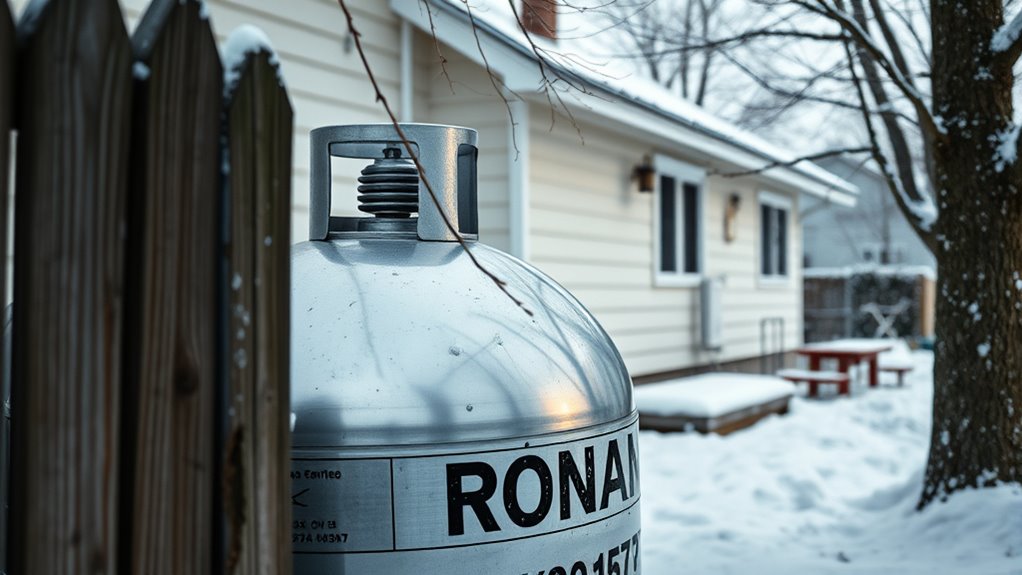
During power outages, small propane tanks can keep your essential appliances running smoothly. When the lights go out, you rely on propane to maintain basic comfort and safety. With a small tank, you can:
- Keep your refrigerator and freezer cold, preventing food spoilage.
- Warm a space heater to maintain a comfortable indoor temperature.
- Power a stove or portable burner for cooking and hot water.
- Rely on Free Floating systems to adapt to changing needs during outages. Small tanks are also designed for easy maintenance, ensuring your system stays reliable over time. Properly sized tanks are essential for efficient energy use, especially during unexpected disruptions. Additionally, understanding how to status your propane system can help prevent shortages and ensure continuous supply when needed.
Choosing the right tank size and understanding system capacity can make a significant difference in maintaining your household’s resilience during outages. These tanks provide peace of mind, ensuring your daily routines continue without interruption. They’re perfect for short-term outages and small households, giving you a reliable energy source when you need it most. Even a modest 20- or 33-pound tank can support your core needs, helping you stay safe, warm, and nourished during unforeseen disruptions.

Westinghouse 4000 Peak Watt Super Quiet Dual Fuel Portable Inverter Generator, Remote Electric Start, Gas & Propane Powered, RV Ready, CO Sensor, Parallel Capable
- High Peak and Rated Power: 4000 Peak Watts, 3300 Rated Watts
- Quiet and Portable Design: Super Quiet, Telescoping Handle
- Dual Fuel Capability: Gas & Propane Powered
As an affiliate, we earn on qualifying purchases.
Medium Tanks and Their Role in Maintaining Comfort
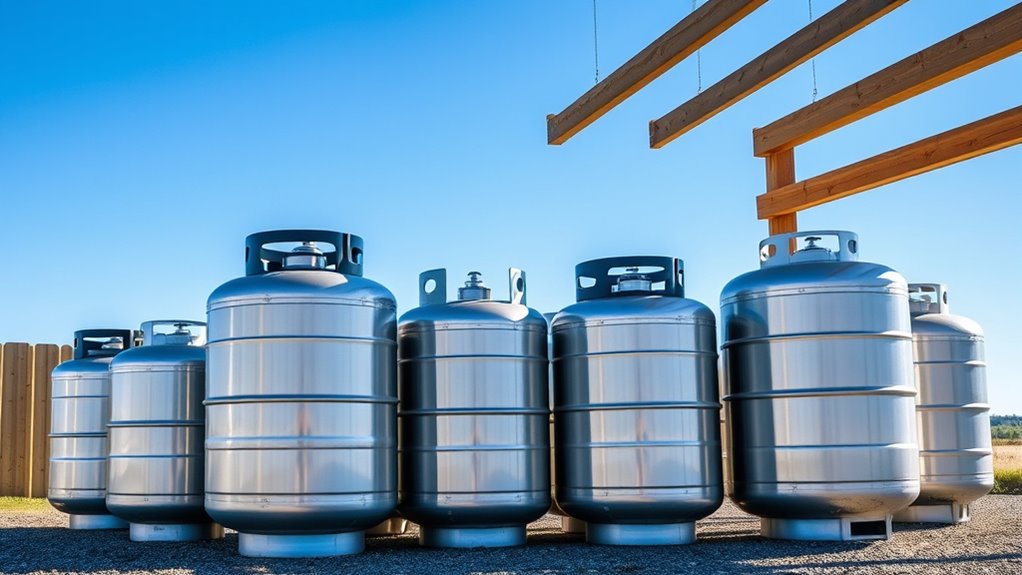
Medium propane tanks play a critical role in maintaining comfort during extended outages by providing a reliable, sizable fuel supply for your home’s heating and energy needs. With capacities of 250 to 330 gallons, these tanks support supplemental heating and backup power for small homes or specific appliances. They are ideal for homes between 1,000 and 2,500 square feet, offering enough fuel to run furnaces, water heaters, or generators for days without refilling. Their size balances capacity and installation flexibility, making them suitable for many residential settings. During outages, these tanks ensure your household remains warm and functional without interruption. They’re a practical choice for homeowners seeking dependable backup fuel, providing peace of mind when power and heat are compromised. Proper tank sizing is essential for ensuring your propane system meets your household’s needs efficiently, especially considering fuel capacity and consumption patterns.

Champion Power Equipment 4000-Watt RV Ready Portable Inverter Generator with Quiet Technology and Free 3-Year Warranty
- Lightweight Design: Under 49 pounds for portability
- Quiet Operation: 64 dBA at 23 feet for peaceful use
- Power and Runtime: 4000 starting watts, 3000 running watts, 10-hour runtime
As an affiliate, we earn on qualifying purchases.
Large Tanks: Ensuring Extended Power and Heating Reliability
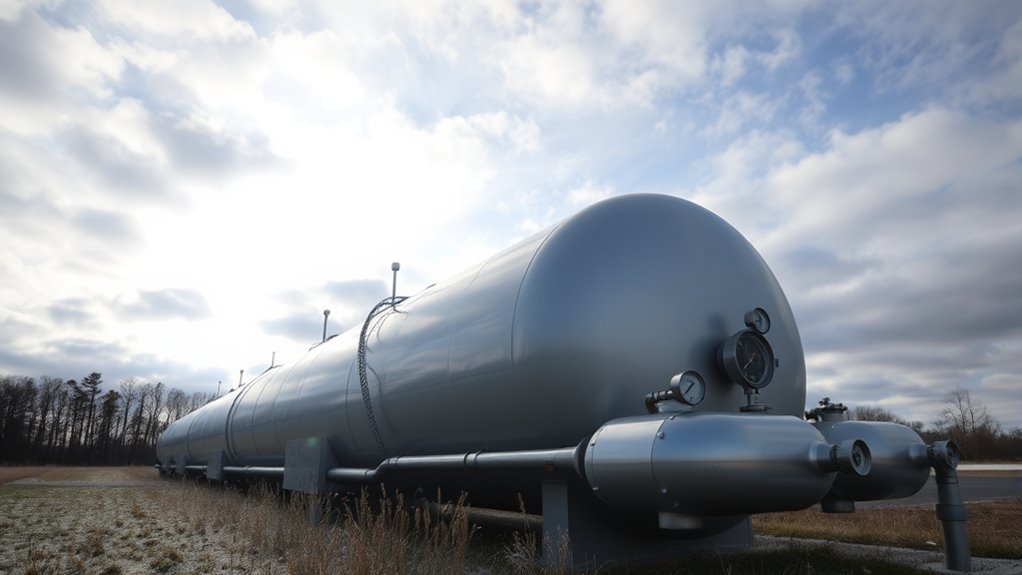
Large propane tanks are essential for ensuring your home has reliable power and heating during extended outages, especially when your energy needs exceed standard supply. With a sizable tank, you can enjoy peace of mind knowing you won’t run out of fuel when it matters most. Consider these benefits:
- Extended outage support—large tanks like 1,000 gallons provide enough BTUs to power your entire home for days or weeks.
- Reduced refill frequency—less worry about running out during winter storms or emergencies.
- Consistent comfort—maintain heating and essential appliances without interruption, keeping your family safe and warm.
- Enhanced energy security—investing in large tanks aligns with sustainable energy solutions by reducing reliance on external supply disruptions. A larger tank also ensures you are prepared for water supply interruptions that could impact other utilities. Additionally, larger tanks can help optimize your overall fuel management, making your energy use more efficient during prolonged outages. Proper tank size also contributes to cost savings over time by minimizing the need for frequent refills.
- Having a large tank means you can better manage fuel consumption during prolonged outages, ensuring you don’t need frequent refills or worry about supply chain issues.
Choosing a large tank means investing in ongoing reliability, giving you confidence in your home’s resilience during unpredictable conditions.
The Impact of Tank Size on BTU Output and Runtime Duration
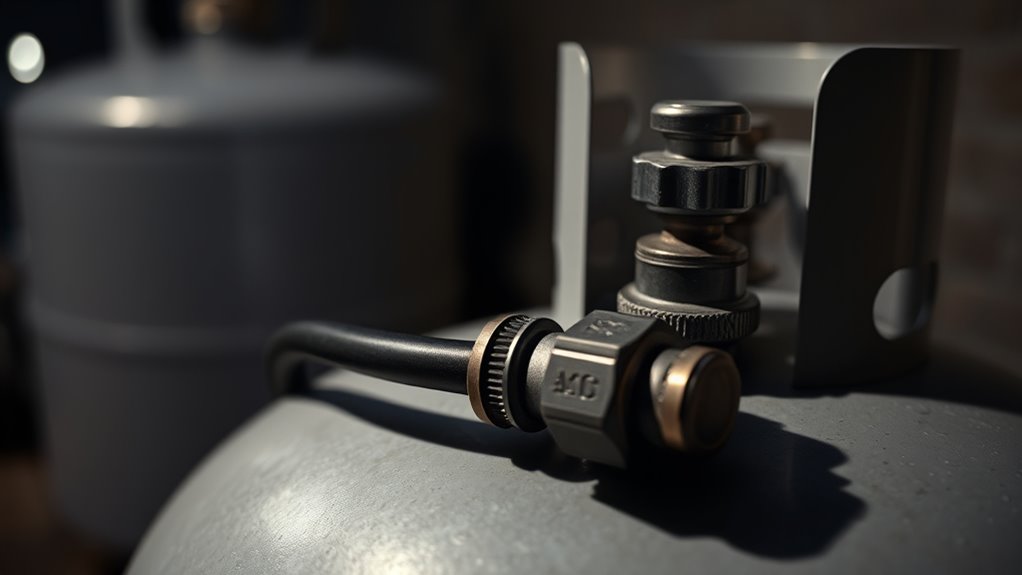
The size of your propane tank directly influences both its BTU output and how long it can sustain your household needs. Larger tanks contain more propane, meaning they can produce more BTUs, which translates to longer runtimes for heating and appliances. For example, a 500-gallon tank provides around 36.6 million BTUs, supporting continuous operation of heating systems and appliances for extended periods. In contrast, a smaller tank, like a 120-gallon, yields about 9.2 million BTUs, limiting its runtime during outages. The bigger the tank, the fewer refills you’ll need, giving you peace of mind during prolonged power failures. Additionally, understanding fuel storage capacity can help you plan better for long-term outages and avoid running out of propane when it’s needed most. Proper tank installation practices are essential to ensure safety and efficiency during extended storage periods. The safety standards for storage tanks are crucial to prevent accidents during prolonged storage periods, especially in colder climates where tanks are exposed to freezing temperatures. Being aware of storage tank safety standards is also essential to prevent accidents during prolonged storage periods.
Installation Considerations Based on Tank Volume and Home Size
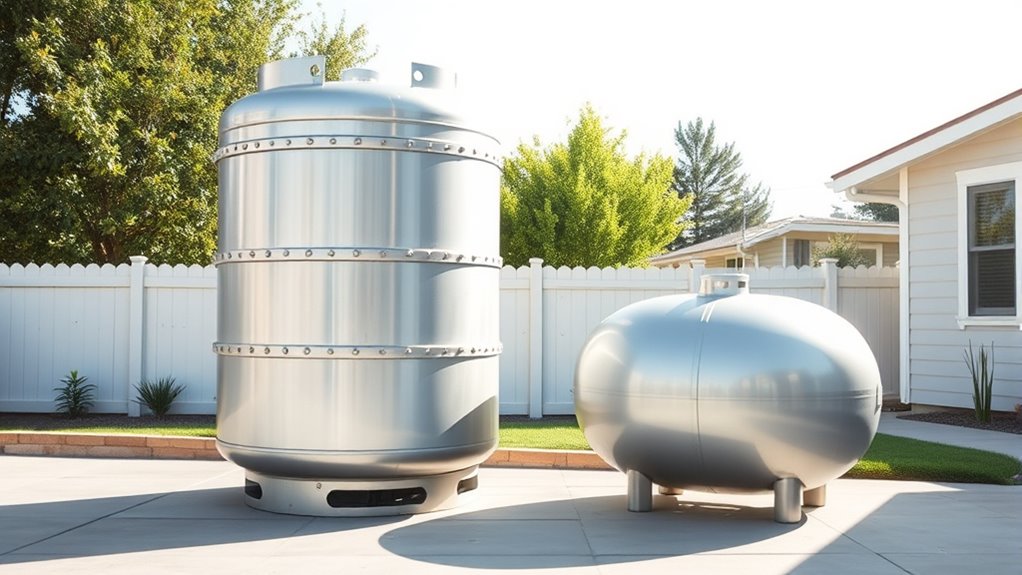
Choosing the right propane tank size for your home depends on both your energy needs and installation space. You need to take into account:
- Your home size and energy consumption—larger homes require bigger tanks to meet seasonal demands. Considering your energy requirements, selecting an appropriately sized tank is essential to ensure continuous supply during peak usage times. Proper sizing also helps in preventing unnecessary refills and managing costs effectively. Additionally, understanding your consumption patterns can assist in selecting the most efficient tank size.
- Available installation space—aboveground tanks need clearance, while underground tanks require specific setbacks.
- Local regulations and safety codes—setback distances vary with tank size, affecting placement options.
- Proper sizing also ensures compliance with safety standards and helps prevent potential hazards during outages.
Choosing the Right Tank to Match Your Emergency Preparedness Goals
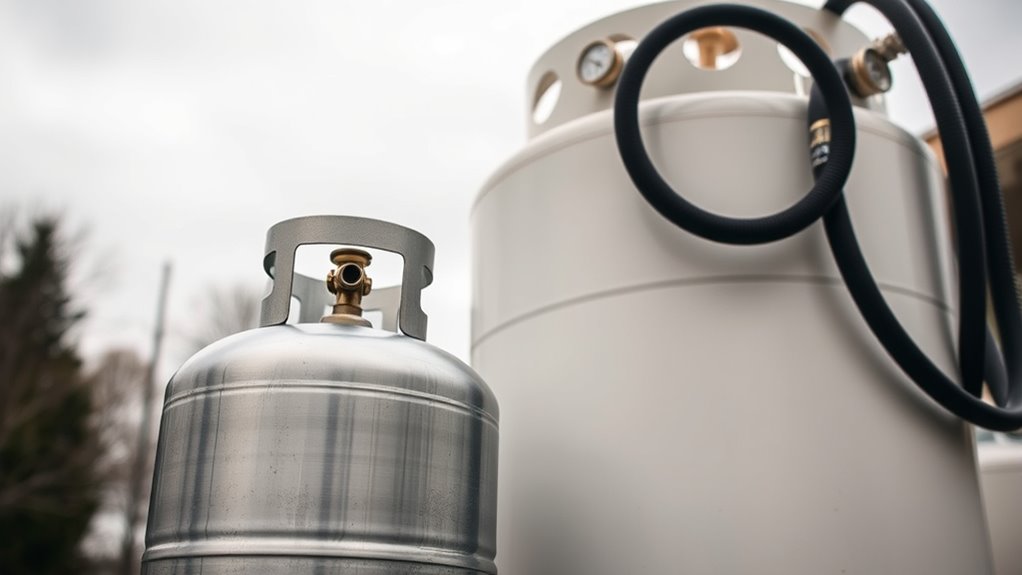
Your emergency preparedness goals should directly influence the size of the propane tank you select, guaranteeing you have enough fuel to sustain your household during outages. If you want to power a few essential appliances and keep your home warm for a few days, a smaller tank like a 120-gallon model might suffice. For longer outages or larger homes with higher energy demands, consider a 500-gallon tank, which provides more capacity and reduces refilling frequency. If you’re preparing for extended emergencies, a 1,000-gallon tank offers substantial supply for heating, cooking, and backup power. Match your tank size to your seasonal needs, household size, and desired outage duration. Properly sizing your tank ensures you’re prepared without over-investing or running short when it matters most.
Practical Tips for Managing Propane Supply During Extended Outages
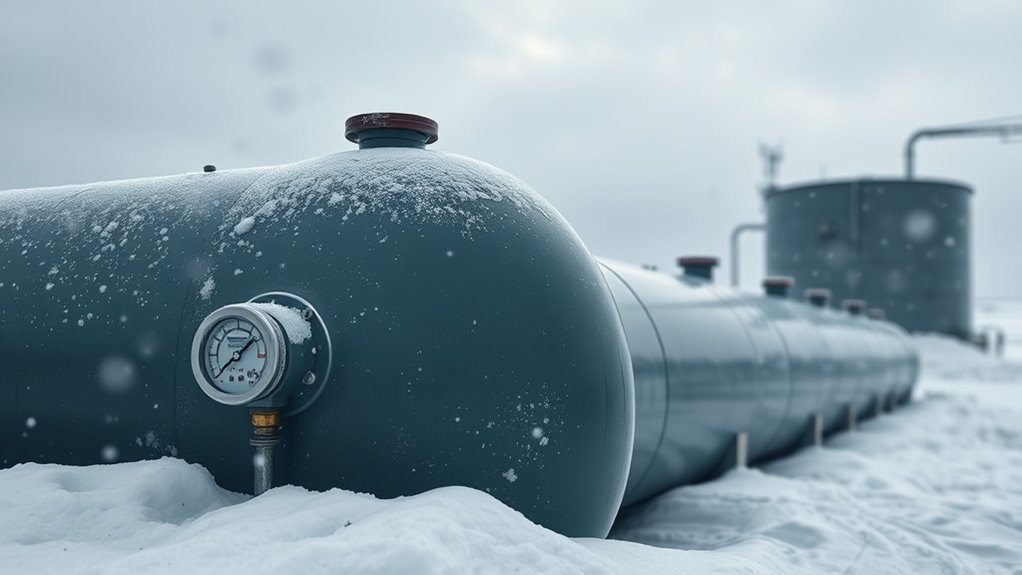
To make your propane last during extended outages, you need to keep a close eye on your tank levels. Efficiently managing your usage can considerably extend your supply, so prioritize essential appliances and heating. By monitoring your propane and optimizing consumption, you’ll be better prepared to weather prolonged disruptions.
Monitor Propane Levels
Monitoring propane levels during extended outages is essential to guarantee you don’t run out unexpectedly. If you lose track, you could face cold nights or disrupted appliances. To stay ahead, consider these critical steps:
- Regularly check your tank’s gauge or use a portable gauge to monitor levels daily.
- Mark the current level on the tank with a weather-resistant marker, so you notice any decline quickly.
- Keep a log to track changes over time, helping you predict when to order more propane.
Optimize Usage Efficiently
Managing your propane supply efficiently during extended outages requires proactive measures to conserve your limited reserves. Start by prioritizing essential appliances such as heating and cooking, reducing usage of non-essential devices. Lower your thermostat to conserve heat, aiming for 60-65°F, and dress warmly to stay comfortable. Use space heaters sparingly and only in occupied rooms. Seal leaks around windows and doors to prevent heat loss. Limit hot water use by taking shorter showers and running appliances only when necessary. Consider alternative heating methods, like firewood or electric heaters if available. Monitor your propane levels regularly to avoid unexpected shortages. By planning your consumption and minimizing waste, you extend your supply, ensuring critical needs are met throughout the outage.
Frequently Asked Questions
How Often Do Propane Tanks Need Refilling During Long Outages?
During long outages, your propane tank’s size determines how often you’ll need to refill it. Smaller tanks, like a 120-gallon, may last only a few days to a week depending on usage. Larger tanks, such as a 1,000-gallon, can supply your home for several weeks or even months. To *guarantee* continuous supply, choose a tank size that matches your household’s energy needs and plan refills accordingly.
Can I Upgrade to a Larger Tank Later if Needs Increase?
A stitch in time saves nine, and upgrading your propane tank later is definitely possible if your needs grow. You can replace or add a larger tank, but you’ll need to evaluate installation space, permits, and safety regulations. It’s wise to consult a professional to guarantee the transition is smooth. Planning ahead helps avoid interruptions, so when your energy demands increase, you can upgrade without hassle and keep your home comfortably powered.
Are There Safety Concerns With Installing Large Underground Propane Tanks?
Yes, there are safety considerations when installing large underground propane tanks. You need proper setbacks from structures, property lines, and underground utilities, which vary by tank size. Make certain the tank is installed by trained professionals who follow all safety codes and regulations. Regular inspections are essential to check for leaks or corrosion. Proper ventilation and pressure relief systems also help prevent accidents, making safety a top priority during installation and use.
How Does Outdoor Temperature Affect Propane Tank Efficiency?
Outdoor temperature can surprisingly impact your propane tank’s efficiency. As temperatures drop, propane molecules contract, reducing pressure and potentially limiting flow to appliances. Conversely, in hot weather, pressure increases, which can strain the tank and system. You might not notice these shifts immediately, but over time, temperature swings can affect performance. Monitoring your tank and understanding these effects helps keep your system running smoothly, no matter the season.
What Maintenance Is Required to Ensure Optimal Propane Supply?
You should regularly inspect your propane tank for leaks, corrosion, or damage, and make certain the pressure relief valve works correctly. Keep it clean and clear of debris, and schedule professional tank inspections annually. Check for proper insulation if outdoors, especially in cold weather. Monitoring your usage helps anticipate refills, preventing outages. Proper maintenance keeps your propane supply reliable, safe, and efficient during outages or routine use.
Conclusion
Choosing the right propane tank size guarantees you’re prepared for power outages. For instance, if you rely on propane for heat during a harsh winter, a larger tank can keep your home warm for days. Imagine a family with a medium tank, comfortably running their heater and stove during a week-long storm. By understanding your needs and tank capacity, you can stay safe and comfortable no matter what outages come your way.