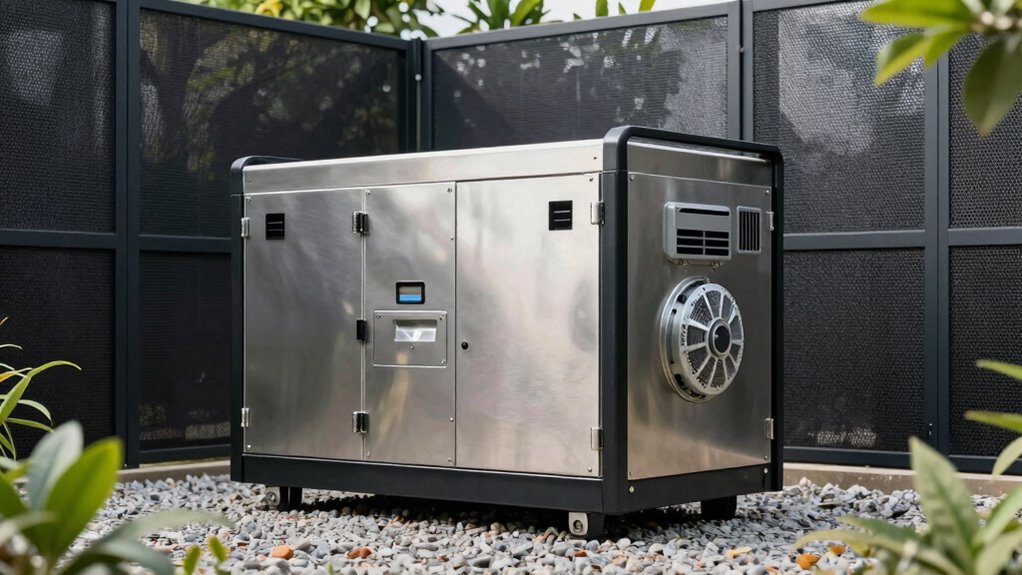

To reduce generator noise without blocking airflow, you should design an acoustic enclosure with sound-absorbing materials and well-planned airflow pathways. Use layered barriers, decoupled panels, and quiet silencers for intake and exhaust. Incorporate proper ventilation that maintains cooling efficiency while minimizing sound transmission. Strategically position silencers and sound barriers, and ensure vibration isolation to prevent noise transfer. Keep sound and airflow management balanced—continue to explore effective strategies to optimize both noise control and airflow performance.
Key Takeaways
- Use acoustic enclosures with carefully designed airflow pathways that balance sound attenuation and proper ventilation.
- Incorporate sound-absorbing materials and baffle systems within the enclosure to reduce noise without obstructing airflow.
- Position silencers and sound barriers strategically to attenuate exhaust and intake noise while maintaining airflow efficiency.
- Implement flexible, vibration-isolating mounts and decoupled panels to minimize noise transmission without restricting air movement.
- Optimize site layout and use reflective or absorptive barriers to control noise paths without blocking essential airflow routes.

Zombiebox Generator Running Cover & Acoustic Barrier | Heavy-Duty Steel Generator Shelter for Portable Generators up to 12,000W | Outdoor Enclosure & Noise Reduction Tent | Rain & Snow Protection
NEW AND IMPROVED DESIGN: After valuable feedback from our customers, this heavy-duty generator cover has improved packaging for…
As an affiliate, we earn on qualifying purchases.
As an affiliate, we earn on qualifying purchases.
Understanding the Importance of Acoustic Enclosure Design
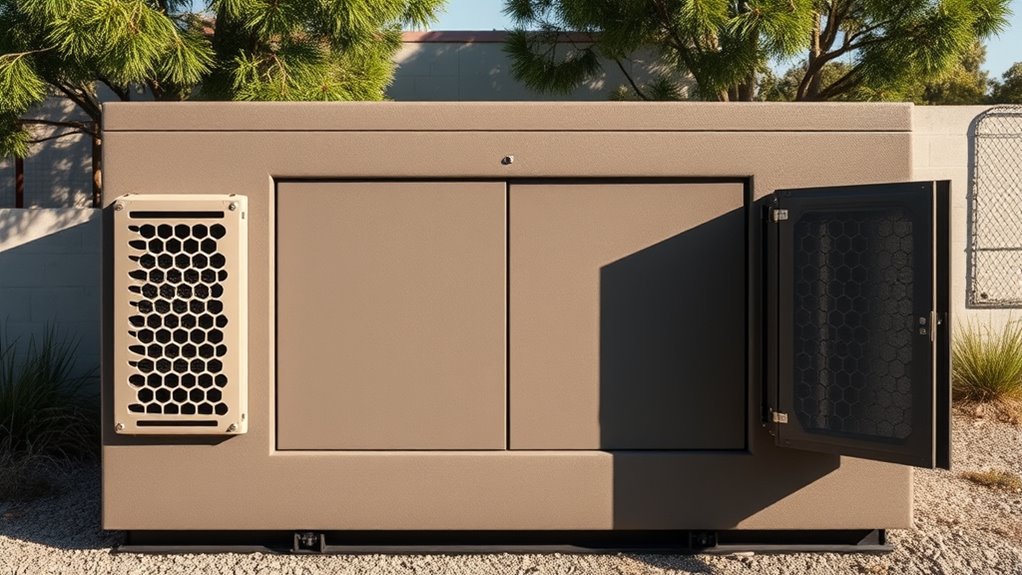
Understanding the importance of acoustic enclosure design is essential because it directly impacts noise reduction and thermal management for generators. A well-designed enclosure minimizes airborne sound radiation by using high-performance barriers and decoupled linings, effectively reducing noise at the source. Proper airflow pathways, including ventilation geometry and baffled flow paths, ensure cooling remains efficient without creating hotspots or recirculation. You need to balance sound attenuation with thermal needs, so selecting appropriate materials and configuring airflow effectively is key. Additionally, accessible panels and service clearances facilitate maintenance without compromising acoustic integrity. When you prioritize thoughtful enclosure design, you control noise levels while maintaining reliable generator operation, ultimately satisfying regulatory requirements and community expectations. Effective airflow management is also crucial for preventing overheating and ensuring consistent performance of the generator. Incorporating advanced insulation techniques can further enhance noise control without sacrificing ventilation efficiency, especially when combined with soundproofing materials designed for high-performance acoustics. Moreover, paying attention to enclosure maintenance helps sustain optimal noise reduction capabilities over time, and considering insulation durability ensures long-term effectiveness.

Generator Exhaust Extension Silencer Kit, Generator Muffler Generator Exhaust Hose
COMPATIBILITY: Generator muffler silencer kit compatible with Fit for Firman Tri-Fuel 7500/6750/5500/9400 /AIVOLT 8000W/Champion 5500.SFit for mufflers with…
As an affiliate, we earn on qualifying purchases.
As an affiliate, we earn on qualifying purchases.
Selecting Materials and Construction for Airflow and Noise Reduction
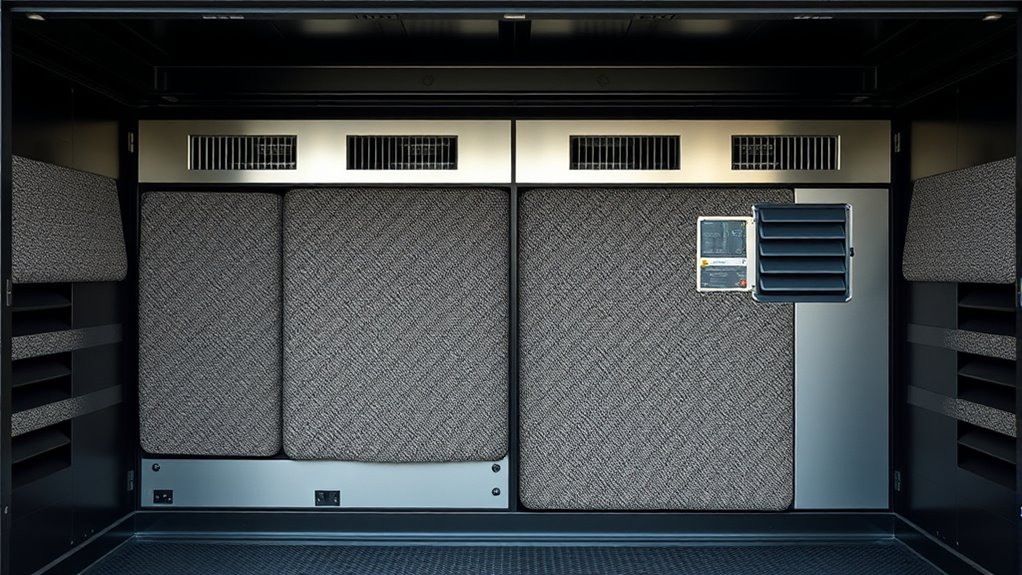
When choosing materials and construction methods, focus on layering strategies that balance sound attenuation with airflow needs. Multi-layer composites and decoupled barriers can target a broad frequency range without compromising cooling or accessibility. Proper design of access panels and construction details guarantees long-term performance and easy maintenance while minimizing noise pathways. Incorporating European cloud innovation principles can further enhance energy efficiency and sustainability in noise reduction solutions. Additionally, selecting materials with high damping properties can significantly improve the overall effectiveness of noise attenuation without restricting airflow. Considering aerospace-grade materials can also contribute to durability and optimal soundproofing performance in various environments. Employing innovative acoustic design techniques allows for more precise control over noise transmission while maintaining airflow efficiency. Paying attention to sound transmission pathways during design ensures that noise is effectively managed without obstructing critical ventilation.
Material Layering Strategies
Selecting the right materials and construction techniques is crucial for effective noise reduction and airflow management in generator enclosures. You should layer materials strategically to target different sound frequencies. Use dense, weighted barriers on the interior surfaces to block airborne noise while maintaining airflow pathways. Incorporate multi-layer composites—such as barrier layers combined with decoupling foam and faced absorptive materials—to broaden attenuation across frequencies without creating large openings that hinder cooling. Position insulation and absorptive layers behind barriers to dampen mid and low frequencies. Ensure these layers are securely mounted, with proper sealing around access panels to prevent sound leaks. By carefully combining barrier, absorptive, and decoupling materials, you optimize noise suppression without compromising airflow or thermal performance.
Construction and Access Design
Choosing the right materials and construction techniques for the enclosure directly impacts both noise reduction and airflow efficiency. You should focus on durable, sound-absorbing, and airflow-friendly options. Use access panels that are easy to seal and maintain, ensuring acoustic integrity isn’t compromised. Incorporate baffled intake and exhaust paths to prevent recirculation hotspots. Select materials like resilient foam-lined panels and multi-layer composites to dampen sound without blocking airflow. Design ventilation geometries that promote smooth airflow, avoiding sharp turns or large openings that cause noise leaks. Use modular construction for easier maintenance and upgrades. Properly engineered barriers and access points ensure your enclosure stays effective while allowing quick, safe servicing. It’s also important to material properties to optimize both sound attenuation and airflow, ensuring your setup remains both quiet and efficient. Additionally, selecting materials with appropriate thermal insulation properties can help manage heat transfer and further reduce noise transmission, contributing to a more comfortable environment. Considering acoustic design principles during planning can significantly enhance noise control while maintaining airflow. This balance is crucial to minimize noise without sacrificing cooling or access.

HizACome M8 40x26mm Rubber Isolator Mounts, 4 Pcs Double Studs Anti-Vibration Mounts for Generators, Compressors, Motor Engines, Pumps
Product Details: Thread Size: M8 x 18mm / 0.31" x 0.71" (Dia. x H). Rubber Size:40mm x 26mm…
As an affiliate, we earn on qualifying purchases.
As an affiliate, we earn on qualifying purchases.
Optimizing Intake and Discharge Silencers for Effective Attenuation
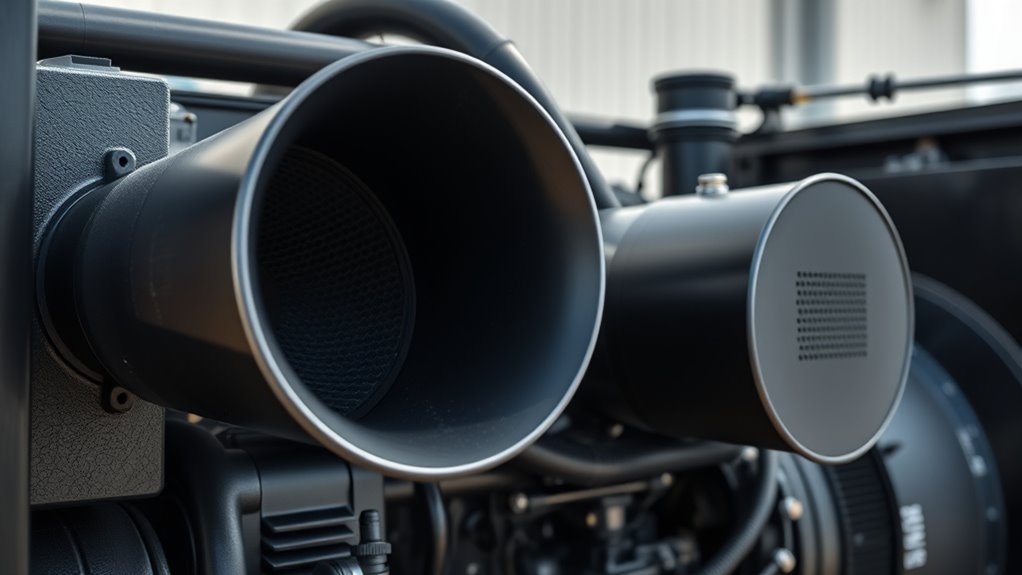
Optimizing intake and discharge silencers involves designing them to effectively reduce noise emissions while maintaining airflow and cooling efficiency. You should size silencers based on actual CFM, ensuring they provide sufficient attenuation without creating excessive pressure drops. Select media and configurations—such as rectilinear modules or transitional silencers—tuned to the generator’s dominant frequencies for maximum noise reduction per unit length. Use erosion-resistant materials like Tedlar for outdoor applications to sustain performance over time. Position silencers and their line lengths to minimize additional fan energy and avoid airflow disruptions, verified through aerodynamic calculations. Modular silencers allow staged installation and easier maintenance, ensuring continuous airflow. Properly optimized silencers strike a balance between noise attenuation and cooling performance, keeping your generator quiet and efficient. Additionally, considering airflow management techniques can further enhance silencer effectiveness while preserving system cooling. Incorporating sound absorption materials inside silencers can further improve noise reduction without compromising airflow. Employing advanced design methods helps optimize silencer placement and configuration for maximum efficiency. Incorporating aerodynamic considerations during design can lead to better performance and reduced pressure losses, ensuring optimal system operation. Furthermore, conducting performance testing ensures that the silencers meet the desired noise and airflow specifications in real-world conditions.

Second Skin Luxury Liner 1 LB Mass Loaded Vinyl (MLV) – Soundproofing Barrier & Sheet – 1/8“ Automotive Insulation, Home & Generator Enclosure Sound Proofing, Made in USA (4 Sheets, 36 Sq Ft)
SOUNDPROOFING BASICS – There are three keys to soundproofing. To block airborne noise, barriers need to be DENSE,…
As an affiliate, we earn on qualifying purchases.
As an affiliate, we earn on qualifying purchases.
Enhancing Radiator and Cooling Air Attenuation Without Impeding Flow
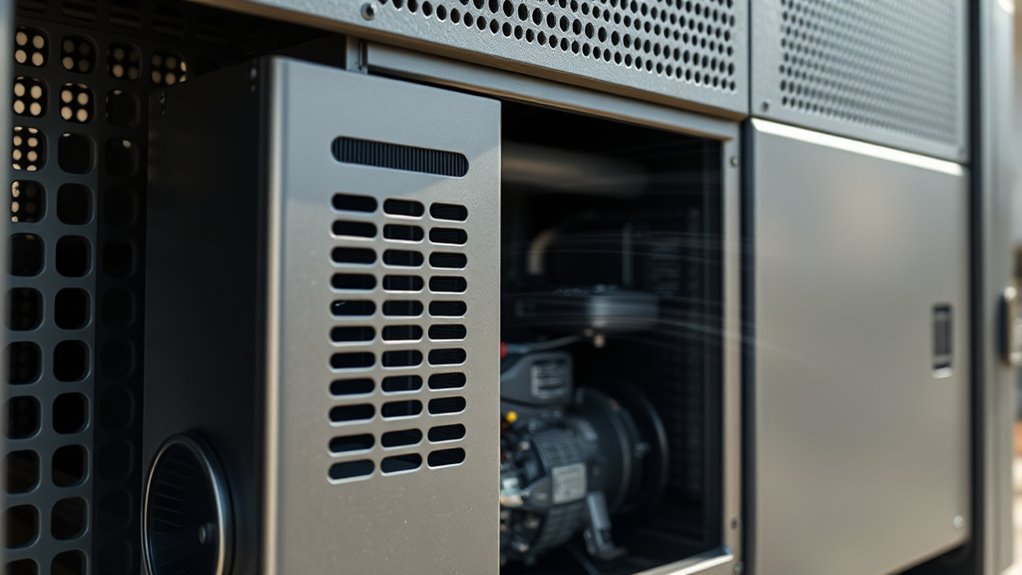
You can reduce radiator and cooling air noise by installing well-designed baffles that attenuate sound without restricting airflow. Using faced absorptive foams and rigid materials in these baffles helps target specific frequencies while maintaining cooling efficiency. Just make certain that the pressure drop stays within the fans’ capacity to prevent overheating and performance issues. Additionally, selecting materials with appropriate sound absorption properties can further enhance noise reduction while preserving airflow. Incorporating airflow management techniques ensures effective noise attenuation without compromising cooling performance. Properly designed ventilation pathways are essential to maintain optimal airflow and prevent any buildup of heat or pressure, especially when considering airflow dynamics for optimal sound and heat dissipation. Understanding pressure drop and its impact on system performance is crucial when designing effective noise reduction strategies.
Noise-Reducing Baffle Designs
How can baffle designs enhance radiator and cooling air attenuation without restricting airflow? Properly designed baffles redirect sound waves and diffuse airflow, reducing noise transmission while maintaining cooling efficiency. By controlling airflow paths, you prevent turbulence and hotspots, ensuring thermal performance isn’t compromised. Effective baffle design involves strategic placement and material choice to absorb or deflect sound.
- Curved or angled panels that diffuse noise outward
- Perforated barriers allowing airflow but trapping sound
- Layered baffle systems combining absorptive and reflective surfaces
- Aerodynamic shapes minimizing turbulence and pressure loss
- Removable or adjustable baffles for maintenance without noise compromise
Maintaining Cooling Efficiency
Maintaining cooling efficiency while enhancing radiator and cooling air attenuation requires careful balance to prevent airflow restriction. You should install attenuators like inlet and outlet panels that reduce noise without blocking the necessary airflow. Use faced absorptive foams and rigid closed-cell materials in baffles to target low- and mid-frequency noise, ensuring they resist heat and airflow erosion. Maintain proper clearance and flow paths, verifying that pressure drops stay within the fan’s capacity to avoid overheating. If attenuation reduces airflow, add auxiliary fans sized to compensate, preserving cooling performance. Apply heat-resistant facings or shields on absorbent materials near hot surfaces to prevent thermal degradation. Additionally, understanding the importance of proper wall surface planning and installation techniques can further optimize both noise attenuation and airflow efficiency. Proper airflow management plays a crucial role in balancing sound reduction with effective cooling, ensuring the system operates reliably. By carefully balancing noise reduction measures with airflow needs, you ensure effective cooling without sacrificing acoustic performance.
Incorporating Vibration Isolation and Structural Treatments to Minimize Noise Transmission
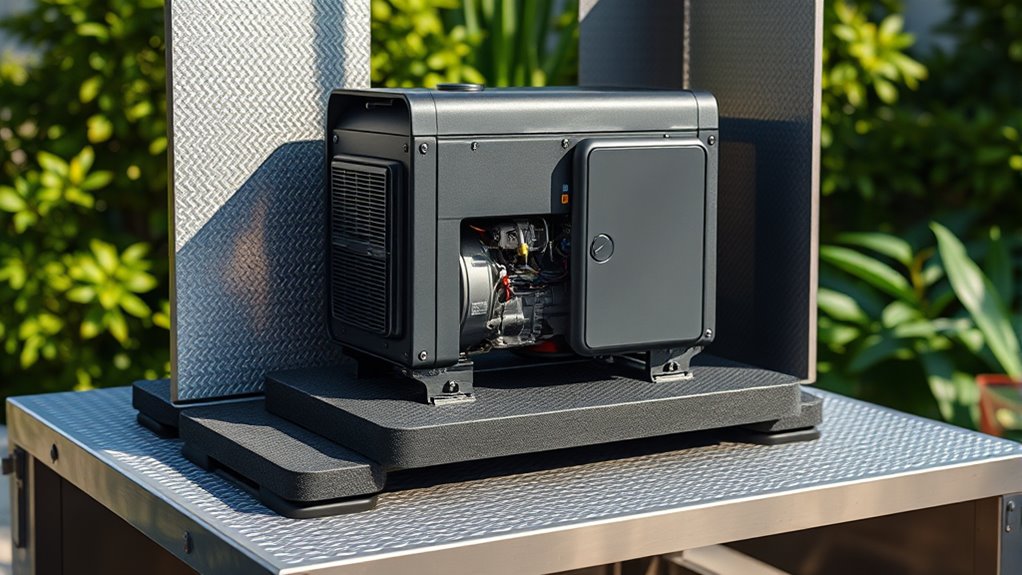
Vibration isolation and structural treatments play a critical role in minimizing noise transmission from generators to surrounding structures. You can achieve this by carefully designing your mounting and support systems to absorb and decouple vibrations. Properly installed anti-vibration mounts or pads, tailored to your generator’s weight and dynamic loads, reduce structure-borne noise. Using floating floors or resilient mounts under generator rooms further prevents vibrations from transmitting through the building. Decoupling enclosure panels with foam or resilient layers interrupts mechanical paths, improving low-frequency attenuation. Additionally, isolating pipes and connections with flexible connectors or hoses prevents vibration transfer. Regular maintenance of engine mounts and balanced rotating components ensures minimal vibration sources, ultimately enhancing your overall noise control efforts.
Strategic Site Layout and Barrier Placement for Community Noise Control

Positioning your generator and exhaust outlets thoughtfully can considerably reduce community noise impacts by maximizing distance and directing sound away from sensitive receptors. Place the generator as far from noise-sensitive areas as possible and orient exhaust outlets to face away from homes, schools, or other quiet zones. Use natural or engineered barriers like solid walls, earth berms, or dense vegetation to block direct sound paths and reflect noise downward or away. Combine these with strategic site planning to avoid line-of-sight between the source and receptors. Ensure pathways are clear of reflective surfaces that could amplify noise. Regularly evaluate community feedback and perform acoustic modeling to confirm your layout minimizes noise levels at nearby locations, maintaining compliance with local regulations.
Employing Monitoring and Maintenance to Sustain Acoustic Performance
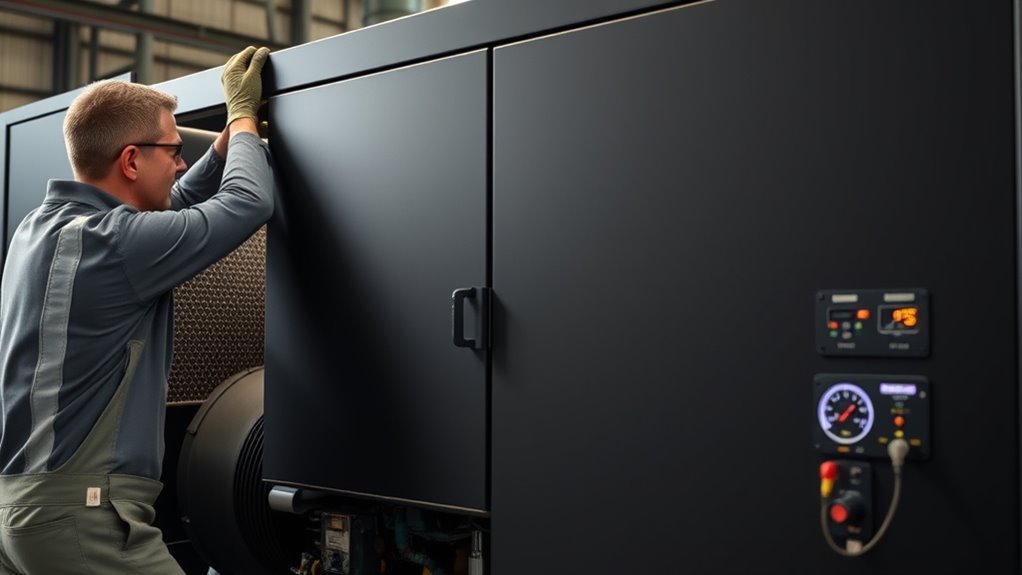
Regularly monitoring the acoustic performance of your generator setup guarantees that noise mitigation measures remain effective over time. This helps you identify issues early, maintain compliance, and optimize performance. Use handheld sound level meters or permanent monitoring stations to track noise levels consistently. Schedule routine inspections of enclosures, silencers, and exhaust systems to check for deterioration or damage. Keep records of measurements and maintenance activities to spot trends and plan upgrades. Adjust maintenance plans based on data to prevent noise leaks or degraded attenuation. Regularly verify that airflow paths are unobstructed and components are functioning properly. This proactive approach ensures sustained noise reduction, preserves airflow, and extends equipment lifespan.
- Conduct periodic sound level assessments with calibrated meters
- Inspect enclosures, silencers, and exhaust for damage or buildup
- Record data to track performance trends over time
- Adjust maintenance schedules based on monitoring results
- Ensure airflow paths and acoustic treatments remain unobstructed
Frequently Asked Questions
How Can I Balance Noise Reduction With Maintaining Proper Cooling Airflow?
You can balance noise reduction with proper cooling airflow by designing acoustic barriers that incorporate airflow-optimized features, like baffled flow paths and aerodynamic progressions. Install purpose-built silencers and attenuators sized for your generator’s CFM, ensuring minimal pressure drop. Use faced absorptive materials and heat-resistant wraps that target noise frequencies without obstructing airflow. Regularly verify airflow and temperature levels, adjusting auxiliary fans or ventilation paths to maintain cooling efficiency while keeping noise levels low.
What Are the Best Practices for Maintaining Acoustic Barriers Over Time?
Imagine your acoustic barriers as guardians standing firm over time. To keep them effective, regularly inspect for damage or wear, especially at seals and joints. Clean internal lining surfaces and replace deteriorated materials promptly. Make certain maintainable access points are sealed properly after service. Keep vegetation and external barriers free from debris. With proactive upkeep, your barriers will continue to silence noise effectively while enduring the test of time.
How Do I Select Silencers Tuned to Specific Generator Frequencies?
You should select silencers tuned to specific generator frequencies by analyzing your generator’s tonal noise spectrum through acoustic measurements. Then, choose silencers with media and configurations—like rectilinear modules or progressive silencers—that target those dominant frequencies. Confirm the silencers are sized for your airflow and verified with aerodynamic calculations. Using modular designs allows staged installation and easier maintenance, helping you effectively reduce noise without impeding airflow or cooling.
Can Vegetation Effectively Replace Structural Noise Barriers?
Vegetation alone can’t fully substitute structural noise barriers because it lacks the density and mass to block sound effectively. While dense evergreen hedges help reduce reflections and soften noise, they’re secondary solutions. To truly minimize generator noise, combine vegetation with engineered barriers like solid walls or berms. This layered approach ensures better attenuation, especially for high-frequency sounds, and helps meet regulatory noise limits without relying solely on natural landscaping.
How Do I Measure and Verify Noise Reduction After Installation?
You measure and verify noise reduction by conducting baseline and post-installation acoustic measurements. Use a calibrated sound level meter or a spectrum analyzer, focusing on A-weighted dB levels at key receiver points. Perform multiple readings during different times to account for variability. Compare results against your initial baseline to confirm the attenuation achieved. Document your findings and make sure measurements follow relevant standards or regulatory guidelines for accuracy and consistency.
Conclusion
Think of your generator as a symphony performer—when tuned right, it sounds smooth and unobtrusive. By carefully designing enclosures, selecting smart materials, and optimizing airflow, you can silence the noise without blocking essential ventilation. Regular monitoring keeps the performance in harmony. With these strategies, you’re conducting a quiet masterpiece, ensuring your generator operates quietly while still performing at its best—turning what could be a discord into a peaceful melody.