
Eco mode saves fuel when you keep your generator’s load between 40-70%, allowing it to run at lower speeds and use less fuel. However, overloading or running heavy appliances can reduce efficiency or cause instability. If used improperly or during high-demand tasks, eco mode can lead to fluctuations, shutdowns, or increased wear. To get the most from these features, it’s important to understand the right operation conditions—more details await to help you optimize your generator’s performance.

Get backup power and energy gear delivered free with Prime
- Fast, free delivery on millions of items
- Prime Video, Amazon Music and more included
- Member-only deals all year
Key Takeaways
- Eco mode maximizes fuel savings when maintaining loads between 40-70%, reducing engine speed and fuel consumption.
- It saves fuel by adjusting engine RPM during steady, low-to-moderate loads, ideal for small appliances and lighting.
- Eco mode can cause power fluctuations or instability, potentially harming sensitive electronics and affecting performance.
- Overloading beyond 70% load or operating under heavy, sudden demands diminishes fuel efficiency and risks generator damage.
- Proper load management and maintenance are essential to ensure eco mode benefits without causing operational problems.
As an affiliate, we earn on qualifying purchases.
How Eco Mode Boosts Fuel Efficiency

Eco Mode boosts fuel efficiency by adjusting the engine’s speed based on the load, ensuring it runs only as fast as necessary. When your generator operates at lower loads, Eco Mode reduces engine speed, which directly cuts fuel consumption. Variable speed technology, common in inverter models, allows the engine to slow down during partial loads, saving fuel without sacrificing power quality. For instance, a Honda EU2200i can run 8-10 hours on less than a gallon at 25% load. By fine-tuning engine speed to match your power needs, Eco Mode minimizes unnecessary fuel burn, extending runtime and reducing costs. This smart adjustment helps you get the most out of your fuel, especially during light or moderate use, without compromising the generator’s performance. Additionally, high-quality inverters optimize power output and efficiency, enhancing overall fuel savings. Incorporating automatic load adjustment features further ensures that the generator adapts dynamically to changing power demands for maximum efficiency. It also benefits from smart technology that can learn and anticipate your power needs over time, further improving fuel economy. Moreover, understanding how engine management systems function can help you better utilize Eco Mode to maximize both performance and efficiency. A deeper understanding of engine control mechanisms can enable more precise tuning and operational efficiency.
inverter generator with eco mode
As an affiliate, we earn on qualifying purchases.
As an affiliate, we earn on qualifying purchases.
Ideal Load Ranges for Eco Mode Operation
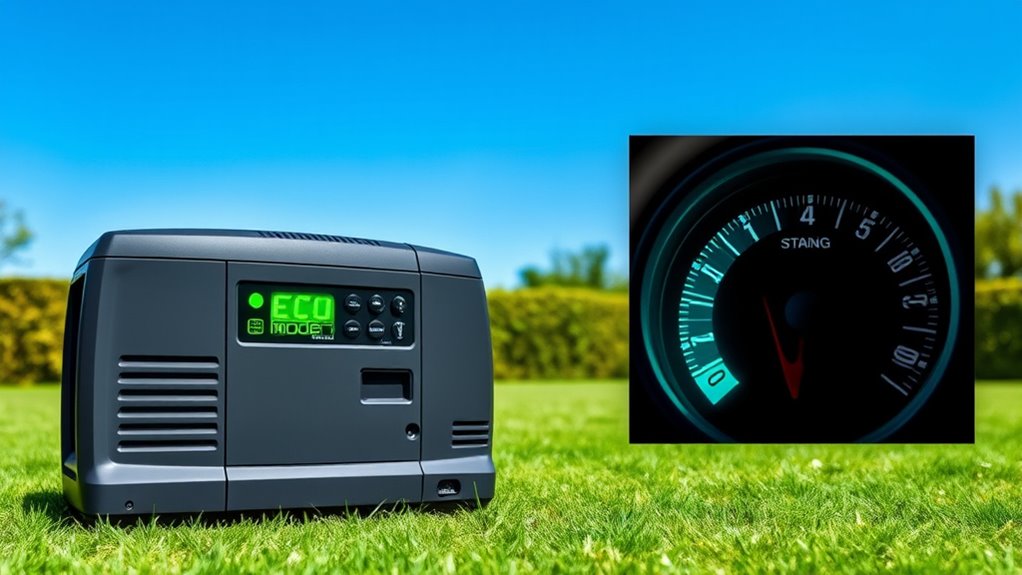
To get the most fuel savings, you should aim to keep your generator’s load within the ideal range of 40-70%. Operating outside this range can reduce efficiency or risk overloading the system. Knowing these load percentages helps you balance performance and fuel economy effectively. Additionally, understanding the proper maintenance of your generator can further optimize its eco mode performance and longevity. Regularly monitoring energy efficiency and adjusting loads accordingly can enhance both sustainability and operational reliability. Incorporating Free Floating concepts, such as flexible load management, can help maintain optimal operation without excessive strain on the system. Being aware of load management techniques can also contribute to maintaining consistent fuel savings while protecting your generator from potential damage. Employing load balancing strategies can further improve efficiency and prevent system overloads during eco mode operation.
Optimal Load Percentage
Achieving maximum fuel efficiency with your generator depends on maintaining it within its ideal load percentage, which generally falls between 40% and 70% of its rated capacity. Operating within this range allows the eco mode to optimize fuel savings by balancing engine speed and power output. When your load is too low, the generator may not fully engage eco mode, reducing efficiency. Conversely, exceeding 70% increases engine strain and fuel consumption due to higher alternator losses. For inverter generators, a load of about 50-70% of their rated capacity typically yields the best fuel economy. Staying within this range ensures you benefit from smooth operation, reduced fuel use, and longer runtime, making eco mode most effective and economical. Proper load management is key to maximizing your generator’s efficiency and preventing overloading or underloading, as well as ensuring compliance with generator safety guidelines. Additionally, understanding load percentage helps you adjust your energy use to stay within the optimal range for eco mode performance. Maintaining an appropriate load level can also extend the lifespan of your generator by reducing unnecessary wear and tear. Being mindful of load fluctuations can further improve overall efficiency and reliability.
Fuel Efficiency Peaks
Fuel efficiency in your generator reaches its peak when operated within specific load ranges, typically between 40% and 70% of its rated capacity. During this range, your generator uses fuel most effectively, delivering maximum energy output with minimal waste. Inverters perform best within this window, providing steady power while maintaining low fuel consumption. Operating below 40% load often results in less efficient fuel usage because the engine runs at lower speeds without fully optimizing combustion. Conversely, exceeding 70% load increases mechanical strain, leading to higher fuel consumption and potential wear. For excellent fuel savings, aim to keep your generator within this ideal load range, especially when using eco mode, which is designed to capitalize on these efficiencies. Additionally, proper maintenance can help sustain optimal fuel efficiency and prevent unnecessary strain on your generator.
Risks of Overloading
Operating your generator within the ideal load range of 40% to 70% is key to maximizing efficiency and prolonging its lifespan. Overloading beyond this range causes stress on components, reducing durability and risking sudden shutdowns. It can also lead to increased fuel consumption, defeating eco mode’s purpose. Excessive loads strain the alternator, generate excess heat, and accelerate wear on engine parts. This not only shortens your generator’s life but also risks damaging sensitive electronics connected during overload. To avoid these issues, monitor your load closely and stay within recommended ranges. Properly sizing your generator and balancing connected devices help maintain excellent performance without risking overload. Proper load management is essential for ensuring safety and efficiency while using your generator’s eco mode. Additionally, understanding your generator’s performance characteristics can help optimize operation and prevent unintended issues. Being aware of the load capacity and how your specific model responds under various conditions can further enhance both safety and efficiency. Regularly reviewing your generator specifications ensures you stay within safe operational parameters and make informed adjustments. Maintaining awareness of your generator’s efficiency range can also help you avoid unnecessary fuel use and mechanical stress.
portable generator load management
As an affiliate, we earn on qualifying purchases.
As an affiliate, we earn on qualifying purchases.
Real-World Examples of Runtime With Eco Mode
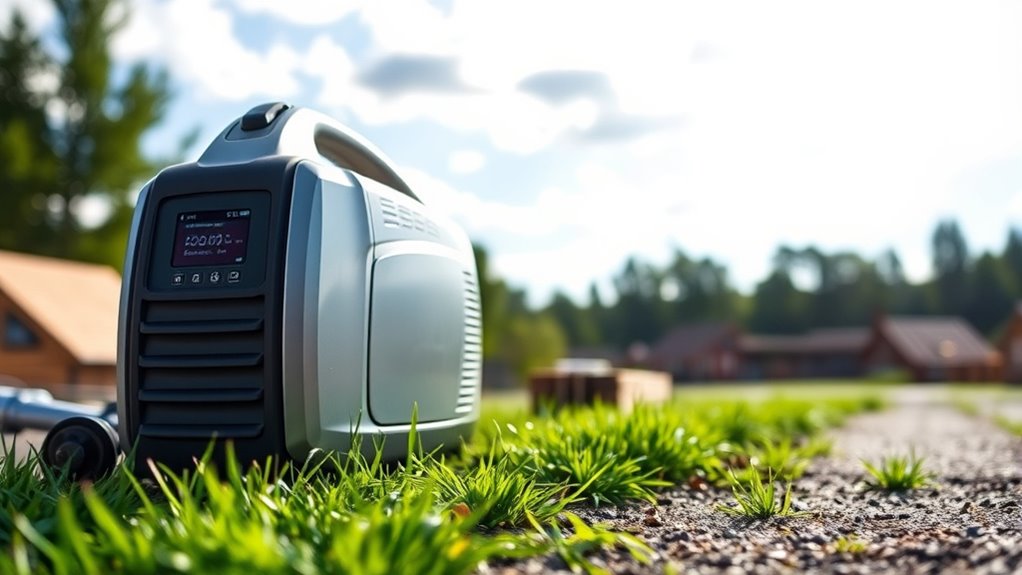
Real-world examples show how eco mode can extend your generator’s runtime significantly. For instance, the Honda EU2200i runs about 8.1 hours on just 0.95 gallons at 25% load, thanks to eco mode’s fuel-saving capabilities. Similarly, the Honda EU3000is can operate for around 20 hours on 3.4 gallons at a quarter load, and the EU7000is offers roughly 18 hours on 5.1 gallons under similar conditions. Smaller inverters, like a 2000W unit, typically use 0.1 to 0.18 gallons per hour at 25-50% load. These examples highlight how operating at ideal loads with eco mode activated can dramatically boost runtime, making your generator more efficient for essential uses like powering lights or a fridge during extended outages.
generator power fluctuation protector
As an affiliate, we earn on qualifying purchases.
As an affiliate, we earn on qualifying purchases.
Comparing Fuel Consumption: Inverter vs. Open-Frame Generators

Inverter generators generally consume less fuel than open-frame models because they operate more efficiently across a range of loads, especially when eco mode is activated. They adjust engine speed to match demand, reducing unnecessary fuel burn during light loads. Open-frame generators run at a constant speed, often wasting fuel when power needs are low. When comparing fuel consumption:
- Inverters excel at partial loads, using less fuel per watt
- Open-frame models are more efficient at full, steady loads
- Inverter eco mode optimizes engine speed for minimal fuel use
- Open-frame units often run at higher RPMs regardless of load
- Fuel savings are most significant during intermittent or light use
- Load management plays a crucial role in maximizing fuel efficiency with inverter models, especially in variable power demands.
- Efficiency benefits can influence overall fuel consumption and cost savings
Choosing between them depends on your typical load and usage patterns, with inverters offering better efficiency for varied, lower demands.
When To Use and When To Avoid Eco Mode

Eco mode is ideal when you need to run your generator quietly and efficiently during low-demand periods, such as powering lights, small appliances, or charging devices. Use eco mode to maximize fuel savings and reduce noise when your load stays within 40-70%. However, avoid eco mode during high-demand tasks like starting air conditioners or heavy tools, as it may cause fluctuations or overload the system. For consistent, heavy loads, switch off eco mode to ensure stable power output. Here’s a quick guide:
| Situation | Use Eco Mode | Avoid Eco Mode |
|---|---|---|
| Powering lights, small devices | Yes | No |
| Running high-demand appliances | No | Yes |
| Gentle, steady loads | Yes | No |
| Heavy startup loads | No | Yes |
| Sensitive electronics | Yes (with caution) | No |
Limitations and Potential Drawbacks of Eco Mode
Eco mode can cause reduced power stability, which might make your equipment fluctuate or shut down unexpectedly. It’s not suitable for heavy loads or appliances that need consistent energy, like air conditioners or power tools. If you rely on stable power, you should consider disabling eco mode to avoid potential issues. Additionally, understanding manipulation tactics can help you recognize if someone is intentionally exploiting system limitations for their benefit.
Reduced Power Stability
Have you noticed that reducing engine speed in eco mode can sometimes lead to fluctuations in power output? This instability occurs because the generator’s engine adjusts speed based on load, which can cause inconsistent voltage and current. When demands spike unexpectedly, the engine may struggle to maintain steady power, leading to dips or surges. These fluctuations can affect sensitive electronics, causing malfunctions or damage. You might also experience:
- Sudden drops in power during load changes
- Increased startup delays for appliances
- Reduced responsiveness to quick load demands
- Unsteady voltage affecting electronic devices
- Potential strain on the generator’s components over time
While eco mode aims to optimize efficiency, these power stability issues highlight its limitations, especially in situations requiring consistent, reliable power delivery.
Not for Heavy Loads
While reducing engine speed can improve efficiency under light loads, it becomes a significant drawback when handling heavy loads. Eco mode limits power output to save fuel, but heavy appliances like air conditioners or power tools demand consistent, higher energy levels. When you try to run these devices in eco mode, the generator may struggle to maintain stable voltage and frequency, causing fluctuations or shutdowns. This not only risks damaging sensitive equipment but also diminishes overall reliability. Additionally, the engine may idle or slow down excessively to meet load demands, leading to increased wear and tear. For heavy loads, disabling eco mode ensures steady power delivery, preventing potential problems and ensuring your equipment operates safely and efficiently.
Technologies Enhancing Eco Mode Performance

Advanced technologies like electronic fuel injection (EFI) and turbocharging play a crucial role in enhancing eco mode performance. EFI ensures precise fuel delivery, optimizing combustion for better fuel economy and smoother operation. Turbocharging increases power output without added engine size, allowing the generator to maintain performance at lower speeds. Automatic voltage regulation stabilizes power, reducing unnecessary fuel use caused by fluctuations. Variable speed technology adjusts engine RPM based on load, cutting fuel consumption during partial loads. Additionally, digital controls enable real-time monitoring and adjustments, improving efficiency. These innovations work together to maximize runtime, reduce emissions, and enhance overall fuel savings, especially during light to moderate loads. By integrating these advanced systems, your generator performs more efficiently in eco mode without sacrificing reliability.
Tips for Maximizing Fuel Savings With Eco Mode
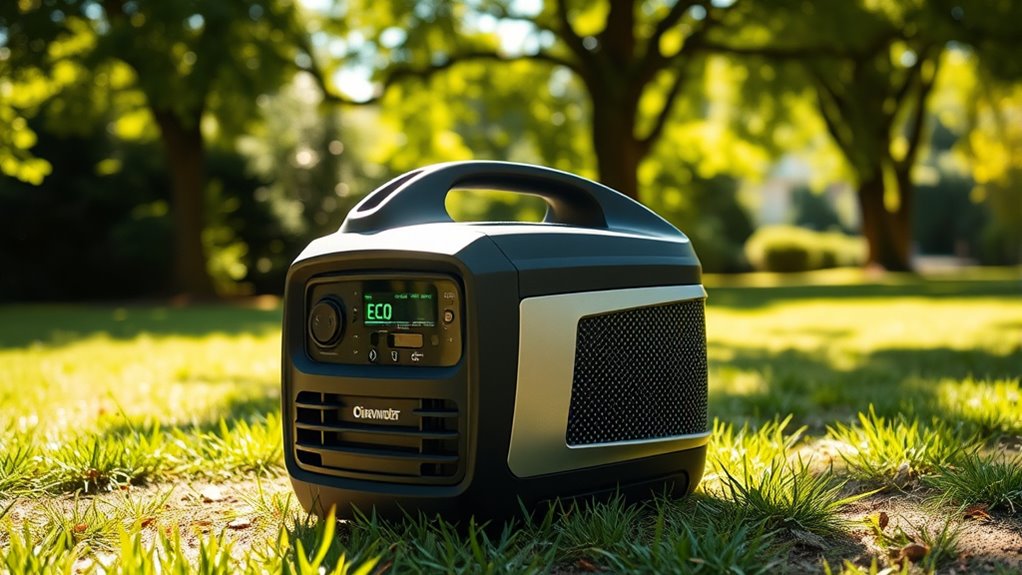
To get the most out of eco mode, focus on optimizing your generator’s load and operation. Keep your load within the 40-70% range for peak fuel efficiency. Avoid running high-energy appliances during eco mode, as this can negate savings. Instead, prioritize lighter loads like lights and small appliances. Use the generator’s load management features to balance your power needs efficiently.
| Tip | Benefit |
|---|---|
| Maintain steady, moderate load | Maximize efficiency, reduce fuel use |
| Avoid sudden load spikes | Prevent engine fluctuations and fuel waste |
| Use inverter units for small loads | Enhance fuel savings and runtime |
| Turn off unnecessary electronics | Minimize idle fuel consumption |
| Regular maintenance | Keep the system running at its most advantageous |
Common Problems Caused by Using Eco Mode Improperly

Using eco mode improperly can lead to several problems that reduce your generator’s efficiency and reliability. When you rely on eco mode for high-demand appliances or continuous heavy loads, it struggles to maintain stable operation, causing fluctuations and potential shutdowns. Additionally, running in eco mode during startup or surges can result in insufficient power delivery and damage. Misusing eco mode may also increase engine wear if it’s forced to operate outside its ideal load range. Poor maintenance, like dirty air filters or old fuel, worsens these issues.
- Overloading the generator beyond recommended limits
- Using eco mode for high-startup power needs
- Ignoring maintenance schedules affecting airflow and fuel quality
- Running at low loads for extended periods without adjustments
- Relying on eco mode during continuous heavy use
Making the Most of Your Generator’s Eco-Friendly Features
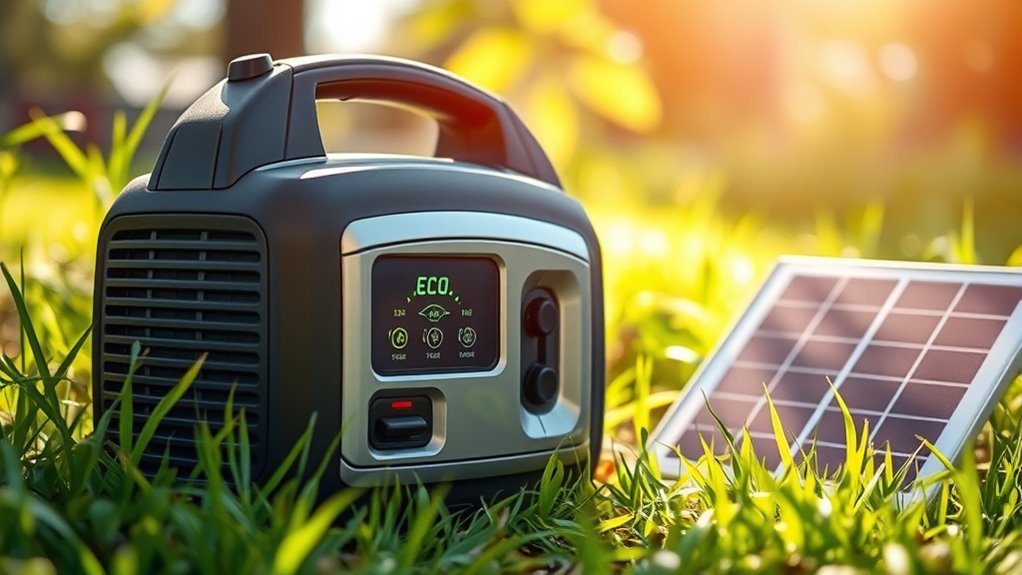
Maximizing your generator’s eco-friendly features requires understanding how to operate it within ideal load ranges and conditions. Keep your load between 40-70% of the rated capacity for peak efficiency, typically achieving 4.5-6 kWh per gallon. Using inverter generators for light to medium loads is especially effective, as they excel at maintaining fuel savings during partial loads. Avoid running at above 80% load, which increases fuel consumption due to higher alternator losses. Use eco mode during steady, moderate usage—like powering lights or a fridge—but switch it off for appliances with high startup demands, such as air conditioners. Regularly clean filters and ensure fresh fuel. Proper load management and understanding your generator’s capabilities help you maximize fuel savings and extend runtime while safeguarding performance.
Frequently Asked Questions
Can Eco Mode Damage My Generator or Reduce Its Lifespan?
You won’t damage your generator by using eco mode, but it can reduce its lifespan if you run it continuously at high loads or don’t follow maintenance guidelines. Eco mode is designed to optimize fuel efficiency, so avoid using it for heavy appliances or constant heavy loads. Regularly clean filters, use fresh fuel, and follow manufacturer instructions to keep your generator running smoothly and extend its life.
Does Eco Mode Work Effectively With All Types of Appliances?
Ever wonder if eco mode suits all your appliances? It works best with light to medium loads, like lights or small refrigerators, but isn’t ideal for high-power devices. When you connect appliances with high startup surges, eco mode may cause fluctuations or shutdowns. For consistent performance, turn it off for sensitive or heavy-duty equipment, ensuring your generator runs smoothly without risking damage or inefficiency.
How Does Eco Mode Impact Generator Startup Time and Responsiveness?
Eco mode can slightly delay your generator’s startup time because it reduces engine speed and adjusts throttle settings to save fuel. You might notice a slower response when turning on high-demand appliances or during initial startup. While it works smoothly for low to medium loads, avoid eco mode for heavy equipment, as responsiveness may decrease, and the generator could struggle to reach full power quickly.
Is Eco Mode Suitable for Continuous or Heavy-Duty Use?
Eco mode isn’t suitable for continuous or heavy-duty use. With 40-70% load being *ideal* for fuel efficiency, running at higher loads reduces savings and can cause engine fluctuations. You’ll notice that eco mode slows down the engine, which isn’t *appropriate* for appliances requiring consistent power. For constant, heavy loads, it’s better to turn eco mode off to *guarantee* reliable performance and avoid unnecessary engine strain.
Can Eco Mode Cause Voltage Fluctuations That Harm Sensitive Electronics?
Eco mode can cause voltage fluctuations that might harm sensitive electronics. When the generator adjusts engine speed to save fuel, it may create unstable voltage levels. You should avoid using eco mode for delicate devices like computers or medical equipment. Instead, keep the generator in standard mode or use a voltage regulator to guarantee stable power, protecting your electronics from potential damage caused by fluctuating voltage.
Conclusion
While eco mode can save you fuel and lower costs, it’s not always the perfect choice. If you push your generator too hard or use it improperly, you might face performance issues. But don’t let that discourage you—by understanding when and how to use eco mode correctly, you can enjoy efficient, reliable power without worry. Embrace these tips, and you’ll make the most of your generator’s eco-friendly features with confidence.
Fall Picks
fall essentials
As an affiliate, we earn on qualifying purchases.