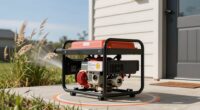
Over time, your generator gets louder because of mechanical wear, dirt buildup, loose parts, and aging components like the exhaust system and bearings. These issues cause increased vibrations, strain, and reduced efficiency, which boost noise levels. Regular inspections, cleaning, tightening fasteners, and replacing worn parts can help keep it quieter. If you want to learn more about how to prevent noise from worsening, keep exploring the details below.

Get backup power and energy gear delivered free — and shop member deals
- Fast, free delivery on millions of items
- Access to Prime Big Deal Days deals on October 6–7
- Prime Video, Amazon Music and more included
Key Takeaways
- Mechanical wear, dirt buildup, and lubricant deterioration increase vibrations and noise over time.
- Loose parts and fasteners cause vibrations and resonance, amplifying generator noise.
- Aging exhaust systems and changing load patterns can lead to louder operation.
- Corrosion, rust, and worn bearings contribute to increased vibrations and noise.
- Inadequate maintenance, such as neglected inspections and dirty filters, results in louder, less efficient generator performance.
As an affiliate, we earn on qualifying purchases.
Wear and Tear of Mechanical Components
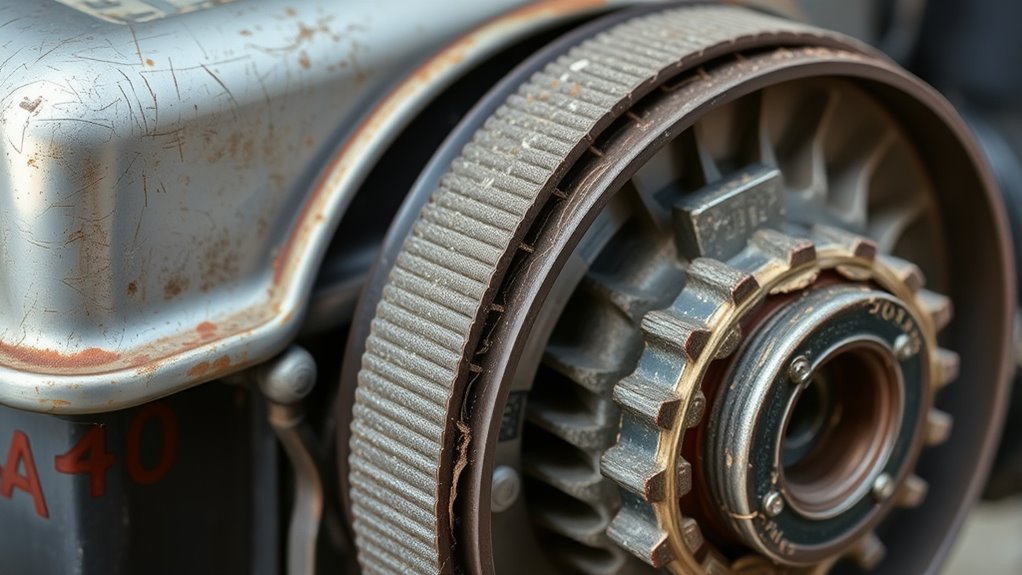
As generators operate over time, their mechanical components inevitably experience wear and tear, which can lead to increased noise levels. Mechanical fatigue weakens parts like belts, bearings, and gears, making them vibrate more and produce louder sounds. Component degradation occurs as metal parts lose their strength and smoothness, causing misalignments and rattling. Over time, this deterioration results in less efficient operation and more noise during startup and running. You might notice your generator becoming louder even without obvious issues. Regular inspection and maintenance help identify early signs of fatigue and degradation. Routine maintenance can help catch problems early and prevent noise escalation. Implementing preventive measures can significantly reduce the impact of mechanical fatigue on noise levels. Replacing worn components before they fail can considerably reduce noise and extend your generator’s lifespan, ensuring it runs quietly and reliably for years to come. Understanding Mechanical fatigue can help you better anticipate when maintenance is needed to prevent noise escalation. Additionally, monitoring vibration levels can serve as an early indicator of mechanical wear.
As an affiliate, we earn on qualifying purchases.
Accumulation of Dirt and Dust
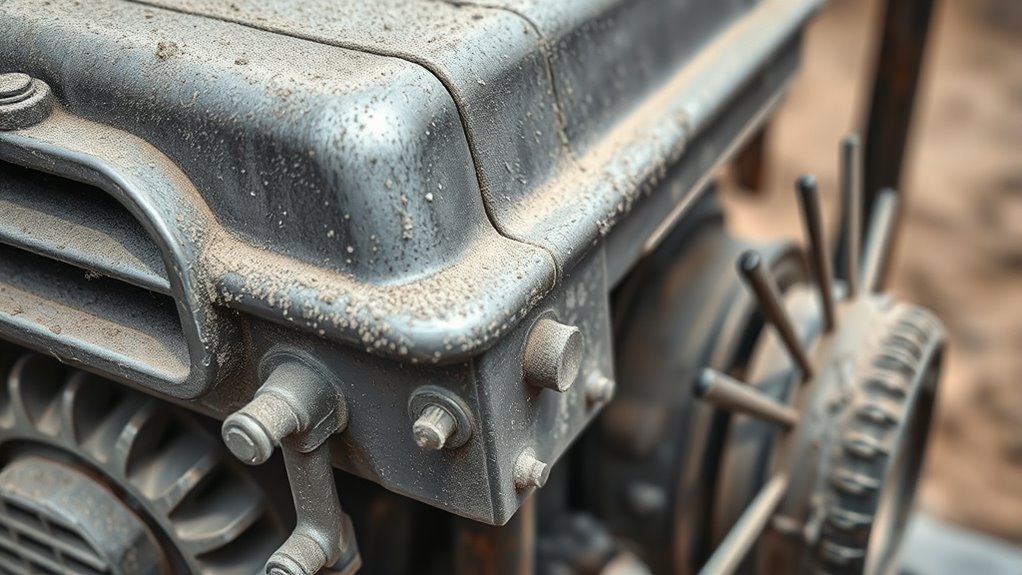
Over time, dust and dirt collect on your generator’s components, causing them to work harder. You might notice blocked air vents that restrict airflow and increase noise levels. Keeping these areas clean helps your generator run quieter and more efficiently. Regular maintenance also helps prevent buildup that can affect performance and noise levels, especially in environments where dust and debris are prevalent. Additionally, navigation and mapping explainers highlight how proper calibration and alignment can improve operational efficiency and reduce noise. Ensuring that airflow is unobstructed can significantly decrease excess noise caused by strain on the generator. Regular inspection of the flushing mechanisms can further prevent issues related to dirt accumulation that contribute to increased noise.
Dust Buildup on Components
Dust buildup on generator components occurs when dirt and debris settle on surfaces over time, often accelerated by operating in dusty environments. This dust accumulation leads to component fouling, where dirt clogs essential parts like cooling fins, filters, and vents. As dust collects, it hampers airflow and insulates parts that need to stay cool, causing the generator to work harder. Over time, this extra strain can increase noise levels and reduce efficiency. You might notice louder operation or overheating issues if dust buildup becomes severe. Regular cleaning is essential to prevent excessive dust accumulation. By removing dirt and dust from critical components, you help maintain proper airflow, reduce strain, and keep your generator running smoothly and quietly longer. Proper maintenance practices are key to preventing dust-related issues and extending the lifespan of your equipment. Additionally, considering air purifier maintenance can help reduce airborne dust that might settle on your generator, further minimizing buildup and ensuring optimal operation. Incorporating routine inspections can also help identify early signs of dust accumulation before it impacts performance, and using dust covers can provide extra protection during periods of inactivity.
Blocked Air Vents
Blocked air vents occur when dirt and dust accumulate, restricting airflow through your generator. This vent blockage reduces cooling efficiency, causing the generator to work harder and louder over time. To prevent this, regularly check your vents and clear any debris. Consider these steps:
- Inspect vents for visible dirt or dust buildup.
- Use compressed air to blow out dirt gently.
- Clean vents with a soft brush or cloth.
- Ensure surrounding areas stay free of dust to minimize future buildup.
- Regularly perform maintenance on your generator’s ventilation system to catch issues early. Additionally, understanding Deaf Vibes can help prevent further issues and extend the lifespan of your generator. Maintaining proper airflow is essential for the wall surfaces and finishes in your environment, as excess heat and dust can also adversely affect wall treatments and finishes. Regular airflow management not only prolongs equipment life but also contributes to a healthier environment by reducing dust circulation. Ignoring airflow restriction caused by vent blockage can lead to overheating and increased noise levels. Keeping vents clear maintains proper airflow, reduces strain on the engine, and helps your generator operate quietly for longer. Regular maintenance is key to preventing loud, inefficient operation.
generator air filter replacement
As an affiliate, we earn on qualifying purchases.
As an affiliate, we earn on qualifying purchases.
Deterioration of Lubricants
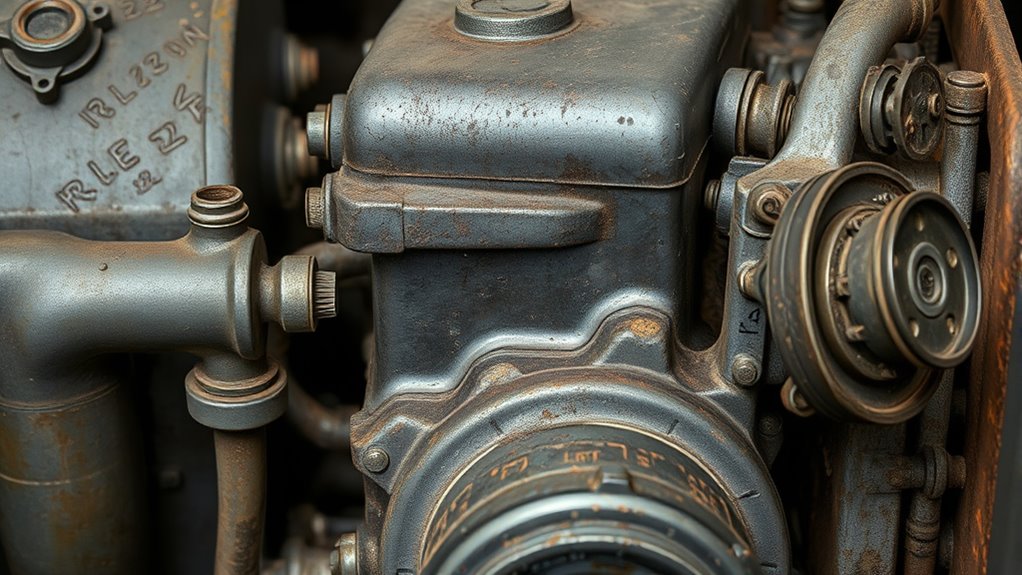
As generators operate, their lubricants naturally break down due to heat, contamination, and oxidation. Over time, this deterioration affects lubricant viscosity, making oil too thin or thick, which impairs lubrication. When viscosity drops, metal parts don’t slide smoothly, increasing friction and noise. Oil contamination also worsens this issue, as dirt, debris, and moisture mix with the lubricant, further degrading its quality. Contaminated oil can cause increased wear on engine components and lead to louder operation. Regularly checking and replacing your generator’s lubricant helps maintain proper viscosity and prevents oil contamination. This maintenance not only reduces noise but also extends the lifespan of your generator, ensuring it runs smoothly and quietly over time.
As an affiliate, we earn on qualifying purchases.
Vibrations and Loose Parts
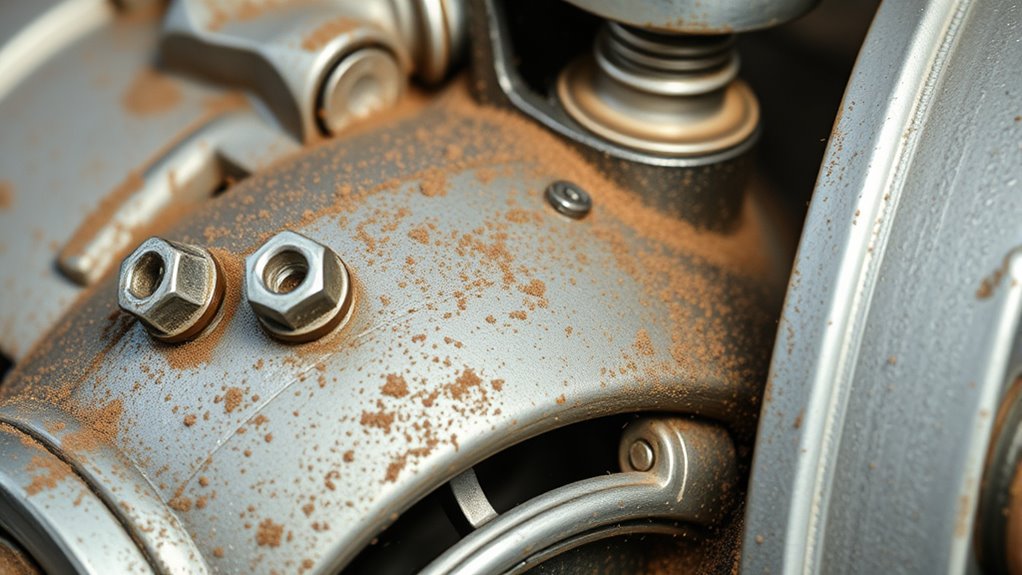
Loose components and unsecured fastenings can cause noticeable vibrations in your generator. These vibrations may lead to resonance, amplifying noise and potential damage over time. Addressing loose parts early helps prevent structural issues and keeps your generator running smoothly. Regular maintenance and inspection can also help identify small issues before they become major problems. Ensuring all parts are durably attached minimizes the risk of vibration-related wear and tear. Proper fitting of all components is essential to reduce unnecessary vibrations, which can further decrease noise levels and prolong your generator’s lifespan. Incorporating vibration damping materials can further mitigate noise caused by vibrations.
Loose Components and Fastening
Vibrations caused by the aging of a generator can gradually loosen components and fasteners, leading to increased noise levels over time. Loose parts, especially around mounting stability and the control panel, contribute considerably to noise amplification. To address this, check:
- Fasteners securing the generator’s mounting points and ensure they’re tight.
- Connections within the control panel for any looseness or wear.
- Mounting brackets, confirming they’re secure and free of corrosion.
- Critical fasteners on moving parts that may loosen with vibration.
Regularly inspecting and tightening these components prevents vibrations from causing loose parts, reducing noise. Maintaining component stability and ensuring the control panel is secure is key to maintaining quieter operation and extending the generator’s lifespan. Additionally, paying attention to vibration control measures can help minimize future loosening issues. Implementing proper vibration dampening techniques can further decrease the likelihood of parts becoming loose over time. Proper maintenance practices are essential for long-term noise reduction and operational reliability.
Resonance and Vibration Effects
When components and fasteners become loose, it sets the stage for resonance and vibration effects that can markedly amplify noise in your generator. Loose parts allow vibrations to build up, creating vibration resonance that increases both noise and wear. This resonance amplification occurs when vibrating parts align at specific frequencies, intensifying the overall sound output. Over time, these vibrations can cause further loosening or damage, fueling a cycle of increased noise and component deterioration. To prevent this, regularly tighten fasteners and check for loose parts. Addressing resonance and vibration early helps reduce noise levels, prolongs your generator’s lifespan, and maintains smoother operation. Additionally, proper maintenance practices can help identify early signs of loosening or imbalance. Recognizing vibration patterns can be crucial for early intervention. Ignoring these effects only leads to louder, more disruptive sounds and potential costly repairs down the line.
Aging of Exhaust System
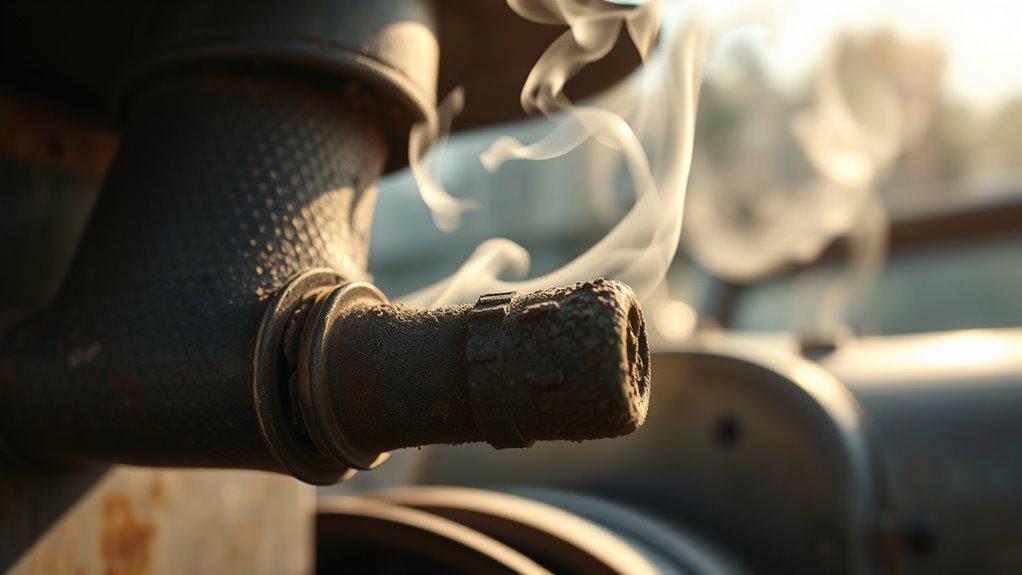
As generators age, their exhaust systems often become less effective, leading to increased noise levels. Over time, rust, corrosion, and wear degrade the exhaust system’s ability to dampen sound and control emissions. This deterioration can cause sound amplification, making your generator louder. To address this, consider these factors:
- Cracks or holes develop in the exhaust pipe, allowing noise to escape more freely.
- Mufflers become clogged or corroded, reducing their sound-dampening capacity.
- Exhaust insulation wears down, increasing vibration and noise.
- Loose fittings or mounting points amplify vibrations and sound transmission.
Regular inspection and maintenance of your exhaust system help prevent these issues, ensuring quieter operation and ideal sound control as your generator ages.
Changes in Load and Usage Patterns
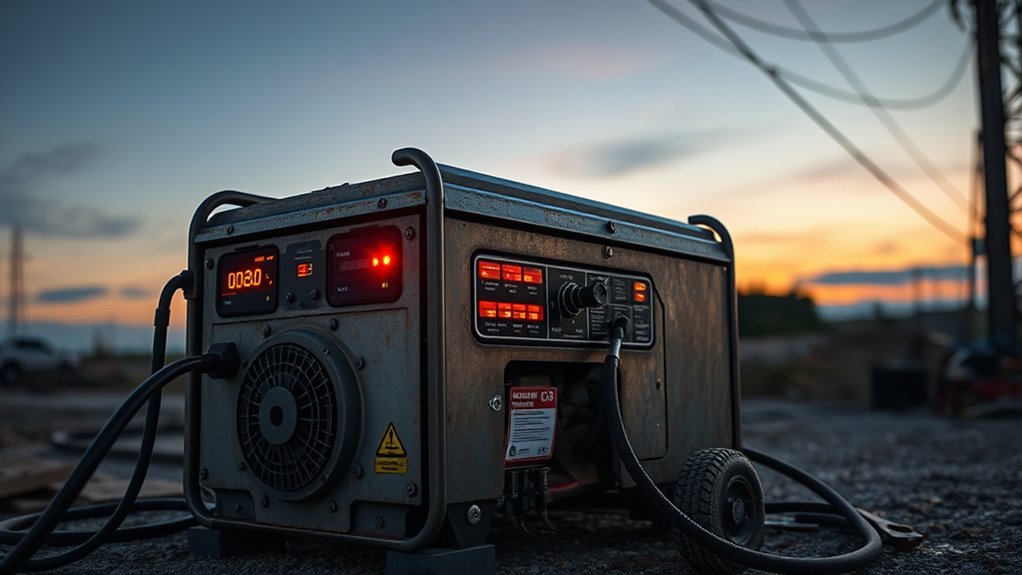
Changes in load and usage patterns can considerably impact your generator’s noise levels. When load fluctuations happen unexpectedly or frequently, your generator has to work harder to meet the demand, causing increased noise. During peak usage times, the engine runs at higher speeds and for longer periods, amplifying noise output. If you frequently use your generator at maximum capacity, it strains more, leading to louder operation over time. These changes can make your generator seem louder even if its physical condition remains the same. To manage this, monitor your usage patterns and avoid consistently pushing the generator to its limit. Implementing load management strategies, like spreading out power demands, can help keep noise levels lower and prolong the generator’s lifespan.
Corrosion and Rust Development
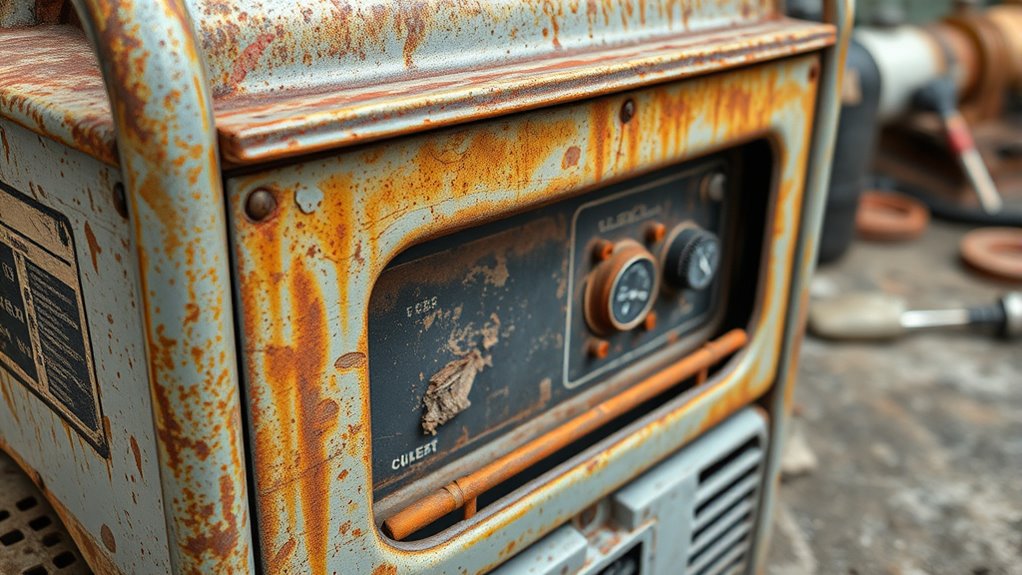
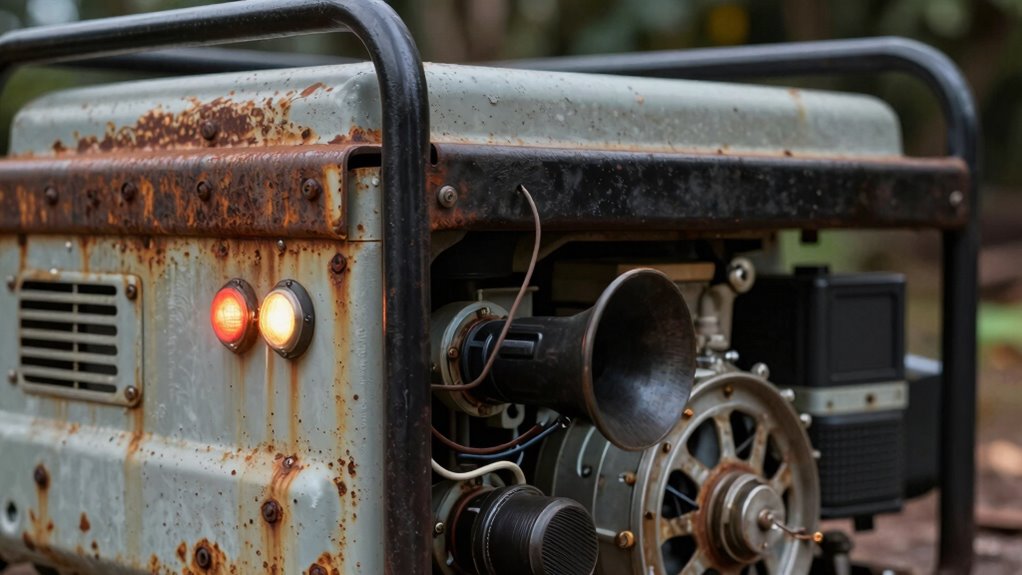
Corrosion and rust development are common culprits behind increasing noise levels in generators over time. These corrosion effects and rust formation weaken metal components, causing parts to vibrate more and generate louder sounds. To combat this, you should:
- Regularly inspect metal surfaces for signs of rust.
- Apply protective coatings or rust inhibitors to prevent moisture contact.
- Keep your generator in a dry, sheltered environment.
- Address early corrosion spots promptly before rust spreads and worsens noise.
Rust formation accelerates with exposure to moisture and air, so proactive maintenance is essential. Ignoring these issues can lead to increased vibration, loose parts, and ultimately, louder operation. Maintaining corrosion-free parts ensures quieter, smoother generator performance over time.
Faulty or Worn-Out Bearings
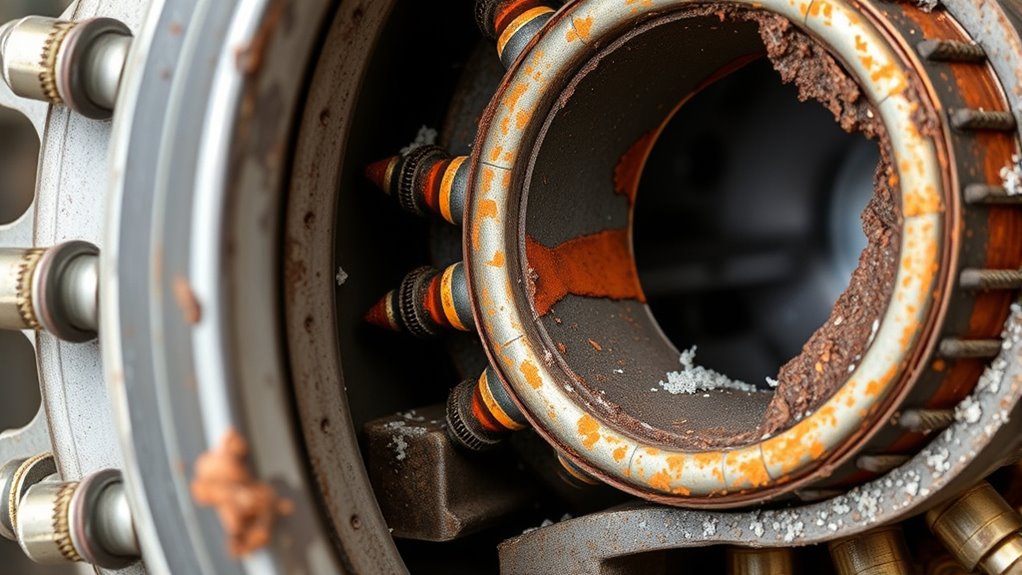
Worn-out or faulty bearings are a common cause of increased noise in generators over time. When bearings start to fail, you’ll notice increased bearing noise, which can make your generator sound louder than usual. This noise results from metal contact or imbalance caused by worn or damaged bearings. Bearing failure can lead to more severe problems if left unaddressed, including overheating and complete breakdown of the generator. As the bearings deteriorate, vibrations intensify, amplifying the noise and risking further damage to surrounding components. Regular inspection of bearings can help you catch early signs of wear. Replacing faulty bearings promptly restores smooth operation, reduces noise levels, and prevents costly repairs down the line. Don’t ignore bearing noise—it’s a sign your generator needs attention.
Inadequate Maintenance Practices
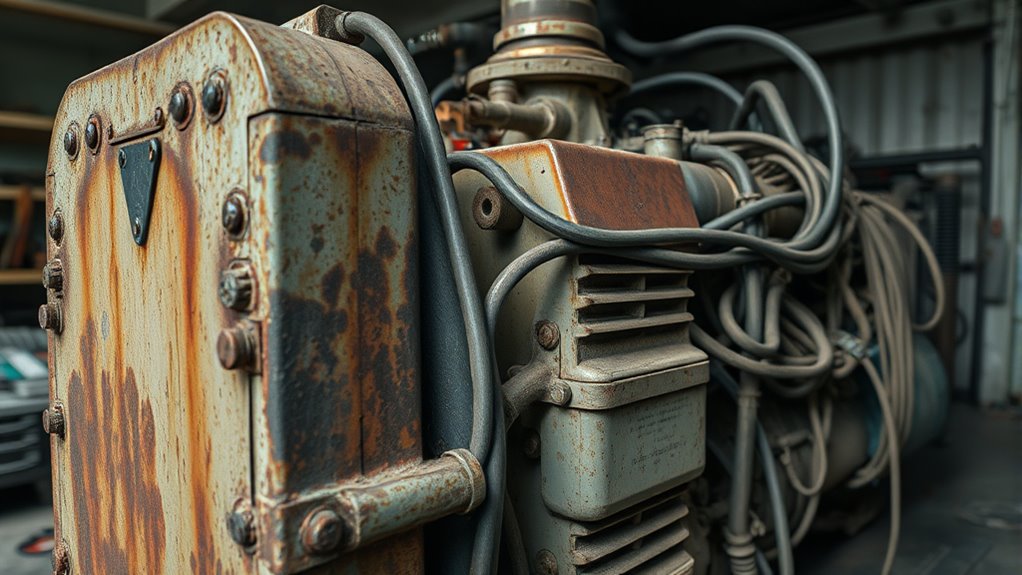
Inadequate maintenance practices can considerably contribute to the loudness of your generator over time. Neglecting routine checks can lead to issues like low oil levels and loose electrical connections, which increase noise. To prevent this:
- Regularly check and top off the oil level to ensure smooth operation and reduce internal friction.
- Inspect electrical connections for corrosion or looseness, tightening or replacing as needed.
- Clean or replace air filters to prevent strain on the engine, which can amplify noise.
- Schedule routine inspections to identify worn components early, avoiding excessive noise caused by parts working harder than they should.
Frequently Asked Questions
Can Environmental Factors Influence Generator Noise Levels Over Time?
Environmental factors can definitely influence your generator’s noise levels over time. Exposure to moisture, dirt, or extreme temperatures can cause parts to wear faster and increase noise. You can counteract this by applying soundproofing techniques and sticking to regular maintenance routines. Keep the area clean, check for wear, and make certain proper insulation. Doing so helps keep your generator quieter and running smoothly despite environmental challenges.
How Does Altitude Affect Generator Noise and Performance?
Altitude impacts your generator’s noise and performance by making it louder and less efficient. Higher elevations reduce oxygen intake, causing the engine to work harder, which amplifies noise. To combat this, you can implement noise mitigation measures like soundproof enclosures and mufflers. These solutions help minimize the noise, ensuring your generator runs smoothly and quietly, even when you’re operating it at challenging altitudes.
Are There Specific Signs That Indicate a Generator’s Noise Is Worsening?
You’ll notice your generator’s noise level increases or you hear unusual vibration symptoms, indicating worsening performance. Pay attention to louder sounds, irregular rattling, or grinding noises, which often point to mechanical issues. These signs suggest that parts may be loosening or wearing out. Regularly inspect your generator, listen for changes, and address any unusual vibrations or noise increases promptly to prevent further damage and make certain of smooth operation.
Can Improper Installation Lead to Increased Generator Noise?
Yes, improper installation can definitely lead to increased generator noise. Installation issues, like loose parts or incorrect mounting, cause vibrations that amplify sound. Maintenance mistakes, such as neglecting regular checks, can also worsen noise levels over time. To keep your generator running quietly, make sure it’s installed correctly and follow a consistent maintenance schedule. Addressing these problems early prevents noise from becoming a bigger issue down the line.
What Role Do Electrical Components Play in Generator Noise Escalation?
Electrical components play a key role in generator noise escalation, especially as electrical wear causes parts like coils and brushes to vibrate more. Coincidentally, as these components age, their resonance can increase, amplifying noise levels. You might notice the sound intensify over time because worn parts struggle to maintain stability, leading to more vibrations and noise. Regular maintenance helps reduce electrical wear and minimizes component resonance, keeping your generator quieter.
Conclusion
So, next time your generator sounds like it’s auditioning for a rock concert, remember it’s just aging gracefully—or not so gracefully. With a little maintenance and a keen eye, you can keep the noise at bay and avoid turning your power backup into a personal subwoofer. After all, who needs a symphony of mechanical chaos when a simple tune-up can restore your generator’s quiet dignity? Stay vigilant and keep the noise in check!
Fall Picks
fall essentials
As an affiliate, we earn on qualifying purchases.