
To keep your generator running smoothly, you need to understand oil viscosity, how often to change it, and the risks of too little oil. Proper viscosity guarantees good lubrication across temperatures, preventing wear and damage. Regularly check oil levels and condition, and follow recommended change intervals. Running with too little oil can cause severe engine damage and failure. Stay informed; exploring these basics helps you keep your generator reliable and long-lasting.
Key Takeaways
- Proper oil viscosity ensures optimal lubrication, reducing wear and preventing damage during temperature fluctuations.
- Regular oil checks and analysis help detect contamination, viscosity loss, and shear thinning early.
- Running a generator with too little oil causes metal-to-metal contact, increased wear, and potential engine failure.
- Multigrade oils maintain suitable viscosity across temperature ranges, especially in fluctuating climates.
- Following manufacturer-recommended oil change intervals and addressing leaks promptly extend generator lifespan.
Understanding Viscosity and Its Role in Generator Performance

Understanding viscosity is essential because it directly affects how well your generator’s oil performs under different conditions. Viscosity measures the oil’s resistance to flow, influencing how easily it circulates and provides lubrication. Dynamic viscosity, reported in centipoise (cP), indicates the oil’s flow at cold temperatures, affecting cold starts. Kinematic viscosity, expressed in centistokes (cSt), reflects flow at operating temperatures and helps classify oil grades like SAE 30 or 5W-30. The Viscosity Index (VI) shows how much the oil’s viscosity changes with temperature; higher VI oils stay more consistent across temperature swings. Choosing the right viscosity guarantees proper oil film thickness, reducing wear and preventing engine damage, especially during startup and under high loads. Proper understanding helps optimize your generator’s longevity and performance. Additionally, selecting oils with appropriate temperature stability ensures consistent lubrication in varying environmental conditions. Recognizing the importance of viscosity grades can further aid in selecting the best oil for specific operating scenarios, especially when considering the effects of viscosity and temperature on engine operation. Being aware of oil formulation can also help in choosing oils that resist breakdown and maintain performance over time.
How Temperature Affects Oil Viscosity and Generator Operation

Temperature has a direct and significant impact on oil viscosity, which in turn affects your generator’s performance. As temperature rises, oil thins, reducing its ability to form a strong lubricating film. This thinning can lead to increased metal-to-metal contact, wear, and potential component damage, especially under heavy loads. Conversely, cold temperatures cause oil to thicken, making it harder to pump and circulate during startup. If the oil is too viscous at low temperatures, it can delay engine lubrication, increasing wear during cold starts. Maintaining the right viscosity across temperature extremes is vital. Using multigrade oils helps guarantee proper flow during cold starts and maintains adequate film strength at operating temperatures. Proper oil selection and monitoring are essential for reliable generator operation in varying climates. Additionally, understanding how temperature influences oil viscosity can help you choose the best lubricant for your specific environment. Regularly checking filtering and maintenance practices can help prevent issues caused by temperature-related viscosity changes. Recognizing the role of sound healing science in understanding vibrations and their effects on materials can also inspire innovative approaches to improving lubricant formulations. Incorporating temperature-resistant additives into your oil can further enhance performance under extreme conditions. Moreover, awareness of viscosity measurement techniques is crucial for ensuring the oil performs correctly across different temperature ranges.
Selecting the Right Oil Viscosity for Different Generator Environments
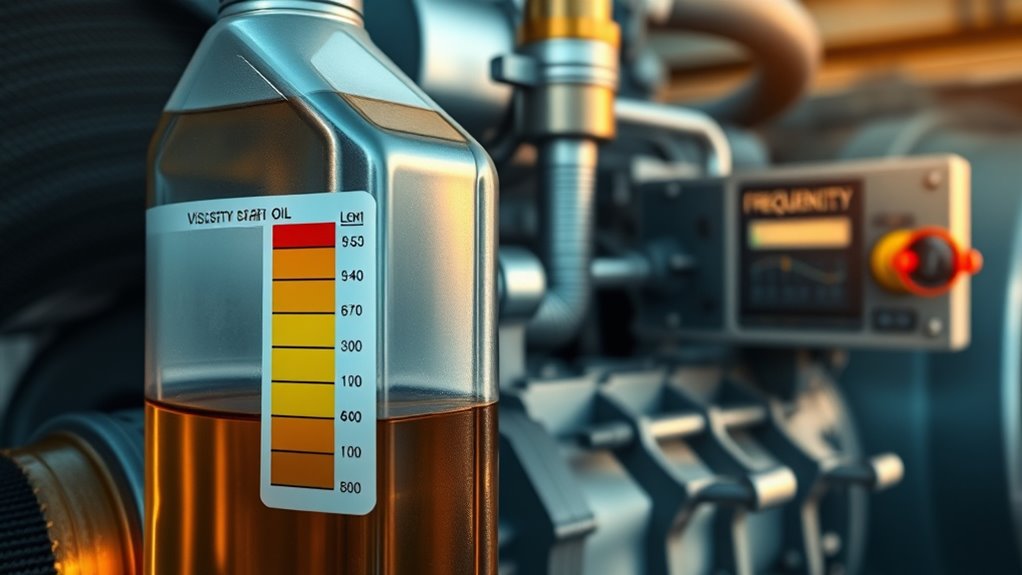
Choosing the right oil viscosity for your generator depends on the specific environment in which it operates. For cold climates, select low-viscosity oils like 5W‑30 or 5W‑20 to ensure easy startup and pumpability. In warmer settings, higher-viscosity oils like SAE‑30 or 10W‑40 provide better film strength under continuous high load. Use the following table to guide your selection:
| Environment | Recommended Oil Viscosity | Key Considerations |
|---|---|---|
| Cold Climate | 5W‑20, 5W‑30 | Cold start, pumpability |
| Moderate Climate | 10W‑30, 10W‑40 | Versatile, general use |
| Hot Climate | SAE‑30, 20W‑50 | High temperature, load stress |
Choose multigrade oils with high VI for temperature fluctuations, and always follow OEM specs for excellent performance. Proper viscosity selection ensures optimal lubrication and engine longevity across various operating conditions.
The Importance of Monitoring Oil Frequency and Condition

Regular oil checks and analytical monitoring are key to ensuring your generator runs smoothly and reliably. They help you catch contamination, oxidation, or shear thinning before they cause damage. By tracking oil condition, you can optimize maintenance schedules and extend the lifespan of your equipment. Maintaining awareness of oil quality is especially important for preventing unexpected failures and ensuring safe operation. Incorporating free floating monitoring techniques can provide more accurate insights into oil performance over time. Utilizing vetted product recommendations can further enhance your monitoring processes and ensure you select reliable tools. Additionally, understanding oil viscosity helps in selecting the right oil for specific operating conditions to maintain optimal engine performance. Paying attention to oil degradation allows for timely interventions that can prevent costly repairs and downtime.
Regular Oil Checks
Why is it essential to monitor your generator’s oil regularly? Because consistent checks help catch issues early, preventing costly damage or failure. Regular inspections allow you to verify oil levels, observe color and consistency, and smell for unusual odors. Monitoring helps identify contamination, water ingress, or signs of oxidation that degrade oil performance. Proper oil maintenance practices ensure your generator operates smoothly when needed. By checking oil frequently, you can guarantee your generator operates smoothly when needed.
Analytical Monitoring Benefits
Monitoring your generator’s oil condition through analytical testing offers precise insights that simple visual checks can’t provide. It reveals hidden issues like contamination, wear metals, and viscosity changes that signal impending failure. Regular analysis helps you catch problems early, preventing costly breakdowns and extending oil life. By tracking viscosity at 40°C and 100°C, you understand how your oil performs under operating conditions. This knowledge allows you to adjust maintenance schedules proactively. Additionally, understanding oil degradation processes can help you optimize oil change intervals and improve overall system reliability. Implementing analytical testing as part of your maintenance routine further enhances your ability to detect subtle changes before they become critical.
Risks and Consequences of Running With Too Little Oil
Running your generator with too little oil can lead to serious wear on moving parts and increased risk of damage. Without sufficient lubrication, metal components grind against each other, accelerating breakdown and potentially causing engine failure. Ignoring low oil levels puts your generator at risk of sudden, costly breakdowns. Proper oil levels are essential to ensure optimal performance and longevity of your equipment.
Increased Wear and Damage
When oil levels drop below the recommended mark, critical components like bearings, pistons, and turbochargers face increased wear and the risk of damage. Without sufficient lubrication, metal parts grind against each other, accelerating deterioration. This can lead to early component failure, costly repairs, and reduced generator lifespan. Running low on oil also causes higher operating temperatures, which weakens seals and warps parts. Insufficient oil level can compromise the entire engine system, leading to significant performance issues. Proper oil viscosity ensures optimal lubrication and protects against excessive wear and heat buildup. Regularly checking and maintaining the correct filtering of oil can prevent contaminants from causing additional harm to engine parts. Additionally, maintaining appropriate oil pressure helps ensure consistent lubrication across all components, further reducing the risk of damage. Using the right battery storage solutions can also support the generator’s performance during extended use or outages.
Risk of Engine Failure
Operating your generator with too little oil can lead to catastrophic engine failure. Insufficient lubrication causes increased friction, which speeds up metal wear and damages moving parts like bearings, pistons, and valves. Without enough oil, critical components overheat, risking warping or seizing entirely. Oil starvation also reduces hydraulic pressure, impairing valve operation and causing loss of compression. During startup or high-load conditions, low oil levels can trigger metal-on-metal contact, leading to scoring and piston ring sticking. Fuel or coolant contamination further weakens the oil’s protective film, accelerating damage. Although modern generators have sensors to detect low oil levels, these can fail or be bypassed, allowing damage to occur unnoticed. Running with too little oil ultimately shortens engine lifespan and risks complete failure, resulting in costly repairs or replacement. Proper lubrication is essential for maintaining optimal engine health and avoiding these damaging effects.
Best Practices for Maintaining Optimal Oil Levels and Viscosity

Maintaining ideal oil levels and viscosity requires proactive monitoring and adherence to manufacturer guidelines. Regular checks help prevent low oil conditions that can cause engine damage or failure. Use the recommended oil grade, considering your ambient temperature and load conditions. Keep an eye on oil levels at least once a week, especially before startup. Conduct periodic oil analysis to track viscosity and detect contamination early. Always top up with the correct oil type if levels drop. Avoid overfilling, which can cause aeration and reduced lubrication. Follow scheduled oil changes based on hours or time intervals. Address any leaks promptly to maintain proper levels. Staying vigilant ensures your generator operates smoothly and extends its lifespan.
- Regularly check oil levels and top off as needed
- Use manufacturer-recommended viscosity grades
- Perform periodic oil analysis for condition monitoring
- Prevent contamination by sealing leaks and keeping the breather clean
- Follow scheduled oil change intervals for ideal performance
Detecting and Addressing Common Oil-Related Issues in Generators
Detecting oil-related issues early can prevent costly generator failures and guarantee reliable operation. Regularly check oil levels using the dipstick or sight glass, especially before startup. Watch for signs of contamination like discoloration, frothing, or a burnt smell. Use oil analysis to identify viscosity changes, wear metals, or contamination from fuel or water. A sudden drop in viscosity indicates shear thinning or dilution, while increased viscosity suggests oxidation or contamination. Pay attention to abnormal engine temperatures or unusual noises, which may signal inadequate lubrication. If you notice any issues, change the oil promptly and address root causes, such as leaks or fuel ingress. Maintaining proper oil quality and levels assures your generator runs smoothly and prevents unexpected breakdowns.
Frequently Asked Questions
How Does Oil Viscosity Impact Generator Startup Performance in Cold Climates?
In cold climates, oil viscosity markedly affects your generator’s startup performance. Low-viscosity oils flow more easily at cold temperatures, ensuring better lubrication during startup, reducing wear, and preventing engine damage. Using multigrade synthetic oils with appropriate cold-start ratings helps maintain proper flow and film strength. If the oil is too thick, it hampers startup, increases strain on the engine, and can cause delayed or difficult starts, risking damage.
Can Synthetic Oils Compensate for Viscosity Changes Over Extreme Temperature Ranges?
Synthetic oils are like a chameleon—they adapt to temperature swings, maintaining more consistent viscosity than conventional oils. You’ll find they resist thinning in extreme cold and stay stable at high temperatures, giving you reliable lubrication across the board. This means your generator starts easier in winter and runs smoothly in summer. By choosing synthetic, you’re better equipped to handle temperature extremes, reducing wear and prolonging engine life.
What Are Signs of Oil Shear or Degradation Beyond Viscosity Measurement?
You’ll notice signs of oil shear or degradation through increased metal wear, engine noise, and reduced performance. Check for dark, dirty, or foamy oil on the dipstick, which indicates contamination or oxidation. Unusual smells or visible sludge also signal breakdown. Regular oil analysis helps detect changes in viscosity, metal particles, and additive depletion, allowing you to catch early signs of oil degradation before it causes significant engine issues.
How Often Should Oil Analysis Be Performed for Optimal Generator Maintenance?
You should perform oil analysis every 50 to 100 hours of operation or at least annually, whichever comes first. Studies show that regular testing can extend oil life by up to 30%, saving costs and preventing failures. By monitoring viscosity, wear metals, and contamination, you catch issues early, especially during high loads or harsh conditions. Consistent analysis maintains your generator running smoothly and ensures you avoid costly downtime.
What Are the Best Practices to Prevent Coolant or Fuel Contamination of Generator Oil?
You should prevent coolant or fuel contamination by regularly inspecting and maintaining your generator’s seals, hoses, and fuel lines to prevent leaks. Use proper filters and change them as recommended. Keep the cooling system clean and functioning properly. Avoid fuel dilution by using high-quality fuel and tuning the engine. Also, monitor oil and coolant levels frequently, and address any signs of contamination immediately to protect your engine’s longevity and performance.
Conclusion
Keeping an eye on your generator’s oil viscosity and levels isn’t just routine—it’s essential. When you pay attention, you might notice that a simple temperature change or a small oil shortage can cause unexpected issues, like downtime or damage. Sometimes, a quick check reveals more than you’d expect, saving you money and stress. So, stay proactive—your generator’s performance depends on it, and sometimes, the smallest detail makes all the difference.