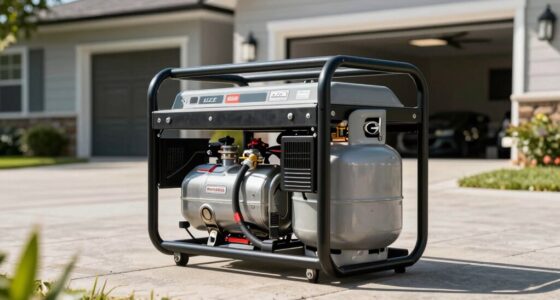
The night before a cold-weather start, verify your generator’s battery is fully charged, clean the terminals, and use a battery warmer if needed. Fill the fuel tank and add anti-gel additives to prevent gelling. Check that air intake and exhaust outlets are clear of snow or debris. Confirm that engine pre-heating devices, like block heaters, are plugged in and functioning. Taking these steps will boost your generator’s reliability; understanding more can help you prepare even better.
Key Takeaways
- Ensure the generator is plugged in and the block or engine heater is functioning properly.
- Verify fuel tank is full and add anti-gel additive to prevent gelling.
- Check battery charge, clean terminals, and confirm battery warmer is operational.
- Clear snow, ice, and debris from exhaust outlets and vents for unobstructed airflow.
- Conduct a brief test run, monitoring oil pressure, coolant temperature, and battery voltage.
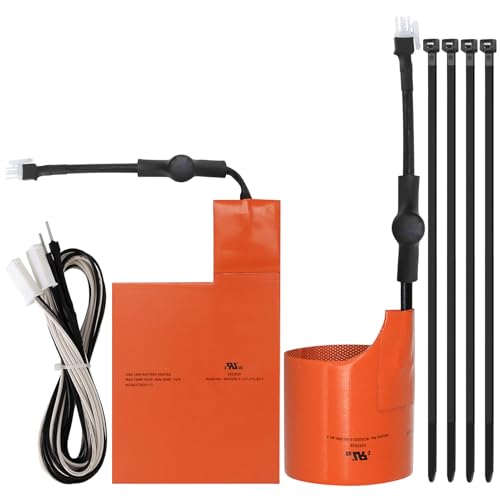
Cold Weather Kit for Generac- Battery Warmer Pad 7101 & Oil Heater Pad 7102,Battery and Oil Filter Heater Kit for Generac 9KW-22KW Air Cooled Standby Generators
- Safety Certified: UL certified for safety and reliability
- Compatible Models: Fits 9kW-22kW Generac generators (2008+)
- Automatic Temperature Control: Turns on at 40°F, off at 55°F
As an affiliate, we earn on qualifying purchases.
As an affiliate, we earn on qualifying purchases.
Check and Prepare Your Battery System
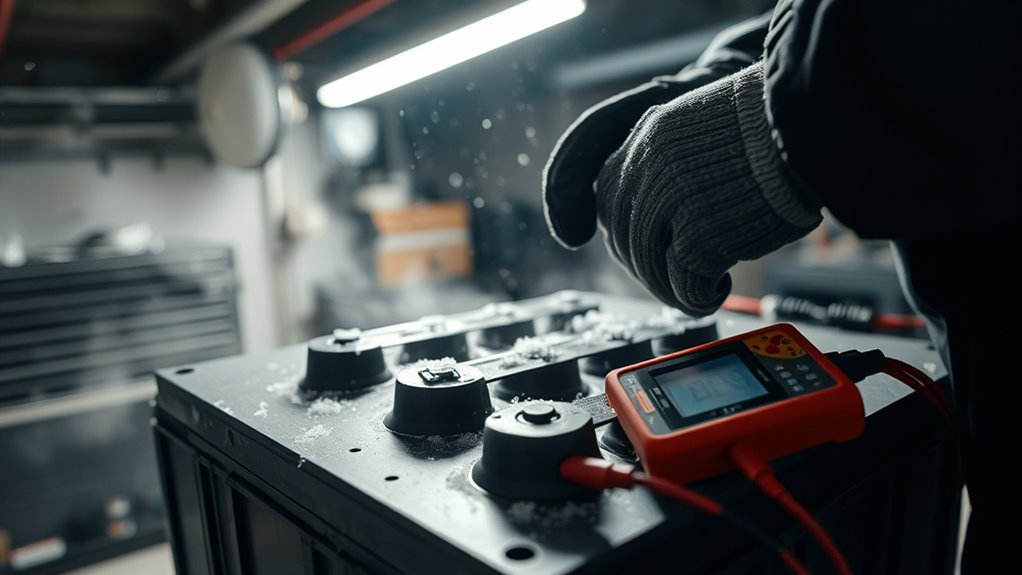
Before cold weather hits, you should verify your battery system is ready for the low temperatures. Start by checking your battery’s state of charge and removing any surface charge, ensuring it’s fully ready for cold starts. Clean and tighten the terminals and cable connections to prevent high resistance that can cause cranking failures. Consider installing a thermostatically controlled battery warmer or blanket if temperatures are expected to drop below freezing; this keeps the battery at ideal temperature and helps maintain starting power. Test your battery charger or maintainer to confirm it’s functioning properly and that the breaker is on, keeping your battery fully charged overnight. Also, inspect the battery’s age and replace any that are past their recommended service life—typically 3 to 5 years for lead-acid batteries—to avoid no-start situations. Regularly battery maintenance can extend your battery’s lifespan and ensure reliable starts during cold weather. Additionally, understanding cold weather impacts on batteries can help you take preventive measures to avoid unexpected failures, such as ensuring proper piercing care and hygiene to prevent corrosion and damage that could affect performance. Being aware of the effects of temperature fluctuations can further assist in maintaining optimal battery function during unpredictable cold snaps. Moreover, staying informed about proper storage techniques can help preserve your battery’s health during extended periods of inactivity in winter.

Power Service 64 Oz. Anti-Gel Diesel Fuel Supplement with Cetane Boost – 1 Each
- Made in the United States: Produced domestically for quality assurance
As an affiliate, we earn on qualifying purchases.
As an affiliate, we earn on qualifying purchases.
Top Off and Treat Your Fuel Supply
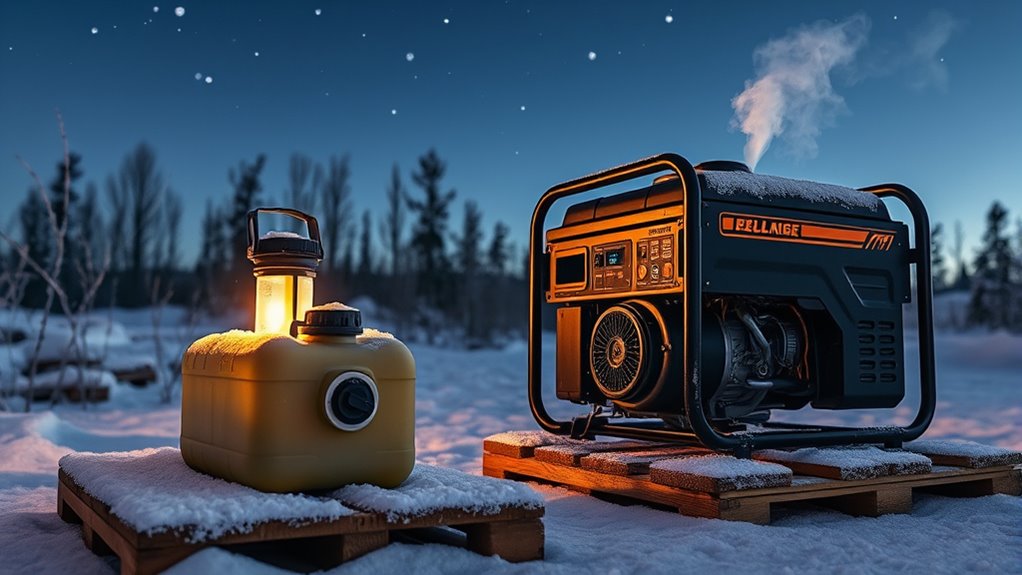
Before cold weather hits, make sure your fuel tank is full to prevent condensation and fuel line issues. Add anti-gel additives to keep diesel flowing smoothly and prevent gelling in low temperatures. Also, check for water in your fuel system to avoid clogs or engine trouble during startup. Incorporating Free Floating techniques can help maintain natural water flow and prevent ice formation in your fuel lines. Regular maintenance and checking your fuel filters can further prevent issues during the cold months. Additionally, ensuring your fuel system has proper lubrication can help reduce wear and tear caused by cold temperatures. Understanding how solar energy impacts fuel stability can also be beneficial in optimizing your winter preparations. Being aware of bioluminescent fungi phenomena can inspire creative lighting ideas for your workshop or garage, making chilly mornings more inviting.
Fill Fuel Tank
Are you prepared to guarantee your fuel supply won’t cause issues during cold weather? Filling your fuel tank to the top ensures minimal air space, reducing condensation that can lead to water buildup and fuel gelling. For diesel generators, adding a winter fuel treatment or anti-gel additive is essential to prevent waxing or gelling overnight. Make sure to use the recommended treatments for your fuel type. Before topping off, inspect the tank for leaks or debris. Avoid letting the tank run low, especially if temperatures drop below freezing, to prevent fuel starvation during startup. Once filled, secure the tank cap tightly to prevent moisture ingress. Properly treated and full tanks keep your generator ready to start reliably, even in the coldest conditions. Regularly checking your fuel quality and storage practices helps ensure safe and dependable backup power during winter outages. Additionally, maintaining a consistent fueling routine can prevent unexpected issues when cold weather strikes. Being aware of your generator’s performance under cold conditions can help you identify potential problems early. Ensuring your fuel is stored in a properly vented container can also minimize moisture buildup and contamination.
Add Anti-Gel Additive
Adding anti-gel additive to your fuel is crucial when preparing your generator for cold weather, especially if you’re topping off the tank. Anti-gel prevents fuel from waxing or gelling as temperatures drop, ensuring smooth fuel flow during startup. Pour the recommended amount of additive into your tank according to the manufacturer’s instructions, ideally before filling with fuel, so it mixes thoroughly. This treatment is particularly important for diesel engines, which are more prone to gelling in freezing conditions. If you’re using gasoline, consider a fuel stabilizer with anti-gel properties. Treating your fuel now helps avoid fuel line blockages and ensures reliable operation during power outages. Remember, fresh, treated fuel is essential for your generator’s performance in cold weather. Incorporating seasonal fuel management about seasonal fuel management can further enhance your preparedness.
Check for Water Buddies
Have you checked your fuel supply for water contamination? Water in your fuel can freeze and block flow, leading to starting issues or engine damage. Start by inspecting fuel filters, water separators, and drain plugs—drain any accumulated water and ensure filters are clean. If you use diesel, add a winter fuel treatment or anti-gel additive to prevent gelling and keep water from settling. Check for signs of water, like cloudy or separated fuel layers. Consider using a fuel additive designed to bind water and help it drain. Top off your tanks to reduce condensation, which can cause water buildup. Properly treated fuel minimizes the risk of freezing and ensures smooth operation during cold weather. Additionally, ensuring your fuel system is compatible with European cloud innovation can help optimize fuel management systems for cold climates. Regularly using essential oils for cold relief in your home can also create a comforting environment during the winter months. Staying proactive now can help prevent fuel system issues and save you from generator failure during an outage. Remember that using a water detection kit can help you identify water contamination early before it causes problems.
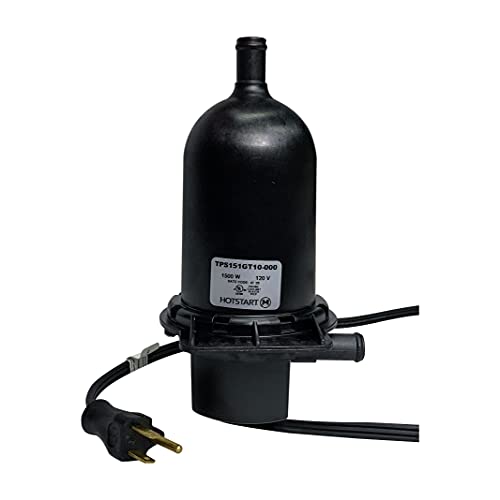
HOTSTART ENGINE HEATER TPS151GT10-000 COOLANT PRE-HEATER – Original – 1 YEAR WARRANTY
- Pre-Heat Applications: Diesel, gas engines, construction, trucks, marine
- Heating Fluid: Engine coolant, water, no pump needed
- Engine Displacement Range: 350–500 CID (5.7–8.2 L)
As an affiliate, we earn on qualifying purchases.
As an affiliate, we earn on qualifying purchases.
Inspect and Clear Air Intake and Exhaust Areas
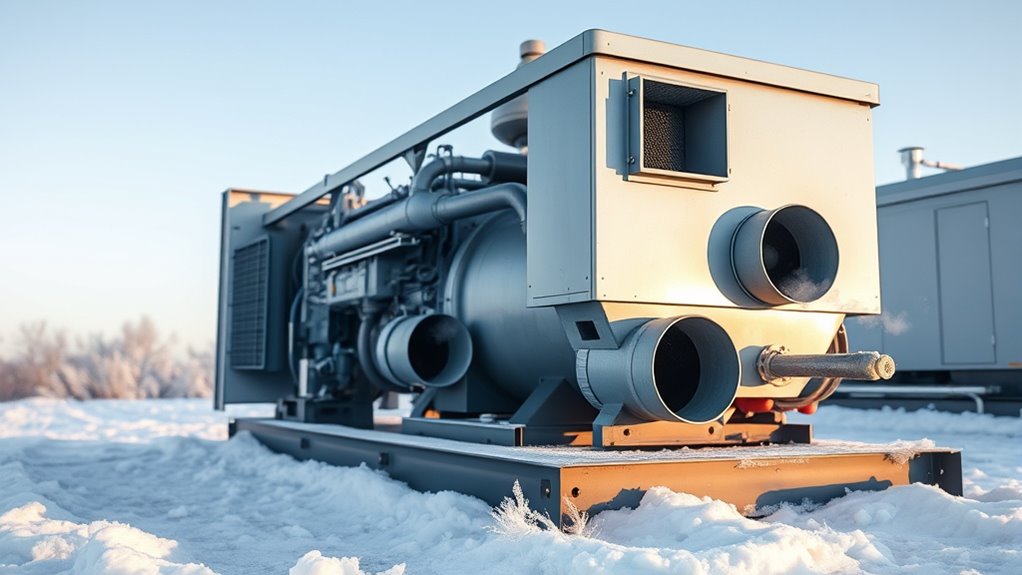
Inspecting and clearing air intake and exhaust areas is essential before cold weather operation to prevent blockages that can cause dangerous exhaust buildup or engine damage. Check vents, screens, and filters for ice, snow, leaves, or debris that could restrict airflow. Remove any obstructions and guarantee vents are unobstructed, with proper clearance from structures, typically 3 to 5 feet for standby units and over 20 feet for portable models. Clear snow and ice from exhaust outlets and piping to prevent backpressure or carbon monoxide buildup. Elevate portable generators on solid, level ground to avoid snow accumulation. Inspect exhaust pipes and mufflers for ice blockages or damage. Keeping these areas clear ensures safe operation, proper ventilation, and reduces the risk of hazardous fumes or engine failure during startup. Regularly checking ventilation pathways can help identify potential issues early and maintain optimal airflow. Being familiar with generator maintenance routines can also aid in preventing unexpected failures during cold weather. Understanding thermal behavior helps maintain optimal performance and safety in cold climates, especially when considering connected home fitness equipment that may require consistent power and ventilation.

STA-BIL Storage Fuel Stabilizer, 16 oz – Treats 40 Gallons – Keeps Fuel Fresh 24 Months, Gas Stabilizer for Storage, Prevents Corrosion
- Product Quality: Great product
As an affiliate, we earn on qualifying purchases.
As an affiliate, we earn on qualifying purchases.
Verify Engine Pre‑Heating Devices Are Functioning
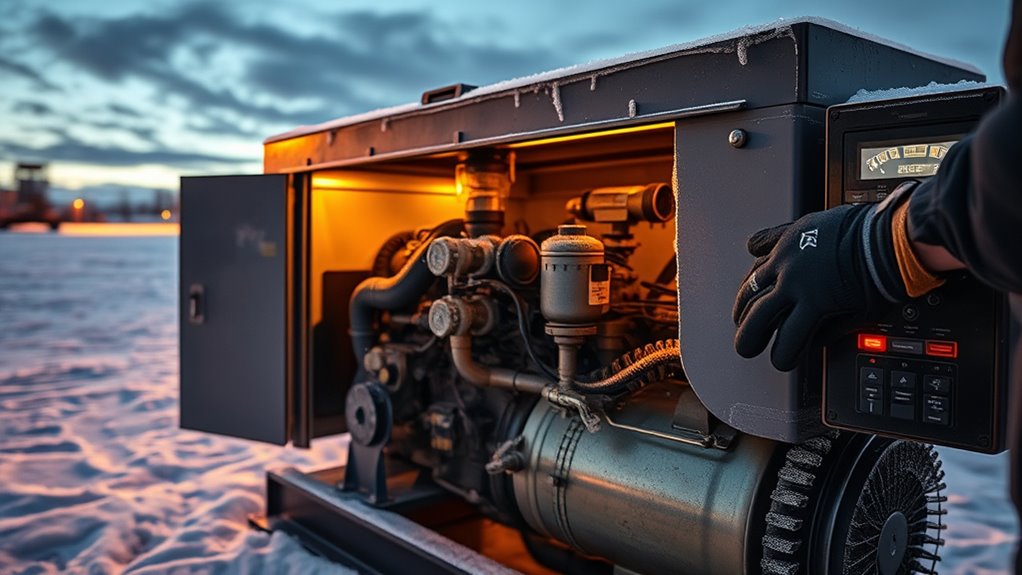
Making certain your engine pre-heating devices are functioning properly is essential for reliable cold-weather starts. Before going to bed, check that your block heater or jacket-water heater is plugged in and operating correctly. Confirm that the thermostat engages the heater only when needed and that it’s set to run overnight if temperatures are expected to drop below freezing. Inspect the device for damage, leaks, or corrosion, and ensure power cords are secure and undamaged. If you use oil pan heaters or heat blankets, verify they are plugged in and functioning properly. Test any thermostatic controls to make sure they activate at the correct temperature. Proper pre-heating reduces engine wear, improves starting reliability, and ensures the generator is ready to operate when needed.
Ensure Proper Coolant and Oil Conditions
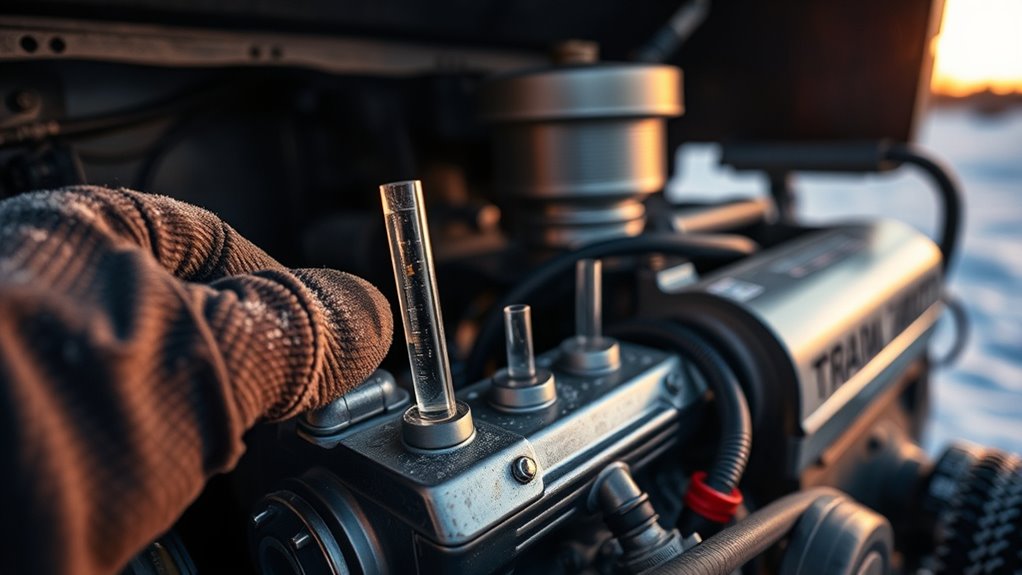
Proper coolant and oil conditions are critical for reliable generator operation in cold weather. You should check that the coolant concentration is appropriate for low temperatures, preventing freezing and ensuring proper heat transfer. Inspect for leaks or cracks that could impair heater function or coolant flow. Confirm the coolant’s freeze point rating matches forecasted lows. Next, verify the oil level and quality; low or degraded oil can cause increased wear during cold starts. Use winter-grade oil with lower viscosity, or change the oil if due. Ensure the oil pan and engine block heaters are plugged in and functioning correctly, pre-warming the engine before starting. These steps help prevent engine damage, improve startup reliability, and ensure the generator runs smoothly during cold conditions.
Conduct a Cold-Weather Test Run Under Load
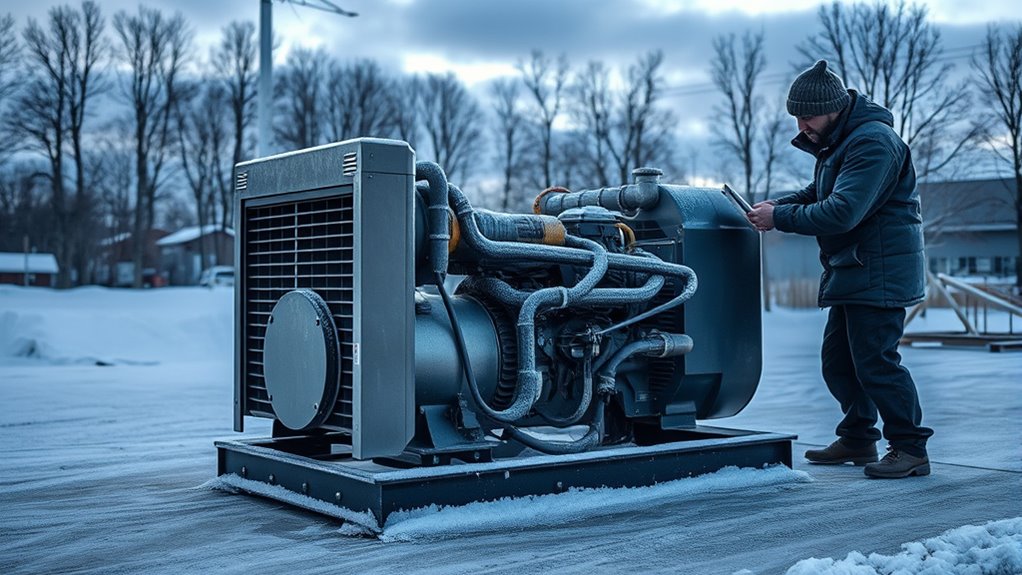
You should perform a test run under load to guarantee your generator can handle real-world power demands in cold weather. As you do, monitor key indicators like oil pressure, coolant temperature, and battery voltage to catch potential issues early. Recording these results helps confirm reliable operation before an actual outage occurs.
Simulate Power Demand
Conducting a cold-weather test run under load is essential to verify your generator’s reliability during winter conditions. This step ensures it can handle real power demands when needed. To simulate typical household loads, you should:
- Connect essential appliances like a heater, refrigerator, and lights to the generator to mimic actual usage.
- Run the generator for at least 15–20 minutes, observing how it maintains voltage and frequency under load.
- Monitor key indicators such as oil pressure, coolant temperature, and battery voltage throughout the test.
This process helps identify potential issues with fuel delivery, cooling, or electrical performance before an outage occurs. Recording your findings allows you to address faults immediately, ensuring your generator’s readiness during cold snaps.
Monitor Key Indicators
Why is it essential to monitor key indicators during a cold-weather load test run? Because cold temperatures can mask underlying issues, and early detection prevents outages. Keep a close eye on oil pressure, coolant temperature, battery voltage, and output frequency and voltage. These readings reveal if the generator is operating within safe parameters or if something’s off. If oil pressure drops unexpectedly or coolant temperature stays low, it indicates potential problems. Low battery voltage may cause starting issues, while voltage or frequency fluctuations suggest load or cooling deficiencies. Recording these indicators helps you identify faults early, so you can address them before an actual emergency. Staying vigilant ensures your generator performs reliably through severe weather and minimizes the risk of unexpected failure during critical times.
Secure Emergency and Safety Equipment
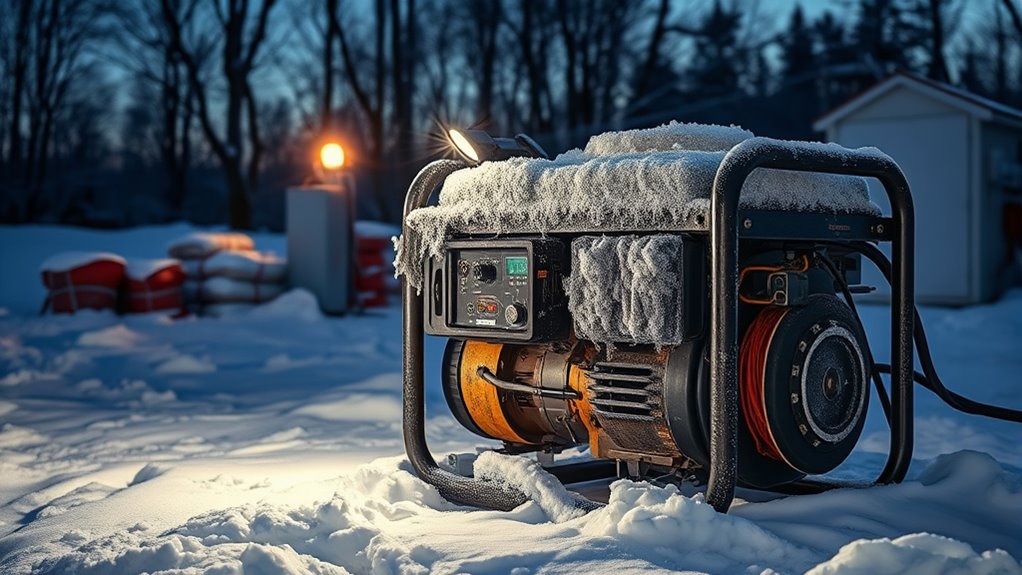
Ensuring that emergency and safety equipment is properly secured is essential before starting your generator in cold weather. You want quick access if issues arise. First, check that carbon monoxide detectors are working and have clear evacuation distances—test alarms to verify they’re functional. Second, ensure fire extinguishers are in place and fully charged, positioned near the generator but not exposed to moisture or cold. Third, confirm that emergency shut-off switches and breaker panels are accessible and clearly labeled, so you can cut power immediately if needed. Keep spare batteries, gloves, and flashlights nearby in case of power failure or if you need to inspect or adjust equipment during outages. Properly securing these items helps prevent accidents, ensures quick responses, and keeps everyone safe during cold-weather generator operation.
Set Up Remote Monitoring and Alerts
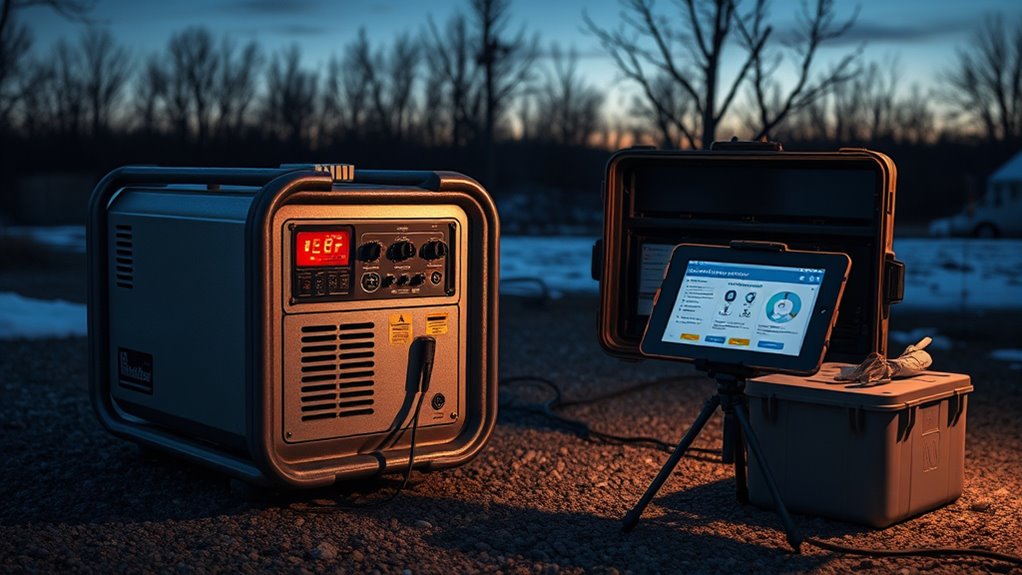
Setting up remote monitoring and alerts allows you to stay informed about your generator’s status without constantly checking it in person. Use a reliable system that tracks critical parameters like battery voltage, coolant temperature, oil pressure, and fuel levels. Configure alerts for abnormal readings or failures, so you’re notified immediately via text or email. Guarantee your internet connection or cellular signal is stable to avoid missing urgent updates. Test the alerts before the cold snap to confirm they work correctly. Keep your contact information current and set thresholds to prevent false alarms. This setup allows you to respond quickly if the generator encounters issues, minimizing downtime and avoiding unexpected failures during an outage. Proper remote monitoring provides peace of mind and enhances your cold weather preparedness.
Prepare Tools and Supplies for Quick Snow and Ice Removal
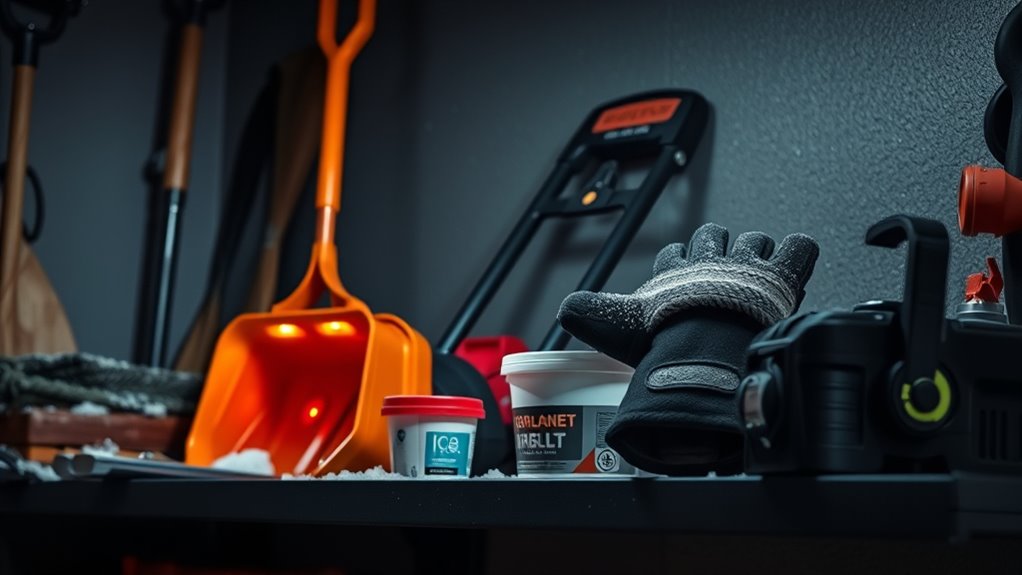
Having the right tools and supplies on hand allows you to remove snow and ice quickly and safely, minimizing delays in generator operation during cold weather. First, keep an ice scraper, snow brush, and a sturdy shovel nearby to clear generator vents, exhausts, and surrounding pathways. Second, stock insulated gloves, a warm tarp or cover, and an ice melt or sand to improve traction and prevent slips during removal. Third, have a portable heater or heat gun ready to thaw frozen fuel lines or tight fittings if needed. These tools ensure you can efficiently clear snow and ice buildup, maintain proper airflow, and prevent obstructions that could delay generator startup. Being prepared reduces the risk of cold-related issues and keeps your generator ready for action.
Frequently Asked Questions
How Do I Know if My Battery Has Enough Charge for Cold Starts?
You can verify if your battery has enough charge by testing its voltage with a multimeter; a healthy, fully charged lead-acid battery should read around 12.6 volts or higher. If it dips below 12.4 volts, consider charging or replacing it. Also, inspect for corrosion and make sure terminals are tight. If you’re unsure, have a professional perform a load test to verify the battery’s cranking ability in cold weather.
What Are the Best Additives to Prevent Diesel Fuel Gelling?
Did you know that diesel fuel gel can occur as low as 0°F (-18°C)? To prevent this, add winter-specific anti-gel additives designed for cold temperatures. These additives lower the fuel’s pour point and inhibit wax crystal formation. Choose products containing pour point depressants or cold flow improvers, and always follow manufacturer instructions for dosage. Regular use during cold spells keeps your diesel fuel flowing smoothly and prevents costly gelling issues.
How Can I Test if My Engine Block Heater Is Working Properly?
You can test your engine block heater by plugging it in and feeling for warmth after about 30 minutes. If it’s a submersible or oil pan heater, check if the surface feels noticeably warmer. Use an infrared thermometer to measure surface temperature, ensuring it reaches the manufacturer’s recommended preheat level. If not, inspect the cord, connection, and heater element for damage or malfunction and replace if necessary.
What’s the Proper Coolant Mixture for Extreme Winter Temperatures?
Imagine this: your coolant mixture is your secret weapon against winter’s icy grip. For extreme cold, you should mix 50/50 antifreeze and distilled water, ensuring the coolant’s freeze point is below your lowest expected temperature. Use a refractometer to verify the mixture’s concentration. This prevents freezing, protects your engine, and keeps your generator running smoothly even when temperatures plunge well below zero.
How Do I Verify My Generator’s Automatic Transfer Switch Is Functioning Correctly?
You verify your generator’s automatic transfer switch works correctly by conducting a test transfer. First, guarantee the generator is running and connected properly. Then, simulate a power outage to trigger the switch. Watch for the transfer to happen automatically, confirming it switches loads from utility to generator smoothly. Check the transfer switch’s indicator lights or alarms, and listen for proper operation. Record the results and address any faults immediately.
Conclusion
Before bed, bolster your battery, briskly boost fuel levels, and briskly clear airways. Double-check device functions, drain doubts from coolant and oil, and do a dry run under load. Equip essential emergency essentials, establish alert awareness, and organize ideal tools for snow and ice. By preparing proactively, you’ll prevent problems, promote peace of mind, and power through the cold with confidence. A little diligence tonight delivers dependable, danger-free daylight delivery.