To guarantee safe use of generator extension cords, match the right connectors—like NEMA 5-15, L14-30, or L5 series—to your generator’s outlets, and choose cables with appropriate insulation for outdoor use. Keep cords short enough to reduce voltage drop and heat build-up while selecting the proper gauge—such as 10 AWG for 30 amps—to prevent overheating. Proper maintenance and understanding connector types help avoid electrical hazards; there’s more to know if you keep exploring.
Listen free for 30 days with Audible
Thousands of audiobooks and originals — cancel anytime.
As an affiliate, we earn on qualifying purchases.
Key Takeaways
- Match extension cord connectors and ratings with generator outlets (NEMA 5-15, L14-30, 14-50) for safe operation.
- Use weather-resistant, UL or ETL-rated cords with appropriate insulation for outdoor durability.
- Keep extension cord length minimal to reduce voltage drop and prevent overheating.
- Choose the correct gauge (e.g., 10 AWG for 30A, 6–8 AWG for 50A) to handle load safely and limit heat buildup.
- Regularly inspect cords for damage, ensure proper grounding, and avoid overloading to maintain safety and performance.

Porch Shield Generator Cover for 5500-15000W, 38 x 28 x 30 inch, Black
- Compatibility: Fits 5500W to 15000W generators
- Premium Material: 600D water-resistant polyester fabric
- All-Weather Protection: Resists sun, rain, snow, wind, dust, dirt
As an affiliate, we earn on qualifying purchases.
Understanding Common Generator Connectors and Their Uses
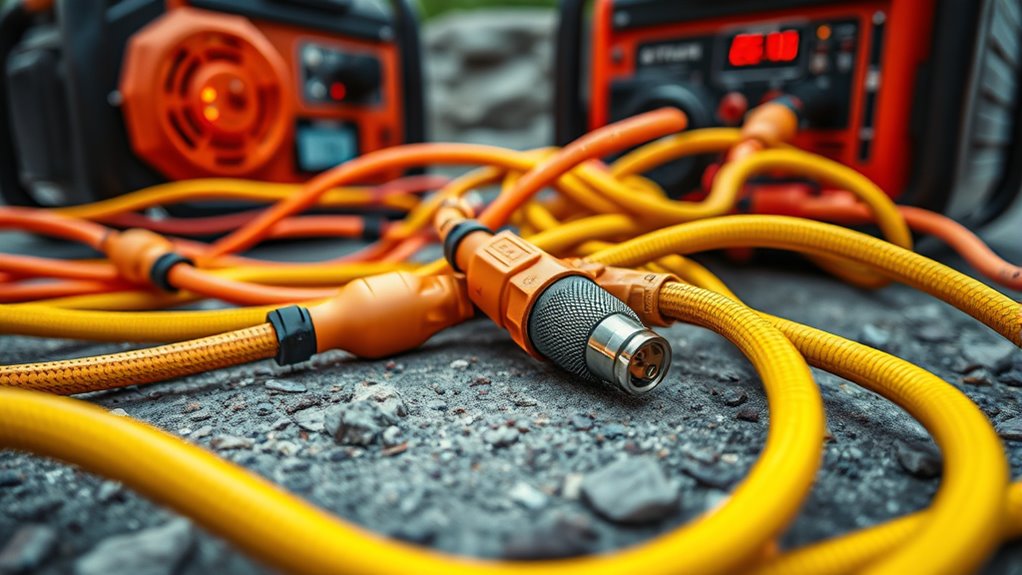
Understanding common generator connectors is essential for guaranteeing safe and reliable power transfer. You’ll encounter various NEMA connectors tailored for specific loads and setups. For household use, the NEMA 5-15, a standard three-prong plug rated at 15 amps, is common for small appliances. Heavy-duty applications often require NEMA L14-30 or NEMA 14-50 connectors, rated at 30 and 50 amps respectively, for safe generator-to-transfer switch connections or large appliances like RVs and ranges. Locking connectors, such as L5 or L14 series, provide secure connections that resist vibration and weather. Specialized connectors like TT-30 or IEC types suit RVs and commercial equipment. Matching the connector type to your equipment’s amperage and receptacle ensures safe, effective power transfer and prevents electrical issues. Additionally, understanding high current capacity is critical when selecting connectors to ensure they can handle the load without overheating or failure. Proper connector selection also involves considering body jewelry materials, as some materials are better suited for durability and safety in electrical environments. Being aware of connector standards and certifications can help ensure compliance with safety regulations and compatibility.
Porch Shield Generator Cover for 5000-10000W, 32 x 24 x 24 inch, Black
- Compatibility: Fits 5000-10000W generators
- Durable Material: 600D water-resistant polyester fabric
- All-Around Protection: Protects against sun, rain, snow, dust
As an affiliate, we earn on qualifying purchases.
Selecting the Right Cable Jacket and Material for Outdoor Power
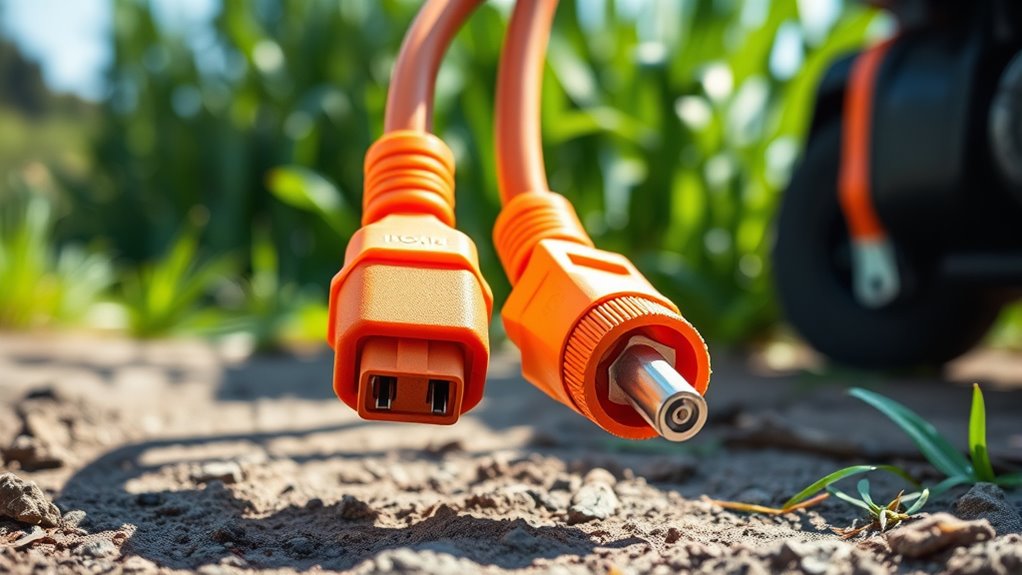
Choosing the right cable jacket and material is key to outdoor power safety and performance. You need jackets that withstand weather, UV rays, and abrasion while still being flexible enough for easy handling. Selecting weather-resistant materials can significantly extend the lifespan of your extension cords, especially in harsh outdoor conditions. Additionally, understanding cable durability helps ensure that your cords remain reliable over time, reducing the risk of failure. Properly rated and UV-resistant coatings can further protect cords from sun damage, prolonging their usability. Balancing cost and compatibility ensures you get durable cords that fit your setup without breaking the bank. Considering Free Floating options can also help ensure your extension cords remain adaptable and safe in diverse outdoor environments.
Weather Resistance Features
When selecting extension cords for outdoor generator use, it’s essential to prioritize weather-resistant jackets that can withstand harsh environmental conditions. Look for cords with rubber or thermoplastic jackets specifically rated for outdoor use, such as SOOW or Type W cables, which resist moisture, UV rays, and temperature extremes. These jackets prevent water ingress that could cause short circuits or corrosion and reduce wear from sun exposure and chemicals. High-visibility or abrasion-resistant coatings add extra durability in rugged environments. Avoid indoor cords or those lacking outdoor ratings, as they can deteriorate quickly when exposed to rain, snow, or dirt. Investing in weather-resistant cords assures safer operation, longer lifespan, and reliable power delivery, even in challenging outdoor conditions. Proper insulation is crucial for maintaining safety and performance in outdoor environments. Additionally, selecting cords with appropriate gauge ensures they can handle the intended electrical load safely and efficiently. Using cords with weatherproof connectors also helps secure connections against moisture and environmental damage, which is vital for outdoor power reliability. Incorporating outdoor-rated connectors further enhances the durability and safety of your power setup.
Flexibility and Durability
Selecting the right cable jacket and material is essential for ensuring your outdoor extension cords are both flexible enough for easy handling and durable enough to withstand harsh conditions. Rubber, like SOOW, offers excellent flexibility and weather resistance, making it ideal for portable generator use. For heavier-duty needs, Type W jackets provide high abrasion and mechanical durability. PVC jackets are cheaper but less flexible and resistant, suitable for light outdoor tasks. Consider these options:
| Material | Flexibility | Durability |
|---|---|---|
| Rubber (SOOW) | Very flexible | High weather and oil resistance |
| Type W | Less flexible | Heavy-duty, abrasion-resistant |
| PVC | Moderately flexible | Less resistant to weather and oil |
Choose based on your environment and handling needs. Additionally, understanding cable ratings can help you select the most appropriate extension cord for your specific application. For example, the heat resistance of the jacket material can be crucial if the cord is exposed to high temperatures.
Cost and Compatibility
To make certain your outdoor extension cord provides the right balance of cost and compatibility, it’s essential to consider both the jacket material and the connector types. Rubber (like SOOW) jackets cost more but offer superior flexibility, weather resistance, and durability, making them ideal for heavy-duty outdoor use. PVC jackets are cheaper and suitable for lighter outdoor tasks but are less flexible and more vulnerable to weather damage. Ensure your connectors match your generator’s outlet type (NEMA 5-15, L14-30, or 14-50) for compatibility and safety. Locking connectors provide a secure fit, reducing accidental disconnections. Investing in the right cable material and compatible connectors prevents damage, extends lifespan, and maintains safe operation, all while balancing your budget. Additionally, choosing sulfate-free shampoos can help preserve the vibrancy of highlighted hair, making it a beneficial consideration for maintaining color-treated hair outdoors. When selecting an extension cord, consider proper insulation to prevent heat buildup and potential hazards during extended use. Proper cable management techniques can also enhance safety and prolong the life of your extension cord, especially in outdoor environments. Being aware of heat buildup risks and monitoring your cord during prolonged use can further prevent accidents and ensure safe operation. Incorporating visual and auditory cues in your setup can also improve safety and ease of use during operation.

Portable Solar Generator 300W Portable Power Station with 60W Solar Panel
- Powerful 300W Portable Generator: Charges smartphones, tablets, laptops, and small devices
- Includes 60W Foldable Solar Panel: Recharges via solar, AC, or car power
- Multiple Charging Outlets: AC, DC, USB, and quick charge ports
As an affiliate, we earn on qualifying purchases.
Matching Cord Gauge and Ampacity to Your Generator Load
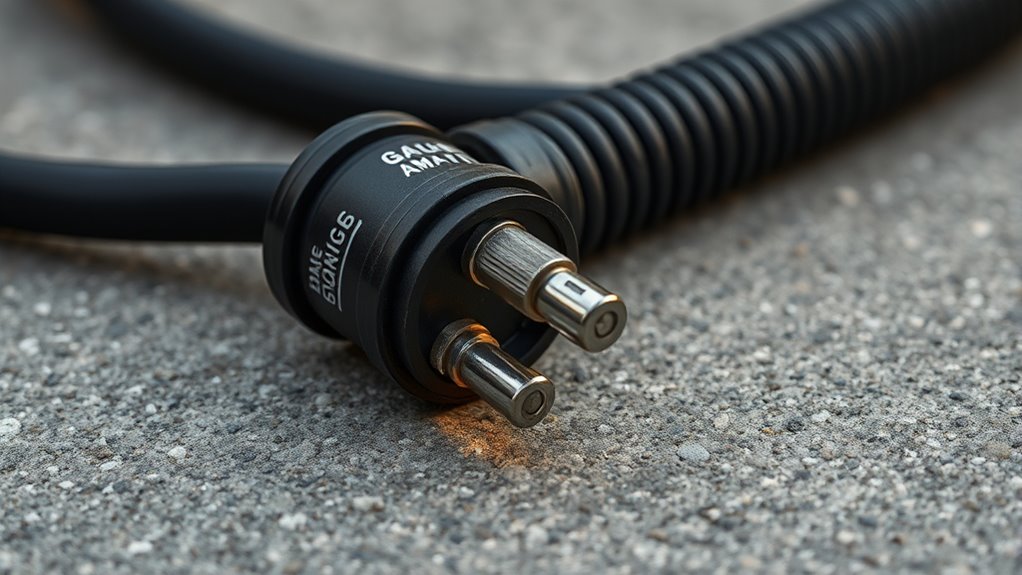
Matching the right cord gauge and ampacity to your generator load is essential for safe and efficient operation. First, identify your generator’s outlet rating—30 A, 50 A, or other—and select a cord with an ampacity that matches or exceeds that rating. For example, use a 10 AWG cord for 30 A loads and a 6–8 AWG cord for 50 A loads. Never overload a cord beyond its rated capacity, as it causes overheating and fire risk. Verify the cord’s insulation and connectors are rated for outdoor use if needed. Always match the cord’s gauge with your load to prevent voltage drops and maintain proper power delivery. Proper sizing not only keeps your equipment safe but also prolongs the life of your extension cords. Ensuring the correct gauge and ampacity helps maintain optimal performance and safety during generator use. Additionally, selecting cords with appropriate insulation ratings can prevent damage from environmental factors and ensure long-term durability. To further enhance safety, consider using weather-resistant cords designed specifically for outdoor and rugged conditions.

Jackery Solar Generator 1000 v2 and 200W Solar Panel,1070Wh,1500W AC
- Powerful AC Output: 1500W continuous, 3000W surge
- Lightweight & Portable: 23.8 lbs with foldable handle
- Fast Charging: 0-100% in 1 hour via app
As an affiliate, we earn on qualifying purchases.
Managing Length and Voltage Drop for Safe Power Delivery
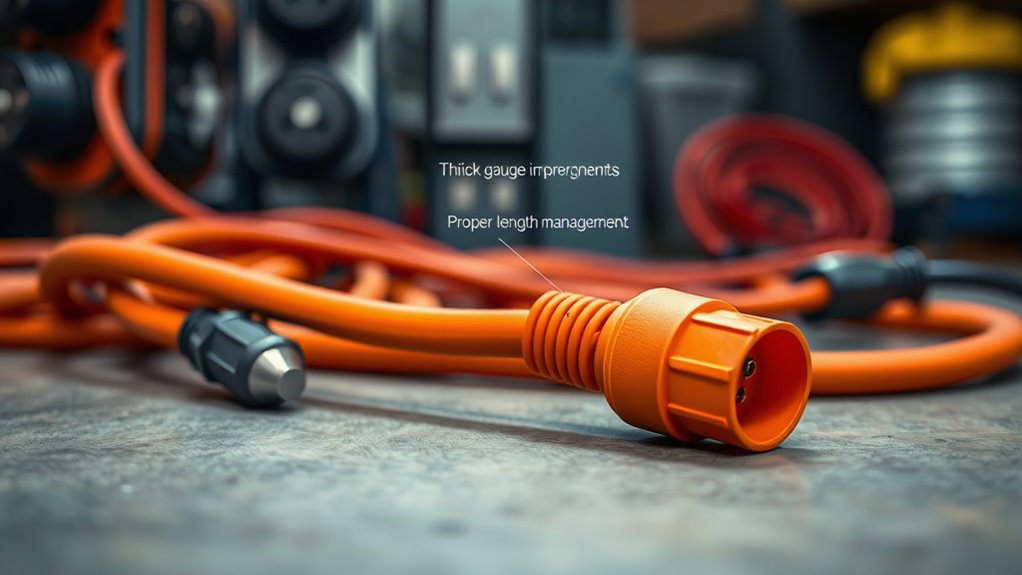
Managing length and voltage drop for safe power delivery is essential to prevent equipment damage and ensure safety. Keeping your extension cord length in check is vital for safe power delivery. Longer cords increase voltage drop, which can affect equipment performance and safety. Using the right length and gauge ensures you stay within recommended voltage drop limits and maintain reliable operation. Additionally, understanding electrical load capacities helps prevent overloads that could lead to hazards. Properly assessing circuit capacity ensures your setup remains within safe limits and avoids potential electrical failures. Being aware of voltage drop limits can further help you select the appropriate cords and protect your devices from voltage fluctuations.
Optimal Cord Lengths
Properly managing the length of your extension cords is essential for ensuring safe and efficient power delivery from your generator. Keep cords as short as possible to reduce voltage drop and minimize heat buildup. For most 30 A, 120/240 V setups, 25 to 50 feet is ideal. Longer cords, over 100 feet, often require thicker gauge wire (lower AWG) to maintain safe voltage levels and prevent overheating. Always check manufacturer tables or AWG charts to select the right gauge for your length and load. Using excessively long cords can cause voltage drops that impair equipment performance and increase fire risk. When possible, opt for dedicated transfer switches or fixed wiring for critical or high-current loads, reducing reliance on extended flexible cords.
Voltage Drop Limits
Have you considered how voltage drop impacts your generator setup? Voltage drop occurs when long extension cords or undersized wiring cause voltage levels to fall below safe or effective levels. Excessive drop can lead to poor appliance performance, overheating, or damage. To prevent this, keep your cord length as short as possible and select a gauge based on the load and distance, following manufacturer tables or electrical codes. For 30 A circuits, aim for less than 3% voltage drop, which often means using thicker gauges like 8 or 10 AWG for longer runs. Use dedicated feeders or heavy-duty cables when running extended lengths to maintain voltage stability. Regularly check connections and avoid exceeding recommended lengths to ensure safe, reliable power delivery.
Recognizing and Preventing Heat Build-Up in Extension Cords
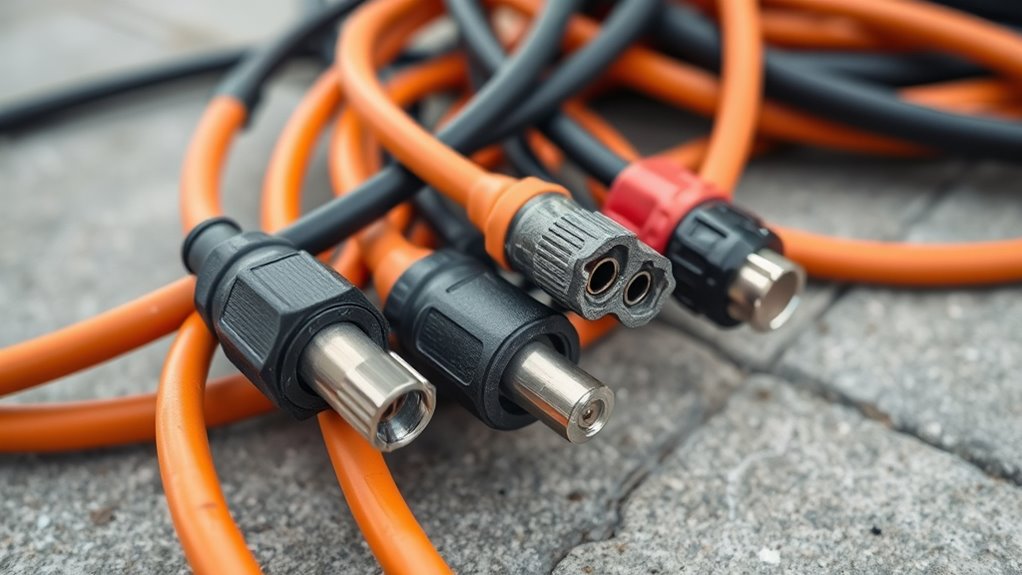
How can you tell if your extension cord is overheating? You might notice its insulation feels warm or hot to the touch, or see discoloration, melting, or melting marks. The cord could emit a burnt smell, or you might feel increased resistance when plugging or unplugging. Sometimes, connections become loose or corroded, causing sparks or sparks when inserting plugs.
To prevent heat build-up, check for:
- Loose or corroded connectors
- Discolored or melted insulation
- Excessive cord length causing voltage drop
- Overloading the cord beyond its rated capacity
- Using cords not rated for outdoor or heavy-duty use
Regular inspection ensures early detection of heat damage, reducing fire risks and prolonging cord lifespan. Never ignore signs of overheating to maintain safe generator operation.
Ensuring Safety and Compliance With Electrical Codes
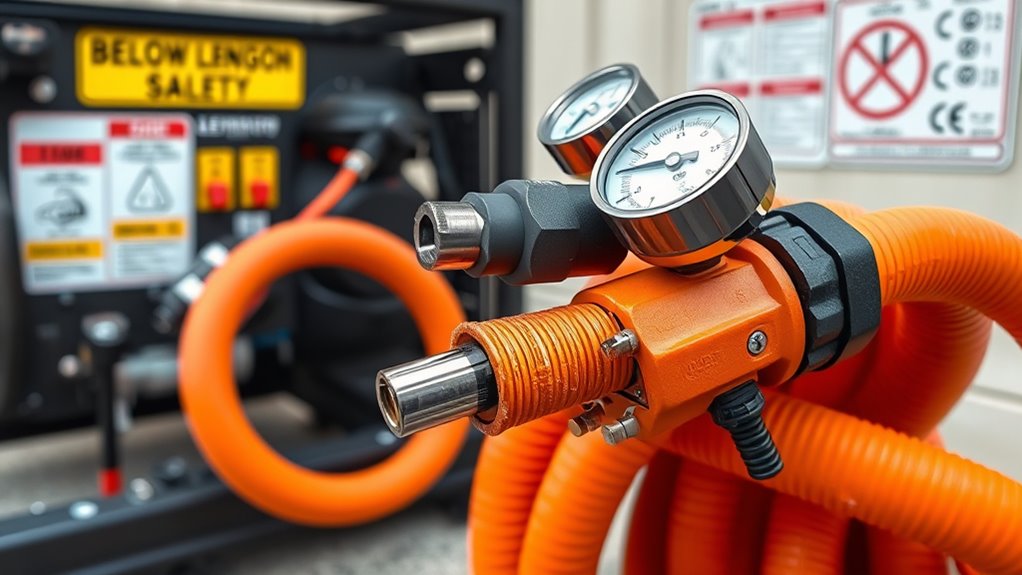
Ensuring safety and compliance with electrical codes is essential when selecting, installing, and using generator extension cords. You must choose cords rated for your specific load and connector type, following manufacturer specifications and local codes. Always use cords with recognized testing labels like UL or ETL, especially for outdoor use. Proper grounding, correct plug and receptacle matching, and avoiding the use of adapters that reduce conductor size are critical for safety. Never backfeed your home without an approved transfer switch, and ensure your generator’s neutral is bonded or floating as required. Protect cords from damage, moisture, and excessive heat. Regularly inspect for wear, discoloration, or damage, and replace any compromised cords. Following these safety practices helps prevent electrical hazards and guarantees code compliance.
Best Practices for Maintaining and Inspecting Extension Cords
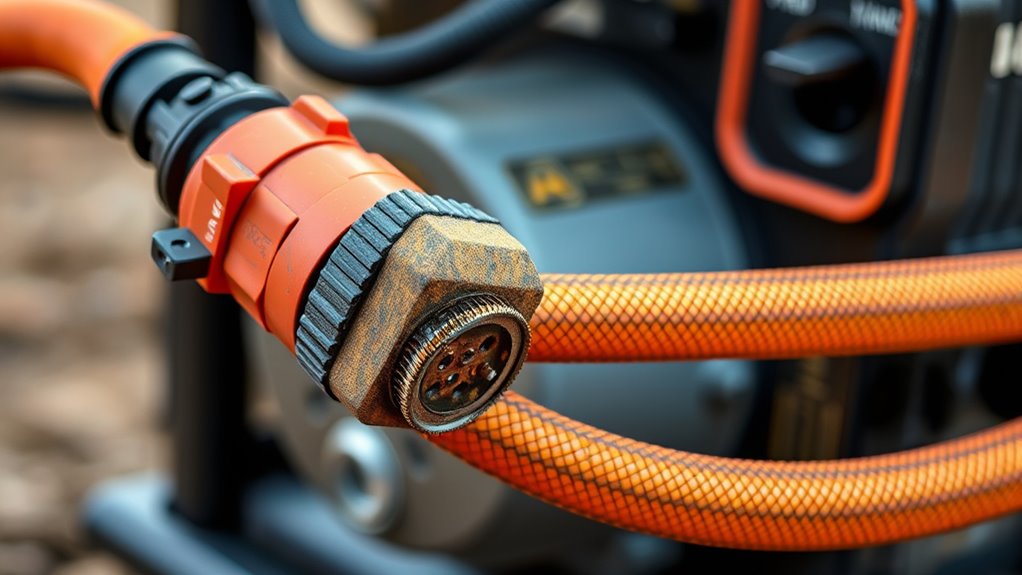
Regular maintenance and thorough inspections are key to keeping your extension cords safe and reliable over time. You should routinely check for signs of damage, wear, or corrosion that could compromise safety. Look for frayed insulation, exposed wires, or melted spots. Test connectors for secure, tight fittings and ensure grounding prongs are intact. Keep cords clean and dry, and store them properly to prevent damage. Avoid using cords that show visible defects or don’t meet safety standards. Replacing damaged cords immediately reduces fire and shock risks. Proper inspection and maintenance extend the lifespan of your cords and keep your setup safe.
- Check for cuts, cracks, or worn insulation
- Ensure connectors fit snugly and securely
- Look for signs of overheating or melting
- Clean dirt, mud, or debris from plugs and sockets
- Store cords in a dry, cool, and protected area
Frequently Asked Questions
Can I Use Indoor Extension Cords Outdoors for Generator Power?
You shouldn’t use indoor extension cords outdoors for generator power. Indoor cords lack the weather-resistant jackets needed to withstand moisture, UV rays, and rough conditions. They also don’t meet safety standards for outdoor use, increasing fire and shock risks. Always choose cords rated for outdoor use, like SOOW or Type W, with proper connectors and grounding, to guarantee safety and durability when powering your generator outside.
What Are the Signs of a Cord Overheating or Failing?
You’ll notice a cord overheating when it feels hot to the touch, like a stove burner, or if you see melting insulation, discoloration, or burn marks. Faint burning smells or sparks are serious warning signs. The cord might also be warm or appear swollen. If it’s behaving oddly—like flickering lights or tripped breakers—you should stop using it immediately. Ignoring these signs risks fire, shocks, or equipment damage, so always inspect cords regularly.
How Do I Determine the Maximum Length for My Generator Cord?
You determine the maximum length for your generator cord by considering the amperage, voltage, and acceptable voltage drop. Use manufacturer tables or AWG charts to match the cord gauge to your load and length, aiming to keep voltage drop below 3%. For longer runs, select thicker, lower AWG conductors. Always follow safety guidelines, and avoid exceeding recommended lengths to prevent overheating, voltage loss, and equipment damage.
Are Adapters Safe for Converting Between Different NEMA Connector Types?
Adapters can be safe if you choose those rated for your specific amperage and connector type. You might think they’re a quick fix, but mismatched or low-quality adapters can create high-resistance points, leading to heat buildup and potential fire hazards. Always verify that adapters are UL-listed or approved by recognized standards. Never use adapters to bypass proper grounding or reduce conductor size, as this risks shock and equipment damage.
How Often Should I Replace My Generator Extension Cords?
You should replace your generator extension cords whenever you notice damage, such as frayed insulation, cracked jackets, or exposed wires. Regularly inspect for melting, discoloration, or loose connectors, and replace cords immediately if any heat damage occurs. Also, replace cords if they no longer meet the required amperage, length, or safety standards, especially after prolonged outdoor use or if they’ve been subjected to harsh conditions. Prioritize safety over cost.
Conclusion
Think of your generator extension cord as the lifeline between safety and disaster. When you choose the right connectors, materials, and length, you’re planting seeds of reliability. Proper maintenance and awareness keep this essential link strong, preventing heat and voltage issues from taking root. Remember, your careful attention is the sunlight that helps this connection flourish, ensuring your power flow remains steady and safe—your shield against the storm.
Labor Day sales Picks
labor day deals
As an affiliate, we earn on qualifying purchases.