To plan extension cords from your generator to your house smartly, start by evaluating your power needs and choosing cords rated for the load to avoid overheating. Place your generator outdoors in a well-ventilated area, away from windows, and connect using heavy-duty, outdoor-rated cords. Organize and label cords to prevent tripping hazards, keep them off walkways, and inspect for damage regularly. Following these steps will help you guarantee safety, efficiency, and environmental consideration during outages—keep exploring to discover more expert tips.

Get backup power and energy gear delivered free — and shop member deals
- Fast, free delivery on millions of items
- Access to Prime Big Deal Days deals on October 6–7
- Prime Video, Amazon Music and more included
Key Takeaways
- Select outdoor-rated, heavy-duty extension cords with sufficient gauge to handle total appliance load safely.
- Map a direct, obstacle-free route from the generator to essential house circuits, avoiding high-traffic areas.
- Use cable organizers and labels to manage excess slack and identify cords for specific appliances or circuits.
- Place the generator outdoors in a well-ventilated area, maintaining safe distances from windows and doors.
- Regularly inspect cords for damage and replace any frayed or cut cords to ensure safe, reliable power delivery.
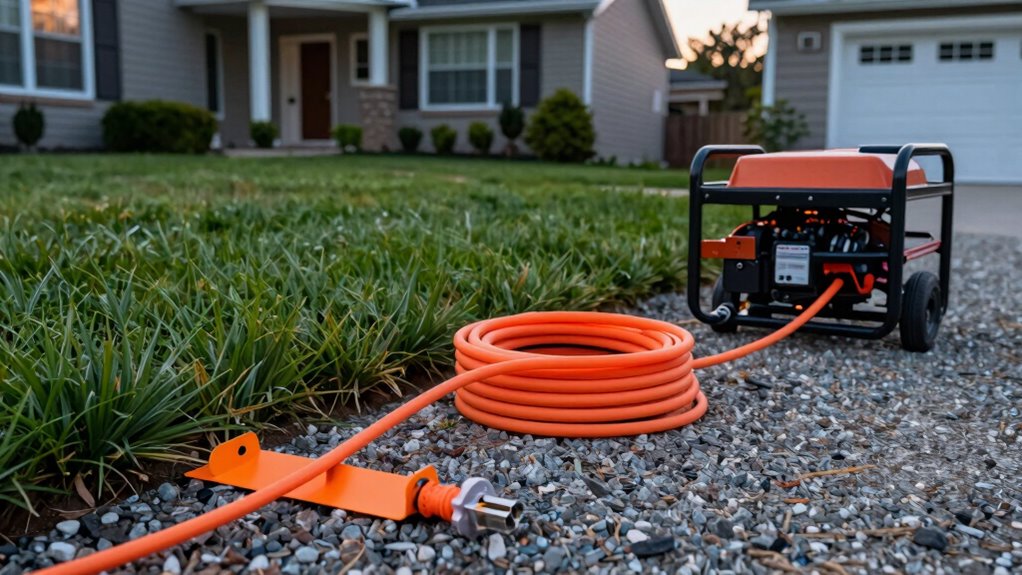
Ever wondered how to safely power your home during a blackout using a generator? Planning your extension cords carefully is vital to guarantee both safety and efficiency. The first step is understanding power safety—your top priority when connecting a generator to your house. You want to prevent any risk of electrical shock or damage to your appliances. To do this, always use heavy-duty, outdoor-rated extension cords designed to handle the power load. Never use indoor cords outside, as they lack proper insulation and grounding, which can lead to dangerous situations. When setting up, make sure the generator is placed outdoors in a well-ventilated area, away from windows and doors, to avoid carbon monoxide buildup. Use a transfer switch if possible; it isolates your home’s wiring from the grid, reducing the risk of backfeeding, which can harm utility workers or damage equipment. Proper biodiversity considerations include ensuring your setup minimizes environmental impact and does not disturb local wildlife. Additionally, consider using eco-friendly methods to reduce your carbon footprint during power outages. Regular maintenance and inspection of your generator and cords are also essential to prevent malfunctions and ensure safety during operation.
Cord organization plays an essential role in maintaining safety and avoiding clutter. Instead of running multiple cords haphazardly through your yard or home, plan a clear, direct route from the generator to your essential appliances. Keep cords off walkways and high-traffic areas to prevent tripping hazards. Use cord organizers, clips, or cable ties to keep excess slack under control, reducing the risk of damage or accidental disconnection. It’s also helpful to create a comprehensive plan that details which cords are used for each appliance to streamline setup and troubleshooting. It’s a good idea to label each cord with its designated appliance or circuit, so you avoid overloading any single line. When connecting multiple cords, ensure they are all rated for the combined load to prevent overheating. Also, inspect cords for cuts, frays, or damage before use—damaged cords should be replaced immediately. Remember that load capacity is a critical factor in selecting cords to avoid overloading and potential fire hazards. Additionally, understanding your power needs helps you select the right cords and avoid dangerous overloads.
heavy-duty outdoor extension cords
As an affiliate, we earn on qualifying purchases.
As an affiliate, we earn on qualifying purchases.
Frequently Asked Questions
Can I Use Any Type of Extension Cord for Generator Power?
You can’t use any type of extension cord for generator power. Always choose heavy-duty, outdoor-rated cords designed to handle high power loads, which is vital for safe generator operation. Proper generator maintenance and accurate power load calculation help determine the right cord gauge. Using the wrong cord can cause overheating or damage your generator, risking safety. Always select cords specifically rated for generator use to guarantee efficiency and safety.
How Long Can an Extension Cord Safely Be From Generator to House?
Think of your extension cord as a lifeline, delicate yet essential. You should keep it within 100 feet to prevent power surges and guarantee cord durability. Beyond this length, voltage drops increase, risking damage to your appliances and generator. Staying within this limit acts like a sturdy bridge, safely channeling power without strain. Always choose quality cords and avoid excessive length to keep your home’s power reliable and safe.
What Safety Precautions Should I Follow When Setting up Extension Cords?
When setting up extension cords, prioritize safety by ensuring proper electrical grounding to prevent shocks. Manage your power load carefully, avoiding overloads that can cause fires or damage your generator. Use grounded, outdoor-rated cords and inspect them for damage before use. Keep cords away from water, sharp objects, and high-traffic areas. Always connect cords securely, and turn off equipment before plugging or unplugging to reduce risks.
Do I Need a Special Type of Extension Cord for Outdoor Use?
Yes, you need a special type of extension cord for outdoor use. Outdoor extension cords are designed with thicker insulation and weather-resistant coatings, making them safer for outdoor safety. Always store cords properly to prevent damage, and avoid indoor storage to maintain their durability. Using the right outdoor cord guarantees safety during power transfer from your generator, reducing risks like short circuits or electric shocks.
Can I Connect Multiple Extension Cords for Longer Distances?
Yes, you can connect multiple extension cords for longer distances, but indoor safety and proper cord management are essential. Always use outdoor-rated cords designed for the power load, and avoid daisy-chaining too many cords to prevent overheating or fire hazards. Make sure connections are secure and the cords aren’t stretched or pinched. Proper cord management keeps your setup safe, efficient, and reduces tripping risks, ensuring your generator power reaches your home safely.
generator to house transfer switch
As an affiliate, we earn on qualifying purchases.
As an affiliate, we earn on qualifying purchases.
Conclusion
Planning your extension cords from the generator to your house is like mapping out a well-lit path through a dark forest—you want safety and efficiency guiding your steps. By choosing the right cords, evaluating power needs, and following proper setup, you ensure your home stays powered without surprises. Think of it as orchestrating a symphony, where each note (or cord) plays its part perfectly. With careful planning, you’ll keep the lights on and the stress off!
outdoor-rated extension cords for generator
As an affiliate, we earn on qualifying purchases.
As an affiliate, we earn on qualifying purchases.
cable organizers and labels for extension cords
As an affiliate, we earn on qualifying purchases.
As an affiliate, we earn on qualifying purchases.
Fall Picks
fall essentials
As an affiliate, we earn on qualifying purchases.