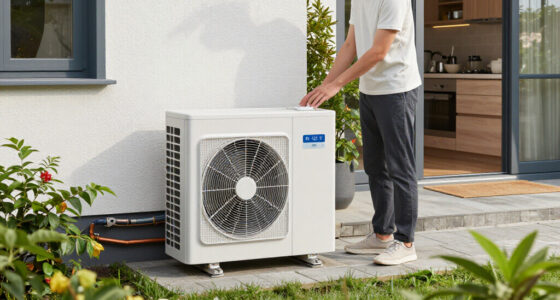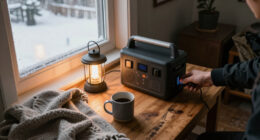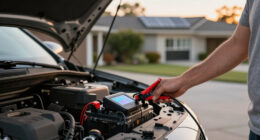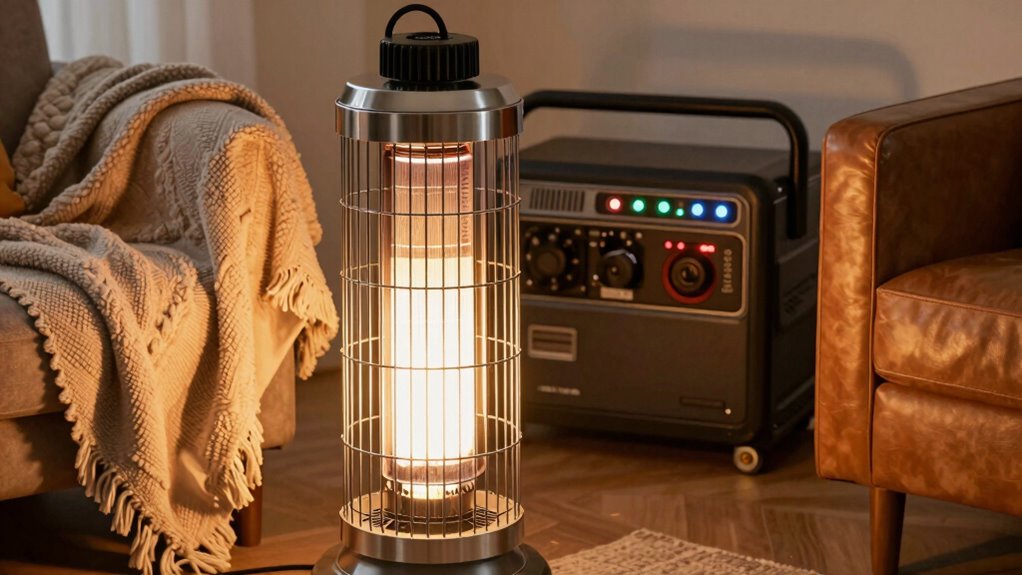
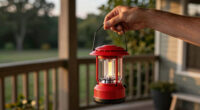
Before using heaters with backup power, guarantee your generator or battery system can handle the heater’s wattage without overload. Always operate generators outdoors to prevent carbon monoxide buildup, and keep safety equipment nearby. Regularly check and maintain your backup equipment for reliability. Manage your electrical load carefully to avoid overusing high-power devices simultaneously. Proper planning and safety measures help you stay warm and safe during outages—more tips on ensuring efficient backup heating come next.

Get backup power and energy gear delivered free with Prime
- Fast, free delivery on millions of items
- Prime Video, Amazon Music and more included
- Member-only deals all year
Key Takeaways
- Ensure your backup power source has sufficient capacity to handle the heater’s wattage safely.
- Operate generators outdoors and away from vents to prevent carbon monoxide buildup.
- Regularly maintain and test backup systems to confirm safety features and reliable performance.
- Manage electrical loads carefully to avoid overloading and system shutdowns during use.
- Use only rated extension cords and follow safety guidelines to prevent fire hazards.

During winter storms or power outages, staying warm becomes a real challenge, especially if your heater relies solely on electricity. When considering heaters with backup power, it’s crucial to understand how they operate and what you need to prioritize for safety and efficiency. Backup power sources, like generators or batteries, can keep your heater running when the grid fails, but not all systems are created equal. To make the most of these devices, focus on their energy efficiency to conserve fuel or battery life, ensuring you get the maximum warmth with minimal waste. An energy-efficient heater with backup power can considerably reduce fuel consumption, which is especially important during extended outages when resources are limited.
Before using any backup power system, it’s essential to follow safety precautions. Generators, for instance, produce carbon monoxide, a deadly gas if used improperly. Always operate generators outdoors, away from windows and vents, and never run them inside your home or garage. Proper ventilation prevents dangerous gas buildup and keeps your household safe. Additionally, ensure your generator is properly maintained, with regular checks on oil levels, fuel quality, and electrical connections. Using extension cords or adapters that aren’t rated for the generator’s load can cause overheating or electrical fires, so verify all equipment’s capacity before plugging in your heater. It’s also important to understand the energy efficiency features of your backup power system, as this can significantly influence operational costs and safety. Being aware of the power capacity of your backup system helps prevent overloads and ensures reliable operation during emergencies. Understanding the generator’s runtime is equally important to plan for prolonged outages and avoid unexpected shutdowns. Moreover, selecting a backup power system with a reliable safety features can prevent accidents and ensure peace of mind during emergency use. Additionally, choosing systems with automatic safety shutoffs can provide extra protection and prevent potential hazards during operation.
Another important safety tip involves managing electrical load. When connecting a heater with backup power, avoid overloading your generator or battery system, which can lead to equipment failure or fire hazards. Calculate the wattage of your heater and compare it to your backup power source’s capacity. Distribute the load evenly and don’t attempt to run multiple high-power appliances simultaneously unless your system is designed to handle it. This not only prolongs your backup system’s lifespan but also minimizes safety risks. Properly managing the electrical load is key to maintaining both safety and efficiency during backup power use. Regularly testing your backup system ensures it will perform reliably during emergencies and helps identify potential issues before they become critical.
It’s also wise to invest in a portable, easy-to-use backup power solution that offers clear instructions and safety features. Modern generators often come with automatic shutoff mechanisms if unsafe conditions are detected, adding an extra layer of protection. Always keep a fire extinguisher nearby, and test your backup power system periodically to ensure it functions properly when you need it most. Remember, safety and energy efficiency go hand in hand when using heaters with backup power—prioritizing both ensures that you stay warm, safe, and prepared during any winter emergency.
portable generator for backup heating
As an affiliate, we earn on qualifying purchases.
As an affiliate, we earn on qualifying purchases.
Frequently Asked Questions
How Long Can a Heater Run on Backup Power?
A heater can run on backup power for as long as the battery or generator supplies energy, but this varies based on size and energy efficiency. Typically, energy-efficient models use less power, extending runtime, while larger units drain backup sources faster. You should consider cost considerations, including fuel or electricity expenses, and balance them with your needs. Regularly monitor your backup system to guarantee it can support your heater during outages.
Are There Safety Risks Using Heaters With Backup Power?
Using heaters with backup power poses safety hazards and electrical risks if not handled carefully. You might face fire risks from overheating or faulty wiring, and the backup power system could cause electrical shocks if improperly installed. Always verify your heater and backup system meet safety standards, avoid overloading circuits, and keep flammable materials away. Regular inspections and proper maintenance help prevent accidents and keep your environment safe.
What Types of Backup Power Sources Are Compatible?
You can use various backup power sources depending on your heater’s fuel types and power capacity. Generators, whether portable or standby, are common, with gas, propane, or diesel fuels. Batteries and uninterruptible power supplies (UPS) work well for smaller, electric heaters, especially if your power capacity is limited. Always match the backup source’s capacity to your heater’s requirements to guarantee safe, reliable operation during outages.
How Do I Maintain Backup Power Systems for Heaters?
You need to stay ahead of the game to keep your backup power systems reliable. Regularly perform generator maintenance, like checking oil levels and inspecting connections, to prevent breakdowns. For battery lifespan, keep batteries charged and clean, and replace them when they show signs of wear. By doing so, you’ll guarantee your heater keeps running smoothly during emergencies, proving that a stitch in time saves nine.
Can Backup Power Cause Heater Performance Issues?
Backup power can cause heater performance issues if power fluctuations occur or if the system isn’t compatible. Sudden surges or drops in power can strain your heater’s components, leading to inefficient operation or damage. To prevent this, make certain your backup power system is compatible with your heater and equipped with surge protection. Regularly check and maintain your system to minimize fluctuations, ensuring consistent, reliable heating.
electric space heater with safety features
As an affiliate, we earn on qualifying purchases.
As an affiliate, we earn on qualifying purchases.
Conclusion
Now that you know the essentials of using heaters with backup power, you’re better prepared for any unexpected outages. But what happens when the power finally goes out—and your heater kicks in? Will your backup system hold up? The answer might surprise you. Stay vigilant, stay prepared, and keep your home cozy no matter what the future holds. Because in the end, the real question isn’t just about backup power—it’s about what’s waiting in the dark.
outdoor generator for winter storms
As an affiliate, we earn on qualifying purchases.
As an affiliate, we earn on qualifying purchases.
As an affiliate, we earn on qualifying purchases.
Halloween Picks
halloween
As an affiliate, we earn on qualifying purchases.