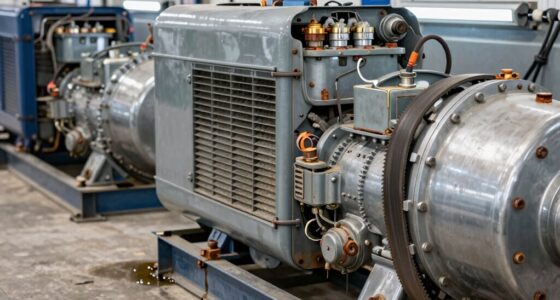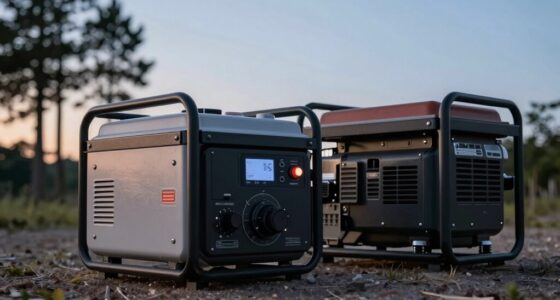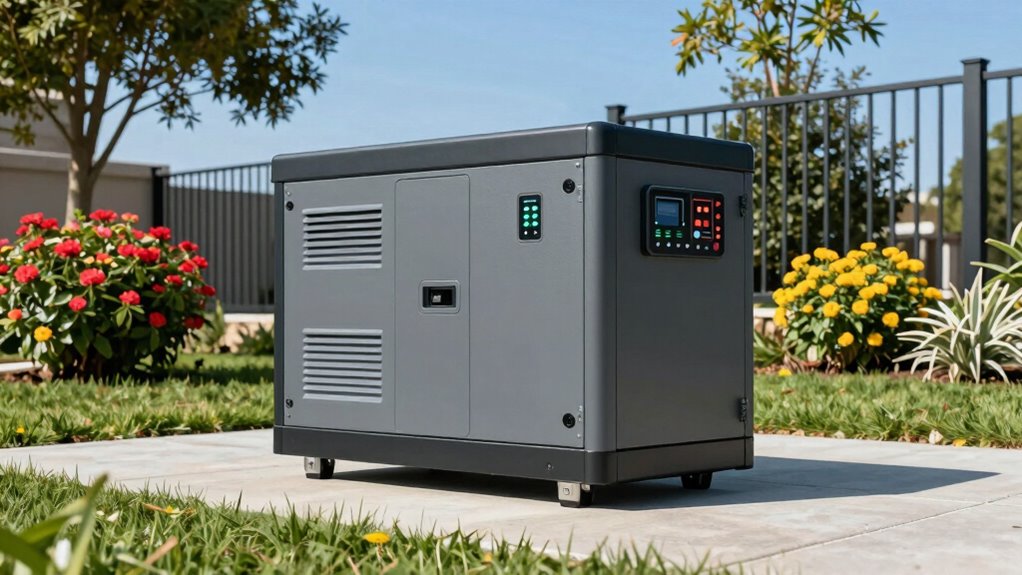

Before installing a standby generator, consider its fuel efficiency to save money and reduce environmental impact. Think about noise levels and choose a quieter model, especially if installed near your home or neighbors. Verify it has the right power capacity for your essential needs without oversizing. Work with licensed professionals for proper placement, following safety codes and environmental guidelines. Regular maintenance ensures reliable operation during outages. Keep exploring to discover more tips for a smooth installation.
Key Takeaways
- Assess your household’s power needs to select a generator with appropriate capacity and avoid oversizing or undersizing.
- Ensure proper installation by working with licensed professionals to meet safety, ventilation, and local code requirements.
- Consider noise levels and location to minimize disturbance and comply with neighborhood regulations.
- Evaluate fuel options for efficiency and environmental impact, opting for eco-friendly, sustainable choices when possible.
- Prioritize regular maintenance to guarantee reliability and readiness during power outages.
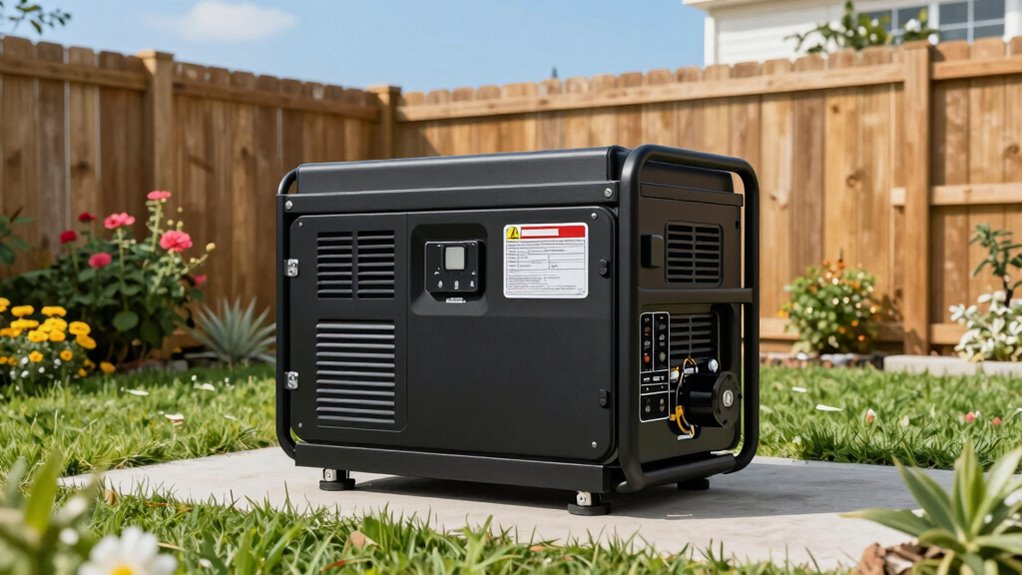
Have you ever experienced a power outage that left your home in the dark? If so, you know how disruptive losing electricity can be, especially during extreme weather or emergencies. Installing a standby generator can be a smart solution, providing peace of mind and continuous power. Before you commit, there are several important factors to consider. One key aspect is understanding the generator’s fuel efficiency. A generator with good fuel efficiency consumes less fuel to produce the same amount of power, which means you’ll save money over time and reduce the frequency of refueling. This is especially important if outages tend to last for days, as an inefficient model could lead to higher operational costs and inconvenience.
Another critical consideration is noise levels. Some generators can be quite loud, which might disturb your household or neighbors, especially if you live in a densely populated area. When researching models, look for those designed with noise reduction features. Quiet generators are not only more neighbor-friendly but also make your home feel less like a power plant during operation. Keep in mind that the location of your installation can influence noise concerns; installing the generator in a well-ventilated, sound-insulated area can help minimize noise pollution. Additionally, understanding energy consumption and how your household uses power can help you make a more informed choice.
Choose quiet, noise-reducing generators and install them in sound-insulated areas to minimize disturbance during outages.
Beyond fuel efficiency and noise levels, you should also evaluate the power capacity of the generator. Consider what essentials you want to keep running during an outage—like your refrigerator, heating system, or medical devices—and select a generator that can handle the total wattage needed. Oversizing might seem like a safe bet, but it can lead to unnecessary costs and inefficiency. Conversely, undersizing will leave you without power for critical appliances, defeating the purpose of having a standby generator. Understanding energy efficiency can guide you toward models that optimize performance while minimizing fuel use. Moreover, researching fuel types can provide insights into the environmental impact and operational costs associated with different options.
Installation is another essential factor. Proper placement requires careful planning to meet safety codes and guarantee maximum operation. You’ll need to consider proximity to your home, ventilation requirements, and local regulations. It’s advisable to work with a licensed professional who can evaluate your home’s specific needs and install the generator safely and efficiently. Additionally, understanding biodiversity and environmental impact can help you select a generator that aligns with sustainable practices, reducing your ecological footprint. Being aware of the environmental impact of your generator can also influence your choice of fuel type, as some options are more eco-friendly than others. Regular maintenance and inspections are also vital to ensure your generator remains reliable during emergencies.
Finally, don’t forget to think about maintenance. Regular inspections and servicing are key to keep your generator running smoothly when you need it most. By understanding these considerations—fuel efficiency, noise levels, capacity, installation, and maintenance—you’ll be better prepared to choose the right standby generator for your home, ensuring you’re protected during power outages without unnecessary hassle or expense.
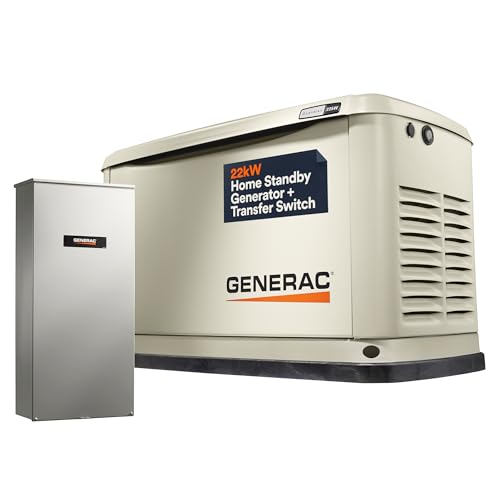
Generac Guardian 22kW Home Standby Generator with 200 Amp Transfer Switch – Automatic Whole House Backup Power for Storms, Emergencies, and Outages, WiFi Enabled, Runs on Natural Gas or Liquid Propane
- Remote Monitoring: Track generator performance remotely via Wi-Fi
- Whole House Protection: 200 Amp outdoor smart transfer switch
- Durable Enclosure: Aluminum outdoor-rated enclosure for protection
As an affiliate, we earn on qualifying purchases.
As an affiliate, we earn on qualifying purchases.
Frequently Asked Questions
How Long Does a Standby Generator Typically Last?
A standby generator typically lasts between 10 to 30 years, depending on its quality and maintenance. The generator lifespan is greatly influenced by how well you care for it, so regular servicing is essential. You might need to contemplate replacement frequency around the 20-year mark, especially if you notice decreased performance or increased repair costs. Proper maintenance helps extend its lifespan, ensuring reliable backup power during outages.
Can I Install a Generator Myself or Need a Professional?
Installing a standby generator is like assembling a complex puzzle—you need skill and precision. You can’t just do a DIY installation safely, as it involves electrical work and safety considerations that are best handled by a professional. Attempting it yourself risks safety hazards, code violations, and voiding warranties. To guarantee proper operation and safety, hire a licensed electrician who understands local regulations and can install your generator correctly.
What Maintenance Does a Standby Generator Require?
You need to regularly check and change the oil, replace air filters, and inspect spark plugs to guarantee your standby generator runs smoothly. Proper maintenance boosts fuel efficiency and minimizes noise, making it more reliable during outages. Additionally, keep the generator’s cooling system clean and monitor fuel levels. Scheduling professional inspections annually helps prevent breakdowns and prolongs its lifespan, keeping your home powered efficiently and quietly.
How Loud Is a Standby Generator During Operation?
A standby generator typically produces noise levels between 60 to 75 decibels during operation, similar to a conversation or background music. To minimize sound disruption, consider sound insulation options like enclosures or barriers around the unit. Proper placement is essential; installing it away from living areas reduces noise impact. Regular maintenance can also help keep the generator running smoothly and quietly.
Are There Any Permits Required for Installation?
When installing a standby generator, you’ll need to obtain permits, such as building codes and electrical permits, to guarantee safety and compliance. For instance, Sarah’s home renovation required her to secure these permits before installation, preventing potential fines or safety issues. Always check with your local authority to confirm what permits are necessary, as requirements vary by location. Getting permits ensures your generator operates safely and legally.
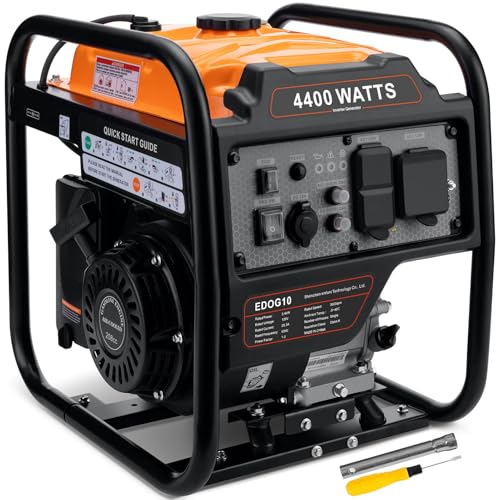
Oxseryn 4400-Watts Inverter Generator, Open Frame Generator Gas Powered, Emergency Home Backup, RV Ready 30A Outlet, EPA Compliment
- Powerful Output: 4400 peak and 3400 running watts
- Multiple Outlets: 120V AC, 30A RV, 12V DC ports
- Long Runtime: Up to 14 hours at 25% load
As an affiliate, we earn on qualifying purchases.
As an affiliate, we earn on qualifying purchases.
Conclusion
Thinking about installing a standby generator? It’s a thoughtful step toward peace of mind when power’s unpredictable. Just remember, a little preparation and understanding go a long way. When you choose wisely and plan ahead, you’re quietly ensuring comfort and safety for your home and loved ones. In the end, it’s not just about avoiding inconvenience—it’s about creating a sanctuary where resilience and reassurance quietly coexist.

Oxseryn Power Equipment 4400 Watts Inverter Generator Gas Powered, Portable Open Frame Generator, Low Noise with ECO Mode, RV Ready, Emergency Home Backup
- High Power Output: 4400 peak and 3400 running watts
- Multiple Output Ports: 2 AC, 1 DC, RV port
- Long Runtime: Up to 14 hours at 25% load
As an affiliate, we earn on qualifying purchases.
As an affiliate, we earn on qualifying purchases.
Generac Guardian 22kW Home Standby Generator with 200 Amp Transfer Switch – Automatic Whole House Backup Power for Storms, Emergencies, and Outages, WiFi Enabled, Runs on Natural Gas or Liquid Propane
- Remote Monitoring: Track generator performance remotely via Wi-Fi
- Whole House Protection: 200 Amp outdoor smart transfer switch
- Durable Enclosure: Aluminum outdoor-rated enclosure for protection
As an affiliate, we earn on qualifying purchases.
As an affiliate, we earn on qualifying purchases.