
When comparing 10, 12, and 14 gauge cords, the thinner wire, like 14 gauge, heats up first because it has higher resistance. Higher resistance causes more heat to develop when electrical current flows through it. The longer or more bundled the cable, the more it heats up, regardless of gauge. Understanding these factors helps you prevent overheating. Keep exploring to learn how gauge, length, and other factors influence cable heating and safety.
Key Takeaways
- Thinner gauges like 14 AWG have higher resistance, causing them to heat up faster under the same current.
- Resistance decreases with thicker wires (lower AWG), so 10 AWG heats less than 12 or 14 AWG at equal loads.
- Longer cables increase resistance and heat generation, making length a key factor in heating speed.
- Connection quality and bundling affect heat buildup, potentially overriding gauge differences.
- Proper thermal management and installation are essential to prevent overheating, regardless of wire gauge.
How Resistance Varies Between Different Gauge Wires

The resistance of wire varies markedly with its gauge because of differences in cross-sectional area. As you move to a lower AWG number, the wire gets thicker, which means more metal for current to pass through, reducing resistance. For example, 14 AWG copper has about 2.5 ohms per 1,000 feet, while 12 AWG drops to roughly 1.6 ohms, and 10 AWG is around 1.0 ohms. This means that thicker wires (lower AWG) have less resistance per foot, allowing more current with less heat generation. The key point is that resistance decreases as the wire gauge increases (thicker wire). This relationship directly impacts how much heat the wire produces under the same current, with thinner wires heating up faster due to higher resistance. Additionally, the material composition of the wire also influences its resistance and heating properties. Moreover, understanding heat dissipation is essential for designing safe and efficient electrical systems. Proper insulation and ventilation further help manage heat buildup and ensure safety. For instance, selecting the appropriate wire gauge considering current load is crucial to prevent overheating and potential failures.
The Relationship Between Current, Resistance, and Heat Generation
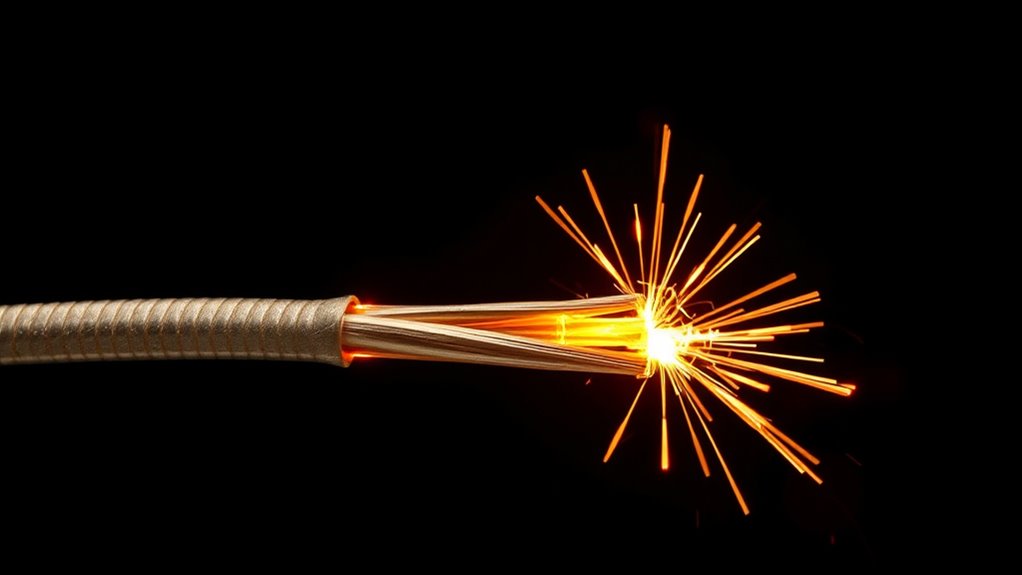
When current flows through a wire, resistance causes some of that electrical energy to be converted into heat. The amount of heat generated depends on the relationship between current and resistance. As current increases, heat production rises exponentially because of the I^2R formula. Here’s how resistance influences this process:
- Higher resistance wires produce more heat for the same current.
- Increasing current amplifies heat output due to the I^2 factor.
- Thinner gauges (higher AWG) have higher resistance, leading to faster heating.
- Longer conductors with higher resistance generate more heat, especially under continuous load.
- Proper filtration and pump protection can help reduce overheating issues by maintaining consistent flow and preventing clogs. Additionally, selecting wires with suitable gauge size is crucial to prevent excessive heat buildup during operation.
- Ensuring appropriate current capacity is essential to match the wire’s resistance and prevent overheating during use. The resistance value of the wire directly impacts how quickly it heats up under load. Awareness of material composition is also important, as different metals conduct electricity with varying resistance levels, influencing heat generation.
Understanding this relationship helps you predict which cords heat first and why. It emphasizes the importance of matching wire gauge and current capacity to prevent overheating and ensure safety.
Practical Factors That Influence Which Cable Gets Hotter
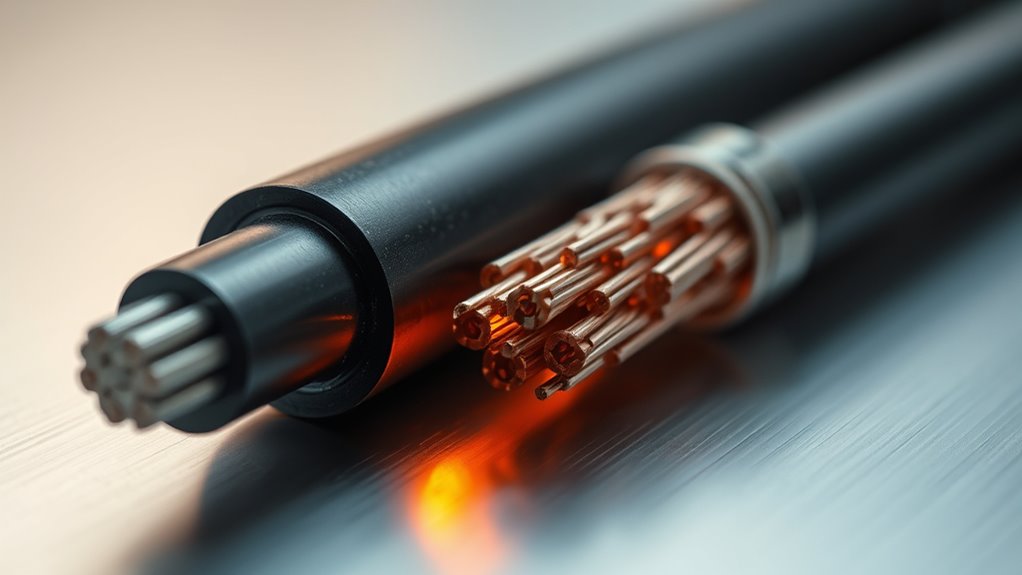
Practical factors such as ambient temperature, cable bundling, and connection quality substantially influence which cable heats up more during use. Higher ambient temperatures reduce cooling, causing cables to heat faster. Bundled cables limit airflow, trapping heat and raising temperatures, especially for thinner wires like 14 AWG. Poor connections, loose terminals, or corroded contacts increase contact resistance, creating hotspots that can surpass distributed conductor heating. The type of insulation and its temperature rating also matter — higher-rated insulation can handle more heat safely. The material properties of the cable influence how heat is conducted and dissipated, affecting overall temperature. Additionally, thermal management techniques, such as proper ventilation and heat sinks, play a crucial role in managing cable temperatures effectively. Mechanical damage or kinks elevate local resistance, elevating hotspot formation and intensifying hotspots. Continuous loads or resistive devices generate sustained heat, and if cables are undersized or improperly installed, they’re more likely to overheat. Proper installation practices can significantly impact how heat accumulates and dissipates across cables. Overall, these practical factors can override the expected heating based solely on wire gauge.
Frequently Asked Questions
Does Wire Insulation Type Affect Which Wire Heats First?
Yes, wire insulation type affects which wire heats first. Different insulation materials have varying temperature ratings and heat dissipation properties. Higher temperature-rated insulation allows the wire to handle more heat safely, reducing risk of overheating. Thinner or less effective insulation may trap heat, causing localized hotspots. So, choosing the right insulation for your application helps prevent premature heating, maintains safety, and guarantees proper heat dissipation during operation.
How Does Ambient Temperature Influence Wire Heating?
Imagine running a bundle of 14 AWG wires in a hot attic during summer. Higher ambient temperature reduces cooling efficiency, causing the wires to heat up faster and reach unsafe temperatures sooner. You’ll notice this effect more with smaller gauges or tightly packed cables, where limited airflow and elevated surroundings hinder heat dissipation. To prevent overheating, consider increasing wire size or improving ventilation in high-temperature environments.
Can Poor Connections Cause Smaller Gauges to Heat More?
Yes, poor connections can cause smaller gauges to heat more, because high contact resistance at terminals, splices, or contacts increases localized heat. When connections are loose, corroded, or damaged, they create hotspots that elevate temperature beyond the conductor’s normal heating. This effect is especially pronounced in smaller gauges, which already have higher resistance. Ensuring tight, clean, and secure connections helps prevent overheating and potential fire hazards.
Does Continuous Load Increase the Risk of Wire Overheating?
Continuous loads markedly increase the risk of wire overheating because they keep current flowing steadily, causing more heat buildup over time. In fact, sustained resistive loads can raise conductor temperatures to dangerous levels if the wire isn’t properly sized. For example, a 14 AWG wire carrying a continuous load near its limit may reach unsafe temperatures faster than a larger gauge. Always match wire size to load duration and current to prevent overheating.
Do Stranded and Solid Wires Heat Differently Under the Same Conditions?
Stranded and solid wires heat differently under the same conditions because of their surface area and flexibility. Stranded wire has more surface area, allowing better heat transfer to the surroundings, so it generally runs cooler. Solid wire, with less surface area, retains heat more, causing it to heat up faster. However, both conductors experience similar internal heating based on their resistance; the difference mainly affects heat dissipation.
Conclusion
In the dance of electricity, the gauge of your cord leads the waltz of heat and resistance. Thinner wires like 14 gauge race ahead, heating up faster like a sprinting flame, while thicker cords like 10 gauge move more slowly, like a steady, smoldering ember. Knowing this, you control the sparks—choose wisely to keep your electrical journey safe and smooth, avoiding unexpected bursts and fiery surprises. Your choice determines whether the heat stays gentle or erupts into a blazing ordeal.