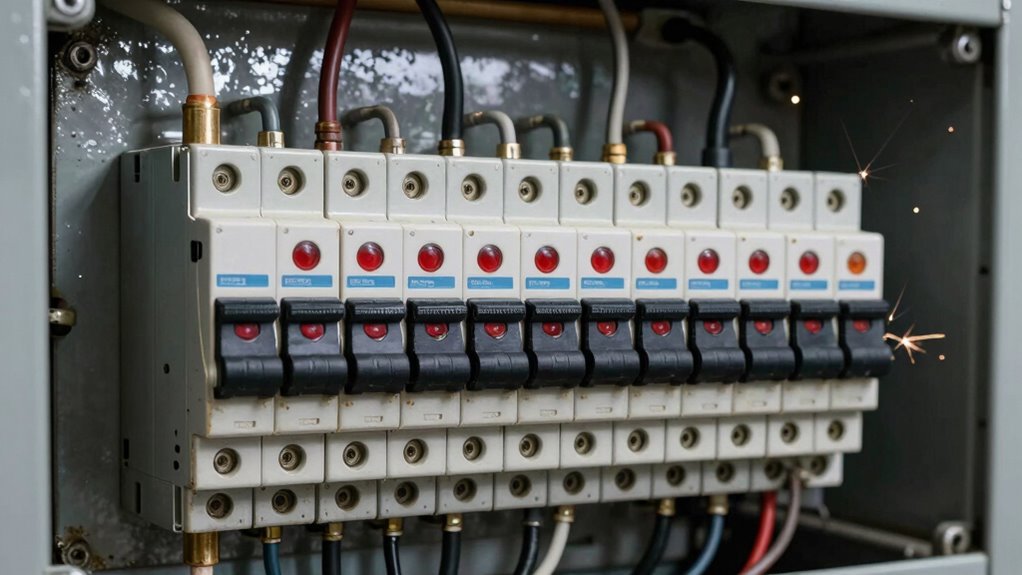

If your generator breaker keeps tripping, the most common mistake is overloading the system by plugging in too many high-wattage appliances at once. To fix this, check the total wattage and spread your devices across multiple outlets, avoiding exceeding the generator’s capacity. Proper load distribution and recognizing overload signs can prevent trips. To keep your system safe and reliable, it’s essential to understand these load management tips—keep going to learn more.

Get backup power and energy gear delivered free with Prime
- Fast, free delivery on millions of items
- Prime Video, Amazon Music and more included
- Member-only deals all year
Key Takeaways
- Overloading the generator by connecting too many high-wattage appliances is a common cause of breaker trips.
- Ensure the total load, including surge watts, does not exceed the generator’s rated capacity.
- Distribute appliances across multiple outlets to prevent overloading a single circuit or outlet.
- Check if the combined wattage of connected devices surpasses the generator’s wattage limit.
- Regularly monitor for signs of overload, such as flickering lights or warm outlets, and adjust your load accordingly.
As an affiliate, we earn on qualifying purchases.
Understanding Your Generator’s Power Capacity

To guarantee your generator runs smoothly without tripping breakers, you need to understand its power capacity. Every generator has a maximum wattage it can handle, which determines how many appliances you can run simultaneously. For example, a 5,000-watt generator can power essential devices like refrigerators, freezers, fans, and lights, but exceeding this limit causes overloads. Check the manual or label to find your generator’s wattage rating, and always account for starting watts of appliances, which are higher than running watts. Using a power cord that matches your generator’s amperage is vital. Overloading your generator by plugging in too many devices or appliances with high power needs is a common cause of breaker trips. Knowing your generator’s capacity helps prevent these issues upfront. Additionally, understanding the load management principles can help you distribute power more effectively and avoid overloads. Being aware of the natural load factors can assist in planning your power usage more efficiently and prevent unexpected trips. Properly managing your power distribution can further minimize the risk of overloading your generator during peak usage times, especially when considering the power factor of your connected devices. Moreover, maintaining a clear understanding of your generator’s performance limits is crucial for safe operation and long-term reliability.
heavy-duty extension cords for generators
As an affiliate, we earn on qualifying purchases.
As an affiliate, we earn on qualifying purchases.
Calculating Total Appliance Load Before Starting Up
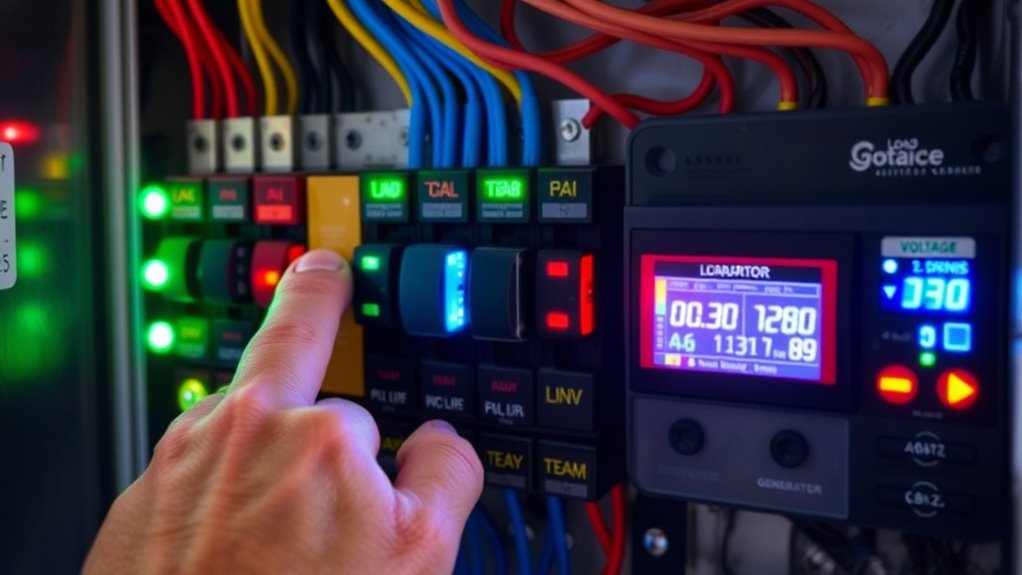
Before you start your generator, it’s important to accurately calculate the total load of all the appliances you plan to run. Begin by listing each device’s wattage, which is usually found on labels or in user manuals. Add up these wattages to determine the total power requirement. Remember, some appliances, like refrigerators or freezers, have starting watts that are higher than running watts; include these surge watts in your calculation. Convert total wattage to amperes if needed by dividing watts by voltage (typically 120V). This helps you ensure your generator can handle the combined load. It’s also helpful to understand load calculation methods to improve accuracy and safety. Avoid overestimating; use a safety margin of 10-20%. Proper calculation prevents overloads, breaker trips, and generator strains, keeping your power supply stable and safe. Additionally, understanding appliance surge watts can further improve your load management. Being familiar with generator capacity can help you select a suitable power source for your needs, and regularly reviewing your power needs ensures continued safe operation. Knowing the total connected load of your appliances is essential to prevent unexpected tripping of circuit breakers.
As an affiliate, we earn on qualifying purchases.
The Importance of Proper Power Cord Sizing
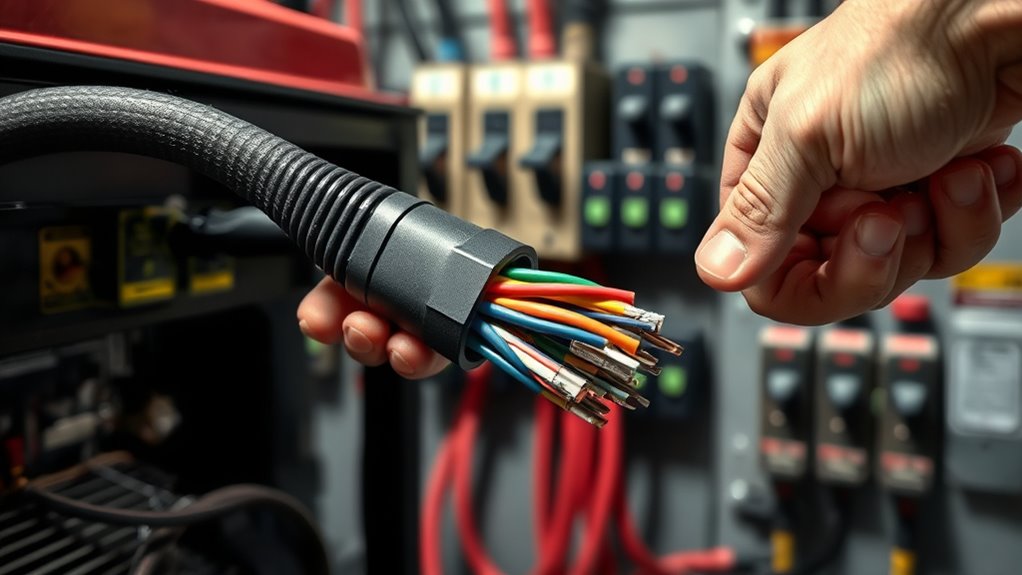
Using an improperly sized power cord can lead to serious issues like overheating, voltage drops, and even tripped circuit breakers. When the cord isn’t rated for the current your generator or appliances demand, it causes resistance, generating heat that can damage the cord and connected equipment. A cord with too small a gauge increases the risk of electrical fires and reduces overall efficiency. Conversely, a cord that’s too heavy for your setup can be unwieldy and unnecessary, adding cost without benefit. Proper sizing guarantees safe, reliable operation, preventing voltage drops that can cause appliances to malfunction or trip breakers. Always match your power cord’s gauge and capacity to your generator’s output and your load requirements, following manufacturer guidelines for superior performance and safety.
outlet power strip with surge protection
As an affiliate, we earn on qualifying purchases.
As an affiliate, we earn on qualifying purchases.
Common Overloading Mistakes to Avoid

One common mistake that leads to generator breaker trips is overloading the system with too many appliances or devices at once. This overload exceeds your generator’s capacity, causing breakers to trip. To avoid this, understand your generator’s wattage limits and don’t push beyond them. Distributing loads wisely prevents overloads and trips. Use this table to check your appliances’ power needs:
| Appliance | Wattage | Count Allowed Simultaneously |
|---|---|---|
| Refrigerator | 600 | 1 |
| Fan | 75 | 2 |
| 60-watt Bulb | 60 | 3 |
| Power Tools | 1500 | 1 |
| Small Heater | 1500 | 1 |
Always stay within your generator’s rated capacity to keep breakers safe. Understanding wattage limits helps prevent overloads and protects your equipment. Being aware of load distribution also contributes to maintaining a safe and functional power system. Proper load management ensures your generator operates efficiently without unnecessary trips. Additionally, regularly checking your circuit connections can help identify potential issues before overloads occur.
How to Distribute Loads Across Outlets Effectively
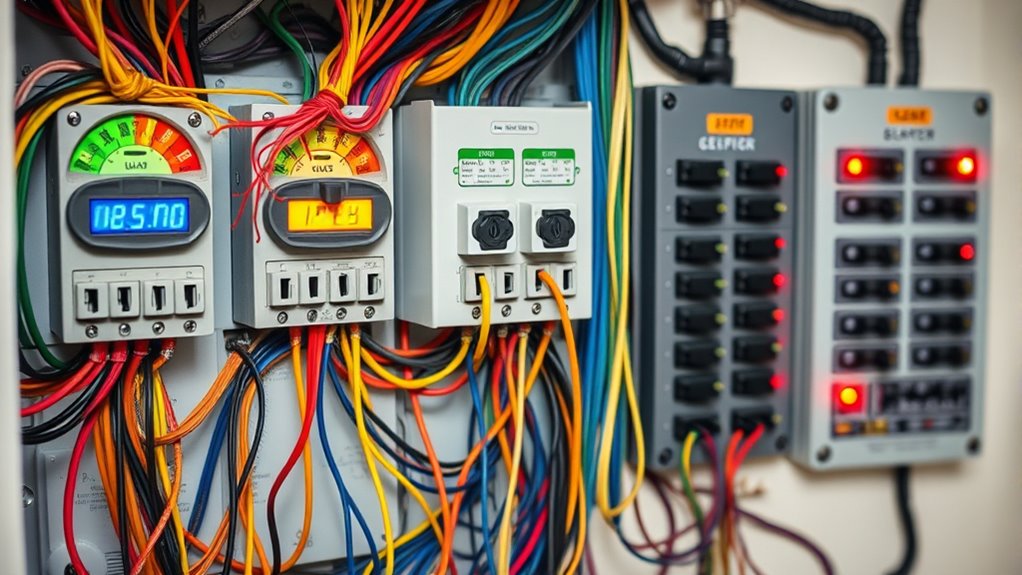
Distributing loads across outlets helps prevent overloading your generator and tripping breakers. To do this effectively, avoid plugging everything into a single outlet or power strip. Instead, spread high-wattage devices across multiple outlets to balance the load. Keep appliances like refrigerators, fans, and lights on separate circuits when possible. Use extension cords rated for the power needs, ensuring they don’t cause a voltage drop. Monitor total wattage to stay within your generator’s capacity. Avoid daisy-chaining multiple power strips or extension cords, which can lead to uneven load distribution. Regularly check outlet labels or circuit breakers to see which devices are connected. Proper load distribution keeps your generator running smoothly without trips or overloads.
Recognizing the Signs of Circuit Overload
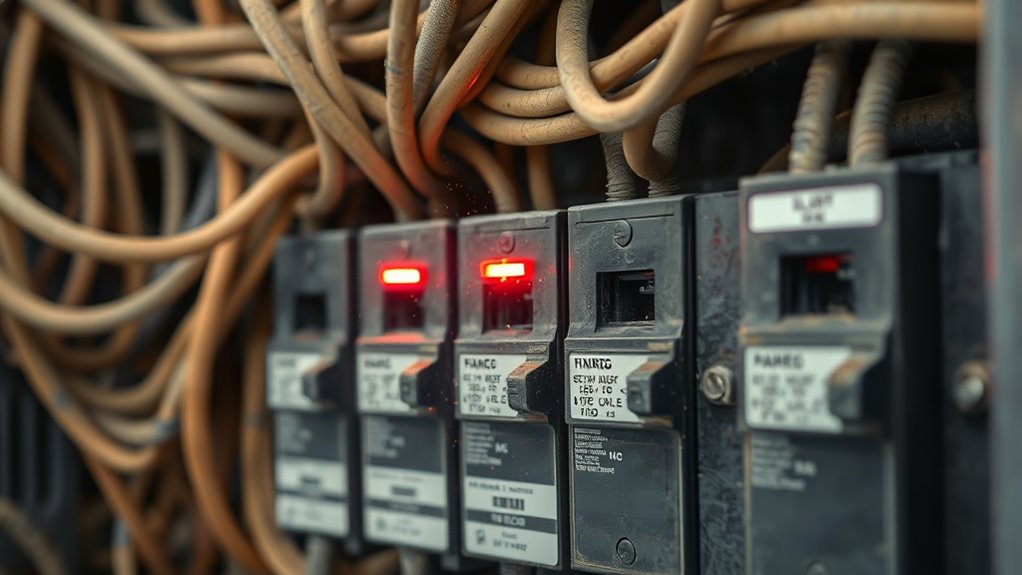
When loads aren’t properly balanced across outlets, your circuit can become overloaded without immediately tripping the breaker. You might notice flickering lights, dimming screens, or appliances that run intermittently. A burning smell or warm outlets are serious signs of overload. You could also experience a breaker tripping unexpectedly or frequent resets. These signs indicate your circuit is strained beyond its capacity. Being aware of circuit overload symptoms can help you take timely action to safeguard your electrical system. Proper load distribution ensures safety and prevents unnecessary strain on your electrical components. Understanding proper load distribution is key to preventing overloads and maintaining safety. Additionally, recognizing the symptoms of circuit overload early can prevent potential electrical hazards or fire risks, especially when combined with regular electrical system inspections.
The Role of Circuit Breakers and How They Protect You
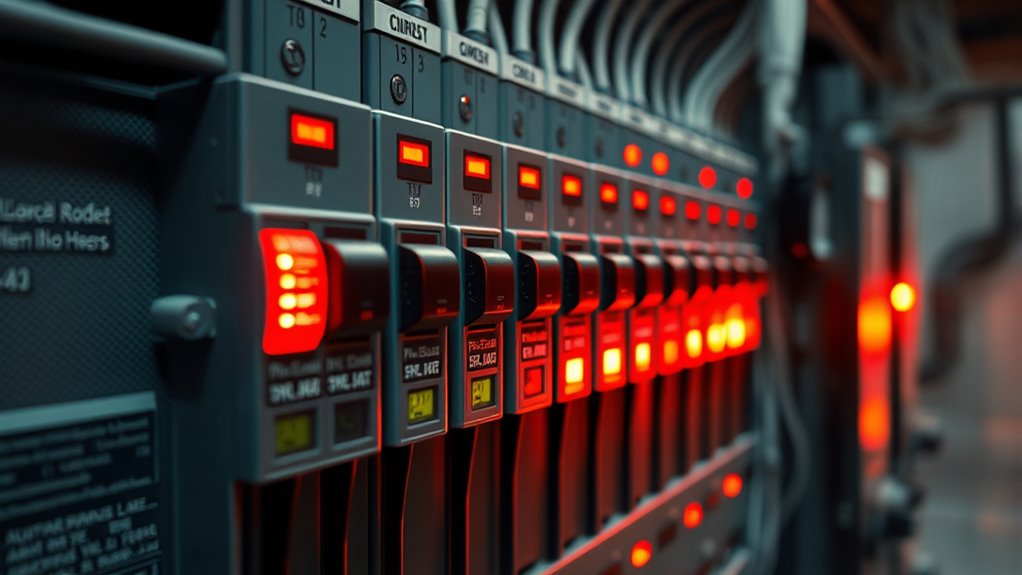
Circuit breakers act as your first line of defense by automatically shutting off power when too much current flows through the system. This overcurrent protection prevents electrical fires and damage to your appliances. Understanding how and why they trip helps you avoid unnecessary outages and keeps you safe. Additionally, modern smart home systems can monitor electrical load patterns to provide early warnings before breakers trip unexpectedly. Properly managing your electrical load ensures your system remains within safe operating limits and reduces the risk of nuisance tripping. Incorporating appropriate circuit protection devices can further enhance safety and prevent frequent trips. Regularly checking your electrical panel for signs of wear or damage can help identify issues before they cause trips or safety hazards. Being aware of the load distribution across circuits can also help prevent overloads that lead to tripping.
Overcurrent Protection Mechanism
Overcurrent protection mechanisms, primarily circuit breakers, play a vital role in safeguarding your electrical system from damage caused by excessive current flow. When too much current passes through your wiring, these devices trip or shut off power to prevent overheating, fires, and equipment damage. Their sensitivity depends on the breaker’s rating, which matches your system’s capacity. If the load exceeds this limit, they activate immediately. This quick response keeps your system safe and prevents costly repairs. Proper understanding of foraging techniques can help you identify the right circuits and avoid overloading your system.
Prevents Electrical Fires
Properly functioning circuit breakers play a crucial role in preventing electrical fires by quickly shutting off power when they detect dangerous conditions. They act as safety guards, stopping overloads and short circuits before they cause overheating or sparks. When your wiring or appliances draw too much current, the breaker trips, cutting off electricity and preventing potential fires. GFCI breakers add an extra layer of protection by sensing leaks that could lead to shocks or fires. Regularly testing and maintaining your breakers ensures they respond promptly to faults. Without these safety devices, faulty wiring or overloaded circuits could overheat, ignite insulation, or start fires. Essentially, circuit breakers are your first line of defense against electrical fires, ensuring your safety and preserving your property.
Trip Trigger Conditions
Understanding how circuit breakers trip is essential to ensuring your electrical safety. Breakers activate when certain conditions threaten your system’s integrity. Overloading is a common trigger, happening when you draw more current than the breaker’s rated capacity. GFCI trips occur if there’s a leak or imbalance, protecting against shocks. Short circuits or faulty wiring can also cause trips, preventing damage or fire. Environmental factors, like moisture or dust, may trigger sensitive devices. Additionally, age and wear can weaken breaker performance, leading to false trips.
- Excessive current load from multiple appliances
- Water intrusion causing leakage or short circuits
- Worn or damaged wiring connections
- Faulty appliances with leakage issues
- Environmental conditions like dust or moisture
Tips for Rationing Power During Limited Capacity
To prevent breaker trips when your generator is at limited capacity, you need to ration your power carefully. Start by prioritizing essential devices and turning off non-essentials, then limit the number of devices plugged into each outlet. Using power strips wisely helps distribute power efficiently without overloading your system.
Prioritize Essential Devices
When your generator has limited capacity, it’s essential to focus on powering only the most critical devices first. This prevents overloads and keeps your essential systems running. Prioritize appliances that keep you safe and comfortable, like your refrigerator or medical equipment. Avoid running non-essential devices to reduce power draw and prevent breaker trips. Planning your power use helps conserve energy and prolongs generator operation.
Consider these key devices:
- Refrigerator and freezer to prevent food spoilage
- Essential lighting for safety
- Medical devices or life-support equipment
- Communication devices like radios or chargers
- Small fans or heaters for comfort
Limit Power Usage Per Outlet
If your generator has limited capacity, it’s essential to ration power across outlets to prevent overloads. Start by identifying which devices are most critical, and avoid plugging everything into a single outlet. Spread out your appliances, ensuring no single outlet bears too much load. Use power strips with built-in circuit breakers to help distribute power safely, but don’t overload them either. Check each device’s wattage and keep the total within your generator’s limit. For example, if your generator supplies 5,000 watts, don’t run your refrigerator, freezer, and lights simultaneously if their combined wattage exceeds that. Prioritize essential devices and turn off non-essentials when possible. Rationing power helps prevent breaker trips and keeps your generator running smoothly longer.
Use Power Strips Wisely
Using power strips can be a practical way to distribute electricity across multiple devices, but you need to do so carefully to prevent overloads. Overloading a power strip can trip your generator breaker or damage your equipment. To use power strips wisely, avoid plugging high-wattage devices into a single strip, and never daisy-chain multiple strips together. Keep track of total wattage and ensure it stays below the strip’s capacity. Regularly inspect cords for damage, and unplug unused devices to reduce load. Use power strips with built-in surge protection for added safety.
- Limit high-wattage appliances on one strip
- Never connect multiple strips together
- Check wattage ratings before plugging in
- Avoid daisy-chaining multiple power strips
- Regularly inspect cords for damage
When to Consult a Professional for Electrical Troubleshooting
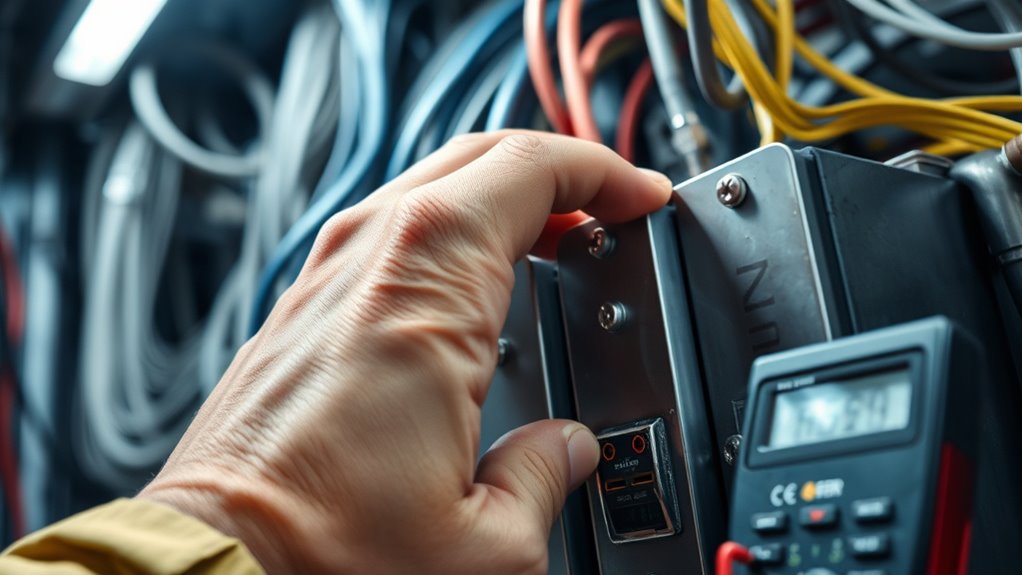
Electrical troubleshooting can be complex and dangerous, especially when dealing with generator breaker trips or GFCI issues. If you’ve tried basic fixes like resetting breakers, checking loads, or testing outlets without success, it’s time to call a professional. Don’t risk electrical shock or further damage by attempting repairs beyond your skill level. A licensed electrician can accurately diagnose problems like faulty wiring, worn circuit breakers, or hidden short circuits. They also have the proper tools to test grounding, insulation, and load capacity safely. If your generator keeps tripping breakers despite your efforts, or if you notice burning smells, sparks, or persistent GFCI trips, seek professional help immediately. Proper troubleshooting ensures safety and prevents costly damage, so don’t hesitate to consult an expert when needed.
Frequently Asked Questions
Can Using Extension Cords Affect Generator Breaker Trips?
Using extension cords can definitely cause generator breaker trips. If the cords are too thin or long, they can increase resistance and lead to overloading the circuit. This extra load may trip the breaker or GFCI. Always use heavy-duty, properly rated extension cords designed for the load you’re connecting. Avoid daisy-chaining multiple cords, and make certain the total wattage doesn’t exceed your generator’s capacity to prevent trips.
How Does Ambient Temperature Impact Breaker Performance?
Ambient temperature affects breaker performance like a thermometer in a room—it can make or break the system. When it’s too hot, breakers may trip more easily because heat weakens their internal components. Conversely, cold temperatures can cause sluggish responses or prevent proper tripping. To keep your generator running smoothly, operate it within the recommended temperature range, and avoid extreme conditions that stress the breaker’s ability to protect your system.
Does Frequent Tripping Indicate a Need for Generator Maintenance?
Yes, frequent tripping often signals your generator needs maintenance. It could be overloaded, have worn-out components, or faulty wiring causing the breaker to trip repeatedly. You might also have issues like a damaged GFCI or a failing circuit breaker. Regular inspections, cleaning, and ensuring your generator isn’t overloaded can prevent trips. If problems persist, it’s best to have a professional diagnose and service your generator to keep it running safely and efficiently.
Can Uneven Load Distribution Cause Breaker Trips?
Think of your generator like a tightrope walker balancing a pole—uneven load distribution can tip the scale and cause breaker trips. When you concentrate power unevenly across circuits, it strains the system, making breakers trip as a safety net. To prevent this, distribute your appliances evenly, avoid overloading one side, and always check the total wattage to keep your generator steady and safe, just like a skilled performer.
Is It Safe to Reset a Breaker Immediately After It Trips?
No, it’s not safe to reset a breaker immediately after it trips. You should first identify and fix the cause of the trip, like overloading or a short circuit. Resetting without troubleshooting can damage the breaker or wiring, and could pose electrical hazards. Turn off connected devices, disconnect power, and inspect the system. Once you’re sure the issue is resolved, then reset the breaker carefully to prevent further problems.
Conclusion
Think of your generator as the heart of your power system, quietly beating with each correctly distributed load. When you overstep its limits, it’s like pushing the heart too hard—tripping the breaker and risking a shutdown. By understanding your load and respecting its capacity, you keep the rhythm steady. Remember, it’s not just about avoiding trips but maintaining the pulse of reliable power—your assurance that everything keeps running smoothly.
Fall Picks
fall essentials
As an affiliate, we earn on qualifying purchases.