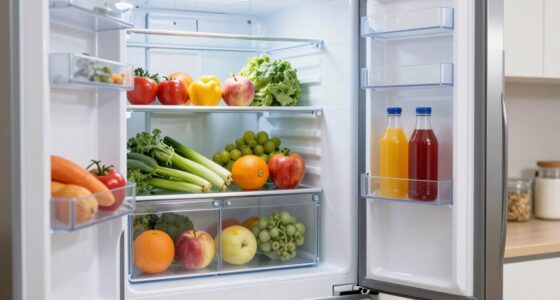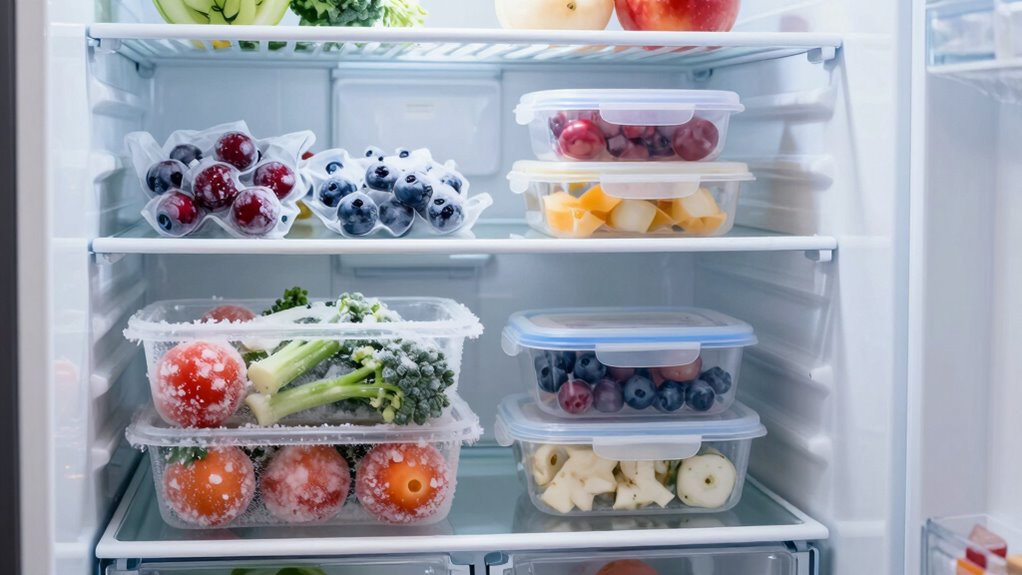

When power is unstable, start with your most perishable foods like raw poultry, ground meats, seafood, eggs, and dairy, as they spoil quickly above 40°F. Transfer these to a cooler with ice or prioritize cooking them first. Use your freezer’s thermal mass by packing it tightly and adding ice packs. Foods still cold or with ice crystals can often be refrozen or cooked safely. For more tips on managing your food during outages, keep exploring.
Key Takeaways
- Prioritize consuming or cooking perishable items like seafood, poultry, and ground meats within 1-2 days of power loss.
- Transfer high-value perishables to a full, well-insulated freezer or cooler with ice to extend safe storage.
- Focus on soft cheeses, eggs, and prepared salads immediately if they warm above 40°F or show spoilage signs.
- Use or cook foods with ice crystals or below 40°F, as they are still safe to refreeze or eat.
- Discard any perishable food that has been above 40°F for over 2 hours unless verified safe, to prevent foodborne illness.

Cool Coolers By Fit & Fresh 4 Pack Slim Ice Packs, Quick Freeze Space Saving Reusable Ice Packs for Lunch Boxes or Coolers, Multi Colored, Single Pack
SLIM, POWERFUL & COLORFUL: Taking "extra chill" to the next level! Measuring at 4.75” x 0.5” x 5”,…
As an affiliate, we earn on qualifying purchases.
As an affiliate, we earn on qualifying purchases.
Prioritize Temperature-Sensitive Items First

When managing a freezer outage or uncertain conditions, it’s essential to prioritize temperature-sensitive items first. Focus on raw poultry and ground meats, as they pose the highest bacterial growth risk if above 40°F. Use or cook seafood promptly, since fish and shellfish spoil quickly when temperatures rise. Eggs and egg-based products also spoil faster and should be used or discarded early. Soft cheeses, cream-based dairy, and prepared foods like deli salads support rapid bacterial growth and need immediate attention. Group these items together to prevent cross-contamination and keep them cold. If possible, transfer high-value perishables to a full freezer or cooler with ice. Acting quickly to consume or cook these items helps minimize food waste and maintains safety until power is restored. Additionally, proper food storage techniques can help maintain the cold chain and extend the safety window for perishable items during outages. Implementing energy-efficient cloud solutions can help prevent such outages by ensuring reliable power backups and sustainable data management. Staying informed about backup power options can also improve your response time during outages, reducing the risk of spoilage and inconvenience. Moreover, understanding the role of temperature control in food safety can further help in managing perishables effectively during unexpected disruptions. Recognizing the importance of effective refrigeration practices can assist in maintaining consistent cold temperatures and preventing spoilage.

TempPro Refrigerator Thermometer 2 Pack with Large Backlit LCD Display, Waterproof Freezer Fridge Thermometer with Max/Min Record, Easy Battery Replacement for Room, Cooler (Previously ThermoPro)
【Backlit Display for Clear Visibility】The oversized LCD screen with bright backlight ensures easy readability, even in dark freezers…
As an affiliate, we earn on qualifying purchases.
As an affiliate, we earn on qualifying purchases.
Assess and Use Your Freezer and Refrigerator Temperatures
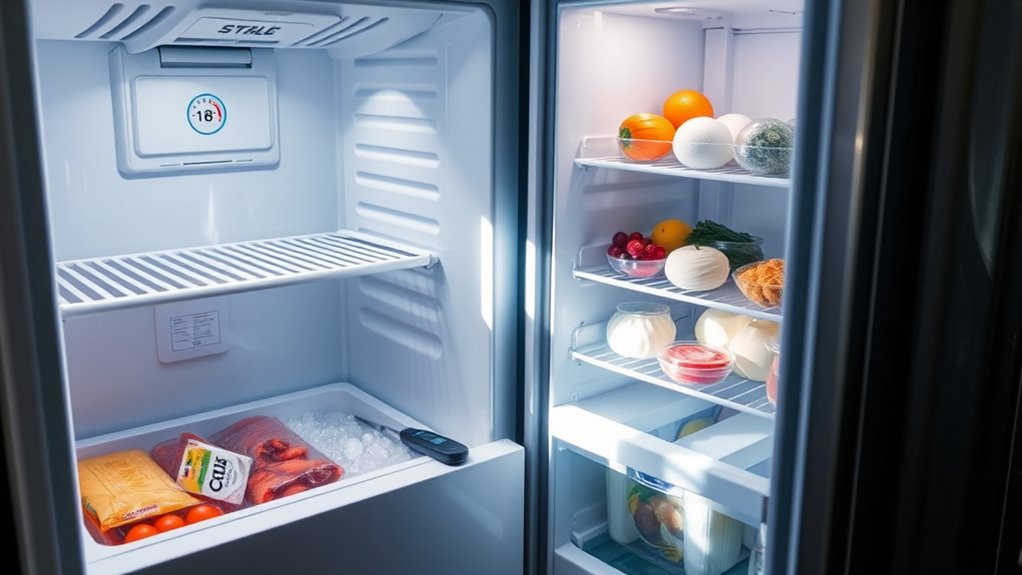
Start by checking your thermometer’s accuracy to guarantee reliable readings, then monitor your fridge and freezer temperatures regularly. Knowing how to interpret these readings helps you decide which items are safe to keep or need discarding. Maintaining proper temperatures is vital for preventing spoilage and protecting your food during outages. Additionally, understanding air quality considerations can help you better manage your storage spaces during power fluctuations. Regularly inspecting and cleaning your appliances, such as filters and vents, can also improve efficiency and food safety during unstable power conditions. Being aware of ventilation needs can further enhance your ability to maintain a safe environment for your stored perishables, especially since proper air circulation supports overall appliance performance and food preservation. Incorporating temperature management practices is essential for minimizing food waste and ensuring safety during power disruptions.
Check Thermometer Accuracy
How can you guarantee your freezer and refrigerator are maintaining safe temperatures? The key is verifying your thermometers are accurate. An unreliable reading could lead to unsafe food handling or unnecessary disposal. To check, place an ice water test: fill a glass with ice, add water, and wait about 5 minutes. The thermometer should read 32°F (0°C). If it doesn’t, calibrate or replace it. Regular calibration ensures precise readings, which are essential during outages.
- Use an ice water test to verify accuracy
- Calibrate or replace faulty thermometers
- Record readings to track temperature consistency
Monitor Temperature Regularly
Regularly monitoring your freezer and refrigerator temperatures guarantees that perishable foods stay safe and reduces waste. Use a reliable thermometer to check temperatures at least once a day, especially during outages or unstable power. In the freezer, ensure it stays at or below 0°F to preserve food safely; in the refrigerator, keep it at or below 40°F. Record readings to track temperature trends and identify issues early. If temperatures rise above safe levels, prioritize consuming or cooking vulnerable items first. Check ice crystal formation in frozen foods—if they still have ice crystals and are ≤40°F, they can often be refrozen or cooked safely. Regular temperature checks help you make informed decisions, minimize food loss, and guarantee food safety during power disruptions.
Interpret Freezer Readings
Interpreting your freezer and refrigerator readings is essential for ensuring food safety during outages or temperature fluctuations. Accurate readings help you decide what’s safe to keep, refreeze, or discard. Use a reliable appliance thermometer to check temperatures regularly. Keep in mind:
- Freezer at or below 0°F indicates food can be refrozen or kept safe if still frozen.
- Refrigerator above 40°F for more than 4 hours means perishable foods should be discarded.
- If your thermometer shows temperatures above safe levels, prioritize consuming or cooking vulnerable foods first.
- Regularly monitor appliance temperatures to catch issues early and maintain food safety.
Always verify readings with a thermometer, not just the appliance display. When in doubt, err on the side of safety. Proper interpretation helps you prevent foodborne illnesses and minimize waste during power instability.
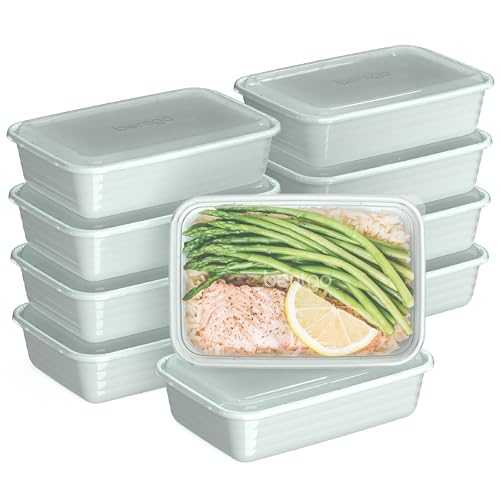
Bentgo Prep – 20-Piece 1-Compartment Reusable Meal Prep Containers with Lids, PFAS & BPA Free Materials, Durable, Microwave, Freezer, & Dishwasher Safe To Go Food Storage (Mint)
#1 Brand Pick for Meal Prep Containers: Bentgo is the top pick for meal prep containers!* This lightweight,…
As an affiliate, we earn on qualifying purchases.
As an affiliate, we earn on qualifying purchases.
Group and Pack Items to Maximize Cold Retention
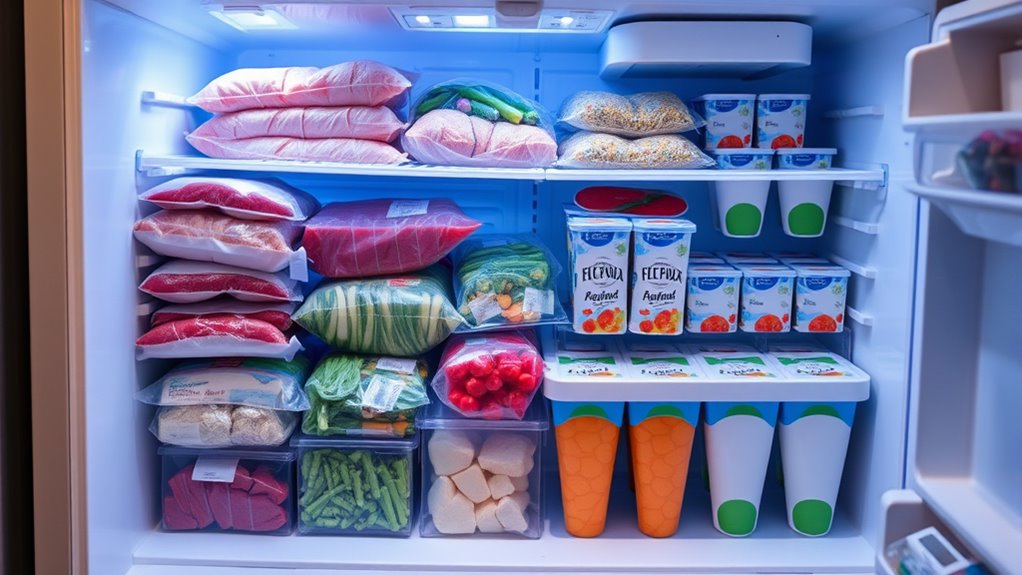
You can keep your freezer colder longer by packing items tightly to reduce exposed surface area. Adding thermal mass, like frozen water containers or gel packs, helps maintain low temperatures during outages. Properly grouping and packing your food minimizes warming and extends safety. Additionally, labeling and organizing items can help you quickly identify what to prioritize when managing your frozen supplies. Proper organization techniques ensure efficient access and minimize unnecessary door openings. Implementing insulation strategies can further improve cold retention during power disruptions. Using temperature monitoring tools can also assist in maintaining the ideal freezer conditions and alert you to potential issues early, especially when integrated with smart home automation systems that can provide remote monitoring and alerts. Moreover, understanding thermal mass properties can optimize your packing methods to maximize cold retention during outages.
Tightly Pack Items
Tightly packing items in your freezer or cooler reduces air circulation and exposed surface area, which helps slow down warming and spoilage. When you pack items close together, the frozen or cold contents act as thermal mass, maintaining low temperatures longer. This approach minimizes cold loss and prevents rapid temperature rises that accelerate spoilage. To maximize effectiveness:
- Use containers or bags to keep items snug and avoid gaps.
- Place smaller items among larger, frozen blocks or water bottles.
- Avoid leaving empty space; fill gaps with ice packs or crumpled foil to maintain cold.
Use Thermal Mass
Grouping and packing items tightly in your freezer or cooler creates thermal mass that helps retain cold temperatures longer. When items are packed closely, less air circulates, reducing heat transfer and slowing warming. Use containers of frozen water or gel packs to increase thermal mass further, especially in refrigerators or coolers. These additions absorb heat, maintaining low temperatures for extended periods. For prolonged outages, consider acquiring dry ice or large blocks of ice to maximize thermal mass and keep foods frozen longer. Make certain your freezer is full or nearly full—an occupied freezer holds cold better than an empty one. Proper packing minimizes exposed surface area and air gaps, helping preserve perishable foods and buy you vital time during power instability. Understanding thermal properties can help optimize your packing strategy for maximum cold retention. Additionally, ensuring consistent temperature maintenance is crucial to prevent food spoilage during outages.

Food Storage for Self-Sufficiency and Survival: The Essential Guide for Family Preparedness
As an affiliate, we earn on qualifying purchases.
As an affiliate, we earn on qualifying purchases.
Determine Which Foods Can Be Safely Refrozen or Cooked
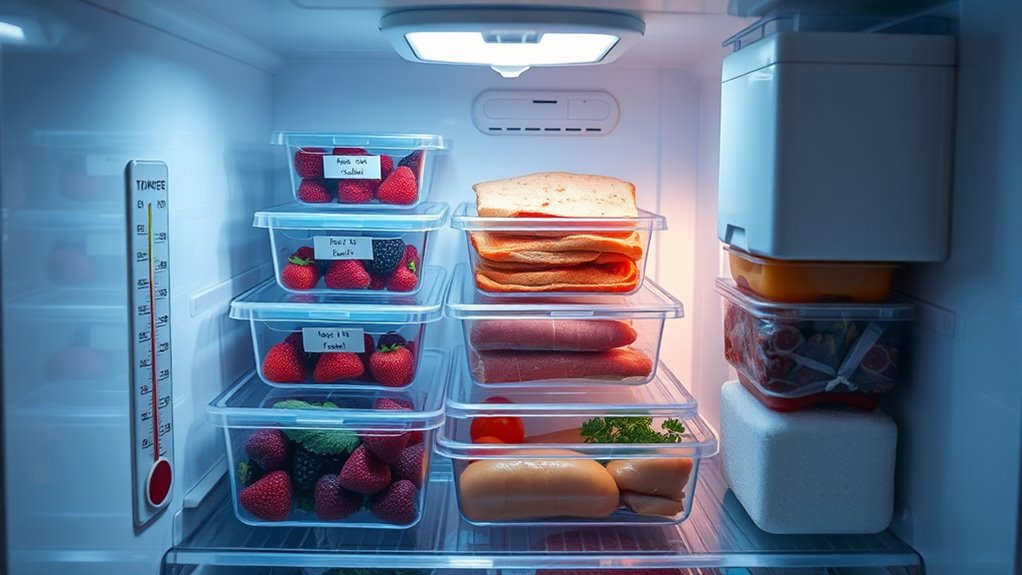
Determining which foods can be safely refrozen or cooked hinges on evaluating their temperature and condition after a power outage or thawing event. If foods still contain ice crystals or are at or below 40°F, they’re generally safe to refreeze or cook. Foods above 40°F for more than two hours should be discarded unless you can verify they’re still cold enough. Ensuring proper water quality can also influence food safety, especially when cleaning and preparing foods during a recovery phase.
- Thawed seafood, poultry, and ground meats should be cooked or eaten first to reduce bacterial risk.
- Soft cheeses, eggs, and prepared salads require prompt use or disposal when warm.
- Foods with unusual odor, color, or texture are unsafe, regardless of temperature, and should be discarded.
Follow Safe Disposal and Consumption Guidelines

After evaluating which foods remain safe to eat or refreeze, it’s important to follow proper disposal and consumption guidelines to prevent foodborne illnesses. First, discard perishable items like meat, seafood, eggs, dairy, and prepared salads if they’ve been above 40°F for more than 4 hours, unless you’ve verified they’re still cold. Use smell, color, and texture as spoilage indicators—if anything seems off, throw it out. Do not taste-test questionable foods. Foods thawed in the freezer should only be refrozen if they still contain ice crystals or measure below 40°F. Keep records of temperature and time during outages to justify disposal or consumption decisions. Maintaining food safety standards through accurate temperature monitoring can help prevent illness. Proper storage techniques, like maintaining quality assessment standards, can help minimize waste and ensure safety. Incorporating AI-driven solutions can further assist in monitoring and managing food safety during power outages. Additionally, regularly checking temperature logs can provide valuable documentation for safe food handling. Being aware of proper thawing methods is also crucial to avoid bacterial growth during power disruptions.
Prepare Backup Strategies to Protect Your Food Supply

To effectively protect your food supply during power outages or emergencies, you need to implement reliable backup strategies ahead of time. Planning now guarantees you can quickly respond and minimize spoilage. Start by maintaining accurate appliance thermometers in your refrigerator and freezer to monitor temperatures. Pre-freeze water containers and group-pack your freezer contents to maximize thermal mass. Identify local sources of dry ice, block ice, and gas-powered generators for quick access during outages. Keep coolers, ice packs, and a limited-generator plan ready to extend cold storage. Train household members or staff on door-closure discipline and emergency food rotation to reduce spoilage. These steps help you preserve perishable foods longer, reduce waste, and ensure safety when power becomes unstable. Additionally, understanding modern kitchen technology can aid in monitoring and managing your food storage more efficiently.
Frequently Asked Questions
How Can I Tell if Frozen Food Still Safe Without a Thermometer?
You can tell if frozen food is still safe without a thermometer by checking for ice crystals and the texture. If the food still has ice crystals or feels solid and cold, it’s likely safe to refreeze or cook. If it’s warm, with no ice crystals or has thawed and become soft, discard it to avoid foodborne illness. Use your senses and proper judgment to make safe choices.
What Signs Indicate My Freezer Has Lost Safe Temperature?
Your freezer has lost safe temperature if ice crystals are melting rapidly, and the food feels warm or has a strange odor. If you notice a large amount of liquid pooling, or if the food has turned discolored or slimy, it’s a sign it’s gone bad. Check for a temperature rise above 0°F—if you don’t have a thermometer, rely on these signs to decide whether to refreeze or discard your food.
Can I Refreeze Food That Has Partially Thawed?
Yes, you can refreeze food that has partially thawed if it still contains ice crystals or measures ≤40°F. Check the temperature with a thermometer or look for ice crystals inside packaging. If the food has been above 40°F for more than two hours or shows signs of spoilage, discard it. Always prioritize safety and err on the side of caution to prevent foodborne illness.
How Long Can I Keep Refrigerated Foods Without Power?
You can keep refrigerated foods safe for about 4 hours without power if the door stays closed. Imagine you’re in a hurry, but remember, every minute counts—so resist opening the fridge. After four hours, perishable items like meats, dairy, and prepared salads are at risk. Check for ice crystals or a thermometer reading below 40°F before consuming or refreezing, otherwise discard to stay safe.
What Are the Best Ways to Organize Frozen Items During an Outage?
You should organize frozen items by grouping them tightly to reduce air exposure, which slows warming. Use containers of ice or gel packs as thermal mass to extend cold. Keep similar items together to easily identify perishables, and consider transferring high-value foods to a full freezer or cooler with ice. Label items with dates if possible, and monitor temperatures regularly to guarantee safety during power outages.
Conclusion
Now that you know how to prioritize, assess, and pack your frozen goods, the real challenge begins. Will your efforts be enough to preserve your food as temperatures fluctuate? Every decision counts—some items may surprise you, while others could be lost forever. Stay vigilant, act swiftly, and trust your instincts. The next few hours could determine what food survives and what doesn’t. Are you ready to face the uncertain hours ahead?