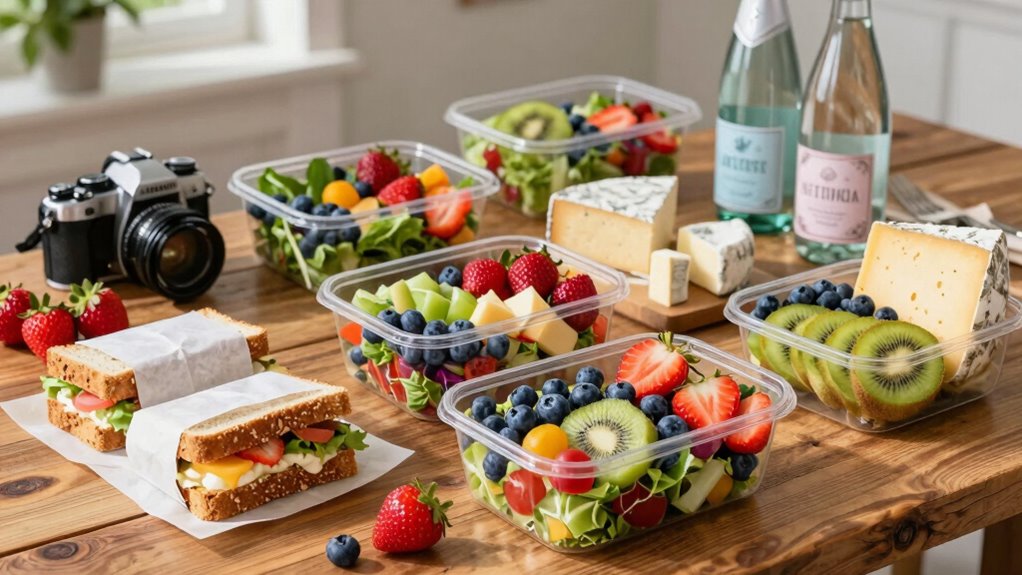
For a zero-cook, 3-day outage meal plan, focus on shelf-stable foods like canned fish, ready-to-eat grains, nut butters, and dried fruits. Pack easy snacks such as granola bars, nuts, and jerky, and prepare no-cook meals like salad jars or wraps with durable ingredients. Keep plenty of bottled water and portable drinks on hand. With smart organization and variety, you can stay nourished and energized—discover more tips to enhance your plan below.

Get backup power and energy gear delivered free with Prime
- Fast, free delivery on millions of items
- Prime Video, Amazon Music and more included
- Member-only deals all year
Key Takeaways
- Use pre-packaged, shelf-stable proteins, grains, and snacks that require no heating or refrigeration for quick, safe meals.
- Prepare and organize grab-and-go meal kits like salad jars, wraps, and snack packs in advance.
- Incorporate nutrient-dense, easy-to-eat foods such as nuts, dried fruits, jerky, and whole-grain crackers for sustained energy.
- Prioritize hydration with bottled water and shelf-stable drinks, and plan small, frequent snack consumption.
- Rotate and replenish supplies regularly to maintain freshness, variety, and nutritional balance throughout the outage.
Building Your Outage Food Stockpile
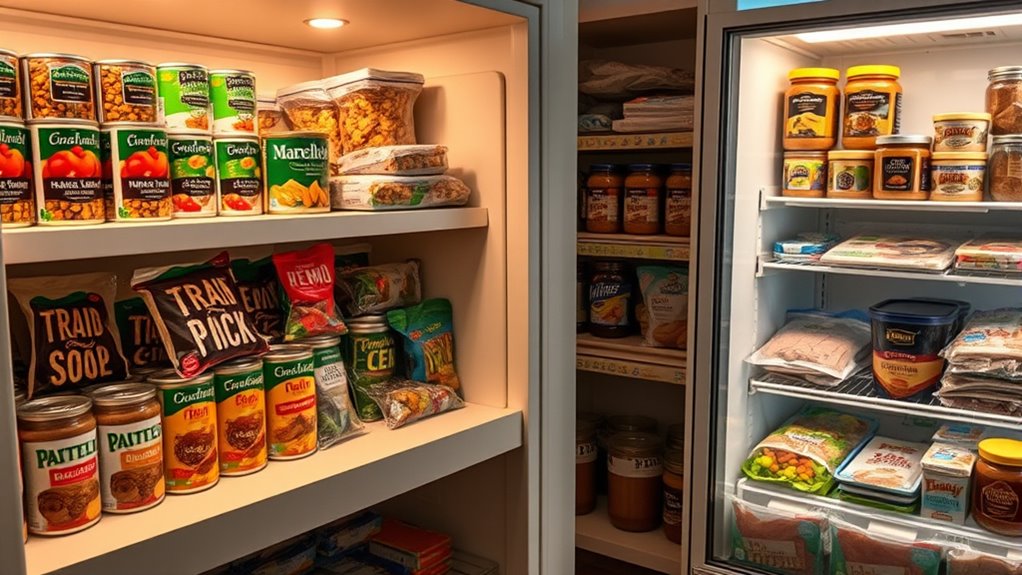
Building your outage food stockpile begins with selecting shelf-stable staples that can sustain you for at least three days without cooking. Focus on canned proteins like tuna, salmon, or chicken—they offer long shelf life and are ready to eat. Add ready grains such as precooked rice or instant quinoa, which only need water and can be eaten cold. Nut butters like peanut or almond provide concentrated calories and healthy fats, staying safe without refrigeration. Incorporate shelf-stable dairy alternatives like UHT milk or powdered milk for calcium and protein. Include snacks like nuts, jerky, and crackers for variety and energy. Proper storage techniques, such as airtight containers, are essential to maintaining the quality and safety of your emergency food supply. Understanding food shelf life can help you rotate and maintain your stock effectively. Additionally, being aware of emergency preparedness strategies can further enhance your readiness for unforeseen situations. This foundation guarantees you’ll have nutritious, no-cook options during an outage.
Essential Supplies for No-Cook Meals
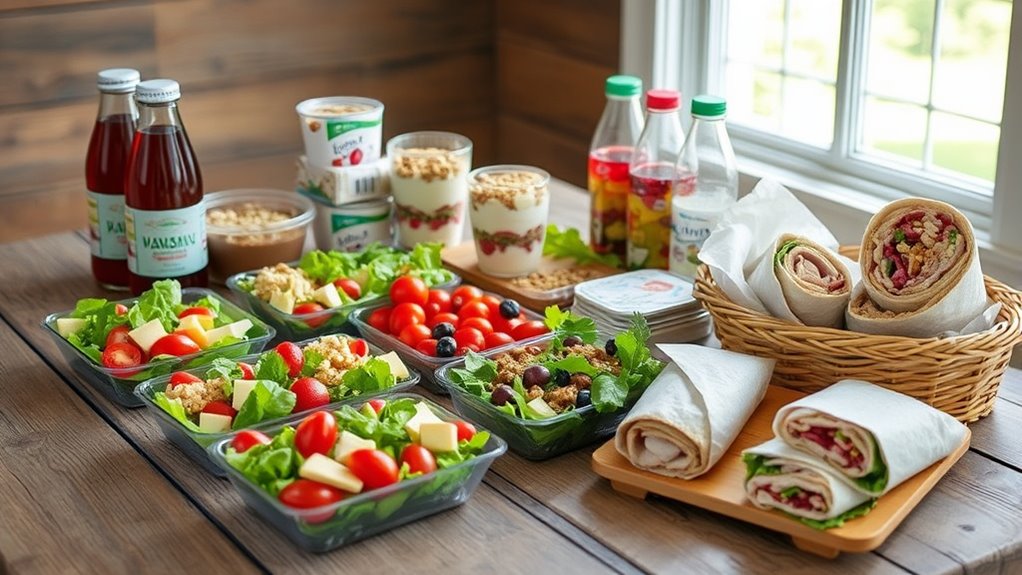
You’ll want to stock up on shelf-stable proteins like canned tuna, salmon, and beans that require no cooking and last long on your shelf. Ready-to-eat grains such as precooked rice, couscous, and instant quinoa make quick meal bases, while snacks like nuts, jerky, and crackers provide energy and convenience. Having these supplies on hand guarantees you can assemble balanced, no-cook meals throughout the outage without hassle. Additionally, choosing items with long shelf life and consistent quality ensures your supplies remain safe and enjoyable over time. Considering lease options for longer-term storage solutions can also help you plan for extended outages or emergencies. Incorporating a variety of ready-to-eat options will help prevent meal fatigue and keep your diet balanced during extended outages. To minimize environmental impact, selecting eco-friendly packaging can support sustainable storage practices and reduce waste. Ensuring your supplies support biodiversity conservation principles can also promote environmentally sustainable storage practices.
Shelf-Stable Protein Options
Shelf-stable proteins are essential for no-cook meal plans during a power outage or emergency, providing convenient and long-lasting sources of nutrition. Canned fish like tuna, salmon, sardines, and chicken offer high protein content and can be eaten straight from the can. Legumes such as beans and chickpeas are versatile, fiber-rich options that require no cooking. Jerky and dried meats deliver portable, protein-dense snacks ideal for on-the-go eating. Shelf-stable dairy alternatives like UHT milk, single-serve yogurt, and powdered milk supply calcium and additional protein. These options stay safe and edible for years when stored properly. Proper storage techniques are crucial to maintaining the quality and safety of these shelf-stable proteins over time. Having a variety of these options ensures you meet your dietary needs without cooking, keeping you nourished and prepared during any outage. Additionally, understanding storage best practices helps prolong the shelf life and preserves the nutritional value of these supplies, especially when stored in cool, dry places.
Ready-to-Eat Grains and Snacks
Ready-to-eat grains and snacks are essential for maintaining energy and nutrition during a no-cook outage. Packaged precooked rice, couscous, and instant quinoa are convenient options that only need water or can be eaten cold. They serve as quick, calorie-dense bases for meals. Keep shelf-stable snacks like nuts, trail mix, granola bars, and crackers on hand to boost energy and provide variety. These snacks are portable, require no preparation, and store well for long periods. Incorporate ready-to-eat grains and snacks into your meal plan for balanced, satisfying meals without cooking. They help meet your daily caloric needs, support sustained energy, and add textures and flavors to your emergency food supply, making your three-day outage manageable and nutritious. Discover Unique High-Quality Home Decor and Gift Ideas To enhance your emergency preparedness, understanding the importance of nutrient-dense foods can help you make smarter choices for long-lasting, healthy options.
Daily Meal Planning Strategies
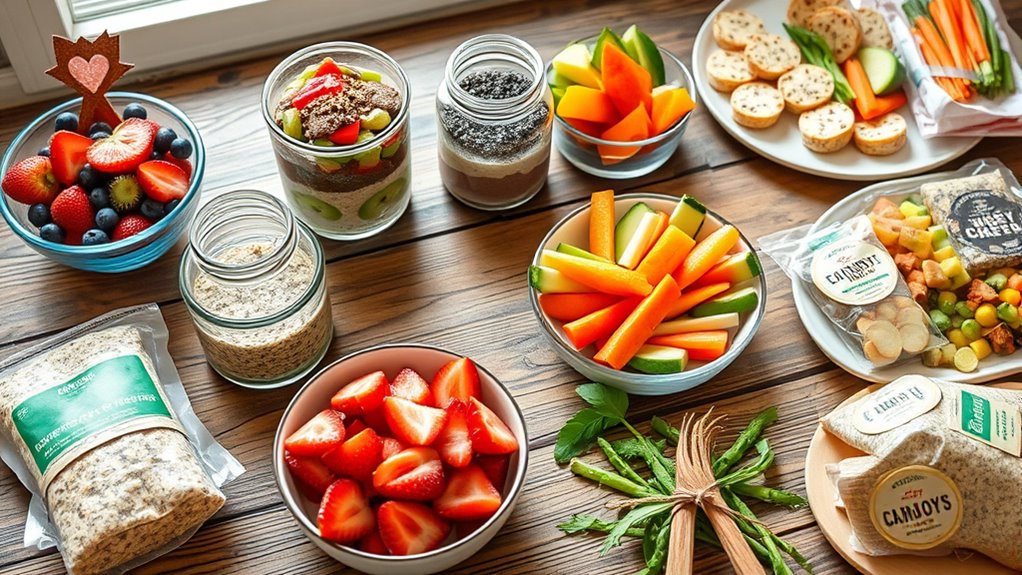
To make the most of your outage meal plan, start by prioritizing perishable items so you utilize them before they spoil. Balance your meals with a mix of macro and micro nutrients to stay energized and healthy throughout the day. Pre-prepping ingredients and snacks ensures quick, easy access and reduces the time spent on meal assembly during stressful moments. Incorporating natural, preservative-free foods can further extend shelf life and promote health. Additionally, understanding solar energy principles can inspire eco-friendly choices in your storage and preparation methods. Familiarizing yourself with home energy systems can help you optimize storage solutions and reduce dependency on traditional power sources during outages, especially when integrating smart appliances that can operate efficiently with alternative energy sources.
Prioritize Perishable Items First
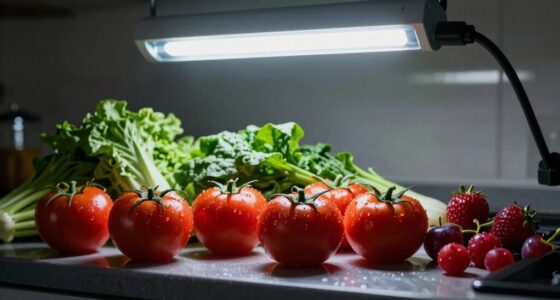
Since perishables have a limited shelf life during an outage, it’s crucial to plan meals that use these items early in the day. Focus on consuming fresh produce, deli meats, pre-cooked chicken, and dairy before they spoil. For breakfast, enjoy yogurt cups or sliced fruit like oranges or apples. Use pre-washed greens and vegetables in salads or wraps, eating those first to prevent waste. Hard cheeses and vacuum-sealed deli meats can last several days, so incorporate them into sandwiches or snacks early on. Keep raw vegetables like carrots and bell peppers for later in the day, as they stay crisp longer. Prioritizing perishables ensures you maximize their nutritional value and minimize spoilage, making your limited resources stretch further during the outage.
Balance Macro & Micro Nutrients
Balancing macro and micro nutrients during a 3-day outage requires strategic meal planning to guarantee you meet your nutritional needs without cooking. Focus on combining protein, healthy fats, and complex carbs for energy and satiety. Incorporate colorful fruits and vegetables to assure micronutrient intake like vitamins C and A, potassium, and fiber. To enhance your understanding of key nutrients, consider exploring net worth and its significance in personal finance, which can help you prioritize nutrient-rich foods within your supply. Utilizing nutrient density principles can guide you in selecting the most beneficial options during limited-resource periods. Use the following table to guide your choices:
| Macro/Nutrient | Food Sources |
|---|---|
| Protein | Canned fish, jerky, shelf-stable yogurt |
| Carbohydrates | Ready grains, whole-grain crackers, dried fruits |
| Fats | Nut butters, nuts, seeds |
| Vitamins/Minerals | Canned fruits, fresh durable vegetables, fortified cereals |
Prioritize variety and balance to maintain energy and health during your outage.
Pre-Prep for Easy Access
Preparing your pantry and meal components ahead of time makes daily outage meal planning much simpler. By pre-assembling snack packs, salad jars, and sandwich ingredients, you can quickly grab what you need without extra steps. Store canned proteins, ready grains, nut butters, and shelf-stable dairy in accessible containers or resealable bags. Label everything with prep dates and contents to track freshness and prioritize perishables first. Keep fresh produce like durable vegetables and fruits grouped together for easy access, and pre-cut or pre-washed when possible. Use clear containers to see contents at a glance. Also, organize utensils, plates, and storage bags nearby. This prep minimizes daily effort, reduces waste, and guarantees you have nutritious options ready during an outage. Incorporating easy document management strategies can also help you keep track of your meal prep supplies and expiration dates efficiently. Additionally, maintaining a well-organized pantry ensures quick access to essentials during an emergency. For added convenience, consider using outage-friendly storage solutions designed to withstand power outages and prevent spoilage.
Breakfast Ideas Without Heating

When facing a no-heat situation during an outage, you can enjoy a variety of nutritious and satisfying breakfast options that require no cooking. These ideas are quick to assemble and packed with energy to start your day. For example, you might grab a single-serve yogurt cup topped with nuts and dried fruit for added crunch. Or, spread nut butter on whole-grain crackers and pair with a fresh apple for fiber and healthy fats. Pre-washed salad greens can be combined with canned salmon or chicken for a protein boost. You could also enjoy a banana with a handful of trail mix or a cheese stick with a few whole-grain crackers. These simple options keep you energized without needing any heat or prep time.
Lunch and Dinner Options Using Shelf-Stable Items

During a power outage, you can easily assemble satisfying lunch and dinner options using shelf-stable items that require no cooking. Start with canned proteins like tuna, salmon, or chicken, paired with ready grains such as pre-cooked rice or instant quinoa. Combine these with raw vegetables like carrots, bell peppers, or cucumbers for crunch and nutrients. For a portable meal, make wraps with whole-grain tortillas, nut butter, or deli meats, plus sliced fruit or veggies. You can also prepare bento-style boxes with cheese, crackers, nuts, and dried fruit for variety. Salad jars with layered durable veggies, grains, and a simple dressing provide a fresh, nutritious option. These meals are balanced, filling, and require minimal effort, making them perfect for a no-cook outage scenario.
Snack and Hydration Tips for Emergency Situations
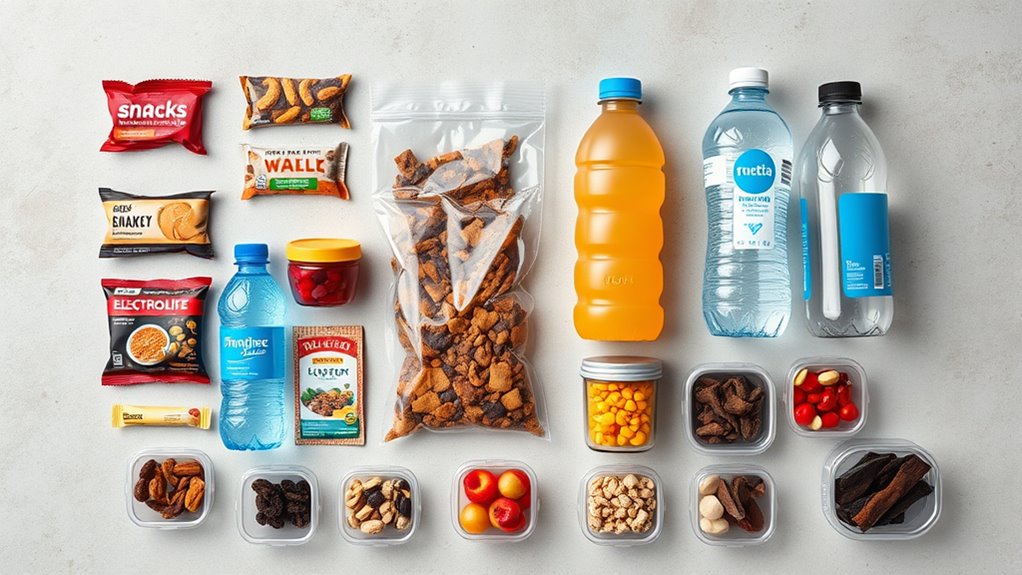
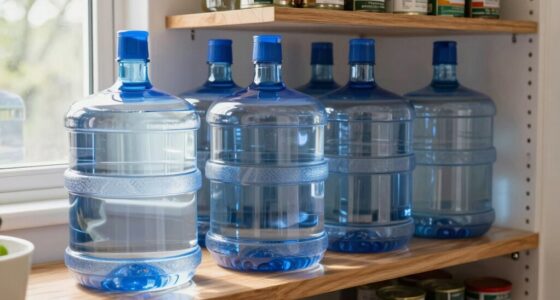
In emergency situations, staying properly hydrated and maintaining energy levels is essential, especially when access to fresh food and water is limited. To keep your energy steady, choose nutrient-dense snacks like nuts, dried fruit, or protein bars. Hydrate with bottled water or shelf-stable electrolyte drinks to replenish lost minerals. Consider these tips:
- Keep a supply of bottled water, aiming for at least 3 liters per person daily.
- Use resealable bags for snack portions to avoid waste and contamination.
- Opt for shelf-stable drinks like fruit juices or electrolyte pouches to boost hydration.
- Incorporate small, frequent snacks instead of large meals to sustain energy.
- Store hydration supplies in a cool, accessible spot, and rotate stock regularly to prevent spoilage.
Staying hydrated and snacking smartly helps you stay alert and healthy during an outage.
Safely Storing and Rotating Your Food Supplies
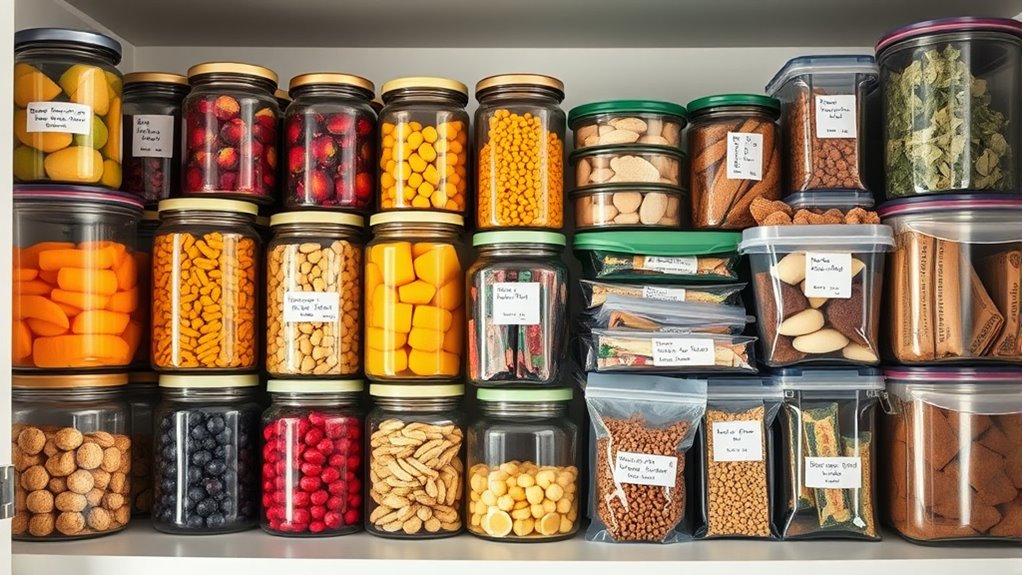
Properly storing and rotating your food supplies guarantees they stay safe and ready when needed. Keep canned goods in a cool, dry place away from direct sunlight, and check for signs of damage like bulging or rust before use. Use the FIFO (first-in, first-out) method—consume older items first to prevent spoilage. Label all containers with purchase or opening dates to help track freshness. Store pre-cut vegetables and fresh produce in sealed containers or resealable bags, and keep perishables refrigerated if possible, rotating them regularly. Maintain a clean storage area by discarding expired items and wiping down surfaces. By organizing your supplies and practicing rotation, you ensure everything remains safe, fresh, and accessible during an outage.
Creative Meal Combinations for Variety

Adding variety to your outage meals keeps your spirits high and your nutrition balanced. You can mix and match simple ingredients to create appealing, no-cook combinations. For example, combine canned tuna with crunchy carrots and crackers for a protein-packed snack. Layer shelf-stable grains, canned beans, and chopped bell peppers in a jar for a colorful salad. Wrap nut butter and sliced fruit in a tortilla for a portable, energizing snack. Pair hard cheese with whole-grain crackers and dried fruit for a savory, sweet combo. Or assemble a bento box with cheese, nuts, raw veggies, and fruit slices for a balanced, satisfying meal. These creative pairings keep your menu interesting while ensuring you get essential nutrients during the outage.
Practical Tips for Managing Limited Resources
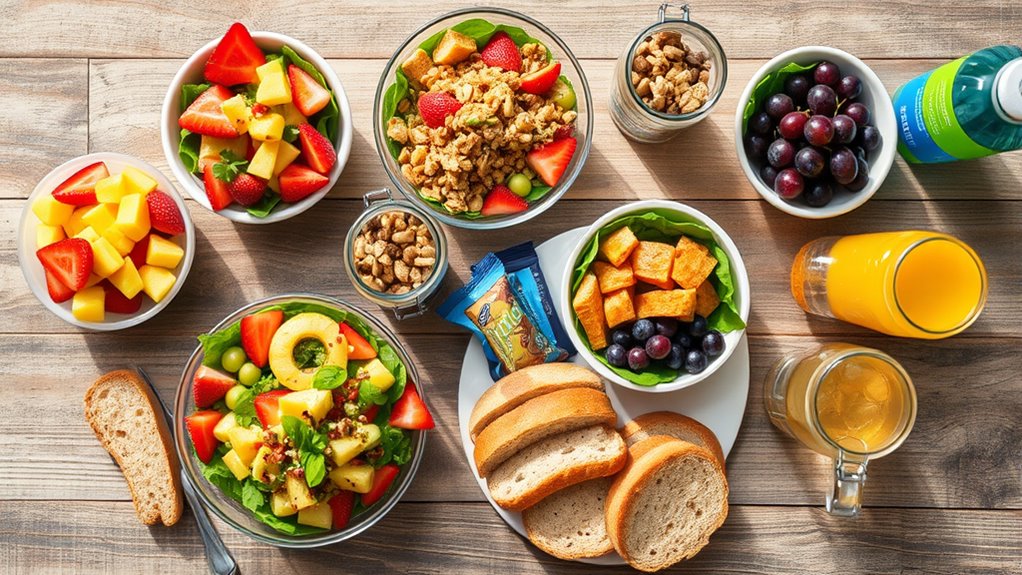
To make your limited resources last, focus on prioritizing shelf-stable foods that won’t spoil quickly. Rotate your supplies regularly to prevent waste and keep track of what’s freshest, so you use items before they expire. Also, prepare portable snacks in advance to guarantee quick, nutritious options that require minimal effort during the outage.
Prioritize Shelf Stability
Managing limited resources during a power outage requires careful prioritization of shelf-stable foods that can last without refrigeration or heating. Focus on items with long shelf lives and minimal spoilage risk. Stock up on canned proteins like tuna or beans, ready grains such as instant rice or couscous, nut butters, shelf-stable dairy alternatives, and packaged snacks or meal kits. These essentials ensure you have nutritious options without relying on refrigeration. Keep canned goods in a cool, dry place, and rotate stock regularly. Look for products with clear expiration dates and sturdy packaging. By prioritizing shelf stability, you reduce waste and ensure access to safe, nourishing food throughout the outage, even when resources are limited and cooking isn’t available.
Maximize Food Rotation
Effective food rotation is crucial to prevent waste and make certain you always have safe, nutritious options on hand. Start by organizing your supplies with the FIFO (first-in, first-out) method, placing newer items behind older ones. Regularly check expiration dates and discard any cans or packages nearing or past their prime. Use perishable items like fresh greens and deli meats early in your plan, saving longer-lasting staples for later. Rotate canned proteins and grains to ensure they’re used before expiration. Keep your storage cool, dry, and well-ventilated to extend shelf life. When restocking, replenish older items first to minimize spoilage. This systematic approach ensures your resources stay fresh, safe, and ready for effective use during your outage.
Prepare Portable Snacks
Preparing portable snacks guarantees you have quick, easy options during an outage, especially when resources are limited and cooking isn’t possible. To stay prepared, stock a variety of shelf-stable, nutrient-dense snacks that require no refrigeration or heating. These snacks should be portable and easy to consume on the go. Consider including:
- Protein bars and jerky for quick protein boosts
- Nut butters and shelf-stable spreads for energy and fats
- Canned nuts and trail mix for fiber and calories
- Dried fruits like apricots or cranberries for vitamins and sweetness
- Whole-grain crackers or rice cakes for carbs and satiety
Having these on hand ensures you can grab a nutritious snack anytime, minimizing hunger and maintaining energy during your outage. Pre-portion snacks into individual servings for convenience and to reduce waste.
Maintaining Nutrition and Energy Levels During Outages
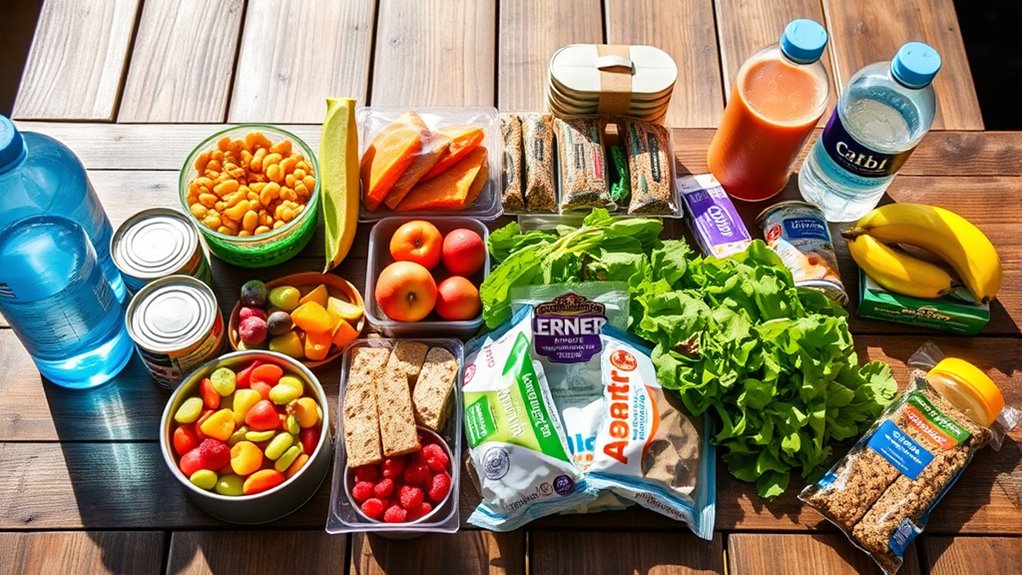
To maintain your energy and nutritional needs during an outage, it’s essential to choose shelf-stable foods that deliver balanced macros and micronutrients. Focus on canned proteins like tuna, salmon, and beans, which provide high-quality protein and healthy fats. Incorporate ready grains such as instant rice or quinoa for complex carbs that sustain energy. Nut butters add calories, healthy fats, and vitamins, while shelf-stable dairy alternatives supply calcium and protein. Include durable fruits like apples and oranges for vitamins and fiber, and add raw vegetables like carrots and bell peppers for crunch and nutrients. Combining these items in balanced meals ensures you get enough protein, healthy fats, carbs, vitamins, and minerals. Proper selection helps keep your energy steady and your body nourished during the outage.
Frequently Asked Questions
How Do I Ensure My Perishable Items Stay Safe During a Power Outage?
To keep your perishable items safe during a power outage, store them in a refrigerator or cooler with ice packs, keeping the temperature below 40°F (4°C). Limit opening the fridge to preserve coolness, and use a thermometer to monitor the temperature. Consume or transfer perishable foods to a cooler early on, and discard anything that’s been above safe temperatures for more than 2 hours to prevent foodborne illness.
What Are the Best Portable Snacks for Quick Energy?
You need snacks that pack a punch like a lightning bolt, fueling you instantly. Opt for protein bars, trail mix with nuts and dried fruit, jerky, and single-serve nut butters. These are super portable, calorie-dense, and require no prep. Keep a stash of crackers, shelf-stable cheese, and fruit for variety. With these, you’ll stay energized and ready to face anything during the outage without missing a beat!
How Can I Manage Food Waste in a No-Cook Emergency?
To manage food waste during a no-cook emergency, you should plan portions carefully and use pre-portioned snacks and meals to avoid leftovers. Store leftovers in resealable containers and label them with dates, then consume perishable items first. Rotate stock using FIFO, and discard any food that shows signs of spoilage or has been stored beyond safe timeframes. Proper storage and mindful planning help minimize waste and guarantee food safety.
Are There Vegetarian or Gluten-Free No-Cook Meal Options?
Imagine a garden blooming with vibrant, safe choices even in tough times. You can craft vegetarian and gluten-free no-cook meals by assembling canned beans or lentils with fresh, durable vegetables like carrots and cucumbers. Pair these with nut butters, gluten-free crackers, or shelf-stable tofu. Layer salads in jars or create snack boxes filled with nuts, dried fruits, and canned fruit. These options nourish your body while keeping your spirit resilient and hopeful.
How Do I Handle Food Safety if Cans Are Damaged or Bulging?
You should discard cans that are damaged or bulging immediately, as they might contain harmful bacteria or toxins. Never consume food from suspicious cans, even if they look okay on the outside. Instead, inspect cans carefully for leaks, rust, or dents, and only keep those in good condition. When in doubt, throw it out to guarantee your safety, and always prioritize safe, uncontaminated food during an outage.
Conclusion
With a well-stocked, no-cook meal plan, you can stay nourished and energized during outages. While some might think it limits variety, strategic choices and creative combinations keep your meals satisfying. Remember, planning ahead guarantees you’re prepared for any unexpected disruption—so you won’t have to compromise on nutrition or flavor. Stay proactive, and you’ll confidently handle any outage without sacrificing quality or comfort.
Halloween Picks
halloween
As an affiliate, we earn on qualifying purchases.