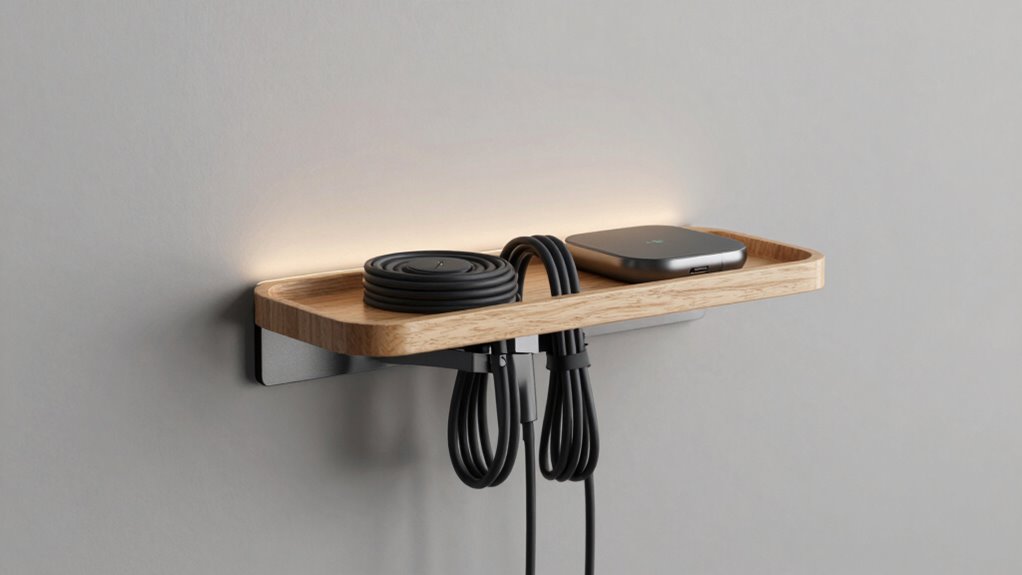

A well-designed charging shelf stops cables from getting yanked by securely supporting devices, organizing cords, and incorporating cable anchors or clips to prevent slack. It guides cables along designated paths with strain-relief features that absorb sudden pulls, keeping connections safe. Using durable, fire-resistant materials and secure mounting methods guarantees stability and safety. If you want to explore how to build or choose the right setup, there’s more to uncover to protect your devices and streamline your space.
Play games included with Prime
Start a Prime free trial and play with Amazon Luna on your devices.
As an affiliate, we earn on qualifying purchases.
Key Takeaways
- Use cable anchors and clips to secure cords along the shelf, preventing accidental yanks and reducing slack.
- Incorporate connector retention features like ledges or magnets to hold plugs securely in place.
- Install strain relief sleeves and rounded edges to absorb pulling forces and protect cables from damage.
- Mount power strips or USB hubs securely to minimize movement and accidental disconnections.
- Elevate connectors off surfaces to prevent dragging and reduce stress on connection points.
charging shelf with cable management
As an affiliate, we earn on qualifying purchases.
As an affiliate, we earn on qualifying purchases.
Understanding the Core Purpose of a Charging Shelf

A charging shelf’s core purpose is to secure and organize cables and connectors, preventing accidental yanks that can damage devices or wiring. It keeps cords neatly routed away from edges and walkways, reducing tripping hazards and connector strain. By supporting cables in designated positions, it minimizes stress at connection points, extending cable and port life. The design aims to make plugging and unplugging easier, often allowing one-handed docking. It also helps declutter surfaces, consolidating multiple chargers into a compact space. Additionally, incorporating Free Floating elements can enhance the flexibility and adaptability of the setup. The use of cable management techniques further optimizes organization and safety. Properly designed cable routing ensures that cables remain secure and easily accessible without unnecessary clutter. Employing modular components allows for customizable and scalable configurations to suit different needs. Integrating flexible mounting options can improve the versatility of the setup, accommodating various workspace arrangements. Whether mounted on a wall, recessed into a desk, or placed on a support shelf, its main goal is to improve safety, protect devices, and streamline daily charging routines. This foundation ensures your workspace remains organized, safe, and efficient.
cable clips and anchors for desk
As an affiliate, we earn on qualifying purchases.
As an affiliate, we earn on qualifying purchases.
Key Components for Effective Cable Management

Effective cable management relies on key components that secure, route, and protect cables to prevent damage and maintain organization. Support shelves or cradles made from plastic, metal, or wood provide stable resting spots for devices and chargers. Cable anchors and clips keep cables along designated paths, reducing slack and stress at connectors. Connector retention features like small ledges or magnets hold plugs in place, resisting accidental yanks. Integrated power strips or USB hubs streamline power delivery, minimizing clutter. Protective features such as rubber pads, strain-relief sleeves, and rounded edges prevent abrasion and damage. Additionally, cable routing techniques help keep cables orderly and accessible. Proper cable strain relief methods are essential to prevent pulling forces from reaching the connectors, thereby extending cable lifespan. Using support shelves or cradles made from durable materials can further enhance stability and organization. Incorporating cable management accessories can simplify adjustments and improve overall setup flexibility. Together, these components ensure cables stay organized, reduce strain, and improve safety—helping you maintain a neat, efficient setup that keeps your devices and cords protected.
As an affiliate, we earn on qualifying purchases.
Techniques to Reduce Cable Strain and Damage
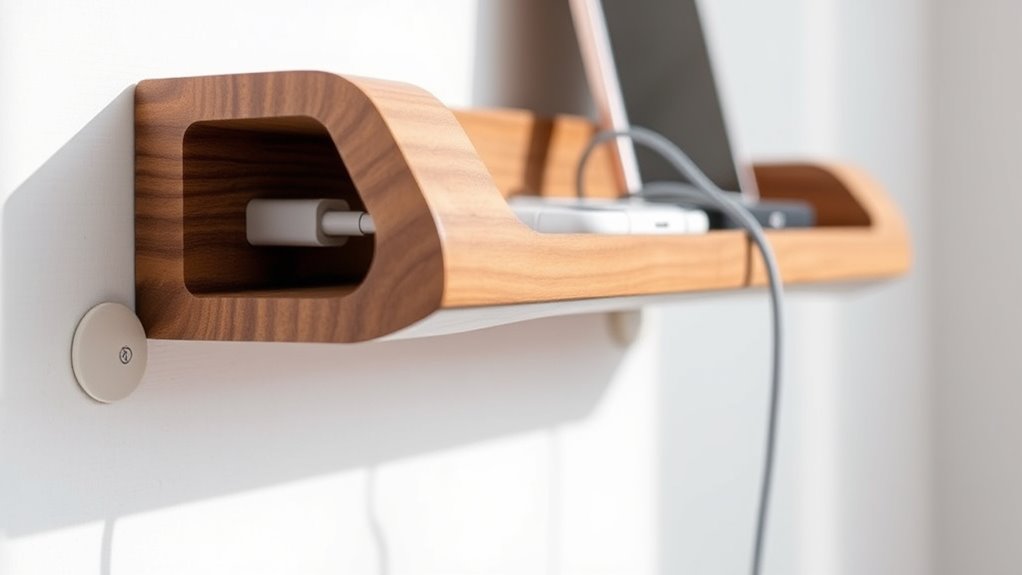
Reducing cable strain and damage starts with implementing proper strain relief techniques that absorb and distribute pulling forces away from device ports. By anchoring cables close to connectors, you prevent excessive tension that can cause fraying or port damage. Routing cables through fixed channels or raceways keeps them organized and minimizes slack that might catch or snag. Elevating connectors off floors or edges reduces dragging and stepping risks. Using flexible sleeves or grips at connection points helps absorb sudden pulls. Additionally, labeling cables and ports ensures quick, correct connections, avoiding unnecessary yanks. Incorporating knowledge about air quality can also encourage the use of cable management solutions that promote a safer and cleaner environment around your workspace, especially when selecting dog-proof cable organizers to prevent accidental damage or chewing. Ensuring proper ventilation around cables can further reduce potential hazards associated with cable overheating or buildup of dust and debris.
As an affiliate, we earn on qualifying purchases.
Selecting the Right Materials and Mounting Options

Choosing durable, safe materials guarantees your charging setup withstands daily use without breaking down or causing hazards. The right mounting method, whether adhesive or screw-based, provides stability and prevents accidental dislodging. By selecting appropriate options, you create a secure, reliable shelf that keeps cables organized and protected from yanks. Additionally, considering space‑heating basics can help ensure your setup integrates well within your room’s environment and safety standards. Incorporating thermal management principles can further enhance safety and durability of your charging station in various conditions. Using materials with proper fire resistance ratings can also mitigate potential hazards related to heat buildup or electrical faults, especially when considering electrical safety protocols for optimal protection. Ensuring your materials meet fire safety standards is crucial for preventing accidents and maintaining overall safety.
Material Durability and Safety
Selecting the right materials and mounting options is essential to guarantee your charging shelf remains durable and safe over time. You need sturdy components that withstand daily use and environmental factors, minimizing risks of failure or hazards. Choose support platforms made of high-quality plastic, metal, or treated wood for strength and longevity. Use corrosion-resistant fasteners and mounts suited for your surface to prevent loosening or deterioration. Incorporate rubberized pads or rounded edges to prevent abrasion and protect devices. Ensure cable clips and anchors are made from durable, adhesive, or snap-fit materials that won’t degrade or fail under stress. Proper selection of high-quality mounting hardware can significantly reduce the risk of mechanical failure. Safety features like strain relief sleeves and non-slip surfaces further enhance protection, reducing electrical or mechanical risks while maintaining a reliable, long-lasting charging setup. Additionally, understanding Feature Buddies can help you select components that are compatible and optimized for your specific setup.
Mounting Methods and Stability
To guarantee your charging shelf remains secure and stable, it’s essential to select the right mounting methods and materials. If you’re attaching the shelf to drywall or wood, screws and anchors provide solid support, especially for heavier loads. For smoother surfaces like glass or tile, adhesive mounts or clamps are ideal, but make certain they’re rated for weight and stability. Clamp mounts allow easy repositioning, while screw mounts offer long-term security. Consider the environment; in high-traffic areas, tamper-resistant fasteners prevent accidental dislodging. Use materials like metal or high-strength plastic for mounting brackets to ensure durability. Properly secured, your setup will resist accidental yanks, maintaining stability and safety while keeping your cables organized and accessible. Additionally, selecting mounts with corrosion resistance is crucial in humid or poolside environments to prolong their lifespan. Incorporating appropriate materials ensures the longevity and reliability of your installation, especially in challenging conditions. Ensuring proper installation techniques will further optimize stability and safety over time. Moreover, choosing mounts with load-bearing capacity suited to your setup prevents failures and enhances overall security.
Designing for Different Environments and Use Cases
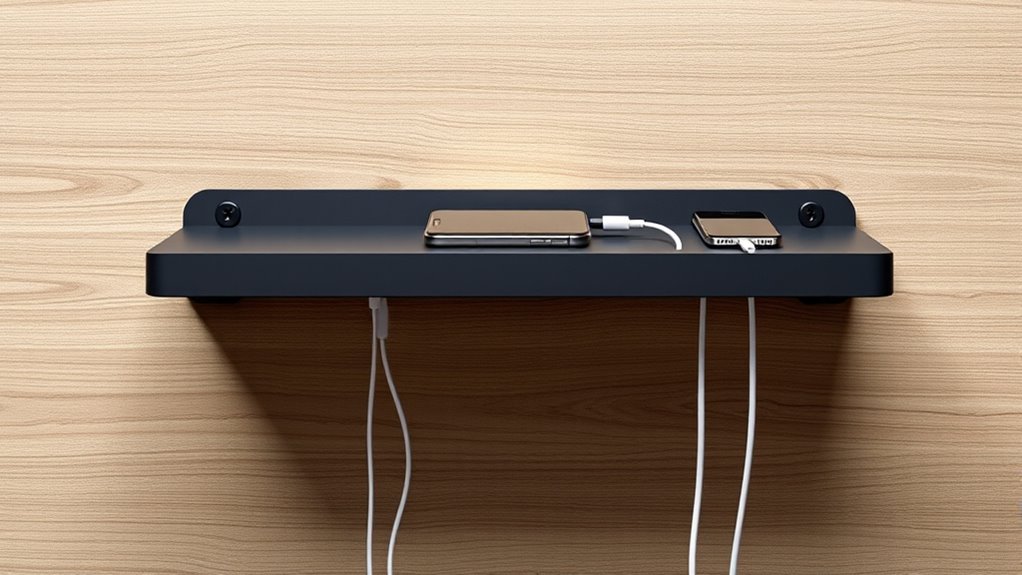
Designing a charging shelf for different environments requires tailoring features to meet specific safety, usability, and space constraints. You need to contemplate where the setup will be used and how people will interact with it. For home desks, prioritize compactness, non-slip supports, and multiport USB hubs. In offices, use tamper-resistant mounts, clear labels, and enclosed shelves to prevent accidental unplugging. For garages or EV charging, select heavy-duty hooks, corrosion-resistant materials, and rugged mounting options. Workshops demand cable raceways and flame-retardant components, while public charging stations require vandal-resistant mounts and easy-clean surfaces. Tailoring your design ensures safety, efficiency, and durability across environments.
- Environment-specific safety features
- Space-efficient layouts
- Durable, suitable materials
- Usability tailored to user needs
- Security and tamper resistance
Safety Features to Prevent Electrical Hazards
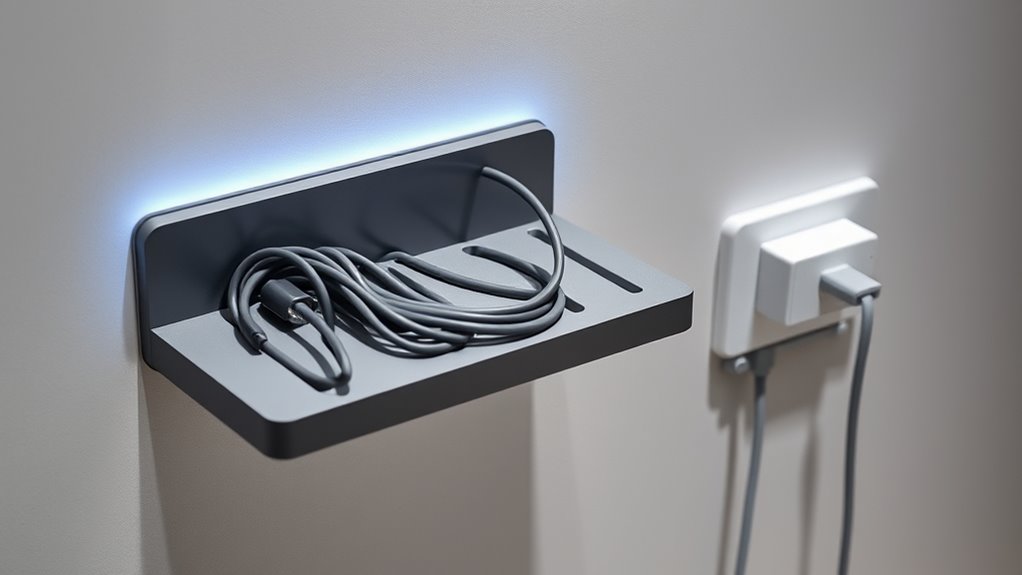
Implementing safety features in charging shelves helps prevent electrical hazards that could cause shocks, fires, or equipment damage. Start by integrating overcurrent protection devices, such as circuit breakers or fuses, to cut power during overloads. Use insulated connectors and strain-relief sleeves to prevent exposed wiring and reduce the risk of short circuits. Mount power strips and USB hubs securely to avoid accidental disconnection or damage, and ensure all components meet safety standards. Incorporate ground-fault circuit interrupters (GFCIs) in areas prone to moisture, like garages or kitchens, to shut off power instantly if a leak occurs. Rounded edges and rubber pads reduce abrasion and accidental contact, further enhancing safety. Regular inspections and proper cable management ensure these features remain effective over time.
Tips for Easy Installation and Maintenance

Installing and maintaining a charging shelf can be straightforward if you plan ahead and use the right techniques. Start by double-checking compatibility with your cables and devices, ensuring your chosen mounting method suits the surface. Use clear labels for ports and cables to streamline troubleshooting and upgrades. Secure cables with clips or raceways to keep them organized and prevent tangling. Regularly inspect support components, replacing worn or damaged parts promptly. Keep the workspace clean by wiping down surfaces and clearing dust from connectors. Test one-handed docking and cable release before final installation to ensure ease of use. Using modular components makes future upgrades simple and maintenance quick, saving time and extending device life.
Ensure easy maintenance by planning ahead, labeling clearly, and using modular components for quick upgrades and repairs.
- Verify connector compatibility before installation
- Use appropriate mounting hardware for surfaces
- Label ports and cables for quick identification
- Regularly check and replace worn parts
- Keep surfaces clean for peak performance
Benefits of Implementing a Well-Designed Charging Shelf
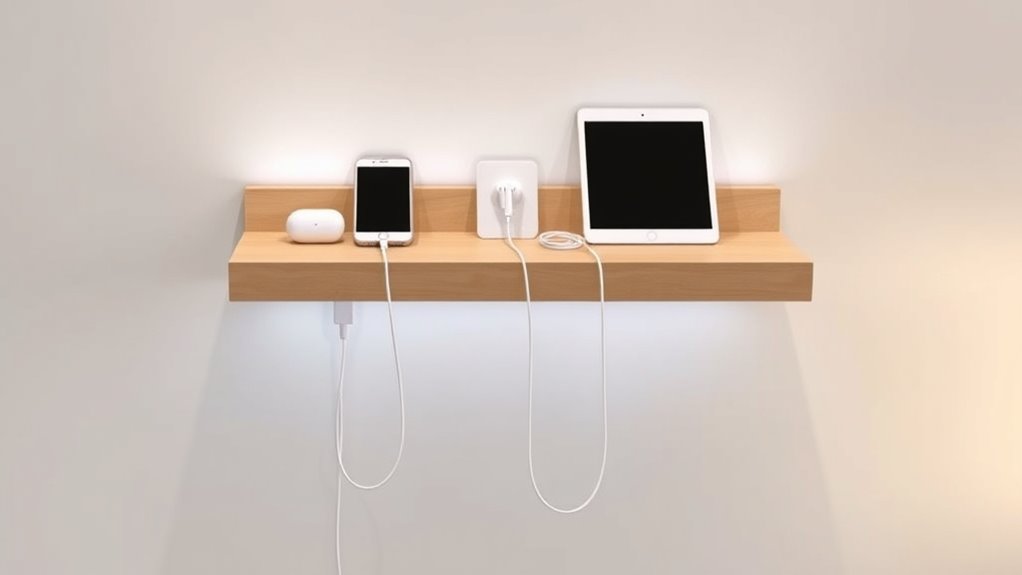
A well-designed charging shelf can substantially reduce cable damage by keeping cords organized and protected from unnecessary stress. It also improves safety by preventing tripping hazards and minimizing electrical risks in your space. Plus, it saves you time and space by streamlining cable management and freeing up surfaces for other uses.
Prevents Cable Damage
By designing a charging shelf with proper cable management features, you substantially reduce the risk of damage to your cords and connectors. Organized routing prevents unnecessary bending, kinks, and strain that weaken cables over time. Secure support keeps connectors aligned and reduces lateral pulls that cause fraying or port wear. Strain relief components absorb sudden tugs, protecting both cable insulation and device ports. Properly anchored cables avoid accidental yanks that can lead to internal wire breakage. Elevated storage keeps connectors off the floor or edges, minimizing contact damage. These features work together to extend your cables’ lifespan and ensure reliable charging performance.
- Prevents fraying at connector joints
- Reduces internal wire breakage
- Minimizes bending stress on cables
- Avoids accidental disconnections
- Extends overall cable durability
Enhances Safety Measures
Implementing a well-designed charging shelf considerably improves safety by reducing common hazards associated with charging cables and devices. It keeps cables organized and routed away from walkways, minimizing tripping risks. Secure connector retention prevents accidental yanks that can damage ports or cause device falls. Strain relief features, like clips and channels, reduce stress on cables and connectors, lowering the chance of frayed wires or short circuits. Elevated storage keeps devices and connectors off the floor, preventing damage from stepping or dragging. Integrated power strips with overload protection minimize electrical risks, while rounded edges and non-slip pads prevent abrasions and slipping accidents. Overall, a thoughtful charging shelf creates a safer environment, reducing injury potential and electrical hazards while promoting a more controlled and stable charging setup.
Saves Time & Space
A well-designed charging shelf streamlines your daily routine by centralizing all charging needs in one accessible location. It reduces the clutter of cords and chargers sprawled across your desk or workspace, saving valuable space. With everything organized and within reach, you spend less time searching for cables or plugging in devices. The integrated design allows quick, one-handed docking, speeding up your charging process. Plus, by consolidating multiple chargers into a compact setup, you free up surface area for other tasks. This efficient arrangement not only declutters but also improves workflow by minimizing cable tangles and unnecessary movements.
- Eliminates tangled cords and reduces clutter
- Speeds up device charging and unplugging
- Frees up valuable desk or counter space
- Simplifies device management and troubleshooting
- Enhances overall workspace organization
Frequently Asked Questions
How Do I Choose the Right Size for My Charging Shelf?
To choose the right size for your charging shelf, first measure your devices and cables to guarantee they fit comfortably without crowding. Consider the number of devices you’ll charge simultaneously, and add extra space for ease of access and cable management. Think about your available space and whether you need room for accessories like power strips or USB hubs. A well-sized shelf keeps everything organized, accessible, and prevents clutter.
Can I Retrofit an Existing Desk or Wall With a Charging Shelf?
You can definitely retrofit an existing desk or wall with a charging shelf, but it takes some planning. First, measure your space and identify sturdy spots for mounting. Then, choose compatible mounting options like adhesive, screws, or clamps. Make sure the shelf fits your devices and cables. With a bit of elbow grease, you’ll have a tidy, yanked-free setup that keeps your workspace organized and safe.
What Maintenance Is Required to Keep the Shelf Functioning Properly?
You should regularly check the support shelf, cable anchors, and retention features for wear or damage. Clean dust and debris from non-slip pads, clips, and channels to prevent slippage or cable misrouting. Tighten any loose screws or adhesive mounts. Inspect cables for frays or cracks, replacing them if needed. Keep the power source connections secure and confirm no buildup of dirt or corrosion that could impair performance.
Are There Wireless or Cable-Free Alternatives to Traditional Shelves?
Sure, you can ditch those cable tangles and yanks with wireless or cable-free options. Think wireless charging pads that eliminate cords altogether, letting your devices juice up effortlessly. Or consider docking stations with magnetic connectors that snap into place—no more wrestling with plugs. These marvels save space, reduce wear and tear, and make your desk look sleek. Who knew tech could be so stylishly lazy?
How Do I Ensure My Shelf Complies With Electrical Safety Standards?
To guarantee your shelf complies with electrical safety standards, verify it uses UL or CE-rated components, including power strips and cables. Make sure all wiring is properly insulated, and avoid overloading circuits. Secure all connections firmly, incorporate strain relief, and use grounded outlets. Regularly inspect for damage or wear, keep cords away from water or heat sources, and follow local electrical codes to prevent hazards and ensure safe operation.
Conclusion
By investing in a well-designed charging shelf, you’ll transform chaotic cable clutter into a streamlined, damage-resistant system that lasts for ages. It’s not just a setup—it’s a game-changer that prevents yanks and tears, saving you from endless repairs and frustration. With the right materials and safety features, you’ll enjoy a sleek, reliable charging station that’s as resilient as it is elegant. Elevate your space and keep cables secure like never before.
Fall yard work Picks
leaf blowers
As an affiliate, we earn on qualifying purchases.