
To make ice last longer, start by pre-chilling your containers and items to lower their temperature before adding ice. Use well-insulated coolers with tight seals to prevent warm air from entering. Keep the lid closed as much as possible and place the cooler in a shaded, sheltered spot. Elevate it off hot surfaces and consider adding phase-change materials for extra cooling. These tips will help you extend your ice’s life—discover more ways to keep it cold longer.

Get backup power and energy gear delivered free with Prime
- Fast, free delivery on millions of items
- Prime Video, Amazon Music and more included
- Member-only deals all year
Key Takeaways
- Pre-chill items and containers to reduce initial temperature differences and slow melting.
- Use high-quality insulation and tightly seal lids to prevent warm air and moisture infiltration.
- Keep coolers in shaded, sheltered areas and elevate them off hot surfaces to minimize heat transfer.
- Limit opening the cooler frequently and drain meltwater to maintain low internal temperatures.
- Incorporate phase-change materials and place ice near heat sources for extended cooling effectiveness.
insulated cooler with tight seal
As an affiliate, we earn on qualifying purchases.
As an affiliate, we earn on qualifying purchases.
Pre-Chill Items and Containers Before Ice Exposure
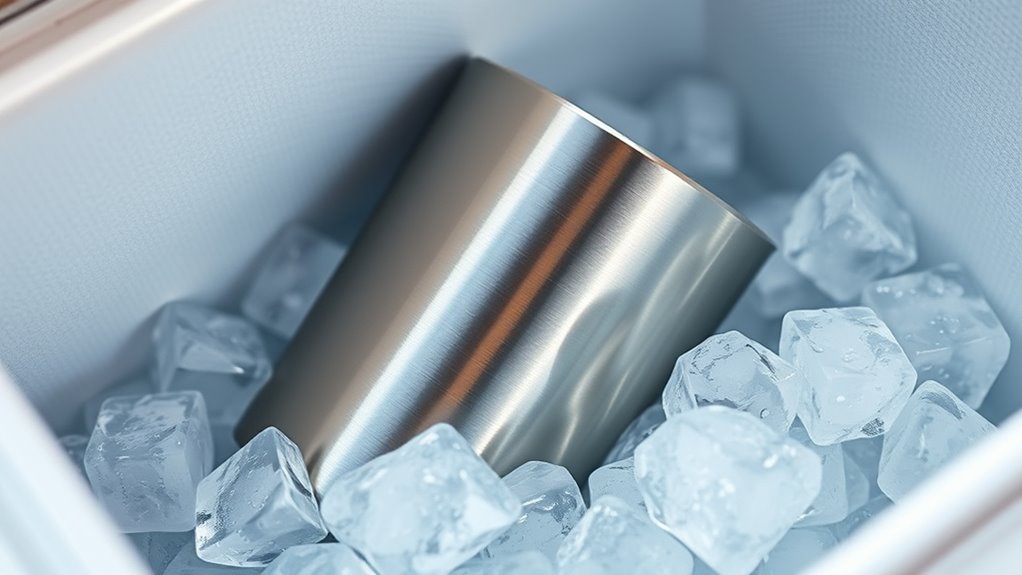
Pre-chilling items and containers before placing them in the cooler minimizes the heat load transferred to the ice, which helps it last longer. When you start with cold or frozen contents, there’s less temperature difference between the items and the ice, reducing initial melting. Rapid pre-freezing, like blast freezing, creates smaller ice crystals inside contents, preventing internal thawing and secondary melting. Cooling containers—such as bottles or cooler walls—before packing lowers conductive heat transfer, giving your ice more thermal buffer. Additionally, placing high thermal mass items like frozen gel packs alongside your goods stores extra cold and stabilizes internal temperatures. Tightly packing items to eliminate warm air pockets further minimizes convection and slows melting. Proper insulation and understanding of thermal management are essential in deep-sky imaging to maintain optimal conditions—similarly, in cooling, effective insulation helps keep contents cold longer. Thermal regulation techniques are crucial for maintaining consistent internal temperatures and preventing unnecessary melting. Employing insulation materials around your cooler can significantly enhance its ability to retain cold, especially when combined with other thermal management practices. Incorporating phase change materials can further improve temperature stability by absorbing excess heat during warmer periods. These steps ensure your ice stays colder, longer, keeping your contents chilled and fresh.
phase change material for cooling
As an affiliate, we earn on qualifying purchases.
As an affiliate, we earn on qualifying purchases.
Choose High-Quality Insulation and Secure Containers
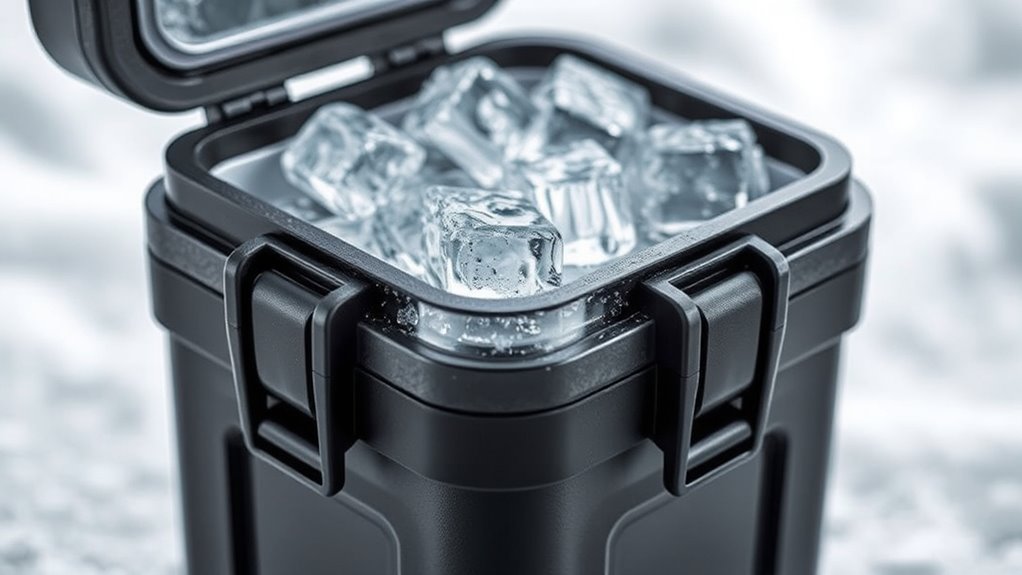
Choosing containers with multi-layer walls or thick insulation helps slow heat transfer and keeps your ice from melting quickly. Make sure to seal lids tightly to prevent warm air from sneaking in and increasing melt rates. Using high-quality, well-sealed containers is key to maintaining a colder environment inside longer. Additionally, selecting proper insulation materials can further enhance heat resistance and prolong ice retention. Incorporating insulation techniques such as foam padding or reflective linings can provide an extra barrier against heat transfer. Implementing smart temperature monitoring can also help you adjust your storage methods in real-time to optimize ice preservation.
Use Multi-Layer Walls
Using multi-layer walls in your cooler or container considerably slows heat transfer, helping your ice last longer. High-quality insulation materials like foam cores, vacuum panels, or reflective linings reduce conductive, radiative, and convective heat flow. Double or triple-walled designs create a thermal barrier that minimizes external temperature influence. Secure containers with tight-fitting lids prevent warm air from infiltrating, further extending ice longevity. Reinforcing walls with reflective surfaces or insulating liners reflects radiant heat away, especially in sunlight. Choosing containers with thick, multi-layer construction also reduces the risk of heat conduction from external surfaces. Incorporating effective insulation techniques enhances the thermal resistance of your setup, ensuring that internal temperatures remain stable longer. Additionally, selecting containers with airtight seals prevents warm air exchange, which is crucial for maintaining low internal temperatures. These layered setups work together to maintain a stable internal temperature, markedly slowing ice melt and preserving freshness, even in hot environments. For optimal results, consider adding proper ventilation to prevent moisture buildup inside the container, which can compromise insulation effectiveness.
Seal to Prevent Warm Air
A tight seal on your cooler or container is essential to keep warm air out and maintain low internal temperatures. Use high-quality, secure closures like rubber gaskets or locking lids to prevent air leaks. Check that all seams and edges are tightly sealed, as even small gaps allow warm air to enter, speeding up ice melt. Consider replacing worn or damaged seals to ensure ideal insulation. Keep containers closed as much as possible, limiting unnecessary openings that let in moisture and warm air. If your cooler has a lid latch, secure it firmly. For added protection, use tape or weatherstripping around the lid to block any gaps. Proper insulation and sealing techniques are key to extending ice longevity during your outings. Additionally, insulation materials with high R-values can further boost your cooler’s ability to retain cold temperatures. Using thermal barriers between the ice and heat sources can also help reduce heat transfer and keep your ice frozen longer. Regularly checking and maintaining the seal integrity of your cooler ensures it continues to perform at its best. Incorporating proper ventilation techniques can help prevent moisture buildup inside the container, which can impact insulation effectiveness. Maintaining a well-sealed container greatly reduces heat transfer, prolonging the life of your ice.
As an affiliate, we earn on qualifying purchases.
Select the Best Ice Type and Packing Strategies

Selecting the right ice type and packing strategy can substantially extend how long your ice lasts. To maximize cooling duration, consider these options:
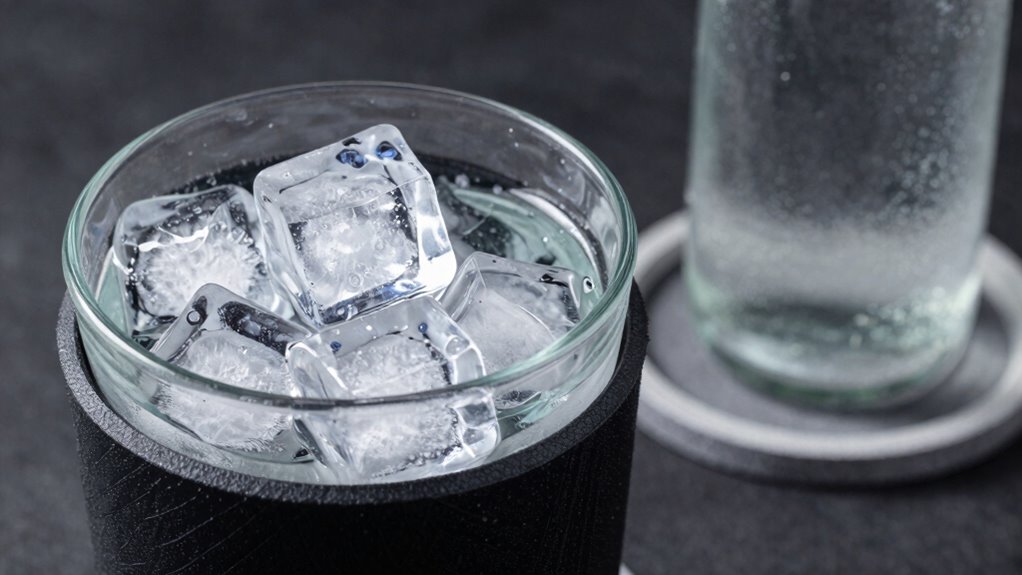
- Use block ice, which melts slower due to a lower surface-area-to-volume ratio, providing sustained cooling.
- Combine block ice with crushed or cubed ice to balance long-term stability and contact cooling for irregular items.
- Pack contents tightly, minimizing voids and preventing convective currents that speed up melting.
- Wet or slightly slush the ice to increase conductive contact with your items, but weigh this against faster melt rates if longevity is your goal.
- Proper insulation around the container can further slow down the melting process by reducing heat transfer from the environment.
- Ensuring proper airflow around the ice can help maintain a lower temperature, reducing the rate of melting.
- Maintaining a cool environment around the ice can also help extend its lifespan by slowing heat transfer from the surroundings.
- Being aware of net worth and other factors influencing the environment can guide you in choosing the optimal storage conditions.
high quality thermal insulation for coolers
As an affiliate, we earn on qualifying purchases.
As an affiliate, we earn on qualifying purchases.
Optimize Placement and Surroundings to Reduce External Heat Gain
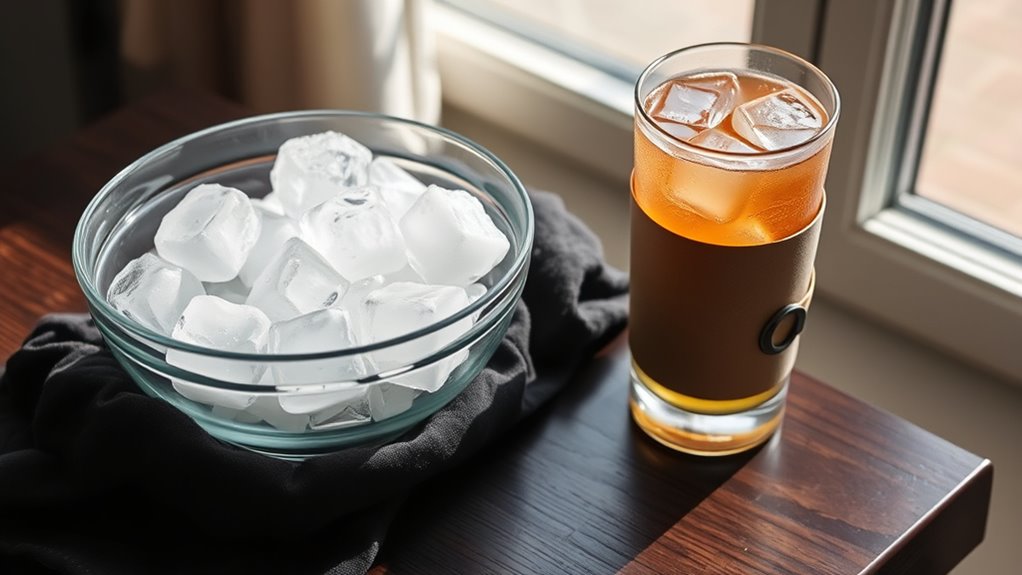
To keep your ice from melting quickly, you should place your cooler in a shaded area or cover it with reflective materials to block radiant heat. Elevating the cooler off hot surfaces and insulating around it can also reduce conductive heat transfer. Additionally, minimizing exposure to wind and warm airflow helps prevent external heat from speeding up the melting process. Using appropriate insulation techniques around your cooler can further improve its ability to retain cold temperatures. Incorporating thermal insulation materials can make a significant difference in maintaining lower internal temperatures and prolonging ice longevity. Employing external heat sources such as direct sunlight can be mitigated by strategic placement and shading to maximize cooling efficiency. Proper placement strategies are essential for optimizing the cooler’s environment and reducing external heat gain. Implementing heat transfer principles can also help identify the most effective ways to preserve cold and extend ice life.
Shade and Cover
Placing your cooler or ice storage in shaded or low-wind areas considerably reduces external heat gain, slowing down the melting process. Shade blocks direct sunlight, which can dramatically raise internal temperatures. Reducing wind minimizes convective heat transfer, further preserving ice. To optimize placement, consider these tips:
- Position the cooler in a shaded spot, away from direct sunlight.
- Use natural or artificial covers, like tarps or tents, to shield from solar radiation.
- Place the cooler against a wall or structure that blocks wind.
- Elevate the cooler off hot surfaces such as concrete or asphalt to prevent conductive heat transfer.
Elevate and Insulate
Elevating your cooler off hot surfaces and enhancing its insulation can substantially slow the rate of ice melt. Placing your cooler on a sturdy platform or wooden pallet prevents ground heat from conducting into the ice, reducing internal warming. Using high-quality, multi-layer insulated coolers or foam-core containers minimizes heat transfer through walls and lids. Keep the lid sealed tightly, limiting warm air infiltration and reducing convective heat gain. Position the cooler in shaded or cool microclimates, such as a basement or north-facing area, to lower ambient temperatures. Shield it from wind and direct sunlight to prevent radiant and convective heat input. These measures optimize placement and surroundings, significantly extending the ice’s lifespan by limiting external heat sources.
Minimize Airflow Exposure
Reducing airflow around your cooler minimizes heat transfer from warm air currents that can accelerate ice melt. To do this effectively, consider these strategies:
- Place the cooler in shaded, sheltered locations to block direct sunlight and reduce radiant heat.
- Elevate the cooler off hot surfaces like concrete or asphalt to prevent conductive heat transfer.
- Position it in low-wind areas or use shields to block airflow that carries warm air.
- Keep the cooler in a stable environment, avoiding frequent moves between hot and cold spaces, which can cause temperature fluctuations.
Incorporate Phase-Change Materials for Enhanced Cooling
Incorporating phase-change materials (PCMs) into your cooling setup can substantially extend ice life by absorbing and releasing heat at specific temperatures. PCMs store cold energy during melting and release it when solidifying, maintaining consistent temperatures and reducing ice melt. To maximize their effectiveness, place PCM packs near high-heat items or around your ice. Use the table below to compare common PCM options and suitable applications:
| PCM Type | Melting Point | Best Use Case |
|---|---|---|
| Water-based | 0°C (32°F) | General cooling, ice replacement |
| Paraffin | 5-10°C (41-50°F) | Food preservation, transport |
| Salt hydrates | 0-5°C (32-41°F) | Medical storage, sensitive items |
Monitor and Manage Ice Usage to Minimize Melting
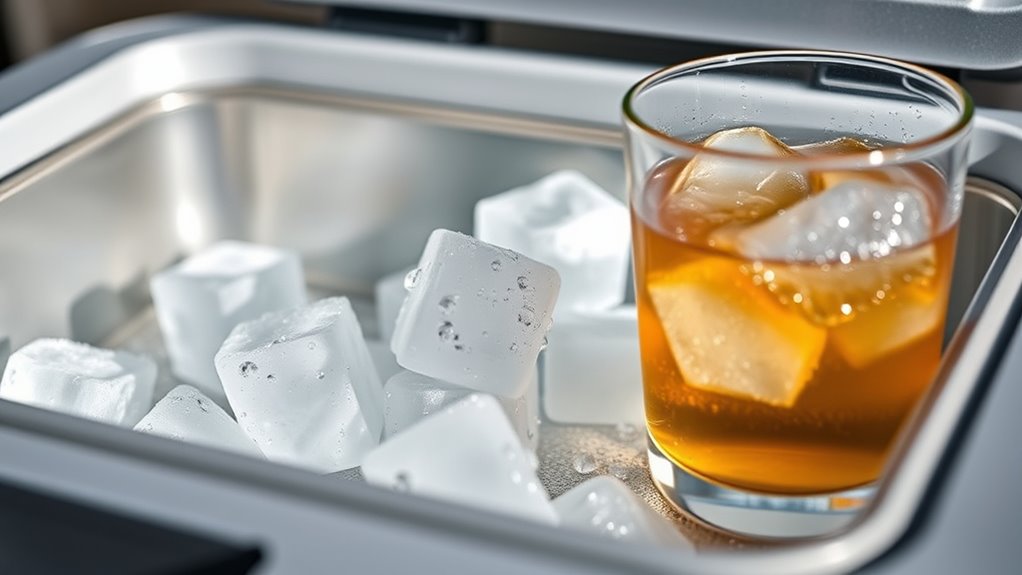
Monitoring and managing your ice usage is key to extending its lifespan. By controlling how often and how long you open your cooler, you prevent warm air from rushing in and accelerating melting. Keep a close eye on internal temperatures with a thermometer to know when to add more ice or redistribute it. Drain meltwater regularly to reduce heat transfer and prevent warm water from warming your items. Replenish with pre-chilled ice or packs instead of warm replacements to avoid temperature spikes. Additionally, plan your load and unload times carefully to minimize door openings and internal disturbances.
Monitor internal temps, limit door openings, drain meltwater, and use pre-chilled ice to extend cooler efficiency.
Here are four ways to optimize your ice management:
- Limit cooler openings and keep the lid closed.
- Use a thermometer to monitor internal temperatures.
- Drain meltwater when necessary.
- Replenish with pre-chilled ice for consistent cooling.
Practical Tips for Extending Ice Longevity in Daily Use
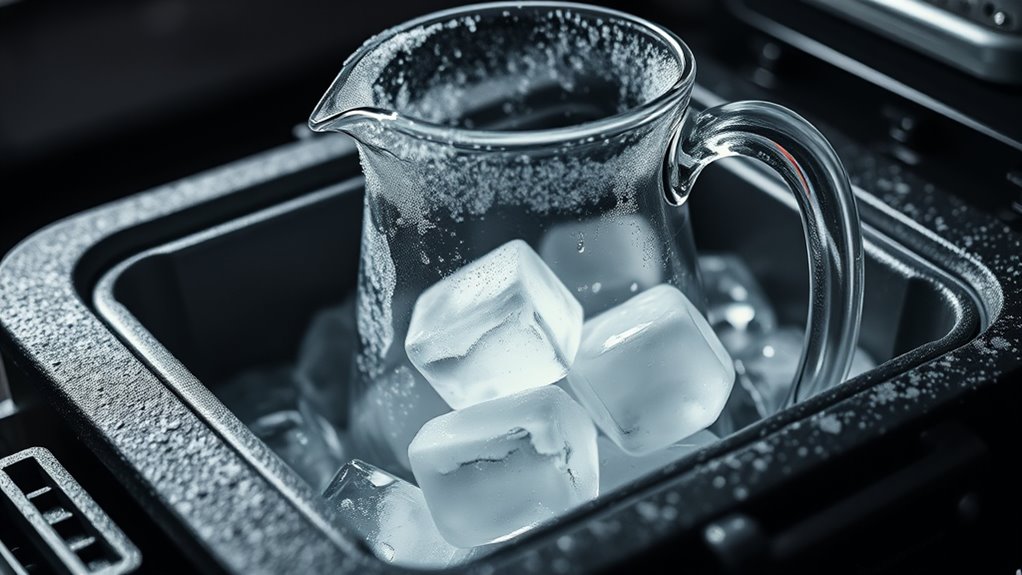
To maximize ice longevity during everyday use, start by planning your access carefully. Limit how often you open the cooler to prevent warm air from entering. When you do open it, do so quickly and efficiently to minimize heat influx. Keep the lid sealed tightly and consider using a gasket or tight closure to block warm air infiltration. Use pre-chilled items and containers to reduce the heat load inside. Pack contents tightly with minimal voids to reduce airflow and convection currents that speed up melting. Place the cooler in shaded, cool locations away from direct sunlight, and elevate it off hot surfaces to prevent conductive heat transfer. Avoid unnecessary movements or shifting, which can cause thermal cycling and accelerate ice melt. These strategies help preserve your ice longer with minimal effort.
Frequently Asked Questions
How Does the Initial Temperature of Items Affect Ice Melt Rate?
You’ll notice that the warmer your items are initially, the faster your ice melts. When contents are warm, they transfer heat to the ice more quickly, causing it to melt faster. To slow this process, pre-chill your items before placing them in the cooler. Cold items absorb less heat, reducing the heat load, which helps your ice last longer and keeps everything colder for a more extended period.
What Insulation Materials Best Extend Ice Longevity?
Think of insulation as a fortress guarding your ice; the stronger the walls, the longer it stays frozen. You’ll want to use multi-layer coolers with thick walls, vacuum-insulated containers, or foam-core options. These materials reduce heat transfer by conduction and radiation, keeping the cold in and warm air out. Reflective liners and shaded placements further bolster your fortress. With these choices, your ice endures longer, even under challenging conditions.
Can Adding Water to Ice Increase or Decrease Melt Time?
Adding water to ice generally decreases melt time because it increases surface area, leading to faster heat transfer. The increased contact with warmer air or container walls accelerates melting. However, if you slightly wet the ice to improve contact with items or create a slush, it might temporarily extend cooling but will usually speed up overall melt. To maximize ice longevity, avoid adding water unless it’s part of a deliberate cooling strategy.
How Does Ambient Temperature Influence the Effectiveness of Phase-Change Materials?
Ambient temperature impacts phase-change materials (PCMs) like a sunbeam warming a snowman—higher temps reduce their effectiveness. When the environment is warm, PCMs melt faster, releasing stored cold more quickly and not lasting as long. Conversely, cooler surroundings help PCMs hold their temperature longer, maximizing their cooling capacity. To get the most from PCMs, keep them in shaded, low-temperature areas, minimizing heat transfer and extending their cold retention.
What Are the Best Practices for Minimizing Heat Gain Through Cooler Lids?
To minimize heat gain through cooler lids, you should use tight-sealing, insulated lids that block warm air infiltration. Avoid opening the cooler frequently, and keep the lid closed when not in use. Add reflective liners or insulating mats on top to reflect radiant heat. Position the cooler in shaded, cool areas, and consider using lids with insulating layers or sealing gaskets to further reduce heat transfer.
Conclusion
By pre-chilling your items, insulating effectively, and choosing the right ice, you create a cool haven that defies the heat. Imagine your cooler as a winter cave, keeping the cold close and the warmth out. With careful placement and mindful management, your ice stays frosty longer, preserving freshness like a frozen treasure chest. Keep these tips in mind, and you’ll enjoy ice that lasts longer, even in the hottest days.
Halloween Picks
halloween
As an affiliate, we earn on qualifying purchases.