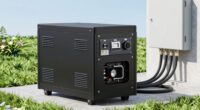
Before using a battery backup for your kitchen appliances, consider their compatibility with the inverter and how much backup time you need during outages. You should analyze your energy consumption to choose the right system size and understand the costs involved, including installation and maintenance. Keep in mind that not all appliances are compatible, and some may require modifications. To guarantee your kitchen stays functional and energy-efficient, explore options carefully—the important details ahead can help you make the best choice.

Get backup power and energy gear delivered free — and shop member deals
- Fast, free delivery on millions of items
- Access to Prime Big Deal Days deals on October 6–7
- Prime Video, Amazon Music and more included
Key Takeaways
- Verify appliance compatibility with inverter systems to ensure proper backup operation.
- Determine the necessary backup duration for essential kitchen appliances during outages.
- Match battery system capacity to your household’s energy needs to avoid overspending or insufficient backup.
- Consider the upfront costs, installation requirements, and long-term maintenance of the backup system.
- Consult professionals for accurate system sizing, integration, and future-proofing your backup solution.
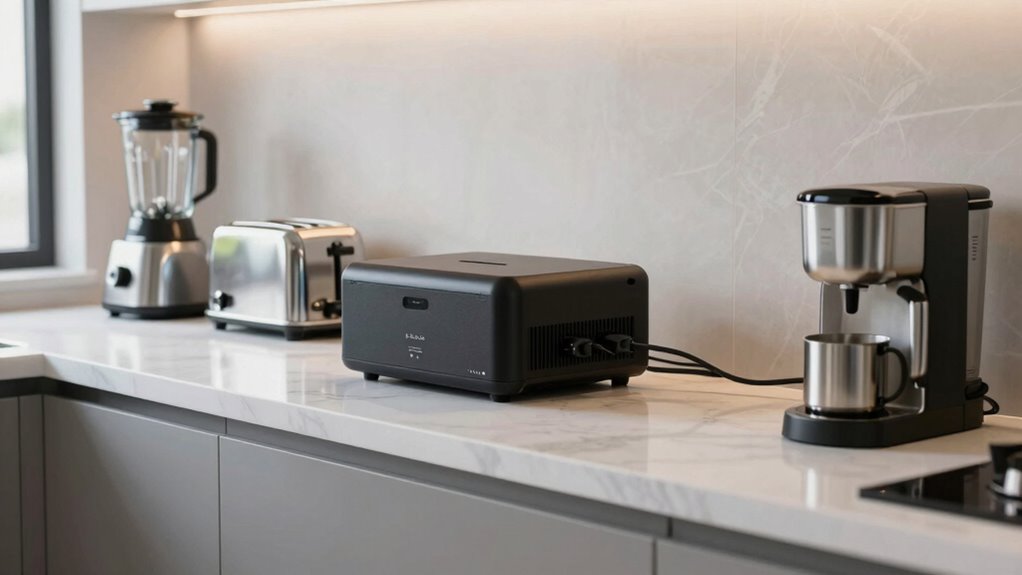
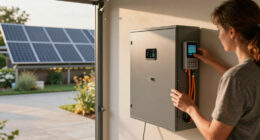
During a power outage, your kitchen appliances are often the first to shut down, leaving you without essential tools like refrigerators, microwaves, and coffee makers. If you’re considering a battery backup for your kitchen, it’s important to understand what’s involved before making a purchase. One key aspect is solar integration, which allows you to pair your battery system with solar panels. This setup can help you reduce reliance on the grid, especially during outages, and can even make your system more sustainable and cost-effective over time. However, integrating solar requires additional planning and upfront investment, so you need to evaluate if it aligns with your energy goals and budget. Additionally, understanding system efficiency can help ensure you get the most out of your backup setup while managing costs effectively.
Solar integration with battery backups can boost sustainability and reduce grid dependence during outages.
Cost analysis plays an integral role in your decision-making process. Battery backup systems can vary widely in price, depending on capacity, brand, and features. You should contemplate not only the initial purchase cost but also installation fees and long-term maintenance expenses. Comparing different systems based on your household’s energy consumption helps determine what size and type of battery will meet your needs without overspending. For example, if you mainly want to keep your refrigerator and a few essential appliances running during outages, a smaller, less expensive system might suffice. But if you aim to power your entire kitchen or even your home, you’ll need a more robust and costly setup. Understanding your energy needs can help you choose a system that balances capacity and cost effectively. Additionally, staying informed about technological advancements can help you make smarter investment decisions as newer, more efficient options become available. Keeping an eye on market trends can also guide you toward more affordable and innovative solutions in the near future. Recognizing the importance of battery lifespan can assist you in selecting a system that remains reliable over time and provides better value.
Another factor to consider is how the battery integrates with your existing appliances. Not all appliances are compatible with backup systems, so check whether your devices can operate smoothly with the battery’s inverter and whether additional modifications are necessary. Also, think about the duration you want your appliances to run during an outage—some batteries provide only a few hours of backup, while others can sustain critical appliances for days. This decision impacts your overall cost analysis and helps you choose a system that fits your needs and budget.
Finally, understand that technology is evolving, and prices are gradually decreasing as systems become more efficient and accessible. This means that what might seem like a hefty investment today could become more affordable in the future. Before purchasing, do thorough research, compare options, and consider consulting with a professional who can help you weigh your options, including solar integration and detailed cost analysis. This way, you’ll guarantee your kitchen remains functional and energy-efficient even when the power goes out.
As an affiliate, we earn on qualifying purchases.
Frequently Asked Questions
How Long Can a Battery Backup Power My Appliances?
Your battery backup can power your appliances for a few minutes to several hours, depending on its power capacity and battery lifespan. Smaller units might last only 15-30 minutes, ideal for essential devices, while larger ones could provide power for a few hours. To maximize runtime, prioritize critical appliances and understand your battery’s capacity. Regularly check your backup’s health to guarantee it’ll perform when you need it most.
Is Installation of a Battery Backup System Complex?
Installation complexity varies depending on your system and skill level, but generally, it can be straightforward or require professional help. You should follow safety precautions closely, such as turning off power sources and wearing protective gear. If you’re comfortable with electrical work, you might handle the setup yourself. Otherwise, hiring a licensed electrician ensures proper installation, safety, and peak performance of your battery backup system.
What Is the Cost of Different Battery Backup Options?
Think of battery backup options as a spectrum, from budget-friendly to high-end. Cost comparison shows that basic units start around $100, while advanced systems can soar to $1,000 or more. Keep in mind, a longer battery lifespan often justifies higher prices, offering more reliable power during outages. Your choice depends on balancing upfront costs with long-term durability, ensuring your kitchen stays alive when the lights go out.
How Often Should I Maintain or Replace the Battery?
You should maintain or replace your battery backup based on its battery lifespan, which typically ranges from 3 to 5 years. Regular maintenance involves checking for corrosion, confirming connections are clean, and testing the backup system monthly. Follow the manufacturer’s recommended maintenance frequency to keep your battery functioning at its best. Replacing the battery promptly when it shows signs of reduced capacity ensures your kitchen appliances stay protected during outages.
Can a Battery Backup Prevent Damage During Power Surges?
Yes, a battery backup can help prevent damage during power surges by providing surge protection and stabilizing power. It acts as a buffer, absorbing sudden voltage spikes and ensuring your appliances receive steady current. This power stabilization reduces the risk of electrical damage. Keep in mind, though, that not all backups are equal—choose one with built-in surge protection for best defense during unexpected power fluctuations.
solar compatible inverter for kitchen appliances
As an affiliate, we earn on qualifying purchases.
As an affiliate, we earn on qualifying purchases.
Conclusion
Before you invest in a battery backup for your kitchen, make sure you understand its capabilities and limitations. It’s not a one-size-fits-all solution, so do your homework to pick the right system for your needs. Remember, rushing into things can lead to more trouble than it’s worth—sometimes it’s better to wait and get it right. With the right backup, you’ll be prepared when the power goes out, ensuring your kitchen stays running smoothly.
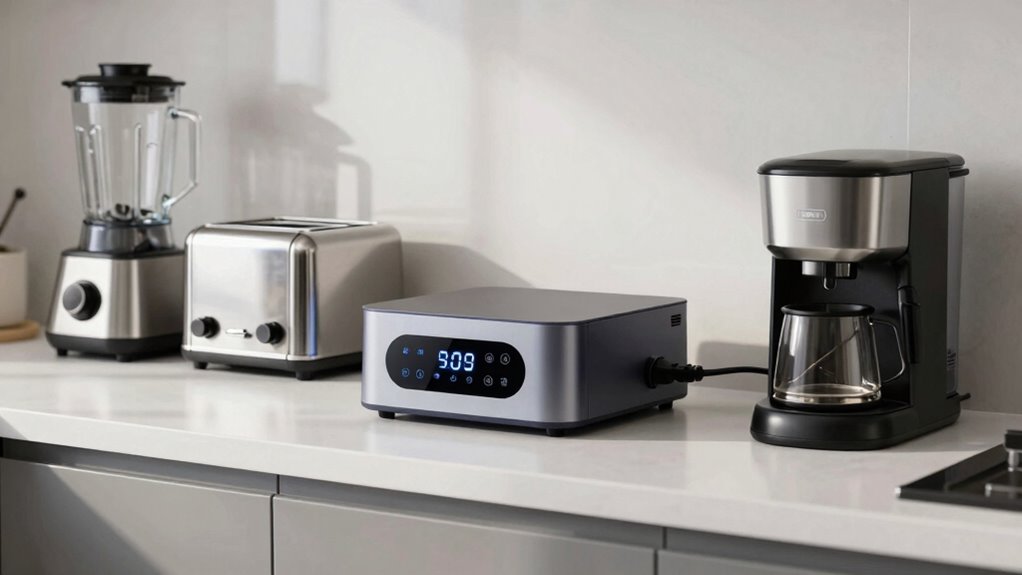
home backup battery for refrigerator and microwave
As an affiliate, we earn on qualifying purchases.
As an affiliate, we earn on qualifying purchases.
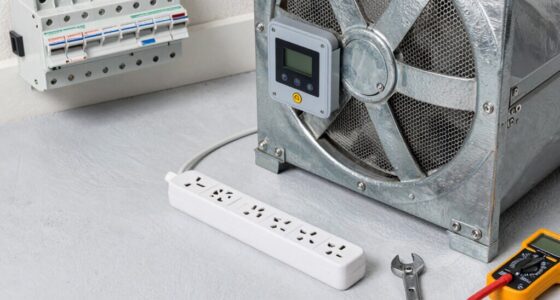
kitchen appliance surge protector
As an affiliate, we earn on qualifying purchases.
As an affiliate, we earn on qualifying purchases.
Fall Picks
fall essentials
As an affiliate, we earn on qualifying purchases.