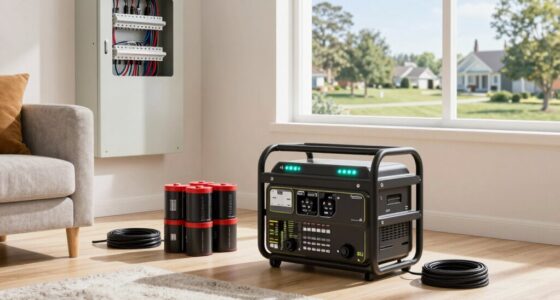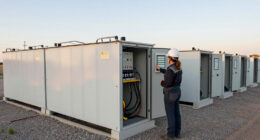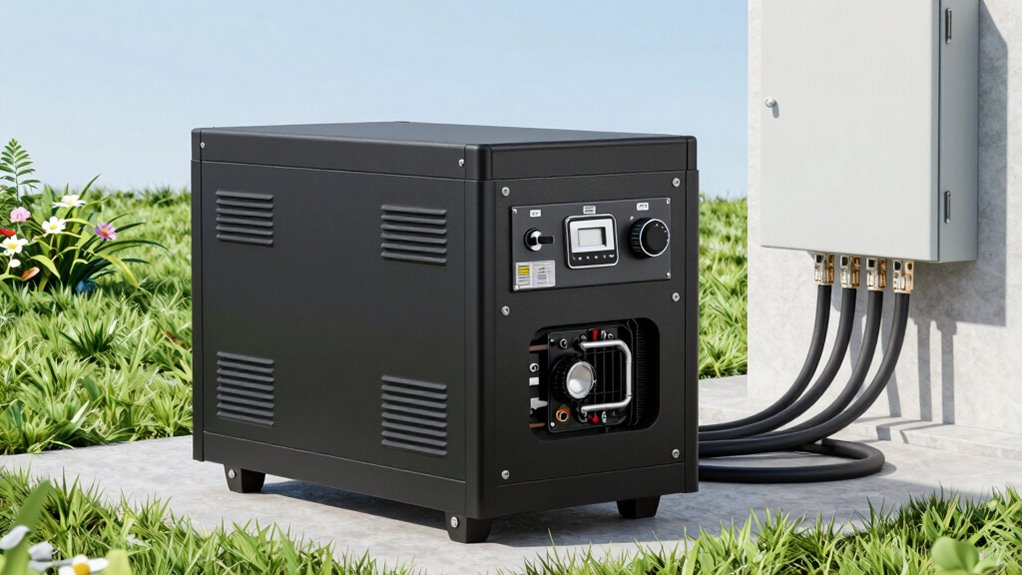

To size a standby generator for essential circuits only, start by listing critical appliances and systems like refrigeration, HVAC, and medical devices. Check their wattage labels and add about 20% for startup surges and future needs. Guarantee the generator’s capacity can handle the total load comfortably without overload. Proper sizing assures reliable power, and considering efficiency helps avoid waste. Continue to explore how to fine-tune your setup for superior performance.

Get backup power and energy gear delivered free — and shop member deals
- Fast, free delivery on millions of items
- Access to Prime Big Deal Days deals on October 6–7
- Prime Video, Amazon Music and more included
Key Takeaways
- List all essential appliances and their wattage requirements, then add a 20% buffer for surges and future growth.
- Calculate the total wattage of essential circuits to determine the minimum generator capacity needed.
- Ensure the generator can handle surge capacity during startup of high-wattage appliances.
- Choose a transfer switch compatible with your generator size and essential circuit load.
- Consider future expansion and consult professionals for accurate sizing and system integration.
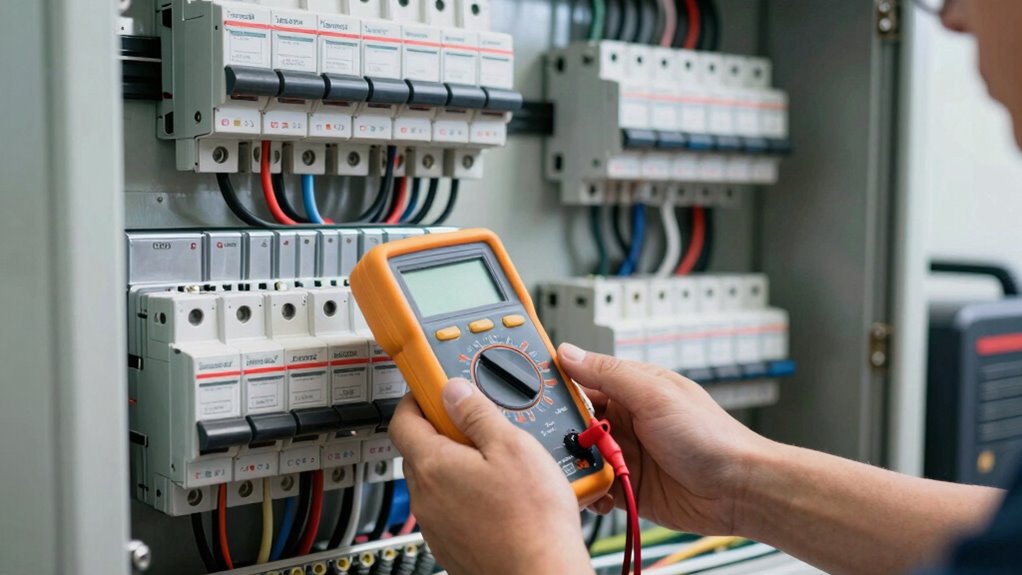
When choosing a standby generator, it’s vital to size it correctly for your essential circuits to guarantee reliable power during outages. Proper sizing ensures your critical appliances and systems keep running without overloading the generator or wasting energy. To do this, start by listing all the essential circuits you want to support during a power outage. These usually include refrigeration, heating or cooling systems, lights, medical devices, and communication equipment. Once you’ve identified these, determine their total wattage requirements. You can find this information on appliance labels or in user manuals. Add a buffer—typically about 20%—to account for startup surges and future needs. This approach helps you select a generator capable of handling the initial power spike without tripping or failing. It’s also important to understand the surge capacity of your generator, which is the extra power it can provide momentarily during startup, to prevent overloads and shutdowns.
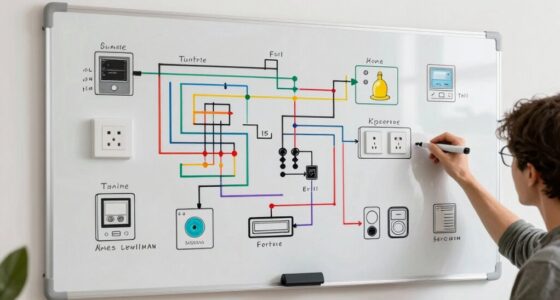
Next, consider the importance of regular generator maintenance. Keeping your generator in top condition guarantees it operates efficiently when needed most. Routine checks, oil changes, filter replacements, and testing are essential to prevent unexpected failures during outages. Proper maintenance also prolongs the lifespan of your equipment, saving you money in the long run. As you size your generator, pay attention to the surge capacity, which is the extra power the unit can provide momentarily during startup. Confirming your generator can handle these brief spikes prevents overloads and system shutdowns. Additionally, understanding the power requirements of your essential circuits helps you select a generator that aligns with your current and future needs. Recognizing the significance of generator efficiency can further optimize your system’s performance and energy consumption. Incorporating load calculation techniques can help you accurately determine your total power needs and avoid over or under-sizing your generator.
Another critical aspect is transfer switch selection. This device seamlessly switches your power source from the utility to your generator, and choosing the right one depends on your generator size and setup. A properly selected transfer switch makes your backup power system safer and more reliable. It should match the generator’s capacity and be compatible with your essential circuits. Many transfer switches are designed for manual or automatic operation, so consider which option suits your needs best. An automatic transfer switch offers convenience, activating your generator immediately during an outage, while a manual switch requires you to start the generator yourself. Planning for future expansion is also crucial to ensure your system remains scalable as your power needs evolve over time. Consulting a professional can help you accurately assess your power needs, select appropriate equipment, and ensure that your transfer switch and generator maintenance plans are aligned. Proper planning guarantees your essential circuits receive reliable power, providing peace of mind during storms or outages.
standby generator for essential circuits
As an affiliate, we earn on qualifying purchases.
As an affiliate, we earn on qualifying purchases.
Frequently Asked Questions
Can I Connect Multiple Generators for Larger Power Needs?
Yes, you can connect multiple generators through parallel connection to meet larger power demands. This setup allows for load sharing, where each generator shares the power load evenly, increasing capacity safely and efficiently. Make certain to use compatible generators and proper synchronization equipment to prevent issues like power surges or imbalances. Always consult a professional to ensure the parallel connection is correctly installed and complies with safety standards.
How Often Should I Test My Standby Generator?
You should test your standby generator at least once a month to guarantee reliability. Regular testing helps you catch fuel efficiency issues and verifies that load management systems are functioning properly. Even if you’re worried about fuel consumption, consistent testing minimizes long-term problems and guarantees your generator will perform when needed. Remember, a well-maintained generator offers peace of mind during power outages.
What Maintenance Is Required for Standby Generators?
You need to follow routine maintenance schedules to keep your standby generator running efficiently. Regularly check and change the oil, replace filters, and inspect the battery for maximum fuel efficiency. Keep the fuel supply clean and dry, and test the system periodically. Proper maintenance ensures reliable operation during outages, prolongs the generator’s lifespan, and helps you avoid costly repairs or failures when you need it most.
Are There Noise Level Considerations for Residential Generators?
Noise level considerations matter because you want a peaceful home environment. You should prioritize noise mitigation strategies like installing soundproof enclosures, choosing quieter generator models, and maintaining proper distances from living spaces. These steps reduce noise pollution, prevent disturbance, and guarantee safety. By implementing soundproof enclosures and considering noise levels, you create a more comfortable, quieter home, especially during power outages when generator operation might be unavoidable.
How Does Altitude Affect Generator Performance?
Altitude impacts generator performance because higher elevations mean less oxygen, which can reduce power output. You might notice decreased efficiency and potential strain on your generator. To guarantee reliable operation, perform a performance adjustment by consulting the manufacturer’s guidelines for high-altitude use. Installing a turbocharger or other modifications can help compensate for altitude effects, maintaining your generator’s capacity to power essential circuits effectively.
As an affiliate, we earn on qualifying purchases.
Conclusion
Choosing the right size for your standby generator guarantees your essential circuits stay powered without overspending. While some believe a larger generator is always better, it’s actually more efficient and cost-effective to size it precisely for your needs. Overestimating can lead to unnecessary expenses, and underestimating risks leaving you in the dark. By carefully calculating your essential loads, you’ll have a reliable backup that protects your home and saves you money—proving that smarter sizing truly pays off.
As an affiliate, we earn on qualifying purchases.
As an affiliate, we earn on qualifying purchases.
Fall Picks
fall essentials
As an affiliate, we earn on qualifying purchases.