TL;DR

Get backup power and energy gear delivered free — and shop member deals
- Fast, free delivery on millions of items
- Access to Prime Big Deal Days deals on October 6–7
- Prime Video, Amazon Music and more included
SMT Energy’s 160 MW/320 MWh Houston IV battery moved from energization on June 1 to ERCOT market participation on July 13, a six-week commissioning period. FlexGen says lab testing, automated field checks and early coordination helped shorten a process it considers typically 25 weeks or more; project earnings and a full independent comparison of timelines were not disclosed.
SMT Energy’s 160 MW/320 MWh Houston IV battery moved from energization on June 1 to participation in the Electric Reliability Council of Texas (ERCOT) market on July 13, completing commissioning in six weeks. FlexGen, which supplied the energy management software and led commissioning, said the timeline was its fastest with SMT and substantially shorter than its typical benchmark of 25 weeks or more.
FlexGen senior vice president of operations Jason Rislov said the company measures commissioning from mechanical completion to the owner’s first day of market participation. That period includes cold, warm and hot commissioning with equipment suppliers, followed by grid qualification with ERCOT. FlexGen’s 25-week benchmark reflects industry averages and its own project history, including earlier work with SMT. Rislov said field commissioning alone commonly takes about 12 weeks, while Houston IV took six.
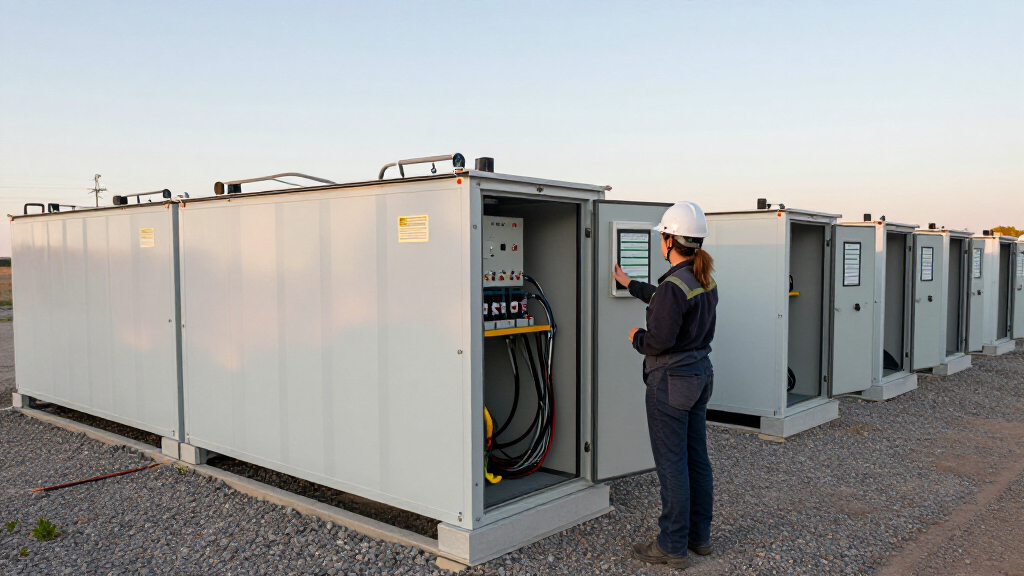
The project comprises 74 Trina Storage Elementa 2 units using lithium iron phosphate cells and 37 Sungrow SC5000-UD-MV-US-P3 power converters. Irby Construction Co., a Quanta Services subsidiary, served as engineering, procurement and construction contractor. FlexGen said it began working alongside Irby before mechanical completion, with SMT’s permission, rather than waiting for construction work to finish.
Before equipment reached the site, FlexGen built digital twins, mapped Modbus communications and tested its controls against an emulator at its Durham, North Carolina, lab. In the field, it used automated scripts for point-to-point and telemetry checks. FlexGen also said its remote operations center continued commissioning work after site crews left each day, and that ERCOT qualification, which can involve weeks of exchanges, took a few days for Houston IV.
Why Six Weeks Matters in ERCOT
A shorter commissioning period can bring storage capacity into the market earlier, giving grid operators access to a battery’s potential services sooner. Houston IV entered ERCOT during the first half of summer, when electricity demand and system conditions can make storage availability relevant. Rislov said getting systems online quickly and reliably remains a key bottleneck as demand grows.
The timing also coincided with weak battery revenue benchmarks. Modo Energy reported ERCOT battery revenues averaging $1.67 per kilowatt per month in May, falling to a record low of $1.11 in June, then rising to $1.42 in July. Those market-wide figures do not establish Houston IV’s earnings. Rislov said FlexGen is not SMT’s qualified scheduling entity and does not have visibility into the project’s revenue.
If the approach can be repeated, earlier testing and automated checks may help developers reduce the time between construction and market operation. The reported result is a project-specific timeline, however, not evidence by itself that every battery can reach market in six weeks or that the same approach changes project economics.
As an affiliate, we earn on qualifying purchases.
The Testing Behind Houston IV
FlexGen attributed the timeline to preparation before site work and its HybridOS energy management platform. Rislov said the latest version draws on 15 years of experience and more than 25 GWh of projects. He said the company has worked with more than 70 equipment configurations and that lab testing lets teams find faults in a controlled setting before crews troubleshoot them on site.
Rislov described Houston IV as FlexGen’s 14th or 15th project with SMT, and said the company had also achieved similar results for an unnamed owner in the Midcontinent Independent System Operator market. FlexGen acquired Powin’s intellectual property, software and spare-parts inventory for $36 million in August 2025 through Powin’s Chapter 11 proceedings. On September 17, FlexGen named former chief technology officer Hugh Scott as chief operating officer. Rislov said the acquisition expanded the equipment data available to HybridOS, and that bringing technology and operations under Scott is intended to feed field lessons into software development earlier.
““We’ve seen every problem and we’ve solved every problem, frankly.””
— Jason Rislov, FlexGen senior vice president of operations
As an affiliate, we earn on qualifying purchases.
Project Earnings and Comparisons
Houston IV’s revenue has not been disclosed in the source material. FlexGen said it is not the project’s qualified scheduling entity and cannot see SMT’s earnings, so ERCOT-wide monthly revenue benchmarks should not be treated as the battery’s results.
The account is based chiefly on FlexGen’s description of its commissioning process. It does not provide an independent audit of the six-week timeline, a detailed breakdown of time spent at each commissioning stage, or a like-for-like comparison with other projects. The report also does not specify Houston IV’s operating performance, dispatch activity or contribution to grid reliability after entering the market.
lithium iron phosphate battery pack
As an affiliate, we earn on qualifying purchases.
As an affiliate, we earn on qualifying purchases.
Performance After Market Entry
The next useful measure is how Houston IV performs after commissioning: its availability, operating results and role in ERCOT dispatch. The source material does not give a date for a further project update or state whether SMT plans to publish earnings or operating data.
FlexGen’s broader test of the approach will be whether it can reproduce the schedule on other projects. Rislov said the company’s work with an unnamed MISO owner had produced similar results, but gave no project details. Further comparable timelines and independently verifiable project data would help show how much the lab-first process can shorten commissioning beyond Houston IV.
As an affiliate, we earn on qualifying purchases.
Key Questions
What happened at the Houston IV battery?
SMT Energy’s 160 MW/320 MWh battery moved from energization on June 1 to ERCOT market participation on July 13, 2026. FlexGen said the six-week commissioning period was its fastest with SMT.
How did FlexGen say it shortened commissioning?
FlexGen said it tested controls in a lab emulator before equipment arrived, then used automated scripts for field checks. It also started work alongside the construction contractor before mechanical completion and continued commissioning through a remote operations center.
Did the six-week schedule involve less testing?
Rislov said it involved more testing overall, not less. That is FlexGen’s account; the source does not include an independent review of the test volume or safety results.
How much revenue did Houston IV earn?
The project’s earnings were not reported. FlexGen said it is not SMT’s qualified scheduling entity and has no visibility into Houston IV’s revenue; ERCOT-wide battery revenue benchmarks are not the project’s earnings.
Does this mean other Texas batteries can be commissioned in six weeks?
Not necessarily. Six weeks was a result for Houston IV, and FlexGen described it as its fastest commissioning with SMT. The source provides no evidence that the same schedule applies to other projects.
Source: rss
Halloween Picks
halloween
As an affiliate, we earn on qualifying purchases.