
TL;DR

Get backup power and energy gear delivered free — and shop member deals
- Fast, free delivery on millions of items
- Access to Prime Big Deal Days deals on October 6–7
- Prime Video, Amazon Music and more included
Hithium has launched a 4 MWh sodium-ion battery energy storage system alongside a 785Ah cell and says it is planning staged validation of the new-generation products. The company sees potential in projects with frequent cycling and long operating lives, while acknowledging that mature LFP systems generally have an initial cost advantage in conventional two-hour projects.
Hithium has launched a 4 MWh sodium-ion battery energy storage system alongside a 785Ah storage cell, and says it is moving the technology toward broader deployment through staged validation. In an October 6 interview with ESS News, senior product manager Leb Lan said sodium-ion could compete where projects need frequent cycling, long operating lives or more predictable material costs, while mature lithium iron phosphate (LFP) systems generally retain an initial-cost advantage in conventional two-hour projects.
Lan said Hithium’s first-generation sodium-ion platform had gone through work spanning materials, cells and system integration. He said that work included safety testing, manufacturing-process validation and application in real-world projects, as well as practical experience with thermal management, battery-management controls and supply coordination. Some project details and operating data, he said, cannot be shared because of customer confidentiality agreements.
For the new generation, Hithium is planning a staged validation program covering the cell, module, system and real-world operating conditions. The company says the program will advance alongside product development and demonstration-project schedules. Lan did not provide a detailed schedule or identify particular demonstration sites in the interview.
Lan said the company completed safety tests under China’s GB/T 44265 standard for its first-generation ∞Cell N162Ah sodium-ion cell. The tests he listed included drop, crush, external short circuit, overcharge, over-discharge and thermal-runaway testing. He said further safety testing for the new cell and system is underway, including work on thermal propagation, gas release, pressure relief, fire-protection coordination, thermal management and transportation safety.
Where Sodium-Ion Could Compete
The interview sets out a potential market for sodium-ion storage without claiming that it is already cheaper than LFP. Lan said sodium’s broad availability could reduce reliance on concentrated lithium resources and exposure to lithium carbonate price cycles. Those considerations may matter to developers and buyers planning infrastructure intended to operate over 20 to 30 years, though the interview does not quantify any resulting cost reduction.
Hithium’s proposed case rests on lifetime economics rather than the purchase price alone. Lan said projects with frequent cycling or long operating lives could benefit if sodium-ion delivers higher lifetime energy throughput and reduces replacement or augmentation needs. Those are company expectations, not independently demonstrated outcomes for the newly launched system. Buyers would need operating data and project-specific comparisons to judge whether those potential benefits outweigh efficiency, degradation and other costs.
For developers, the distinction is practical: a chemistry can have attractive resource characteristics and still struggle to win a project if its installed cost, performance history, financing terms or warranty support are less established. Hithium’s comments point to a possible role in selected applications, not a near-term replacement for LFP across the storage market.
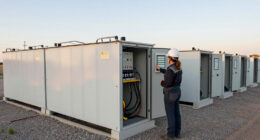
4 MWh sodium-ion battery energy storage system
As an affiliate, we earn on qualifying purchases.
As an affiliate, we earn on qualifying purchases.
From Cell Launch to Bankability
Hithium’s launch pairs a 4 MWh system with a new 785Ah cell, part of the company’s effort to move sodium-ion products beyond laboratory development. Lan described the first-generation platform as a way to develop the engineering chain from materials through system integration. He said it provided experience, but did not give public operating figures or identify the projects involved.
Bankability depends on more than a product announcement. Project owners, lenders and insurers typically need evidence about system performance, safety, manufacturing consistency, warranties and long-term service. In the interview, Lan said validation and safety work were continuing for the new generation; he did not supply specific insurer engagement, warranty terms or third-party results.
Lan also cautioned against comparing battery prices without defining the project boundary. A 100 MW / 200 MWh installation includes more than cells: he listed power-conversion systems, medium-voltage equipment, civil works, grid connection, fire protection, installation, commissioning and planned augmentation. He said mature LFP supply chains generally keep an initial CAPEX advantage for a conventional two-hour project.
As an affiliate, we earn on qualifying purchases.
Validation and Cost Evidence Still Pending
The interview does not establish a final cost comparison between Hithium’s sodium-ion products and LFP. Lan did not provide the requested CAPEX figures for the hypothetical 100 MW / 200 MWh project, saying a single figure could mislead without a shared project boundary. The relative cost per unit of stored energy, efficiency and lifetime performance also remain unquantified in the material provided.
It is not clear when the new-generation validation program will finish, which real-world demonstration projects will publish data, or what independent test results will be available. Hithium also did not provide details about insurer discussions, warranties or commercial operating records for the new products. Claims about long cycle life and potential lifetime cost advantages should be treated as company expectations until supported by product-specific evidence.
commercial sodium-ion battery storage
As an affiliate, we earn on qualifying purchases.
As an affiliate, we earn on qualifying purchases.
Demonstrations Will Test Commercial Claims
Hithium says the new-generation cell and system will proceed through staged validation as product development and demonstration schedules advance. The company’s next useful milestones for prospective buyers will be evidence from cell, module and system testing, followed by operating data from real-world deployments.
Those results, alongside published project boundaries and comparable cost assumptions, will help developers assess whether sodium-ion suits particular duty cycles better than LFP. The interview did not give dates for those disclosures or confirm when Hithium will release a detailed project-cost comparison.
As an affiliate, we earn on qualifying purchases.
Key Questions
What did Hithium launch?
Hithium launched a 4 MWh sodium-ion battery energy storage system alongside a new 785Ah cell, according to the ESS News interview.
Is the new sodium-ion system fully validated?
Not according to the interview. Hithium said it is planning staged validation for the new-generation cell, module and system, including real-world operating conditions. It did not give a completion date.
Where does Hithium see sodium-ion competing with LFP?
Lan said sodium-ion may suit projects with frequent cycling, long operating lives or a strong need for predictable long-term costs. He also said mature LFP supply chains generally retain an initial CAPEX advantage for conventional two-hour projects.
Did Hithium disclose a cost comparison?
No detailed CAPEX figures were provided for the hypothetical 100 MW / 200 MWh project. Lan said a fair comparison must define project components and account for operating life, efficiency, degradation, augmentation and other costs.
What safety testing has Hithium reported?
Lan said the first-generation ∞Cell N162Ah completed tests under GB/T 44265, including crush, short-circuit, overcharge and thermal-runaway testing. He said further safety testing for the new cell and system is underway.
Source: rss
Halloween Picks
halloween
As an affiliate, we earn on qualifying purchases.