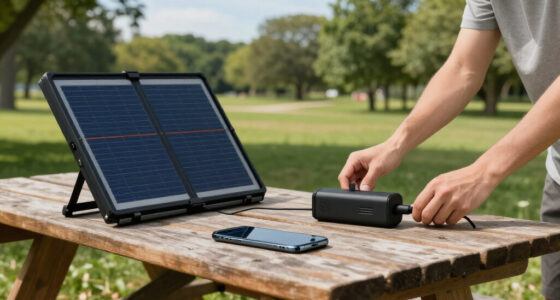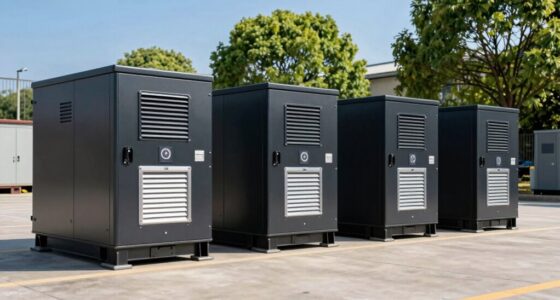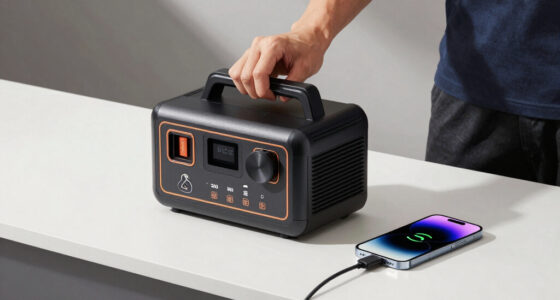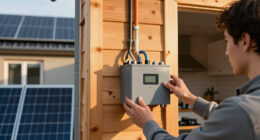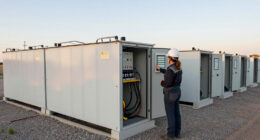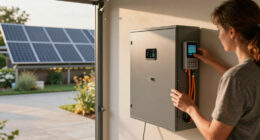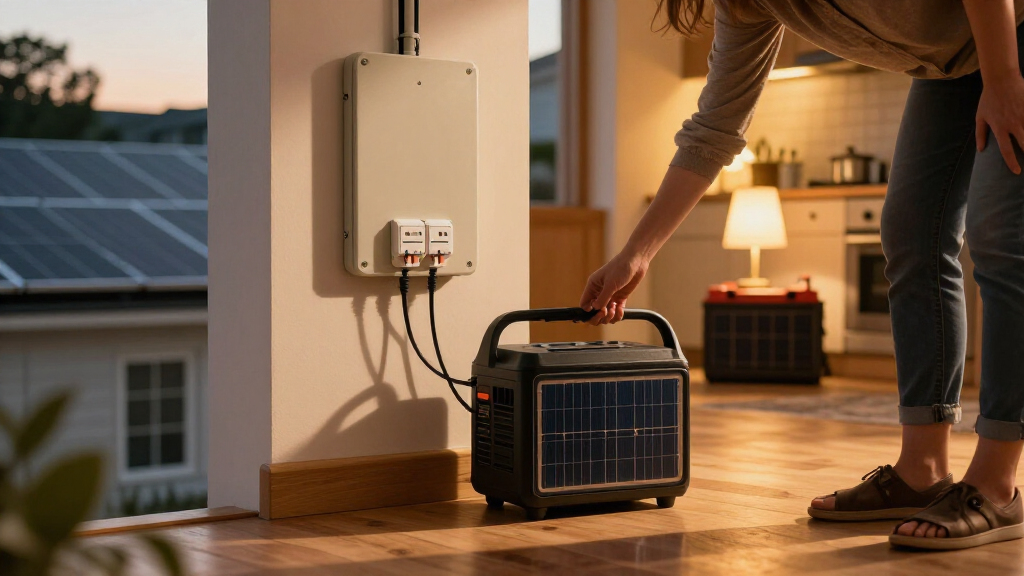
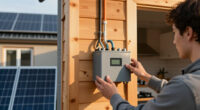
Solar generator transfer switches connect a compatible portable power station or inverter to selected home circuits, but the right choice depends on the equipment, wiring, and backup loads involved. My best overall pick is the Jackery Smart Transfer Switch, 14,400 W, for buyers pairing it with a compatible Jackery system and wanting a dedicated home backup setup. The Connecticut Electric Series 2 50A kit stands out for a cord-and-inlet approach, while the EZ Generator Switch is a simpler option for a narrower set of needs. The main tradeoffs are circuit count, voltage and amperage compatibility, automatic versus manual operation, and installation complexity. Read on for the full comparison and guidance on matching a switch to your generator, panel, and essential loads.

Get backup power and energy gear delivered free — and shop member deals
- Fast, free delivery on millions of items
- Access to Prime Big Deal Days deals on October 6–7
- Prime Video, Amazon Music and more included
Complete the kit


Key Takeaways
- Compatibility outranks headline capacity: the Jackery-branded switches are tied to compatible Jackery systems, while the Renogy switch is specified for pure sine wave inverters; neither should be treated as universal.
- Panel-style kits suit whole groups of selected circuits: the Connecticut Electric, Nature’s Generator, and DSGSANO options differ in circuit count, inlet arrangement, and voltage configuration, so their labels alone do not settle the fit.
- Automatic switching is not automatically the better choice: MOES, Zgqmcgy, Renogy, and the automatic/manual units may reduce intervention, but buyers still need to verify sensing behavior, source compatibility, and installation requirements.
- Portable power station bundles solve a broader problem: the Jackery HomePower 3000 package includes solar panels and a transfer switch, while the Explorer 5000 Plus package centers on a higher-capacity power station with a smart switch; these are not standalone switch comparisons.
- Large amp and watt claims need context: 100A and 200A listings do not prove a switch matches a home’s service, generator output, wiring, or intended loads. Circuit design and qualified installation matter more than a single number.
| MOES Smart Automatic Transfer Switch for Off-Grid Solar Systems |  | Best for Battery-Aware Solar Switching | Model: BAT-80A-BHUB-W-MS | DC input voltage: 12 V, 24 V, or 48 V | AC input voltage: 100–120 V, 60 Hz / 220–240 V, 50 Hz | VIEW LATEST PRICE | See Our Full Breakdown |
| Jackery HomePower 3000 Portable Power Station with Transfer Switch and Two 200W Solar Panels |  | Best Portable Solar Backup Package | Battery capacity: 3072 Wh | Battery chemistry: LiFePO4 | Output wattage: 3600 W | VIEW LATEST PRICE | See Our Full Breakdown |
| 63 Amp Generator Transfer Switch – 120/240V Prewired Manual |  | Best for High-Capacity Manual Switching | Operating voltage: 240 V | Maximum wattage: 15,000 W | Number of circuits: 3, breaker protected | VIEW LATEST PRICE | See Our Full Breakdown |
| Zgqmcgy 110V 2P 63A Dual Power Automatic Transfer Switch |  | Best for Straightforward 110 V Automatic Backup | Poles: 2 | Current range: 6–63 A | Operating voltage: 110 V | VIEW LATEST PRICE | See Our Full Breakdown |
| 100A 110V Automatic/Manual Transfer Switch, 2-Pole, DIN Rail Mounted |  | Best for Fast 110 V Source Changes | Operating voltage: 110 V AC | Frequency: 50/60 Hz | Poles: 2 | VIEW LATEST PRICE | See Our Full Breakdown |
| Tzechkii 200-Amp Manual Generator Transfer Switch, 48,000W |  | Best for High-Capacity Manual Backup | Maximum current: 200 A | Stated power capacity: 48,000 W | Voltage: 120/240 V | VIEW LATEST PRICE | See Our Full Breakdown |
| Jackery Explorer 5000 Plus Portable Power Station with Smart Transfer Switch |  | Best Integrated Solar Generator System | Battery capacity: 5,040 Wh | Expandable capacity: Up to 60 kWh | Surge output: 14,400 W | VIEW LATEST PRICE | See Our Full Breakdown |
| Renogy 30 Amp Automatic Transfer Switch for Pure Sine Wave Inverters |  | Best Compact Automatic Switch | Input voltage: 120 V AC | Output voltage: 120 V AC | Output power: 3,600 W | VIEW LATEST PRICE | See Our Full Breakdown |
| Jackery Smart Transfer Switch, 14,400 W |  | Best for Fast Smart Circuit Backup | Maximum power: 14,400 W | Maximum capacity: 60 kWh | Output current: 120 A | VIEW LATEST PRICE | See Our Full Breakdown |
| Nature’s Generator 30A Manual Transfer Switch, 6-Circuit, 120V |  | Best Beginner-Friendly Manual Kit | Operating voltage: 120 V | Wattage: 3,600 W | Circuit support: 6 circuits | VIEW LATEST PRICE | See Our Full Breakdown |
| Nature’s Generator 50A Manual Transfer Switch, 12-Circuit, 120/240V | 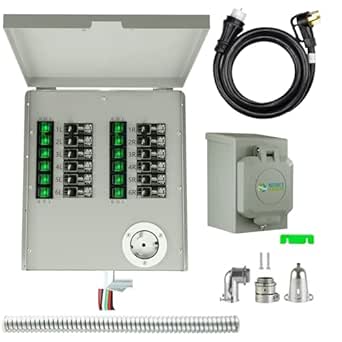 | Best for More Circuits | Operation: Manual | Voltage: 120/240V AC | Circuit capacity: 12 circuits | VIEW LATEST PRICE | See Our Full Breakdown |
| Connecticut Electric Series 2 Manual Transfer Switch Kit, 50 Amp, 10 Circuits, with 25 ft Cord and Outdoor-Rated Inlet |  | Best for an Outdoor-Rated Inlet | Model: EGS1012KG2 | Operation: Manual | Amperage: 50A | VIEW LATEST PRICE | See Our Full Breakdown |
| EZ Generator Switch Universal Manual Transfer Switch |  | Best for Small Essential Loads | Model: Universal | Operation: Manual, ON-OFF-ON | Voltage: 120V | VIEW LATEST PRICE | See Our Full Breakdown |
| DSGSANO 50A 10-Circuit Manual Generator Transfer Switch |  | Best Compact 10-Circuit Panel | Model: A5 | Voltage: 240V | Circuit support: Up to 10 circuits | VIEW LATEST PRICE | See Our Full Breakdown |
| 100 A 220 V AC Automatic/Manual Transfer Switch, 2-Pole |  | Best for Automatic Source Switching | Operating voltage: 220V AC | Frequency: 50/60Hz | Switching mode: Automatic/manual | VIEW LATEST PRICE | See Our Full Breakdown |
More Details on Our Top Picks
MOES Smart Automatic Transfer Switch for Off-Grid Solar Systems
The MOES BAT-80A-BHUB-W-MS is the most solar-specific choice here: it can change between inverter and grid power based on battery voltage, with adjustable cut-off and recovery points. That gives an off-grid or hybrid system a way to fall back to utility power before batteries run too low, rather than relying on a basic source-failure trigger. Its manual, app, and Bluetooth controls, LCD, and monitoring for battery, inverter, grid, and load also provide more system feedback than the simpler Zgqmcgy 2P switch. The included hub extends remote control beyond ordinary Bluetooth range, though remote access depends on using it. This is not a portable battery station like the Jackery HomePower 3000, and its voltage range must match the battery bank. I’d favor it for configured solar systems, not buyers seeking a simple whole-home generator inlet.
Pros:- Automatically switches between inverter and grid power according to battery voltage.
- Adjustable battery cut-off and recovery settings help tailor when utility backup takes over.
- LCD and app monitoring cover battery, inverter, grid, and load status.
- Includes surge protection and a Bluetooth hub for remote control beyond Bluetooth range.
Cons:- Remote control beyond Bluetooth range depends on the included hub.
- Battery-bank voltage must match one of the supported 12 V, 24 V, or 48 V options.
- Its system-oriented setup may be more involved than a basic manual transfer switch.
Best for: Owners of hybrid or off-grid solar systems who want battery-voltage-based source switching and app monitoring.
Not ideal for: Buyers who need a portable, all-in-one power station or whose battery bank does not match the switch’s 12 V, 24 V, or 48 V support.
- Model:BAT-80A-BHUB-W-MS
- DC input voltage:12 V, 24 V, or 48 V
- AC input voltage:100–120 V, 60 Hz / 220–240 V, 50 Hz
- Power capacity:8 kW at 100–120 V; 16 kW at 220–240 V
- Switching time:≤10 ms inverter to grid; ≤16 ms grid to inverter
- Control:Manual, app, and Bluetooth; Bluetooth hub included
- Battery compatibility:Sealed, gel, lead-acid, and lithium
- Display:LCD
Our verdict“Choose the MOES if your solar setup needs battery-aware automatic switching and monitoring; skip it if you want a portable power station or a straightforward manual switch.”
Jackery HomePower 3000 Portable Power Station with Transfer Switch and Two 200W Solar Panels
The Jackery HomePower 3000 suits buyers who want stored solar energy and portable backup in one package, rather than a standalone switch for a fixed solar installation. Its 3072 Wh LiFePO4 battery and 3600 W output can run supported essential loads, while UPS switching of up to 20 ms helps maintain power for compatible devices. The included pair of 200 W panels adds a charging path, and the TT-30 outlet makes the unit more useful for RV owners than the wall-mounted MOES switch. The tradeoff is that this is a 120 V power station, not a 120/240 V panel transfer solution like the 63 Amp Generator Transfer Switch. At 59.5 pounds, it is portable only in a limited sense, and panels may arrive separately. I’d choose it for flexible backup, not broad household circuit coverage.
Pros:- 3072 Wh LiFePO4 battery and 3600 W output support a range of essential loads.
- UPS switching within 20 ms can help keep supported devices powered during source changes.
- Includes two 200 W solar panels and offers AC and hybrid AC/DC recharging.
- TT-30 RV outlet joins AC, USB-C, USB-A, and DC connections.
Cons:- At 59.5 pounds, moving it often or carrying it far is inconvenient.
- Its 120 V output does not provide the 120/240 V circuit coverage of a household transfer switch.
- Solar panels may arrive separately from the power station.
Best for: Households or RV owners who want a portable battery-based backup source with included solar panels and a TT-30 outlet.
Not ideal for: Buyers seeking a fixed 120/240 V transfer switch for multiple household circuits or a lightweight unit to carry frequently.
- Battery capacity:3072 Wh
- Battery chemistry:LiFePO4
- Output wattage:3600 W
- Surge capacity:7200 W
- UPS switching time:≤20 ms
- Solar panels:2 × 200 W
- Voltage:120 V AC
- Weight:59.5 lb
Our verdict“Pick the Jackery HomePower 3000 for portable, solar-rechargeable backup and RV use, but choose a dedicated panel switch for 120/240 V household circuits.”
63 Amp Generator Transfer Switch – 120/240V Prewired Manual
For a fixed 120/240 V setup where I want a person to choose the source, this 63 A prewired manual switch offers a different kind of capacity from the compact automatic models. Its stated maximum of 15 kW and three breaker-protected circuits make it a fit for selected larger loads, and the prewired copper connections can reduce wiring work compared with assembling a switch from loose components. Unlike the MOES, it does not watch battery voltage or switch sources on its own; someone must operate it when power changes. It also lists generators and solar panels as compatible sources, but the product data does not describe solar-specific controls. The wall-mounted enclosure is fairly large, and the manufacturer recommends professional installation. I’d choose this over the Zgqmcgy for higher stated capacity and 120/240 V use, not for unattended backup.
Pros:- 63 A rating and stated 15 kW maximum support higher-capacity backup applications.
- Prewired design with pure copper connections can simplify installation work.
- Three circuit breakers provide overload protection for the switched circuits.
- Designed for wall mounting and indoor or outdoor use.
Cons:- Manual operation requires someone to switch sources when utility power changes.
- Professional electrical installation is recommended.
- Its 10 × 9.5 × 3.9-inch enclosure may be difficult to place in a tight area.
Best for: Homeowners with selected 120/240 V loads who want a high-capacity, breaker-protected manual switch for generator or solar backup.
Not ideal for: People who need automatic failover, battery monitoring, or an installation that avoids electrician-level electrical work.
- Operating voltage:240 V
- Maximum wattage:15,000 W
- Number of circuits:3, breaker protected
- Control type:Manual
- Mounting type:Wall mount
- Dimensions:10 × 9.5 × 3.9 in
- Compatible sources:Generators and solar panels
Our verdict“Choose this switch for manually controlled, higher-capacity 120/240 V backup circuits; choose the MOES instead if battery-aware automatic operation matters more.”
Zgqmcgy 110V 2P 63A Dual Power Automatic Transfer Switch
The Zgqmcgy 2P 63A is a basic automatic/manual source switch for 110 V systems, with protection features aimed at common supply problems. Its 6–63 A range and listed 6930 W maximum give it more stated capacity than the 100 A DIN-rail model’s published data, while the latter specifies a much faster 0.05-second transfer. Here, the transfer takes about two seconds, so this is a better fit for loads that can tolerate a brief interruption than for sensitive equipment expecting near-instant backup. It supports generators, solar systems, and batteries supplying AC 110 V, but unlike the MOES it does not list battery-voltage-based switching or monitoring. Voltage monitoring is limited to Phase A, and wiring may call for an electrician. I’d shortlist it for a simple 110 V backup setup, not for precision solar management.
Pros:- Offers both automatic and manual switching modes.
- Supports 6–63 A and lists a maximum load of 6930 W.
- Includes protections for short circuits, overloads, phase failures, and undervoltage.
- Can work with generators, solar systems, and batteries supplying AC 110 V.
Cons:- Approximately two-second transfer time may interrupt sensitive loads.
- Voltage monitoring is limited to Phase A.
- Electrical wiring may require professional installation.
Best for: Owners of 110 V backup systems who want automatic or manual source selection with built-in electrical protections.
Not ideal for: Users with sensitive loads that cannot tolerate an approximately two-second interruption, or solar owners needing battery monitoring and voltage-based controls.
- Poles:2
- Current range:6–63 A
- Operating voltage:110 V
- Frequency:50/60 Hz
- Transfer time:Approximately 2 seconds
- Switching modes:Automatic and manual
- Maximum wattage:6930 W
- Dimensions:7.5 × 7 × 5.5 in
Our verdict“Choose the Zgqmcgy for protected, general-purpose 110 V source switching, but favor the 100 A DIN-rail model when its stated faster transfer better suits your loads.”
100A 110V Automatic/Manual Transfer Switch, 2-Pole, DIN Rail Mounted
Among these compact source switches, this 100 A, 110 V model is the clearest fit when a short transfer interval matters: its stated changeover time is 0.05 seconds, much quicker than the Zgqmcgy’s approximate two seconds. It can run in automatic or manual mode and includes overvoltage and undervoltage thresholds, so it can respond to abnormal primary-source voltage as well as loss of supply. DIN-rail mounting and screw terminals suit an appropriately equipped electrical enclosure, but they do not make installation a casual DIY task. The available specifications identify compatibility with generators and photovoltaic sources, yet give no solar-specific battery controls or household circuit count. Compared with the MOES, it is less tailored to battery management; compared with the 63 Amp wall switch, it is a 110 V DIN-rail unit rather than a 120/240 V manual circuit switch. Its description also says it is designed for infrequent switching.
Pros:- Specified 0.05-second transfer is faster than the Zgqmcgy’s approximately two-second changeover.
- Supports automatic and manual source selection.
- Overvoltage and undervoltage thresholds provide defined voltage protection.
- DIN-rail mounting and screw terminals suit compatible electrical enclosures.
Cons:- Designed for infrequent switching, limiting its fit for systems that change sources often.
- The supplied data does not specify a household circuit count or 120/240 V operation.
- No battery-voltage monitoring or solar-specific charging controls are listed.
Best for: Solar or generator system owners with a suitable DIN-rail enclosure who prioritize fast 110 V source changes and voltage protection.
Not ideal for: Buyers who need a listed 120/240 V household circuit transfer panel, frequent switching, or battery-aware solar controls.
- Operating voltage:110 V AC
- Frequency:50/60 Hz
- Poles:2
- Switching modes:Automatic and manual
- Transfer time:0.05 seconds
- Undervoltage threshold / recovery:85 V / 95 V
- Overvoltage threshold / recovery:145 V / 130 V (±5 V)
- Mounting and connection:DIN rail; screw terminals
Our verdict“Choose this model for fast, infrequent 110 V source switching in a compatible enclosure; choose the MOES for battery-aware solar control or a dedicated 120/240 V switch for household circuits.”
Tzechkii 200-Amp Manual Generator Transfer Switch, 48,000W
The Tzechkii is the high-current manual option in this group, with a 200 A rating and stated 48,000 W capacity for buyers planning a substantial home backup connection. Its galvanized-steel NEMA 3R enclosure is designed for indoor or outdoor exposure, unlike the Nature’s Generator 30A Manual Transfer Switch, which is limited to indoor installation. The double-throw lever and pre-installed lugs support a direct, hands-on setup, but this is not a plug-and-play kit: installation calls for an experienced installer or electrician, and switching sources requires manual action. Its listed 12-circuit support gives buyers circuit-level control, though the product data should be checked against the actual panel and intended generator before purchase. I’d choose it for a professionally planned, high-capacity installation, not for a portable solar generator setup that needs simple, matched components.
Pros:- 200 A rating and stated 48,000 W capacity suit high-demand backup plans.
- NEMA 3R enclosure is designed for outdoor weather exposure.
- Manual double-throw design is described as preventing backfeeding.
- Pre-installed wiring lugs simplify connection work for a qualified installer.
Cons:- Installation is intended for experienced users or professionals, not casual DIY setup.
- Manual operation means a person must switch the power source during an outage.
- Its high capacity may be excessive for buyers connecting a modest portable power station.
Best for: Homeowners planning a high-capacity generator connection who have an electrician or experienced installer handling the panel work.
Not ideal for: Portable solar-generator owners seeking a matched, simple backup kit, or anyone who wants automatic changeover without operating a lever.
- Maximum current:200 A
- Stated power capacity:48,000 W
- Voltage:120/240 V
- Circuit support:12 circuits
- Operation:Manual double-throw
- Enclosure:Galvanized alloy steel; NEMA 3R
- Dimensions:7.4 × 5.1 × 14.5 in
Our verdict“Choose the Tzechkii for a professionally installed, high-capacity manual setup, and skip it if you want an easy solar-generator-specific kit.”
Jackery Explorer 5000 Plus Portable Power Station with Smart Transfer Switch
This is the clearest all-in-one direction for buyers who want a battery power station and transfer switch designed to work together. The Explorer 5000 Plus provides 5,040 Wh capacity, 7,200 W rated output, and 120/240 V support; its included switch covers up to 12 circuits at 120 V or six at 240 V. That integrated approach is more suitable for a solar-generator buyer than the standalone Tzechkii 200-Amp switch, which still needs a separately chosen generator and professional installation. Capacity can expand to 60 kWh, and solar input reaches 4,000 W, giving a path to longer backup runtime. The tradeoff is that expansion and solar charging involve additional equipment, while a home circuit connection may still require installation work. I’d favor this package for buyers building around Jackery, rather than shoppers who only need a transfer switch for existing equipment.
Pros:- Power station and smart transfer switch are presented as an integrated backup pairing.
- 5,040 Wh capacity and 7,200 W rated output support substantial appliance loads.
- Expandable capacity up to 60 kWh supports longer backup plans.
- Up to 4,000 W solar input offers a substantial charging path when compatible panels are added.
Cons:- Solar panels are optional, so solar charging requires separate equipment.
- A whole-home or circuit-level installation may call for electrical work.
- The system is a less natural fit for owners committed to another power-station brand.
Best for: Households building a Jackery-centered solar backup system that need 120/240 V output, circuit-level connection, and room to expand storage.
Not ideal for: Buyers who already own a different power station or only need a standalone transfer switch; solar panels are optional and circuit installation may be needed.
- Battery capacity:5,040 Wh
- Expandable capacity:Up to 60 kWh
- Surge output:14,400 W
- Voltage:120/240 V
- Solar input:Up to 4,000 W
- Transfer switch:60 A; up to 12 circuits at 120 V or 6 at 240 V
- Battery chemistry:LiFePO₄
Our verdict“Pick this package if you want a Jackery power station and transfer switch as one expandable backup system, rather than a standalone switch.”
Renogy 30 Amp Automatic Transfer Switch for Pure Sine Wave Inverters
The Renogy is a compact choice for automatic switching between two 120 V AC sources, such as an inverter and shore power. Its 30 A, 3,600 W limit makes it a better match for an RV, van, or modest backup circuit than the Jackery Smart Transfer Switch, which is designed for up to 12 household circuits and much higher system output. The Renogy’s 20–30 second delay allows voltage to stabilize before transfer, reducing the chance of switching immediately onto unsettled power. At just 2.4 pounds, it is also easier to place in a compact system than a larger home-transfer setup. The main compromises are its 120 V-only, 30 A ceiling and the need for a separate waterproof enclosure outdoors. I’d choose it when automatic source selection matters more than whole-home coverage, while confirming inverter compatibility before wiring.
Pros:- Automatic switching removes the need to change power sources by hand.
- 20–30 second delay allows voltage stabilization before transfer.
- Compatible with Renogy and other brands’ pure sine wave inverters up to 30 A.
- Compact 2.4-pound body suits space-limited mobile installations.
Cons:- 30 A and 3,600 W limits rule it out for larger loads.
- Provides 120 V AC rather than 120/240 V household service.
- Outdoor mounting requires a separate waterproof enclosure.
Best for: RV, camper-van, and off-grid system owners with a compatible pure sine wave inverter and a 120 V load within 30 A.
Not ideal for: Homeowners seeking 120/240 V service, high-output household circuit coverage, or an outdoor installation without a separate waterproof enclosure.
- Input voltage:120 V AC
- Output voltage:120 V AC
- Output power:3,600 W
- Switching delay:20–30 seconds
- Waveform compatibility:Pure sine wave inverter
- Dimensions:8 × 8 × 3 in
- Weight:2.4 lb
Our verdict“Choose the Renogy for compact, automatic 120 V source switching in an RV or small off-grid system, not for whole-home backup.”
Jackery Smart Transfer Switch, 14,400 W
The Jackery Smart Transfer Switch stands out for automatic 20 ms switching and app-based control across as many as 12 household circuits. It is a switch, not a self-contained generator, so it makes the most sense for buyers already planning around compatible Jackery power stations. The system supports 120/240 V output, and its stated maximum of 14,400 W depends on connecting two E5000 Plus power stations. That dependency is the key difference from the Explorer 5000 Plus package, which includes a power station alongside its switch; this model leaves the power source to the buyer. Independent circuit control and electricity monitoring offer more visibility than a basic manual switch such as the Nature’s Generator 30A model, but compatibility narrows the audience. I’d shortlist it for a Jackery-based household that values quick automatic transfer, not for someone seeking a universal switch.
Pros:- Automatic 20 ms transfer helps keep connected circuits supplied during an outage.
- Supports up to 12 circuits with independent control.
- App-based control and electricity monitoring add system visibility.
- Supports 120/240 V output for compatible backup configurations.
Cons:- Requires compatible power-station equipment to provide backup power.
- The 14,400 W maximum requires two E5000 Plus power stations.
- Its brand-specific system fit limits flexibility compared with a general-purpose switch.
Best for: Owners building a compatible Jackery backup system who want automatic outage response, app monitoring, and control of multiple household circuits.
Not ideal for: Buyers without compatible Jackery power stations, or anyone expecting the switch alone to provide stored energy or the full 14,400 W output.
- Maximum power:14,400 W
- Maximum capacity:60 kWh
- Output current:120 A
- Output voltage:120/240 V
- Circuit support:Up to 12 circuits
- Automatic switching time:20 ms
- Enclosure material:Acrylonitrile Butadiene Styrene
- Weight:14 kg
Our verdict“Choose this switch for fast, app-managed circuit backup in a compatible Jackery system, and skip it if you need a standalone or brand-neutral solution.”
Nature’s Generator 30A Manual Transfer Switch, 6-Circuit, 120V
This Nature’s Generator kit is the most approachable manual option here for connecting a modest 120 V generator to selected household circuits. It supports six circuits at 30 A and includes a 30 A inlet and power cord, so buyers get more of the connection hardware than with the Tzechkii 200-Amp switch, which is a higher-capacity component intended for experienced installers. Illuminated rocker switches make it easier to see generator status while selecting circuits, and compatibility with AFCI/GFCI breakers is useful when planning around protected circuits. Its 3,600 W ceiling calls for load prioritization rather than whole-home operation, and the indoor-only installation rules out exposed locations. Unlike the Renogy, it requires manual source selection, but it provides a more direct fit for a fixed, six-circuit home setup. I’d choose it for straightforward essentials backup, not 240 V loads.
Pros:- Supports six circuits, letting users select specific essential loads.
- Includes a 30 A power inlet and power cord.
- Illuminated rocker switches show generator power status.
- Compatible with AFCI/GFCI breakers.
Cons:- Manual switches require users to select circuits and change sources themselves.
- Indoor installation only limits placement options.
- 30 A, 3,600 W, and 120 V ratings do not cover 240 V loads or larger backup demands.
Best for: Homeowners who want a fixed, indoor 120 V backup connection for up to six selected circuits and prefer an included inlet and cord.
Not ideal for: Buyers needing 240 V service, outdoor installation, automatic switching, or enough capacity to run a broad set of household loads at once.
- Operating voltage:120 V
- Wattage:3,600 W
- Circuit support:6 circuits
- Operation:Manual OFF-NONE-ON
- Enclosure material:Stainless steel
- Mounting:Wall mount; indoor installation
- Dimensions:13 × 9 × 4 in
Our verdict“Pick this kit for a simple indoor, six-circuit 120 V backup setup, and look elsewhere for outdoor use or 240 V service.”
Nature’s Generator 50A Manual Transfer Switch, 12-Circuit, 120/240V
For a solar generator setup that needs to feed a broad selection of household circuits, this Nature’s Generator switch offers the most circuit capacity in this group: 12 circuits, with support for 120/240V loads. Its 50A CS6375 inlet and included inlet box, cord, and pre-wired components reduce the number of compatible connection parts a buyer must source separately. Compared with the Connecticut Electric Series 2, it offers two additional circuit positions, while that kit specifies an outdoor-rated inlet. The manual controls mean you still choose and switch circuits yourself; this is not an automatic handoff from utility power to a solar generator. It is also rated for indoor installation, so the inlet and placement plan need attention. I’d favor it when circuit coverage matters more than automation or outdoor-rated components.
Pros:- Supports up to 12 circuits, more than the Connecticut Electric Series 2 kit.
- Handles both 120V and 240V loads.
- Includes a 50A CS6375 inlet, inlet box, cord, and pre-wired components.
- UL-listed steel enclosure.
Cons:- Manual operation requires the user to switch circuits by hand.
- Rated for indoor installation, which limits placement options.
- Requires a compatible 50A CS6375 source and suitable installation.
Best for: Homeowners with a compatible 50A CS6375 generator or inverter who want to manually back up up to 12 selected 120/240V circuits.
Not ideal for: Buyers seeking automatic source switching, outdoor-rated switch installation, or a smaller 120V-only setup.
- Operation:Manual
- Voltage:120/240V AC
- Circuit capacity:12 circuits
- Power capacity:12,000W
- Compatible inlet:CS6375, 50A
- Mounting:Wall mount
- Enclosure:Steel
- Certification:UL listed
Our verdict“Choose this for broad manual circuit coverage from a compatible 50A source, but skip it if you need automatic switching or an outdoor-rated switch.”
Connecticut Electric Series 2 Manual Transfer Switch Kit, 50 Amp, 10 Circuits, with 25 ft Cord and Outdoor-Rated Inlet
The clearest reason to choose this kit over the Nature’s Generator 50A 12-circuit switch is its specified outdoor-rated inlet with a weather-resistant cover. That can make the connection point easier to site where a portable source will be connected, while the switch itself still manages up to 10 circuits and supports 240V applications. Its double-throw switches are designed to prevent hazardous backfeeding, a key part of safely separating utility and generator power. The tradeoff is two fewer circuit positions than the Nature’s Generator option, and the included cord length is inconsistent in the listing: the title says 25 feet, while product information says 15 feet. I’d confirm that detail before planning the inlet location. It suits buyers who value the inlet setup more than maximum circuit count.
Pros:- Outdoor-rated 50A inlet includes a weather-resistant cover.
- Supports up to 10 circuits and 240V applications.
- Double-throw switches are designed to prevent backfeeding.
- Includes a connecting cord.
Cons:- Cord length is inconsistent: 25 feet in the title and 15 feet in product information.
- Offers fewer circuit positions than the Nature’s Generator 12-circuit model.
- Installation requirements and difficulty are not specified.
Best for: Homeowners wanting a 50A manual kit with an outdoor-rated inlet for up to 10 selected 120/240V circuits.
Not ideal for: Buyers who need 12 circuits, require a confirmed cord length before purchase, or want automatic switching.
- Model:EGS1012KG2
- Operation:Manual
- Amperage:50A
- Circuit capacity:10 circuits
- Power capacity:12,500W
- Voltage support:240V
- Inlet:Outdoor-rated 50A inlet with weather-resistant cover
- Certification:ETL certified
Our verdict“Pick this kit when an outdoor-rated inlet is the priority, but verify the cord length and accept a 10-circuit limit.”
EZ Generator Switch Universal Manual Transfer Switch
Unlike the 50A, multi-circuit panels in this roundup, the EZ Generator Switch is a plug-in, 120V option rated at 1,800W, aimed at routing inverter power to a short list of essential loads. That makes it a closer fit for a modest solar generator powering items such as a refrigerator, lights, or a sump pump than for backing up a larger set of household circuits. Its stated compatibility with bonded or floating neutrals gives it flexibility across inverter setups, and it is designed to prevent backfeeding without modifying existing breakers. Compared with the DSGSANO 10-circuit switch, it trades broad circuit coverage for a simpler plug-in approach and lower capacity. Manual operation remains part of the routine, and the 20A current limit rules it out for higher-demand systems.
Pros:- Supports bonded and floating neutral systems.
- Designed to prevent backfeeding without modifying existing circuit breakers.
- Can serve essential loads including refrigerators, lighting, and sump pumps.
- UL, CSA, and ETL certifications are listed.
Cons:- Limited to 120V and 1,800W, far below the capacity of the 50A switches.
- Manual operation requires the user to change the switch setting.
- Plug-in format is not a substitute for a multi-circuit transfer panel.
Best for: Solar-generator owners who want a manual 120V connection for a few essential loads and need compatibility with bonded or floating neutrals.
Not ideal for: Households seeking 240V support, 10 or more backed-up circuits, or power above the stated 1,800W capacity.
- Model:Universal
- Operation:Manual, ON-OFF-ON
- Voltage:120V
- Wattage:1,800W
- Mounting:Plug-in
- Material:Steel
- Dimensions:4 × 4 × 4 in
- Certifications:UL, CSA, ETL
Our verdict“Choose this for a small, 120V essential-load setup where neutral compatibility matters, not for whole-panel or high-wattage backup.”
DSGSANO 50A 10-Circuit Manual Generator Transfer Switch
The DSGSANO is a compact-format alternative for buyers who want a 50A, 240V manual switch serving up to 10 circuits without the larger circuit count of the Nature’s Generator 12-circuit model. Its stated dimensions of 11.75 × 4.5 × 11 inches and marked wires may help with space planning and connection identification, though they do not remove the need for sound installation work. Unlike the Connecticut Electric kit, the supplied information does not specify an inlet, cord, or outdoor-rated connection point; the listed included component is the transfer switch itself. That makes accessory and compatibility checks especially important for a solar generator installation. The product description calls for basic electrical knowledge and recommends professional installation for inexperienced users, so I’d treat compactness as a benefit only when the wiring plan is already clear.
Pros:- Supports up to 10 circuits at 240V.
- Compact listed dimensions can help with limited mounting space.
- Marked wires aid connection identification.
- Described for selected household, RV, and off-grid backup uses.
Cons:- Only the transfer switch is listed as included; an inlet and cord are not specified.
- Requires electrical knowledge, with professional installation recommended for inexperienced users.
- No certification or power-capacity rating is provided in the supplied specifications.
Best for: Experienced installers or buyers working with an electrician who need a compact 50A manual switch for up to 10 selected 240V-system circuits.
Not ideal for: First-time DIY installers or buyers who want a clearly specified inlet-and-cord kit included.
- Model:A5
- Voltage:240V
- Circuit support:Up to 10 circuits
- Amperage:50A
- Mounting:Surface mount
- Contact type:Normally open
- Dimensions:11.75 × 4.5 × 11 in
- Included components:Transfer switch
Our verdict“Consider it for a space-conscious 10-circuit installation if an electrician can confirm compatibility and source any needed connection hardware.”
100 A 220 V AC Automatic/Manual Transfer Switch, 2-Pole
This is the only option in this batch that specifies automatic as well as manual switching, making it a different kind of fit from the circuit-by-circuit panels. It monitors two power sources and lists a 0.05-second transfer time, plus overvoltage and undervoltage protection. For a compatible 220V system, that can reduce the need for someone to operate a manual switch when the source changes. But its 2-pole design and 220V specification do not establish compatibility with a typical North American 120/240V home panel or a particular solar generator; those details need professional confirmation. Compared with the EZ Generator Switch, it offers automatic operation and a much higher stated wattage, but gives no selected-circuit count or solar-inverter-specific compatibility details. I’d choose it only when the electrical system matches its ratings.
Pros:- Offers both automatic and manual transfer modes.
- Lists a 0.05-second transfer time.
- Includes overvoltage and undervoltage thresholds and recovery values.
- Specifies 100A and 22,000W capacity for compatible systems.
Cons:- 220V specification may not match common 120/240V residential panels or a given solar generator.
- No selected-circuit capacity or solar-inverter compatibility is specified.
- Installation and system matching may require electrical expertise.
Best for: Owners of compatible 220V systems who need automatic or manual changeover between two power sources and can have compatibility verified by an electrician.
Not ideal for: Buyers seeking a clearly specified 120/240V, multi-circuit solar generator panel or anyone unable to verify source and load compatibility.
- Operating voltage:220V AC
- Frequency:50/60Hz
- Switching mode:Automatic/manual
- Poles:2
- Transfer time:0.05 seconds
- Wattage:22,000W
- Undervoltage threshold:175V
- Overvoltage threshold:260V
Our verdict“Choose it only for a verified compatible 220V system where automatic changeover matters more than a defined multi-circuit panel layout.”
How We Picked
I ranked these products by how clearly they serve a real solar-generator backup setup: compatibility with the power source, stated voltage and current, circuit coverage, switching method, and whether the package includes useful installation components. I also separated standalone switches from bundled power-station systems, since a bundle can simplify purchasing but is a different commitment from adding a switch to equipment the buyer already owns.
The order favors products with a clear role and a plausible path to connecting a compatible backup source to household loads. A brand-matched smart switch ranks ahead for buyers already choosing its power station; a cord-and-inlet kit ranks well for a defined manual connection; and compact or broadly specified transfer devices rank lower when application details need extra verification. Product titles alone do not establish code compliance or suitability, so buyers should confirm the manufacturer’s wiring diagram, system compatibility, and local electrical requirements with a qualified electrician.
Factors to Consider When Choosing Solar Generator Transfer Switches
Before choosing a switch, I would work backward from the power station or inverter and the circuits that need backup. The product name may say “automatic,” “universal,” or “200 amp,” but those labels do not establish that a device matches a particular panel. These checks help avoid buying a switch that cannot be safely connected to the intended source.
Match the switch to the exact power source
Start with the power station or inverter model, not the switch’s advertised category. Confirm supported input voltage, current, neutral arrangement, grounding instructions, and whether the manufacturer lists the switch as compatible. A switch designed around a brand’s system may offer a cleaner pairing but can limit future equipment choices. A general-purpose unit may look more flexible while requiring more electrical verification. Do not infer compatibility from matching plug shapes or wattage figures; ask the manufacturer or an electrician to confirm the complete connection path.
Choose circuits by measured backup needs
Count the circuits you actually need during an outage and estimate their running and startup loads. A refrigerator, lighting, communications gear, and a well pump can have very different power demands, especially when motors start. More circuit positions do not mean the generator can run every connected load at once. Buyers often select a larger panel kit based on circuit count, then discover the power source is the limiting factor. Prioritize essential loads and have an electrician check both the branch circuits and the generator’s usable output before selecting capacity.
Treat voltage and amperage as system requirements
Determine whether the intended loads require 120V only or 120/240V service, then check the power source and switch against that requirement. A 120V device will not supply 240V loads simply because it has a high wattage or amperage label. Likewise, the switch rating must suit the wiring and source, but a high rating does not increase the generator’s output. Misreading a 2-pole listing or confusing service capacity with available backup power can lead to an unsuitable purchase. Use the equipment documentation and a qualified electrician to confirm every part of the circuit.
Decide whether automatic operation is worth the added setup
An automatic switch can change sources without a person moving a handle, which may help when an outage happens while no one is home. That convenience depends on the switch correctly detecting the source and working with the particular inverter or generator. Manual models put the decision in the homeowner’s hands and may suit a simpler backup routine, but someone must operate them as directed. Do not assume “automatic/manual” means both modes work with every source or that the device configures itself. Compare the switching sequence, control requirements, and failure behavior before paying extra for automation.
Check installation style, location, and included hardware
Transfer switches vary from DIN-rail devices and compact adapters to panel kits with cords and outdoor-rated inlets. Those formats affect where the equipment can be mounted, what wiring work is needed, and how the generator connects from outside. A bundled inlet and cord can reduce separate parts shopping, but only if their ratings and length suit the installation. Outdoor-rated components do not make every part of a setup weatherproof. Review enclosure ratings, clearances, cable routing, and local permit or inspection requirements before deciding that a kit is a straightforward DIY job.
Compare the complete cost and future flexibility
The lowest-complexity purchase is not always the lowest-cost system once compatible cables, an inlet, installation labor, or a matched power station are included. A bundled Jackery system can make sense for someone who wants the power station, solar panels, and switching equipment together, but it ties the setup to that product family. A standalone switch may leave more freedom to choose a source, though compatibility checks and separate components add work. Buyers planning to expand should ask whether additional circuits, another power source, or a different inverter can be supported later. Paying more makes sense when it buys a verified fit or useful included hardware, not just a larger number on the label.
Frequently Asked Questions
Can I connect any solar generator to any transfer switch?
No. The power station or inverter must match the switch’s voltage, current, output type, connection method, and wiring requirements. Brand-specific products such as the Jackery switches should be checked against the exact supported models, while the Renogy listing calls out pure sine wave inverters. A compatible-looking connector is not proof of electrical compatibility. Confirm the pairing in both manufacturers’ documentation and have a qualified electrician review the installation.
Do I need a 120/240V switch if my solar generator only provides 120V?
Not necessarily, and a 120/240V switch does not create a 240V output from a 120V source. If your backup plan includes 240V equipment, the power source and transfer arrangement must support that load and configuration. If you only intend to power selected 120V circuits, a 120V setup may be a better match, subject to panel and code requirements. Check the voltage of each intended circuit before choosing a switch. An electrician can identify whether your planned loads can be backed up as proposed.
Is an automatic transfer switch safer or better than a manual one for a solar generator?
Neither switching style is automatically better for every household. Automatic operation can reduce the need for someone to respond to an outage, but only when the switch is compatible and configured to detect and use the backup source correctly. Manual switching gives the owner direct control and may be easier to understand, though it requires someone to follow the operating procedure. Safety depends on correct equipment, wiring, installation, and use, not the word “automatic” on a product page. Ask an electrician to explain how the selected model isolates sources and behaves during a fault or loss of power.
Can a 50A or 100A transfer switch run that much power from my portable power station?
No—the switch’s rating describes its electrical limits, not the amount of power the portable station can supply. The source’s continuous output, surge capability, voltage, and available energy set the practical limits for backed-up loads. A high-rated switch may be part of a suitable installation, but it cannot make a smaller inverter deliver more power. Add up expected loads and account for motor startup before selecting circuits. Have the source and switch ratings checked together rather than shopping by amperage alone.
Should I buy a power-station bundle or a standalone transfer switch?
A bundle can be a sensible choice if you need the power station and its matched switching equipment, as with the Jackery packages in this roundup. It may simplify compatibility decisions, though it commits you to that ecosystem and may include components you do not need. A standalone switch is more appropriate when you already own a compatible inverter or generator, but it can require separate cables, inlets, and professional installation. Compare the complete system rather than the switch alone. If you already own equipment, verify its exact model compatibility before buying a bundle or standalone unit.
Conclusion
For most buyers building around a compatible Jackery system, I recommend the Jackery Smart Transfer Switch, 14,400 W as the best overall because it offers a defined brand-matched route to home backup. The Connecticut Electric Series 2 kit is my best value-style pick for shoppers who want a manual 50A setup with a cord and outdoor-rated inlet included, provided its circuit and voltage layout fits their plan. For the best premium, bundled option, compare the Jackery Explorer 5000 Plus package; choose the HomePower 3000 bundle instead if its power-station capacity and included solar panels better match your needs. The EZ Generator Switch is the easier starting point for a buyer with a narrow, compatible use case, while the Nature’s Generator 50A 12-circuit model better suits someone prioritizing a larger set of selected 120/240V circuits. Before purchasing any option, confirm source compatibility, planned loads, and installation requirements with the manufacturer and a qualified electrician.
Fall Picks
fall essentials
As an affiliate, we earn on qualifying purchases.