
TL;DR

Get backup power and energy gear delivered free — and shop member deals
- Fast, free delivery on millions of items
- Access to Prime Big Deal Days deals on October 6–7
- Prime Video, Amazon Music and more included
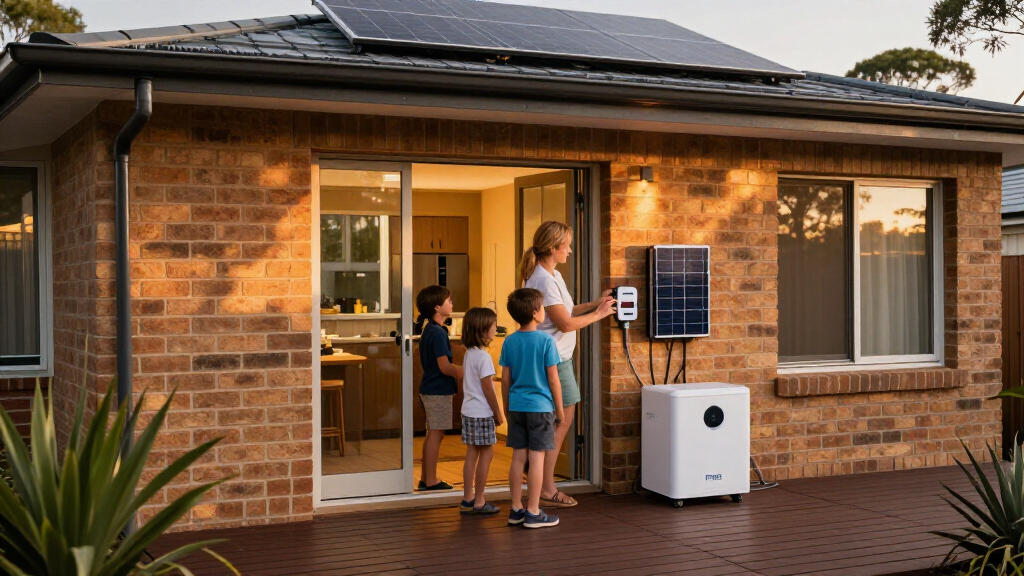
Australia installed 276,011 home batteries in the first half of 2026, 52% more than in the previous six-month period, according to the Clean Energy Council. Rooftop solar installations also reached a six-month record, with the council saying both technologies are on track for further growth this year.
Australian households installed 276,011 home batteries in the first half of 2026, while rooftop solar additions reached their strongest six-month total since 2021, according to a new Clean Energy Council report. The figures show batteries being deployed faster than new solar systems and put rooftop solar on track to exceed 300,000 installations for the year, the industry body said.
The council’s Rooftop Solar and Storage Report for January to June 2026 records 180,878 new rooftop solar systems, a 35% increase on the same period in 2025. They added 1,894 megawatts of capacity, up 41% year on year and the highest six-month total in the report’s records. The June quarter alone accounted for 102,234 systems and 1,079 MW, both quarterly records.
Battery installations rose 52% compared with the second half of 2025. The new systems added 8,691 megawatt-hours of storage, more than double the 4,221 MWh added in that earlier six-month period. Across the first 12 months of the federal government’s battery rebate program, 457,439 batteries were installed, with a combined reported capacity of 12.9 gigawatt-hours.
In the first half of 2026, installers deployed 153 batteries for every 100 rooftop solar systems, compared with 130 per 100 in the second half of 2025. The ratio counts installations during the period; it does not mean every new battery was paired with a new solar system. The CEC said the figures point to both retrofits at homes with existing solar and new solar-and-storage packages.
Batteries Outpace New Solar
The rising battery total indicates that household energy investment is extending beyond adding rooftop generation. Storage can allow households with solar to use more of their electricity at a later time, while the expanding installed base also adds consumer-owned capacity to the energy system. The report gives installation and capacity figures, but does not quantify how much the new batteries reduced household bills or changed electricity supply during peak demand.
The CEC says the federal government’s Cheaper Home Batteries Program is a key driver of the increase. It also says the incentive appears to be bringing solar installations along with storage, rather than displacing them. Those are the council’s interpretations of the reported pattern; the figures alone do not establish how much of the growth was caused by the program or by other factors.
Rooftop solar supplied 12.9% of Australia’s electricity generation in the first half of 2026, according to the report. The scale of household installations therefore matters to the national energy mix as well as to participating homes. The generation share is for rooftop solar during that six-month period, not a measure of battery output.
Rebate Follows a Slower Year
The report describes a rebound after annual rooftop solar installations fell to 273,672 in 2025, below 300,000 for the first time since 2020. The CEC says the first-half 2026 pace puts installations on track to pass 300,000 again this year. That is a projection based on the reported pace, not a final annual count.
CEC Chief Executive Jackie Trad said the country now has more rooftop solar capacity than the capacity of its remaining coal-fired power stations combined. The report also compares current investment with the Australian Energy Market Operator’s central planning scenario. At current rates, it projects rooftop solar in the National Electricity Market could reach 40.3 GW by 2029-30, around 4.5 GW, or 13%, above the ISP Step Change scenario. Consumer battery storage could reach 59.2 GWh, 79% above the scenario’s 33 GWh projection.
Trad also pointed to a planned expansion of the Small-scale Renewable Energy Scheme to support solar systems up to 1 MW. The report presents that change as a possible further boost; its effects are not included in the first-half installation totals.
““Installation volumes have recovered sharply.””
— Clean Energy Council
Program Effects Need More Data
The report identifies the federal battery rebate as a key driver, but the figures provided do not isolate its effect from other influences on household purchasing. They also do not give a breakdown of battery installations by state, household type, system size or whether each battery was paired with newly installed or existing solar. The 153-to-100 ratio signals the overall pace of the two kinds of installations, but does not settle those details.
Actual full-year solar installations and future capacity will depend on activity in the months ahead. The report’s 2029-30 figures are projections at current rates compared with AEMO’s planning scenario; they are not confirmed future outcomes. The supplied figures also do not quantify household bill savings or explain how storage will affect power-system reliability.
Second-Half Figures Will Test Pace
The next key measure will be whether rooftop solar and battery installations remain at a similar pace in the second half of 2026. A later reporting period can show whether the annual solar total passes the CEC’s 300,000-installation threshold and whether the battery-to-solar ratio continues to rise.
The CEC also expects the planned SRES expansion to support additional solar installations, including systems up to 1 MW. Its effect will become clearer after the change takes effect and subsequent installation data are available. For now, the report records a first-half surge and sets a benchmark against which future household solar and storage growth can be measured.
Key Questions
How many home batteries were installed in Australia in the first half of 2026?
The Clean Energy Council reported 276,011 installations from January through June 2026, 52% more than in the previous six-month period.
How many rooftop solar systems were installed in the same period?
The report counted 180,878 new rooftop solar systems, up 35% on the first half of 2025.
Does the battery-to-solar ratio mean every battery came with new solar panels?
No. The report says there were 153 battery installations for every 100 new rooftop solar installations. The CEC says this reflects both retrofits to homes with existing solar and new solar-and-storage packages.
Is Australia certain to install more than 300,000 rooftop solar systems in 2026?
No. The CEC says the first-half pace puts installations on track to exceed 300,000, but that is a projection. The final annual count is not yet available.
Source: rss
Fall Picks
fall essentials
As an affiliate, we earn on qualifying purchases.