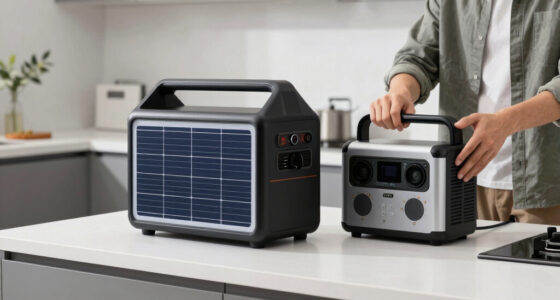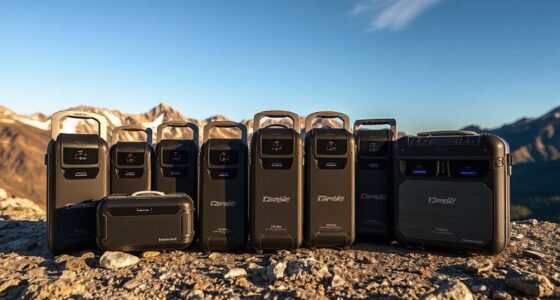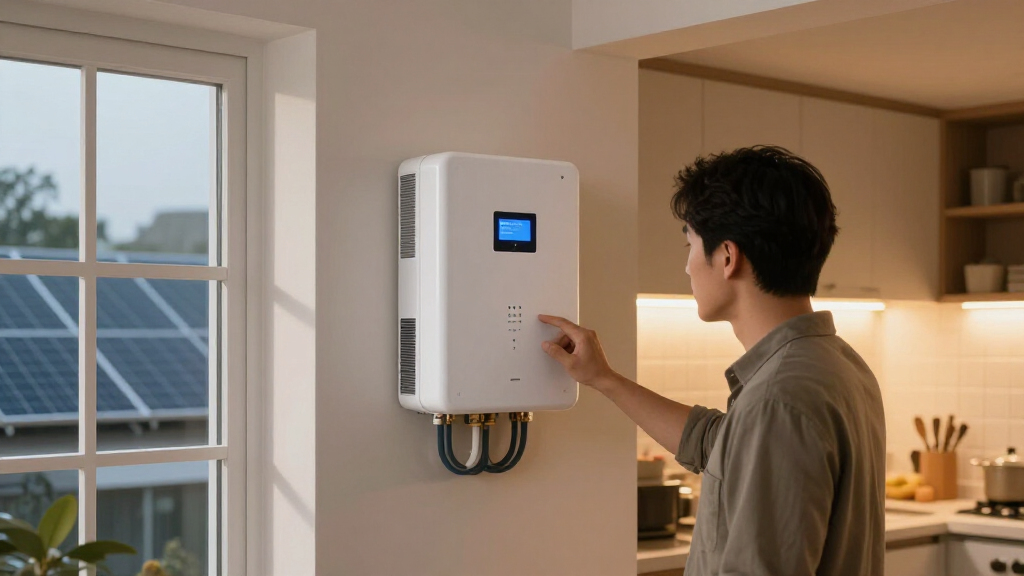
The best home battery systems balance usable storage, output, expandability, and installation needs. I’d put the EcoFlow DELTA Pro Ultra X with Smart Home Panel 3 first for buyers seeking a large, integrated backup setup; the ECO-WORTHY Powermega kit stands out for a modular 48V system, while the Jackery HomePower 3600 Plus suits buyers who want a simpler portable unit. The main tradeoff is between permanently installed capacity for household circuits and portable systems that are easier to move but cover fewer needs at once. Battery chemistry, inverter output, solar compatibility, and installation requirements can matter as much as the headline capacity. Read on for the full comparison and guidance on choosing a system for your home.

Get backup power and energy gear delivered free — and shop member deals
- Fast, free delivery on millions of items
- Access to Prime Big Deal Days deals on October 6–7
- Prime Video, Amazon Music and more included
Key Takeaways
- Integrated backup separates the whole-home contenders: EcoFlow pairs 12,288Wh of storage with a smart home panel, while Anker SOLIX E10 is positioned as a whole-home backup system; buyers should compare their circuit coverage and installation requirements before choosing.
- The Powermega lineup trades simplicity for modularity: its 314Ah battery can form part of a larger setup, while the system with two batteries and a 10kW hybrid inverter bundles more of the power equipment into one purchase.
- Capacity alone does not determine what a system can run: the PowerMax 6000 lists 3,600Wh, while the ECO-WORTHY kit pairs 10.24kWh with a 10kW inverter; buyers need to match both stored energy and output to their loads.
- Server rack batteries are building blocks, not complete backups: the WT5100 and Cubix100 are 51.2V 100Ah LiFePO4 batteries, so a buyer still needs compatible inverter, controls, wiring, and installation planning.
- Portable stations favor flexibility over whole-home coverage: Jackery HomePower 3000 includes two 200W solar panels, and HomePower 3600 Plus offers 3,600W AC output; neither should be assumed to replace a panel-connected home system.
| WT5100 51.2V 100Ah LiFePO4 Server Rack Battery |  | Best Expandable Rack Battery | Chemistry: LiFePO4 | Voltage: 51.2V | Capacity: 100Ah | VIEW LATEST PRICE | See Our Full Breakdown |
| ECO-WORTHY 48V Home Backup Power Kit with 10kW Inverter and 10.24kWh Battery |  | Best Complete Backup Kit | Battery chemistry: LiFePO4 | Total battery capacity: 10,240Wh | Battery configuration: Two 51.2V 100Ah batteries | VIEW LATEST PRICE | See Our Full Breakdown |
| EcoFlow DELTA Pro Ultra X Power Station with Smart Home Panel 3, 12,288 Wh |  | Best for Whole-Home Circuit Backup | Battery capacity: 12,288Wh | Expandable capacity: 12–180kWh | Output power: 12kW | VIEW LATEST PRICE | See Our Full Breakdown |
| ECO-WORTHY Cubix100 48V 100Ah LiFePO4 Server Rack Battery |  | Best Connected Rack Battery | Nominal voltage: 48V (51.2V) | Capacity: 100Ah | Chemistry: LiFePO4 | VIEW LATEST PRICE | See Our Full Breakdown |
| HumsiENK 48V 628Ah LiFePO₄ Battery with Bluetooth, Active Balancing, and LCD |  | Best Single-Battery Capacity | Chemistry: LiFePO₄ | Voltage: 48V | Capacity: 628Ah | VIEW LATEST PRICE | See Our Full Breakdown |
| PowerMax 6000 Portable Power Station, 3600Wh |  | Best High-Output Portable Pick | Battery capacity: 3,600Wh | Battery type: LiFePO4 | Continuous AC output: 6,000W | VIEW LATEST PRICE | See Our Full Breakdown |
| ECO-WORTHY 48V Home Backup Power Kit with 10,240Wh LiFePO4 Batteries and 5,000W Inverter |  | Best Expandable Starter Kit | Battery chemistry: LiFePO4 | Battery configuration: Two 51.2V 100Ah batteries | Total capacity: 10,240Wh | VIEW LATEST PRICE | See Our Full Breakdown |
| ECO-WORTHY Powermega 48V 314Ah LiFePO4 Battery System with 10kW Hybrid Inverter (2 Batteries) |  | Best for High-Capacity Whole-Home Backup | Battery chemistry: LiFePO4 | Battery voltage: 48V | Battery capacity: 314Ah per battery | VIEW LATEST PRICE | See Our Full Breakdown |
| ECO-WORTHY Powermega 48V 314Ah LiFePO4 Battery |  | Best Expandable Battery Module | Chemistry: LiFePO4 | Nominal voltage: 51.2V | Capacity: 314Ah | VIEW LATEST PRICE | See Our Full Breakdown |
| Jackery HomePower 3000 Portable Power Station with Two 200W Solar Panels |  | Best Portable Solar Bundle | Capacity: 3,072Wh | AC output: 3,600W (7,200W surge) | UPS transfer time: 20ms or less | VIEW LATEST PRICE | See Our Full Breakdown |
| Anker SOLIX E10 Whole-Home Battery Backup System |  | Best for Expandable Whole-Home Backup | Battery capacity: 6 kWh, expandable to 90 kWh | Continuous output: 7.6 kW | Solar input: Up to 9 kW per unit | VIEW LATEST PRICE | See Our Full Breakdown |
| Jackery HomePower 3600 Plus Portable Power Station, 3584Wh, 3600W AC Output |  | Best for Flexible, Portable Backup | Capacity: 3,584 Wh | AC output: 3,600 W | Parallel output: 7,200 W | VIEW LATEST PRICE | See Our Full Breakdown |
More Details on Our Top Picks
WT5100 51.2V 100Ah LiFePO4 Server Rack Battery
The WT5100 is a focused choice for a home system built around a compatible 48V-class inverter: one rack battery supplies 5.12kWh, with CAN/RS485 communication and an LCD for checking status. Its support for up to 63 batteries in parallel gives it a much larger expansion ceiling than the ECO-WORTHY Cubix100, which supports up to 32. That flexibility matters if storage will grow in stages, but it does not make the WT5100 a complete backup system: buyers still need to match an inverter and plan the installation. The 100A BMS and listed UL1973 certification and UL9540A testing add useful protection context, while inverter compatibility may vary. Choose it for modular rack storage; skip it if you want one bundled kit ready to power household circuits.
Pros:- 5.12kWh of storage in a rack-mountable battery
- Supports parallel expansion up to 63 batteries
- LCD monitoring and CAN/RS485 communication
- 100A smart BMS with built-in battery protections
Cons:- Does not include an inverter or whole-home circuit controls
- Compatibility depends on the inverter and system setup
Best for: Solar owners with a compatible inverter who want to begin with one rack battery and add storage over time
Not ideal for: Buyers seeking a complete inverter-and-battery backup kit or anyone who has not confirmed inverter compatibility
- Chemistry:LiFePO4
- Voltage:51.2V
- Capacity:100Ah
- Energy:5.12kWh
- Maximum output power:5.12kW
- BMS:100A smart BMS
- Communication:CAN/RS485
- Maximum parallel batteries:63
- Certification and testing:UL1973 certified; UL9540A tested; CEC listed
Our verdict“Choose the WT5100 if you want rack-based storage that can scale substantially and already have a compatible inverter.”
ECO-WORTHY 48V Home Backup Power Kit with 10kW Inverter and 10.24kWh Battery
This ECO-WORTHY kit makes a more direct starting point than the standalone WT5100 because it pairs 10.24kWh of battery storage with a 10,000W inverter. Split-phase 120V or 240V output suits homes that need to run a mix of standard circuits and larger 240V loads, while two independent MPPT controllers let the system take solar input through separate channels. App monitoring adds a convenient way to check the batteries. Expansion is possible to six inverters and 32 batteries, though those additions require compatible equipment, and the components ship separately. Compared with the EcoFlow DELTA Pro Ultra X, this is a more conventional battery-and-inverter kit with less stated storage expansion and no listed automatic transfer time or smart circuit panel. It suits buyers who can plan installation and want core power equipment together.
Pros:- Includes two LiFePO4 batteries and a 10kW inverter
- Provides 120V and 240V split-phase output
- Two independent MPPT controllers support solar charging
- App monitoring and expansion support for batteries and inverters
Cons:- Batteries and inverter ship separately
- Expansion requires additional compatible equipment
- Installation and system configuration require planning
Best for: Homeowners planning a fixed solar backup installation who need split-phase output and an included inverter
Not ideal for: Buyers who want a single portable unit, turnkey circuit management, or a system delivered as one package
- Battery chemistry:LiFePO4
- Total battery capacity:10,240Wh
- Battery configuration:Two 51.2V 100Ah batteries
- Inverter output:10,000W
- Peak power:20,000W
- Output voltage:120V or 240V split-phase; 120V single-phase
- Charge controllers:Two independent MPPT controllers
- Maximum battery charger current:200A
- Expansion:Up to 6 inverters and 32 batteries in parallel
Our verdict“Pick this kit if you want substantial battery storage and split-phase inverter output bundled for a planned home backup installation.”
EcoFlow DELTA Pro Ultra X Power Station with Smart Home Panel 3, 12,288 Wh
The DELTA Pro Ultra X is the most integrated whole-home option in this group: its Smart Home Panel 3 manages household circuits, and the system lists a transfer time under 20 milliseconds for a quick response to an outage. Its 12kW output and stated expansion range of 12 to 180kWh give it a broader whole-home brief than the ECO-WORTHY 10kW kit, whose listed expansion tops out at 32 batteries and six inverters. The EcoFlow also supports solar, battery, and off-peak grid power, which gives owners more ways to manage stored energy. The tradeoff is a larger, more involved installation, and the inverter, battery, and panel ship separately. I would favor it for circuit-level backup and high expansion needs, not for buyers seeking a compact or self-contained battery.
Pros:- Smart Home Panel 3 provides household circuit management
- Listed transfer time is under 20 milliseconds
- 12kW output with capacity expandable up to 180kWh
- Supports solar, battery, and off-peak grid power
Cons:- Large system requires dedicated installation space
- Inverter, battery, and panel ship separately
- More involved installation than a standalone battery
Best for: Homeowners seeking managed backup for household circuits, fast outage response, and room to expand storage substantially
Not ideal for: Renters or buyers with limited installation space who want a compact, self-contained backup unit
- Battery capacity:12,288Wh
- Expandable capacity:12–180kWh
- Output power:12kW
- Voltage:240V
- Transfer time:Under 20ms
- Power sources:Solar, battery, and off-peak grid power
- Included components:Inverter, battery, Smart Home Panel 3
- Dimensions:26.6 × 18.7 × 9.06in
Our verdict“Choose the DELTA Pro Ultra X if circuit-managed whole-home backup and extensive capacity expansion matter more than a compact installation.”
ECO-WORTHY Cubix100 48V 100Ah LiFePO4 Server Rack Battery
The Cubix100 suits buyers who want a rack battery with several ways to check status: it combines CAN/RS485 communication with Bluetooth and Wi-Fi monitoring. That makes it a more connected choice than the WT5100, whose listed monitoring features are an LCD and wired communication. Both are 100Ah LiFePO4 rack batteries with a 10-year limited warranty, but the Cubix100’s parallel limit is 32 units, compared with 63 for the WT5100. Its included cables and mounting accessories can simplify assembly, though compatible rack space and inverter matching still matter. The listed UL9540, UL1973, and CEC credentials provide useful reference points when planning a system. This is a practical fit for a monitored rack installation; buyers who prioritize the highest stated parallel count should favor the WT5100 instead.
Pros:- Bluetooth and Wi-Fi monitoring plus CAN/RS485 interfaces
- Includes installation cables and mounting accessories
- Supports up to 32 batteries in parallel
- Lists UL9540, UL1973, and CEC credentials
Cons:- Requires compatible rack space and inverter setup
- Parallel expansion limit is lower than the WT5100’s
- Technical issues must qualify for return or replacement within 30 days
Best for: Solar and backup system owners who want app monitoring alongside wired inverter communication in a rack battery
Not ideal for: Buyers who need more than 32 parallel batteries or do not have compatible rack space
- Nominal voltage:48V (51.2V)
- Capacity:100Ah
- Chemistry:LiFePO4
- Certifications:UL9540, UL1973, CEC listed
- Communication interfaces:CAN, RS485
- Connectivity:Bluetooth, Wi-Fi
- Maximum parallel units:32
- Maximum parallel capacity:163.8kWh
- Warranty:10-year limited
Our verdict“Choose the Cubix100 if app visibility and included rack accessories matter more than the WT5100’s higher parallel expansion limit.”
HumsiENK 48V 628Ah LiFePO₄ Battery with Bluetooth, Active Balancing, and LCD
With 32.15kWh in one wall-mounted battery, the HumsiENK offers far more listed capacity per unit than the WT5100’s 5.12kWh. Its 10.24kW continuous power rating also gives it a substantial output ceiling for a battery-based home system, while the 200A BMS and 3A active balancing handle battery management. Bluetooth and LCD monitoring make status accessible, and RS485, CAN, and RS232 provide several communication options for compatible inverters. The tradeoff is physical delivery and integration: freight requires an address suitable for truck access, and inverter compatibility must be checked. Compared with the ECO-WORTHY 10kW kit, this is a much larger battery but does not include the inverter. It makes sense for homes seeking long-duration storage that already have a compatible power system.
Pros:- 32.15kWh of capacity in one wall-mounted battery
- 10.24kW continuous power rating
- 200A BMS with 3A active balancing
- Bluetooth, LCD, and RS485/CAN/RS232 communication
Cons:- Requires freight delivery access for a truck
- Inverter compatibility must be confirmed
- Battery does not include an inverter
Best for: Homeowners with a compatible inverter who need substantial stored energy for extended backup or solar self-consumption
Not ideal for: Buyers with limited delivery access, modest storage needs, or no compatible inverter
- Chemistry:LiFePO₄
- Voltage:48V
- Capacity:628Ah
- Energy:32.15kWh
- Continuous power:10.24kW
- Battery management system:200A
- Active balancing:3A
- Monitoring:Bluetooth app and built-in LCD
- Communication protocols:RS485, CAN, RS232
Our verdict“Choose the HumsiENK for high-capacity, long-duration storage if your site can accept freight delivery and your inverter is compatible.”
PowerMax 6000 Portable Power Station, 3600Wh
6,000W continuous output gives this portable station more headroom for running several household appliances than the Jackery HomePower 3000, whose AC output is 3,600W. Its 3,600Wh LiFePO4 battery and claimed UPS transfer under 0.01 seconds suit buyers who want a portable reserve for outages and sensitive electronics. AC charging is listed at 1.96 hours, and Wi-Fi and Bluetooth app control make it easier to check status remotely. The tradeoff is capacity: it stores far less energy than the ECO-WORTHY Powermega system’s 30kWh-plus, so it is better for targeted backup than extended whole-home supply. Solar panels are sold separately, and the product notes that its weight may mean separate shipments. I’d choose it for high output in a portable format, not for long-duration household coverage.
Pros:- 6,000W continuous AC output supports demanding appliance loads
- LiFePO4 battery rated for over 3,500 cycles
- Claimed UPS transfer time under 0.01 seconds
- AC, solar, and vehicle charging with app monitoring
Cons:- Solar panels are sold separately
- 3,600Wh capacity is modest beside the ECO-WORTHY Powermega system
- Heavy weight may lead to separate shipments
Best for: Households that need portable outage backup with enough output for several appliances and value rapid claimed UPS switching
Not ideal for: Buyers seeking multi-day whole-home storage or an included solar setup, since capacity is 3,600Wh and panels are sold separately
- Battery capacity:3,600Wh
- Battery type:LiFePO4
- Continuous AC output:6,000W
- Peak output:9,000W
- Full AC charge time:1.96 hours
- Battery cycle life:Over 3,500 cycles
- UPS transfer time:Under 0.01 seconds
- Charging methods:AC, compatible solar panels, vehicle power outlet
- Warranty:5 years
Our verdict“Choose the PowerMax 6000 if portable backup with unusually high AC output matters more than long-duration storage.”
ECO-WORTHY 48V Home Backup Power Kit with 10,240Wh LiFePO4 Batteries and 5,000W Inverter
This kit bundles two 51.2V batteries and a 5,000W inverter, so buyers get a coordinated 10.24kWh starting point rather than sourcing a battery and inverter separately. Its built-in 100A MPPT controller and charger support a solar-ready off-grid setup, while app monitoring and parallel expansion provide room to grow. Compared with the ECO-WORTHY Powermega 48V 314Ah system, it starts with much less storage and a lower-rated inverter, but it gives a smaller installation a more approachable footprint. The single inverter supplies 120V output, a key limit for homes that need 240V loads. The batteries and inverter ship separately, adding delivery coordination. I’d shortlist it for a modular 120V backup setup; buyers planning larger loads should look at the 10kW Powermega configuration.
Pros:- Includes two LiFePO4 batteries and a 3-in-1 inverter system
- 10,240Wh capacity with 5,000W rated inverter output
- Built-in 100A MPPT controller and battery charger
- Supports parallel expansion and app monitoring
Cons:- Single inverter provides 120V output
- Batteries and inverter ship separately
- Less capacity and inverter power than the ECO-WORTHY Powermega 10kW system
Best for: DIY homeowners starting a 48V solar backup system for 120V household circuits, with plans to expand later
Not ideal for: Households needing 240V split-phase output or substantial storage from day one
- Battery chemistry:LiFePO4
- Battery configuration:Two 51.2V 100Ah batteries
- Total capacity:10,240Wh
- Inverter peak power:10,000W
- Inverter type:Pure sine wave
- MPPT controller:100A
- PV input voltage range:120–500V DC
- Maximum parallel batteries:32
Our verdict“Pick this kit for a bundled, expandable 120V home backup foundation, provided its output matches your circuits.”
ECO-WORTHY Powermega 48V 314Ah LiFePO4 Battery System with 10kW Hybrid Inverter (2 Batteries)
With 30kWh-plus of usable energy and a 10kW hybrid inverter, this system is the roundup’s strongest fit for buyers who need sustained backup or off-grid storage. Its split-phase 240V and single-phase 120V output can serve a broader range of household loads than the ECO-WORTHY 10,240Wh kit, which supplies 120V from a single inverter. The Powermega also pairs active cell balancing with fire suppression, a circuit breaker, and monitoring over Bluetooth and Wi-Fi. The scale brings real costs in installation and delivery: the batteries are large, heavy, and pallet-shipped. The inverter version may also arrive with a different exterior appearance. Compared with the portable PowerMax 6000, this is a fixed-system choice built around capacity and household integration, not easy relocation.
Pros:- Over 30kWh of usable energy for longer backup periods
- 10kW inverter supports 240V split-phase and 120V output
- Active-balancing BMS and multiple built-in safety features
- Monitoring and communications include Wi-Fi, Bluetooth, RS485, CAN, and RS232
Cons:- Large, heavy batteries require palletized truck delivery
- The inverter version is selected randomly and may look different
- Requires more space and installation planning than the ECO-WORTHY 10,240Wh kit
Best for: Homeowners or off-grid property owners seeking substantial 120V and 240V storage with a hybrid inverter
Not ideal for: Renters, space-constrained households, or buyers who need a portable battery and simple parcel delivery
- Battery chemistry:LiFePO4
- Battery voltage:48V
- Battery capacity:314Ah per battery
- Number of batteries:2
- Usable energy:30kWh+
- Inverter power:10kW
- Battery cycle life:9,000+ cycles at 80% DoD
- Output:Split-phase 240V and single-phase 120V
- Communication:RS485, CAN, RS232, Bluetooth, and Wi-Fi
Our verdict“Choose this Powermega system when high storage capacity and split-phase output justify a large, fixed installation.”
ECO-WORTHY Powermega 48V 314Ah LiFePO4 Battery
This 16.07kWh battery module suits buyers who already have a compatible 48V inverter or want to build storage in stages. It supports expansion up to 15 units, giving an established system room to grow toward the listed 241kWh maximum. A 200A BMS with active cell balancing, integrated aerosol fire suppression, and UL 1973 certification provide concrete safety and management features; a touchscreen plus Wi-Fi and Bluetooth help with local and remote status checks. Unlike the bundled ECO-WORTHY 10,240Wh kit, this listing is a battery alone, so the buyer must match it with a compatible inverter and system design. Its pallet delivery and large size also make it a poor fit for small spaces. This is a storage building block, not a ready-to-run home backup kit.
Pros:- 16.07kWh capacity in a single battery
- Can expand to 15 units, with a listed 241kWh maximum
- UL 1973 certification, active balancing, and integrated fire suppression
- Includes touchscreen, Wi-Fi, Bluetooth, RS485, and CAN
Cons:- Battery only; a compatible inverter and system components are needed
- Large, heavy unit ships by truck on a pallet
- Requires an address that can accommodate truck delivery
Best for: Solar and backup system owners with a compatible 48V inverter who want substantial storage and a path to add batteries
Not ideal for: First-time buyers seeking a complete inverter-and-battery package or anyone without truck-accessible delivery space
- Chemistry:LiFePO4
- Nominal voltage:51.2V
- Capacity:314Ah
- Energy:16.07kWh
- Battery management system:200A with active cell balancing
- Expansion:Up to 15 units; 241kWh maximum
- Safety certification:UL 1973
- Monitoring:7-inch HD touchscreen, Wi-Fi, and Bluetooth
- Warranty:10 years
Our verdict“Buy this battery when you have a compatible 48V system and want to add substantial, expandable storage.”
Jackery HomePower 3000 Portable Power Station with Two 200W Solar Panels
The Jackery HomePower 3000 pairs a 3,072Wh portable station with two 200W solar panels, making it a more ready-to-charge bundle than the PowerMax 6000, which sells its panels separately. Its 3,600W AC output and ports for USB, DC, and an RV connection suit essential appliances, electronics, and travel needs. The UPS switches within 20ms, which is useful for keeping many devices powered through an outage, though it is slower than the PowerMax’s claimed under-0.01-second transfer. Hybrid AC/DC charging is listed at 1.7 hours, but the included panels take 9 hours to charge the station to 80%, so solar replenishment requires patience. Its capacity is also far below the ECO-WORTHY Powermega system’s 30kWh-plus. I’d choose Jackery for portable backup with panels included, not for whole-home endurance.
Pros:- Includes two 200W solar panels
- 3,072Wh capacity and 3,600W AC output for essential loads
- UPS transfer time of 20ms or less
- LiFePO4 battery rated for 4,000 cycles to 70% capacity
Cons:- Included panels take 9 hours to charge the station to 80%
- Solar panels and power station ship separately
- Far less storage than the ECO-WORTHY Powermega system
Best for: Households and RV owners who want a portable battery with included solar panels for essential loads and device charging
Not ideal for: Buyers needing 240V household integration, long-duration whole-home storage, or faster solar replenishment
- Capacity:3,072Wh
- AC output:3,600W (7,200W surge)
- UPS transfer time:20ms or less
- Included solar panels:2 × 200W
- Battery chemistry:LiFePO4
- Battery cycle life:4,000 cycles to 70% capacity
- Hybrid AC/DC charging time:1.7 hours
- AC charging time:2.2 hours
- Ports:AC, USB-C, USB-A, DC, TT-30 RV
Our verdict“Choose the Jackery HomePower 3000 for portable backup with solar panels included, if its capacity and solar charging pace fit your needs.”
Anker SOLIX E10 Whole-Home Battery Backup System
The Anker SOLIX E10 suits homeowners building toward a larger backup system: its 6 kWh base capacity can expand to 90 kWh, and each unit accepts up to 9 kW of solar input. That makes it a different proposition from the EcoFlow DELTA Pro Ultra X, which is presented as a power station with a 12,288 Wh capacity, while the E10’s appeal is its stated expansion ceiling and outdoor-rated installation. Its 7.6 kW continuous output, LFP battery, and NEMA 4 protection support a fixed backup setup, and smart-generator compatibility offers another charging path. The tradeoff is that the starting capacity is modest for whole-home use, so buyers may need additional modules to meet longer outages. At 60.6 pounds for the listed system, it is also not a lightweight portable option.
Pros:- Expandable capacity up to 90 kWh
- Supports up to 9 kW of solar input per unit
- NEMA 4 protection and an operating range from -4°F to 131°F support outdoor placement
- Smart-generator compatibility adds another charging option
Cons:- The included base capacity is 6 kWh, which may not cover extended whole-home backup without expansion
- At 60.6 pounds, the listed system is heavy to reposition
- The listed warranty is five years
Best for: Homeowners planning a fixed outdoor backup system they can expand over time, especially those pairing it with substantial solar input.
Not ideal for: Buyers who need high usable capacity from the outset or want a light, easily portable power station.
- Battery capacity:6 kWh, expandable to 90 kWh
- Continuous output:7.6 kW
- Solar input:Up to 9 kW per unit
- Battery type:LFP
- Outdoor protection:NEMA 4
- Operating temperature:-4°F to 131°F
- Weight:60.6 pounds
- Warranty:5 years
Our verdict“Choose the E10 if you want an outdoor-rated home system with substantial expansion potential and can start with its 6 kWh base capacity.”
Jackery HomePower 3600 Plus Portable Power Station, 3584Wh, 3600W AC Output
The Jackery HomePower 3600 Plus is the flexible pick for buyers who want backup they can move and recharge in several ways. Its 3,584 Wh capacity and 3,600 W AC output make it smaller in its starting configuration than the Anker SOLIX E10, but wheels and a telescopic handle help when portability matters more than a fixed installation. Charging can draw on AC, solar, a gas generator, or hybrid AC and DC input; the listed hybrid recharge time is two hours, though actual times depend on conditions. Capacity can expand to 21 kWh per unit or 43 kWh across multiple units. It can also reach 7,200 W and 240 V in parallel, but that requires operating units together. Buyers seeking simple, ready-made 240 V whole-home backup may prefer a system designed around fixed installation.
Pros:- AC, solar, gas generator, and hybrid charging options
- Expandable to 21 kWh per unit or 43 kWh with multiple units
- Wheels and a telescopic handle aid movement
- Parallel operation supports up to 7,200 W and 240 V
Cons:- Full 240 V output requires parallel operation
- The 3,584 Wh base capacity is lower than the E10’s expandable home-system approach
- Published charging times can vary with charging conditions
Best for: Households seeking a movable backup station with several charging options and a path to add capacity as needs grow.
Not ideal for: Buyers who need 240 V output from a single unit or want a fixed whole-home system without parallel operation.
- Capacity:3,584 Wh
- AC output:3,600 W
- Parallel output:7,200 W
- Voltage:120 V; 240 V in parallel
- Expandable capacity:Up to 21 kWh per unit or 43 kWh with multiple units
- Charging options:Hybrid AC+DC, AC, solar, and gas generator
- Listed recharge time:2 hours hybrid AC+DC; 2.5 hours AC or gas generator; 4 hours solar
- Battery cycle life:Manufacturer states up to 6,000 cycles
- Design:Wheels and telescopic handle
Our verdict“Pick the HomePower 3600 Plus if portability and varied charging options matter more than single-unit 240 V output.”

How We Picked
I compared these options as home backup systems, not as interchangeable battery boxes. The main criteria were stated storage capacity, inverter or AC output, system integration, modularity, solar support, portability, and the amount of additional equipment or installation a buyer may need. I gave more weight to systems that make a plausible path to powering household circuits, while recognizing that a complete kit may suit a different buyer than a battery intended for a custom build.
The ranking reflects those differences and the product information provided. The EcoFlow DELTA Pro Ultra X leads for its large stated capacity and included smart home panel; the Powermega kit and ECO-WORTHY backup kits follow for buyers seeking 48V configurations with bundled inverter capability. The Anker whole-home system earns a place among integrated options, while rack batteries and portable stations rank lower for whole-home use because they require more design work or offer a more limited installation format. Where specifications such as runtime, circuit coverage, expansion limits, or installation details are not stated, I treat them as unknown rather than assuming an advantage.
Factors to Consider When Choosing Best Home Battery Systems
Before choosing a battery, I’d start with the outage you need to manage and the equipment you expect to run. A system that can keep a refrigerator, lights, and communications online may be very different from one intended to support central air conditioning or multiple household circuits. These broader checks can prevent a mismatch between a battery’s advertised capacity and the backup you actually need.
Size for Both Energy and Power
Capacity and output answer different questions. Capacity, usually listed in watt-hours or kilowatt-hours, indicates how much energy is stored; inverter output indicates how much power can be delivered at one time. A battery with ample stored energy may still struggle with appliances that draw high power or surge briefly when starting. List the devices you want to run, their wattage, and how many may operate together. Then estimate how many hours each needs to run during a typical outage. Leave room for conversion losses and avoid treating the sum of appliance nameplate ratings as an exact runtime promise.
Decide Which Circuits Need Backup
Whole-home backup is a wiring decision as well as a battery decision. A panel-connected system can support selected circuits or broader household coverage, depending on its output, configuration, and installation. Portable stations can be useful for individual appliances and electronics, but may require careful extension-cord planning and do not automatically power a home’s circuits. Decide whether you need a few essential loads or want backup through the electrical panel. Ask an installer how the system handles high-demand loads and whether circuits need to be prioritized. This step can reveal that a smaller targeted system fits better than a larger battery with the wrong connection method.
Check Compatibility Before Building a 48V System
A rack battery is one component in a larger power system. Buyers assembling a 48V setup need to confirm that the inverter supports the battery’s voltage range, communication protocol, and charging limits. They should also account for breakers, cabling, fusing, enclosures, and any required monitoring hardware. Batteries that look similar on paper may not share the same communications or approved expansion method. Confirm how many units can be connected and whether the inverter can manage that configuration. A bundled kit can reduce planning work, while a component build may offer more flexibility to a technically prepared buyer.
Plan for Solar and Recharging Conditions
Solar input affects outage endurance when a grid outage lasts longer than the stored energy. Check the system’s supported solar input, connector type, charge controller or inverter requirements, and whether panels are included. Panel wattage alone does not predict daily energy: weather, roof orientation, shade, and winter daylight all change production. Also check whether the battery can charge from the grid or a generator and how quickly those sources can replenish it. Avoid buying panels before confirming electrical compatibility with the battery system. A solar-ready label does not mean every panel or array can connect directly.
Account for Installation, Space, and Noise
Where the system lives changes the practical choice. A panel-connected backup system may need an electrician, permits, and space near the electrical service, while a portable station can be placed where its cables reach the loads. Check the manufacturer’s indoor or outdoor placement requirements, operating temperature range, ventilation needs, and protection from moisture. Inverter cooling fans can also affect whether a system belongs near a bedroom or living space. Consider battery weight and access if it may need to be moved. Installation planning early helps avoid choosing equipment that cannot be safely or conveniently placed at home.
Compare Expansion and Long-Term Support
Expansion claims need specific limits. Find out how additional batteries connect, whether capacity can be expanded after purchase, and whether older and newer units can operate together. Review the warranty terms, service process, software support, and availability of replacement components. A modular system can suit changing needs, but only if the inverter and controls support the intended growth. A fixed portable station may be easier to use day one yet less adaptable later. Pay more for expansion or integration when it solves a clear future requirement, rather than relying on a general promise of scalability.
Frequently Asked Questions
Can a portable power station run my home during an outage?
A portable station can run selected devices, but it does not automatically connect to household circuits. The Jackery HomePower and PowerMax models in this roundup are portable options, while the EcoFlow package includes a smart home panel for a more integrated setup. Check the station’s continuous output and surge capability against the appliances you want to operate. If you want lights or outlets powered through the home’s wiring, ask a qualified electrician about a compatible transfer or panel connection. Never feed power into a household outlet through an improvised connection.
Should I buy a battery with an inverter or choose a rack battery separately?
A bundled system reduces compatibility work because the battery and inverter are sold as part of a planned configuration. A rack battery such as the WT5100 or Cubix100 can suit a buyer who already knows how to specify a 48V system and verify communications, protection, and charging limits. Compare the complete cost and equipment list, including wiring, breakers, mounting, and controls. Also check who supports the system if the battery and inverter come from different manufacturers. Choose separate components only when you can confirm the complete design and service path.
How much battery capacity do I need for an overnight outage?
Start with the loads and hours**, rather than choosing a capacity by household size alone. Estimate the energy use of each device you plan to keep running during the night, then add the totals and allow for inverter losses. Refrigerators cycle rather than drawing their full rated power continuously, while heating equipment or air conditioning can consume far more energy. The result depends on appliance age, ambient temperature, and how often devices run. If overnight backup is the goal, compare that estimate with usable capacity and confirm the system can handle the highest simultaneous load.
Is a larger battery always better for backup?
More stored energy helps extend runtime, but it cannot compensate for an inverter that cannot handle the loads you need. A large battery may also take longer to recharge and may need more room and installation work. For brief outages, a smaller system dedicated to essential circuits may be a better fit. For repeated or extended outages, recharge options and solar input become more important alongside capacity. Match the system to the outage pattern you expect and the appliances you are willing to leave off.
What should I check before adding solar panels to a home battery?
Confirm electrical compatibility first. Check the battery system’s maximum solar input, voltage and current limits, supported connectors, and whether it needs a separate charge controller. Then compare those limits with the panel array’s electrical specifications, not only its advertised wattage. Consider shade, roof direction, and seasonal daylight when estimating how much energy the panels may provide. Ask whether solar charging can happen while the system is powering loads and how the system behaves when the battery is full. A qualified installer can check the array design and local electrical requirements.
Conclusion
For best overall backup integration, I’d choose the EcoFlow DELTA Pro Ultra X for its stated 12,288Wh capacity and Smart Home Panel 3. Buyers seeking a bundled 48V setup should compare the ECO-WORTHY Powermega system with two batteries and a 10kW hybrid inverter against the 10kW backup kit, checking included components and installation details to determine the better value. For a premium whole-home direction, consider the Anker SOLIX E10 alongside EcoFlow, with the final choice depending on circuit coverage and system specifications. Beginners who want a portable format can start with the Jackery HomePower 3600 Plus, while buyers who want solar panels in the package can look at the HomePower 3000 bundle. For a custom 48V build, the WT5100 or ECO-WORTHY Cubix100 may suit buyers prepared to select the rest of the system; for straightforward portable backup, the PowerMax 6000 is another option. I’d choose only after matching output, usable capacity, wiring, and recharge plans to the loads that matter at home.
Fall Picks
fall essentials
As an affiliate, we earn on qualifying purchases.