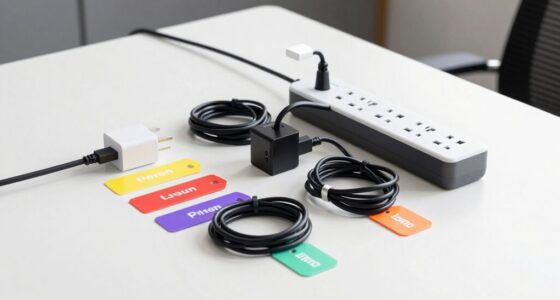
To tackle the “Two-Outlet Challenge” like a pro, start by identifying your essential devices and calculating their total wattage. Choose a battery system, like two Delta Pro units, connected via a dual-voltage hub to balance load across phases. Use safe wiring, proper grounding, and a transfer switch to guarantee seamless power transfer. Focus on load management and renewable sources to extend runtime. Keep safety top of mind—if you want detailed steps, learn more about optimizing your backup power setup.

Get backup power and energy gear delivered free with Prime
- Fast, free delivery on millions of items
- Prime Video, Amazon Music and more included
- Member-only deals all year
Key Takeaways
- Identify critical devices and prioritize their power needs to optimize limited outlet and battery capacity.
- Use dual-phase inverters with proper wiring to balance loads and prevent overloads on two outlets.
- Implement load management strategies, switching essential appliances on one outlet while offloading non-essentials.
- Synchronize and connect Delta Pro units to separate phases for seamless, balanced backup power.
- Incorporate safety measures like grounding, transfer switches, and proper wiring to ensure reliable, safe operation.
Delta Pro portable power station
As an affiliate, we earn on qualifying purchases.
As an affiliate, we earn on qualifying purchases.
Understanding Your Power Needs and Load Calculations
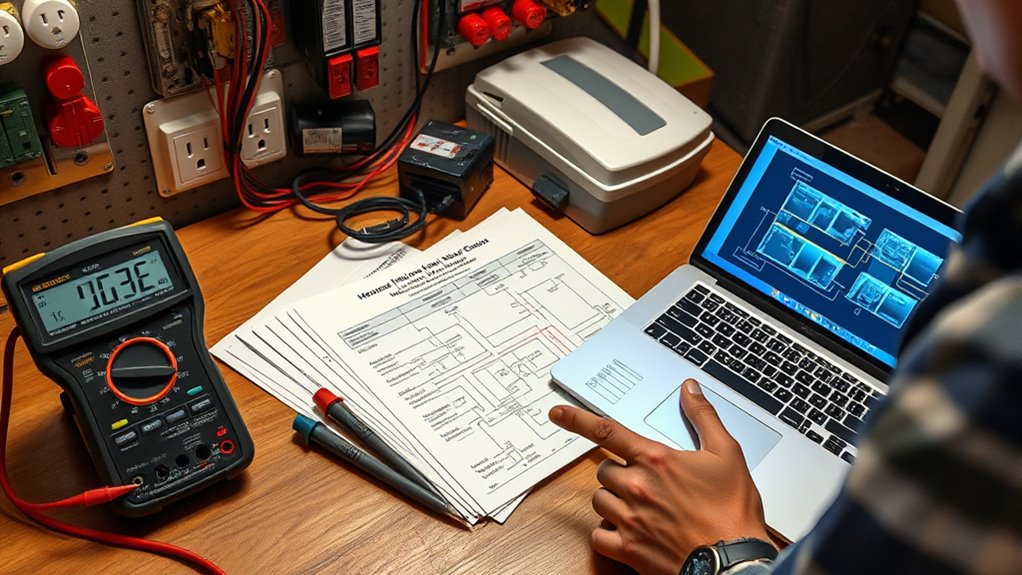
To effectively plan your backup power system, you need to understand your actual power needs and perform accurate load calculations. Start by listing all essential devices and appliances you want to keep running during an outage. Note each item’s wattage or amperage and estimate how long you’ll need them powered. Add up the total wattage to determine your peak load. Remember, some devices draw more power at startup, so factor in their surge wattage. Consider the runtime you require—aiming for at least one night, which typically means a minimum of 3,000Wh capacity. Identifying your critical loads helps in selecting the right battery size and generator capacity, ensuring your backup system is reliable without over- or under-provisioning. Proper calculations save money and increase system efficiency. Additionally, understanding power management strategies can help optimize your system’s performance and longevity. Developing a clear understanding of your power needs is essential to avoid overloading your system and ensure safety during operation. Incorporating load balancing techniques can further improve system reliability and prevent interruptions during power transitions. Being aware of energy efficiency practices can also help extend your backup system’s runtime and reduce overall energy consumption, making your setup more sustainable and cost-effective. Understanding best anime movies can provide entertainment options during extended outages or power failures, making your backup power plan more comprehensive.
dual-phase inverter for backup power
As an affiliate, we earn on qualifying purchases.
As an affiliate, we earn on qualifying purchases.
Selecting the Right Battery and Storage Solutions
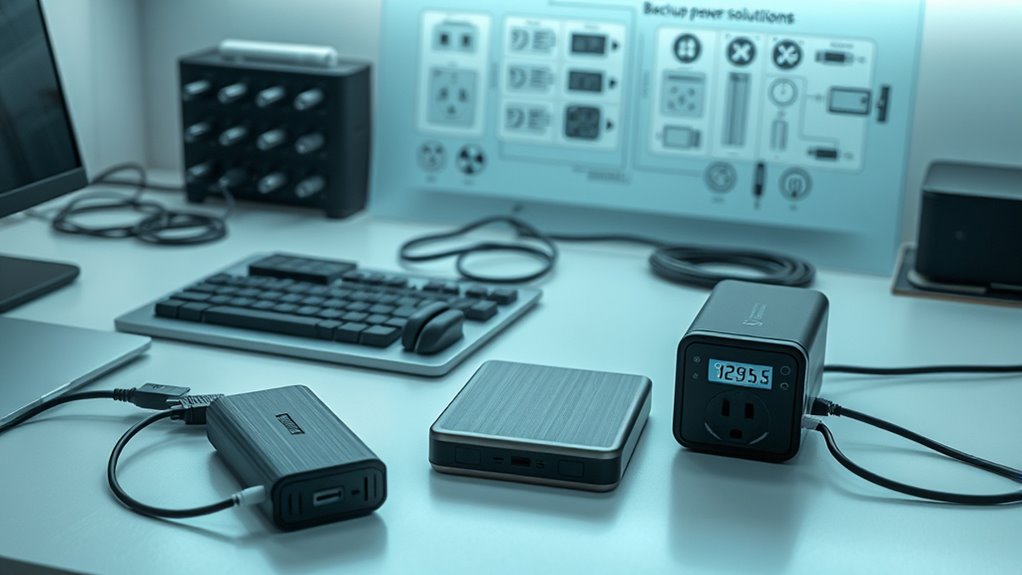
Choosing the right battery and storage solution is essential for guaranteeing your backup system meets your power needs efficiently. First, determine your critical loads and their total wattage to select a battery capacity that provides enough runtime. For instance, EcoFlow DELTA Pro offers 3600Wh, suitable for essential appliances like fridges and routers for several hours. If you want longer backup, consider expandable options up to 21.6kWh or add more units. Keep in mind, a minimum of 3000Wh is recommended for overnight use. Also, ensure the battery can deliver the necessary surge wattage, like 2000W+ for larger appliances. Balance capacity with charging speed and compatibility with your existing system. Proper sizing is crucial to avoid under- or over-provisioning your backup power. Selecting a battery with a high discharge rate ensures reliable power delivery during peak demands without risking damage or inefficiency. When choosing storage, prioritize system compatibility to ensure seamless integration with your home setup. Additionally, understanding battery chemistry can help you select a more durable and efficient energy storage option tailored to your needs. To further optimize your system, consider the safety features incorporated into modern batteries, which can prevent hazards such as overheating or overcharging. Choosing the right storage means reliable power when you need it most, without overpaying for unnecessary capacity.
As an affiliate, we earn on qualifying purchases.
Integrating Dual-Phase Power With Two Delta Pro Units
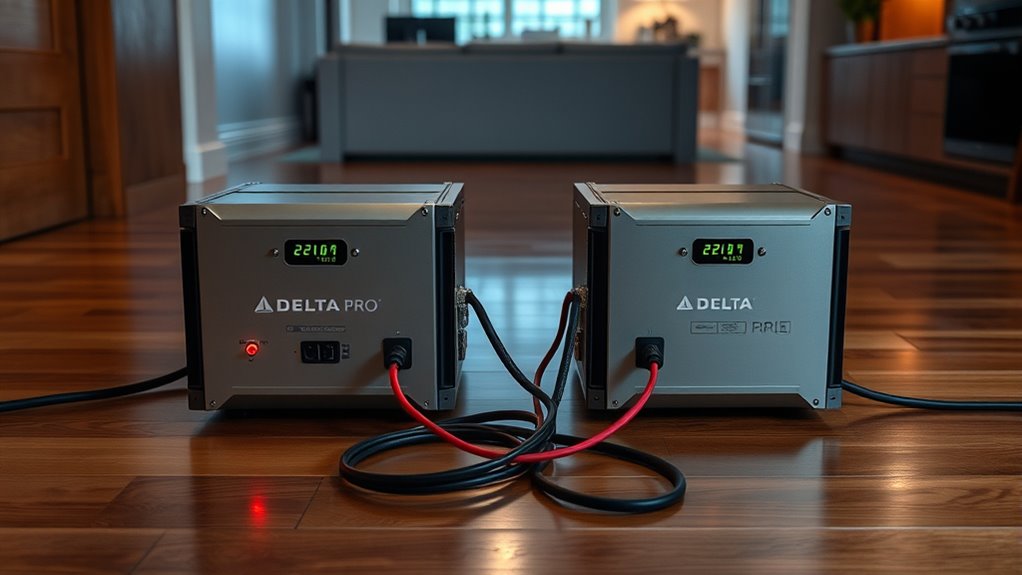
To integrate dual-phase power with two Delta Pro units, you need to carefully set up the wiring to balance both phases properly. Synchronizing the units ensures seamless power transfer and prevents conflicts that could damage your system. Managing how power flows between your units and the grid is vital for reliable operation and safety. Properly understanding electrical system synchronization helps in avoiding overloads and ensures that your backup power setup functions efficiently. Additionally, understanding European cloud innovation can provide insights into adopting advanced power management solutions for modern infrastructure. Being aware of preventive maintenance practices can also help maintain system reliability over time. Recognizing the importance of system monitoring allows for early detection of potential issues, ensuring continuous operation and safety. Implementing load balancing techniques can optimize performance and extend the lifespan of your equipment.
Dual-Phase Wiring Setup
Integrating dual-phase power with two Delta Pro units involves carefully wiring each unit to phase different legs of your electrical system, ensuring balanced load distribution and reliable power delivery. You’ll connect one Delta Pro to the first phase and the other to the second, using the dual-voltage hub to maintain synchronization. Each unit should be wired to its respective phase without overlapping, preventing overloads and potential damage. Make sure to use appropriate gauge wiring and follow all safety protocols to avoid shorts or ground faults. Verify that the circuits are evenly loaded and that the wiring is secure and correctly grounded. Proper wiring techniques help ensure safety and efficiency in your setup. Additionally, monitoring the load balance during operation prevents uneven distribution that could stress components and compromise performance. Utilizing phase balancing strategies can further optimize power flow and extend the lifespan of your system. Regular inspection and testing can help identify potential issues early, maintaining system reliability. Implementing a comprehensive wiring plan ensures that your setup remains safe and adaptable for future expansions. This setup provides stable, efficient power across both phases, maximizing your backup capacity and ensuring your critical loads stay powered during outages.
Synchronizing Delta Pro Units
Synchronizing two Delta Pro units for dual-phase power requires careful setup to guarantee seamless operation and balanced load sharing. First, ensure both units are fully charged and connected via the dual voltage hub. Use the Delta Pro app or control panel to set each unit to the correct phase, typically phase 1 and phase 2. You’ll need to enable the dual-phase mode, which synchronizes the units to work together as a single, stable power source. Confirm that both units are communicating properly, and verify that the load is evenly distributed across both units to prevent overloads. Monitoring the voltage and frequency readings ensures proper synchronization and helps detect any irregularities early. Proper setup is vital to avoid power fluctuations or equipment damage, so follow manufacturer instructions closely throughout the process. Additionally, understanding power distribution principles helps optimize the setup for long-term reliability. Being aware of load balancing techniques ensures that the power is distributed efficiently and safely between the units. Incorporating proper wiring methods can further enhance safety and performance during this synchronization process. A thorough understanding of electrical safety practices is essential to prevent accidents and ensure a safe working environment during setup.
Managing Power Transfer
Managing power transfer between dual-phase systems with two Delta Pro units requires careful coordination to guarantee balanced load sharing and stable operation. First, confirm each Delta Pro is properly synchronized and connected to its respective phase. Use the dual voltage hub to distribute power evenly, preventing overloads on either unit. When transferring loads, activate the transfer switch smoothly to avoid sudden surges or dips. Monitor battery levels and load demands closely; if one unit nears capacity, shift loads to prevent shutdowns. Be cautious with sensitive electronics, and verify wiring to prevent ground loops or phase mismatches. Regularly test the system under various scenarios to affirm seamless transitions. Proper management ensures reliable backup power, prolongs equipment lifespan, and maintains safety during outages.
As an affiliate, we earn on qualifying purchases.
Designing a Safe and Efficient Transfer Switch System
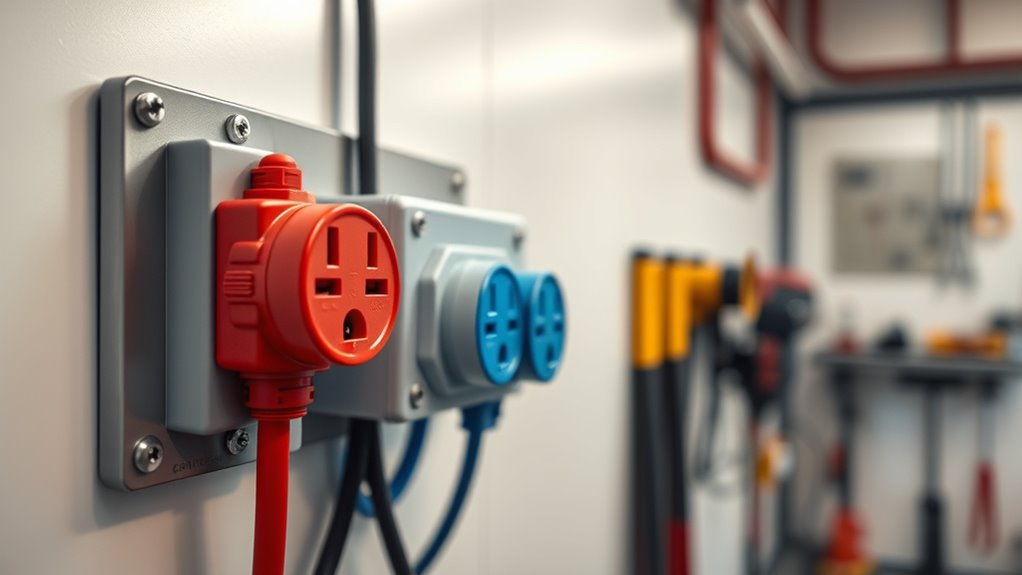
Designing a safe and efficient transfer switch system starts with selecting the right type of switch to prevent backfeeding and guarantee seamless power transfer between your grid and backup sources. You should consider an automatic transfer switch (ATS) that automatically detects power loss and switches to backup power without manual intervention. Verify the switch is rated for your load capacity, especially if you’re connecting multiple outlets or large appliances. Proper wiring is critical—use dedicated circuits and double-pole breakers for 240V loads. Grounding must be robust, tying together the grid and backup system grounds to avoid potential shock hazards. Avoid daisy-chaining devices or mixing incompatible systems. A well-designed transfer system minimizes risks, maintains safety, and ensures your essential loads stay powered during outages.
Avoiding Common Pitfalls: Daisy-Chaining and Compatibility
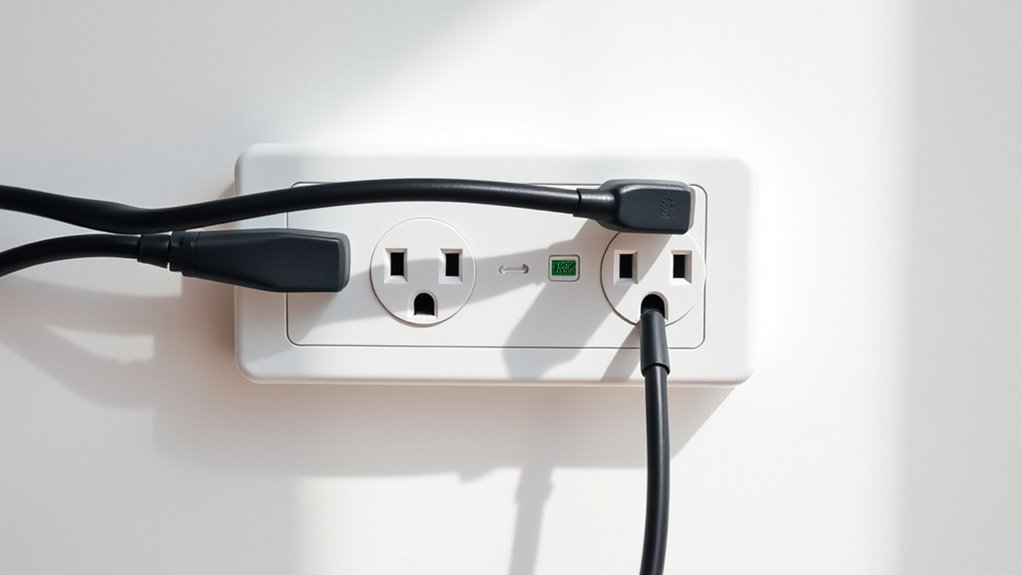
You need to avoid daisy-chaining UPS systems, as this can cause inverter conflicts and harmonic distortion. Ensuring your system components are compatible prevents unexpected failures and safety hazards. Using redundancy methods like dual power supplies or ATS PDU can help maintain reliable power without risking overloads.
Dangers of Daisy-Chaining
Have you ever considered the risks of daisy-chaining UPS systems or backup power units? It might seem like a simple way to increase capacity, but it can cause serious issues. When you connect units improperly, you risk overloads, harmonic distortion, and equipment damage. Incompatible systems can switch to battery unexpectedly or create dangerous power surges. The following table highlights common daisy-chaining pitfalls:
| Issue | Cause | Consequence |
|---|---|---|
| Incompatibility | Different brands/models | Premature battery switching |
| Overloading | Excessive load on chained units | Equipment damage |
| Harmonic distortion | Conflicting controllers | Power quality issues |
| Increased failure risk | Combining failure rates | Higher chance of total system failure |
Ensuring System Compatibility
To guarantee your backup power system operates safely and reliably, verifying compatibility between components is essential. Confirm your transfer switch, outlets, and extension cords are rated for your system’s voltage and current. For example, using a device not designed for 240V can cause overloads or damage. Confirm that your inverter and batteries match your load requirements and are compatible with your power sources. Avoid mixing different brands or models that might have conflicting controls or protective features. Check that the wiring gauge supports the load and that grounding is correctly implemented to prevent electrical faults. Properly matching components reduces the risk of failures, ensures efficient power transfer, and maintains safety during outages. Always consult manufacturer guidelines to verify compatibility before connecting new equipment.
Redundant Power Solutions
Implementing redundant power solutions enhances system reliability, but common mistakes like daisy-chaining UPS units or mismatched components can undermine safety and performance. Daisy-chaining creates harmonic distortion and risks system failure, while incompatible units may not share loads properly. To avoid these pitfalls, use dedicated dual power supplies or an automatic transfer switch (ATS) PDU designed for redundancy. Properly matching components ensures seamless operation and reduces failure points. Here’s a quick comparison:
| Aspect | Best Practice | Pitfall to Avoid |
|---|---|---|
| Power Distribution | Use an ATS or dual power supplies | Daisy-chaining UPS units |
| Compatibility | Match voltage, capacity, and brand | Mixing incompatible components |
| Reliability | Properly rated and tested systems | Overloading or improper wiring |
Stay precise—your backup setup depends on it.
Expanding Capacity for Longer Runtime and Higher Power
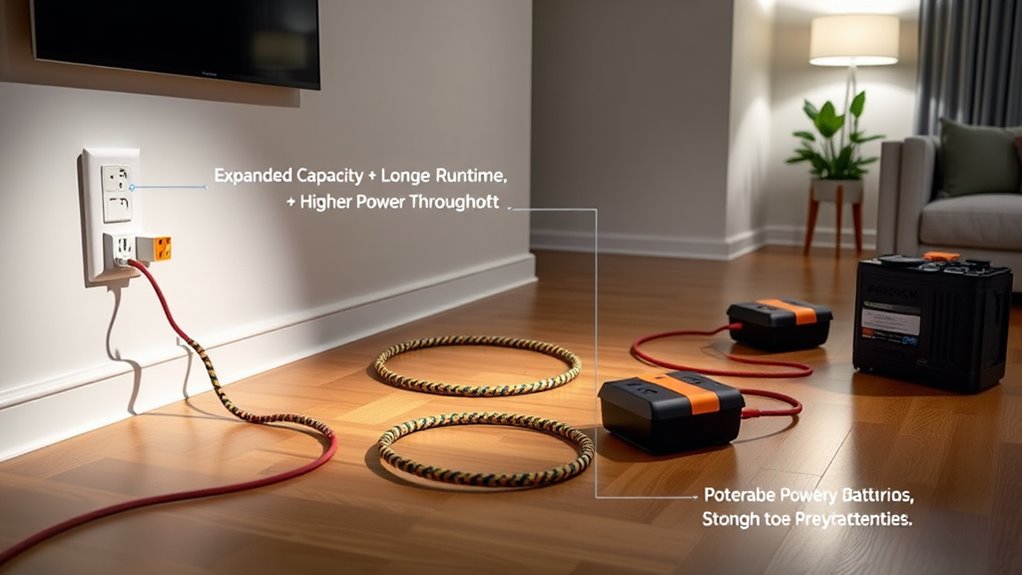
Expanding your power system’s capacity allows for longer runtime and higher load handling during outages. To do this, consider adding additional battery modules, like extra EcoFlow DELTA Pro units, to increase total capacity beyond the standard 7.2kWh. This extension guarantees your essential devices stay powered longer without frequent recharges. Upgrading to larger inverters or integrating multiple units in parallel can also support higher power demands, enabling you to run larger appliances simultaneously. Using a smart transfer switch helps manage load distribution efficiently, preventing overloads. Remember, expanding capacity also involves ensuring your wiring and breakers can handle increased power safely. Combining these upgrades with a robust backup plan ensures your system remains reliable, resilient, and capable of meeting longer or more demanding outages.
Incorporating Renewable Energy Sources for Silent Operation

Adding renewable energy sources like solar panels or small wind turbines can substantially enhance your backup power system by providing silent, emission-free operation. Solar panels are particularly effective, allowing you to harness sunlight during the day to recharge batteries quietly and efficiently. Small wind turbines can supplement solar, especially in windy areas, ensuring a more consistent power supply. Connecting these sources to your battery system through proper charge controllers prevents overcharging and damage. This setup reduces reliance on noisy generators and minimizes fuel costs. By integrating renewables, you create a greener, more sustainable backup solution that operates silently, ideal for nighttime use or in noise-sensitive environments. Proper planning guarantees your system remains reliable, efficient, and environmentally friendly during outages.
Implementing Smart Charging and Generator Activation Strategies
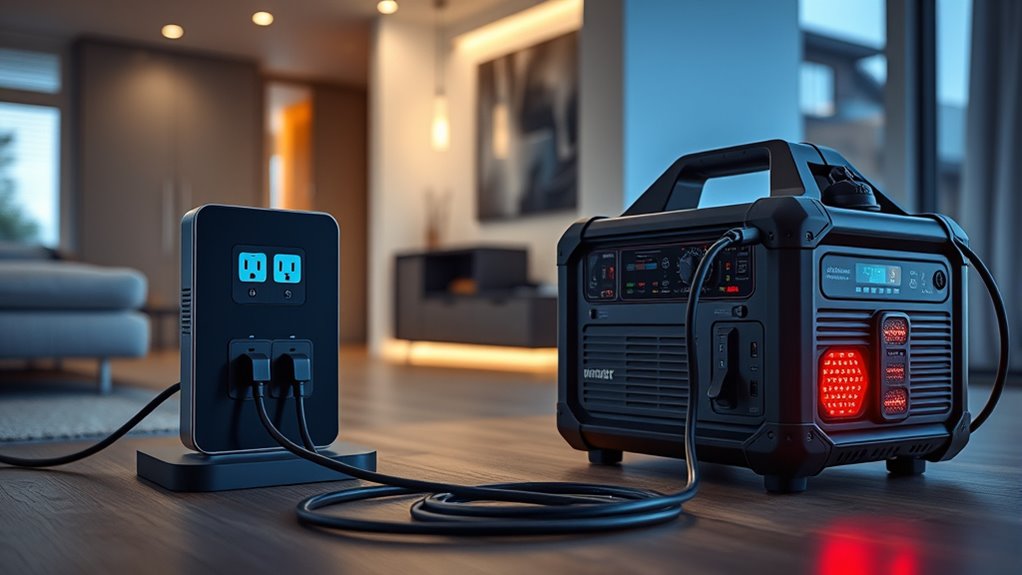
To optimize your backup system’s efficiency, smart charging and generator activation strategies make certain batteries stay charged without unnecessary energy use. You should set your generator to activate automatically when battery levels drop below 30%, ensuring continuous power without manual intervention. Use smart chargers that adapt charging rates based on current load and battery state, preventing overcharging and extending battery life. Prioritize charging during off-peak hours or when renewable sources are available, reducing reliance on the generator. Implement load management to balance essential circuits first, then ramp up charging during low-demand periods. These strategies help conserve fuel, maximize battery lifespan, and guarantee your backup system is ready when you need it most, all while maintaining efficient energy use.
Ensuring Safety and Grounding for Backup Power Systems
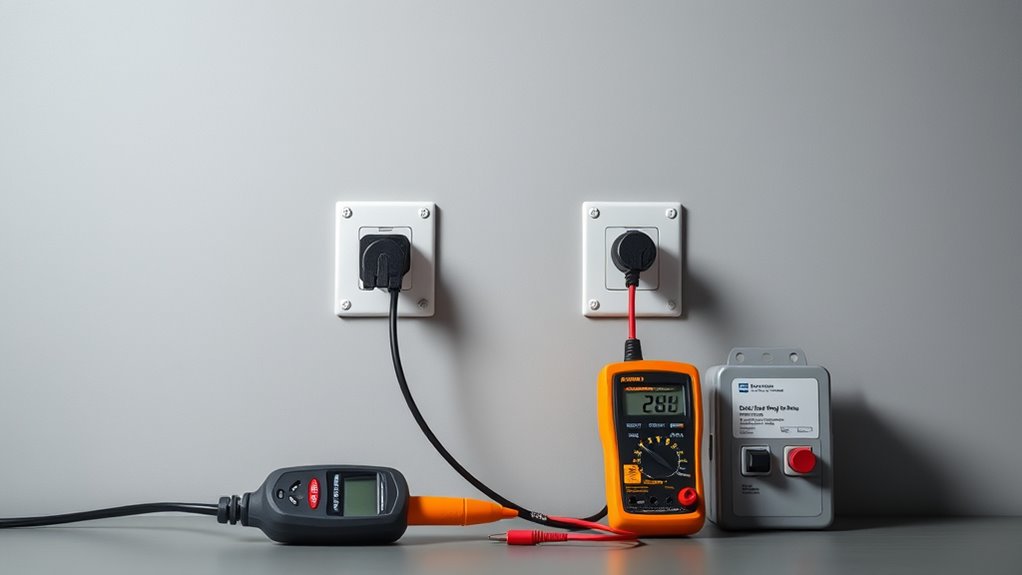
Proper safety and grounding practices are essential when setting up backup power systems to prevent electrical hazards and guarantee reliable operation. Start by ensuring all equipment is properly grounded according to local electrical codes. Use a dedicated grounding rod or connect to an existing grounding system to provide a clear path for fault currents. Verify that your transfer switch and outlets are correctly wired, with grounding terminals securely connected. Always turn off power before working on circuits to avoid shocks. Test your grounding system regularly with a circuit tester to confirm proper connections. Keep grounding wires free of damage or corrosion. Proper grounding not only protects you from electric shocks but also prevents equipment damage and ensures your backup system functions safely and effectively during outages.
Frequently Asked Questions
How Do I Prevent Inverter Conflicts When Using Multiple Backup Units?
To prevent inverter conflicts when using multiple backup units, you should avoid daisy-chaining UPS systems altogether, as this causes controller clashes and harmonic distortion. Instead, use dual power supplies or an Automatic Transfer Switch (ATS) PDU to manage power sources seamlessly. Regularly verify wiring and grounding, and consider integrating smart transfer switches that coordinate unit operation, ensuring smooth, conflict-free power transfer during outages.
What Are the Risks of Incorrectly Wiring the Split-Circuit Receptacle?
Don’t be caught in a “tech storm,” wiring your split-circuit receptacle wrong risks electrical shock, fires, or damaging your backup system. If you don’t isolate the hot and neutral wires correctly or fail to cut the tab, you could energize both sides simultaneously, causing shorts or overloads. Always verify wiring with a circuit tester, follow manufacturer instructions, and double-check connections to keep your setup safe and reliable.
Can I Integrate Solar Panels With My Existing Backup Power Setup?
Yes, you can integrate solar panels with your backup power setup. Connect your solar array to a compatible inverter or charge controller that feeds into your battery system. Guarantee your inverter supports solar input and matches your battery capacity. Properly size your panels to meet your energy needs, and follow safety guidelines. This setup allows silent, renewable power, reducing reliance on grid or generator during outages.
How Do I Ensure Proper Grounding Across Different Power Sources?
You guarantee proper grounding by connecting the ground wires from your grid, backup system, and inverter to a common grounding point or grounding rod. Use a quality grounding clamp and verify all connections are tight and corrosion-free. Always follow local electrical codes, and if unsure, consult a licensed electrician. Proper grounding prevents electrical shock, equipment damage, and ensures safe operation across all power sources.
What Safety Measures Are Essential When Modifying Outlet Tab Connections?
Think of modifying outlet tab connections like taming a wild stallion—you need to handle it with care and respect. Always turn off power first, then double-check with a circuit tester. Use insulated tools and guarantee grounding is solid and consistent. Avoid rushing; a small mistake can spark big trouble. Follow manufacturer instructions meticulously, and if unsure, consult a professional—safety’s the rider’s reins in this electrical rodeo.
Conclusion
Mastering the two-outlet challenge is like tuning a finely crafted instrument—you’ll enjoy seamless backup power when everything harmonizes. By understanding your needs, choosing the right gear, and following safety tips, you’ll keep your home running smoothly even when the lights go out. Think of your system as a well-oiled machine, ready to kick into gear at a moment’s notice. With a little planning, you’ll turn backup power from a challenge into your secret weapon.
Halloween Picks
halloween
As an affiliate, we earn on qualifying purchases.