Before heading out during outage season, check your vehicle’s tire tread, battery, lights, and keep the fuel tank at least half full. Prepare an emergency kit with signaling tools, traction aids, and portable chargers. Plan your route carefully, considering weather forecasts and alternate paths. Secure your home by closing doors, bringing in outdoor items, and ensuring detectors work. Drive cautiously, maintaining safe distances and slow speeds. Follow these essentials to travel safely—more tips await if you keep going.

Get backup power and energy gear delivered free with Prime
- Fast, free delivery on millions of items
- Prime Video, Amazon Music and more included
- Member-only deals all year
Key Takeaways
- Check weather forecasts and plan routes with alternative options to avoid severe conditions.
- Ensure your vehicle is road-ready with full fuel, functioning lights, and emergency supplies like a shovel and traction aids.
- Confirm your home’s heating system is inspected, filters are replaced, and detectors are working to prevent indoor hazards.
- Pack essential items for travel, including pet supplies, medications, and a one-week emergency kit.
- Inform a trusted contact of your itinerary and scheduled check-ins for added safety during winter travel.
Vehicle Readiness Checks
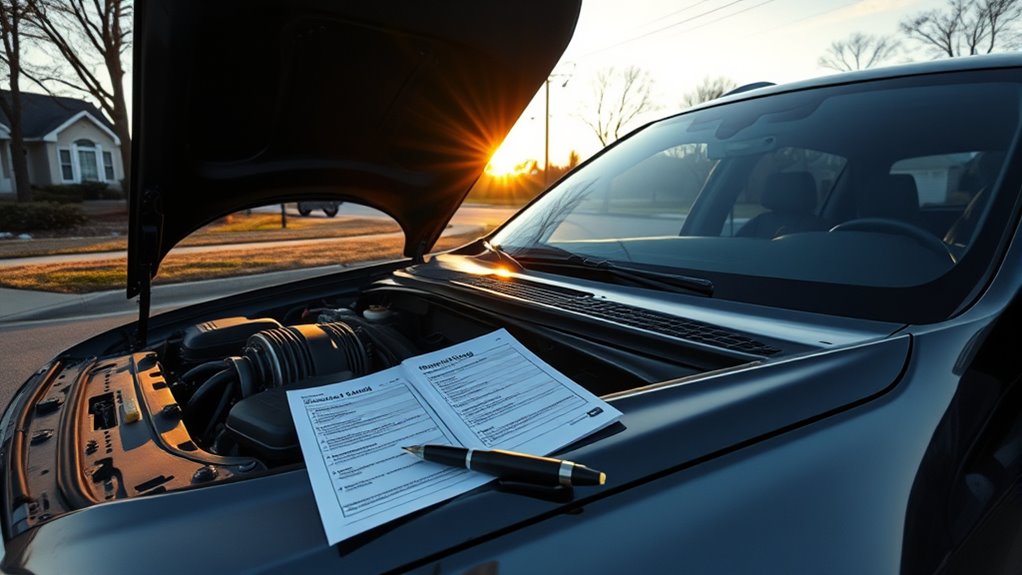
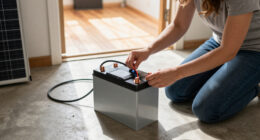
Before hitting the road during outage season, you need to perform essential vehicle readiness checks to guarantee safe travel in winter conditions. First, verify your tire tread depth—consider switching to winter or all-season tires with at least 4/32″ tread for better traction. Check your battery’s health and replace it if it’s over 3–5 years old or shows signs of weakness with a load test. Refill your windshield washer reservoir with winter-grade fluid and ensure your wipers and defrosters work properly. Keep your fuel tank at least half full—ideally full—to prevent fuel-line freeze and stay prepared if you get stranded. Finally, inspect all lights—headlights, brake, turn, hazard—and carry spare bulbs or tested replacements. These simple checks keep you safe and ready for winter driving challenges. Additionally, assessing your vehicle’s contrast ratio can help you see better in low-light or foggy conditions, enhancing safety during winter travel. Regularly performing these vehicle maintenance checks can prevent unexpected breakdowns and ensure your vehicle operates efficiently in harsh weather, especially when combined with advanced safety features like anti-lock brakes and stability control. Incorporating preventive maintenance practices also extends your vehicle’s lifespan and reliability in challenging conditions. Staying informed about weather forecasts before departure can further help you plan accordingly and avoid hazardous situations.
Emergency Kit Preparation
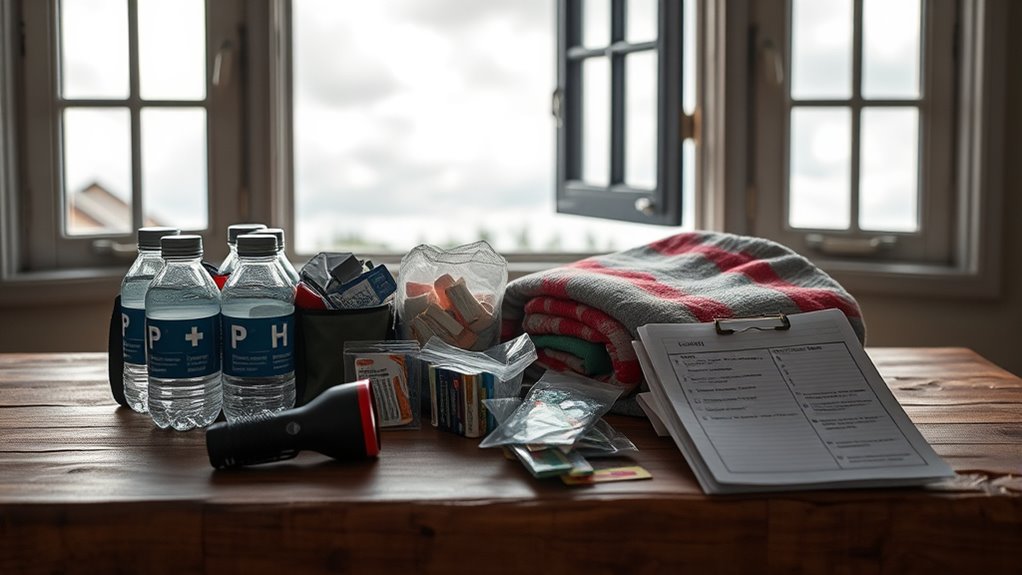
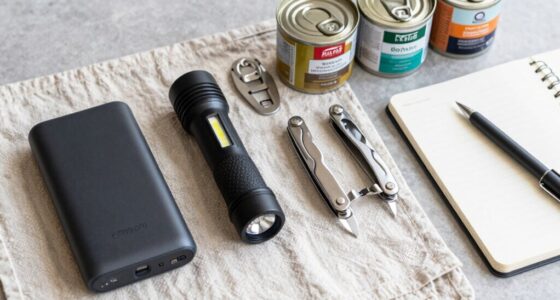
Preparing a well-stocked emergency kit is vital for winter travel safety. It guarantees you’re ready for unexpected delays or breakdowns in harsh conditions. Focus on the basics to stay warm, visible, and prepared for minor injuries or emergencies. Regularly reviewing your kit ensures all items are functional and up-to-date, providing peace of mind during your journey. Remember that vehicle preparedness can make all the difference in safely navigating severe weather. Here are three essential items to include: Warmth essentials: blankets, extra hats, gloves, and a warm jacket to stay insulated if stranded. Signaling tools: flashlight with spare batteries, reflective triangles, and a bright cloth to alert rescuers. Traction aids: a shovel, sand or traction mats, and tire chains for better grip in snow or ice. Ensuring your vehicle has reliable power sources like a portable charger can be crucial if your vehicle’s battery fails or you need to keep devices running. Additionally, backup power solutions such as portable jump starters can prevent being stranded with a dead battery. Incorporating smart technology like portable device monitors can help you track battery health and prevent unexpected power failures. Keep these items accessible in your vehicle, check their condition regularly, and customize your kit based on your route and expected weather.
Route Planning and Communication
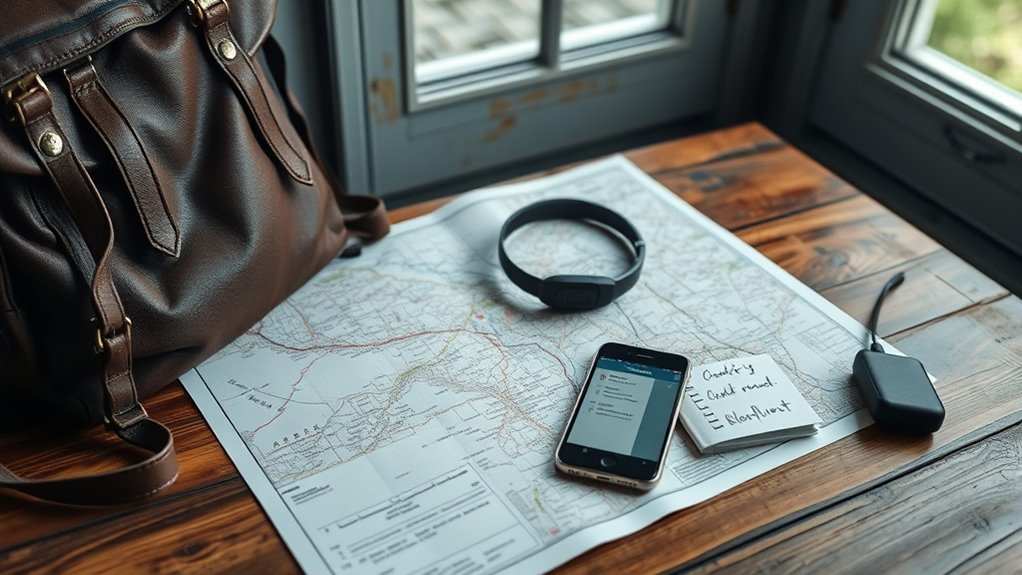
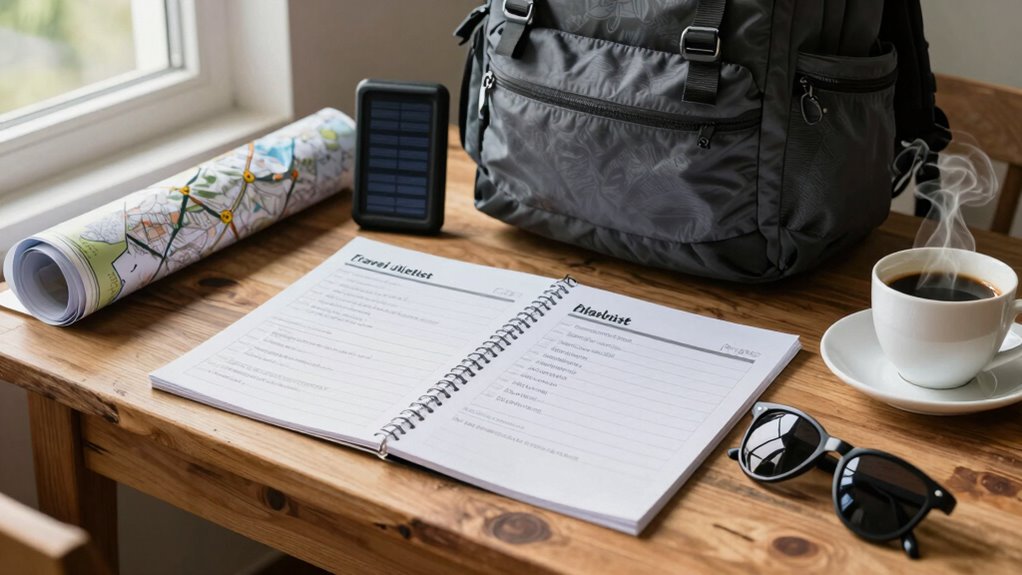
Effective route planning and staying informed about current conditions can mean the difference between a smooth trip and unexpected delays. Before leaving, check weather forecasts for your origin, destination, and along your route. Delay travel if severe conditions are forecasted. Use state 511 or DOT services and local traffic reports to identify closures, road hazards, or chain requirements. Plan primary and alternate routes, estimating extra travel time for snow, ice, or restrictions. Mark key points like fuel stops, emergency services, and shelters for quick access if needed. Inform a trusted contact of your itinerary, route, and estimated arrival time, and schedule check-ins. Staying updated and prepared helps you navigate safely through potentially hazardous conditions and guarantees you can adapt quickly if disruptions occur. Incorporating load calculations into your planning can ensure your EV is properly prepared for the trip’s demands. Additionally, understanding essential oils for specific health concerns can help you manage minor ailments during travel, ensuring a more comfortable journey. Considering outdoor backyard transformation essentials can also provide a relaxing space for rest stops or breaks during long trips, making your travel experience more enjoyable. Being aware of the horsepower of electric dirt bikes can help you anticipate vehicle performance and choose suitable routes if you plan to use electric bikes during your journey. Moreover, staying informed about modern kitchen technology can inspire you to prepare nutritious meals or snacks that boost energy levels during travel.
Home and Property Precautions

Before you leave, make sure to secure exterior items like furniture and trash cans to prevent damage from strong winds. Keep your heating system maintained and set to a safe minimum to avoid frozen pipes. Taking these precautions helps protect your property and makes a smoother return after your trip. Additionally, consider inspecting your air quality and ensuring your air purifiers are functioning properly to maintain a healthy indoor environment during your absence. Regularly testing your HVAC system and replacing filters can also improve indoor air safety and efficiency while you’re away. Being aware of weather forecasts can help you better prepare for unexpected storm conditions that may arise during outage season. For added safety, review your home electrical system to identify any potential hazards that could be exacerbated during storms or outages. Ensuring your emergency preparedness plan is up to date can give you extra peace of mind during this period.
Secure Exterior Items
Securing exterior items is essential to guarantee damage and assure safety during winter storms. Loose objects can become projectiles or block drainage, increasing risk of property damage and accidents. To protect your home and surroundings, focus on these key steps:
- Bring in or secure outdoor furniture, trash cans, and decorations to prevent them from being blown away or causing damage.
- Clear gutters and downspouts to avoid ice dams and water backups that could lead to leaks or structural issues.
- Tie down or store tools, ladders, and other loose equipment that could be displaced by strong winds. Additionally, understanding weather-resistant materials can help you select items better suited for harsh conditions.
- Check your outdoor lighting and electrical fixtures to prevent electrical hazards and damage during storms.
- Ensure that storm-resistant barriers are installed around vulnerable areas to minimize potential damage from high winds and debris. Additionally, inspecting materials and coatings can help ensure they withstand harsh weather conditions more effectively, as research on material durability underscores their importance in storm preparedness.
Taking these precautions minimizes potential hazards, protects your property, and helps maintain safety during severe winter weather.
Maintain Heating System
Maintaining your heating system is essential to guarantee your home stays warm and safe during winter storms. Start by scheduling a professional inspection if needed, making sure your furnace or heat pump operates efficiently. Replace filters to improve airflow and reduce strain on the system. Test thermostats and set them to a safe minimum or freeze-prevent setting to avoid frozen pipes. Close interior doors to concentrate heat in occupied areas. If you’ll be away for an extended period, consider lowering the temperature or shutting off the system entirely, but keep the heat above freezing if pipes are at risk. Clean vents and registers for proper circulation. Finally, verify your carbon monoxide and smoke detectors are functioning with fresh batteries, providing extra safety during cold months.
Safe Driving Practices During Outages

When driving during outages, you need to adjust your speed to match road conditions. Keep a safe following distance so you have time to react if something unexpected happens. Staying cautious helps prevent accidents and keeps you safer on slippery or uncertain roads.
Adjust Speed Accordingly
Adjusting your speed appropriately is essential for safe driving during outages, especially in winter conditions. Reduced traction and visibility make speed adjustments critical to prevent accidents.
To stay safe:
- Slow down when roads are icy, snowy, or slushy to maintain control and avoid skidding.
- Follow posted speed limits but adapt based on road conditions; lower your speed if conditions worsen.
- Increase your following distance to give yourself more time to react if a vehicle ahead slides or stops suddenly.
Maintain Safe Following Distance
During outages and winter driving conditions, keeping a safe following distance is essential to prevent collisions. Snow, ice, and slush reduce traction, increasing stopping distances. You should increase your usual gap—at least 4 seconds behind the vehicle ahead—so you have time to react. Maintain this distance even in traffic or when approaching intersections. Avoid tailgating or sudden braking, which can cause skidding or crashes. Keep a close eye on brake lights and road conditions, adjusting your distance as needed. If visibility drops or the road is icy, double your following distance. Staying alert and patient helps you respond safely to unpredictable conditions, reducing the risk of accidents and keeping everyone safer during challenging winter outages.
Special Considerations for Travelers

Traveling during outage season requires extra planning to guarantee safety and comfort for all travelers, especially pets, seniors, and those with medical needs. To assure everyone’s well-being, consider these key points:
- Pack pet supplies: extra water, food, leash, vaccination ID, and avoid leaving pets unattended in cold vehicles.
- Prepare for seniors and medical needs: carry spare medications, medical records, mobility aids, and an emergency contact list.
- Plan for longer trips: have a one-week supply of essentials, confirm lodging with backup power, and review local chain laws and vehicle restrictions.
Frequently Asked Questions
How Can I Verify My Vehicle’s Battery Health Effectively?
You can verify your vehicle’s battery health by performing a load test or voltage check using a multimeter. Turn off all accessories, then measure the voltage; it should be around 12.6 volts. Conduct a load test if possible, which simulates starting conditions. If the voltage drops below 12.4 volts or the test shows weakness, consider replacing your battery before your trip. Regular testing helps prevent unexpected failures.
What Are the Best Locations to Store Emergency Supplies in My Car?
You should store emergency supplies in easily accessible spots in your car, like the trunk, glove compartment, or under the seats. Keep essentials such as blankets, flashlights, and snacks within reach without having to crawl under seats or dig through the trunk. Use containers or bags to organize items, and guarantee frequently used supplies are visible and quick to grab, especially in cold weather or emergencies.
How Do I Find Real-Time Road Condition Updates During Outages?
Think of your phone as a trusty lighthouse guiding you through stormy roads. To find real-time updates, turn it on and open weather apps, navigation services, or local DOT websites. Subscribe to alerts or download apps that send push notifications about road conditions. Keep a portable charger handy so your lighthouse stays lit. Regularly check these sources before and during your trip to navigate safely through changing conditions.
What Are Essential Home Safety Steps Before Leaving During Outages?
Before leaving during outages, you should secure your home by maintaining a safe minimum heat setting and closing interior doors to protect pipes. Shut off the main water valve or drain vulnerable plumbing if you’ll be gone long. Secure outdoor items like furniture and gutters, unplug electronics, and check smoke/CO detectors. Program your thermostat remotely or ask someone to check periodically, ensuring your home stays safe and protected during your absence.
How Should I Prepare for Medical Emergencies While Traveling in Winter?
Imagine your travel kit as a lifeboat in a winter storm. You should pack extra medications, medical records, and essential supplies like warm clothing and mobility aids. Carry a fully charged phone, a power bank, and a basic first-aid kit. Know where emergency services are along your route, and inform someone of your plans. Being prepared guarantees you’re ready to weather any medical emergency that icy road may throw your way.
Conclusion
By ticking off these simple steps, you’ll navigate outage season with confidence, like steering a steady ship through unpredictable waters. Picture your vehicle ready, your emergency kit packed, and your route mapped out—each detail a safeguard against surprises. As you set out, remember that preparedness transforms uncertainty into calm reassurance. With these precautions, your journey becomes a smooth voyage, allowing you to enjoy the road ahead while staying safe and secure amidst the unpredictable landscape.
Halloween Picks
halloween
As an affiliate, we earn on qualifying purchases.