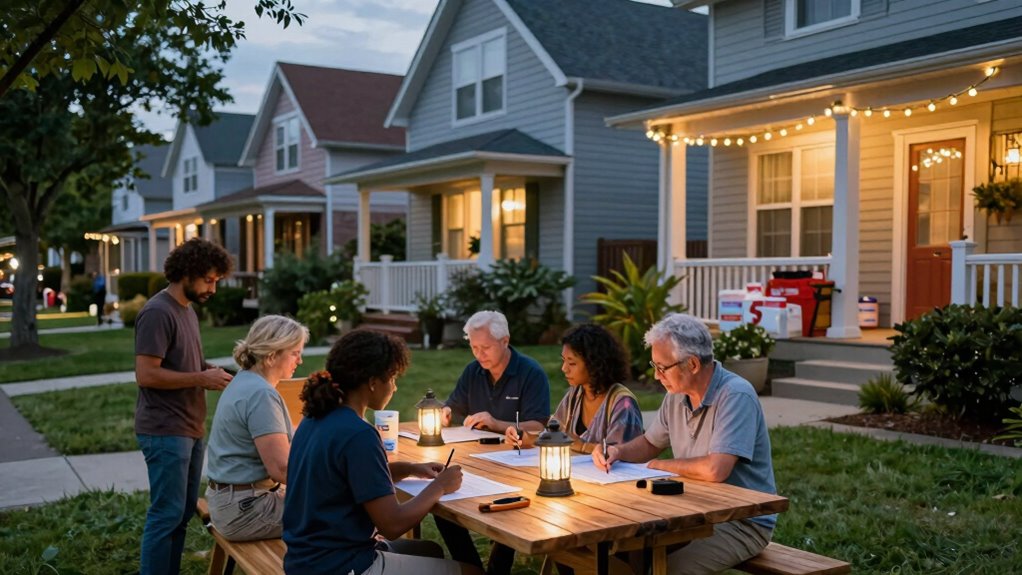

To coordinate neighborhood outage readiness without drama, set up clear communication channels like private social media groups or blockchain-secured apps, so everyone stays informed calmly. Assign specific roles such as safety supervisor or resource manager to avoid confusion, and create a shared emergency supply plan for quick access. Practice drills regularly to build confidence, and maintain ongoing feedback to strengthen trust. Keep these strategies in mind, and you’ll discover more steps to ensure everyone stays prepared and in harmony.

Get backup power and energy gear delivered free — and shop member deals
- Fast, free delivery on millions of items
- Access to Prime Big Deal Days deals on October 6–7
- Prime Video, Amazon Music and more included
Key Takeaways
- Establish clear roles and communication protocols to prevent misunderstandings during outages.
- Use secure, centralized platforms like blockchain or neighborhood apps for transparent info sharing.
- Conduct regular drills and simulations to build familiarity and reduce panic during actual events.
- Foster open dialogue and collaborative planning to address concerns and promote cooperation.
- Maintain updated resource inventories and evacuation plans to ensure swift, organized responses.
Building a Neighborhood Communication Network
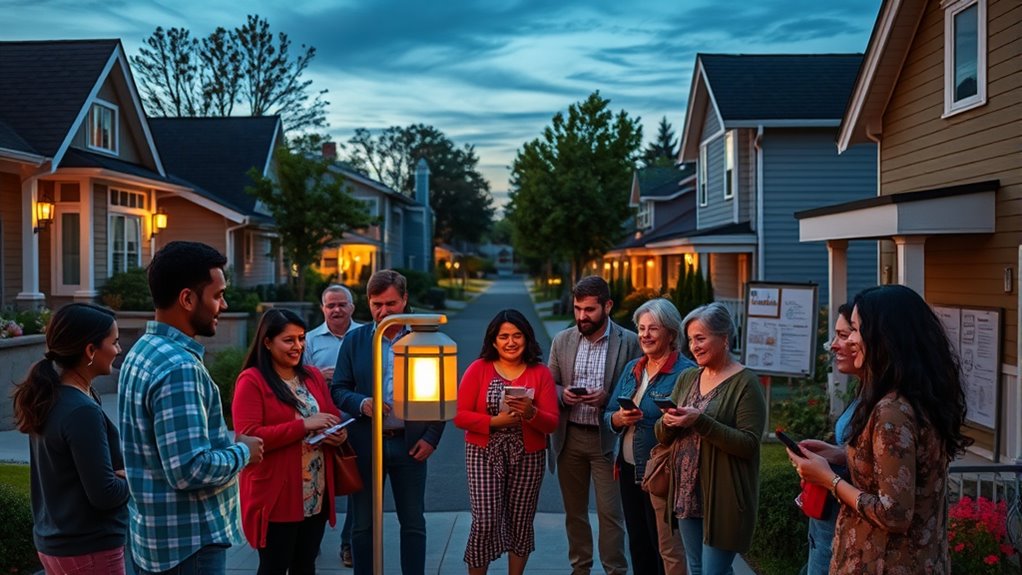
Creating a reliable neighborhood communication network is essential for effective outage readiness. You should explore secure methods like blockchain encryption to protect sensitive information shared among residents, guaranteeing privacy even during emergencies. Incorporating social media outreach allows you to quickly reach a broad audience, keeping everyone informed in real time. Platforms like Facebook or neighborhood-specific apps enable instant updates and facilitate community engagement. By combining blockchain encryption’s security with social media’s immediacy, you build a resilient communication system that’s both trustworthy and accessible. This foundation ensures residents stay connected, share vital information swiftly, and reduce confusion during outages. Understanding Free Floating concepts can help tailor communication strategies to better suit your neighborhood’s needs. Establishing these channels now prepares your neighborhood to respond effectively when disruptions occur, keeping everyone safe and informed. Additionally, leveraging projector technology insights can help plan community gatherings or emergency drills more effectively, ensuring visual clarity and engagement during crucial moments. Recognizing emergency communication protocols can further enhance your neighborhood’s preparedness and response capabilities. Implementing trusted communication methods can also foster a sense of security and reliability within the community.
Establishing Clear Roles and Responsibilities
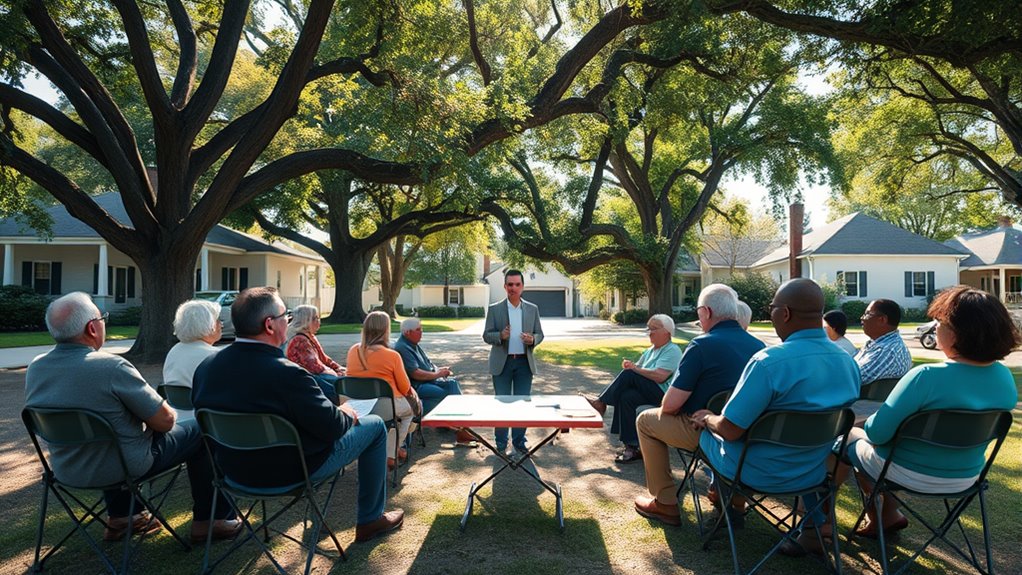
To guarantee an effective outage response, you need to establish clear roles and responsibilities within your neighborhood. This starts with community mapping to identify skills, resources, and available volunteers. Then, assign specific tasks to avoid confusion. Consider these key roles:
- Communication Coordinator – manages neighborhood updates and relays info.
- Volunteer Recruiter – finds and organizes volunteers for various tasks.
- Resource Manager – tracks supplies, tools, and emergency equipment.
- Safety Supervisor – ensures safety protocols are followed during outages, including piercing care and hygiene to prevent infections and complications. Incorporating smart home technology such as automated alerts and remote monitoring can further enhance safety oversight during outages, especially when managing water-related emergencies or monitoring essential systems. Additionally, training community members on basic first aid can significantly improve the neighborhood’s overall resilience during emergencies. Understanding community preparedness strategies can help coordinate efforts more effectively and reduce chaos during outages.
Creating a Shared Emergency Supply Plan
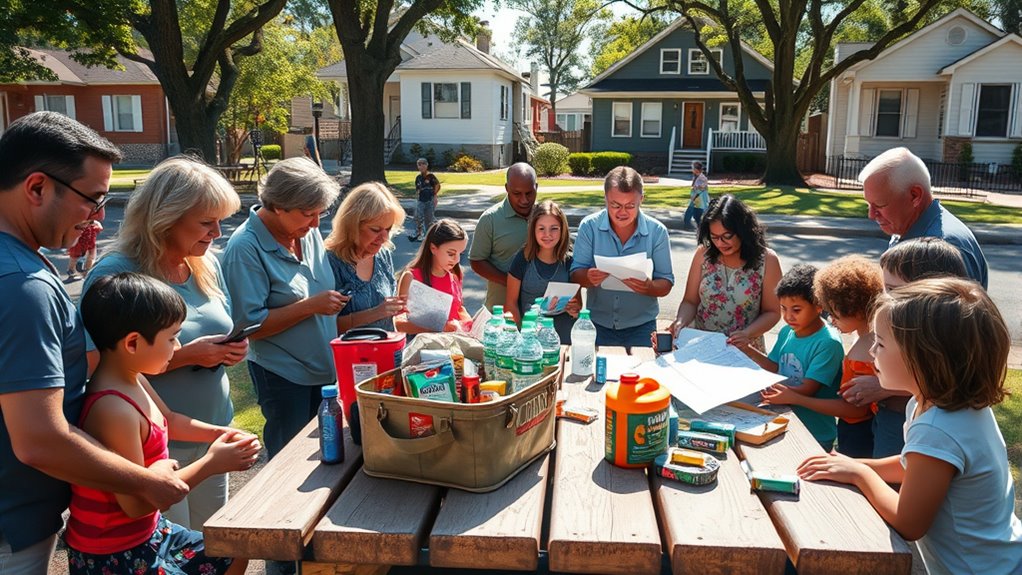
Building a shared emergency supply plan guarantees your neighborhood is prepared for outages and unexpected disruptions. Start by mapping out evacuation routes so everyone knows how to safely leave the area if needed. Collect resource inventories from each household, noting essentials like water, food, first aid supplies, and batteries. Decide on communal resources, such as generators or bulk supplies, and assign locations for storage. Establish clear communication channels to share updates quickly during an emergency. Make sure everyone knows where supplies are kept and how to access them if individual resources run low. Incorporating smart appliances and connected devices can enhance coordination and monitoring of supplies. Understanding field-of-view and imaging-scale concepts can help in planning resource distribution and assessing neighborhood needs visually. Conducting regular drills and simulations ensures everyone is familiar with the procedures and can respond effectively in real scenarios. Utilizing community mapping tools can help identify vulnerable areas and optimize resource allocation. Developing a resource management system that tracks supplies and usage can further streamline neighborhood preparedness. A coordinated plan ensures no one is left unprepared and helps prevent chaos during a crisis. With everyone on the same page, your neighborhood can respond swiftly and effectively when disaster strikes.
Practicing Drills and Simulations
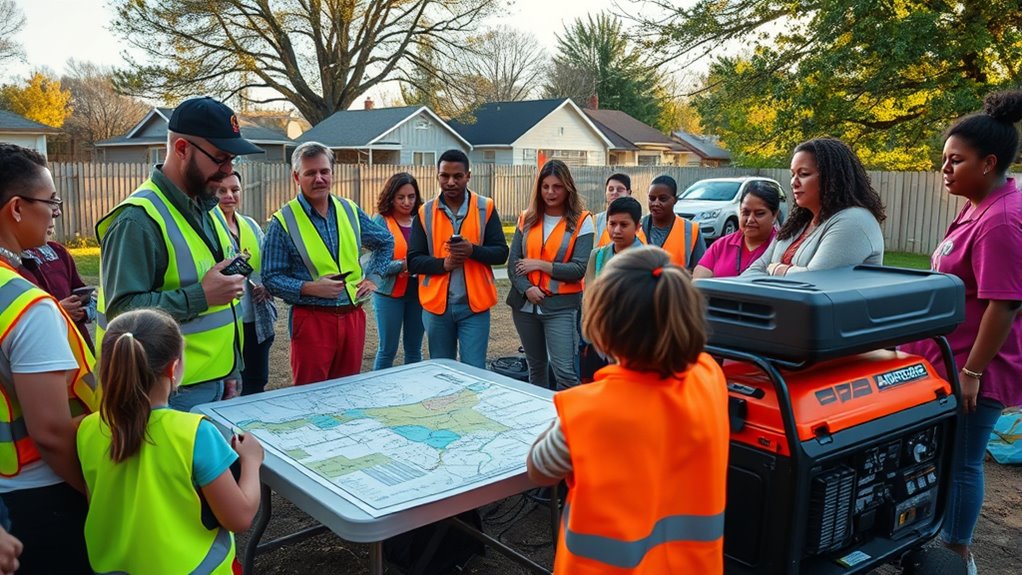
Practicing drills and simulations is essential to make certain your neighborhood’s emergency plan works effectively when it’s needed most. Regular practice helps identify gaps in evacuation procedures and optimizes resource allocation. To maximize impact, consider these steps:
- Schedule diverse scenarios to test different aspects of the plan.
- Assign roles to residents to clarify responsibilities during an emergency.
- Simulate resource distribution to ensure efficient allocation.
- Debrief afterward to gather feedback and improve procedures.
- Incorporate psychological tactics to recognize and mitigate potential manipulation or panic during a crisis. Additionally, incorporating emergency preparedness training can help residents better understand their roles and reduce anxiety during actual events. Emphasizing connected technology in drills can further enhance coordination and real-time communication among neighbors. Building community resilience through regular practice fosters a collective sense of responsibility and readiness.
Maintaining Ongoing Coordination and Feedback
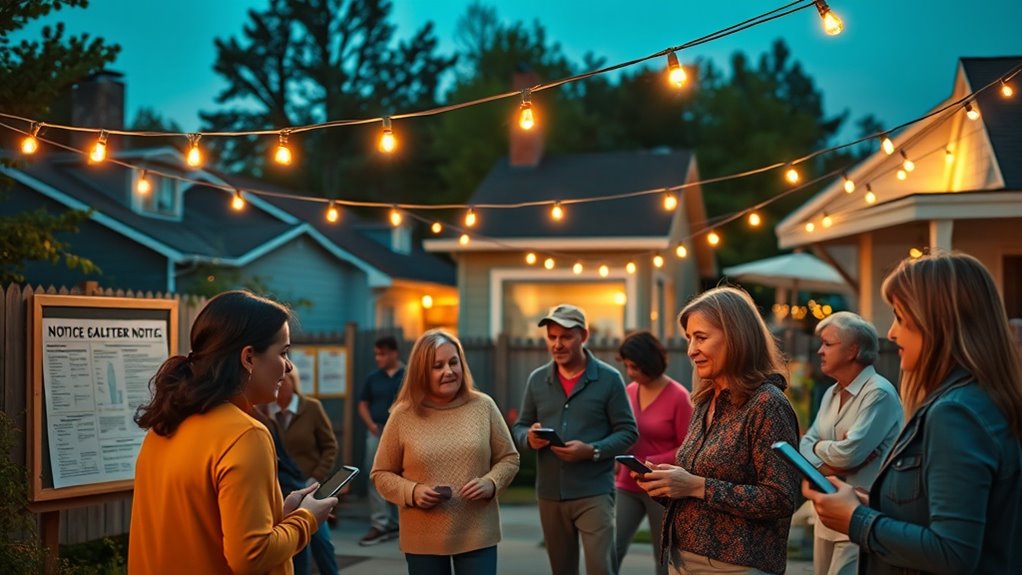
How can your neighborhood stay prepared over time? The key is maintaining ongoing coordination and feedback. Regular neighborhood social events create opportunities for neighbors to share updates and strengthen relationships. These gatherings keep everyone informed about potential risks and response plans. Building local business partnerships also plays a crucial role; businesses can provide resources, expertise, and support during outages, ensuring a swift response. Consistent communication channels, like group chats or community boards, help gather feedback and address concerns promptly. Promoting a community-centered approach fosters trust and cooperation among residents. Developing resilience strategies tailored to your neighborhood’s needs can further enhance preparedness. Incorporating emergency planning tools can streamline response efforts and improve overall resilience. Additionally, utilizing auditory processing insights can help identify specific communication challenges within the community, ensuring inclusive and effective outreach. By fostering open dialogue and collaborative planning, your neighborhood remains resilient. This continuous process guarantees everyone stays engaged, prepared, and ready to act without drama when an outage occurs. Staying connected and responsive transforms preparedness into a shared community effort.
Frequently Asked Questions
How Do We Handle Disagreements Within the Neighborhood Team?
When disagreements arise within your neighborhood team, address community conflict calmly by focusing on leadership roles and listening carefully. Encourage open, respectful communication, and remind everyone of shared goals. Use active listening to understand different perspectives, and mediate disputes without taking sides. Establish clear guidelines for decision-making, and stay focused on collaboration. This approach helps resolve issues smoothly and maintains a positive, united neighborhood team.
What Legal Considerations Should We Be Aware Of?
Imagine the neighborhood as a delicate web—you’re responsible for its integrity. You should be aware of liability concerns that could arise if someone gets hurt or property damages occur. Also, prioritize privacy policies to protect residents’ personal information during coordination efforts. Stay informed about local laws and regulations, and consider consulting a legal expert to guarantee your plans are compliant, safeguarding everyone involved from unforeseen legal issues.
How Can We Ensure Inclusivity for All Residents?
You can guarantee inclusivity by actively engaging in community outreach efforts that invite all residents to participate. Be mindful of cultural sensitivity by respecting diverse backgrounds and traditions, and communicate in multiple languages if needed. Create an open, welcoming environment where everyone feels heard and valued. By promoting transparency and understanding, you foster unity and ensure that every resident’s needs are considered during outage preparations and responses.
What Technology Tools Are Best for Communication?
Imagine you’re in the 21st century, where tech is your secret weapon. Use messaging apps like WhatsApp or Slack for real-time updates, videos, and community engagement, fostering emergency preparedness. Social media platforms are also powerful tools for quick communication, keeping everyone informed and involved. These tools help coordinate efforts smoothly, minimize drama, and make certain all residents stay connected, ready to respond when needed.
How Do We Adapt Plans for Different Types of Outages?
You adapt plans for different outages by focusing on mutual aid and resource sharing. Identify the specific outage type, like power or internet, and tailor your response accordingly. Coordinate with neighbors to share resources such as generators or emergency supplies, and establish clear roles to avoid confusion. Flexibility is key; update your plan regularly based on outage patterns and community feedback, ensuring everyone stays prepared and resilient without drama.
Conclusion
By building bonds, clarifying roles, and practicing preparedness, you create a community ready to respond without chaos. Keep communication clear, coordinate consistently, and collaborate confidently to conquer crises calmly. Remember, a well-woven web of cooperation and continuous communication crafts a resilient, ready neighborhood. With diligent dedication and dynamic drills, you’ll turn turmoil into teamwork, transforming trouble into trust. Stay steady, stay supportive, and succeed together—because preparedness is power in any predicament.
Fall Picks
fall essentials
As an affiliate, we earn on qualifying purchases.