In real homes, seasonal backup power readiness means regularly inspecting and maintaining your systems to handle harsh weather like snow, hail, or wind. You should clean solar panels, check batteries, and guarantee your generator operates smoothly. Stock supplies, familiarize your family with emergency plans, and install safety measures. Staying proactive helps prevent surprises during outages. If you’re curious about how to make your backup systems truly storm-ready, there’s more you need to know.

Get backup power and energy gear delivered free — and shop member deals
- Fast, free delivery on millions of items
- Access to Prime Big Deal Days deals on October 6–7
- Prime Video, Amazon Music and more included
Key Takeaways
- Regularly inspect and clean solar panels to ensure optimal performance during seasonal sunlight variations.
- Conduct safety and functionality checks on generators, including fuel levels and ventilation, before adverse weather hits.
- Develop and rehearse emergency backup plans, ensuring all family members understand procedures.
- Stock essential supplies like batteries, flashlights, and non-perishable food for quick access during outages.
- Perform routine system evaluations to identify vulnerabilities and maintain backup systems’ reliability year-round.
As seasons change, it’s vital to guarantee your backup power systems are ready to handle unexpected outages. Preparing for seasonal shifts means more than just flipping a switch; it involves proactive maintenance and safety checks. If you rely on solar panels, regular solar panel maintenance becomes essential to ensure peak performance when sunlight is limited or inconsistent. Clean your panels of dirt, dust, and debris so they can absorb maximum sunlight. Check for any damage or wear and tear that could hinder energy production, especially after harsh weather conditions like snow or hail. Without proper maintenance, your solar power system might underperform when you need it most. Additionally, understanding backup power safety protocols can help prevent accidents during installation or use.
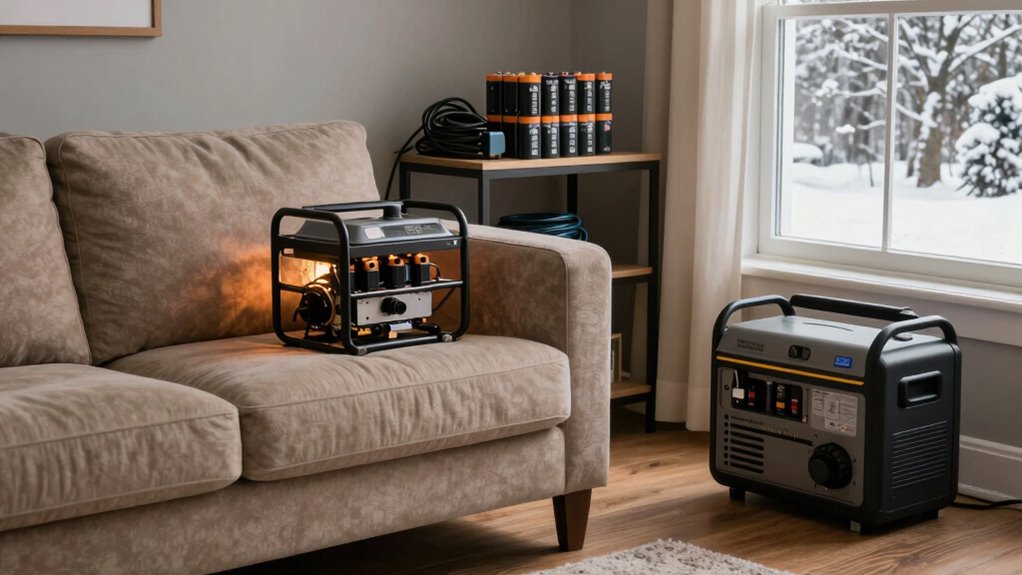
For those with generators, safety tips should be a top priority. Before the season shifts, test your generator thoroughly to confirm it runs smoothly. Make sure the fuel is fresh, and keep extra supplies on hand. Never operate a generator indoors or in enclosed spaces—carbon monoxide poisoning is a serious risk. Instead, set it up outdoors in a well-ventilated area, away from windows and vents. Installing a transfer switch can also prevent back-feeding electricity into the grid, protecting utility workers and your home’s wiring. Regularly inspecting your generator’s cords, outlets, and overall condition guarantees it’s ready when needed. During the off-season, run the generator periodically to keep it in good shape and identify any potential issues early. Remember, a comprehensive backup plan can make all the difference during emergencies, ensuring you’re prepared for any situation.
To further enhance your preparedness, consider inspecting your battery systems and inverter components regularly, ensuring they’re capable of delivering reliable backup power during emergencies. Beyond equipment checks, review your backup power plan. Know how to safely start and shut down your systems. Confirm all family members understand the procedures, so everyone is prepared in an emergency. Stock up on essential supplies like batteries, flashlights, and non-perishable food, especially if severe weather is forecasted. Conducting routine system evaluations can help identify potential vulnerabilities before a crisis occurs. If you have a solar-powered backup, inspect your batteries and inverter systems, ensuring they’re functioning correctly and fully charged. Additionally, understanding the importance of regular maintenance can help prolong the lifespan of your backup systems and prevent unexpected failures. Remember, seasonal changes can bring unexpected weather—heavy snow, strong winds, or ice storms—so it’s wise to have your systems fully prepared before the worst hits.
As an affiliate, we earn on qualifying purchases.
Frequently Asked Questions
How Often Should I Test My Backup Power System?
You should test your backup power system at least once a month to guarantee it’s ready during a power outage. Regular generator maintenance, including checking fuel levels and battery health, helps prevent surprises. During these tests, verify that your system activates properly and supplies power as needed. Consistent testing boosts your power outage preparedness, giving you confidence that your backup system will perform effectively when you need it most.
What’s the Average Cost of a Home Backup Generator?
You can expect to pay between $2,000 and $5,000 for a home backup generator, depending on size, features, and installation costs. Regular generator maintenance keeps your system ready, ensuring power outage preparedness when you need it most. Investing in the right generator means reliable backup power, peace of mind, and a proactive approach to seasonal challenges. Plan ahead, compare options, and prioritize quality to safeguard your home effectively.
Can I Install Backup Power Without Professional Help?
You can install a backup power system yourself, but it’s not recommended without professional help. Proper installation guarantees safety and reliable operation, especially for generator maintenance and choosing the right power source options. DIY installation might save money initially, but mistakes can be costly or dangerous. A licensed professional can assess your home’s needs, handle wiring safely, and ensure your backup system functions seamlessly during outages.
How Long Can a Backup Generator Run Continuously?
Think of your generator like a trusty steed—its endurance depends on proper maintenance and fuel supply. Typically, a generator can run continuously for 8 to 12 hours, but this varies with model and load. To keep it running smoothly, you need regular generator maintenance and safe fuel storage. For longer outages, consider supplemental fuel tanks or scheduled rest periods, ensuring safety and efficiency without risking damage or exhaustion.
Are There Tax Incentives for Installing Backup Power?
Yes, there are tax incentives and installation rebates available for installing backup power systems. You may qualify for federal tax credits, like the Investment Tax Credit (ITC), which can cover a percentage of your system’s cost. Additionally, some states and local governments offer rebates or incentives to encourage backup power installation. Check with your local utility or tax professional to see what specific incentives you can access for your home.
home backup generator with transfer switch
As an affiliate, we earn on qualifying purchases.
As an affiliate, we earn on qualifying purchases.
Conclusion
Now that you’ve prepared your home for seasonal outages, you’re like a modern-day knight ready for any storm. Keep your backup power system maintained, stock up on essentials, and test everything regularly—think of it as tuning your trusty steed before battle. With these steps, you’ll be ready to face winter’s chill or summer’s heat without missing a beat. After all, in the game of home comfort, preparedness is your secret weapon.
portable battery backup for home
As an affiliate, we earn on qualifying purchases.
As an affiliate, we earn on qualifying purchases.
emergency supplies kit for power outages
As an affiliate, we earn on qualifying purchases.
As an affiliate, we earn on qualifying purchases.
Fall Picks
fall essentials
As an affiliate, we earn on qualifying purchases.