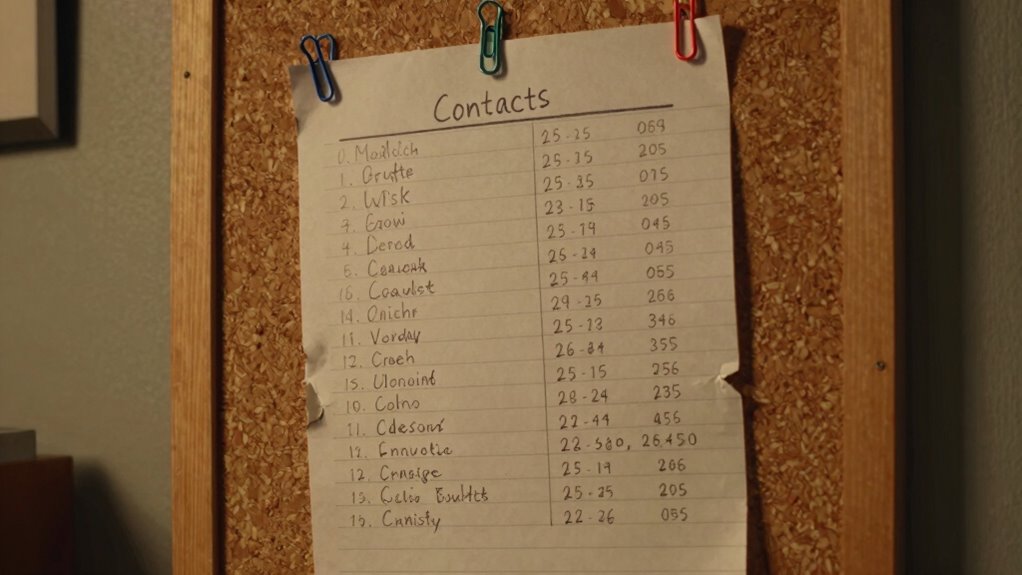

To create a paper contact list that works in a blackout, use durable, waterproof materials like laminated sheets or plastic sleeves to protect your info from moisture and damage. Organize contacts clearly in categories such as family, emergency services, and utilities, with all essential details. Store multiple copies in various secure locations like your home and car. Regularly update and maintain these sheets. Keep your preparedness plan accessible—next, you’ll discover more tips to guarantee your contacts stay safe and reachable in any situation.
Key Takeaways
- Use high-quality, weather-resistant paper and laminate sheets to protect contact information from moisture and damage.
- Organize contacts into clear categories with large, legible handwriting or print for quick access.
- Store the list in waterproof containers and multiple accessible locations like home, car, and emergency kits.
- Regularly update and replace contact sheets to ensure accuracy and maintain durability.
- Include essential emergency contacts, community resources, and critical details for comprehensive preparedness.

Have you ever been caught in a blackout and realized your digital contacts are inaccessible? It’s a frustrating situation that highlights the importance of emergency preparedness. Relying solely on your phone or cloud-based contacts puts you at risk when power goes out or technology fails. Creating a paper contact list guarantees you’re covered during such emergencies, but not just any paper will do. You need to focus on paper durability, choosing materials that withstand the test of time and environmental factors. Ordinary notebook paper can easily tear, smudge, or fade over months or years, making it unreliable when you need it most. Instead, opt for high-quality, heavy-weight paper or laminated sheets that resist moisture, tearing, and fading. This way, your contact list remains legible and intact regardless of weather or handling.
Choose durable, high-quality paper or lamination to ensure your emergency contact list withstands environmental challenges.
When assembling your paper contact list, keep it organized and easy to read. Use clear, large handwriting or print out contacts on durable paper and cut them neatly. Consider dividing the list into categories such as family, friends, emergency services, and utility companies. This organization makes it faster to find the right contact during an urgent situation. Include essential details like full names, phone numbers, addresses, and any relevant notes, such as alternate contacts or specific instructions. You might also want to jot down nearby hospitals, local emergency numbers, or community resources. Having this information in one accessible place can be life-saving. Additionally, understanding biodiversity helps emphasize the importance of community resilience and preparedness in emergencies. Recognizing the significance of community resilience can help motivate you to prepare thoroughly. A well-prepared community can better withstand disasters and support one another during crises. Incorporating knowledge about disaster preparedness can further enhance your readiness, ensuring you’re equipped for a variety of scenarios.
To maximize durability, consider laminating the sheet or storing it inside a plastic sleeve or waterproof container. Laminated contact lists can be wiped clean if they get dirty, and they’re protected from water damage or tearing. Using weather-resistant materials ensures your list remains functional in all conditions. Keep multiple copies in different locations—your emergency kit, a safe box at home, or even in your car—so you always have access, no matter where you are during a blackout. Regularly update your paper contact list, checking for outdated information and replacing worn or damaged sheets. This maintenance guarantees your list remains reliable when you need it most.
Ultimately, creating a paper contact list isn’t just about having a backup; it’s part of a broader emergency preparedness plan. By choosing durable materials and organizing your contacts effectively, you ensure that vital information is accessible even when digital means fail. When the lights go out and your devices are dead, your carefully prepared paper list keeps you connected and informed, providing peace of mind during unexpected blackouts.
waterproof laminated contact list
As an affiliate, we earn on qualifying purchases.
As an affiliate, we earn on qualifying purchases.
Frequently Asked Questions
How Often Should I Update My Paper Contact List?
You should update your paper contact list at least every six months to guarantee accuracy. Regular updates help you keep track of new contacts and remove outdated information. Always keep a digital backup stored securely in a different location, like a cloud service or encrypted device, to prevent losing data. This way, you can easily cross-reference and update your paper list, maintaining reliable contact info even during a blackout or emergency.
What Materials Are Best for Durable Writing?
For durable writing, choose high-quality ink that resists smudging and fading, ensuring your contact list stays legible over time. Opt for thick, heavy paper—around 80-100gsm—as it prevents ink bleed and tears during handling. These materials withstand rough conditions and frequent updates, making your paper contact list reliable during blackouts or emergencies. Prioritize these features to keep your important contacts accessible when it matters most.
How Can I Protect My List From Water Damage?
To protect your list from water damage, use waterproof ink to guarantee your writing stays legible even if it gets wet. Store your paper contact list in airtight containers or resealable plastic bags to keep moisture out. These simple steps prevent water from ruining your information, making your list durable and reliable during emergencies. Regularly check and replace your storage if needed to maintain maximum protection.
Should I Include Emergency Contacts Only?
You should focus on emergency contacts only, but don’t stop there—think about emergency contact prioritization. What if you forget important numbers in a crisis? Include critical contacts like family, neighbors, and local authorities. To stay safe, keep a digital backup, too—cloud storage or encrypted files—so if your paper list gets lost or damaged, you’ll still have access. Staying prepared means thinking ahead, even in the darkest moments.
How to Organize Contacts for Quick Access?
To organize your contacts for quick access, use color coding to categorize emergency, family, and service numbers. Write clearly and alphabetically for easy scanning. Keep a digital backup on your phone or cloud, so you can update easily. When offline, your color-coded, alphabetized paper list lets you find essential contacts fast. Regularly review and update the list to guarantee accuracy, especially after moving or changing numbers.
durable plastic sleeve for contact sheets
As an affiliate, we earn on qualifying purchases.
As an affiliate, we earn on qualifying purchases.
Conclusion
By keeping a paper contact list, you’re holding onto a lifeline in a blackout, like a lighthouse guiding you through dark waters. Regularly update it, keep it in a safe spot, and include essential contacts and details. Think of it as your backup plan, a trusty sidekick when technology fails. With a little effort, you’ll have a reliable, tangible resource that keeps you connected no matter how dark the night gets.
weather-resistant emergency contact paper
As an affiliate, we earn on qualifying purchases.
As an affiliate, we earn on qualifying purchases.
waterproof document storage container
As an affiliate, we earn on qualifying purchases.
As an affiliate, we earn on qualifying purchases.