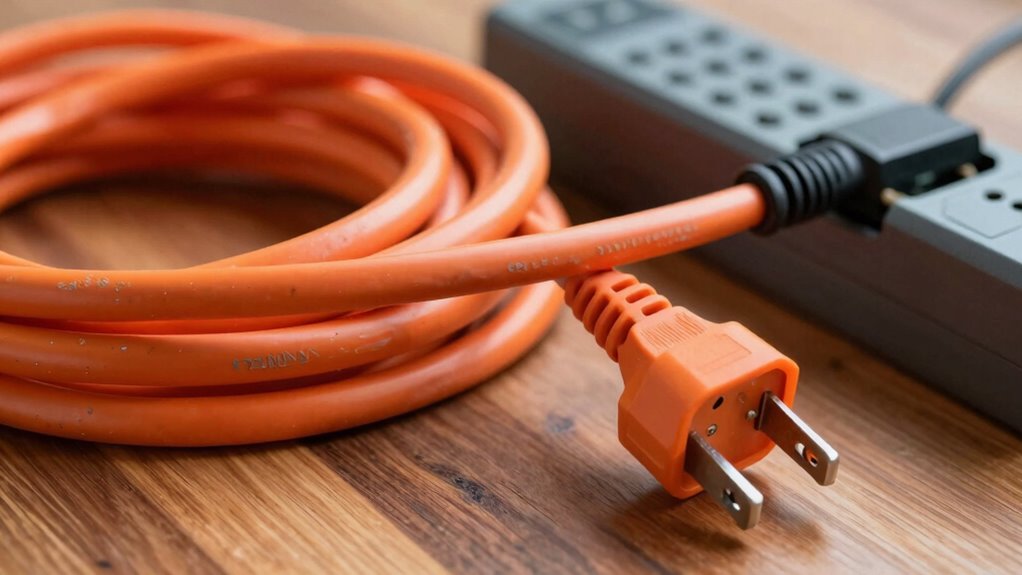

To keep backup power safe, always use extension cords rated for your intended load and guarantee they’re approved for the environment, like outdoor cords for outdoor use. Avoid overloading cords and don’t daisy-chain multiple ones together. Regularly inspect for damage and replace if needed. Proper management, like keeping cords organized and out of high-traffic areas, further prevents accidents. If you want to know more about effective safety practices, there’s important information ahead.

Get backup power and energy gear delivered free with Prime
- Fast, free delivery on millions of items
- Prime Video, Amazon Music and more included
- Member-only deals all year
Key Takeaways
- Use extension cords rated for the total wattage and amperage of your backup power devices.
- Avoid daisy-chaining multiple extension cords to prevent overloads and potential fire hazards.
- Ensure cords are properly grounded and suitable for indoor or outdoor use as needed.
- Regularly inspect cords for damage to maintain safety and prevent electrical shocks.
- Follow manufacturer guidelines for safe connection and storage of backup power extension cords.
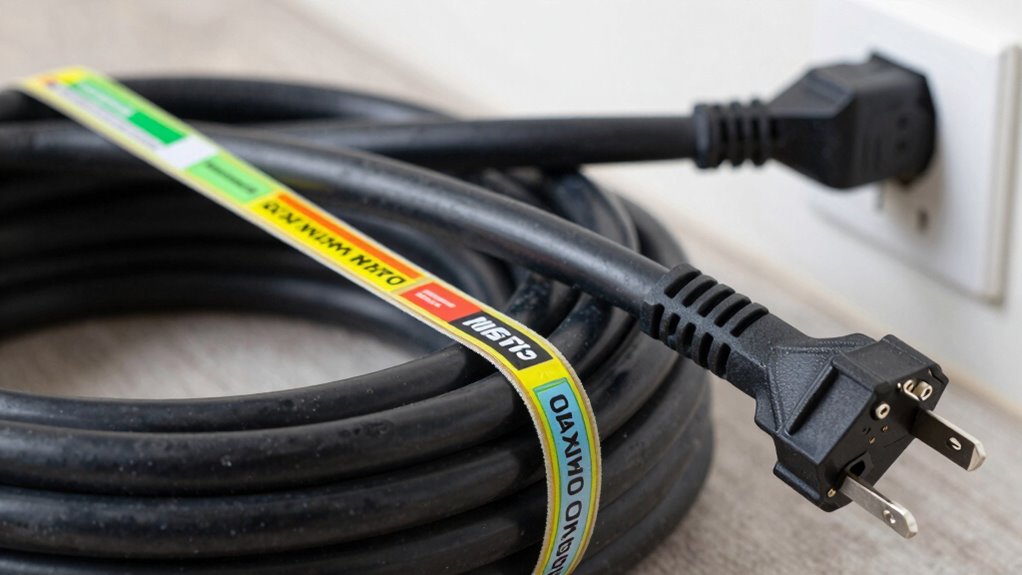
Extension cords are convenient tools, but they can pose safety risks if not used properly. When you rely on extension cords for portable power, it’s essential to understand the importance of safe practices to prevent accidents. Proper cord management is key to avoiding hazards like trips, electrical fires, or damage to the cords themselves. You want to guarantee that your setup not only provides the power you need but also remains safe for everyone around.
One of the most important rules is to avoid overloading extension cords. They’re designed to handle specific current loads, and exceeding that limit can cause overheating or fires. Always check the cord’s wattage or amperage ratings before plugging in multiple devices. If you need more power, consider using a heavy-duty extension cord rated for higher loads rather than daisy-chaining multiple cords together. This helps keep your portable power setup safe and reliable.
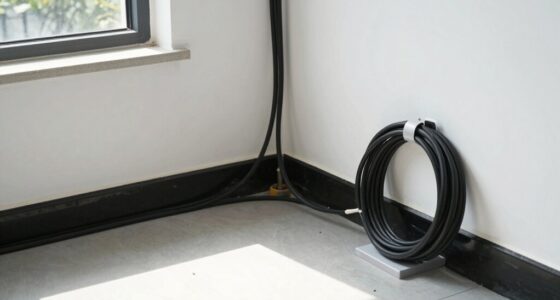
Cord management plays a significant role in safety. Keep cords organized and out of high-traffic areas to prevent tripping hazards. Use cord clips, covers, or tape to secure loose wires along walls or floors. When cords run across walkways, make sure they’re well secured and covered to avoid accidents. Never run cords under carpets or rugs, as this can cause overheating and damage the insulation, which increases the risk of fire. Additionally, understanding extension cord ratings can help you select the right cord for your needs.
Another critical aspect is inspecting your extension cords regularly. Look for frays, cracks, or exposed wires. Damaged cords should be replaced immediately to prevent electrical shocks or fires. Also, avoid running cords through water or in damp environments unless they are specifically rated for outdoor or wet conditions. Keeping cords dry and in good condition extends their lifespan and keeps your portable power sources safe. Regular inspections are essential for maintaining a safe setup, especially in environments where cords are used frequently. Incorporating proper maintenance practices can further extend the life of your extension cords and ensure ongoing safety. Proper storage and handling are also key to preventing damage and maintaining cord integrity, which is why understanding safety standards is crucial.
When you’re using extension cords outdoors, you need to be extra cautious. Use only cords marked for outdoor use, and make certain they are properly rated for weather exposure. Keep them away from sharp objects or areas where they might get damaged. If you’re powering outdoor equipment, make sure cords are plugged into grounded outlets and that you’re following all manufacturer safety guidelines. Remember that proper outdoor cord use reduces the risk of electrical hazards and ensures durability in harsh conditions.
Products Worth Considering

Bose SoundLink Plus Portable Bluetooth Speaker, Wireless Outdoor Speaker, Up to 20 Hours Battery Life, Waterproof and Dustproof, Black

Shark HydroVac MessMaster Corded Wet Dry Vacuum and Mop (WD161)

Philips Hue Secure Starter Kit with Contact Sensors, Motion Sensor, Bridge, and Color Smart Bulbs
As an affiliate, we earn on qualifying purchases.
Frequently Asked Questions
Can Extension Cords Be Used Outdoors Safely?
Yes, you can use extension cords outdoors safely if they’re weather-resistant and have proper cord insulation. Always choose cords labeled for outdoor use, as they’re designed to withstand moisture, temperature changes, and UV rays. Check the insulation for any damage before plugging in your devices. To guarantee safety, avoid overloading the cord, keep it away from water, and don’t run it through standing water or snow.
What Are the Signs of a Damaged Extension Cord?
Like a warning from Pandora’s box, damaged extension cords reveal themselves through frayed cord insulation, exposing wires that can cause shocks or fires. Look for cracked or melted insulation and any signs of scorch marks. Check the plug for damage, including loose or broken prongs. If you notice any of these signs, stop using the cord immediately to prevent hazards, and replace it for safety.
How Often Should Extension Cords Be Replaced?
You should replace extension cords immediately if you notice damaged cord insulation, frayed wires, or scorch marks, as these pose safety risks. Regularly check for signs of wear and tear, especially if you’ve used the cord frequently. For maximum power strip safety, avoid overloading cords and replace them every 3-5 years or sooner if they show any damage. Doing so helps prevent electrical hazards and ensures safe backup power.
Are There Specific Extension Cords for Backup Power Systems?
Yes, there are specific extension cords designed for backup power systems. You should look for cords with a compatible power source and guarantee they meet safety standards. These cords are built to handle higher loads and are often rated for continuous use. Always verify cord compatibility with your backup power setup to prevent overloads or hazards, and choose cords that are appropriately rated for outdoor or indoor use based on your needs.
What Is the Maximum Length for Safe Extension Cord Use?
The maximum safe length for an extension cord is typically 50 feet to guarantee ideal extension safety and prevent power loss. Going beyond this length risks voltage drops and overheating, which can be dangerous. Regular cord maintenance, like inspecting for damage and avoiding overloads, is essential. Keep cords short and in good condition to maintain safe backup power, as longer cords can compromise safety and efficiency.
Conclusion
By following the extension cord safety rule, you’re taking a simple step to protect yourself and your loved ones. Remember, a little caution goes a long way in preventing accidents and electrical hazards. So next time you plug in, ask yourself: are you prioritizing safety first? Keeping backup power secure isn’t just about convenience — it’s about ensuring everyone stays safe. Stay smart, stay safe, and always follow that extension cord rule!