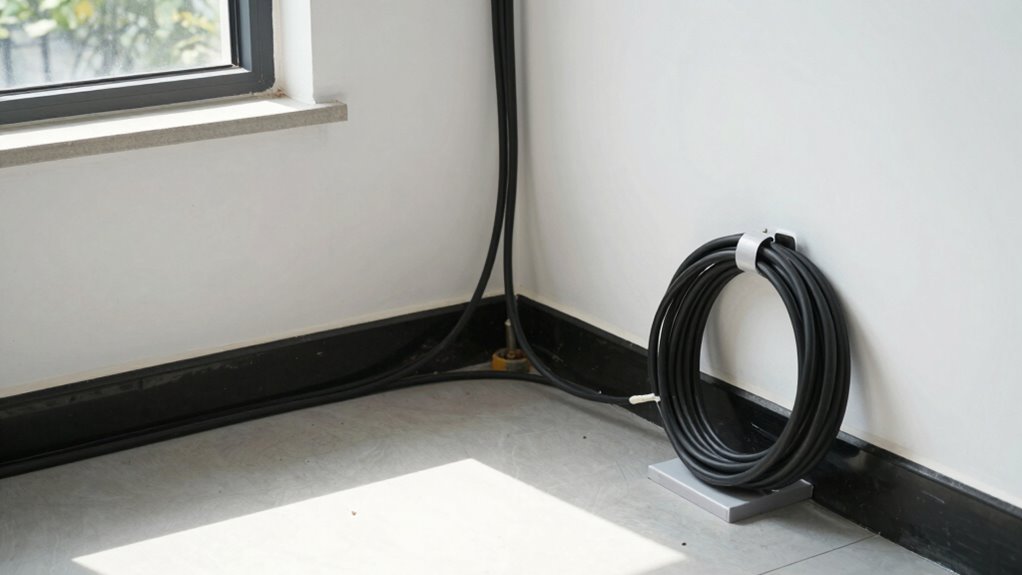

To keep your “power corner” safe, make certain you maintain clear access with at least 30 inches in width and 36 inches deep, free from clutter and obstructions. Proper ventilation is essential—use vents, fans, or louvered doors to prevent overheating, and keep pathways well-lit and tidy. Regularly inspect and remove flammable materials or debris. Following safety standards reduces risks and enhances system longevity—if you want to see how to optimize your space further, keep exploring these critical tips.

Get backup power and energy gear delivered free with Prime
- Fast, free delivery on millions of items
- Prime Video, Amazon Music and more included
- Member-only deals all year
Key Takeaways
- Maintain minimum 36-inch deep and 30-inch wide clearances around electrical panels for safe access and inspection.
- Ensure proper ventilation with vents, louvers, or fans to prevent overheating and prolong equipment lifespan.
- Keep pathways, clearance zones, and electrical areas free of clutter, combustible materials, and obstructions.
- Conduct regular inspections to verify clearance, ventilation effectiveness, and remove hazards or debris promptly.
- Use signage and labels to warn of hazards, enforce clutter control, and ensure compliance with safety standards.
electrical panel ventilation fan
As an affiliate, we earn on qualifying purchases.
As an affiliate, we earn on qualifying purchases.
Understanding Clearance Dimensions and Legal Standards
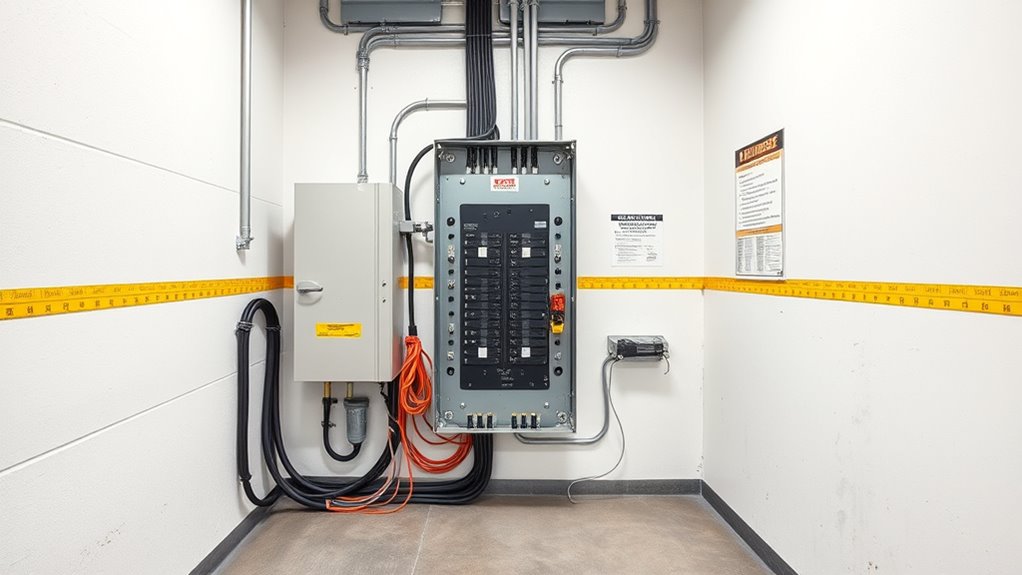
Understanding clearance dimensions and legal standards is essential for ensuring safe and compliant electrical installations. You need to maintain the minimum working space in front of panels, typically at 36 inches deep, as required by NEC and OSHA. The clear width should be at least 30 inches, providing enough room for safe access and movement. The vertical space from the floor to 78 inches or the equipment’s height must be kept free of obstructions, preventing obstructions. When facing grounded surfaces or other electrical gear, you might need deeper clearances, around 42 to 48 inches. Remember, local authorities may impose stricter rules, so always verify specific requirements for your project. Staying within these standards helps ensure safety, facilitates inspections, and minimizes risk during maintenance or emergencies. Additionally, maintaining proper ventilation around electrical equipment is crucial to prevent overheating and ensure reliable operation. Ensuring proper clutter management keeps walkways clear and reduces tripping hazards, further promoting safety. Proper clearance and airflow are also vital for preventing equipment failure and prolonging the lifespan of your electrical components. Incorporating properly designed ventilation systems can significantly improve airflow and temperature regulation around electrical panels.
clearance zone safety signage for electrical panels
As an affiliate, we earn on qualifying purchases.
As an affiliate, we earn on qualifying purchases.
Ensuring Unobstructed Access and Pathways
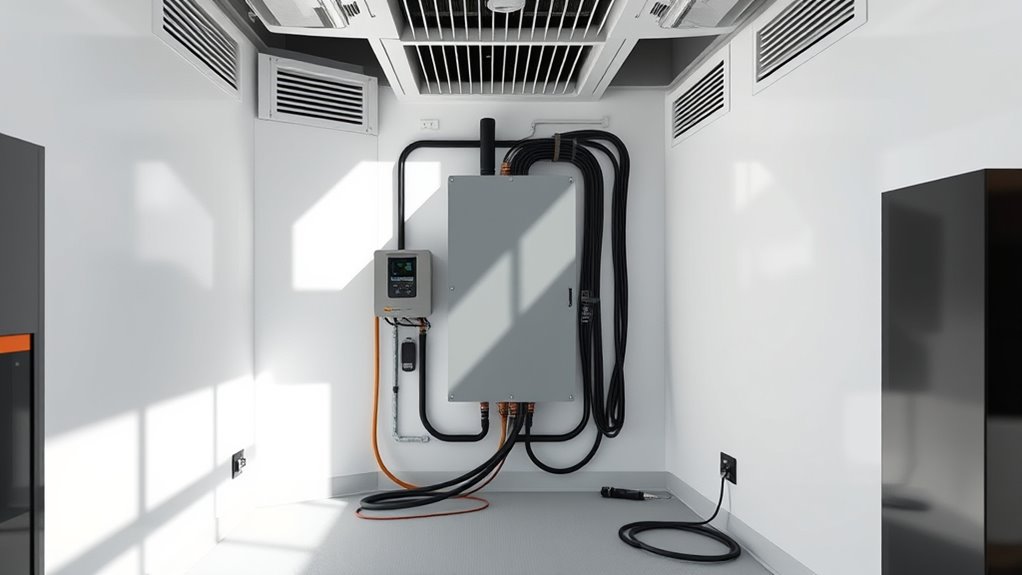
To guarantee safe and efficient maintenance, you must keep access routes to electrical panels unobstructed at all times. Blocked pathways slow down repairs and create safety hazards. You need to assure clear, continuous routes from the nearest egress to your panels, free of stored items or obstructions. Also, account for door swing and panel opening space, allowing at least 90° access for full operation. Proper lighting is essential; fixed, adequate illumination must be installed to prevent accidents. To stay compliant, consider these key points:
- Keep a dedicated, clutter-free pathway from the door to the panel.
- Avoid storing boxes, tools, or other items within the required clearance zone.
- Clearly mark or tape the clearance area to prevent accidental encroachment.
- Incorporate local automation to monitor and alert you of obstructions or unsafe conditions near your electrical panel.
- Regularly inspect and maintain clearance zones to prevent debris buildup and ensure ongoing accessibility. Incorporating regular inspections helps maintain safety standards and promptly address potential hazards.
Maintaining unobstructed access reduces hazards and speeds up maintenance.
As an affiliate, we earn on qualifying purchases.
Managing Ventilation and Heat Dissipation
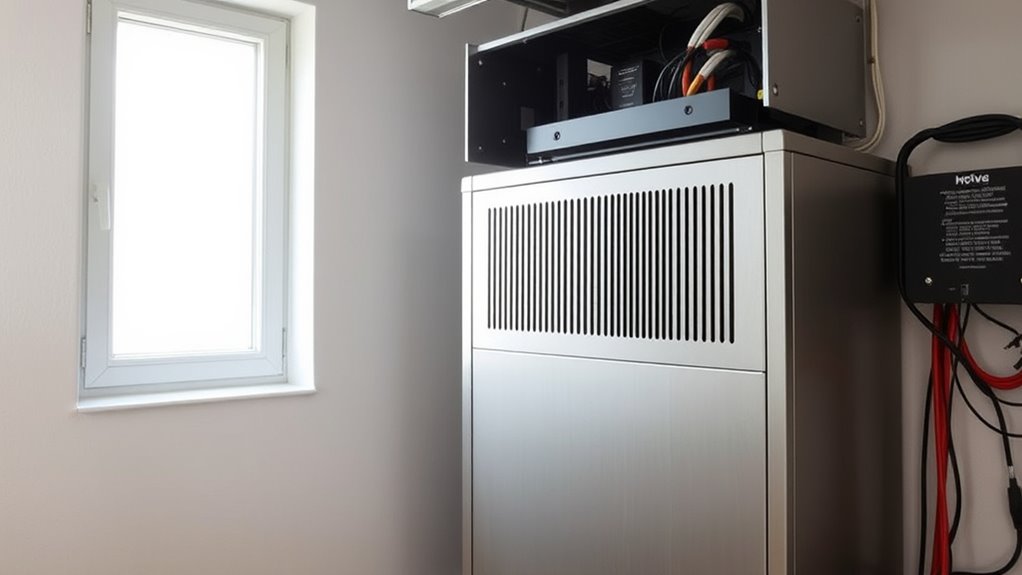
Proper airflow is essential to prevent overheating of electrical panels and components. If your enclosure is in a confined space, consider adding ventilation or increasing clearance to improve heat dissipation. Ensuring adequate ventilation helps extend equipment life and maintains safe operating temperatures. Incorporating at‑home beauty tech devices with built-in safety features can further reduce overheating risks. Additionally, monitoring electrical system performance can help identify potential issues before they lead to overheating.
Ensuring Adequate Airflow
Effective airflow is crucial for preventing overheating in electrical panels and maintaining safe operating conditions. Without proper ventilation, heat builds up, risking component failure and fire hazards. To ensure adequate airflow:
- Keep panels and surrounding areas free of obstructions, allowing air to circulate freely.
- Install ventilation openings, such as louvers or vents, if the enclosure is sealed, to facilitate heat dissipation.
- Position heat sources like furnaces or water heaters away from panels or provide dedicated ventilation paths to reduce ambient temperature.
- Ensure that proper airflow management is part of your overall electrical safety and maintenance routine. Regularly inspecting for dust, debris, or clutter that could block airflow is essential to prevent thermal buildup and ensure safety. Maintaining these practices helps prevent thermal degradation, extends equipment life, and keeps your power corner safe and compliant.
Ventilation Solutions for Enclosures
Are your electrical enclosures equipped to handle heat buildup? Proper ventilation is essential to prevent overheating and prolong equipment life. If your panels are in enclosed spaces or tight closets, consider installing ventilation openings, louvered doors, or forced fans to improve airflow. For sealed enclosures, adding dedicated vents or exhaust fans helps dissipate heat effectively. Ensure that ventilation methods meet local codes and standards. Position equipment away from heat sources like furnaces or water heaters, or increase spacing to reduce ambient temperature. Regularly monitor temperature levels inside the enclosure, especially during peak operation. Proper ventilation not only safeguards your equipment but also reduces fire risk and minimizes downtime, keeping your power corner safe and compliant. Additionally, selecting appropriate ventilation solutions tailored to your enclosure’s size and environment can optimize airflow and efficiency. Implementing temperature monitoring devices can provide real-time data to prevent overheating before issues arise. Incorporating ventilation maintenance practices ensures continued effective heat dissipation over time.
LED work light for electrical panels
As an affiliate, we earn on qualifying purchases.
As an affiliate, we earn on qualifying purchases.
Keeping the Power Area Free of Clutter and Flammable Materials
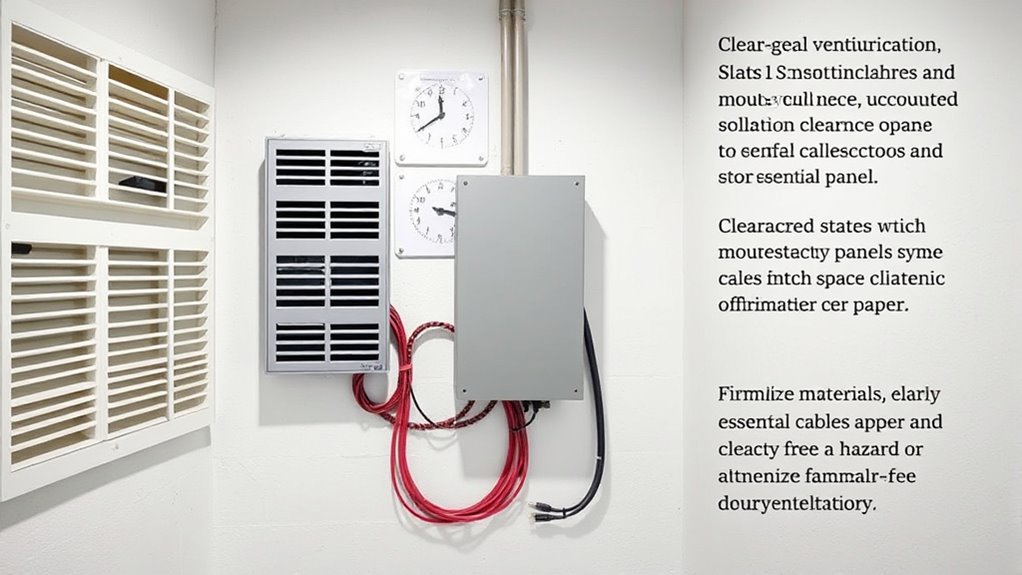
Keeping the power area free of clutter and flammable materials is essential for safety and code compliance. Clutter can block access, hinder proper ventilation, and increase fire risk. To keep your power corner safe, focus on these key points:
Keeping the power area clear of clutter and flammable materials enhances safety and ensures code compliance.
- Remove all combustible items such as paper, cardboard, paint, or stored boxes from the workspace to prevent fire spread.
- Keep flammable liquids and compressed gas cylinders outside the clearance zone to reduce explosion hazards.
- Regularly inspect and tidy the area, using signage or floor markings to remind yourself and others to maintain clear space and prevent accidental clutter accumulation.
- Implement proper ventilation systems to ensure airflow and reduce the buildup of potentially hazardous fumes or heat.
- Ensuring proper clearance zones around electrical equipment is vital to prevent overheating and facilitate safe maintenance practices. Additionally, maintaining proper grounding can significantly improve electrical safety by reducing the risk of electrical faults or sparks.
- Proper storage practices for tools and materials further reduce the risk of accidents and help maintain a safe environment.
Maintaining a tidy, organized power corner minimizes fire hazards, ensures quick access during emergencies, and helps meet safety standards. Consistent housekeeping keeps your system safe and compliant.
Assessing and Mitigating Arc-Flash Risks
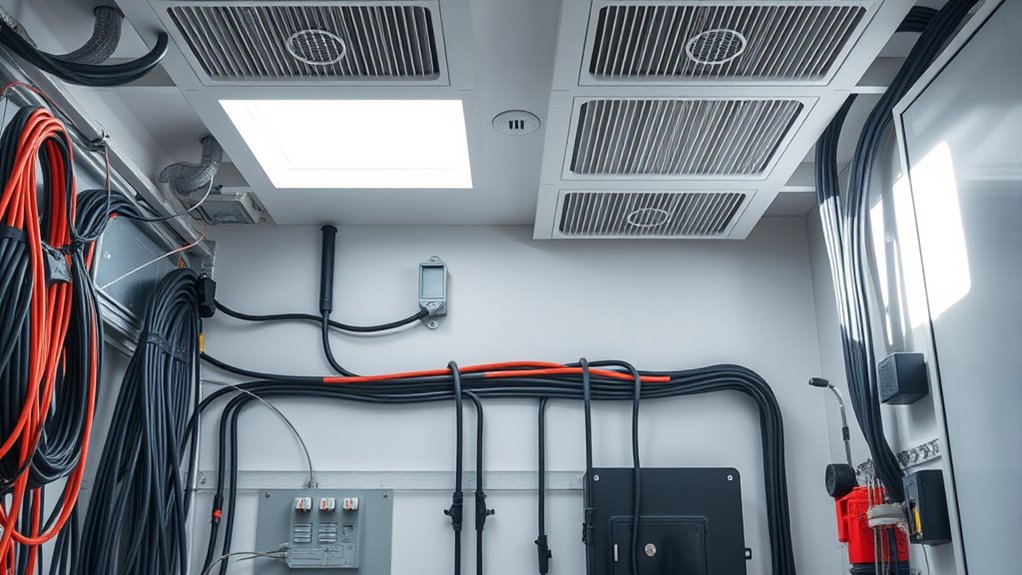
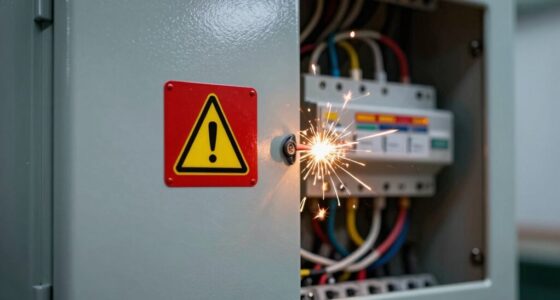
Evaluating and mitigating arc-flash risks is a critical step in ensuring electrical safety during maintenance and operation. Start by conducting a thorough risk assessment, considering equipment voltage, fault current, and working conditions. Use NFPA 70E guidelines to determine arc-flash boundaries and PPE requirements. Label panels clearly with arc-flash warning signs to inform personnel of potential hazards. Keep clearances adequate to allow quick access and reduce exposure time in an emergency. Remove obstructions that could delay shutdown or rescue efforts, and ensure proper lockout/tagout procedures are followed before working on energized equipment. Regularly review and update your risk assessments, especially after modifications or upgrades, to maintain a safe work environment and minimize arc-flash incidents. Additionally, understanding appliance testing requirements can help identify potential electrical hazards before they lead to dangerous situations. Incorporating compliance standards into your safety protocols ensures that your facility adheres to the latest regulations and best practices.
Conducting Routine Inspections and Maintaining Compliance
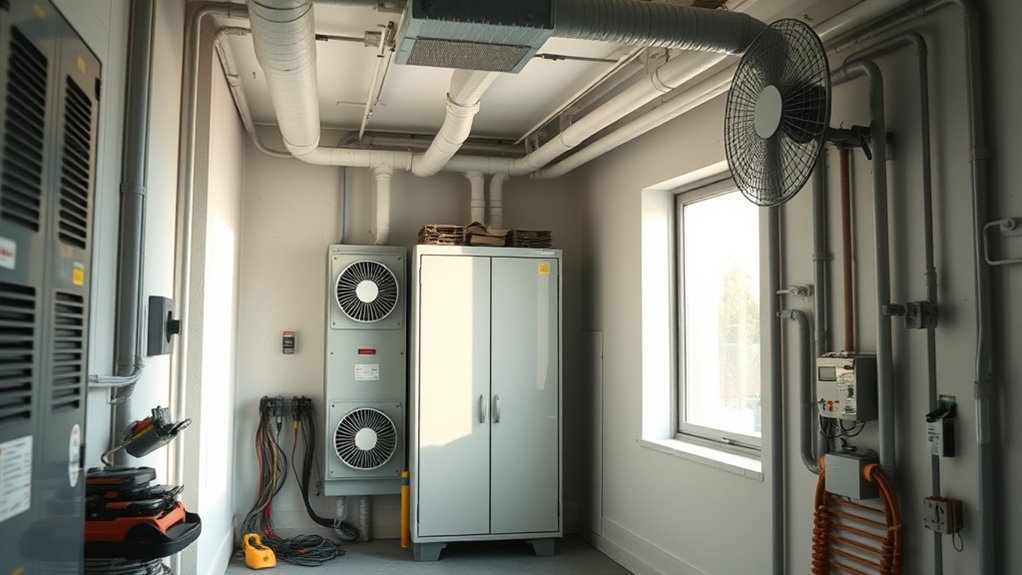
Regular inspections of electrical panels help make certain ongoing compliance with safety standards and code requirements. To keep your Power Corner safe, focus on these key steps:
- Verify clearances: Measure the width, depth, and height to ensure they meet NEC/OSHA standards—30 inches wide, 36 inches deep, and 78 inches high. Proper clearances facilitate safe access during emergency situations.
- Check for obstructions: Remove clutter, stored items, or any blockages in the clearance zone. Ensure pathways are unobstructed and lighting is adequate. Maintaining clearance zones is essential for quick access and safety.
- Assess ventilation and heat: Confirm proper airflow and ventilation around the panel, especially in enclosed spaces, to prevent overheating. Regularly document findings, update signage, and coordinate with professionals for remediation if needed. These actions keep your Power Corner compliant and safe during maintenance and emergencies. Additionally, proper ventilation around electric equipment prevents overheating and prolongs the lifespan of components. Maintaining adequate airflow is especially important in security zones, where consistent performance of electrical systems is critical.
Frequently Asked Questions
How Often Should I Reassess My Panel’s Clearance and Ventilation Needs?
You should reevaluate your panel’s clearance and ventilation needs at least quarterly to guarantee ongoing safety and compliance. Regular inspections help catch clutter, obstructions, or heat buildup early. After any modifications, renovations, or changes in equipment placement, reassess immediately. Additionally, if you notice signs of overheating, unusual odors, or difficulty opening panels, perform an inspection right away. Consistent checkups prevent hazards and maintain proper functioning.
What Are the Best Practices for Marking or Floor Tape in the Power Area?
You should clearly mark your power area with floor tape to guarantee compliance and safety. Use bright, durable tape that contrasts with the floor to define the required clearance zones accurately. Place it around the perimeter of the working space, including door swings and access pathways. Regularly inspect and reapply the tape as needed, especially after cleaning or renovations, to maintain clear boundaries and prevent accidental encroachment.
Can I Store Non-Flammable Items Near Electrical Panels Safely?
You shouldn’t store non-flammable items near electrical panels because they can still obstruct access and violate clearance requirements. Even if the items aren’t flammable, they can create hazards or interfere with safe maintenance. Keep the area clear of shelving, boxes, or stored things within the designated 30×36×78-inch space. Regularly inspect and maintain proper housekeeping to prevent accidental encroachment and guarantee safe, compliant operation.
What Are the Signs of Overheating or Thermal Stress in Electrical Panels?
You’ll notice overheating or thermal stress in your electrical panels through signs like scorching or discolored components, a burning smell, or warm surfaces when touched. Buzzing or crackling sounds may also indicate heat buildup. If you see melting insulation, smoke, or frequent tripping of circuit breakers, these are urgent indicators that your panel needs inspection. Address these signs promptly to prevent damage or fire hazards, and consult a professional for repairs.
How Do Local AHJ Regulations Differ From NEC or OSHA Requirements?
Think of local AHJ regulations as the wise town crier, often ringing louder than NEC or OSHA. They can impose stricter clearance, ventilation, or access rules based on local climate, building codes, or safety concerns. You must check with your AHJ before starting work, as their requirements might require more space, better ventilation, or specific safety measures, ensuring your installation not only meets the law but also the community’s safety standards.
Conclusion
Keeping your power corner safe might seem overwhelming, but with regular inspections and adherence to clearance, ventilation, and clutter rules, you can prevent accidents and guarantee compliance. Some worry that these measures are too costly or time-consuming, but investing in proper maintenance saves you from costly repairs or hazards later. Prioritize safety now—you’ll protect your property, your team, and your peace of mind in the long run.
Halloween Picks
halloween
As an affiliate, we earn on qualifying purchases.