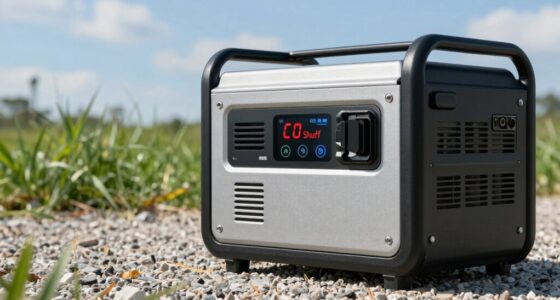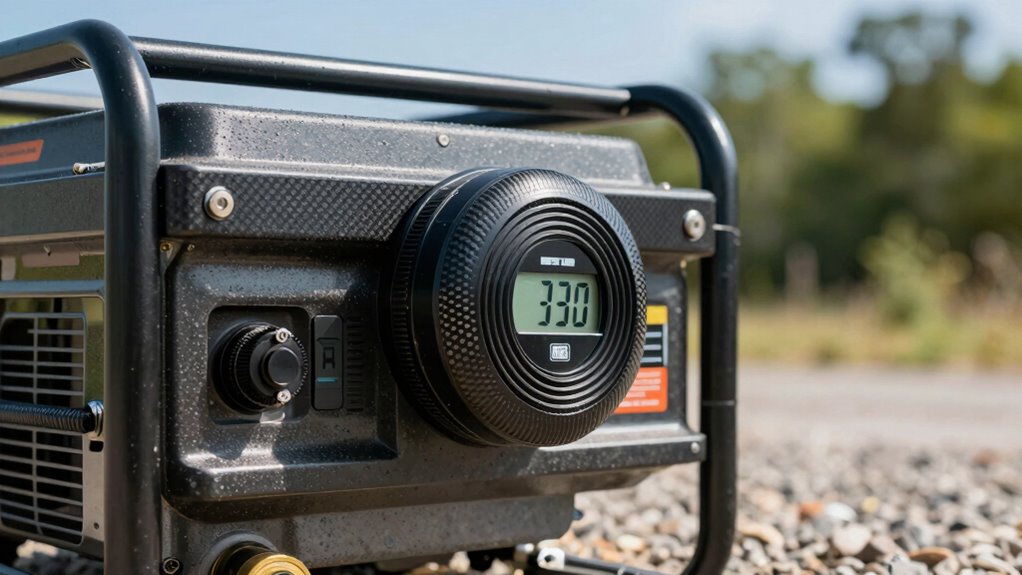

Carbon monoxide detectors are essential in every generator plan because CO is colorless, odorless, and deadly. They give you early warnings of dangerous gas buildup, preventing poisoning and saving lives. Proper placement guarantees you get alerts before CO reaches harmful levels. Regular maintenance keeps your detector working properly. To keep your home safe during power outages, it’s important to understand how to use and position these detectors effectively—more tips await you.

Get backup power and energy gear delivered free — and shop member deals
- Fast, free delivery on millions of items
- Access to Prime Big Deal Days deals on October 6–7
- Prime Video, Amazon Music and more included
Key Takeaways
- CO detectors provide early warning of dangerous gas buildup during generator use or power outages.
- Proper placement ensures timely alerts, preventing CO poisoning in homes and enclosed spaces.
- Regular maintenance and testing keep detectors effective and reliable for ongoing safety.
- Detectors help monitor indoor air quality when generators are operated indoors temporarily.
- Integrating CO detectors into generator plans enhances overall household safety and emergency preparedness.
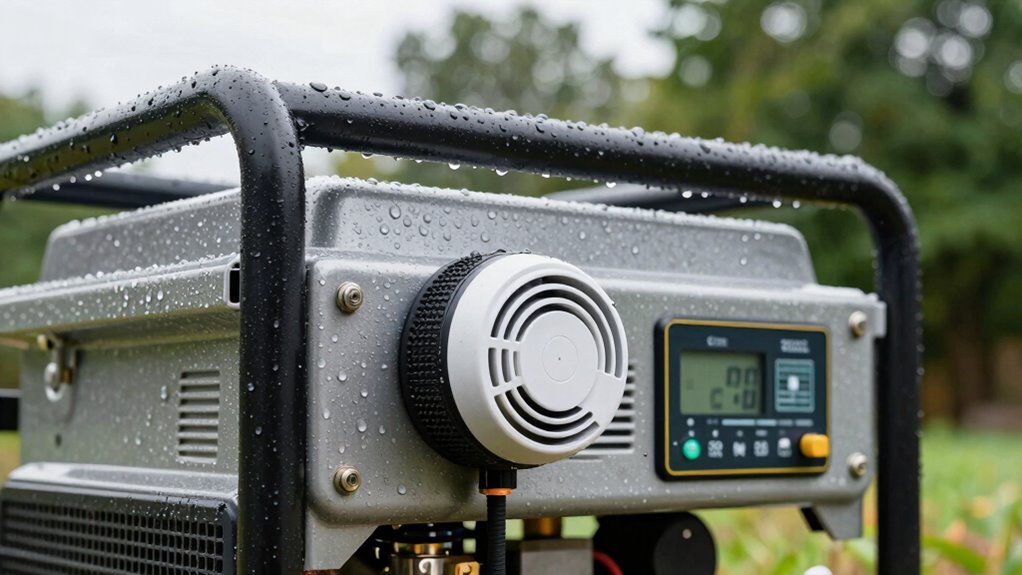
Generators are valuable tools during power outages, but they pose a serious risk if carbon monoxide (CO) buildup goes unnoticed. CO is a colorless, odorless gas that can quickly become deadly in enclosed spaces. That’s why integrating carbon monoxide detectors into your generator plan is essential for indoor safety. Proper detector placement is fundamental to guarantee that these devices alert you early enough to take action. You should install CO detectors on every level of your home, especially near sleeping areas and in rooms where the generator is used or stored. Placing detectors at least 15 feet from fuel-burning appliances prevents false alarms caused by normal engine exhaust. Remember, mounting them on the ceiling or high on the wall is ideal because CO rises with warm air, making early detection more effective.
Install CO detectors on every home level, near sleeping areas, and high on walls for early, effective detection.
Your primary goal is to prevent CO from accumulating to dangerous levels. When you set up your detectors, avoid placing them near vents, windows, or fans that could disperse the gas or cause false readings. Instead, situate them where they can best monitor the air in your living space, particularly in enclosed or poorly ventilated areas. It’s equally important to regularly test your detectors and replace their batteries, especially during winter months when generators are more likely to be in use. A functioning CO detector is only as good as its maintenance, so sticking to a routine check ensures constant protection. Additionally, understanding CO safety guidelines can help you better prepare for emergencies. Being aware of carbon monoxide risks can guide you in creating a comprehensive safety plan. Proper knowledge about CO detection devices helps ensure you select the right equipment for your needs.
Indoor safety hinges on awareness and preparedness. No matter how modern or sophisticated your generator is, it won’t protect you if CO leaks go unnoticed. That’s why detector placement isn’t something to overlook; it’s a crucial element of your overall safety plan. When you’re using a generator, keep it outdoors and away from windows or vents to prevent CO from seeping indoors. If you must operate the generator in an enclosed area, make sure your CO detectors are working correctly, and never ignore their alarms. Quick action, like turning off the generator and ventilating the space, can save lives. Proper placement of detectors is essential to maximize early detection and safety. Regularly reviewing CO detection device features and updates can help ensure your safety equipment remains effective over time.
Incorporating CO detectors into your generator setup is a simple yet essential step toward safeguarding your household. Proper placement and regular maintenance provide peace of mind, knowing that you’ll be alerted early if dangerous CO levels develop. By prioritizing indoor safety and strategically positioning your detectors, you’re taking proactive steps to protect yourself and your loved ones from an invisible, deadly threat.
carbon monoxide detector for home
As an affiliate, we earn on qualifying purchases.
As an affiliate, we earn on qualifying purchases.
Frequently Asked Questions
How Do Carbon Monoxide Detectors Work in Generators?
You should know that CO detectors in generators work by sensing carbon monoxide levels in the air. When CO reaches unsafe levels, the detector triggers an alarm, alerting you to evacuate. For generator safety, you must regularly check and maintain your CO detector to guarantee it functions properly. Proper CO detector maintenance helps prevent carbon monoxide poisoning, keeping you safe during power outages or generator use.
Are There Different Types of Carbon Monoxide Detectors for Generators?
Yes, there are different types of carbon monoxide detectors for generators, including digital, electrochemical, and biomimetic models. When considering safety protocols, you should choose a detector that suits your space and generator type. Proper detector installation is vital for effective protection—place detectors at recommended heights and locations. Regular testing and maintenance guarantee your safety system works reliably, keeping you and your loved ones safe during power outages.
How Often Should I Test My Carbon Monoxide Detector?
You should test your carbon monoxide detector once a month to guarantee safety protocols are in place. Regular testing confirms the detector functions properly and can alert you in an emergency. Place your detector in the correct location, typically near sleeping areas and on each level of your home, to maximize protection. Consistent tests help you stay prepared, so make it a routine to check your detector’s performance regularly.
Can Carbon Monoxide Detectors Be Used Outdoors With Generators?
Outdoor safety is essential, but carbon monoxide detectors aren’t designed for outdoor use. Exposure to weather and humidity can compromise their function, making them unreliable. Instead, place detectors inside your home, especially near generators, to guarantee proper detection. Proper detector placement is key to early warning, so keep them away from vents or open windows. Always follow manufacturer guidelines for indoor placement to maximize safety and effectiveness.
What Is the Lifespan of a Typical CO Detector?
A typical CO detector lasts about 5 to 7 years. You should regularly check the battery replacement to guarantee it functions properly. Follow placement guidelines by installing the detector on every level of your home, especially near sleeping areas, and avoid placing it near vents or windows. Proper placement and timely battery replacements help keep you protected from dangerous carbon monoxide leaks, especially when using generators outdoors.
As an affiliate, we earn on qualifying purchases.
Conclusion
Don’t wait until it’s too late to realize you should’ve had a carbon monoxide detector in your generator plan. These small devices act as your silent guardian, catching danger before it becomes a tragedy. Think of them as your safety net—there when you need them most. Installing a CO detector isn’t just smart; it’s essential. Remember, it’s better to be safe than sorry, so make sure yours is part of your emergency plan today.
As an affiliate, we earn on qualifying purchases.
As an affiliate, we earn on qualifying purchases.
Fall Picks
fall essentials
As an affiliate, we earn on qualifying purchases.