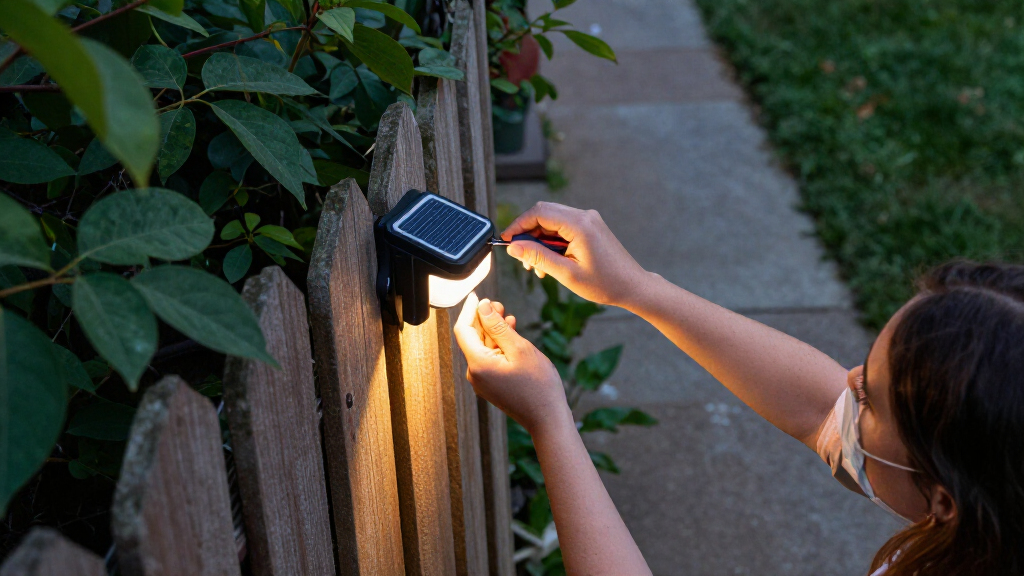
Among these solar motion sensor security lights, I’d name the Philips 3600 LM Solar Security Light the best overall for its separate solar panel, three adjustable heads, and dimmable output. The Tuffenough 2500-lumen, 3-head light is a strong alternative for broad coverage, while the HMCITY 6-pack suits buyers who want several smaller lights around a property. The main tradeoff is between a concentrated, adjustable beam and wider coverage from multiple fixtures; pack size, panel placement, and controls also affect convenience. More heads or LEDs do not automatically mean a better result if the light cannot be aimed at the right area or the panel gets too little sun. Read on for the full breakdown and guidance on matching a light to your space.

Get backup power and energy gear delivered free with Prime
- Fast, free delivery on millions of items
- Prime Video, Amazon Music and more included
- Member-only deals all year
Key Takeaways
- The Philips model stands out for panel placement: its separate panel can sit in a sunnier spot than the light, a meaningful advantage when the mounting location is shaded.
- Three-head and multi-head designs prioritize coverage: the Philips, Tuffenough, Daphino, YSEAGA, LYWALT, and omibee options offer more aiming flexibility than single-fixture designs, but head count alone does not establish brightness or runtime.
- Pack size changes the job these products can do: HMCITY and Aootek provide six lights per pack, while several Tuffenough and other models come as two-packs, better suited to fewer focal locations.
- Remote control is a convenience feature, not a substitute for placement: YSEAGA and some Tuffenough options add remote operation, while the Philips model offers dimming and a separate panel as distinct forms of control and flexibility.
- Specifications are uneven across the lineup: Philips lists 3600 lumens, Tuffenough and Daphino list 2500 lumens, and LEPOWER lists 1600 lumens; many other listings emphasize LED counts, so buyers should compare like-for-like information rather than treat LED quantity as a brightness ranking.
| Solar-Powered Outdoor Motion Sensor Flood Lights, 286 LEDs, 3 Modes, 2-Pack |  | Best for Adjustable Coverage | Power source: Solar | LED count: 286 | Brightness: 2500 lumens in description; 3500 lumens in product information | VIEW LATEST PRICE | See Our Full Breakdown |
| Philips 3600 LM Solar Security Light – Waterproof Dimmable LED Motion Sensor with 3 Adjustable Heads and Separate Solar Panel |  | Best for Flexible Solar Panel Placement | Maximum brightness: 3600 lumens | Brightness levels: 1800 lm and 3600 lm | Color temperature: 5000 K | VIEW LATEST PRICE | See Our Full Breakdown |
| TECKNET 416-LED Solar Outdoor Motion Sensor Lights, 2-Pack |  | Best for Wide-Angle Coverage | Pack size: 2 lights | LED count: 416 | Brightness: 4200 lumens | VIEW LATEST PRICE | See Our Full Breakdown |
| Outdoor Solar Flood Lights with Motion Sensor, 2-Pack |  | Best for Clearly Defined Entryway Coverage | Pack size: 2 lights | Light heads: 3 adjustable heads per light | Brightness: Up to 2500 lumens | VIEW LATEST PRICE | See Our Full Breakdown |
| HMCITY 120-LED Outdoor Solar Motion Sensor Lights, 6-Pack |  | Best for Multi-Point Budget Coverage | Pack size: 6 lights | LED count: 120 | Brightness: 960 lumens | VIEW LATEST PRICE | See Our Full Breakdown |
| Solar-Powered Outdoor Motion Sensor Lights, 2-Pack |  | Best for Flexible Controls | Quantity: 2 lights | LED chips: 231 | Battery capacity: 4,000 mAh | VIEW LATEST PRICE | See Our Full Breakdown |
| YSEAGA 4-Head Solar Motion Sensor Lights, 288 LEDs, Remote Control, IP65 Waterproof, 2-Pack |  | Best for Wide-Area Coverage | Pack quantity: 2 | LEDs: 288 | Light heads: 4 adjustable heads | VIEW LATEST PRICE | See Our Full Breakdown |
| Tuffenough Solar Outdoor Motion Sensor Lights, 2500 Lumens, 210 LEDs, 3 Heads, 2-Pack | 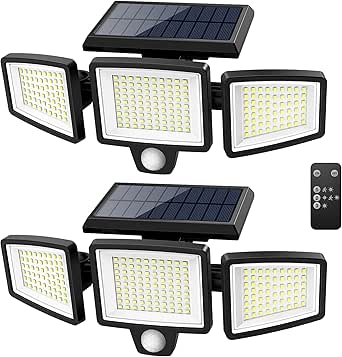 | Best for Clearly Specified Brightness | Package quantity: 2 lights | LEDs: 210 | Brightness: Up to 2,500 lumens | VIEW LATEST PRICE | See Our Full Breakdown |
| LEPOWER Solar LED Security Light with Motion Sensor, 1600 Lumens |  | Best for Long-Range Detection | Brightness: Up to 1,600 lumens | Color temperature: 5500 K | Motion sensor range: Adjustable up to 72 feet | VIEW LATEST PRICE | See Our Full Breakdown |
| Tuffenough Solar Outdoor Security Lights, 210 LEDs, 3 Heads, 4-Pack |  | Best for Multi-Zone Coverage | Pack size: 4 lights | Light source: 210 LEDs per light | Brightness: 2,500 lumens | VIEW LATEST PRICE | See Our Full Breakdown |
| omibee Solar Motion Sensor Flood Lights, 6 Heads, 2-Pack |  | Best for Maximum Coverage | Light output: Up to 6000 lumens | Heads and quantity: 6 heads; 2-pack | LED count: 284 | VIEW LATEST PRICE | See Our Full Breakdown |
| LYWALT Solar Outdoor Motion Sensor Flood Light, 4 Heads, 188 LEDs |  | Best for Balanced Coverage | Brightness: 3000 lumens | Heads and LEDs: 4 heads; 188 LEDs | Motion detection: Up to 40 ft; 180° | VIEW LATEST PRICE | See Our Full Breakdown |
| Aootek Solar Motion Sensor Lights, 120 LEDs, 6-Pack |  | Best for Multiple Mounting Points | Pack size: 6 lights | Brightness and LEDs: 800 lumens; 120 LEDs per light | Motion detection: Up to 26 ft; 120° | VIEW LATEST PRICE | See Our Full Breakdown |
| Daphino 2500-Lumen Solar Motion Sensor Lights, 3-Head, 2-Pack |  | Best for Longer Listed Runtime | Pack quantity and LEDs: 2 lights; 156 LEDs per light | Brightness: 2500 lumens | Motion detection: Up to 40 ft; 130° | VIEW LATEST PRICE | See Our Full Breakdown |
| Tuffenough Solar Outdoor Security Lights, 210 LEDs, 3 Heads, Remote Control |  | Best for Remote-Controlled Setup | Light output and LEDs: Up to 2500 lumens; 210 LEDs | Heads: 3 adjustable heads | Color temperature: 6500 K | VIEW LATEST PRICE | See Our Full Breakdown |
| solar motion sensor security light | Brightness | Water resistance | Lighting modes |
|---|---|---|---|
| Solar-Powered Outdoor Motion S | 2500 lumens in description; 3500 lumens in product information | IP65 | 3 |
| Philips 3600 LM Solar Security | — | — | — |
| TECKNET 416-LED Solar Outdoor | 4200 lumens | IP66 | 3 |
| Outdoor Solar Flood Lights wit | Up to 2500 lumens | IP65 | 3 |
| HMCITY 120-LED Outdoor Solar M | 960 lumens | IP65 | 3 |
| Solar-Powered Outdoor Motion S | — | IP65 | DIM, sensor, and always-on |
| YSEAGA 4-Head Solar Motion Sen | — | IP65 | 4 |
| Tuffenough Solar Outdoor Motio | Up to 2,500 lumens | IP65 | — |
| LEPOWER Solar LED Security Lig | Up to 1,600 lumens | IP65 | — |
| Tuffenough Solar Outdoor Secur | 2,500 lumens | IP65 | — |
| omibee Solar Motion Sensor Flo | — | — | — |
| LYWALT Solar Outdoor Motion Se | 3000 lumens | — | 3 |
| Aootek Solar Motion Sensor Lig | — | — | — |
| Daphino 2500-Lumen Solar Motio | 2500 lumens | — | 3 |
| Tuffenough Solar Outdoor Secur | — | — | — |
More Details on Our Top Picks
Solar-Powered Outdoor Motion Sensor Flood Lights, 286 LEDs, 3 Modes, 2-Pack
For buyers who want to light more than one approach without wiring, this two-pack pairs three adjustable heads with up to 270° of illumination. Each light has three modes, so you can choose motion-triggered lighting or a steadier setting to suit the area. The battery-level and mode indicators make status easier to check, and can be turned off if you prefer fewer visible lights.
Compared with the Philips 3600 LM Solar Security Light, this set offers two fixtures rather than one and has a broader stated coverage angle, while Philips provides a separate panel on a long cable and adjustable detection range. The main caveat here is a conflicting brightness claim: the description lists 2500 lumens, while product information says 3500. I would choose it for flexible placement, not if a precise output figure is central to the decision.
Pros:- Two solar-powered fixtures allow coverage of separate outdoor areas without hardwiring.
- Three adjustable heads provide up to 270° of stated light coverage.
- Three lighting modes give options for motion-triggered and other lighting behavior.
- Battery and mode indicators can be switched off.
Cons:- Brightness is reported as both 2500 and 3500 lumens, making output unclear.
- Charging and runtime depend on available sunlight.
- IP65 protection and ABS construction are specified, but no separate panel or extended cable is listed.
Best for: Homeowners who want two adjustable solar floodlights for separate entrances, paths, or garage approaches.
Not ideal for: Buyers who need a verified lumen output or whose mounting spots receive too little direct sunlight for dependable solar charging.
- Power source:Solar
- LED count:286
- Brightness:2500 lumens in description; 3500 lumens in product information
- Lighting modes:3
- Motion detection:26 ft range; 120° angle
- Light coverage:Up to 270°
- Water resistance:IP65
- Pack size and mounting:2 lights; wall mount
Our verdict“Choose this two-pack for adjustable, wide-area coverage at multiple mounting points, but skip it if you need an unambiguous brightness specification.”
Philips 3600 LM Solar Security Light – Waterproof Dimmable LED Motion Sensor with 3 Adjustable Heads and Separate Solar Panel
The separate solar panel and 16-foot cable are the defining advantage here: they let you put the light where movement happens and the panel where sunlight reaches it. That makes this a stronger fit than the TECKNET 416-LED Solar Outdoor Motion Sensor Lights for shaded walls or awkward mounting spots, since TECKNET is described as needing a full day of direct sun. Philips also offers two brightness levels and adjustable motion range and lighting duration, giving you more control over how the light behaves.
Its 3600-lumen maximum output and three movable heads suit buyers seeking a brighter single fixture, while the 4000 mAh battery supports its solar-powered design. The tradeoff is that this is a wall-mounted unit rather than a multi-light pack, and it has no app or remote control. Choose it for installation flexibility and settings control, not for covering several locations with one purchase.
Pros:- A 16-foot panel cable allows the panel and light to be mounted in different locations.
- Two brightness levels offer a choice between stronger illumination and a lower setting.
- Motion range and lighting duration are adjustable.
- Three movable heads and up to 3600 lumens suit broad-area lighting.
Cons:- The product is listed for wall mounting only.
- No remote control or app integration is specified.
- Unlike the two-packs in this lineup, it provides one light fixture.
Best for: Homeowners with a shaded or hard-to-reach wall who can place a separate solar panel in a sunnier spot.
Not ideal for: Buyers who need several fixtures, app control, or mounting options beyond a wall installation.
- Maximum brightness:3600 lumens
- Brightness levels:1800 lm and 3600 lm
- Color temperature:5000 K
- Light heads:3 adjustable heads
- Solar panel cable:16 ft
- Battery capacity:4000 mAh
- Motion sensor range:0–59 ft
- Lighting duration:30–120 seconds
- Mounting and water resistance:Wall mount; waterproof
Our verdict“Pick Philips if a remote-mounted solar panel and adjustable settings matter more than getting multiple lights in one set.”
TECKNET 416-LED Solar Outdoor Motion Sensor Lights, 2-Pack
TECKNET makes the strongest case for buyers prioritizing wide directional coverage: its stated 300° lighting angle is broader than the 270° listed for the Solar-Powered Outdoor Motion Sensor Flood Lights, 286 LEDs, 3 Modes, 2-Pack. The two-light set also lists 4200 lumens per product data, three modes, and IP66 weather resistance, a higher protection rating than the IP65 options elsewhere in this group.
The motion sensor’s 13–20-foot range is more modest than Philips’s advertised reach of up to 59 feet, so TECKNET is better suited to nearby paths, doors, and smaller approaches than distant property lines. Its stated 10–12-hour runtime follows a full charge, which requires 6–8 hours of direct sunlight; shaded sites or cloudy spells can reduce that benefit. Adhesive mounting may also be unreliable on rough surfaces, so a secure mounting surface matters.
Pros:- A 300° lighting angle offers wider stated coverage than the 270° options in this batch.
- IP66 weather resistance is the highest specified rating among these five products.
- Three lighting modes give flexibility for different nighttime needs.
- Product data states 10–12 hours of illumination after a full day of direct sunlight.
Cons:- The 13–20-foot detection range is shorter than Philips’s stated maximum range.
- A full charge calls for 6–8 hours of direct sunlight, with performance potentially falling in cloudy or shaded conditions.
- Adhesive mounting may not hold reliably on rough or uneven surfaces.
Best for: Buyers covering broad paths or building approaches who have a sunny charging location and a suitable wall surface.
Not ideal for: People who need long-distance motion detection or whose mounting surface is rough, uneven, or heavily shaded.
- Pack size:2 lights
- LED count:416
- Brightness:4200 lumens
- Motion detection:13–20 ft range; 120° angle
- Lighting angle:300°
- Coverage area:376 square feet
- Lighting modes:3
- Runtime and charging:10–12 hours; 6–8 hours of direct sunlight to charge
- Water resistance:IP66
Our verdict“Choose TECKNET for broad light coverage and higher stated weather resistance, provided your mounting spot gets strong sun and supports secure installation.”
Outdoor Solar Flood Lights with Motion Sensor, 2-Pack
This pair stands out for a clearly specified 180° motion-detection angle and reach up to 30 feet, making it a practical fit for entrances and nearby driveways where movement can approach from several directions. Each fixture has three adjustable heads with up to 270° of light coverage, three modes, and up to 2500 lumens. Compared with the TECKNET 416-LED Solar Outdoor Motion Sensor Lights, it has a shorter stated lighting angle but a wider motion-detection angle and greater stated detection reach.
The package includes mounting hardware, and the recommended installation height is 6.5–8 feet, useful guidance for positioning the sensor. The tradeoffs are familiar to solar security lights: charging depends on direct sun, and sensor performance may change with mounting height. Its 158 light sources are fewer than TECKNET’s 416 LEDs, so buyers drawn to that larger count should compare the stated brightness and coverage rather than LED totals alone.
Pros:- The sensor is specified with a 180° detection angle and reach up to 30 feet.
- Three adjustable heads provide up to 270° of light coverage.
- Three modes include motion-activated and smart-brightness options.
- Two lights, wall-mounting hardware, and a recommended mounting height are specified.
Cons:- Solar charging performance depends on sufficient direct sunlight.
- Motion detection may be affected by installation height.
- The stated 270° lighting coverage is narrower than TECKNET’s 300° angle.
Best for: Homeowners who want two wall-mounted lights for doors or driveway approaches and value a wide motion-sensing area.
Not ideal for: Buyers who need the widest lighting angle in this batch or cannot give the solar panels sufficient direct sunlight.
- Pack size:2 lights
- Light heads:3 adjustable heads per light
- Brightness:Up to 2500 lumens
- Light coverage:Up to 270°
- Motion detection:180° angle; up to 30 ft
- Lighting modes:3
- Water resistance:IP65
- Recommended installation height:6.5–8 ft
- Light sources:158
Our verdict“Pick this two-pack for entryways where broad motion sensing and included wall hardware matter more than maximum lighting angle.”
HMCITY 120-LED Outdoor Solar Motion Sensor Lights, 6-Pack
HMCITY’s main advantage is quantity: six compact wall lights make it easier to place illumination around a garden, patio, garage, and side passage than with the two-light sets from Philips or TECKNET. Each unit is listed at 960 lumens with three modes, a PIR sensor, and IP65-rated ABS housing. That makes this a coverage-first choice for buyers who need several separate mounting points rather than one high-output floodlight.
The tradeoff is lower stated brightness per fixture: Philips reaches 3600 lumens, while this set lists 960. Also, motion sensing does not operate in constant medium-light mode, so that setting will not serve buyers who want continuous low-level light plus a motion boost. As with the other solar options, charging depends on sun exposure and a clean panel. I would choose HMCITY for distributing modest light across multiple areas, not for securing one large or distant approach.
Pros:- Six fixtures allow coverage at more mounting points than the two-light sets.
- Three lighting modes support different nighttime lighting preferences.
- IP65-rated ABS housing is specified for outdoor use.
- Compact dimensions suit smaller wall spaces.
Cons:- Each light is listed at 960 lumens, well below the Philips fixture’s stated maximum output.
- Motion sensing does not activate in constant medium-light mode.
- Charging performance depends on direct sunlight and keeping the panel clean.
Best for: Homeowners who want to add several small solar lights across garden paths, patios, garages, or side passages.
Not ideal for: Buyers who need high-output illumination for a large driveway or want motion detection active in every lighting mode.
- Pack size:6 lights
- LED count:120
- Brightness:960 lumens
- Lighting modes:3
- Motion sensor:PIR; motion sensing does not activate in constant medium-light mode
- Color temperature:6500 K daylight white
- Water resistance:IP65
- Dimensions:3.74 × 3.38 in
- Recommended initial charging:6–8 hours in direct sunlight
Our verdict“Choose HMCITY when spreading lower-output solar lighting across six locations matters more than bright coverage from a single fixture.”
Solar-Powered Outdoor Motion Sensor Lights, 2-Pack
This pair suits buyers who want to switch between motion-triggered, dim, and always-on lighting without relying on a phone. Its remote and onboard buttons make changing the three modes straightforward, while the 4,000 mAh battery offers a stated capacity that exceeds the 1,800 mAh batteries listed for the Tuffenough 210-LED models. Dual motion sensors are another distinction, though the supplied details don’t specify their detection range, so I wouldn’t choose it over the LEPOWER if long-range sensing is the priority. The IP65 rating fits outdoor mounting, but solar charging still depends on exposure to sunlight, and the warranty is only three months. The roughly five-hour charging figure is useful as a reference, not a guarantee in cloudy conditions.
Pros:- Three lighting modes cover dim, sensor, and always-on use.
- Dual motion sensors are included.
- 4,000 mAh battery capacity is specified.
- Remote control and onboard buttons provide two ways to change settings.
Cons:- Solar charging and runtime depend on available sunlight.
- Three-month warranty is limited.
- Motion detection range is not specified in the provided product data.
Best for: Homeowners who want two wall-mounted lights with remote-access mode changes and a higher stated battery capacity than the Tuffenough 210-LED options.
Not ideal for: Buyers who need a long warranty or a clearly specified motion detection range; the warranty is three months and no range is provided.
- Quantity:2 lights
- LED chips:231
- Battery capacity:4,000 mAh
- Lighting modes:DIM, sensor, and always-on
- Charging time:Approximately 5 hours
- Water resistance:IP65
- Controls:Buttons and wireless remote
- Mounting:Wall-mounted
Our verdict“Choose this pair for remote-adjustable modes and a stated 4,000 mAh battery, but pick LEPOWER instead if documented long-range detection matters more.”
YSEAGA 4-Head Solar Motion Sensor Lights, 288 LEDs, Remote Control, IP65 Waterproof, 2-Pack
The YSEAGA pair is the coverage-first choice here: four adjustable heads and a stated 270-degree lighting angle give buyers more flexibility to spread light across a driveway, yard edge, or broad entrance. Its motion detection is specified up to 26 feet, matching the stated reach of the Tuffenough three-head lights, but its extra head gives it a different layout advantage rather than a longer sensing range. The remote and four lighting modes also offer more control options than the three modes on the Tuffenough models. One qualification is the product data itself: the listing gives conflicting brightness figures of 2,500 and 2,800 lumens, so I would not treat either as a dependable comparison point. Like the other solar picks, output depends on charging conditions.
Pros:- Four adjustable heads help direct light across a wider area.
- 270-degree lighting angle is specified.
- Four lighting modes and a remote offer flexible control.
- IP65 rating and included wall-mounting hardware suit outdoor installation.
Cons:- Brightness is listed inconsistently as 2,500 or 2,800 lumens.
- Solar charging performance depends on sunlight.
- The provided data does not specify battery capacity.
Best for: Owners covering a wide driveway or yard who want four adjustable light heads, remote control, and a stated 26-foot motion range.
Not ideal for: Buyers who need a dependable brightness specification or want the simplest, smallest fixture; the lumen figures conflict and the unit is roughly 7 inches across.
- Pack quantity:2
- LEDs:288
- Light heads:4 adjustable heads
- Lighting angle:270°
- Motion detection range:Up to 26 ft
- Lighting modes:4
- Water resistance:IP65
- Dimensions:7.48 x 7.09 x 5.91 in
Our verdict“Pick YSEAGA for adjustable, broad-area coverage, but choose a model such as LEPOWER if a consistent brightness figure and a longer stated sensing range matter more.”
Tuffenough Solar Outdoor Motion Sensor Lights, 2500 Lumens, 210 LEDs, 3 Heads, 2-Pack
The two-light Tuffenough package stands out for buyers who want a useful set of comparable specifications: up to 2,500 lumens, a 26-foot detection range, and a 270-degree illumination angle. Its three adjustable heads can spread light across a path or entrance, while the remote and three modes make it more configurable than a basic motion-only fixture. Against the four-head YSEAGA, it gives up one head and a lighting mode, but its brightness figure is stated consistently in the supplied data. The tradeoff is the 1,800 mAh battery and sensitivity to solar conditions; the instructions call for several days of charging during cloudy or rainy weather. I’d favor it for defined coverage needs, not for locations with persistently limited sunlight.
Pros:- Up to 2,500 lumens and 6500 K color temperature are specified.
- Three adjustable heads and a 270-degree angle aid directional coverage.
- Motion detection range is stated as up to 26 feet.
- Remote control and three lighting modes add flexibility.
Cons:- 1,800 mAh battery capacity may limit stored energy compared with the 4,000 mAh capacity listed for the 231-chip two-pack.
- Charging performance depends on direct sunlight.
- Instructions recommend several days of charging in cloudy or rainy conditions.
Best for: Buyers who want two adjustable-head lights with a stated 2,500-lumen output, a 26-foot sensor range, and remote mode control.
Not ideal for: People mounting lights in shaded spots or needing a higher-capacity battery; solar charging may take several days in cloudy or rainy conditions, and capacity is 1,800 mAh.
- Package quantity:2 lights
- LEDs:210
- Brightness:Up to 2,500 lumens
- Color temperature:6500 K
- Motion detection range:Up to 26 ft
- Illumination angle:270°
- Battery capacity:1,800 mAh
- Water resistance:IP65
Our verdict“Choose this two-pack for stated brightness and broad three-head coverage, but favor the YSEAGA if you want four heads and an extra lighting mode.”
LEPOWER Solar LED Security Light with Motion Sensor, 1600 Lumens
LEPOWER’s main advantage is not headline brightness but its unusually long stated sensing reach: adjustable detection up to 72 feet puts it ahead of the 26-foot Tuffenough and YSEAGA options on paper. That makes it a stronger match for watching a long approach or driveway, while its three adjustable heads and up-to-1,600-lumen output support targeted security lighting. The 15-foot cable is also a practical distinction: it lets the solar panel sit in a sunnier spot than the fixture, unlike integrated-panel designs. The tradeoff is lower stated brightness than Tuffenough’s 2,500-lumen model, and the normally-on mode lasts about 50 minutes after a full charge. I’d choose it for panel-placement flexibility and reach, not for sustained always-on illumination.
Pros:- Adjustable motion sensing range reaches up to 72 feet.
- 15-foot cable allows more flexible solar panel placement.
- Three adjustable heads direct light across different areas.
- Wall or eave mounting and IP65 protection suit outdoor installation.
Cons:- Up to 1,600 lumens is lower than the stated 2,500 lumens for the Tuffenough three-head pair.
- Normally-on mode lasts about 50 minutes after a full charge.
- Charging performance depends on sunlight.
Best for: Homeowners monitoring a long driveway or approach who can place the separate solar panel in sunlight using the 15-foot cable.
Not ideal for: Buyers seeking higher stated brightness or extended continuous lighting; output is up to 1,600 lumens and normally-on mode lasts about 50 minutes after a full charge.
- Brightness:Up to 1,600 lumens
- Color temperature:5500 K
- Motion sensor range:Adjustable up to 72 feet
- Light heads:3 adjustable heads
- Cable length:15 feet
- Operating modes:Auto, normally on, and test
- Water resistance:IP65
- Mounting:Wall and eave mount
Our verdict“Choose LEPOWER for long-range sensing and flexible panel placement, but select Tuffenough if higher stated brightness and broader illumination are the priority.”
Tuffenough Solar Outdoor Security Lights, 210 LEDs, 3 Heads, 4-Pack
This four-pack makes the most sense when several separate areas need motion lighting: four fixtures in one package can cover a side entrance, shed, walkway, and garage approach without buying multiple two-packs. Each light has three adjustable heads, a 270-degree angle, remote control, and a stated 26-foot sensing distance. Compared with the two-pack Tuffenough model, the per-fixture feature set is similar; the difference is the larger quantity, not a stronger battery or longer detection range. Each unit is specified with a 1,800 mAh battery, and solar performance depends on direct sunlight. The instructions recommend turning the lights off during cloudy or rainy days to charge, a limitation that matters if you need dependable illumination through prolonged poor weather.
Pros:- Four fixtures support coverage across multiple outdoor zones.
- Each light has three adjustable heads and a 270-degree lighting angle.
- Remote control and three modes allow setting changes.
- IP65 water resistance is specified for outdoor installation.
Cons:- Each light has a 1,800 mAh battery, with charging dependent on direct sunlight.
- Instructions recommend turning the lights off during cloudy or rainy days to charge.
- The 26-foot sensing distance matches the two-pack model rather than extending its range.
Best for: Property owners who need matching motion lights at several separate outdoor locations and can give each solar panel good sun exposure.
Not ideal for: Buyers who only need one or two fixtures or who need reliable charging in shaded or frequently cloudy locations; each light depends on solar exposure.
- Pack size:4 lights
- Light source:210 LEDs per light
- Brightness:2,500 lumens
- Color temperature:6500 K
- Lighting angle:270°
- Motion sensing distance:Up to 26 feet
- Battery capacity:1,800 mAh
- Water resistance:IP65
Our verdict“Choose this four-pack when you need several matching fixtures, but buy the two-pack Tuffenough if two locations are all you need.”
omibee Solar Motion Sensor Flood Lights, 6 Heads, 2-Pack
The omibee is the strongest fit here for buyers who want to spread light across several directions: its six adjustable heads can aim up to a 360-degree lighting angle, while the two motion sensors cover up to 40 feet across 180 degrees. Its stated output of up to 6000 lumens is higher than the LYWALT’s 3000 lumens and Daphino’s 2500, making it the more compelling option for a broad, bright approach or yard. A remote control and three modes make adjustments easier after mounting. The tradeoff is the 2200mAh battery, which is smaller than LYWALT’s 2500mAh capacity, and output and runtime still depend on sunlight. Choose this over the compact Aootek six-pack when coverage per fixture matters more than having more separate mounting points.
Pros:- Six adjustable heads offer broad, aimable coverage
- Up to 6000 lumens is the highest stated output among these five picks
- Dual sensors detect movement up to 40 feet across 180 degrees
- Remote control, three modes, and IP65 weather resistance
Cons:- The 2200mAh battery is smaller than the LYWALT’s 2500mAh battery
- Charging and runtime depend on adequate sunlight
- Wall placement must provide direct sunlight to the solar panel
Best for: Homeowners lighting a wide driveway, yard, or building frontage who want adjustable coverage and remote mode control.
Not ideal for: Buyers with a shaded mounting spot or those who prefer several small lights distributed around a property; the panel needs direct sun and this is a two-light pack.
- Light output:Up to 6000 lumens
- Heads and quantity:6 heads; 2-pack
- LED count:284
- Motion detection:Up to 40 ft; 180°
- Lighting angle:Up to 360°
- Battery:2200mAh rechargeable
- Weather resistance:IP65
- Controls and mounting:Remote control and motion sensor; wall mount
Our verdict“Pick the omibee if you want the brightest stated output and the most adjustable coverage from a two-light solar set.”
LYWALT Solar Outdoor Motion Sensor Flood Light, 4 Heads, 188 LEDs
LYWALT balances useful reach with a more moderate stated brightness than the omibee. Its four adjustable heads spread light across up to 270 degrees, and dual sensors detect movement up to 40 feet away—useful for a patio, garage entrance, or driveway where one fixture needs to cover more than a narrow doorway. The 2500mAh battery is the largest stated capacity among these five products, and the tempered-glass panel is listed with up to 35% conversion efficiency. That makes this a well-rounded pick on paper, though actual charging still depends on sun exposure. Compared with the Daphino, LYWALT has a wider stated sensor angle and a higher battery capacity; it gives up Daphino’s stated 12-hour runtime and has no remote control listed.
Pros:- Four adjustable heads provide up to 270-degree illumination
- Dual sensors detect movement up to 40 feet
- 2500mAh battery capacity is the largest stated in this group
- Three lighting modes and IP65 waterproof construction
Cons:- Requires sunlight to recharge, so shaded locations can limit operation
- No remote control is listed
- Its 3000-lumen output is lower than the omibee’s stated maximum
Best for: Homeowners seeking one wall-mounted light for a garage, patio, or driveway, with long detection reach and multiple aimable heads.
Not ideal for: Buyers who need a remote, a documented long runtime, or the highest stated brightness; the omibee lists up to 6000 lumens.
- Brightness:3000 lumens
- Heads and LEDs:4 heads; 188 LEDs
- Motion detection:Up to 40 ft; 180°
- Illumination angle:Up to 270°
- Lighting modes:3
- Battery:2500mAh rechargeable
- Solar panel conversion:Up to 35%
- Weather resistance and mounting:IP65; wall mount
Our verdict“Choose LYWALT for broad, practical coverage and a comparatively large battery when remote control and peak brightness are not priorities.”
Aootek Solar Motion Sensor Lights, 120 LEDs, 6-Pack
Aootek is the practical choice when a property needs several smaller lights rather than one or two broad floodlights. This six-pack lets buyers place lights at separate doors, paths, or outbuildings, while three modes include motion-only, low brightness, and a setting that brightens when movement is detected. Each unit is just 4.13 × 2.75 inches, making these easier to fit into tight mounting spots than the multi-head omibee or LYWALT. The tradeoff is scale: at 800 lumens per light, a single Aootek is not the same kind of wide, high-output security flood as the omibee’s stated 6000 lumens. Its sensor reaches up to 26 feet and 120 degrees, shorter and narrower than the 40-foot sensors on both larger floodlights.
Pros:- Six compact lights support coverage at multiple mounting points
- Three modes include motion activation and smart brightness control
- IP65-rated design for outdoor use
- Low-brightness mode is listed for up to 8 hours
Cons:- 800 lumens per light is modest beside the larger floodlights in this group
- Motion detection is limited to 26 feet and 120 degrees
- Permanent-on operation is limited to 8 hours at 10% brightness
Best for: Homeowners who want several compact solar lights placed at separate entrances, walkways, sheds, or other small areas.
Not ideal for: Buyers lighting a large driveway or broad yard with one fixture; its 800-lumen output and 26-foot sensor range are more limited than the omibee or LYWALT.
- Pack size:6 lights
- Brightness and LEDs:800 lumens; 120 LEDs per light
- Motion detection:Up to 26 ft; 120°
- Modes:Motion sensor, permanent-on, smart brightness control
- Low-brightness runtime:Up to 8 hours
- Battery:Rechargeable lithium-ion
- Weather resistance:IP65
- Dimensions and mounting:4.13 × 2.75 inches; wall mount
Our verdict“Choose the Aootek six-pack when you need many compact lights across a property, not a single powerful floodlight for a wide area.”
Daphino 2500-Lumen Solar Motion Sensor Lights, 3-Head, 2-Pack
Daphino earns its place for buyers who want a stated runtime to compare, rather than relying only on brightness and sensor range. The manufacturer lists up to 12 hours after a full charge, along with three lighting modes that include motion activation and dusk-to-dawn operation. Each fixture has three adjustable heads and 2500 lumens, giving it broader coverage than the compact Aootek lights while remaining less powerful on paper than the omibee and its 6000-lumen claim. Its 40-foot detection range matches those larger options, but the 130-degree sensor angle is narrower than the 180-degree ranges listed for omibee and LYWALT. The 270-degree light coverage is useful for a driveway or wall, though sunlight and charging conditions affect real runtime.
Pros:- Listed runtime of up to 12 hours after a full charge
- Three adjustable heads provide up to 270-degree light coverage
- Motion detection reaches up to 40 feet
- Three modes include motion activation and dusk-to-dawn settings
Cons:- The 130-degree detection angle is narrower than omibee and LYWALT
- Runtime depends on sunlight and charging conditions
- The panel needs direct sunlight at the wall-mounted location
Best for: Buyers who want two adjustable-head lights and a stated runtime for planning dusk-to-dawn or motion-activated use.
Not ideal for: People who need the broadest motion-sensing angle or the strongest stated output; omibee and LYWALT list 180-degree detection, and omibee claims up to 6000 lumens.
- Pack quantity and LEDs:2 lights; 156 LEDs per light
- Brightness:2500 lumens
- Motion detection:Up to 40 ft; 130°
- Light coverage:270°
- Lighting modes:3
- Runtime:Up to 12 hours
- Charging time:7–8 hours
- Weather resistance and mounting:IP65; wall mount
Our verdict“Pick Daphino if a stated 12-hour runtime and two adjustable-head fixtures matter more than a wider sensor angle or maximum brightness.”
Tuffenough Solar Outdoor Security Lights, 210 LEDs, 3 Heads, Remote Control
Tuffenough stands out for buyers who want to change settings without reaching the fixture. Its remote control and three lighting modes bring convenient adjustment to a three-head, 2500-lumen light, while the heads aim across a 270-degree area. That makes it a more manageable option for a garage or side yard than the six-head omibee, which claims far higher output and up to 360-degree lighting but may be more than a smaller space needs. Tuffenough’s motion range is up to 26 feet, shorter than the 40 feet listed for Daphino and LYWALT, and its battery is 1800mAh. Placement matters too: the recommended mounting height is 6.5–8 feet, and the panel needs sun to recharge.
Pros:- Remote control offers convenient adjustment after installation
- Three adjustable heads spread light across a 270-degree area
- Three lighting modes provide setup flexibility
- IP65 waterproof construction for outdoor mounting
Cons:- Motion detection reaches up to 26 feet, shorter than Daphino and LYWALT
- The 1800mAh battery is smaller than the listed capacities of omibee, LYWALT, and Daphino
- Mounting height and panel placement can affect sensing and charging
Best for: Homeowners who want a remote-controlled, three-head light for a garage, side entrance, or modest-sized yard.
Not ideal for: Buyers who need long-range motion detection or broad-area maximum output; Daphino and LYWALT list 40-foot detection, while omibee claims up to 6000 lumens.
- Light output and LEDs:Up to 2500 lumens; 210 LEDs
- Heads:3 adjustable heads
- Color temperature:6500 K
- Illumination angle:270°
- Motion detection distance:Up to 26 ft
- Battery:1800mAh rechargeable
- Controls and modes:Remote control and motion sensor; 3 modes
- Mounting and weather resistance:Wall mount; IP65 waterproof
Our verdict“Choose Tuffenough if remote adjustment and a three-head layout suit your space better than longer motion range or higher stated output.”
How We Picked
I compared each option as a solar-powered security light, prioritizing the features that shape day-to-day usefulness: stated light output when supplied, head adjustment, motion-sensor lighting modes, solar-panel arrangement, weather protection where specified, controls, and pack size. These details help indicate whether a light is better suited to one doorway, a wider wall, or several points around a yard. I also separated measurable claims such as lumens from LED counts, which do not by themselves tell buyers how bright the light will appear.
The ranking favors useful flexibility and clearly stated specifications over large numbers in a product name. The Philips model leads for its listed 3600-lumen output, dimming, three adjustable heads, and separate panel. Tuffenough and Daphino 2500-lumen models follow as broader-coverage alternatives, while multi-packs such as HMCITY and Aootek rank for buyers who need more fixtures rather than one premium light. Where listings provide limited detail, I avoid assuming performance that the stated specifications do not establish; that uncertainty is part of the tradeoff.
Factors to Consider When Choosing Solar Motion Sensor Security Lights
Choosing a solar security light is less about chasing the biggest LED count and more about matching the fixture, panel, and sensor to the spot you need to cover. I’d use these factors to narrow the options before comparing individual models.
Match the Beam to the Area
Start by identifying whether you need to light a narrow entry, a garage approach, or a wider stretch of wall. Multiple adjustable heads can aim light in different directions, but they cannot compensate for a weak or poorly positioned fixture. A focused light may be more useful at a doorway, while a broad multi-head layout can reduce dark gaps across a larger area. Avoid choosing by head count alone: look for stated lumens and details about adjustability, and remember that lumen figures are not always presented consistently across listings. If the product gives no clear output figure, treat brightness as less certain rather than inferring it from LEDs.
Plan for Sunlight and Panel Placement
The panel needs useful daylight, so check the sun exposure of the mounting area before deciding where the light will go. A fixture mounted under an eave or on a shaded wall may not receive enough direct sun for reliable operation. A model with a separate panel, such as the Philips option in this roundup, gives more freedom to place the light and panel in different locations, though it adds another component to mount and position. Integrated-panel designs are simpler when both the light and panel can face a sunny area. A common mistake is choosing the ideal light location first and only later discovering that the panel has no good exposure there.
Think About Sensor Coverage and False Triggers
A motion sensor is useful only when it covers the route people actually take. Consider the approach direction, nearby paths, and whether branches, passing traffic, or other movement could trigger the light repeatedly. Mounting height and angle can affect what the sensor detects, so follow the product’s installation guidance rather than assuming a larger fixture will detect motion farther away. If a light offers modes or sensitivity adjustments, those controls may help balance security with unwanted activation. Before buying, check which settings are actually described; a mode count alone does not explain the sensor’s range or detection pattern.
Choose the Right Control and Lighting Modes
Lighting modes determine whether a fixture stays dim until motion, switches on only when movement is detected, or behaves in another way described by its maker. Those differences affect both convenience and how often the light uses stored solar energy. Remote controls, as included with some YSEAGA and Tuffenough models, can make adjustments easier when the light is mounted high, but they add another item to keep track of. Dimming, such as on the Philips model, gives a different kind of flexibility by letting buyers adapt output. Check the available mode descriptions before purchase, since a stated number of modes does not reveal exactly how each one behaves.
Treat Weather Protection as a Placement Decision
Outdoor exposure varies: a sheltered porch is not the same environment as an open fence or a wall that receives wind-driven rain. Look for a stated weather-resistance rating when the light will be fully exposed; the YSEAGA listing, for example, specifies IP65. Do not assume that every product is equally protected just because it is marketed for outdoor use. Think about where water can collect, whether the panel and fixture have separate exposure, and how accessible the mounting position will be for cleaning or repositioning. Better-specified protection matters most at exposed sites, while a sheltered location may put greater emphasis on beam direction and ease of installation.
Decide Between a Multi-Pack and a More Flexible Fixture
A larger pack can cover several entrances or sides of a small property, but only if each mounting spot gets adequate sunlight. Six-light packs such as HMCITY and Aootek suit buyers who want distributed points of light; a two-pack may be a better match when the goal is to secure two specific areas. A separate-panel fixture or adjustable heads can be more useful than extra units when one location has awkward shade or a wide field to cover. Count the number of usable sunny mounting locations before treating pack size as value. Also check whether the product listing clearly specifies included components and controls, so you do not plan around features that are not part of that version.
Frequently Asked Questions
Is the Philips 3600-lumen model a better choice than a 2500-lumen light?
The Philips listing states a higher lumen figure than the Tuffenough and Daphino 2500-lumen options, so it has the clearest stated output advantage among those models. It also adds dimming and a separate solar panel, which may matter more than the lumen difference if your mounting point is shaded. A stated lumen figure does not by itself tell you how evenly light spreads or how the sensor performs. Compare beam direction, panel placement, and the area you need to cover alongside the number. If those details matter most and the specifications are unclear, check the manufacturer’s product information before choosing.
Should I buy a six-pack or a two-pack for a home exterior?
Choose a six-pack when you have several separate locations to cover and each has enough sun exposure for its own fixture. HMCITY and Aootek are the six-pack choices in this lineup, while many alternatives come in two-packs that focus coverage on fewer areas. A larger pack is not automatically the better fit if some lights would end up in shade or overlap the same space. Map likely mounting spots first, including entrances, paths, and darker sides of the property. If you only need a couple of clearly defined areas, a two-pack with more adjustment or stated output may be the more practical choice.
When is a separate solar panel worth choosing?
A separate panel is most useful when the light needs to be mounted somewhere that does not receive strong sunlight. It lets you position the panel in a sunnier location while aiming the fixture at the area that needs illumination. The Philips model in this roundup includes this arrangement, unlike options whose panel is built into the light. The tradeoff is a more involved installation, with an extra component and placement decision. If the fixture and panel can both sit in good sun, an integrated design may be simpler.
Does a higher LED count mean a brighter security light?
No: LED count tells you how many LEDs a listing names, but it does not establish the fixture’s total light output or how that light is distributed. This roundup includes products promoted by LED counts and others with stated lumen figures, so the specifications are not directly interchangeable. The Philips, Tuffenough, Daphino, and LEPOWER listings provide lumen numbers, while several other product names emphasize LED quantity. Compare stated lumens when available, then check how many heads can be aimed and whether the coverage suits your site. Avoid ranking products by LED count alone.
Is a remote-control model worth choosing over one with basic controls?
A remote can be handy when the light is mounted high or difficult to reach, and YSEAGA and some Tuffenough listings call out remote control. It is less useful if the light will be mounted within easy reach or if the listing does not explain which settings the remote changes. Basic lighting modes may be enough for a straightforward entryway, while dimming or a separate panel addresses different needs. Compare control details with installation height and the way you plan to use the fixture. Do not assume remote control changes sensor range, brightness, or mode behavior unless the product information states that it does.
Conclusion
For the best overall, I’d choose the Philips 3600 LM Solar Security Light: its stated output, dimming, adjustable heads, and separate panel make it the most flexible option for varied mounting conditions. For best value by coverage, the HMCITY 6-pack is a practical pick when you need several fixtures, while the Tuffenough 2500-lumen 3-head model is a stronger fit for buyers prioritizing a stated output and multi-direction aiming. My best premium-style choice is Philips for its extra placement flexibility; for beginners, I’d favor a simpler two-pack where the panel can sit in full sun and the lighting modes suit the intended spot. Choose YSEAGA if a remote and a stated IP65 rating fit your needs, or a six-pack from Aootek or HMCITY if distributed coverage matters more than a single highly adjustable fixture. Before ordering, match the sensor area, sunlight, and mounting locations to your property rather than choosing by LED count alone.