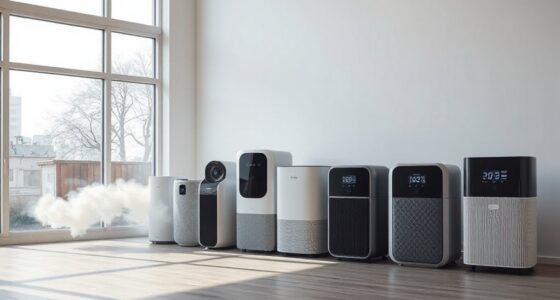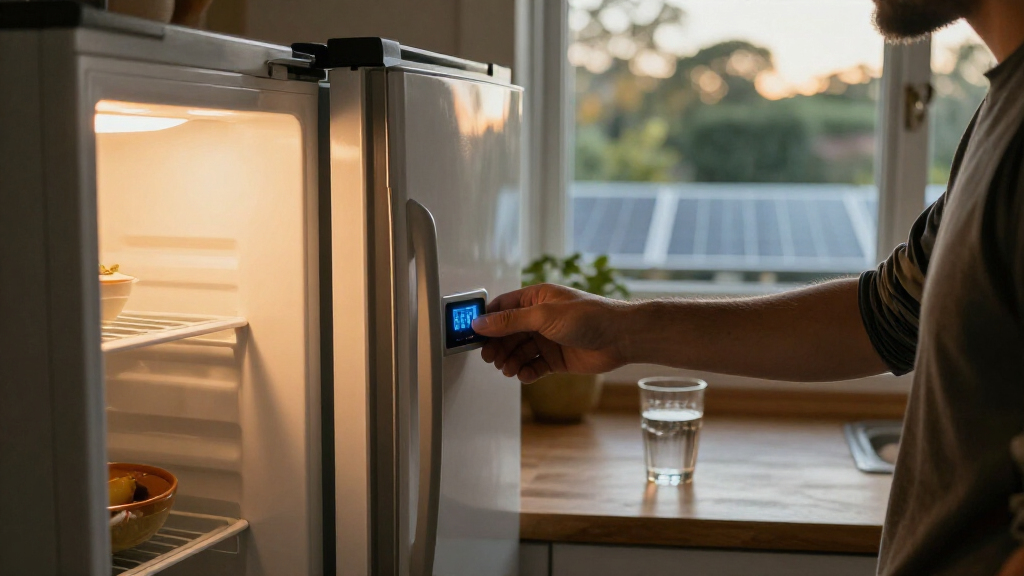

A solar-powered refrigerator backup needs enough battery capacity to cover your outage and enough solar input to replenish what the fridge uses. My best overall pick is the BLUETTI FridgePower 2016Wh, a refrigerator-focused system with an expandable LFP battery; the SolarPlay 2500W stands out for its larger 2304Wh capacity and included 200W panel, while the BougeRV 266Wh suits a 12V fridge when compact, direct-use backup matters more than whole-home flexibility. The main tradeoff is between runtime, solar recharging, portability, and cost: a bigger battery can carry a fridge longer, but a small panel may not refill it quickly. Keep reading for the full breakdown and help matching a power station to your refrigerator and outage plans.

Get backup power and energy gear delivered free with Prime
- Fast, free delivery on millions of items
- Prime Video, Amazon Music and more included
- Member-only deals all year
Complete the kit


Key Takeaways
- BLUETTI FridgePower 2016Wh earns the overall lead for its refrigerator-specific focus and expandable LFP battery, a useful combination for buyers planning beyond a brief outage.
- SolarPlay 2500W pairs the roundup’s largest listed capacity with a 200W panel, but its solar bundle still needs to be judged against daily fridge consumption and available sunlight.
- Anker SOLIX C2000 Gen 2 combines 2048Wh with a 400W bifacial panel, making it a stronger fit for buyers prioritizing solar replenishment over a smaller, lighter setup.
- Compact options divide into two different jobs: BougeRV 266Wh targets 12V refrigerators, while Jackery Explorer 300 is a small general-purpose backup with limited energy for longer fridge outages.
- Battery capacity alone does not predict refrigerator runtime: compressor startup draw, cycling, ambient temperature, panel output, and inverter losses all affect how long a system can keep food cold.
| CTOLITY AP1000 1800W Portable Power Station with 100W Solar Panel |  | Best for Fast UPS Backup | Battery capacity: 1,024Wh | Battery chemistry: LiFePO4 | AC output: 1,800W pure sine wave | VIEW LATEST PRICE | See Our Full Breakdown |
| BLAVOR 1600W Solar Generator with 1024Wh Capacity and Built-In 40W Solar Panel |  | Best for Built-In Solar Convenience | Battery capacity: 1,024Wh | Battery chemistry: LiFePO4 | Peak output: 3,200W | VIEW LATEST PRICE | See Our Full Breakdown |
| SolarPlay 2500W Portable Power Station, 2304Wh with 200W Solar Panel |  | Best for Longer Refrigerator Runtime | Battery capacity: 2,304Wh | Battery chemistry: LiFePO4 | Running output: 2,500W | VIEW LATEST PRICE | See Our Full Breakdown |
| EF ECOFLOW DELTA 2 Max Portable Power Station, 2048Wh LiFePO4 Battery |  | Best Expandable Backup | Battery capacity: 2,048Wh | Battery chemistry: LiFePO4 | AC output: 2,400W | VIEW LATEST PRICE | See Our Full Breakdown |
| Anker SOLIX C1000 Gen 2 Portable Power Station with 200W Solar Panel |  | Best Included Solar Kit | Battery capacity: 1,024Wh | Battery chemistry: LiFePO4 | AC output: 2,000W | VIEW LATEST PRICE | See Our Full Breakdown |
| Jackery Solar Generator 1000 v2 with 200W Solar Panel, 1024Wh LiFePO4 Battery |  | Best Portable Mid-Capacity Backup | Battery capacity: 1,024Wh | Battery chemistry: LiFePO4 (LFP) | AC output: 1,500W | VIEW LATEST PRICE | See Our Full Breakdown |
| BougeRV 266Wh Portable Power Station for 12V Refrigerators |  | Best for 12V Fridge Owners | Capacity: 266Wh | Refrigerator compatibility: Most 12V car refrigerators | Maximum solar input: 100W | VIEW LATEST PRICE | See Our Full Breakdown |
| Anker SOLIX C2000 Gen 2 Portable Power Station with 400W Bifacial Solar Panel, 2048Wh |  | Best Solar-Ready High-Capacity Kit | Battery capacity: 2,048Wh | Battery chemistry: LiFePO4 | Peak output: 4,000W | VIEW LATEST PRICE | See Our Full Breakdown |
| BLUETTI FridgePower 2016Wh Portable Power Station with Expandable LFP Battery |  | Best for Installed Refrigerator Backup | Battery capacity: 2,016Wh | Expandable capacity: 4,032Wh | Battery chemistry: LFP | VIEW LATEST PRICE | See Our Full Breakdown |
| Jackery Explorer 300 Portable Power Station, 292Wh |  | Best Compact Solar-Expandable Option | Battery capacity: 292Wh | Battery chemistry: LiFePO4 | Peak surge: 600W | VIEW LATEST PRICE | See Our Full Breakdown |
| solar powered refrigerator backup | Battery capacity | Battery chemistry | Weight | Included solar panel |
|---|---|---|---|---|
| CTOLITY AP1000 1800W Portable | 1,024Wh | LiFePO4 | Under 30 lb | 100W |
| BLAVOR 1600W Solar Generator w | 1,024Wh | LiFePO4 | 26 lb | — |
| SolarPlay 2500W Portable Power | 2,304Wh | LiFePO4 | — | 200W |
| EF ECOFLOW DELTA 2 Max Portabl | 2,048Wh | LiFePO4 | — | — |
| Anker SOLIX C1000 Gen 2 Portab | 1,024Wh | LiFePO4 | 24.9 lb | 200W bifacial |
| Jackery Solar Generator 1000 v | 1,024Wh | LiFePO4 (LFP) | 23.4 lb | 200W |
| BougeRV 266Wh Portable Power S | — | — | 3.8 lb | — |
| Anker SOLIX C2000 Gen 2 Portab | 2,048Wh | LiFePO4 | — | 400W bifacial, IP68-rated |
| BLUETTI FridgePower 2016Wh Por | 2,016Wh | LFP | 44 lb | — |
| Jackery Explorer 300 Portable | 292Wh | LiFePO4 | 7.5 lb | — |
More Details on Our Top Picks
CTOLITY AP1000 1800W Portable Power Station with 100W Solar Panel
The AP1000 makes the most sense when keeping a refrigerator powered through a brief outage matters as much as recharging later. Its under-20ms UPS switching is designed to shift connected equipment to battery quickly, while 1,024Wh and 1,800W output provide a capable starting point for a compatible fridge. Compared with the Anker SOLIX C1000 Gen 2, it offers a lower stated AC output and slower UPS switching, but includes a 100W solar panel and supports AC, solar, and car charging. The tradeoff is that 100W is a modest solar input for replenishing a large battery, so recovery can take time when sunlight is limited. Its 11 ports and under-30-pound weight add flexibility, though its listed dimensions make it less compact than the Anker.
Pros:- 1,024Wh LiFePO4 battery with a stated life of more than 4,000 cycles
- 1,800W pure sine wave output and 3,600W peak output
- Under-20ms UPS switching for connected backup loads
- Includes a 100W solar panel and supports AC, solar, and car charging
Cons:- The included 100W panel provides limited solar input for refilling the battery quickly
- Its listed 19.29 x 9.84 x 22.44-inch dimensions may be awkward to store
- The solar panel ships separately
Best for: Households seeking a mid-capacity refrigerator backup with UPS switching and an included starter solar panel.
Not ideal for: Buyers who need long refrigerator runtimes or rapid solar replenishment without adding a higher-output panel.
- Battery capacity:1,024Wh
- Battery chemistry:LiFePO4
- AC output:1,800W pure sine wave
- Peak output:3,600W
- UPS switching:Under 20ms
- Included solar panel:100W
- Charging methods:AC, solar, and car
- Weight:Under 30 lb
Our verdict“Choose the AP1000 for UPS-style refrigerator backup with a starter solar panel, but look to a higher-capacity or higher-input option for longer outages.”
BLAVOR 1600W Solar Generator with 1024Wh Capacity and Built-In 40W Solar Panel
BLAVOR is the pick for buyers who want solar capability built into the power station rather than relying on a separate panel for basic charging. Its 40W built-in panel can provide a small trickle of solar input, but it is not a substitute for a larger array when a refrigerator is drawing power through an extended outage. The unit accepts up to 200W from a compatible external panel, still below the Anker SOLIX C1000 Gen 2’s 600W solar-input ceiling. BLAVOR counters with a 1,024Wh LiFePO4 battery, 1,600W rated output, and a bidirectional 100W USB-C port. Compared with the CTOLITY AP1000, it is lighter at 26 pounds, but has fewer output ports and less stated AC output. The built-in panel favors convenience over recharge speed.
Pros:- Built-in 40W solar panel provides solar charging without setting up a separate panel
- 1,024Wh LiFePO4 battery rated for more than 3,500 charge cycles
- 100W bidirectional USB-C port supports compatible charging and devices
- Accepts wall, car, built-in solar, and compatible external solar charging
Cons:- The built-in panel is only 40W, limiting its usefulness for replenishing refrigerator backup capacity
- Maximum 200W solar input is lower than the Anker SOLIX C1000 Gen 2
- Eight output ports and 1,600W rated output offer less headroom than the CTOLITY AP1000
Best for: Apartment dwellers and occasional campers who want a compact backup with onboard solar for supplemental charging.
Not ideal for: Households expecting meaningful solar recovery during a long outage or needing more than 200W of solar input.
- Battery capacity:1,024Wh
- Battery chemistry:LiFePO4
- Peak output:3,200W
- Built-in solar panel:40W
- Maximum solar input:200W with compatible external panel
- Output ports:8
- Weight:26 lb
Our verdict“Pick BLAVOR for convenient onboard solar and everyday portability, not for fast solar recovery or extended refrigerator backup.”
SolarPlay 2500W Portable Power Station, 2304Wh with 200W Solar Panel
For refrigerator backup, the SolarPlay’s main advantage is straightforward: its 2,304Wh capacity is more than twice that of the 1,024Wh CTOLITY AP1000 and BLAVOR, giving a fridge more stored energy to draw on before recharging. Its 2,500W running output also gives it more appliance headroom than those smaller stations. A 200W solar panel is listed as included, though the supplied information does not give a maximum solar-input figure, making recharge planning less clear than with the Anker SOLIX C1000 Gen 2. The SolarPlay also has 14 ports and adjustable AC input power. I would be cautious about relying on its UPS specification for sensitive equipment: listed switching times conflict, as do surge ratings. That uncertainty matters more for automatic backup than for manual use.
Pros:- 2,304Wh capacity provides substantially more stored energy than the 1,024Wh stations in this group
- 2,500W running output supports a broader range of compatible appliances
- Includes a 200W solar panel and supports AC, solar, and car charging
- 14 ports and adjustable AC input power settings offer connection and charging flexibility
Cons:- UPS switching time is inconsistent in the supplied product information
- Surge ratings conflict between listed figures, making startup-load planning less certain
- Maximum solar input is not specified in the provided data
Best for: Households prioritizing a larger battery for a compatible refrigerator and other loads during outages.
Not ideal for: Buyers who need clearly specified UPS switching, verified surge figures, or a predictable solar recharge plan.
- Battery capacity:2,304Wh
- Battery chemistry:LiFePO4
- Running output:2,500W
- Starting wattage:4,800W listed in specifications
- Included solar panel:200W
- Ports:14
- AC input settings:300W, 500W, 700W, 900W, and 1,100W
- Dimensions:15.39 x 11.22 x 12.56 in
Our verdict“Choose the SolarPlay for its larger battery and higher running output, provided you can accept unclear UPS and surge specifications.”
EF ECOFLOW DELTA 2 Max Portable Power Station, 2048Wh LiFePO4 Battery
The DELTA 2 Max is the strongest fit here for a household that may want to add storage rather than replace its power station as backup needs grow. Its 2,048Wh battery starts well above the 1,024Wh CTOLITY and Anker C1000, and expansion up to 6kWh can support a larger reserve for a refrigerator and other loads. Solar input reaches up to 1,000W, far beyond the included-panel systems in this group, though panels and expansion batteries are additional purchases. It can reach 80% in 43 minutes using combined AC and solar input; that speed depends on having both sources available. Compared with the SolarPlay, EcoFlow offers clearer expansion and solar-input figures, but the listed outlet count conflicts between the description and specifications, so I would verify the configuration before planning connections.
Pros:- 2,048Wh LiFePO4 battery offers twice the capacity of the 1,024Wh options
- Expandable to 6kWh with additional batteries
- Solar input supports up to 1,000W
- Combined AC and solar charging is listed to reach 80% in 43 minutes
Cons:- Solar panels and expansion batteries are not included in the listed package
- The stated outlet count conflicts with the number in the specifications
- Battery life is listed at 3,000 cycles to 80% capacity, lower than the stated cycle figures for some alternatives
Best for: Homeowners who want a substantial refrigerator backup now and the option to add battery capacity and solar input later.
Not ideal for: Buyers who need a complete solar kit in the box or want to avoid the added cost and space of expansion batteries.
- Battery capacity:2,048Wh
- Battery chemistry:LiFePO4
- AC output:2,400W
- Maximum output with X-Boost:3,400W
- Expandable capacity:Up to 6kWh
- Maximum solar input:1,000W
- AC and solar charging:80% in 43 minutes with combined input
- Noise level:As low as 30 dB
Our verdict“Choose the DELTA 2 Max if you want a larger, expandable home backup system and are prepared to source panels and extra batteries separately.”
Anker SOLIX C1000 Gen 2 Portable Power Station with 200W Solar Panel
The Anker SOLIX C1000 Gen 2 is a practical choice when the goal is to pair a portable battery with usable solar hardware from the start. Its 200W bifacial panel is a stronger included starting point than BLAVOR’s built-in 40W panel or the CTOLITY AP1000’s 100W panel, and the station can accept up to 600W of solar input with compatible panels. A 1,024Wh battery and 2,000W output suit a compatible refrigerator, while the under-10ms UPS switchover is the fastest stated here. The tradeoff is capacity: the SolarPlay and EcoFlow begin above 2,000Wh, which gives them more stored energy for longer outages. The Anker’s quick solar-recharge claim also depends on using up to 600W of input, not just the included panel.
Pros:- Includes a portable 200W bifacial solar panel
- Supports up to 600W solar input with compatible panels
- Under-10ms UPS switchover is the quickest stated in this group
- 2,000W output, 3,000W peak output, and app-based monitoring and scheduling
Cons:- 1,024Wh capacity is much lower than the SolarPlay and EcoFlow options
- The stated 1.8-hour solar recharge requires up to 600W of solar input
- The power station and solar panel ship separately
Best for: Buyers who want a relatively light 1,024Wh refrigerator backup with a useful included panel and fast UPS switching.
Not ideal for: Households planning multi-day outages without access to extra panels or those needing more than 1,024Wh of stored energy.
- Battery capacity:1,024Wh
- Battery chemistry:LiFePO4
- AC output:2,000W
- Peak output:3,000W
- Included solar panel:200W bifacial
- Maximum solar input:600W
- UPS switchover:Under 10ms
- Weight:24.9 lb
Our verdict“Pick the Anker SOLIX C1000 Gen 2 for a portable, solar-ready refrigerator backup with fast UPS switching, but choose a larger station for longer runtimes.”
Jackery Solar Generator 1000 v2 with 200W Solar Panel, 1024Wh LiFePO4 Battery
The Jackery Solar Generator 1000 v2 balances a useful 1,024Wh reserve with a 23.4-pound power station, making it easier to move than the larger Anker SOLIX C2000 Gen 2 or BLUETTI FridgePower. Its 1,500W AC output and 3,000W surge capacity offer more headroom for a refrigerator’s startup demand than small 300W-class stations, while the included 200W panel gives buyers a solar-recharging route without sourcing a panel separately. A 10ms UPS switchover also suits equipment that should stay powered through a brief interruption. The tradeoff is capacity: a full-size refrigerator can drain 1,024Wh quickly, so this is better as portable, shorter-duration backup than an extended household outage solution. Emergency charging to full takes 50 minutes only when enabled in the app, and the power station and panel ship separately.
Pros:- 1,500W AC output with 3,000W surge capacity
- Includes a 200W solar panel for recharging
- 10ms UPS switchover supports brief-interruption backup
- LiFePO4 battery rated for over 4,000 charge cycles
Cons:- 1,024Wh capacity may be limiting for extended refrigerator outages
- Emergency 50-minute charging must be enabled in the app
- Power station and solar panel ship separately
Best for: Households seeking a portable solar-ready station for short refrigerator outages, with enough output headroom for startup surges.
Not ideal for: Buyers who need multi-day refrigerator backup without frequent recharging; the 1,024Wh capacity is well below the expandable 4,032Wh BLUETTI FridgePower setup.
- Battery capacity:1,024Wh
- Battery chemistry:LiFePO4 (LFP)
- AC output:1,500W
- Surge capacity:3,000W
- Included solar panel:200W
- UPS switchover:10ms
- Weight:23.4 lb
- Battery lifespan:Over 4,000 charge cycles; over 70% capacity retained
Our verdict“Choose the Jackery 1000 v2 if you want a portable, panel-included setup for shorter outages rather than the longer reserve of a larger expandable station.”
BougeRV 266Wh Portable Power Station for 12V Refrigerators
The BougeRV 266Wh is a specialized choice for a compatible 12V refrigerator, not a substitute for a high-output home backup station. Its compact 3.8-pound body can fit inside compatible BougeRV CRPRO refrigerator storage compartments, and its DC output avoids relying on an AC inverter when powering a supported cooler. BougeRV states up to 17 hours in ECO mode, but actual runtime depends on fridge settings and conditions, so I would treat that as a best-case estimate rather than a promise. Compared with the Jackery Explorer 300, this model is more explicitly geared to 12V fridge use and offers up to 100W solar input, but its 266Wh capacity is still modest. It suits mobile cooling and brief interruptions; buyers seeking to back up a household refrigerator should look at the larger Jackery 1000 v2 or BLUETTI FridgePower instead.
Pros:- Designed to power most compatible 12V car refrigerators
- Compact 3.8-pound form fits compatible CRPRO refrigerator compartments
- Accepts solar, AC, DC, XT60, and USB-C charging
- Digital display shows battery and charging status
Cons:- 266Wh capacity limits backup duration and appliance scope
- 100W USB-C charging needs a compatible cable and charger, neither included
- Solar recharge time and refrigerator runtime vary with conditions and settings
Best for: Owners of compatible 12V car refrigerators who want a compact battery for camping, vehicle use, or short periods without power.
Not ideal for: Households backing up a standard AC refrigerator, or buyers needing a long reserve; 266Wh is far smaller than the Jackery 1000 v2 and BLUETTI FridgePower.
- Capacity:266Wh
- Refrigerator compatibility:Most 12V car refrigerators
- Maximum solar input:100W
- Recharge inputs:XT60, USB-C, AC, DC, and solar
- Stated refrigerator runtime:Up to 17 hours in ECO mode, depending on conditions
- Pass-through charging:Supported
- Dimensions:7.2 × 2.9 × 3.3 in
- Weight:3.8 lb
Our verdict“Pick the BougeRV for a compatible 12V portable fridge, not as a general-purpose backup for a full-size household refrigerator.”
Anker SOLIX C2000 Gen 2 Portable Power Station with 400W Bifacial Solar Panel, 2048Wh
For buyers who want a substantial battery and a capable solar panel in one package, the Anker SOLIX C2000 Gen 2 is the strongest fit here. Its 2,048Wh LiFePO4 battery starts at twice the capacity of the Jackery 1000 v2, and expansion to 4kWh gives it a longer-outage path that the smaller BougeRV and Jackery Explorer 300 cannot match. The included 400W bifacial panel can collect light from both sides and is rated IP68, helping the solar setup suit outdoor use. Anker also lists a 58-minute full recharge using AC and solar, though real solar replenishment depends on conditions. This kit carries a portability penalty: the panel alone weighs 21.9 pounds, and the power station is larger than compact options. Choose it for capacity and solar input, not for the lightest carry or a slim permanent spot beside a refrigerator.
Pros:- 2,048Wh LiFePO4 capacity expandable to 4kWh
- Includes a 400W bifacial, IP68-rated solar panel
- 2,400W rated output and 4,000W peak output
- Supports six recharging methods
Cons:- Included solar panel weighs 21.9 lb
- The larger kit is less convenient to carry than compact stations
- Power station and solar panel are dispatched separately
Best for: Households or campers seeking a high-capacity solar kit with room to expand for longer refrigerator backup.
Not ideal for: Buyers prioritizing easy solo transport or a small footprint; the 21.9-pound panel and larger power station are less portable than the Jackery 1000 v2.
- Battery capacity:2,048Wh
- Battery chemistry:LiFePO4
- Peak output:4,000W
- Expandable capacity:Up to 4kWh
- Included solar panel:400W bifacial, IP68-rated
- Panel weight:21.9 lb
- AC and solar recharge time:100% in 58 minutes; 80% in 45 minutes
Our verdict“Choose the Anker C2000 Gen 2 when a larger solar-fed reserve and capacity expansion matter more than portability.”
BLUETTI FridgePower 2016Wh Portable Power Station with Expandable LFP Battery
The BLUETTI FridgePower is the most refrigerator-focused option in this group: its slim, 75mm profile can sit beside a fridge or mount on a wall, rather than taking the form of a camping-oriented power station like the Anker SOLIX C2000 Gen 2. A 10ms UPS switchover helps keep a connected appliance powered through a brief outage, while the stated 4W idle draw limits energy spent while the unit waits on standby. Its 2,016Wh LFP battery can expand to 4,032Wh, giving it a clear advantage over the Jackery 1000 v2 for buyers planning a longer reserve. There are practical tradeoffs: at 44 pounds it is not an easy grab-and-go unit, and the expansion capacity requires an additional battery pack. The provided runtime figure is four hours, so buyers should check their refrigerator’s consumption before treating it as an outage-duration estimate.
Pros:- Slim profile supports freestanding or wall-mounted placement
- 10ms UPS switchover supports continuous appliance backup
- Low 4W idle draw reduces standby energy use
- 2,016Wh battery can expand to 4,032Wh
Cons:- 44-pound weight makes moving it difficult
- Expansion pack is required to reach 4,032Wh
- No solar panel or solar input details are provided in the supplied specifications
Best for: Homeowners who want a dedicated, space-conscious backup installed near a refrigerator, with the option to add battery capacity.
Not ideal for: People who need a lightweight portable station or expect 4,032Wh without buying an expansion pack; it weighs 44 pounds and expansion is separate.
- Battery capacity:2,016Wh
- Expandable capacity:4,032Wh
- Battery chemistry:LFP
- Surge output:3,600W
- Idle power draw:4W
- UPS switchover:10ms
- Installation:Freestanding or wall-mounted
- Weight:44 lb
Our verdict“Choose FridgePower for a refrigerator-centered, semi-permanent backup setup, and choose a portable station if you need to move power between locations.”
Jackery Explorer 300 Portable Power Station, 292Wh
The Jackery Explorer 300 is the lightest choice here at 7.5 pounds, but its 292Wh capacity and 300W rated output place it firmly in the small-device and brief-backup category. It can support a low-draw 12V fridge or help keep essential electronics running, but I would not choose it as the sole supply for a typical household refrigerator. Compared with the BougeRV 266Wh, it offers two AC outlets and a 100W USB-C PD port, making it more versatile for mixed device charging; BougeRV, by contrast, is more explicitly tailored to 12V refrigerator use. The Explorer 300 accepts compatible solar panels, but none is included, so solar readiness requires a separate purchase. Its long-life LiFePO4 battery is a plus for repeated use, though the modest output and reserve remain the limiting factors for refrigerator backup.
Pros:- Lightweight 7.5-pound design with carry handle
- Two AC outlets plus USB-C PD, USB-A, and car-port connections
- LiFePO4 battery rated for over 4,000 cycles before reaching 70% capacity
- Can recharge with compatible solar panels
Cons:- 292Wh capacity is limited for refrigerator backup
- 300W rated output may not suit higher-wattage appliances
- Solar panel is sold separately
Best for: Campers and vehicle owners who need a lightweight station for a compatible low-draw 12V fridge and small electronics.
Not ideal for: Households relying on a standard refrigerator through an extended outage; 292Wh and 300W output are much more limited than the Jackery 1000 v2 or BLUETTI FridgePower.
- Battery capacity:292Wh
- Battery chemistry:LiFePO4
- Peak surge:600W
- Ports:6
- USB-C port:100W PD, input/output
- Solar charging:About 80% in 2.8 hours with a 100W panel; 7.5 hours with a 40W panel
- Weight:7.5 lb
Our verdict“Pick the Explorer 300 for portable, low-draw backup and device charging, not as a long-running power source for a household refrigerator.”
How We Picked
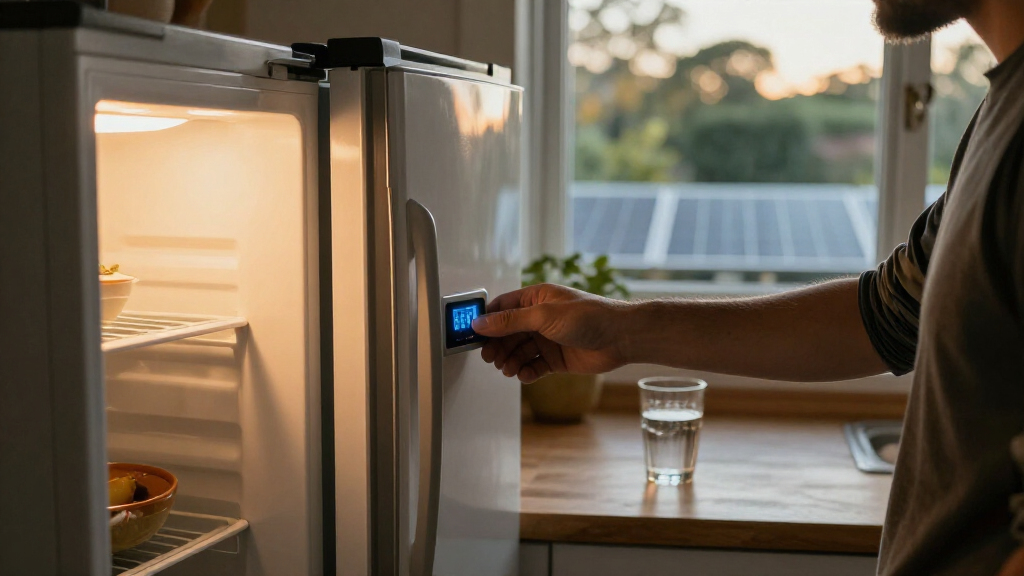
I ranked these options around the job implied by the title: keeping a refrigerator powered during an outage with the possibility of solar recharging. I weighed listed battery capacity, output capability, included panel size, battery chemistry where specified, expandability, refrigerator-specific design, and how practical each system seems for its intended use. For a fridge, a larger capacity can stretch runtime, while an adequate solar panel can help replace energy during a long outage; neither spec works alone.
The ranking favors useful balance over a single headline number. The BLUETTI FridgePower leads for its fridge-focused design and expansion path, while the SolarPlay and Anker C2000 offer larger-capacity or higher-panel-power alternatives. Mid-sized general power stations rank below those choices when their bundle or listed capacity is less suited to extended fridge backup, and compact units are reserved for buyers with a 12V fridge or short, limited-power needs. I do not treat any stated capacity as a guaranteed runtime, since refrigerator draw and operating conditions vary.
| solar powered refrigerator backup | Battery chemistry |
|---|---|
| CTOLITY AP1000 1800W Portable | LiFePO4 |
| BLAVOR 1600W Solar Generator w | LiFePO4 |
| SolarPlay 2500W Portable Power | LiFePO4 |
| EF ECOFLOW DELTA 2 Max Portabl | LiFePO4 |
| Anker SOLIX C1000 Gen 2 Portab | LiFePO4 |
| Jackery Solar Generator 1000 v | LiFePO4 (LFP) |
| BougeRV 266Wh Portable Power S | — |
| Anker SOLIX C2000 Gen 2 Portab | LiFePO4 |
| BLUETTI FridgePower 2016Wh Por | LFP |
| Jackery Explorer 300 Portable | LiFePO4 |
Factors to Consider When Choosing Solar Powered Refrigerator Backup
Before choosing a model, I would start with the refrigerator and outage scenario rather than the panel bundle. The right backup depends on the fridge’s actual energy use, whether you need to power other essentials, and whether you can place solar panels in sun for much of the day.
Estimate Refrigerator Energy Use, Not Just Running Watts
A refrigerator switches its compressor on and off, so its average consumption is usually more useful than its running-watt figure. Check the appliance label or manual, and, if possible, measure its energy use over a full day with a plug-in energy meter. A power station’s capacity in watt-hours gives a starting point, but the usable energy will be lower after inverter and conversion losses. Compressor startup can also demand a brief surge that differs from steady operation, so confirm the station’s output and surge capability against the fridge’s specifications. Cold weather, frequent door opening, warm surroundings, and a nearly empty freezer can all change demand. Avoid treating a capacity number as a promise of a set number of hours.
Plan for the Outage You Actually Need to Cover
For a short outage, a compact station may bridge the gap, but it leaves little margin if power stays out overnight or longer. For multi-day outages, think in daily energy budgets: estimate what the fridge consumes, then decide how many hours or days the battery must cover without useful sun. Add other loads separately, since a router, lights, medical device, or freezer can consume energy that would otherwise go to refrigeration. A common mistake is sizing for the refrigerator alone and then plugging in several extras without revising the runtime estimate. If food safety is the priority, leave capacity in reserve rather than planning to run the battery to empty. A larger system is most valuable when the outage could last longer than one charging cycle.
Match Solar Panel Output to Battery Use
An included panel is helpful, but its rated wattage is not the energy it will deliver throughout a day. Sun angle, shade, clouds, panel temperature, placement, and the power station’s solar input limits all affect charging. A 400W panel bundle, such as the Anker C2000 package, offers more rated panel power than the 200W SolarPlay bundle, but actual charging still depends on conditions and compatibility. Check the station’s maximum solar input, supported voltage range, connectors, and whether extra panels can be added safely. Buyers often focus on battery size and overlook that a small panel may take too long to replace a fridge’s daily use. If panels will stay outside during an outage, plan for secure placement and a clear, sunny area.
Choose Between AC Power and a 12V Refrigerator Connection
Most household refrigerators need an AC outlet, which means the power station’s inverter will be part of the setup. Some portable 12V fridges can connect directly to DC outputs, potentially avoiding inverter losses and simplifying a vehicle or camping arrangement. That does not make a compact DC station a substitute for household fridge backup: confirm voltage, connector type, and the refrigerator’s current requirements first. Also check whether the backup unit can power other appliances at the same time without exceeding its output limit. A direct-DC setup can be efficient for one compatible fridge, while AC output is more flexible across household appliances. Pick the connection type around the refrigerator you own, not the one that sounds more efficient on paper.
Weigh Portability Against Capacity and Expandability
Higher-capacity power stations generally take up more space and can be harder to move, so consider where the unit will sit during an outage and how far it must travel. A compact option like the Jackery Explorer 300 is easier to store and carry but has much less energy than the 2016Wh to 2304Wh systems in this roundup. Expandable batteries can help buyers add capacity later, though expansion only makes sense if the system supports the specific battery and the added modules suit the planned location. LFP chemistry, listed for several models here, is a relevant ownership detail, but it does not answer questions about warranty, service, or charging rules by itself. Pay more for size or expansion only when the extra energy solves a real runtime need. If the unit must be moved often, a large battery that stays in storage may be less useful than a smaller one you can deploy easily.
Check Setup, Safety, and Household Fit Before Buying
A backup station is not a substitute for a permanent electrical installation, and it should not be connected to household wiring through an improvised method. For a refrigerator, place the station where its vents remain clear and follow the manufacturer’s charging, storage, and temperature instructions. Measure the available space, including room for cables and airflow, before choosing a larger unit. Check the outlet type, cable reach, and whether the refrigerator can be moved near the station without blocking ventilation. If solar panels will be used, account for cable length and a safe route from the panel location to the unit. These practical checks can prevent a capable system from being awkward or unsafe to use when an outage begins.
Frequently Asked Questions
How can I estimate how long a power station will run my refrigerator?
Start with the fridge’s measured daily energy use in watt-hours, then compare it with the station’s capacity while allowing for conversion losses. A simple estimate divides usable station energy by the refrigerator’s average hourly use, but it remains an estimate rather than a guarantee. Compressor cycling, room temperature, door openings, and other devices sharing the station can change the result. Startup demand also needs to fit the power station’s output capability. If you need dependable overnight or multi-day coverage, plan for a margin instead of sizing to the exact calculated figure.
Is a 1024Wh power station enough for a household refrigerator during an outage?
It may cover a short outage for some efficient refrigerators, but the capacity alone cannot confirm that it will last through a particular night or day. Actual consumption depends on the appliance, its condition, ambient temperature, and how often it is opened. The 1024Wh BLAVOR and Jackery Solar Generator 1000 v2 sit below the 2016Wh to 2304Wh options in this roundup, so they offer less stored energy before recharging. Check the fridge’s daily energy use and leave room for inverter losses and any extra loads. If the outage could extend beyond a brief period, consider a larger battery or a reliable solar charging plan.
Will an included solar panel keep my refrigerator running continuously?
Not by itself in every situation. A panel produces different amounts of energy through the day and may generate little during clouds, shade, poor panel angle, or nighttime. For continuous use, compare expected daily solar production with the refrigerator’s daily consumption and account for charging losses and periods without sun. Also verify that the power station accepts the panel’s voltage and wattage. A larger panel can replenish the battery faster in good conditions, but it cannot guarantee uninterrupted power through extended poor weather.
Should I choose a compact 12V backup or a larger AC power station?
A compact 12V option makes the most sense when you own a compatible portable refrigerator and want a focused, easy-to-carry setup. The BougeRV 266Wh is designed around 12V refrigerator use, but its small capacity is not equivalent to a household-scale backup system. A larger AC station gives you more stored energy and can serve a household refrigerator and other compatible devices, though it may be heavier and less convenient to move. Confirm the fridge’s connector, voltage, and power needs before choosing direct DC. If you need backup for a standard kitchen refrigerator, prioritize AC output, surge capability, and enough capacity for the intended outage length.
When is an expandable refrigerator backup worth choosing over a fixed-capacity unit?
Expandability is useful when your current needs are modest but you expect longer outages, added appliances, or a future change in setup. The BLUETTI FridgePower’s expandable LFP battery gives it a different path from fixed-capacity choices such as the SolarPlay 2500W bundle. That flexibility has less value if you already know the exact capacity you need and will never add another battery. Check which expansion batteries are supported, how they connect, and whether additional capacity affects the system’s charging plan. Compare the complete expanded setup with buying a larger station at the outset, including its space and portability demands.
Conclusion
For most buyers seeking a dedicated refrigerator backup with room to grow, I recommend the BLUETTI FridgePower 2016Wh as the best overall pick. The SolarPlay 2500W is my best value-oriented choice for buyers who want a large listed capacity with a 200W panel included, while the Anker SOLIX C2000 Gen 2 is the best premium fit for those who prioritize its 400W bifacial solar bundle. Beginners who want a familiar, mid-capacity setup can start with the Jackery Solar Generator 1000 v2, provided its 1024Wh capacity matches their fridge and outage plan. For a compatible 12V refrigerator, choose the focused BougeRV 266Wh; for a small, light-duty backup, the Jackery Explorer 300 is easier to carry but is not the pick for extended household refrigeration. Before deciding, compare your fridge’s measured daily use with usable battery capacity and realistic solar conditions.