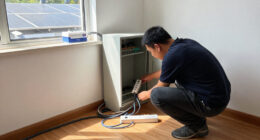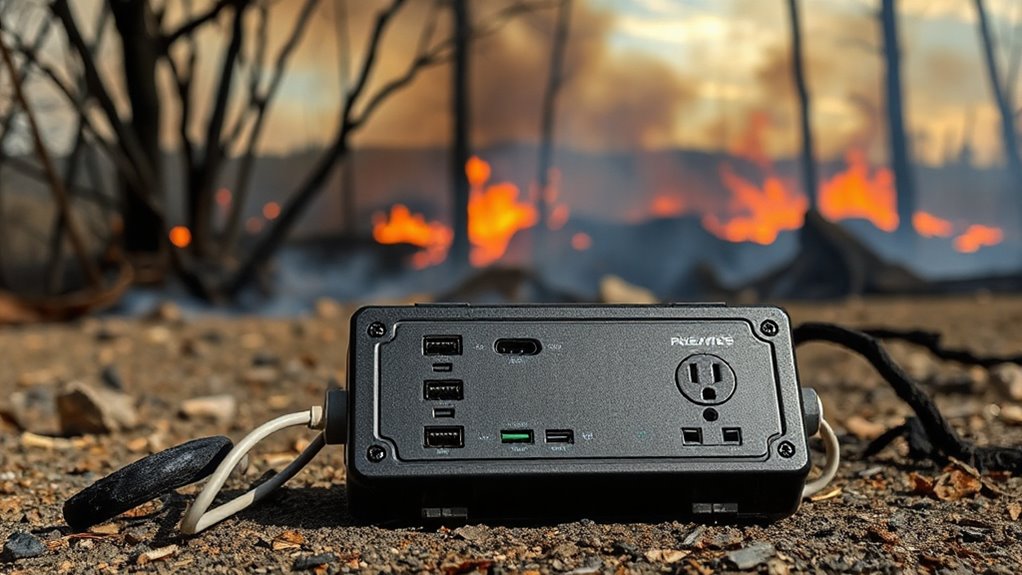

When wildfire power shutoffs occur, having a reliable portable power station becomes essential for maintaining critical devices and safety. The best overall pick is the Jackery HomePower 3000, thanks to its high capacity and robust surge power, ideal for longer outages. The BLUETTI Elite 300 stands out for its compact size and expandable capacity, making it suitable for both emergency backup and outdoor use. Meanwhile, the OUPES Mega 1 offers impressive surge capacity and versatility for camping and home backup alike. These options highlight key tradeoffs: larger capacity versus portability, and affordability versus advanced features. Continue reading for a detailed breakdown to find the best fit for your needs.

Get backup power and energy gear delivered free with Prime
- Fast, free delivery on millions of items
- Prime Video, Amazon Music and more included
- Member-only deals all year
Complete the kit


Key Takeaways
- High-capacity units like Jackery HomePower 3000 excel for prolonged outages, but come with higher price tags.
- Compact models such as BLUETTI Elite 300 are easier to store and transport but may lack extended run times.
- LiFePO4 battery technology provides safer, longer-lasting power, which is critical during extended wildfire shutoffs.
- Inverter wattage and surge capacity determine whether a power station can run sensitive or high-demand devices.
- Expandable and modular designs can adapt to changing power needs, but often add complexity and cost.


| portable power station for wildfire power shutoff | Capacity | Battery Type |
|---|---|---|
| 1000W Portable Power Station 1 | 1024Wh | LiFePO4 |
| BLUETTI Elite 300 Portable Pow | 3014.4Wh | LiFePO4 |
| OUPES Mega 1 Portable Power St | — | — |
| Anker SOLIX S2000 Portable Pow | — | LiFePO4 |
| LIBRIDS Portable Power Station | 640Wh | LiFePO4 |
| EnginStar Portable Power Stati | — | — |
| Jackery HomePower 3000 Portabl | 3072Wh | LiFePO4 |
| Jackery Portable Power Station | 292Wh | — |
| UDPOWER S2400 Portable Power S | 2083Wh | LiFePO4 |
| Portable Power Station 300W wi | 192Wh | — |
| OUPES Mega 1 Lite Portable Pow | 1024Wh | LiFePO4 |
| Anker SOLIX C1000 Gen 2 Portab | 1024Wh | LiFePO4 |
| BLUETTI Elite 30 V2 Portable P | 288Wh | LiFePO4 |
| AFERIY 3840Wh Portable Power S | 3840Wh | LiFePO4 |
| Jackery Explorer 1000 v2 Porta | 1070Wh | LiFePO4 |
More Details on Our Top Picks
1000W Portable Power Station 1024Wh LiFePO4 Solar Generator for Camping & Emergency
This power station stands out for its high-capacity 1024Wh LiFePO4 battery combined with a lightweight design that makes it suitable for both home emergencies and outdoor adventures. Unlike the larger BLUETTI Elite 300, it remains highly portable at just under 28 pounds, though it sacrifices some of the massive capacity and advanced features of that model. Its multiple fast-charging ports, including USB-C PD, and solar compatibility make it flexible for off-grid use. However, the 300W solar input limit could slow charging in overcast conditions, and the weight might be a concern for those seeking ultra-light portability. Overall, this unit balances power and portability well but is best for users who need a reliable emergency backup that can also handle outdoor trips without being overly bulky.
Pros:- High-capacity 1024Wh LiFePO4 battery with long cycle life
- Multiple fast-charging ports including USB-C PD and AC outlets
- Supports solar input for off-grid applications
- Lightweight and portable with a non-slip handle
Cons:- Relatively heavy at 27.73 lbs for some users
- Limited to 300W solar input, which may slow recharging in cloudy weather
Best for: Individuals needing a portable, reliable power source for both emergency outages and outdoor camping, who value a balance of capacity and weight.
Not ideal for: Users requiring the highest solar input or ultra-lightweight units for frequent backpacking, as it is relatively heavy and solar input is limited.
- Power Output:1000W
- Capacity:1024Wh
- Battery Type:LiFePO4
- AC Ports:2×110V
- USB-C PD:60W
- Solar Compatibility:Up to 300W
- Weight:27.73 lbs
- Colors:Gray, Blue, Yellow
Our verdict“This model offers a well-rounded blend of capacity, portability, and versatility ideal for emergency preparedness and outdoor use.”
BLUETTI Elite 300 Portable Power Station for RV & Home Backup 3014.4Wh, 2400W (4800W Surge), LiFePO4 Battery, Compact Solar Generator
The BLUETTI Elite 300 is designed for users seeking substantial power in a compact form, making it ideal for home backup or RV use. Its 3014Wh capacity surpasses most portable options like the Anker SOLIX S2000, and with a 2400W continuous output, it can run multiple appliances simultaneously. Its nearly 59% smaller size than traditional units enhances portability, yet it still offers rapid recharging from AC, solar, or car, and features a reliable UPS switch. The limited detail on solar input capacity could be a concern for those relying solely on solar power, and the need for app control adds a layer of complexity for some. Compared to the OUPES Mega 1, it is less expandable but more compact for stationary backup.
Pros:- Large 3014Wh capacity ideal for home or RV backup
- Fast recharge time—78 minutes from zero to full
- High continuous power of 2400W with 4800W surge
- Nearly 60% smaller than traditional large units for easier handling
Cons:- Limited information on solar input capacity for off-grid recharging
- Requires app control, which may be a learning curve for some users
Best for: Homeowners or RV travelers needing substantial, reliable backup power with quick recharging, especially when space is limited.
Not ideal for: Outdoor enthusiasts seeking ultra-lightweight, portable units for backpacking or frequent outdoor trips, as it is heavier and bulkier than smaller models.
- Capacity:3014.4Wh
- Continuous Power:2400W
- Surge Power:4800W
- Battery Type:LiFePO4
- Size:Nearly 59% smaller than traditional large units
- Recharging Time:78 minutes from 0 to 100%
Our verdict“This power station is best suited for those needing high capacity and fast recharge in a compact form for home or RV backup scenarios.”
OUPES Mega 1 Portable Power Station 2000W (Surge 4500W), 1024Wh LiFePO4 Battery Generator, Expandable to 5kWh, UPS, for Home Backup Power, Camping, Road Trips
The OUPES Mega 1 is built for users who need flexible, expandable power with professional reliability. Its 2000W continuous output and 1024Wh battery serve well for camping and backup needs, but its standout feature is the ability to expand capacity up to 5kWh, making it suitable for more demanding situations. Compared to the Anker SOLIX S2000, it offers faster recharge times and a more versatile expansion system, though it comes with a higher initial cost and increased bulk. Its pure sine wave output and smart management system provide safe power for sensitive electronics, but setup complexity and weight could deter casual users. It is ideal for those who want a long-term, scalable solution for critical power loads.
Pros:- Fast recharge times with AC and solar input
- Expandable capacity up to 5kWh for larger loads
- Pure sine wave output ensures safe powering of sensitive electronics
- Reliable UPS with quick transfer during outages
Cons:- High initial cost due to advanced features
- Heavy and bulky, less portable for casual outdoor use
- Complex setup for expansion modules
Best for: Professionals, emergency planners, or serious campers needing scalable power with fast recharge and reliable backup for sensitive electronics.
Not ideal for: Backpackers or users seeking ultra-lightweight portable units, given its bulk and complexity of expansion modules.
- Battery Capacity:1024Wh
- Surge Power:4500W
- Continuous Power:2000W
- Expandable Capacity:Up to 5120Wh
- Charge Time (AC):36 minutes to 80%
- Lifecycle:3500+ cycles
Our verdict“This model is best for users requiring scalable, professional-grade backup power that can grow with their needs over time.”
Anker SOLIX S2000 Portable Power Station, 2010Wh, 1500W, Home Backup, UPS
The Anker SOLIX S2000 emphasizes longevity, offering a remarkable 10,000 cycle lifespan, making it an attractive long-term investment for home backup. Its 2010Wh capacity can power essential appliances like refrigerators for extended periods, comparable in size to the LIBRIDS C600 but with greater durability. The unit’s lightweight design at approximately 35.7 pounds enhances portability, though it lacks a 12V DC port, limiting some device options. While it doesn’t match the massive capacity of the BLUETTI Elite 300, its durability and multiple recharging options, including solar, make it versatile. However, the price is not specified, which could be a barrier for some buyers. It is ideal for those prioritizing long-term durability and frequent recharging cycles over maximum capacity.
Pros:- Long-lasting 10,000-cycle battery with 15-year lifespan
- Multiple recharging options including solar and AC
- Lightweight for its capacity, easy to carry
- Reliable UPS with 15-year durability
Cons:- No 12V DC port for certain device connections
- Price not specified, making cost assessment unclear
Best for: Homeowners or outdoor enthusiasts seeking a long-lasting, durable backup power source with numerous recharge options.
Not ideal for: Users needing extremely high capacity or the most robust surge power for heavy-duty appliances, as it offers moderate power delivery and no 12V DC port.
- Battery Capacity:2010Wh
- Battery Type:LiFePO4
- Continuous Power:1500W
- Peak Power:3000W
- Cycle Life:10,000 cycles
- Recharge Options:AC, solar, generator, car outlet
Our verdict“This station suits users prioritizing durability and long-term performance for home or outdoor backup needs.”
LIBRIDS Portable Power Station C600, 640Wh LiFePO4 Battery, 600W Solar Generator with Fast Charge and UPS
The LIBRIDS C600 offers a compact solution with a 640Wh capacity and 600W output, suitable for quick backup during power outages and outdoor activities. Its rapid 1.5-hour charging time makes it a strong choice for emergency prep, especially compared to bulkier units like the BLUETTI Elite 300. The multiple outlets, including four AC ports and USBs, provide versatility for various devices, and the LiFePO4 battery promises over 4000 cycles for long-term use. However, its indoor-only design limits outdoor wet weather use, and the lack of detailed weight data makes portability assessment difficult. This pick makes the most sense for users who want fast readiness in a small, manageable package.
Pros:- Fast 1.5-hour charging ensures quick readiness
- Reliable UPS with 10ms switch-over
- Long-lasting LiFePO4 battery with 4000+ cycles
- Multiple outlets including 4 AC ports and USB
Cons:- Designed for indoor use only, limiting outdoor wet weather suitability
- Weight details are not specified, affecting portability assessment
Best for: Emergency preparedness for urban or indoor use where quick recharge and multiple device support are priorities.
Not ideal for: Outdoor adventurers or those requiring waterproof units, given its indoor-only design and unspecified weight.
- Capacity:640Wh
- Output Power:600W
- Peak Power:1200W
- Charging Time:1.5 hours
- Battery Type:LiFePO4
- Number of Outlets:8 (4 AC)
Our verdict“This unit is ideal for indoor emergency setups needing rapid recharge and multiple device support in a compact form.”
EnginStar Portable Power Station 300W 296Wh Battery Bank with 110V Pure Sine Wave AC Outlet for Outdoors, Camping, Emergency, and Backup Power
This option stands out for its portability, making it ideal for quick, lightweight backup during power shutoffs. Compared with larger units like the Jackery HomePower 3000, the EnginStar’s 296Wh capacity limits its ability to sustain multiple devices for extended periods, but it excels in ease of transport and setup. The pure sine wave outlet is a key feature for protecting sensitive electronics like CPAP machines or laptops, while its multiple charging methods—including solar—offer flexibility. However, the absence of a solar panel means relying on wall or car charging, which can be inconvenient during prolonged outages. Its 6.5-pound weight makes it highly portable, though the battery capacity might fall short for sustained power needs during longer outages.
Pros:- Extremely lightweight and compact for easy transport
- Multiple charging options including solar, wall, and car
- Pure sine wave outlet protects sensitive devices
Cons:- Solar panel not included, limiting solar recharging convenience
- Limited to 300W output, unsuitable for high-power appliances
- Battery capacity may not support extended outages
Best for: Campers, outdoor enthusiasts, and emergency prepper who need quick, portable power for short durations
Not ideal for: Users expecting to power high-wattage appliances or needing long-term backup, due to limited capacity
- Wattage:296 watt-hours
- Power Source:Battery
- Recommended Uses:Camping, Emergency, Outdoor, RV, Travel
- Voltage:110 volts
- Output Wattage:300 watts
- Weight:6.5 pounds
Our verdict“This power station is perfect for lightweight, short-term emergency or outdoor use where portability matters most.”
Jackery HomePower 3000 Portable Power Station, 3600W (Surge 7200W), 3072Wh LFP Battery Solar Generator, Home Backup, RV, Emergency Power
This model makes the most sense for those seeking substantial, reliable power during extended outages, especially compared to smaller units like the Jackery Explorer 300. Its 3072Wh capacity and 3600W continuous output can handle essential appliances such as refrigerators or small HVAC units, which smaller units cannot sustain. The LiFePO4 battery ensures a long cycle life, making it cost-effective over time, and fast recharging—under 2 hours—keeps downtime minimal. However, the higher initial cost and larger size mean it’s less portable, and detailed dimensions are not specified, which could be a concern for storage or transport. It’s best suited for users who prioritize capacity and longevity over portability.
Pros:- Massive 3072Wh capacity supports multiple devices for days
- Fast charging options including solar panels and AC
- Long cycle life with LiFePO4 batteries ensures durability
Cons:- Higher upfront cost and larger size reduce portability
- Limited detailed size and weight info may affect planning
- Requires compatible solar panels for full solar recharging
Best for: Homeowners and RV travelers needing dependable, long-term backup during extended power shutoffs
Not ideal for: Individuals who require lightweight, portable units for short outdoor trips or emergency brief outages
- Power Output:3600W (7200W surge)
- Capacity:3072Wh
- Battery Type:LiFePO4
- Charging Time:1.7 hours (hybrid AC/DC)
- Cycle Life:4,000 cycles
- Weight:Not specified
Our verdict“This generator is ideal for those who need durable, high-capacity power for prolonged outages or RV use, accepting reduced portability for reliability.”
Jackery Portable Power Station Explorer 300
This pick shines in portability and versatility, making it a solid choice for outdoor trips and short-term emergencies compared to bulkier options like the UDPOWER S2400. Its 292Wh capacity is sufficient for charging phones, small tablets, or cameras, but it won’t run larger appliances or sustain multiple devices for long. Its multiple ports, including USB-C and USB-A, enable convenient device charging, and the long cycle life of over 4,000 charges adds value. The main tradeoff is its limited capacity and the absence of a solar panel, which means you’ll need to plan for frequent recharging. It’s best suited for users who prioritize weight and ease of carry over extended power needs.
Pros:- Very lightweight at 7.5 pounds for easy carrying
- Multiple output ports including USB-C and car outlet
- Over 4,000 charge cycles ensure long-term durability
Cons:- Limited capacity of 292Wh restricts longer use
- No included solar panel, requiring additional purchase
- Not suitable for high-wattage appliances
Best for: Outdoor enthusiasts, casual campers, and emergency users who need lightweight power for brief outages or trips
Not ideal for: People relying on it as a primary backup for long outages or to power high-wattage appliances
- Weight:7.5 lbs
- Capacity:292Wh
- Output:300W (600W surge)
- Charge Cycles:Over 4,000
- Charging Time:80% in 2.8 hours
- Recommended Uses:Camping, travel, emergency
Our verdict“This station is perfect for portable, short-term power needs during outdoor activities or brief outages where weight and versatility matter most.”
UDPOWER S2400 Portable Power Station with Solar Panel Option, 2083Wh LiFePO4, 2400W (Surge 3000W) UPS, 6 AC Outlets, Emergency & Camping Generator
The UDPOWER S2400 distinguishes itself with an impressive 2083Wh capacity, making it well-suited for powering multiple devices during extended outages or outdoor adventures, unlike smaller units such as the Jackery Explorer 300. Its six AC outlets and various USB ports facilitate simultaneous device charging, while the fast recharge time of around 1.3 hours via AC or solar makes it highly practical for frequent use. The LiFePO4 battery ensures a long lifespan, and its automatic backup switching offers seamless power during outages. The main drawback is its weight—at 41 pounds—which reduces portability for some users, and it requires a compatible UDPOWER solar panel for solar recharging, adding to the overall cost.
Pros:- Large 2083Wh capacity supports multiple devices for extended periods
- Fast recharging via AC or solar input
- Multiple outlets enable powering several devices simultaneously
Cons:- Heavy weight at 41 lbs reduces portability
- Requires compatible solar panel for solar recharging
- Higher price point may be a barrier for budget-conscious buyers
Best for: Homeowners, outdoor enthusiasts, and emergency prepper who need reliable, high-capacity power with multiple outlets
Not ideal for: Users seeking a lightweight, portable solution for quick outdoor trips or infrequent use
- Capacity:2083Wh
- Rated Output:2400W
- Peak Power:3000W
- Battery Type:LiFePO4
- Charge Cycles:Over 4000
- Dimensions:15.8 x 9.5 x 10.1 inches
Our verdict“This power station is designed for those needing dependable, high-capacity backup power with multiple device support, accepting portability tradeoffs.”
Portable Power Station 300W with 192Wh LiFePO4 Battery and 10ms UPS for Camping and Emergency
This model excels in offering seamless UPS backup along with a lightweight design, making it suitable for quick emergency power during outages, especially compared to bulkier options like the UDPOWER S2400. Its 192Wh capacity limits its runtime, but the 10ms UPS feature ensures devices stay powered without interruption. The fast 1-hour recharge via AC makes it convenient for short-term use, and the multiple ports support a variety of devices. However, the capacity restricts its ability to handle high-wattage appliances or multiple devices for long periods. It’s best suited for users who want reliable, immediate backup for essential devices without the bulk of larger generators.
Pros:- Fast recharge time of 1 hour with AC adapter
- Built-in UPS ensures no power interruption
- Lightweight at 8.8 lbs for portability
Cons:- Limited capacity of 192Wh restricts runtime
- No solar panel included, requiring additional purchase
- Not suitable for high-wattage appliances
Best for: Emergency preparedness for brief outages and camping trips where quick, seamless power is needed
Not ideal for: Those needing to power large appliances or sustain multiple devices over long outages
- Wattage:300W
- Capacity:192Wh
- Surge Power:600W
- Charge Cycles:Over 4,000
- Charge Time:1 hour
- UPS:10ms
Our verdict“This unit is ideal for quick, reliable backup of essential devices during short outages, especially when portability and seamless power are priorities.”
OUPES Mega 1 Lite Portable Power Station 1024Wh, 2000W AC Outlets, LiFePO4 Battery, Solar Generator, Fast Charging, UPS, Outdoor Camping, RV Off-Grid
This model stands out for its robust 1024Wh capacity paired with a high 2000W continuous AC output, making it suitable for running most essential appliances during wildfire power shutoffs. Compared to the Jackery Explorer 1000 v2, it offers a faster recharge time of just 46 minutes from zero, which is vital during unpredictable outages. The LiFePO4 battery ensures over 3,500 cycles, translating into years of reliable backup, yet its relatively higher price and limited capacity could be a drawback for those needing prolonged power. Its lightweight design at 26.7 lbs combined with quiet operation enhances portability for outdoor and emergency scenarios. However, recharging still depends on external sources like solar or AC, which might be less convenient during extended outages. This pick makes the most sense for users requiring a balance of power, speed, and durability in both outdoor adventures and home backup settings.
Pros:- Fast recharge from 0 to 100% in 46 minutes, minimizing downtime
- High power output suitable for most appliances during outages
- Long-lasting LiFePO4 battery with over 3,500 cycles ensures durability
- Lightweight and portable for outdoor and emergency use
Cons:- Limited to 1024Wh capacity, which might be insufficient for extended outages
- Requires external solar or AC sources for recharging, which may be unavailable during prolonged power cuts
Best for: Homeowners and outdoor enthusiasts needing a reliable, quick-recharge power source for critical devices during wildfire shutoffs
Not ideal for: Users seeking a low-cost or ultra-lightweight solution for minimal device needs or very extended off-grid use, due to its price and capacity limits
- Capacity:1024Wh
- AC Output:2000W (4500W peak)
- Recharge Time:46 minutes (AC), 70 minutes (solar)
- Battery Type:LiFePO4
- Battery Cycles:3500+
- Weight:26.7 lbs
Our verdict“Ideal for those who need a fast-charging, durable power station capable of handling essential appliances during wildfire shutdowns.”
Anker SOLIX C1000 Gen 2 Portable Power Station, 1024Wh, 2000W, Camping, Emergency Backup
The Anker SOLIX C1000 Gen 2 excels in offering rapid recharging—just 49 minutes—making it highly effective when quick turnaround is essential during wildfire power shutoffs. Its 1024Wh capacity aligns with the OUPES Mega 1 Lite, but it emphasizes portability, being 14% smaller and 11% lighter, ideal for users who prioritize ease of transport. The 2000W continuous output is sufficient for many critical devices, though its limited port count (only 10 ports) might restrict larger setups. The support for solar recharging in just 1.8 hours is a significant advantage over less flexible models. However, the price might be a barrier for budget-conscious users, and its smaller size could mean less overall capacity for prolonged outages. This model is best suited for those who need a compact, quick-charging power source for essential devices in emergency or outdoor scenarios.
Pros:- Fast recharge in just 49 minutes, minimizing downtime
- Highly portable with a compact, lightweight design
- Supports solar recharging in 1.8 hours, ideal for off-grid use
- High continuous output suitable for essential appliances
Cons:- Limited to 10 device ports, restricting larger device setups
- Price may be high relative to capacity for some users
Best for: Campers and emergency preparedness users needing a portable, fast-recharge station for critical devices
Not ideal for: Large households or users needing to power many devices simultaneously for extended periods, due to limited port and capacity constraints
- Capacity:1024Wh
- Power Output:2000W (3000W peak)
- Recharge Time:49 minutes
- Solar Recharging:1.8 hours with 600W solar
- Battery Type:LiFePO4
- Cycle Life:4000 cycles
Our verdict“Perfect for users who need a lightweight, rapid-recharge power station for emergency and outdoor use with moderate device loads.”
BLUETTI Elite 30 V2 Portable Power Station 600W, 288Wh LiFePO4 Battery with UPS for Emergency and Outdoor Use
The BLUETTI Elite 30 V2 offers a compact and lightweight solution, weighing just 9.4 lbs, making it highly portable for quick deployment during wildfire power shutoffs. Its 288Wh capacity is significantly lower than larger units, but it provides a reliable 600W continuous power with a surge capacity of 1500W for smaller appliances and devices. Its fast charging in 45 minutes via AC or solar makes it suitable for quick setups, and the UPS feature provides critical device protection during outages. While it cannot power larger appliances or run extended outages, its portability makes it perfect for short-term backup needs or to charge essential devices. The relatively high price for its capacity means it’s best suited for users prioritizing lightweight design and quick charging over high capacity.
Pros:- Very lightweight and portable for outdoor and emergency use
- Fast charging with multiple methods including solar
- UPS feature adds reliability for critical devices
- Surge capacity of 1500W supports various small appliances
Cons:- Limited capacity may be insufficient for longer outages
- Not suitable for powering larger devices or multiple appliances simultaneously
Best for: Individuals needing a lightweight, portable backup for essential devices during short-term outages or outdoor trips
Not ideal for: Users requiring high power capacity or to run multiple appliances for extended periods, due to its limited 288Wh capacity
- Capacity:288Wh
- Continuous Power:600W
- Surge Power:1500W
- Charging Time:45 mins
- Weight:9.4 lbs
- Battery Type:LiFePO4
Our verdict“Ideal for quick, lightweight backup power to charge essential devices during short-term emergencies.”
AFERIY 3840Wh Portable Power Station with 120V AC Outlets, LiFePO4 Battery, Fast Charging, and Expandable Capacity
The AFERIY 3840Wh model delivers impressive capacity, making it a strong contender for prolonged wildfire outages or off-grid living. Its expandable feature up to 11.5kWh surpasses all other models here, offering flexibility for extensive power needs. The fast recharge time of just 1.5 hours and multiple outlets, including 5 AC ports, make it highly versatile. Its seamless UPS backup—less than 10ms—ensures critical devices remain powered during outages. The significant weight of over 80 lbs limits portability, but for stationary backup, it’s a powerful choice. Compared to smaller units like the Jackery Explorer 1000 v2, it provides vastly more capacity and expandability, at the cost of mobility. This makes it ideal for users seeking a long-term, high-capacity backup that can grow with their needs.
Pros:- High-capacity 3840Wh battery with expandability up to 11.5kWh
- Fast recharge time of 1.5 hours via multiple methods
- Seamless UPS backup with less than 10ms delay
- App control for remote monitoring and management
Cons:- Heavy weight over 80 lbs, limiting mobility
- High capacity might be more than needed for small-scale or short-term use
Best for: Homeowners or small business owners needing a high-capacity, expandable power source for prolonged outages and off-grid applications
Not ideal for: Individuals requiring lightweight, portable solutions for camping or quick emergencies, due to its weight and size
- Capacity:3840Wh
- Battery Type:LiFePO4
- Continuous Power:3600W
- Peak Power:7200W
- Recharging Time:1.5 hours
- Expansion Capacity:up to 11.5kWh
Our verdict“Best suited for users who need a reliable, expandable power station capable of supporting prolonged outages and off-grid needs.”
Jackery Explorer 1000 v2 Portable Power Station, 1070Wh, 1500W
The Jackery Explorer 1000 v2 remains a popular choice for its combination of portability and reliable power, featuring a 1070Wh capacity and 1500W output. Its fast charging—just one hour—approximates the quick turnaround needed during wildfire power shutoffs, especially when paired with Jackery’s solar panels, which are the only compatible option. Compared to the OUPES Mega 1 Lite, it offers slightly more capacity but lacks the higher peak surge or faster recharge times. Its long lifespan of over 10 years with LiFePO4 batteries adds value for long-term use, but the reliance on specific solar panels and limited port count may restrict flexibility for larger or more complex setups. This makes it well-suited for individuals who prioritize portability and rapid charging with compatibility constraints.
Pros:- Fast recharge in just one hour, ideal during outages
- Long-lasting LiFePO4 battery with over 10 years lifespan
- Lightweight and portable design for outdoor use
- Multiple ports for versatile device charging
Cons:- Requires Jackery-specific solar panels for solar recharging
- Limited to 10 device ports, restricting large or multiple device setups
Best for: Outdoor enthusiasts and emergency preppers seeking a lightweight, fast-charging power station compatible with Jackery solar panels
Not ideal for: Users needing a versatile, expandable power capacity or to run multiple large appliances simultaneously, due to its limited ports and capacity
- Capacity:1070Wh
- AC Output:1500W
- Surge Peak:3000W
- Charging Time:1 hour
- Battery Type:LiFePO4
- Weight:23.8 lbs
Our verdict“Best for users who want a portable, rapid-charge power station optimized for outdoor and emergency use within a moderate capacity range.”

How We Picked
These products were evaluated based on several key factors: power capacity (Wh), inverter wattage and surge capabilities, battery chemistry (favoring LiFePO4 for safety and longevity), portability, and versatility (including expandability and multiple outlets). We prioritized models that balance performance with user-friendliness, ensuring they are suitable for emergency use during wildfire shutoffs. Cost and build quality also played roles in the rankings, with a focus on products that offer reliable backup power in critical situations. Our goal was to identify options that cater to different needs—from basic emergency backup to extensive off-grid power—while maintaining safety and ease of use.Factors to Consider When Choosing Portable Power Station For Wildfire Power Shutoffs
Choosing the right portable power station for wildfire power shutoffs involves understanding your specific power needs, mobility requirements, and safety considerations. Not all units are created equal, so matching features with your typical outage scenario can save money and improve reliability. Here are some critical factors to weigh before making your purchase.Capacity and Runtime
Capacity, measured in watt-hours (Wh), determines how long your devices can run during an outage. Larger capacities support longer runtimes but tend to be heavier and more expensive. Consider your essential devices—like a refrigerator, medical equipment, or communication gear—and estimate their power consumption to select a suitable capacity. Remember that overestimating needs can lead to unnecessary costs, while underestimating can leave you unpowered when it matters most.
Inverter Power and Surge Capacity
The inverter’s continuous wattage and surge capacity are vital for running high-demand appliances, such as refrigerators or power tools. A unit with insufficient surge capacity may not handle startup surges of certain devices, leading to shutdowns. For wildfire scenarios, prioritize models with at least 2000W surge capacity if you plan to power larger appliances, and ensure continuous wattage matches your essential devices’ needs.
Battery Chemistry and Safety
LiFePO4 batteries are increasingly common in portable power stations because they are safer, more durable, and have longer cycle lives than traditional lithium-ion batteries. This is especially important during extended outages, where battery longevity and safety are paramount. Be aware that units with LiFePO4 cells tend to be more expensive upfront but can save money and hassle over time by requiring fewer replacements and reducing fire risks.
Portability and Size
During wildfire emergencies, you may need to move your power station frequently or store it in tight spaces. Compact models like the BLUETTI Elite 300 or smaller units are easier to handle and store, but often come with lower capacity. Larger units provide more power but can be cumbersome to transport. Balancing size with capacity ensures you have enough power without sacrificing ease of handling during stressful situations.
Additional Features and Expandability
Features like multiple AC outlets, USB ports, and solar input options increase the versatility of your power station. Expandable designs allow adding extra batteries or solar panels, which can extend runtimes and improve resilience. However, these features can add complexity and cost. Assess your potential energy needs and future plans to decide whether investing in expandability aligns with your preparedness goals.
Frequently Asked Questions
How long can a portable power station run essential devices during a wildfire power shutoff?
The runtime depends on the capacity of the power station and the power draw of your devices. For example, a 3000Wh unit could theoretically power a small refrigerator (around 100W) for approximately 30 hours, assuming no other devices are connected. Always account for surge wattage and inefficiencies. It’s wise to have some extra capacity for unexpected needs or longer outages, especially if you rely on critical medical devices or communication equipment.
Should I choose a portable power station with solar charging for wildfire emergencies?
Solar charging enhances resilience by allowing recharging without grid access, which is especially valuable during extended outages. Even a small solar panel can top off your station during daylight, extending its usability. However, solar panels require sunlight, so consider your local climate and the station’s compatibility. Combining solar with a high-capacity battery provides a more reliable backup, but it adds to initial costs and setup complexity.
Is a larger capacity power station always better for wildfire shutoffs?
Not necessarily. While larger capacities provide longer runtimes, they also tend to be heavier, more expensive, and less portable. If your power needs are limited to charging phones, radios, or small appliances, a smaller unit might suffice and be easier to handle. For extensive backup needs, like powering medical equipment or refrigerators for several days, investing in a higher-capacity model makes sense despite the added weight and cost.
What safety features should I look for in a portable power station?
Look for units with built-in protections such as over-voltage, over-current, short circuit, and thermal safeguards. Safety features like LiFePO4 batteries inherently reduce fire risks compared to traditional lithium-ion batteries. Additionally, models with automatic shutoff when overloaded or overheating provide extra security during use. These safety considerations are vital when relying on a portable station during stressful emergency situations.
How often should I maintain or test my portable power station before wildfire season?
Regular maintenance and testing ensure your power station is ready when needed. Aim to fully charge and discharge the unit at least once every 3-6 months, checking for any operational issues. Store it in a cool, dry place, and keep it clean from dust and debris. If the unit has replaceable batteries, consider replacement intervals based on manufacturer recommendations to maintain optimal performance during an emergency.
Conclusion
For those seeking the best overall performance in wildfire power shutoff scenarios, the Jackery HomePower 3000 offers ample capacity and robust surge power, making it suitable for extended emergencies. If portability and expandability are priorities, the BLUETTI Elite 300 stands out for outdoor use and future upgrades. Budget-conscious users should consider smaller, reliable units like the EnginStar 300W, which still provide essential backup. Beginners may prefer simple, user-friendly models such as the Jackery Explorer 300 for straightforward operation. For those with specific needs like medical devices or solar recharging, prioritize units with higher capacity, safety features, and expandability options. Matching your power requirements with these factors ensures reliable, safe backup during wildfire shutoffs.
Halloween Picks
halloween
As an affiliate, we earn on qualifying purchases.