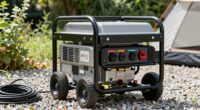
When facing extended power outages, selecting the right standby generator becomes critical for maintaining comfort and safety. The Generac Guardian 24kW stands out as the best overall choice thanks to its reliability and quiet operation. For those seeking budget-friendly yet dependable options, the Champion 8.5-kW offers solid performance at a lower price point. The main tradeoffs in this category involve balancing power capacity, fuel type, noise levels, and upfront cost. Keep reading for a detailed breakdown of the top picks and what makes each suitable for long outage scenarios.
Key Takeaways
- High-capacity generators like the Generac Guardian 24kW lead in handling long outages with ease due to their robust power reserves.
- Dual-fuel options provide flexibility, ensuring continued operation even if one fuel source becomes scarce.
- Quiet operation is a key feature for long-term use, especially in residential neighborhoods, and is often linked to higher-end models.
- Portability features matter less for permanent standby models but are crucial for portable generators intended for emergency use.
- Price varies significantly based on power output, fuel type, and features—more expensive options often offer better longevity and quieter operation.






More Details on Our Top Picks
Generac Guardian 22kW Home Standby Generator with 200 Amp Transfer Switch – WiFi Enabled, Natural Gas or Liquid Propane
The Generac Guardian 22kW stands out for its robust power output and proven reliability, making it an ideal choice for long outages where continuous, whole-house backup is required. Compared to smaller or less capable models like the Champion 8.5-kW, this generator provides significantly more capacity, ensuring your home remains powered for extended periods. Its automatic transfer switch and Wi-Fi connectivity add convenience and peace of mind, especially for those who prefer remote monitoring. The main tradeoff involves higher upfront costs and installation complexity, as it requires a certified electrician and a dedicated fuel supply. This model makes the most sense for larger households or those in areas prone to lengthy outages, where dependable power is non-negotiable.Pros:- High 22kW power output for whole-house backup
- Wi-Fi enabled for remote monitoring and management
- Durable weather-resistant enclosure, designed for outdoor installation
- Engine designed for low maintenance and reliability
Cons:- Higher initial purchase and installation costs
- Requires professional installation and dedicated fuel supply
- Fuel dependency could be a concern if supply is interrupted
Best for: Homeowners needing a dependable, high-capacity backup during long outages, especially in cold or unpredictable climates.
Not ideal for: Those on a tight budget or with limited space, since the unit is large and installation costs are substantial.
- Power Output:22,000 watts
- Transfer Switch:200 Amp NEMA 3R
- Fuel Type:Natural Gas or Liquid Propane
- Connectivity:Wi-Fi (Mobile Link)
- Warranty:5 Years Limited
- Engine:G-Force Engine
Bottom line: This generator is best for homeowners seeking reliable, whole-house backup power with remote monitoring capabilities.
Champion Power Equipment 8.5-kW Home Standby Generator with 50-Amp Automatic Transfer Switch
The Champion 8.5-kW generator offers seamless power with a focus on cold-weather operation, which sets it apart from smaller or less weather-resistant units. Compared with the DuroMax 13,000-watt model, this generator provides less wattage but excels in quiet operation and extreme cold start capability. Its 10-year warranty and easy access for maintenance make it appealing for long-term residential use. However, its lower capacity means it cannot power a whole house during extended outages unless your load is minimal. The tradeoff involves balancing capacity and cost; this is suitable for smaller households or essential circuits, but not for large homes with high energy demands.Pros:- Reliable power in extreme cold down to -22º F
- Easy installation and maintenance access
- Quiet operation suitable for residential areas
- Long 10-year warranty
Cons:- Limited capacity for whole-house backup
- Requires professional installation
- Size may need ample space for setup
Best for: Homeowners in cold climates needing reliable backup for essential circuits without the complexity of larger systems.
Not ideal for: Large households or those requiring full-house backup, as its capacity may fall short over prolonged outages.
- Power Output:8.5 kW
- Transfer Switch:50-Amp, 10-circuit
- Start System:24V Sub Zero start
- Enclosure:Gullwing
- Warranty:10 years
Bottom line: This generator is ideal for cold climate residents who need reliable essential power for shorter or moderate outages.
DuroMax XP13000EH 13,000-Watt Dual Fuel Portable Generator
The DuroMax XP13000EH offers high wattage and dual fuel flexibility, making it a powerful choice for emergency backup or outdoor projects. Its 13,000 surge watts surpass many home standby options like the Champion 8.5-kW, providing enough capacity for most essential appliances during outages. Its all-metal, weather-resistant frame enhances durability, and the transfer switch-ready outlets simplify setup for home backup. The main tradeoff involves its portability; at an unspecified weight, it may be cumbersome to move in an emergency, and detailed runtime data isn’t provided. This generator suits those who need high power in a portable form, but less so for permanent, long-term home installation without dedicated storage or transport arrangements.Pros:- High 13,000 surge wattage for heavy loads
- Dual fuel capability for flexibility and extended runtime
- Heavy-duty all-metal construction for durability
- Transfer switch-ready outlets
Cons:- Weight not specified, possibly heavy to transport
- No detailed runtime or fuel efficiency info
- Price range not indicated, which may affect budget considerations
Best for: Individuals requiring a portable, high-capacity generator for emergency or outdoor use, especially where permanent installation isn’t feasible.
Not ideal for: Homeowners seeking a permanent, integrated standby solution, due to its portable design and lack of built-in automatic transfer switch.
- Power Output:13,000 watts (surge), 10,500 watts (running)
- Fuel Type:Gasoline, Propane
- Engine:500cc OHV
- Start Type:Electric start
- Outlets:2 120V GFCI, 50A transfer switch-ready
- Construction:Heavy-duty all-metal
Bottom line: This generator works best for portable, high-power needs during emergencies or outdoor events, not as a permanent household backup.
Jackery HomePower 3600 Plus Portable Power Station, 3600W AC Output, 3584Wh LFP Solar Generator, Expandable up to 21kWh
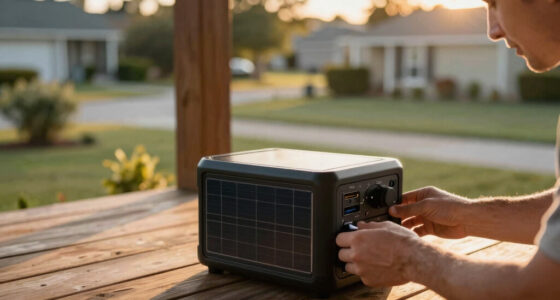
The Jackery HomePower 3600 Plus emphasizes portability combined with impressive expandable capacity, making it a unique option for long outages where mobility matters most. Unlike the larger, fixed generators like the Generac Guardian, this unit offers 3600W AC output and a lightweight design at just over 77 pounds, suitable for RVers or those who need to move their backup power easily. Its real strength lies in the ability to expand capacity up to 21kWh, which can power a household for over two weeks—something fixed units can’t match. The tradeoff involves handling the weight, and expansion requires multiple units and setup, increasing complexity and initial cost. This makes it ideal for users seeking flexibility and portability over sheer wattage or permanence.Pros:- High-capacity expandable battery system
- Lightweight and portable design
- Powerful 3600W AC output for household appliances
- Multiple charging options including solar and AC
Cons:- Heavy at 77 pounds, may need assistance
- Expansion setup is complex and costly
- Additional solar panels are optional and add expense
Best for: Mobility-focused homeowners or RV users needing reliable power with the ability to expand capacity over time.
Not ideal for: Homes that require a fixed, high-capacity backup system for prolonged outages, due to weight and setup complexity.
- Wattage:3600 watts
- Battery Capacity:3584Wh, expandable to 21kWh
- Fuel Type:Electric (solar, AC)
- Voltage:120V
- Item Weight:77.16 pounds
- Item Dimensions:15.2″L x 12.2″W x 19.3″H
Bottom line: This portable power station is best for mobile users who want reliable, expandable backup power for extended outages.
Westinghouse 14500 Peak Watt Tri-Fuel Portable Generator with Remote Electric Start
This tri-fuel generator stands out for its exceptional versatility, allowing you to run on gasoline, propane, or natural gas, which is a key advantage over traditional gasoline-only models like the Westinghouse 12500. Its long runtime of up to 19 hours on a full tank ensures sustained power during extended outages. The electric and remote start features add convenience, especially when quick startup is critical. However, its weight and size make it less portable, meaning it’s best suited for stationary backup rather than frequent relocation. Compared to smaller portable units, this model sacrifices portability for extended, flexible power supply, but it may be challenging to move without assistance. It’s ideal for users who prioritize prolonged, flexible power and don’t mind the bulk. The main tradeoff involves transport—this isn’t a quick-carry option. Overall, this generator provides reliable, long-lasting backup power for those who can handle its size.Pros:- Tri-fuel capability offers maximum flexibility in fuel choice
- Extended runtime of up to 19 hours on a full tank
- Electric and remote start for quick, easy operation
- Transfer switch ready simplifies home backup setup
Cons:- Heavy and bulky, difficult to transport without help
- No specific weight information provided, complicating portability assessment
Best for: Homeowners or contractors needing a versatile, long-duration power source for backup or job sites
Not ideal for: Individuals seeking a lightweight, easily portable generator for frequent moving or outdoor camping
- Peak Watts:14,500
- Running Watts:11,500 (gasoline), 10,500 (propane), 9,500 (natural gas)
- Engine:550cc 4-Stroke OHV
- Fuel Tank Capacity:9.5 gallons
- Runtime:Up to 19 hours on gasoline
- Fuel Types:Gasoline, Propane, Natural Gas
- Starting System:Electric and remote start
- Transfer Switch Ready:Yes
Bottom line: This generator makes the most sense for users who need reliable, long-lasting power with fuel flexibility over portability.
Generac Guardian 24kW Home Standby Generator – Automatic Whole House Backup Power, WiFi Enabled, Natural Gas or Liquid Propane, Quiet Operation
The Generac Guardian 24kW is designed to handle entire home loads automatically, making it ideal for long outages where uninterrupted power is essential. Its true power technology ensures clean, stable power for sensitive electronics, outperforming smaller standby units like the Champion 8.5-kW in capacity and sophistication. The WiFi connectivity allows for remote monitoring, adding peace of mind during extended outages. It’s notably quiet during self-tests, which is a plus for homes near neighbors. The main tradeoff is the higher upfront cost and the need for professional installation, which can be a barrier for some. Compared to portable options, this unit offers a true plug-and-play solution that requires minimal user intervention once installed. It’s perfect for users who want a reliable, maintenance-free, long-term backup that can power everything in the house.Pros:- Automatic operation for seamless home power restoration
- WiFi-enabled for remote monitoring and alerts
- Quiet during self-test cycles to minimize disturbance
- Reliable, clean power suitable for sensitive electronics
Cons:- Requires professional installation, adding to initial cost
- Higher purchase price compared to portable units
Best for: Homeowners seeking a seamless, maintenance-free whole-house backup with remote monitoring features
Not ideal for: Renters or users with limited budget who cannot commit to professional installation
- Power Output:24,000 watts
- Fuel Type:Natural Gas or Liquid Propane
- Warranty:5-Year Limited
- Technology:True Power Technology
- Engine:G-Force Engine
- Operation:Quiet-Test Self-Test Mode
Bottom line: This generator is best for homeowners who prioritize convenience, reliability, and full-home power during outages.
BLAVOR Portable Power Station 1600W with 1024Wh LiFePO4 Battery and Built-in Solar Panel
The BLAVOR power station combines portability with high capacity, making it suitable for outdoor or emergency use where grid power isn’t an option. Its 1024Wh LiFePO4 battery offers over a decade of reliable service, and the built-in 40W solar panel allows for renewable recharging—an advantage over purely battery-powered units like the Jackery Explorer 2000. The 1600W continuous output covers most small appliances and electronics, but its weight of 26 pounds limits ease of carrying over long distances. For faster solar recharge, additional panels might be necessary, which can increase costs. Compared with larger stationary generators, this is less suitable for powering entire homes, but it excels in portability and renewable energy generation. It’s ideal for users who need a durable, solar-compatible backup or outdoor power supply, not a full household backup.Pros:- Large 1024Wh LiFePO4 battery with over 10 years of lifespan
- Built-in solar panel for renewable recharging
- Multiple charging options including fast USB-C
- Powerful 1600W continuous output
Cons:- Heavy for portable use at 26 pounds
- Limited solar panel capacity included, may need extra panels
- Higher cost compared to smaller portable units
Best for: Outdoor enthusiasts or those needing portable, renewable backup power for camping or emergency situations
Not ideal for: Homeowners seeking to power entire homes or appliances requiring high wattage over long outages
- Wattage:1600 watts
- Capacity:1024Wh
- Built-In Solar Panel:40W
- Charging Methods:Wall, car, solar
- USB-C Fast Charge:Yes, 100W
- Item Weight:26 Pounds
Bottom line: This pick is best for users who prioritize renewable energy and portability over powering entire homes during outages.
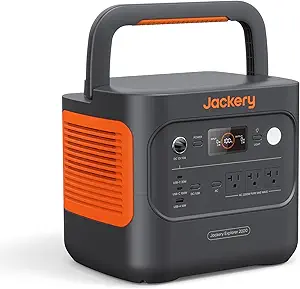
Jackery Explorer 2000 v2 Portable Power Station, 2042Wh LiFePO4 Battery, 2200W Solar Generator with USB-C PD 100W
The Jackery Explorer 2000 v2 offers a substantial 2042Wh capacity, making it one of the best portable options for long outages that require sustained power. Its 2200W output can handle multiple appliances simultaneously, outperforming smaller units like the Jackery Explorer 300. The unit’s lightweight design at just 39.5 pounds and fast charging capabilities make it attractive for users who need mobility without sacrificing capacity. However, the price point is higher, and optimal solar charging depends on compatible panels, which adds to total cost. Compared to stationary generators, this is a portable alternative that still provides long-lasting, reliable power, but it isn’t suitable for entire-home backup without additional units or extended solar setups. It’s ideal for those seeking a balance of portability, capacity, and quick recharge during extended outages.Pros:- High-capacity 2042Wh LiFePO4 battery for extended use
- Lightweight and portable at 39.5 lbs
- Fast charging with AC and solar options
- Quiet operation for discreet use
Cons:- High price may limit accessibility
- Requires compatible panels for optimal solar recharge
- Limited outlet options compared to larger stationary units
Best for: Individuals needing portable, high-capacity power for homes, camping, or emergencies during long outages
Not ideal for: Users on a tight budget or those requiring full home backup without additional solar investment
- Capacity:2042Wh
- Power Output:2200W
- AC Ports:3
- USB-C PD:100W
- Weight:39.5 lbs
- Charge Time (AC):66 minutes to 80%
Bottom line: This generator is perfect for those who need portable, reliable power with long-lasting capacity for outdoor or emergency use.
Generac Guardian 10kW Home Standby Generator with 100 Amp Transfer Switch – Automatic Whole House Backup Power, WiFi Enabled, Natural Gas or Liquid Propane
This Generac Guardian 10kW stands out for providing dependable, automatic whole-house backup with a proven track record. Its true power technology ensures stable output, and the WiFi connectivity allows for remote status monitoring—an essential feature if you’re away during an outage. Compared with the larger 18kW model, it offers a slightly lower capacity but is easier to install and manage, making it ideal for medium-sized homes. The main tradeoff is its higher upfront cost and dependency on a fuel supply, which could be a concern during extended outages. Still, it strikes a strong balance between power, convenience, and reliability for most homeowners who want peace of mind during long-term outages.
Pros:- Automatic operation ensures immediate power restoration during outages
- WiFi-enabled for easy remote monitoring and diagnostics
- Reliable true power technology provides clean, stable electricity
- Durable aluminum enclosure withstands harsh weather
Cons:- Installation requires a certified electrician, adding to overall cost
- Higher upfront price compared to smaller or less advanced units
- Fuel supply dependency could limit runtime during extended outages
Best for: Homeowners seeking dependable, full-house backup with remote monitoring capabilities
Not ideal for: Residents with very high power demands or those on very tight budgets, due to its higher initial cost
- Power Output:10,000 watts
- Transfer Switch:100 Amp, 16-circuit
- Fuel Type:Natural Gas or Liquid Propane
- Connectivity:WiFi Enabled with Mobile Link
- Enclosure Material:Aluminum
- Warranty:5 Years
- Engine:G-Force Engine
- Country of Manufacture:USA
Bottom line: This generator is best suited for homeowners who prioritize reliability and remote management for medium-sized homes.
Honeywell 22kW Home Standby Generator
The Honeywell 22kW generator offers substantial capacity suitable for larger households or critical applications. Its automatic transfer switch ensures seamless power restoration, comparable to the 18kW Generac but with a significant increase in wattage capacity. This model excels in quiet operation thanks to its well-designed sound insulation and self-test mode, making it less intrusive in residential settings. Its all-aluminum weather-resistant enclosure boosts durability, and user-friendly LCD controls simplify maintenance. The main tradeoff is that it typically requires professional installation, and the price might be prohibitive for smaller budgets. Compared to the 10kW Generac, it’s better suited for larger homes or those with high power loads, but its higher cost and installation complexity are considerations.
Pros:- Automatic transfer ensures seamless backup during outages
- Quiet operation minimizes noise disturbance
- Weather-resistant aluminum enclosure enhances durability
- Intuitive LCD controls simplify monitoring
Cons:- Installation may require professional setup, increasing costs
- Higher purchase price compared to smaller units
- Limited to natural gas or propane, restricting fuel options
Best for: Large households or properties with high power demands needing quiet, reliable backup
Not ideal for: Small residences or budget-conscious buyers, due to its higher price and installation requirements
- Wattage:22,000 watts
- Fuel Type:Natural Gas, Propane
- Operation Mode:Automatic, Self-Test
- Connectivity:LCD Control Panel
- Enclosure Material:Aluminum
- Recommended Uses:Residential, Whole-House
Bottom line: Ideal for large homes or critical needs where quiet, reliable power is a priority and budget allows for professional installation.
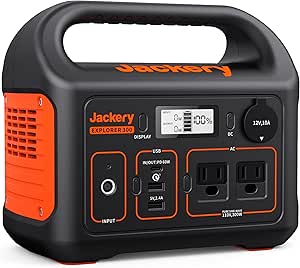
Jackery Explorer 300 Portable Power Station, 293Wh Lithium Battery, Solar Generator for Camping and Outdoors
The Jackery Explorer 300 offers a compact, lightweight solution for temporary power needs during outages or outdoor adventures. Its 293Wh battery capacity is sufficient for charging essential devices—phones, small appliances, or lights—but falls short for running larger appliances during long outages. Compared with larger units like the 4400-Watt inverter generator, it’s designed for mobility rather than high power output. Its fast recharge options via wall, car, or solar panel make it versatile, but the limited capacity means it’s not suitable for extended power failures or high-demand appliances. This pick makes the most sense for users who need portable, emergency power for a few devices rather than whole-house backup.
Pros:- Lightweight and portable, easy to carry
- Fast recharge via multiple methods including solar
- Multiple device charging ports for flexibility
- Green energy compatible with solar panels
Cons:- Limited capacity restricts usage to small devices
- Solar panel not included, adding to cost
- Not suitable for high-power appliances or long outages
Best for: Campers, travelers, or those needing a small backup for essential devices during short outages
Not ideal for: Homeowners seeking long-term, whole-house power during extended outages
- Battery Capacity:293Wh
- Weight:7.1 pounds
- AC Outlets:2 Pure Sine Wave
- USB-C Port:60W PD
- Fast Charge Port:3.0
- Recharging Time:80% in 2 hours
Bottom line: Best suited for short-term, portable emergency power rather than long-term home backup solutions.
4400-Watts Inverter Generator, Gas Powered, RV Ready, EPA Compliant
The 4400-Watt inverter generator provides a practical balance of portability and power for short-term outages or RV use. Its 3400 running watts can handle essential appliances or RV systems, making it more versatile than smaller portable generators like the Jackery but less capable than whole-house standby units. Weighing only 56 pounds, it’s easy to transport, and its eco mode enhances fuel efficiency, extending runtime. Compared with larger standby generators, it’s less suited for prolonged outages or whole-home backup, but it excels in mobility and quick setup. Its limited runtime at higher loads means it’s best for shorter outages or supplementary power, not full-home coverage.
Pros:- Lightweight and easy to transport
- Powerful enough for RV and emergency use
- Multiple outlets for versatile needs
- Eco mode for fuel efficiency
Cons:- Limited runtime at higher loads
- Requires fuel for operation, with no long-term fuel storage
- Not suitable for whole-house backup during extended outages
Best for: RV owners or campers needing reliable portable power during short outages or travel
Not ideal for: Homes requiring long-term backup or high power loads, as it’s designed for mobility, not endurance
- Peak Watts:4400
- Running Watts:3400
- Fuel Tank Capacity:2 gallons
- Runtime at 25% load:14 hours
- Outlets:2x120V AC, 1x30A RV, 1x12V DC
- Weight:56 lbs
Bottom line: Ideal for mobile, short-term power needs where portability and convenience are prioritized over extended runtime.
Generac Guardian 18kW Home Standby Generator – Automatic Whole House Backup Power, WiFi Enabled, Natural Gas or Propane, Quiet Operation
The Generac Guardian 18kW offers a significant capacity for whole-house backup with quiet operation, making it suitable for larger households or homes with high power demands. Its automatic transfer switch and WiFi connectivity mirror the features of the 10kW model but with added capacity, making it more suitable for extended outages. Compared to the 22kW Honeywell, it balances power with a quieter operation, though the Honeywell provides even more capacity. The main tradeoffs include the need for professional installation and a higher initial cost, but its reliability and ease of monitoring make it a compelling choice for sizable homes.
Pros:- Automatic startup during outages ensures seamless power
- Quiet operation minimizes noise pollution
- Remote WiFi monitoring simplifies maintenance
- Reliable true power technology reduces harmonic distortion
Cons:- Requires professional installation, increasing costs
- Higher upfront investment compared to smaller models
- Limited to natural gas or propane, restricting fuel options
Best for: Large households or critical home systems requiring reliable, quiet, whole-house backup
Not ideal for: Smaller homes or budget-conscious buyers who don’t need such a high capacity
- Power Output:18,000 watts
- Fuel Type:Natural Gas, Propane
- Warranty:5 Years
- Operation Mode:Automatic, Self-Test
- Connectivity:Wi-Fi Enabled
- Engine:G-Force Engine
Bottom line: Best for large homes needing quiet, dependable backup with remote management, provided the budget permits.

How We Picked
The products in this roundup were evaluated based on performance during extended outages, reliability, fuel efficiency, ease of installation and maintenance, noise levels, and overall value. We prioritized generators with proven durability, high wattage capacity for whole-house backup, and smart features like WiFi connectivity for remote monitoring. Portable models were included for comparison but are generally less suited for long outages, so they’re assessed for different use cases. The ranking reflects a balance between power, convenience, cost, and user reviews, ensuring each option offers a clear advantage for long outage scenarios.Factors to Consider When Choosing Best Standby Generator For Long Outages
Choosing the best standby generator for long outages involves considering a few key factors that impact performance, reliability, and long-term value. Knowing your household’s power needs is essential—oversizing can mean unnecessary expense, while undersizing risks inadequate backup. Fuel type also plays a significant role, with natural gas and liquid propane offering advantages in availability and storage. Noise levels can be a concern for long-term operation, especially in residential zones. Finally, installation complexity and ongoing maintenance should influence your decision, as some models require professional setup and regular upkeep. Understanding these broader considerations can help you make a smarter, more informed choice.Power Capacity and Home Size
Matching your generator’s wattage to your home’s essential power needs is critical. Larger homes with multiple appliances require more capacity—typically 20kW or higher—to reliably power everything during long outages. However, oversizing can lead to unnecessary costs and inefficiency. Calculate your critical loads first, such as refrigerators, heating or cooling systems, and medical devices, to determine the appropriate size. Remember, a generator that’s too small won’t sustain your essential circuits, while one that’s too large may be more expensive and less fuel-efficient.
Fuel Type and Availability
Choosing between natural gas, liquid propane, or dual-fuel options affects convenience and resilience. Natural gas generators connect directly to your home’s gas line, providing continuous fuel supply, but depend on local infrastructure. Propane tanks offer stored fuel, making them suitable where gas lines are unreliable or unavailable. Dual-fuel models give added flexibility, allowing you to switch fuel sources based on availability and cost. Consider your region’s fuel supply stability and your capacity to store or access fuel when selecting the best option for long outages.
Noise Levels and Operation
During prolonged outages, noise can become a significant concern, especially if you have close neighbors or live in a quiet residential area. Higher-capacity standby generators tend to be louder, but many modern models incorporate sound-dampening features to reduce noise. If quiet operation is a priority, look for models explicitly designed for lower decibel levels, even if they come at a higher cost. Remember, quieter models often have more advanced muffling technology or better engine design, which can improve long-term comfort without sacrificing performance.
Installation, Maintenance, and Cost
Proper installation is vital for safe and reliable operation, typically requiring professional setup, especially for large standby systems. Maintenance involves regular testing, oil changes, and inspections to ensure longevity, adding ongoing costs and effort. Budgeting for installation and maintenance upfront can prevent surprises later. While high-end models might have higher initial prices, they often offer better durability, lower noise, and more user-friendly features, translating into lower total ownership costs over time. Balance your budget with these long-term factors for the best value.
Smart Features and Monitoring
Many modern standby generators include smart technology such as WiFi connectivity and remote monitoring, enabling you to track performance and receive alerts if issues arise. This feature can be especially valuable during long outages, providing peace of mind and allowing quick response to potential problems. While these add-ons increase initial costs, they can significantly enhance reliability and ease of use, making them worthwhile investments for those prioritizing convenience and safety during extended power disruptions.
Frequently Asked Questions
How do I determine the right size generator for my home?
To find the right size, list all the essential appliances and systems you want to power during an outage, then sum their wattages. Many appliances have label wattages, or you can estimate based on typical values. Add a buffer to account for startup surges, especially for motors like refrigerators or air conditioners. It’s usually best to consult with a professional to ensure your chosen generator can handle your critical loads without being oversized, which could lead to unnecessary expenses and inefficiency.
Is a dual-fuel generator worth the extra cost for long outages?
Dual-fuel generators offer notable advantages for long outages, as they provide flexibility in fuel choice—natural gas or propane—depending on availability. This can be particularly beneficial if one fuel source becomes scarce or costly. However, they tend to be more expensive upfront and may require additional setup or fuel storage. If you live in an area prone to prolonged outages or fuel supply issues, investing in a dual-fuel model can pay off by ensuring continuous operation.
How important is noise level for a standby generator used during long outages?
Noise level becomes increasingly important if you expect to run your generator for extended periods, as loud operation can cause fatigue and disturb neighbors. Quiet models often feature soundproof enclosures and advanced mufflers, which can significantly reduce decibel levels. While they may cost more initially, these features improve comfort and neighbor relations, especially in residential areas. For long-term use, prioritizing quieter operation can enhance your overall experience and reduce stress during outages.
What maintenance is required to keep a standby generator reliable for long-term use?
Regular maintenance includes checking and changing oil, inspecting filters, testing automatic transfer switches, and verifying fuel supply connections. Running periodic tests ensures the generator functions properly when needed. Many models now include automatic diagnostics and remote monitoring, simplifying upkeep. Maintaining a schedule and keeping detailed records can extend your generator’s lifespan, reduce unexpected breakdowns, and ensure readiness for long outages.
Are portable generators a viable option for long outages?
While portable generators can provide emergency backup power, they are generally less suitable for long outages due to limited fuel capacity and lower power output. They require manual setup, refueling, and monitoring, making them less convenient for sustained use. For extensive outages, a dedicated standby generator offers automatic operation, larger fuel tanks, and higher capacity, making it a more dependable choice. Portable units are better suited for short-term emergencies or outdoor activities.
Conclusion
For those seeking a reliable, long-term backup solution, the Generac Guardian 24kW stands out as the best overall choice, offering ample power and quiet operation for large homes. Budget-conscious buyers should consider the Champion 8.5-kW for dependable performance at a lower price. If you’re looking for the ultimate in convenience and smart features, investing in a premium model like the Generac Guardian 22kW with WiFi connectivity makes sense. Beginners or smaller households might find portable options suitable for short-term needs, but for extended outages, a dedicated standby system remains the most effective. Carefully consider your home’s size, fuel supply, noise tolerance, and budget to choose the best fit.