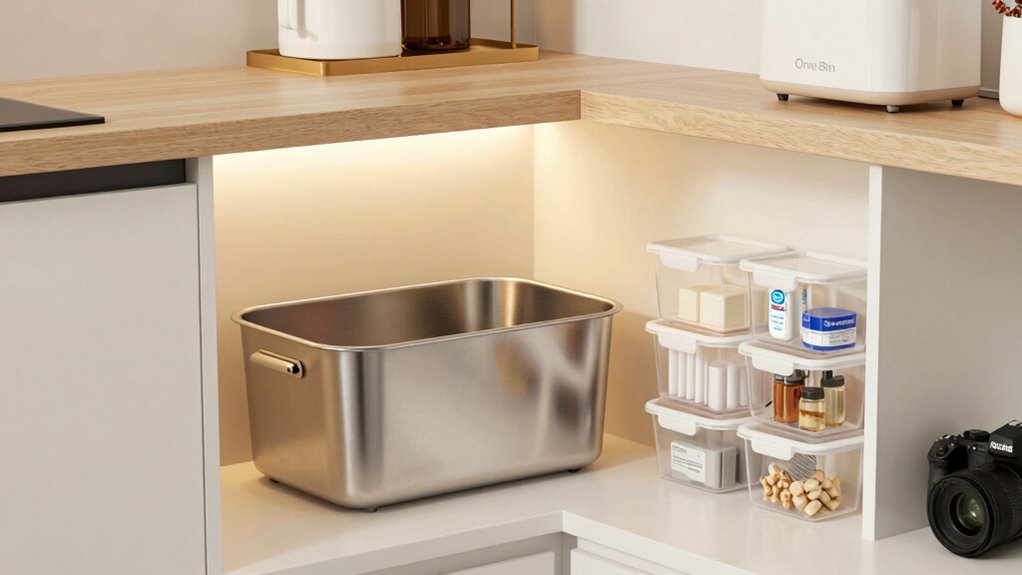

During outages, small homes using the “One Bin” system can stay resilient by having manual waste bags and portable containers ready. Smart waste units with backup power keep operations running, while emergency storage solutions prevent overflow and contamination. Planning alternative disposal methods like shared community pickup points or composting also helps. To learn how advanced technologies and strategies can keep your waste system functional during outages, explore more ways to strengthen your setup.
Key Takeaways
- Stock manual trash bags and portable containers to maintain waste collection during power outages.
- Use weatherproof, pest-proof bins with secure lids for emergency waste storage.
- Implement backup power options like portable batteries or generators for smart waste system continuity.
- Coordinate with local waste services for emergency pickups during outages.
- Practice on-site composting and educate residents on waste segregation to reduce reliance on collection systems.
Understanding the One Bin System and Its Benefits

The One Bin System simplifies waste collection by combining recyclables like paper and containers into a single bin, making it more convenient for residents. Instead of sorting different materials, you just toss everything into one container. This reduces the hassle of sorting at home and encourages more participation in recycling efforts. Once collected, the materials are sorted at a Material Recovery Facility (MRF), where they’re separated efficiently. This system lowers collection costs because there’s only one pickup per residence, saving time and resources. Although processing costs increase due to sorting at the facility, the overall process becomes more streamlined. The Free Floating approach promotes easier recycling, increases participation, and supports community sustainability goals—all while simplifying waste management for small homes. Additionally, connectivity and science-backed training can be used to raise awareness and motivate residents to adopt this system more enthusiastically. Incorporating educational programs can further enhance understanding and compliance among community members. Implementing community engagement strategies is also essential to foster a culture of recycling and environmental responsibility.
Integrating SmartWasteBins for Effective Waste Management

Integrating SmartWasteBins into your waste management system enhances efficiency and sustainability by leveraging advanced technology. These bins use AI to automatically sort recyclables, reducing human error and speeding up processing. They also compress waste after sorting, maximizing capacity and minimizing collection frequency. By monitoring fill levels in compartments, SmartWasteBins help you schedule pickups only when necessary, avoiding overflowing bins or unnecessary trips. This targeted approach cuts collection costs and lowers greenhouse gas emissions. The system provides real-time data, enabling you to optimize routes and respond quickly to changing waste patterns. Moreover, integrating European cloud solutions into your waste management infrastructure ensures data security and compliance with local regulations. Understanding the waste management process can further help you tailor the system to your specific needs. Implementing smart sensors allows for even more precise waste monitoring and management. These sensors can also facilitate real-time data analysis, improving overall operational efficiency. With SmartWasteBins, your small home can achieve better waste separation, reduce environmental impact, and streamline collection efforts—making waste management more effective, eco-friendly, and cost-efficient.
Utilizing WasteLevelSensors to Monitor Bin Capacity

Using WasteLevelSensors allows you to accurately monitor the fill levels of bins and dumpsters in real time, preventing overflow and contamination. These sensors provide instant data, so you can schedule pickups efficiently and avoid messy spills. Imagine a dashboard displaying fill statuses as shown here:
| Bin Location | Fill Level | Next Pickup |
|---|---|---|
| Front Yard | 80% | Tomorrow |
| Side Alley | 45% | In 3 days |
| Backyard | 95% | Today |
| Street Corner | 60% | In 2 days |
With this info, you optimize collection routes, reduce unnecessary trips, and maintain a cleaner environment. Regular monitoring of these sensors further enhances efficiency and helps prevent potential issues before they occur. Incorporating smart waste management practices ensures your small home remains organized and environmentally conscious during outages or resource constraints. Being proactive with capacity tracking allows for better planning and resource allocation, ultimately improving your overall outage readiness. Additionally, integrating real-time data into your management system can further streamline operations and increase responsiveness. Implementing automated alerts can notify you immediately when bins reach critical levels, further preventing overflow and optimizing response times.
Leveraging SolarTrashCompactors for Increased Efficiency

SolarTrashCompactors increase waste capacity by holding five times more than traditional bins, reducing the frequency of pickups. They operate energy-efficiently by compressing trash as it accumulates, powered solely by solar energy. By transmitting real-time data on fill levels, they help optimize collection routes and lower operational costs. Additionally, their air quality benefits contribute to healthier indoor environments by minimizing odor and airborne pollutants. These systems also promote financial savings for waste management services through decreased labor and vehicle usage. Incorporating reliable driving tech features ensures the system functions smoothly and reduces potential malfunctions. Moreover, implementing features like color accuracy can further enhance the system’s effectiveness and sustainability. Furthermore, adopting these systems can enhance overall waste management efficiency, leading to better service quality and environmental impact.
Enhanced Waste Capacity
Have you considered how solar-powered trash compactors can dramatically boost waste capacity and efficiency? These compactors hold up to five times more waste than traditional bins, reducing the frequency of pickups. As trash accumulates, the compactor compresses it automatically, maximizing space and minimizing overflow risks. Powered by solar panels, they operate sustainably and require minimal energy. They also transmit real-time data on fill levels and suitable collection times, enabling you to plan waste collection proactively. This reduces unnecessary trips, cuts fuel costs, and lowers emissions. With enhanced capacity, you’ll manage waste more effectively, especially during peak usage or outages. Incorporating sustainable technology into the design ensures durability and aesthetic appeal, making these systems a seamless part of your home. Additionally, integrating smart waste management solutions can further optimize your waste handling processes. Embracing innovative waste solutions can help you adapt more easily to unexpected disruptions. The use of AI-driven data analytics in these systems allows for even more precise scheduling and resource allocation. Overall, solar trash compactors streamline waste handling, save resources, and improve your home’s resilience to waste management challenges.
Energy-Efficient Operations
By integrating solar-powered trash compactors into your waste management system, you can considerably enhance operational efficiency. These compactors hold five times more waste than traditional bins, reducing collection frequency and fuel consumption. They compress trash as it accumulates, preventing overflow and minimizing environmental hazards. Powered by solar panels, they transmit real-time data on fill levels and ideal collection times, enabling dynamic routing. This targeted approach cuts collection costs by reducing unnecessary trips and lowers greenhouse gas emissions. Additionally, the system’s ability to monitor waste volume supports better planning and resource allocation. Furthermore, understanding exfoliation benefits can help optimize maintenance and cleaning schedules for these compactors, ensuring they operate efficiently and last longer. Overall, SolarTrashCompactors streamline waste management, save energy, and promote sustainability—making them a smart choice for small homes seeking energy-efficient operations that align with outage preparedness.
Preparing for Power Outages and System Failures

When power outages or system failures occur, small homes must be prepared to maintain waste management efficiency and prevent environmental issues. Stock up on backup supplies like manual trash bags and portable waste containers. Ensure your smart waste systems have low-power or battery backup options to keep essential functions running. Regularly test emergency protocols to identify vulnerabilities before an outage hits. Consider alternative disposal methods if your system becomes inaccessible.
- Keep manual tools and supplies ready for quick waste handling
- Maintain backup power sources, like portable batteries or generators
- Know how to switch to manual sorting or collection procedures
- Store extra waste containers for emergency use to prevent overflow
Strategies for Maintaining Waste Collection During Outages

During outages, you need reliable ways to manage waste without regular collection services. Emergency storage solutions and alternative disposal methods can help you avoid overflow and contamination. Planning ahead guarantees your waste stays contained and safe, even when power is out.
Emergency Storage Solutions
Effective emergency storage solutions are essential for maintaining waste collection services during outages. You need reliable methods to store waste safely and prevent overflow when collection services are interrupted. Consider using sturdy, weather-resistant bins with secure lids to contain odors and pests. Portable or collapsible containers can help you adapt to space limitations. Designate a specific area for emergency storage, keeping it accessible but away from living spaces. Regularly monitor and rotate stored waste to prevent odors and contamination. Clear signage and instructions for proper disposal can also improve efficiency. Properly planned emergency storage not only minimizes health risks but also makes it easier to manage waste once services resume.
- Use weatherproof, pest-proof bins
- Allocate a dedicated, accessible area
- Rotate stored waste regularly
- Label containers clearly for proper disposal
Alternative Disposal Methods
To guarantee waste collection continues seamlessly during outages, you need to implement alternative disposal methods that can be quickly mobilized. Consider using portable waste containers or temporary holding bins placed near your home. These allow you to store waste safely until regular pickup resumes. You might also coordinate with neighbors to share disposal sites or arrange for community collection points. If possible, create an agreement with local waste services for emergency pickups, especially during extended outages. Composting biodegradable waste on-site can reduce the volume needing collection. Additionally, educating household members about waste segregation and proper disposal during outages helps prevent overflow and contamination. Having these strategies in place ensures minimal disruption, maintains hygiene, and supports your community’s overall resilience during power or service interruptions.
Enhancing Sustainability and Disaster Resilience in Small Homes

Enhancing sustainability and disaster resilience in small homes requires innovative approaches that maximize resource efficiency and minimize environmental impact. You can achieve this by adopting smart waste management systems that reduce waste, lower emissions, and prevent overflows. These systems help you prepare for outages by ensuring waste is handled efficiently and sustainably. Implementing technologies like AI-powered smart bins, waste level sensors, and solar compactors allows you to optimize collection routes, reduce fuel consumption, and prevent contamination. Additionally, these solutions support zero-waste goals and improve overall resilience during disasters. By integrating these strategies, your small home becomes more environmentally friendly and better equipped to handle disruptions, ensuring continued safety and sustainability.
- Use smart waste bins with AI sorting
- Install waste level sensors for timely pickups
- Incorporate solar-powered compactors
- Optimize collection routes with real-time data
Future Innovations in Single-Stream Recycling and Outage Preparedness

As technology advances, future innovations in single-stream recycling and outage preparedness aim to make waste management smarter and more resilient. You’ll benefit from AI-powered SmartWasteBins that automatically sort recyclables, compress waste, and monitor fill levels, reducing costs and errors. WasteLevelSensors will enable you to predict when bins need emptying, preventing overflow and contamination. SolarTrashCompactors, powered by solar energy, will hold more waste and transmit data on fill status, optimizing collection schedules. These innovations will lead to dynamic collection routes, cutting costs and emissions while preventing litter and pest issues. In outages, these smart systems will adapt, ensuring continuous waste management. Overall, these technologies will make your small home’s waste system more efficient, eco-friendly, and ready to handle disruptions seamlessly.
Frequently Asked Questions
How Does the System Handle Waste During Power Outages?
During power outages, your “One Bin” system keeps functioning thanks to its simple design that doesn’t depend on electricity. You can still collect and dispose of waste normally. The system’s mechanical components work without power, so you won’t experience disruptions. When power returns, smart features like sensors and AI sorting resume automatically. This ensures your waste management remains reliable, even during outages, maintaining hygiene and convenience.
What Backup Options Exist if AI Sorting Fails?
If AI sorting fails, you’re not left stranded. You can switch to manual sorting, using simple labels or designated areas to separate recyclables. Keep backup bins for paper and containers nearby. Regularly maintain and update your system, and make sure staff or residents know emergency procedures. This approach guarantees continuous waste management, minimizes disruptions, and safeguards your sustainability goals, even when tech hiccups happen.
Are Manual Overrides Available for Malfunctioning Sensors?
Yes, manual overrides are available if sensors malfunction. You can access a control panel or app to disable automatic functions and switch to manual operation. This allows you to monitor fill levels, sort waste, or empty bins without relying on sensors. Having these overrides guarantees continuous waste management without disruptions, giving you peace of mind and maintaining efficiency while addressing sensor issues quickly.
How Secure Is Data Transmission in Solar-Powered Compactors?
Your solar-powered compactors transmit data securely using encrypted communication protocols, ensuring that your waste management data stays protected from unauthorized access. They often utilize industry-standard encryption methods like TLS or AES, providing a robust security layer. Additionally, regular firmware updates address vulnerabilities, and network security measures prevent hacking attempts. Rest assured, your data remains confidential and safe, giving you peace of mind about the integrity and privacy of your waste management information.
Can the System Operate Without Internet Connectivity?
Like a lighthouse guiding ships in fog, the system can operate temporarily without internet, ensuring continuous function. It relies on local storage and onboard processing to manage data and functions during outages. However, features like remote monitoring and real-time updates won’t be available until connectivity is restored. For full capabilities, a stable internet connection is essential, but basic operations keep running smoothly offline.
Conclusion
By embracing the “one bin” system and smart innovations, you can turn waste management into a seamless routine, even when the unexpected occurs. These simple yet effective tools act like reliable companions, helping you stay on track during life’s little surprises. With a proactive approach, you’ll find that resilience and sustainability become natural parts of your small home life, ensuring you’re always prepared to keep things running smoothly, no matter what challenges come your way.