To keep emergency lights effective, place them where everyone can see them from all exit points, such as near doors, corridors, and stairwells. Position lights along main pathways and hazard-prone areas like kitchens and bathrooms to guarantee safe navigation during power outages. Mount them at about 7 to 8 feet high, avoiding obstructions like furniture. Proper placement, maintenance, and adherence to safety standards help keep your home safe—discover how to optimize their locations for every room.
Key Takeaways
- Place emergency lights near exits, corridors, and stairwells for maximum visibility during evacuations.
- Install lights along main pathways within rooms to ensure safe navigation.
- Position lights close to hazard-prone areas like kitchens and bathrooms for quick access.
- Mount lights at 7-8 feet high, avoiding obstructions like furniture or curtains.
- Ensure lights are visible from all points of entry and regularly maintain batteries for reliability.

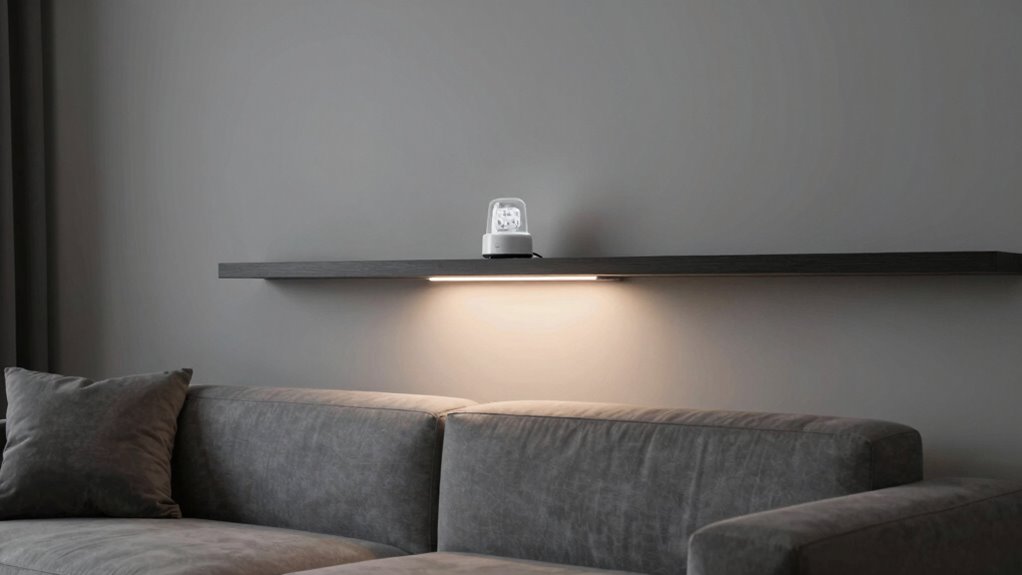
Have you ever wondered how emergency lights are strategically placed to guarantee safety during power outages or emergencies? It’s not just about installing them randomly; it’s about ensuring they activate when needed most. The key is understanding the smart placement of these lights in every room, which involves considering factors like battery maintenance and installation guidelines. Proper battery maintenance is essential because the backup power source must be reliable at all times. You should regularly check the batteries for corrosion, proper charge, and overall condition. Many emergency lights come with indicator lights to show if the battery is functioning correctly. Failing to perform routine maintenance can leave you in the dark during a critical moment, so set a schedule to inspect and replace batteries as recommended by the manufacturer. When it comes to installation guidelines, placement is everything. You want emergency lights to be visible from all points of exit, especially in corridors, stairwells, and near doors. Think about the natural flow of movement within each room—your goal is to assure no area is left unlit during an outage. For example, in a living room, place emergency lights near the main pathways so you can navigate safely without stumbling over furniture. In bedrooms, position them near the door or window, where they can help you find your way out quickly. In kitchens or bathrooms, where hazards are more common, install lights close to exits and areas you might need to access immediately. Additionally, understanding emergency lighting standards can help ensure your setup complies with safety regulations and provides optimal coverage. Proper placement also involves considering the lighting layout to maximize efficiency and safety. In fact, consulting standard installation procedures can further ensure that your emergency lighting setup adheres to safety and compliance requirements. The height at which you install emergency lights also matters. Typically, they are mounted on walls about 7 to 8 feet high, guaranteeing broad visibility without being obtrusive. Keep in mind that obstructions like furniture or curtains shouldn’t block the light. Also, avoid placing lights behind objects that could cast shadows or hinder their effectiveness. Regularly reviewing the battery backup system can help prevent unexpected failures and ensure continuous operation. Additionally, choosing the right installation location can make a significant difference in how well the lights perform during emergencies. Following installation guidelines provided by manufacturers is vital because each model may have specific requirements, such as clearance space or wiring instructions. Proper placement and maintenance aren’t just about compliance—they’re about safety and peace of mind. When you keep batteries in good shape and follow installation best practices, you’re making sure that your emergency lights will perform flawlessly when you need them most.

Lichamp LED Camping Lantern, 4 Pack Battery Powered Flashlight for Power Outages, Portable Collapsible Hanging Light Essential for Home, Outdoor, Emergency Lamp Survival Kit Gear for Hurricane, Gray
ULTRA BRIGHT & SAFE: Designed with 30 energy-efficient LED for 360 degree lighting (97 sq.ft coverage), the latest…
As an affiliate, we earn on qualifying purchases.
As an affiliate, we earn on qualifying purchases.
Frequently Asked Questions
How Often Should Emergency Lights Be Tested?
You should test your emergency lights at least once a month to guarantee they’re working properly. During each test, check the battery replacement needs and make sure the lights turn on instantly. Follow the recommended testing schedules from the manufacturer or local safety codes. Regular testing helps you catch any issues early, so replace batteries promptly and keep emergency lighting reliable, especially during power outages or emergencies.
Can Emergency Lights Be Installed Outdoors?
Like a lighthouse guiding ships safely, emergency lights can be installed outdoors if you choose weatherproof fixtures designed for outdoor lighting. You should make certain they’re rated for weather resistance, protecting against rain, wind, and dust. Proper outdoor installation guarantees safety during power outages or emergencies, illuminating pathways and exits. Always select high-quality, weatherproof fixtures and follow local codes to ensure your outdoor emergency lighting remains reliable and effective in any weather.
What Is the Battery Life Expectancy for Emergency Lights?
Emergency lights typically have a battery lifespan of 3 to 5 years, but this can vary based on usage and maintenance. You should follow a replacement schedule recommended by the manufacturer to guarantee reliability. Regular testing helps identify if the battery is losing capacity, so you can replace it before it fails during an emergency. Proper maintenance keeps your emergency lighting system functioning effectively when you need it most.
Are There Specific Regulations for Emergency Light Placement?
Did you know that proper emergency light placement can reduce evacuation time by up to 40%? Yes, there are specific regulations you must follow. Emergency light standards outline placement guidelines to ensure visibility during power outages. You should position lights along escape routes, near exits, and in hallways, following local building codes. Complying with these standards guarantees safety and compliance, making evacuation quicker and more efficient.
How Do I Maintain Emergency Lights for Longevity?
To maintain emergency lights for longevity, you need to perform regular emergency light maintenance, including testing them monthly to guarantee they work correctly. Replace batteries promptly when they show signs of wear or after a specified period, typically every 1-2 years. Keep the lights clean and free of dust, and check wiring connections annually. Proper maintenance guarantees your emergency lights will function reliably when needed.
Lichamp LED Camping Lantern, 4 Pack Battery Powered Flashlight for Power Outages, Portable Collapsible Hanging Light Essential for Home, Outdoor, Emergency Lamp Survival Kit Gear for Hurricane, Gray
ULTRA BRIGHT & SAFE: Designed with 30 energy-efficient LED for 360 degree lighting (97 sq.ft coverage), the latest…
As an affiliate, we earn on qualifying purchases.
As an affiliate, we earn on qualifying purchases.
Conclusion
So, now you know the secret to avoiding chaos when the lights go out—place those emergency lights like a pro, right at the heart of every room’s chaos zone! Miss this, and you might as well be stumbling around in a blackout maze, bumping into furniture and risking disaster. Get it right, and you’ll be the hero who’s brighter than a lighthouse in a storm, guiding everyone safely through the darkness with a single flicker.

Lithonia Lighting Basics Low Profile Emergency Light, LED Emergency Lights for Business, Ceiling or Wall mount, White Thermoplastic, 120/277V Dual Voltage (EU2L M12)
RELIABLE EMERGENCY LIGHTING: The Lithonia Lighting LED Low Profile emergency light provides 90 minutes of illumination upon power…
As an affiliate, we earn on qualifying purchases.
As an affiliate, we earn on qualifying purchases.

Lithonia Lighting Basics LED Emergency Light, Emergency Lighting with Dual Adjustable LED Lamp Heads, Wall Mount, Damp Location Rated, 90-Minute Backup, 120/277V, White (EU2C M6)
ESSENTIAL EMERGENCY LIGHTING: The Lithonia Lighting Basics emergency light is ideal for stairways, hallways, and egress paths; It…
As an affiliate, we earn on qualifying purchases.
As an affiliate, we earn on qualifying purchases.