
Your one-page outage plan, taped inside a cabinet, should include clear details like affected systems, impact levels, response steps, key contacts, and communication templates. Use custom statuses and real-time data views to track progress and update stakeholders automatically. Guarantee it’s highly visible, durable, and easy to access during emergencies. Regularly test and update your plan to stay prepared. Keep exploring to discover how to make your outage response even more effective.

Get backup power and energy gear delivered free with Prime
- Fast, free delivery on millions of items
- Prime Video, Amazon Music and more included
- Member-only deals all year
Key Takeaways
- The plan should include outage cause, affected systems, impact level, and estimated resolution time for quick reference.
- Clearly define team roles, responsibilities, and communication protocols to streamline response efforts.
- Use visual aids, checklists, and color coding for easy identification and swift action during emergencies.
- Place the printed plan at eye level inside accessible cabinets, protected and regularly updated for durability.
- Incorporate custom status fields and real-time data views to monitor outage progress and automate stakeholder notifications.
Why a One-Page Outage Plan Is Essential
Having a one-page outage plan is essential because it provides a clear, quick reference during emergencies when time is critical. When an outage occurs, every second counts, and you need instant access to crucial information. A single page consolidates key details—such as affected systems, contact info, and steps to follow—so you don’t waste precious time searching for resources or instructions. This simplicity helps reduce confusion and ensures everyone knows their roles immediately. It also minimizes the risk of overlooking important steps or miscommunication. By having this plan printed and taped inside a cabinet, you guarantee that it’s always accessible, especially during high-stress situations. Incorporating visual aids and checklists can further enhance understanding and execution during outages. Additionally, aligning your outage plan with European cloud standards can ensure compatibility and compliance with security protocols. Implementing automated alerts and backup power sources can further improve your response effectiveness during emergencies. Having a prepared and organized approach can significantly improve your response effectiveness during emergencies. In short, a one-page plan keeps your response organized, efficient, and effective when it matters most.
Key Components to Include in Your Outage Plan
To guarantee your outage plan is effective, it must include essential components that provide clear guidance during emergencies. Start with a brief overview of the outage, explaining what happened and why. Include specific details like affected systems, impact level, and estimated resolution time to prioritize actions. Clearly define roles and responsibilities so everyone knows their tasks immediately. Incorporate communication protocols, such as notifications via email, texts, or social media, and include template messages for different outage types. List key resources like backup generators, emergency kits, and contact numbers. Ensure your plan outlines response steps, from threat assessment to restoration, with checklists for quick reference. Keep this information concise, accessible, and easy to follow to facilitate swift, organized action. Additionally, power safety considerations should be integrated to prevent accidents during outages and ensure safe handling of backup equipment. Incorporating emergency procedures based on established best practices can further enhance your plan’s reliability and safety, particularly when considering backup power options and their safe operation.
Utilizing Custom Statuses and Fields for Clear Communication
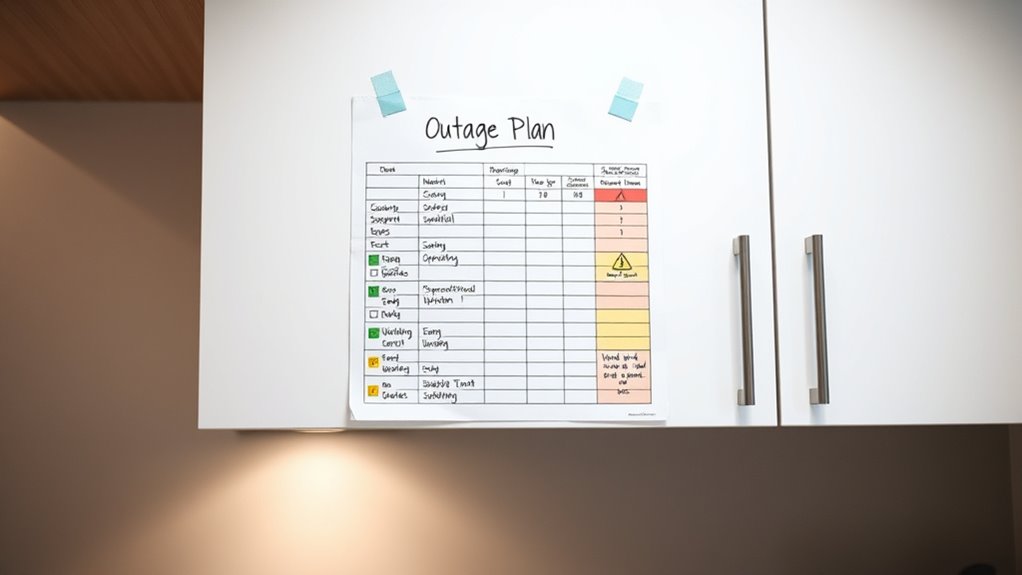
Using custom statuses and fields helps you deliver real-time updates that keep everyone informed. They also enable you to document detailed impact information, so stakeholders understand the scope of the outage. Clear communication reduces confusion and guarantees timely responses during critical moments. Incorporating practical knowledge from your garage upgrades ensures that everyone remains aligned and can act swiftly when needed. Additionally, understanding different styling products can help tailor communication to technical and non-technical audiences alike. For example, knowing about the net worth of reality TV stars like Kate from Breaking Amish can be useful when discussing financial impacts or sponsorship opportunities related to outages. Recognizing the importance of network infrastructure helps clarify where issues originate and guides troubleshooting efforts effectively.
Real-Time Status Updates
Real-time status updates are essential for maintaining clear communication during outages, and leveraging custom statuses and fields makes this process more effective. By setting statuses like Identified, In Progress, or Resolved, you give your team and stakeholders immediate visibility into the outage’s stage. Custom fields such as Affected Systems, Impact Level, and Estimated Resolution Time capture critical details, ensuring everyone understands the scope and urgency. Using dedicated views like Active Outages helps you monitor current issues at a glance. Automations can notify stakeholders automatically as statuses change, reducing manual effort and delays. Multiple channels—texts, emails, social media—relay updates consistently. This approach keeps everyone informed, minimizes confusion, and speeds up response times, ultimately helping you manage outages smoothly.
Detailed Impact Documentation
Effective impact documentation relies on detailed custom fields and statuses to communicate the scope and severity of outages clearly. Use custom statuses like Identified, In Progress, and Resolved to track outage progress in real time. Populate custom fields with specific details such as Affected Systems, Impact Level, and Estimated Resolution Time for each incident. This structured approach guarantees everyone understands the outage’s reach and urgency. Organize data with views like Active Outages, Resolved Outages, and Pending Actions, making updates quick to find. Automations can send notifications automatically based on status changes, keeping stakeholders informed without delay. Incorporating navigation and mapping concepts from household robots can help visualize outage locations and affected areas more effectively. Clear, consistent documentation minimizes confusion, streamlines response efforts, and helps you restore normal operations faster.
Organizing Your Plan With Visual Data Views
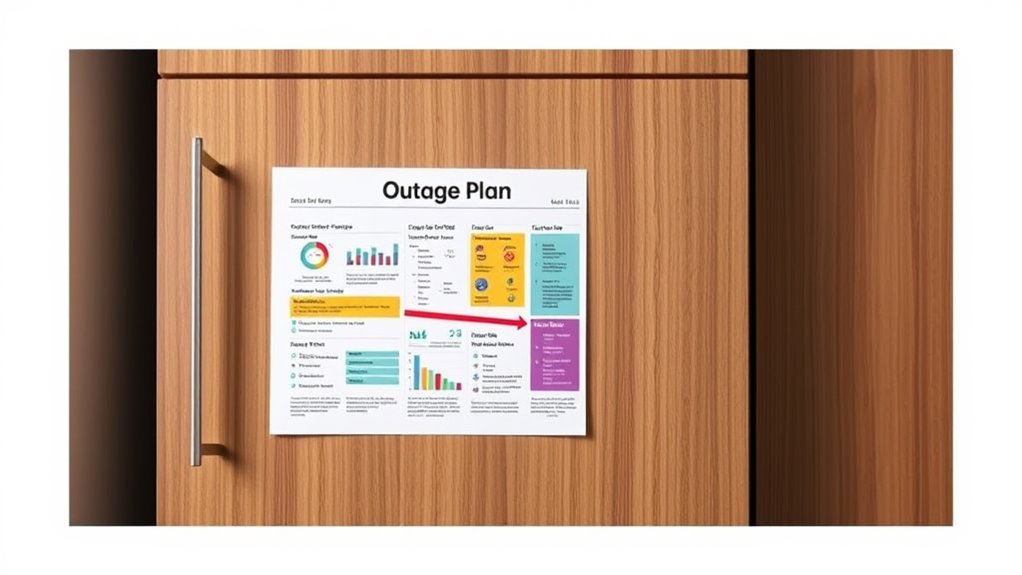
Organizing your outage plan with visual data views helps you quickly grasp the status and progress of each aspect. Use views like Active Outages, Resolved Outages, and Pending Actions to keep everything clear at a glance. These views categorize information, making it easy to identify what needs attention and track ongoing tasks. A well-structured visual layout saves time during emergencies and guarantees everyone stays informed. Incorporating crafting quality wooden products into your training materials can also enhance team understanding of detailed processes. Additionally, understanding the significance of visual data can improve decision-making and response times during critical situations, emphasizing the importance of visual data in effective crisis management. Recognizing the importance of air purifier maintenance dos and don’ts can further optimize your plan’s effectiveness during outages. Staying updated on reconditioning batteries can help maintain backup power systems more reliably during outages.
Automating Notifications to Keep Stakeholders Informed
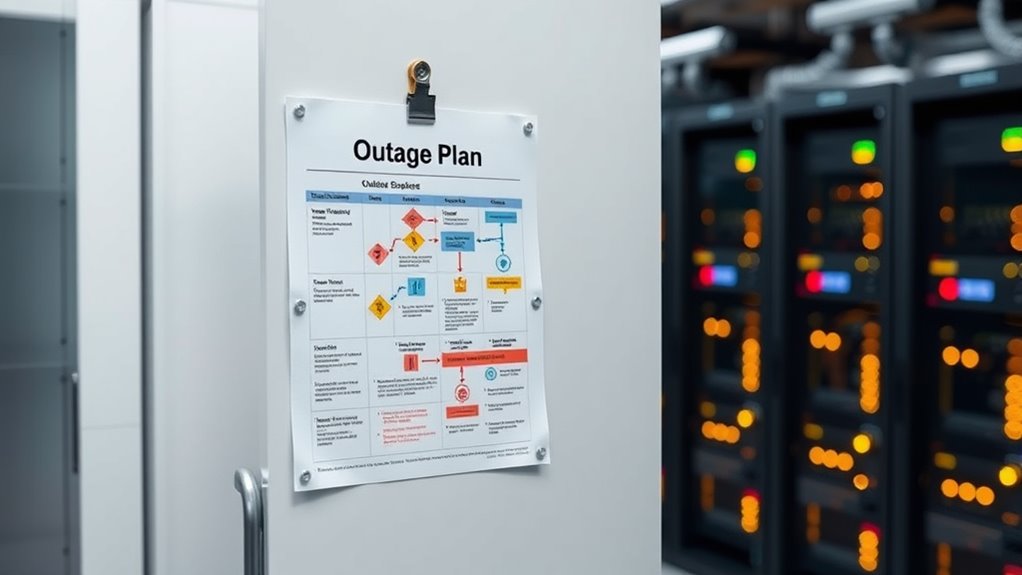
Automating notifications guarantees stakeholders receive timely updates without manual effort, keeping everyone informed throughout the outage lifecycle. By setting up automatic alerts, you ensure that critical information reaches the right people instantly via multiple channels like texts, emails, or social media. Use pre-designed templates for different outage scenarios—planned, unplanned, or ongoing investigations—so updates are clear and consistent. Automations can trigger alerts when statuses change or new information is available, reducing delays and minimizing confusion. This automation process can significantly improve the efficiency of your outage management. This approach frees your team from manual communication tasks, allowing you to focus on resolving the outage. Regularly review and test your notification workflows to confirm they work smoothly, ensuring stakeholders stay confident and informed during every phase of the outage. Incorporating communication strategies based on the latest best practices can further enhance the effectiveness of your outage management. Additionally, understanding somatic therapy techniques can help teams manage stress and maintain focus during high-pressure situations. Moreover, integrating incident response plans ensures that your team is prepared for various outage scenarios and can respond swiftly. Implementing automated monitoring tools can also provide real-time insights, enabling proactive responses and minimizing downtime.
Preparing Contact and Resource Information for Quick Access
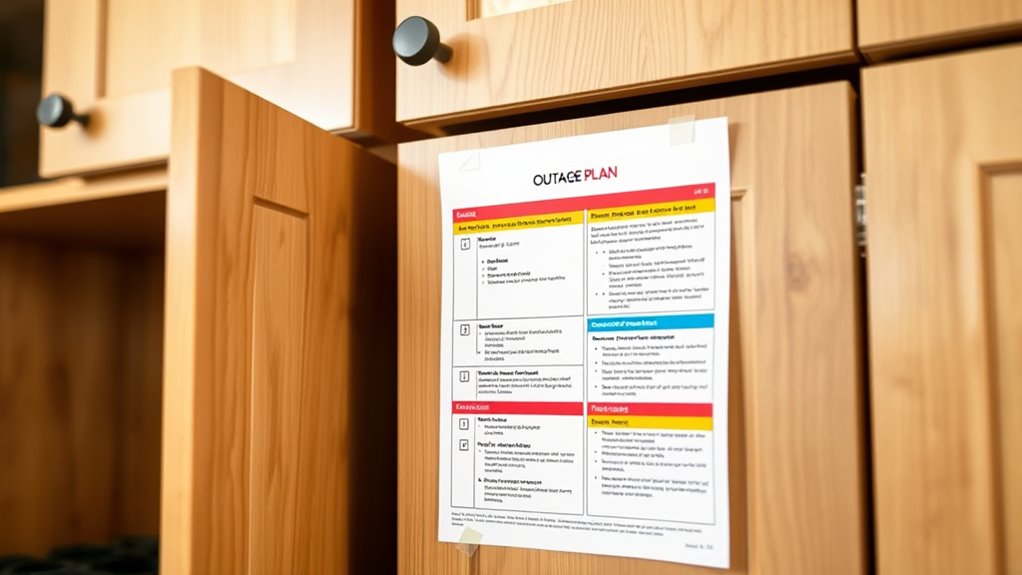
You need to organize your contact list so it’s easy to access quickly during an outage. Managing your resource inventory guarantees you know what’s available when time matters most. Make sure both contact and resource info are visible and accessible, whether digitally or physically, to speed up responses.
Contact List Organization
To guarantee quick access during outages, it’s essential to compile a thorough contact and resource list that’s easy to update and retrieve. Organize contacts by categories such as emergency responders, utility providers, and key team members. Use clear labels and consistent formatting to ensure quick identification. Keep digital copies for easy updates and print a physical version for quick reference. Store the list in a visible, accessible location, like inside a cabinet or near equipment. Regularly review and update contact details to prevent outdated information. Having a well-organized contact list minimizes delays and confusion during critical moments. Incorporating emergency management best practices and emotional needs considerations into your organization can help ensure everyone’s well-being during emergencies. Additionally, consider including essential oils for stress relief to promote calmness and emotional resilience during stressful situations.
Resource Inventory Management
A well-organized resource inventory is essential for quick access during outages, ensuring that critical contact and resource information is readily available when seconds count. You should compile a thorough list of essential equipment, supplies, and personnel, including backup power sources, radios, first aid kits, and key contact numbers. Use clear labels and categorize items logically, such as by location or function. Keep this inventory updated regularly to reflect current stock levels and personnel changes. Store physical copies in a designated spot inside your cabinet, and digitize the information for backup. This way, during an outage, you can quickly locate resources and contact details without searching through clutter or outdated data. An accurate inventory minimizes downtime and streamlines your response efforts.
Accessibility and Visibility
Organizing contact and resource information for rapid access during outages guarantees your team can respond without delay. When everyone knows exactly where to find essential details, response times improve and confusion decreases. To make certain quick access, print a clear, easy-to-read sheet with key contacts and resources. Tape it inside a cabinet or on a wall in a central location. Use large fonts and color coding to highlight critical information. Keep it updated regularly to reflect current contacts and resource statuses. Incorporate a quick-reference checklist for immediate actions. This visibility minimizes search time and streamlines communication during emergencies.
- List of emergency contacts with phone numbers and roles
- Locations of essential resources like generators and first aid kits
- Step-by-step contact protocols for different outage scenarios
Making Your Plan Easily Accessible and Visible
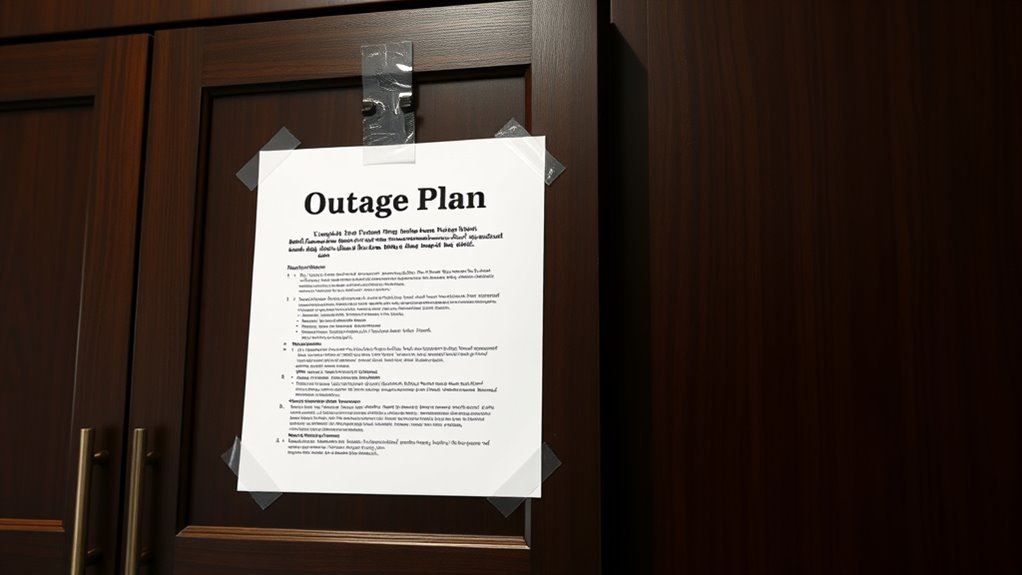
Ensuring your outage plan is easily accessible and visible is crucial for a swift response during emergencies. You should print the plan and tape it inside a cabinet or another prominent spot where team members can quickly find it. This guarantees immediate access, even if digital systems are down or inaccessible. Keep the plan in a protective sleeve to prevent damage from dust or spills. Make sure it’s at eye level and clearly labeled so anyone can locate it without confusion. Regularly check that the printed copy remains legible and up-to-date. Combining physical placement with digital backups ensures your team always knows where to find critical outage information, helping you respond faster and more effectively when minutes matter.
Conducting Drills and Updates to Ensure Readiness
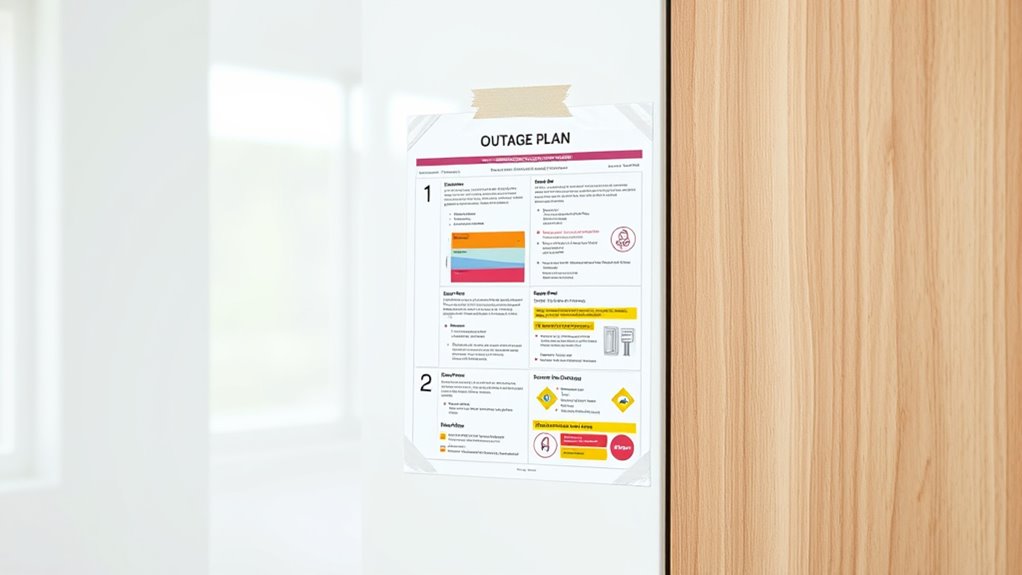
Regularly conducting drills simulates real outage scenarios, helping you identify weaknesses and refine response procedures. These exercises keep your team prepared and confident when actual outages occur. During drills, focus on testing communication channels, response steps, and resource deployment to ensure everything works smoothly. After each drill, review performance, gather feedback, and update your plan accordingly. Keep your team engaged with realistic scenarios to spot gaps early and improve coordination.
- Schedule regular tabletop exercises to evaluate response effectiveness
- Debrief after each drill to identify areas for improvement
- Update your outage plan based on lessons learned and new risks
Benefits of Having a Printed, Taped-Out Plan in Emergencies

Having a printed and taped-out outage plan on hand offers immediate access to critical information during emergencies, bypassing potential delays caused by technology failures or communication breakdowns. You won’t need to rely on digital devices or internet connectivity, which might be compromised. This quick-reference guide allows you to instantly locate essential details like affected systems, contact persons, and step-by-step response actions. It guarantees everyone on-site knows their responsibilities without searching through emails or digital files. Having the plan visible fosters a coordinated response, reducing confusion and saving valuable time. It’s a reliable, tangible resource that keeps your team prepared, confident, and focused, even when modern communication channels are down. This simple measure can make a significant difference in managing outages effectively.
Frequently Asked Questions
How Often Should the Plan Be Reviewed and Updated?
You should review and update your outage plan at least annually, or whenever significant changes occur, such as new systems, updated procedures, or after a drill or actual outage. Regular reviews guarantee your plan remains effective and aligned with current operations. Make it a habit to schedule these updates proactively, and document any adjustments. This way, you stay prepared for unexpected outages and can respond swiftly and confidently.
Who Is Responsible for Maintaining the Physical Tape and Plan?
You’re the hero responsible for maintaining the physical tape and plan, ensuring it’s always in top shape. You need to regularly check the tape for wear and tear, replace it as needed, and keep the plan updated with any procedural changes. Your vigilant eye guarantees that during an outage, everyone can access critical information instantly—like having a lighthouse guiding you through the darkest storm. Stay proactive to keep safety and communication seamless.
What Are the Security Considerations for the Taped Plan?
You should guarantee the taped plan is stored securely to prevent unauthorized access. Use a locked cabinet or designated secure area, limiting access to trained staff only. Avoid placing it in easily accessible or public spaces. Regularly review and update the security measures, and keep a record of who has access. This way, you protect sensitive information while ensuring the plan is available during emergencies.
How Do We Customize the Plan for Different Types of Outages?
You customize the plan by tailoring your notification templates, response steps, and roles based on outage types. For planned outages, include details like schedule and contact info. For unplanned outages, focus on diagnosis and rapid response. Use custom views and automations to track progress and inform stakeholders accordingly. Adjust resource allocations and communication channels to match outage severity, ensuring your team responds efficiently and maintains clear, relevant communication throughout each scenario.
Can the Plan Be Integrated With Digital Outage Management Systems?
Yes, you can integrate your plan with digital outage management systems, turning your static document into a dynamic command center. Think of it as a bridge connecting your physical plan to real-time updates, automations, and data tracking. This seamless link enhances coordination, speeds response times, and guarantees everyone stays informed. By leveraging APIs and compatible software, your outage plan becomes a living tool—empowering you to adapt swiftly and confidently during crises.
Conclusion
Having a printed outage plan taped inside a cabinet keeps critical information within arm’s reach during emergencies. Studies show that 75% of organizations that prepare in advance recover faster from outages. By keeping your plan visible, you guarantee quick access, clear communication, and effective coordination when it matters most. Regular drills and updates make sure your plan stays reliable. Stay prepared, stay confident—your quick response can make all the difference in minimizing downtime.
Fall Picks
fall essentials
As an affiliate, we earn on qualifying purchases.