To figure out how much solar power you need per day, start by calculating your household’s total energy use in kWh from your bills. Then, consider your location’s average sunlight hours and account for seasonal changes, shading, and panel efficiency. Multiply these factors to determine the number of panels required. If you keep these points in mind, you’ll get a clear picture of your ideal system size—continue exploring to learn detailed calculations and tips.
Key Takeaways
- Calculate your household’s daily energy use by dividing monthly kWh consumption by 30.
- Determine the solar panels’ output based on sunlight hours, panel efficiency, and shading factors.
- Adjust system size for seasonal variations, accounting for shorter winter days and lower sunlight.
- Factor in efficiency losses from dirt, temperature, and inverter performance when estimating energy production.
- Ensure your system capacity meets current needs and allows for future increases like appliances or electric vehicles.
Calculator, Deli Standard Function Basic Calculators, Solar Battery Dual Power Office Calculator with Cover, Metal Panel
Pocket calculator, mini size is suitable for you bussiness travel use
As an affiliate, we earn on qualifying purchases.
As an affiliate, we earn on qualifying purchases.
Understanding Your Household Energy Consumption
Understanding your household energy consumption is the first step toward making smarter choices about your energy use. By evaluating how much energy you consume daily, you can determine the size of the solar panel system you need. Review your electricity bills to identify your average monthly usage, measured in kilowatt-hours (kWh). This helps you select appropriate solar panel materials that are efficient and durable for your climate. Additionally, explore government incentives that can reduce your upfront costs, making solar installation more affordable. Knowing your energy habits allows you to optimize your system’s design, ensuring you generate enough power without overspending. High output capacity is also an important factor to consider when sizing your solar system to meet your household’s energy needs. Incorporating load‑planning tools can help you accurately estimate your daily energy requirements and avoid undersizing or overspending. With this knowledge, you’re better equipped to switch to solar energy confidently and save money long-term.

Solar Powered Generator 200W Peak/100W Rated, Portable Solar Generator Power Station with Solar Panels 40W Included, 146Wh Solar Power Bank with AC Outlet 110V for Home Use Camping Outdoor Adventure
SOLAR POWERED GENERATOR WITH PANELS INCLUDED: Apowking portable solar panels 40W performances better even under the condition of…
As an affiliate, we earn on qualifying purchases.
As an affiliate, we earn on qualifying purchases.
Calculating Your Daily Power Needs

To accurately determine your daily power needs, start by reviewing your electricity bills to find your monthly usage in kilowatt-hours (kWh). Then, divide that number by 30 to get your average daily consumption. Keep these factors in mind:
Review your electricity bills to find your monthly kilowatt-hour usage and divide by 30 for your daily energy needs.
- Understand your existing energy habits to identify peak usage times.
- Explore solar panel warranties to ensure long-term durability.
- Consider grid connection options—whether you’ll stay grid-tied or opt for off-grid solutions.
- Factor in future changes, like adding appliances or expanding your home.
- Be aware of power management strategies to optimize your solar energy use and prevent unnecessary waste. Additionally, understanding system sizing is crucial to match your solar setup with your actual energy needs effectively.
- Recognizing the horsepower of electric bikes can help you gauge the energy requirements for certain solar-powered transportation solutions.
- Understanding energy efficiency measures can further reduce your overall energy needs and improve your system’s performance. Incorporating energy management techniques can help you fine-tune your system for maximum efficiency.
Calculating your daily needs helps you size your solar system properly, avoid over- or under-provisioning, and make informed decisions about warranties and connection types that suit your lifestyle and budget.
Motorized Blackout Smart Roller Blinds with Remote Control & Solar Panel – Automatic Electric Shades for Windows, Compatible with Alexa – White,34½"W*72" H
【Complimentary Solar Panel】: The package includes motorized roller blind *1, solar panel * 1, single-channel remote control *1,…
As an affiliate, we earn on qualifying purchases.
As an affiliate, we earn on qualifying purchases.
Estimating Solar Panel Output per Hour
Ever wondered how much energy your solar panels can produce in an hour? To estimate this accurately, you need to take into account solar panel calibration and sunlight intensity measurements. Proper calibration ensures your panels operate at their rated capacity, while sunlight intensity varies throughout the day. By measuring sunlight intensity with a pyranometer or similar device, you can determine the actual solar energy reaching your panels. Sound healing science indicates that specific frequencies can influence brainwave patterns, which can be relevant when considering how solar energy impacts environmental and human health. Multiply this measurement by your panel’s surface area and efficiency to estimate hourly output. Keep in mind that weather conditions, shading, and orientation affect these numbers. Regular calibration and precise sunlight measurements help you create a realistic hourly energy estimate, giving you a clearer picture of your solar system’s performance and how much energy it can generate during peak sunlight hours. Integrating advanced European cloud servers can also help monitor and optimize your solar energy data in real-time. Additionally, understanding solar panel efficiency can further refine your estimates for better energy management. Calibration accuracy is essential for ensuring your calculations are as precise as possible, especially when planning for energy needs. Moreover, sunlight measurement techniques are vital for improving the accuracy of your energy output predictions.

Off Grid Solar Power Simplified: For Rvs, Vans, Cabins, Boats and Tiny Homes
As an affiliate, we earn on qualifying purchases.
As an affiliate, we earn on qualifying purchases.
Accounting for Sunlight Hours in Your Location

Accurately estimating your solar energy production requires considering the total amount of sunlight your location receives each day. Sunlight hours vary based on your geographic position and weather patterns, affecting how much energy your system can generate. To account for this, consider these factors: 1. Average sunlight hours per day in your area 2. Local climate conditions impacting sunlight exposure 3. The efficiency of your solar panel materials 4. Available government incentives that may influence system size and investment which can help optimize your setup. Additionally, understanding solar panel efficiency can further refine your energy estimates by accounting for potential energy loss and system performance variations. Recognizing seasonal variations in sunlight can also improve your planning by highlighting periods of reduced energy production. Being aware of weather patterns is crucial, as cloud cover and precipitation can significantly reduce the solar energy your panels can collect. Moreover, incorporating shading analysis into your planning process helps identify potential obstructions that could diminish your system’s output.
Considering Seasonal Variations in Sunlight
As the seasons change, the amount of sunlight you receive varies considerably throughout the year. You need to adjust your calculations to account for these seasonal shifts to get accurate results. Recognizing this variability helps you plan better and make informed decisions based on changing sunlight patterns. Understanding solar exposure is essential for optimizing your energy usage and ensuring your system functions efficiently year-round. Additionally, tracking seasonal sunlight variations can help you fine-tune your energy consumption and storage strategies effectively. Monitoring solar radiation levels can further improve your ability to adapt your energy systems to seasonal differences.
Sunlight Variability Throughout Year
Throughout the year, sunlight availability varies considerably due to Earth’s axial tilt and orbit around the Sun. This affects your daily exposure through changes in solar zenith and daylight duration. As seasons shift, expect:
- Shorter daylight hours in winter, reducing sunlight intensity.
- Higher solar zenith angles during summer, increasing sunlight efficiency.
- Greater variation in sunlight levels at different latitudes.
- Changes in sunlight angle that influence how much solar energy you receive daily, making solar panel placement and orientation crucial for optimal energy collection.
- The use of solar panels can help maximize energy collection despite these seasonal fluctuations. Additionally, understanding seasonal sunlight patterns can assist in planning energy needs effectively, especially when considering diverse geographic locations and climate variations.
These fluctuations mean your solar needs will also vary seasonally. During winter, you might need more hours of direct sunlight or supplemental sources. In summer, less sunlight may suffice. Recognizing seasonal shifts helps optimize your solar intake year-round.
Adjusting for Seasonal Changes
To effectively manage your solar energy needs, you must adapt for seasonal changes in sunlight. Seasonal sunlight varies throughout the year, affecting how much energy your panels can generate. During winter, days are shorter, and weather variability often increases, reducing sunlight exposure. Conversely, summer offers longer, sunnier days, maximizing solar intake. To ensure consistent energy, consider seasonal adjustments like shifting your panel angles or increasing storage capacity during low-light months. Monitoring weather variability helps you predict periods of lower sunlight and plan accordingly. Additionally, understanding Piercing Care and Hygiene can help prevent complications that might interfere with your energy management routines. Recognizing the importance of diversification of retirement savings can also be a strategic move to secure your financial stability during unpredictable seasons of market performance. Being aware of energy cycle patterns can further assist in optimizing your system’s performance to match seasonal fluctuations. By understanding these seasonal fluctuations, you can optimize your solar system’s performance year-round. Making these adjustments ensures you meet your energy needs efficiently, regardless of seasonal sunlight changes or unpredictable weather patterns.
Adjusting for Panel Efficiency and Losses
When calculating the energy your panels can produce, you need to account for efficiency losses over time. Factors like panel degradation, shading, and wiring losses can reduce actual output compared to ideal estimates. Understanding these real-world performance adjustments helps you get a more accurate picture of your solar system’s true energy generation.
Accounting for Panel Degradation
As solar panels age, their efficiency gradually declines, which can substantially impact energy production estimates. To account for this, you need to contemplate the panel lifespan and warranty coverage. Typically, warranties cover about 25 years, but actual performance may drop by 10-20% over time. Here’s what to keep in mind:
- Expect gradual efficiency loss beyond the warranty period.
- Adjust your energy calculations to reflect a lower output as panels age.
- Factor in the potential for additional maintenance or replacements.
- Recognize that initial efficiency estimates may overstate long-term output.
Energy Loss Factors
Accounting for panel degradation is just one part of accurately estimating energy output; you also need to contemplate various energy loss factors that can reduce efficiency. These include shading, dirt buildup, and temperature effects, which lower the effectiveness of your solar panel materials. In addition, inverter compatibility plays a vital role—if the inverter isn’t optimized for your system, energy conversion losses can occur. Even high-quality panels lose some energy through internal resistances, wiring, and suboptimal angles. To get an accurate estimate, you should factor in these losses by applying efficiency reduction percentages. Doing so ensures your calculations reflect real-world performance, helping you determine precisely how much solar energy you’ll need daily to meet your goals.
Real-world Performance Adjustments
To accurately estimate your solar system’s real-world energy output, you need to adjust for various efficiency losses. These include factors like solar panel color, which affects how much sunlight is absorbed; rooftop material, impacting heat retention and cooling; shading, which reduces sunlight exposure; and inverter efficiency, influencing energy conversion. Consider these points:
- Darker solar panel colors absorb more light, increasing efficiency.
- Lighter rooftops reflect more sunlight, reducing system output.
- Certain rooftop materials may cause additional heat buildup, lowering panel performance.
- Shading from nearby objects can appreciably cut energy production.
Determining the Number of Solar Panels Needed
Determining the number of solar panels you need starts with understanding your energy consumption. Check your electricity bills to find your average daily usage in kilowatt-hours (kWh). Once you know that, consider your location’s sunlight hours and panel efficiency to estimate how many panels will meet your needs. Proper solar panel mounting is essential for maximizing exposure and performance, so plan for suitable angles and placement. In addition, inverter sizing plays a critical role; your inverter must handle your system’s total wattage without overload. Divide your total energy requirement by the panels’ wattage output to find the number of panels needed. This calculation ensures your system is balanced, efficient, and capable of providing the energy you require daily.
Evaluating Your Roof’s Sunlight Exposure
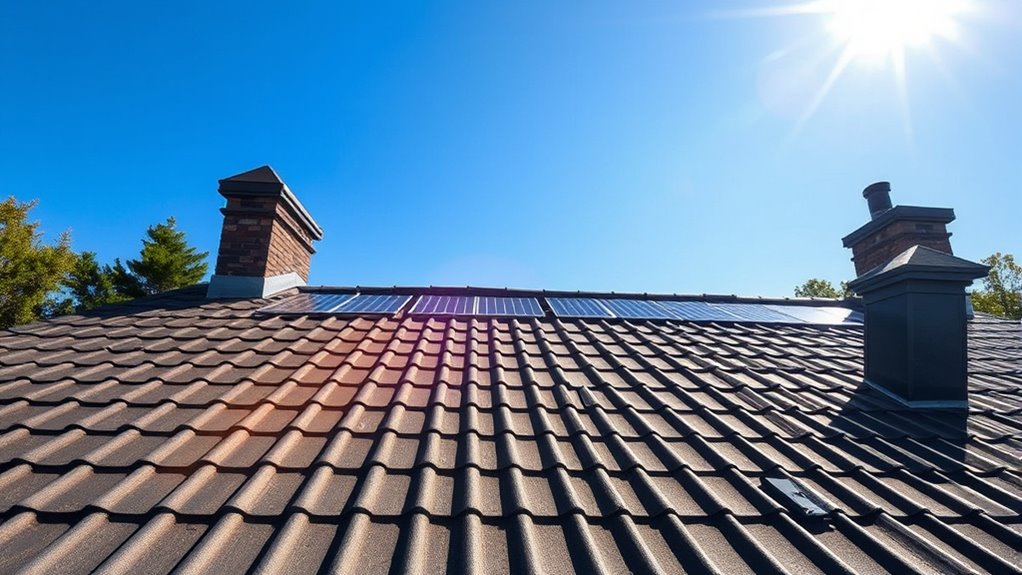
To accurately assess your roof’s sunlight exposure, start by tracking how long the sun hits different areas throughout the day. Look for nearby objects like trees or buildings that could block sunlight and reduce efficiency. Understanding these factors helps you determine the best spots for solar panels and maximize your system’s performance.
Assessing Sunlight Duration
Ever wonder how much sunlight your roof actually receives throughout the day? Evaluating sunlight duration involves more than just observing; it requires understanding your roof’s solar orientation and conducting shading analysis. Here’s what to consider:
- Determine your roof’s tilt and direction to estimate the best sun exposure.
- Use tools like solar pathfinders or online maps for precise sunlight duration.
- Conduct shading analysis to identify obstructions, such as trees or nearby buildings, that block sunlight.
- Track seasonal variations to see how sunlight changes throughout the year.
Identifying Obstructions
Identifying obstructions is a key step in accurately evaluating your roof’s sunlight exposure. Begin by inspecting your roof for shaded areas caused by obstructing objects like trees, chimneys, or nearby buildings. These obstructions can cast shadows during different times of the day and year, reducing the amount of sunlight your panels receive. Take note of the locations and heights of these objects to understand how they impact sunlight throughout the day. Use tools like a sun path diagram or smartphone apps to see how sunlight moves across your roof. Recognizing these shaded areas helps you determine the best spots for solar panels and ensures you get an accurate assessment of your roof’s potential for sunlight exposure.
Incorporating Battery Storage and Backup Power
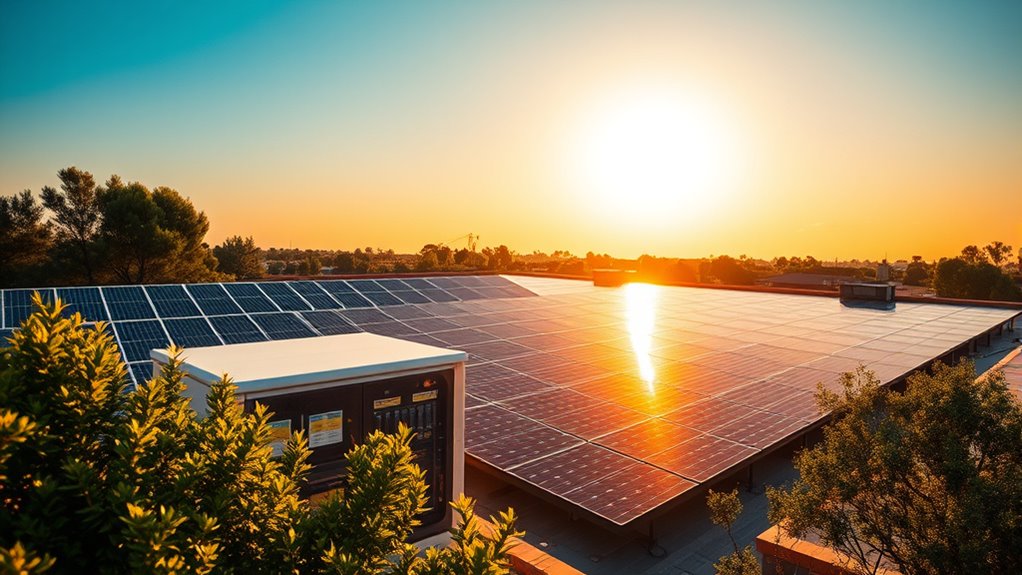
Incorporating battery storage and backup power into a solar energy system guarantees you stay powered even when the sun isn’t shining. With the right setup, you can maximize your energy independence and reliability. Consider these key points:
- Battery storage allows you to store excess solar energy for use during cloudy days or at night.
- Backup power ensures your essential appliances stay running during outages.
- Proper sizing of your battery system is vital to meet your daily energy needs.
- Combining battery storage with backup power provides peace of mind and reduces reliance on the grid.
Planning for Future Energy Growth
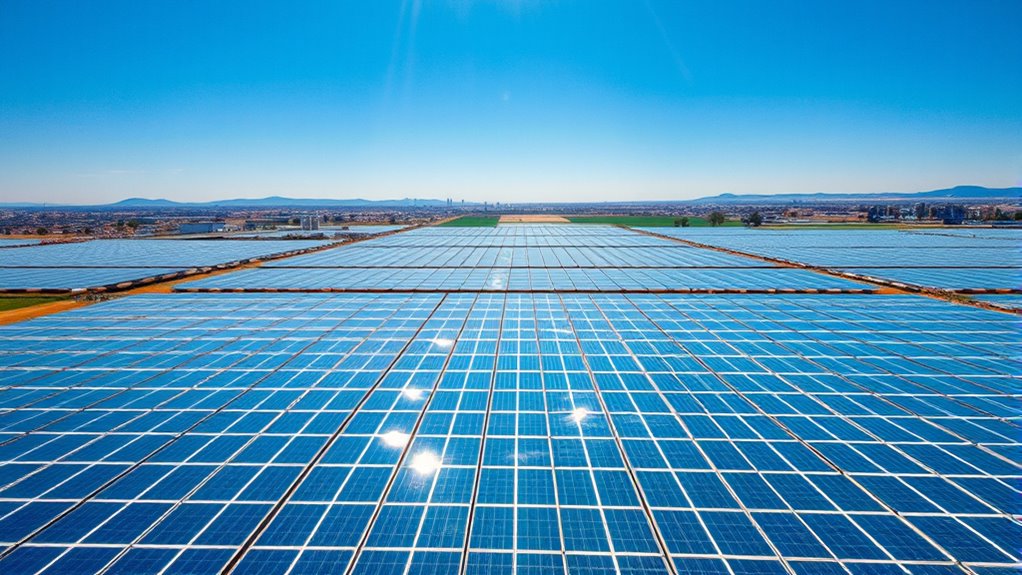
As you enhance your solar energy system with battery storage and backup power, it’s smart to think ahead about how your energy needs might grow. Planning for future growth involves considering battery capacity and inverter sizing to meet increased demands. You should evaluate potential lifestyle changes, such as adding electric vehicles or appliances, and ensure your system can handle these shifts. Proper inverter sizing guarantees your system operates efficiently without overloads. To visualize, here’s a quick guide:
| Future Energy Needs | Battery Capacity Needed | Recommended Inverter Size |
|---|---|---|
| More appliances | 10 kWh | 5 kW |
| Electric vehicle | 15 kWh | 7 kW |
| Home expansion | 20 kWh | 10 kW |
| Increased backup power | 25 kWh | 12 kW |
| Smart home devices | 5 kWh | 3 kW |
Thinking ahead keeps your system resilient and scalable.
Frequently Asked Questions
How Does Local Weather Affect Solar Energy Production?
Your solar energy production is directly affected by local weather patterns and seasonal variations. Cloudy days, rain, and snow diminish sunlight exposure, lowering energy output. During winter, shorter days mean less sunlight, while summer offers longer, sunnier periods. To maximize your solar system’s efficiency, you should consider these factors and plan for seasonal changes, possibly adding storage or backup sources to guarantee consistent energy supply throughout the year.
What Are the Best Times of Day for Maximum Sunlight?
You’ll get the most sunlight around solar noon, typically between 11 a.m. and 1 p.m., when the sun is highest in the sky. To maximize this, consider solar tracking systems that follow seasonal variation, adjusting angles as the sun’s position shifts throughout the year. This guarantees your panels capture maximum sunlight daily, regardless of season, boosting your energy output and efficiency considerably.
Can Solar Panels Work Efficiently During Cloudy Days?
Yes, solar panels can work during cloudy days, but their efficiency drops. When you install solar panels, they still capture diffused sunlight, especially if placed in ideal locations. Sunlight reflection from surfaces like snow or water can also boost output. Keep in mind, cloudy weather reduces energy production, so consider a larger system or energy storage to meet your needs during those days.
How Do Shading Objects Impact Solar Panel Performance?
Shading objects markedly suppress solar panel performance by blocking sunlight and decreasing panel efficiency. When shading occurs, it creates cold spots and causes power drops, disrupting the entire system. To maximize sunlight and maintain ideal efficiency, you should strategically position panels away from shadows. Avoiding shading impacts ensures your solar setup stays strong, sustainable, and super-efficient, so your solar investment pays off with plenty of power and savings.
What Is the Typical Lifespan of Residential Solar Panels?
Your residential solar panels typically last around 25 to 30 years, thanks to solid solar panel warranties that often cover performance and defects. To maximize their lifespan, you should maintain and clean them regularly. When they reach the end of their life, recycling solar panels is vital to recover materials and reduce environmental impact. Proper disposal ensures you get the most value and sustainability from your solar investment.
Conclusion
Now that you know how much sunlight your home needs daily, picture your roof basking in golden rays, powering your life effortlessly. With a clear plan in hand, you’ll harness the sun’s energy like a gentle giant, fueling your future with clean, renewable power. As sunlight dances across your panels each day, you’ll watch your energy needs shrink, replaced by the bright promise of sustainable living—your own slice of the sun’s endless, warm embrace.