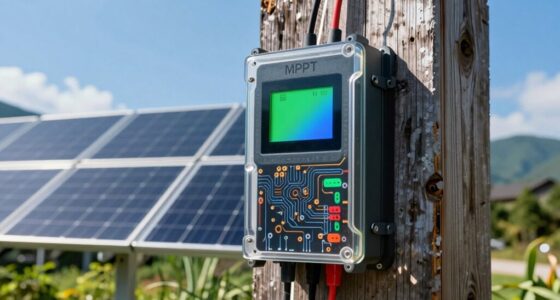
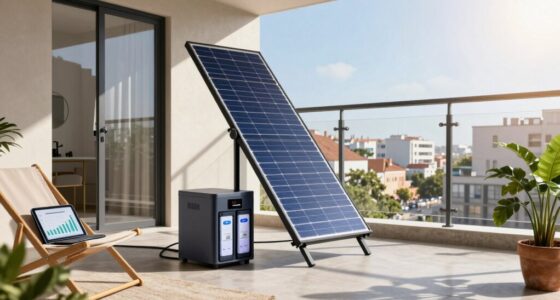
At noon, the sun’s intensity is at its peak, but high temperatures also cause solar panels to heat up considerably. As temperatures rise beyond 25 °C, the efficiency of your panels drops, a phenomenon called heat derating. This means your system produces less power despite the strong sunlight. The increased heat causes internal resistance, reducing current flow and overall output. To discover how you can minimize these effects, keep exploring the details behind heat management.
Open a free Amazon Business account
Business pricing, bulk buying and tax-exempt orders.
As an affiliate, we earn on qualifying purchases.
Key Takeaways
- Solar panels generate less power at high temperatures due to increased resistance in semiconductor cells.
- Heat causes the voltage output of PV cells to drop, reducing overall system efficiency during peak sun hours.
- The temperature coefficient indicates power loss; a 30°C rise can reduce output by approximately 11%.
- Inverters may also derate or overheat, decreasing energy conversion efficiency during hot midday periods.
- Proper thermal management and cooling strategies help mitigate heat derating and maintain optimal solar charging.
As an affiliate, we earn on qualifying purchases.
How Heat Impacts Solar Panel Performance
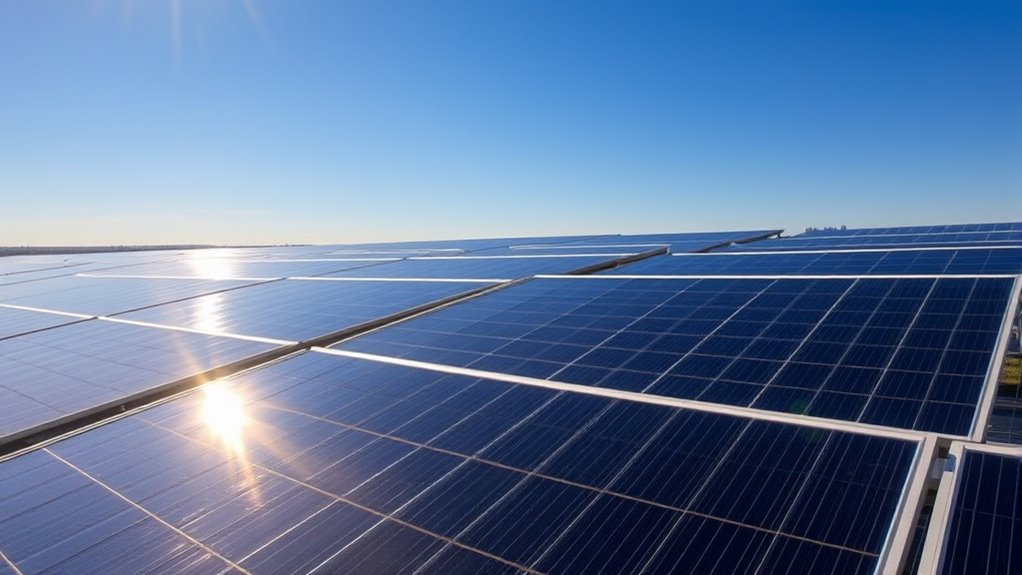
Heat directly affects solar panel performance by reducing the voltage output of the PV cells. When temperatures rise above the standard test conditions of 25 °C, the semiconductor materials inside the modules become less efficient at converting sunlight into electricity. As a result, the open-circuit voltage drops, which decreases the maximum power the panel can produce. Typically, crystalline silicon panels have a temperature coefficient between −0.2% and −0.5% per °C, meaning each degree above 25 °C reduces power output. During midday, when the sun is most intense, module temperatures often reach 65 °C or higher, causing significant voltage loss. This heat-induced derating lowers overall system efficiency, especially at peak sunlight hours, leading to reduced energy generation exactly when you need it most. Color temperature adjustments can help optimize performance in varying heat conditions. Additionally, implementing cooling techniques such as passive airflow or water cooling can mitigate high-temperature effects and improve overall efficiency. Proper heat management strategies are essential for maintaining maximum energy output during the hottest parts of the day. Recognizing how temperature impacts performance is crucial for designing and maintaining efficient solar systems in hot climates, especially when considering climate-specific system design.
As an affiliate, we earn on qualifying purchases.
The Role of Inverter Thermal Management
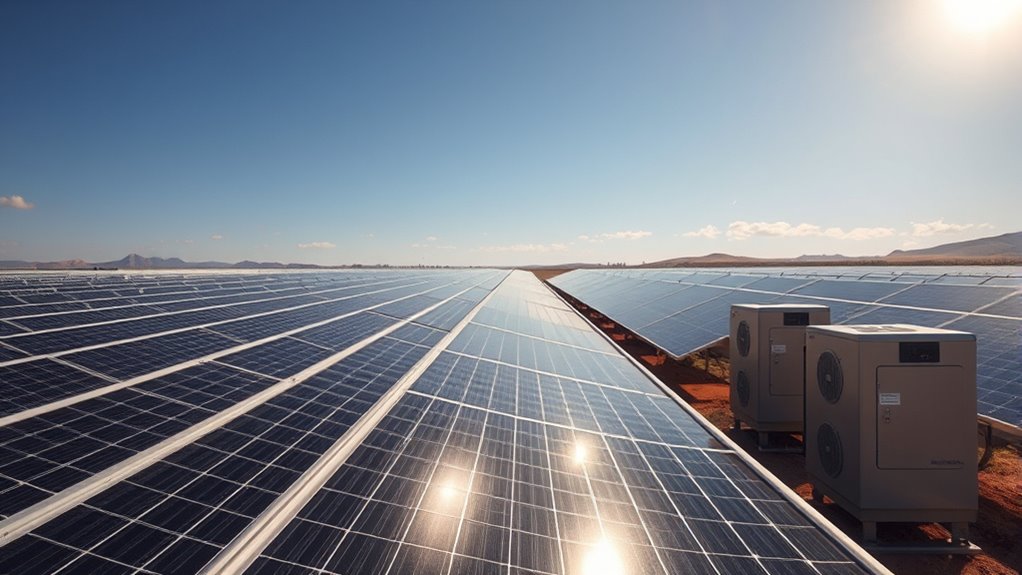
Effective inverter thermal management is essential because high internal temperatures can trigger derating and reduce overall system output. When inverters overheat, they activate protective measures that limit power to prevent damage, leading to decreased energy delivery during peak sunlight hours. Proper cooling methods, such as heat sinks, fans, or strategic placement in shaded or ventilated areas, keep internal components within safe operating temperatures. Good airflow around the inverter reduces thermal buildup, ensuring it operates efficiently and maintains maximum output. Additionally, selecting inverters designed with robust thermal management features can mitigate heat-related derating. Thermal management plays a crucial role in maintaining inverter performance and longevity, especially in hot environments. Efficient cooling strategies help prevent thermal overloads and sustain high system efficiency. Consistent temperature control not only optimizes immediate performance but also extends inverter lifespan, reducing maintenance costs and ensuring reliable energy production during the hottest parts of the day. Incorporating innovative cooling solutions can further enhance heat dissipation and system reliability. Implementing advanced thermal design strategies can help prevent overheating and improve overall system resilience.
passive airflow solar panel cooling
As an affiliate, we earn on qualifying purchases.
As an affiliate, we earn on qualifying purchases.
Why Midday Temperatures Cause Power Drop
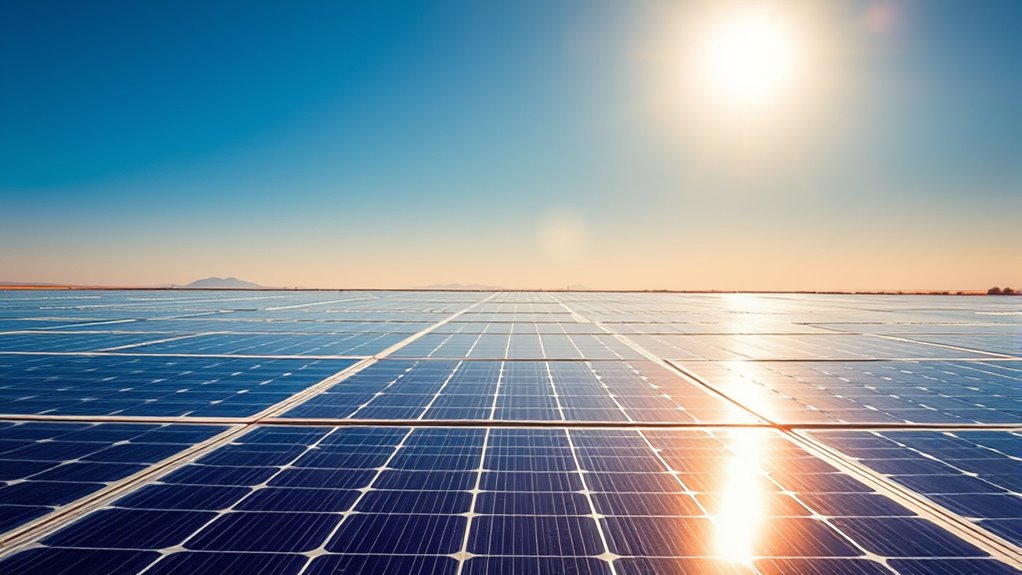
Midday temperatures cause power drops in solar systems because the intense sunlight that produces maximum energy also raises the temperature of PV modules and inverters beyond their ideal operating ranges. As modules heat up above their rated 25 °C, their voltage drops due to semiconductor characteristics, reducing overall power output. Crystalline silicon panels typically lose about 0.2% to 0.5% of their capacity per degree Celsius increase, leading to significant midday losses. Similarly, inverters heat up from high DC input and ambient conditions, triggering thermal protection and clipping. Hot surfaces, such as rooftops over asphalt, worsen heat buildup. This combination of higher module and inverter temperatures causes the system to operate below its peak potential during midday, resulting in noticeable power drops. Understanding temperature effects helps optimize system performance and longevity. Additionally, implementing heat management solutions such as ventilation or cooling can mitigate these issues. Proper system design that considers local temperature coefficients and environmental factors can further minimize efficiency losses during peak heat. In some cases, temperature coefficients can be considered when designing or upgrading a solar array to minimize efficiency losses. Recognizing the impact of solar panel temperature on output can lead to better installation strategies and increased energy yields.
As an affiliate, we earn on qualifying purchases.
Quantifying the Effect of Temperature on Energy Output
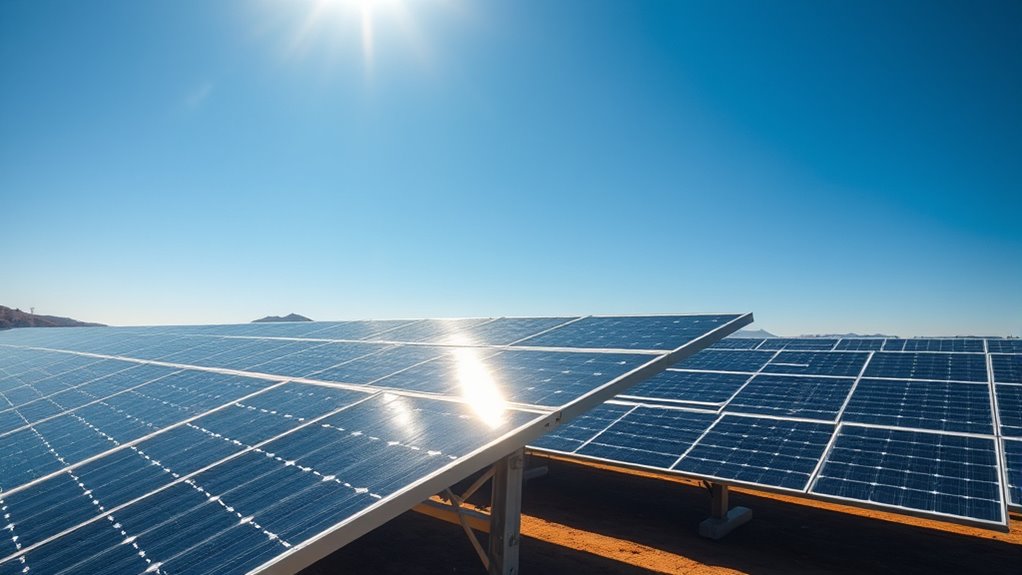
Understanding how temperature impacts energy output requires quantifying the relationship between thermal conditions and power loss. You can measure this impact using the temperature coefficient, which indicates how much power decreases per degree Celsius above 25 °C. For crystalline silicon panels, this typically ranges from −0.2% to −0.5% per °C. For example, with a −0.38%/°C coefficient, a 30 °C increase above standard test conditions results in about an 11.4% power reduction. Surface temperatures often reach 65 °C or higher under peak sun, causing significant losses. Inverter derating can add another 3% reduction per °C above internal thresholds. By quantifying these effects, you understand how midday heat can cause substantial drops—often 10–25%—in energy output compared to ideal conditions. Additionally, heat derating is a critical factor that further influences the efficiency of solar panels during peak heat periods. Recognizing the net worth of solar components can also help in designing systems that mitigate heat-related power losses. Moreover, monitoring thermal performance allows for better system management and optimization during hot conditions. Being aware of temperature effects helps in implementing effective cooling solutions to improve overall energy yield.
Strategies to Minimize Heat-Related Solar Losses
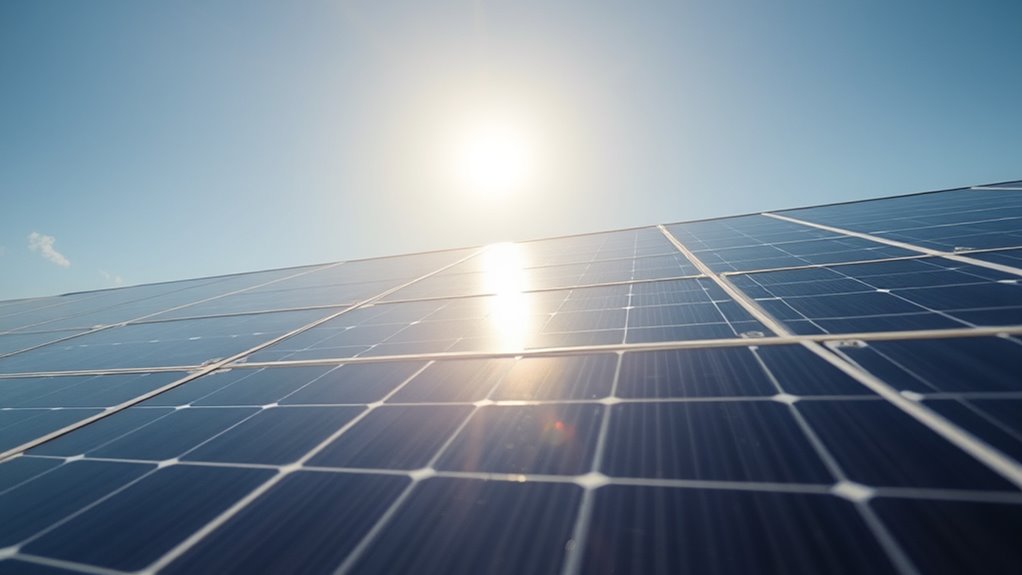
To minimize heat-related solar losses, you should focus on improving the cooling and ventilation of your solar array. Increase mounting clearance to enhance airflow beneath panels, reducing operating temperatures. Choose modules with lower temperature coefficients or alternative chemistries that handle heat better. Implement passive cooling methods like reflective coatings or white backsheets, or consider active cooling solutions such as fans or heat sinks for inverter cooling. Proper placement of inverters in shaded, ventilated areas prevents overheating. Regularly inspect and clean modules to reduce soiling that traps heat. Avoid installing panels over hot surfaces like asphalt; instead, use reflective or cooler mounting surfaces. Monitoring system temperatures helps identify hotspots and optimize cooling strategies. Using temperature management techniques can further help keep modules cooler, maintaining efficiency and reducing midday power losses. Additionally, employing thermal management strategies such as heat exchangers or advanced materials can significantly improve overall system performance. These steps keep modules cooler, maintaining efficiency and reducing midday power losses.
Frequently Asked Questions
How Do Different Panel Materials Affect Heat-Related Derating?
Different panel materials impact heat-related derating by varying in their temperature coefficients and heat tolerance. For example, monocrystalline silicon panels usually have lower negative coefficients, meaning they handle high temperatures better. Thin-film modules often perform better in hot conditions due to their higher temperature coefficients but may produce less power overall. Choosing materials with lower temperature sensitivities helps minimize midday power loss and improves overall system performance in hot climates.
Can Shading or Soiling Amplify Midday Heat Losses?
Shading or soiling is like a blanket trapping heat on your panels, intensifying midday heat losses. When dirt, dust, or shadows cover parts of your panels, they reduce the cooling airflow and increase local hotspots. This makes the panels hotter and exacerbates thermal derating, lowering overall efficiency. So, regular cleaning and trimming shadows can help keep your panels cooler and maintain higher power output during peak sunlight hours.
What Inverter Features Help Reduce Thermal Derating?
You can reduce thermal derating by choosing inverters with built-in cooling features like fans or heat sinks that actively manage internal temperatures. Opt for models with wide operating temperature ranges and smart thermal management systems that automatically adjust power output during high temperatures. Additionally, inverters with advanced monitoring and control capabilities enable you to optimize cooling strategies and catch overheating issues early, ensuring consistent performance even at peak heat.
How Does Mounting Height Influence Module Operating Temperatures?
By increasing mounting height, you improve airflow around your modules, which helps keep their temperatures lower. Elevated mounting allows for better convective cooling, reducing heat buildup from direct sunlight and hot surfaces. This means your panels operate closer to their ideal temperature, maintaining higher efficiency and power output. Proper mounting height is a simple yet effective way to minimize heat-related losses, especially during peak midday heat when temperatures tend to rise the most.
What Is the Long-Term Impact of Repeated Thermal Cycling on System Lifespan?
Repeated thermal cycling shortens your system’s lifespan by causing material fatigue, cracks, and solder joint failures. As your modules expand and contract with temperature changes, they develop microcracks that reduce efficiency and increase maintenance needs. Over time, these stresses weaken components, leading to potential failures and decreased performance. To mitigate this, guarantee proper installation with adequate ventilation, use durable materials, and regularly monitor your system to catch issues early.
Conclusion
Understanding how heat impacts your solar panels helps you stay ahead of midday power dips. Think of your system as a finely tuned orchestra—when the temperature rises, the harmony can falter. By implementing strategic cooling and proper maintenance, you can keep your energy production steady, even at the sun’s peak. Remember, managing heat isn’t just about preserving panels; it’s about ensuring your solar symphony continues to play at full volume when the sun is hottest.
Fall yard work Picks
leaf blowers
As an affiliate, we earn on qualifying purchases.