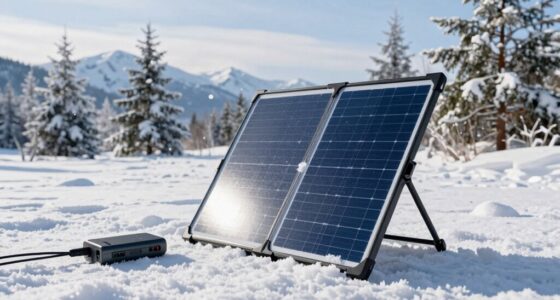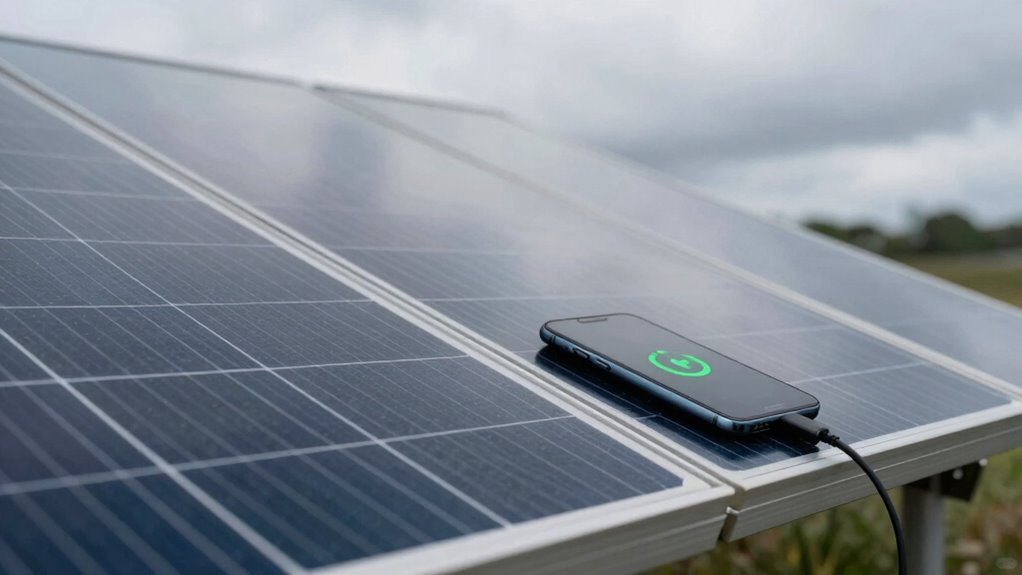

You might feel your solar charger is slow because it operates below 100% efficiency, usually around 20-25%, depending on your panel quality and conditions. Cooler temperatures help it work better, while heat or shading can reduce power even on sunny days. Proper placement and equipment matter too. Many factors combine to slow down charging, so if you stick around, you’ll discover how to optimize your setup and improve your experience.
Listen free for 30 days with Audible
Thousands of audiobooks and originals — cancel anytime.
As an affiliate, we earn on qualifying purchases.
Key Takeaways
- Solar panels convert sunlight to electricity at limited efficiencies, slowing charging despite bright conditions.
- Higher ambient temperatures reduce panel efficiency, leading to slower power generation.
- Shading, incorrect angles, or dirty panels decrease sunlight absorption and charging speed.
- Equipment quality and technology set inherent limits on how fast devices can charge.
- Multiple factors like efficiency, temperature, and placement combine to cause perceived slow charging.
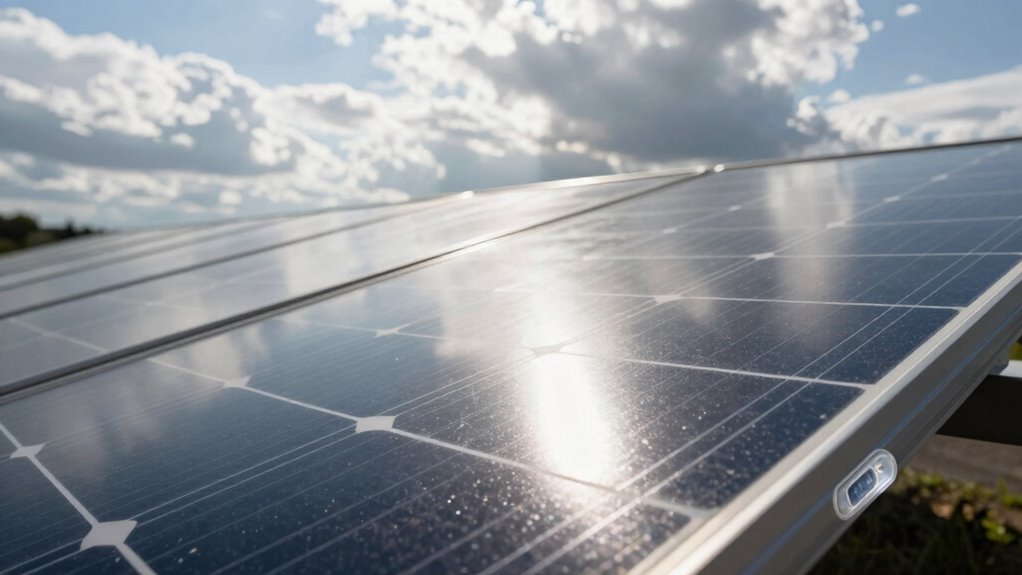
Many people expect solar charging to be quick and efficient, but in reality, it often feels much slower than they anticipate. The main reason for this is the inherent limitations of solar panel efficiency. Solar panels convert sunlight into electricity, but they never operate at 100% efficiency. Factors like the quality of the panel, its age, and how it’s installed all influence how much sunlight is converted into usable power. Even the best panels can only reach about 20-25% efficiency under ideal conditions. So, if you’re counting on fast-charging times, you need to understand that the process isn’t instantaneous. Instead, it’s a gradual transfer of energy, which can be surprisingly slow, especially if you’re dealing with larger devices or batteries.
Solar charging is slow due to efficiency limits, temperature effects, and installation factors, making quick power-ups unrealistic.
Another critical factor that impacts solar charging speed is ambient temperature. You might think that hot, sunny days are perfect for maximizing solar energy, but the opposite is often true. Solar panels tend to perform better in cooler temperatures. When ambient temperature rises, the efficiency of the panel decreases because heat causes the solar cells to become less effective at converting sunlight into electricity. On hot days, the panel’s output drops, meaning you get less power than you might expect. Conversely, in cooler weather, panels can operate closer to their maximum efficiency, providing more energy in less time. This temperature dependence explains why sometimes, despite clear skies and bright sunlight, your solar charger isn’t producing as much power as you’d like.
Because of these factors, your solar charging experience may feel sluggish, especially if conditions aren’t ideal. You might notice that even in full sunlight, your device takes longer to charge than expected. Sometimes, shading from trees or nearby objects can further reduce the amount of sunlight reaching the panel, compounding the problem. Also, the angle at which sunlight hits the panel plays a role; panels need to be oriented correctly to capture the maximum amount of sunlight, particularly during different times of the day or seasons. Proper panel placement and regular cleaning can significantly improve performance. Additionally, solar panel efficiency varies depending on the quality of the components, making some chargers inherently slower than others. Using advanced solar cell technology can help mitigate some of these issues, but it still cannot eliminate the fundamental efficiency limits. Understanding these efficiency limitations can help set realistic expectations for your solar charging setup.
In essence, the perceived slowness of solar charging isn’t just about sunlight availability; it’s also about the efficiency of the panels under given conditions. To get the most out of your solar charger, you need to take into account ambient temperature, proper panel placement, and the inherent efficiency limits of your equipment. All these factors combine to influence how quickly your devices can be powered up. So, patience and good setup are key to making your solar charging experience as effective as possible.
high efficiency portable solar charger
As an affiliate, we earn on qualifying purchases.
As an affiliate, we earn on qualifying purchases.
Frequently Asked Questions
Does the Type of Solar Panel Affect Charging Speed?
Yes, the type of solar panel impacts charging speed. Monocrystalline panels are more efficient, delivering faster charging, while polycrystalline panels are less efficient but more affordable. You should consider panel durability, especially if you’ll be exposed to harsh conditions, and weigh cost considerations against efficiency. Higher-quality panels might cost more upfront but can provide quicker charging and last longer, making them a better investment over time.
How Does Battery Capacity Influence Solar Charging Time?
Your battery capacity directly influences solar charging time; larger capacities take longer to fully charge. If your battery health is good and it undergoes frequent charging cycles, it will accept power more efficiently, speeding up the process. However, a degraded battery or one with reduced charging cycles might resist charging or take longer. Maintaining peak battery health ensures the solar panel can charge your device more effectively and quickly.
Can Weather Conditions Drastically Change Charging Efficiency?
Weather conditions can drastically change your solar charging efficiency. Variability in weather patterns, like clouds, rain, or snow, reduces sunlight reaching your solar panel, slowing down the charging process. Additionally, the durability of your solar panel matters; more durable panels withstand harsh weather better, maintaining efficiency. So, unpredictable weather directly impacts how fast your device charges, making it essential to consider both weather pattern variability and panel durability for peak performance.
Do Different Device Models Charge at Different Speeds?
Like a symphony where each instrument plays differently, device models charge at varying speeds. Your device’s compatibility with solar charging depends on its charging technology and power requirements. Some devices are optimized for faster charging, while others may take longer. Always check your device’s specifications and confirm your solar charger supports its charging technology for the best results. This way, you get a more accurate estimate of charging times.
Is There a Way to Optimize Solar Charging Performance?
To optimize solar charging performance, guarantee your solar panel is positioned in direct sunlight and kept clean to maximize durability. Use a high-quality charging cable to reduce energy loss and improve efficiency. Avoid shading or tilting the panel unnecessarily. Regularly check connections and clean dust or debris. These small adjustments help your solar panel work more effectively, speeding up charging times and making the most of your solar energy.
As an affiliate, we earn on qualifying purchases.
Conclusion
So, next time you’re waiting for your solar charger to juice up, remember—patience isn’t just a virtue, it’s part of the process. The sun’s slow dance with your device might feel like a tease, but it’s nature’s way of reminding you that good things take time. In the grand symphony of solar power, every ray counts, and your device’s slow charge is just a gentle note in the beautiful melody of renewable energy.
As an affiliate, we earn on qualifying purchases.
As an affiliate, we earn on qualifying purchases.
Fall Picks
fall essentials
As an affiliate, we earn on qualifying purchases.