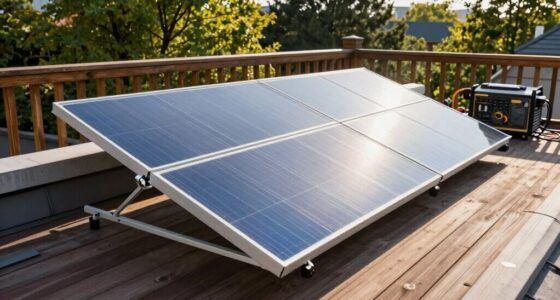
MPPT charge controllers optimize the energy transfer from your solar panels to your batteries by continuously adjusting to the panels’ maximum power point. They maximize efficiency, even when sunlight fluctuates or panel configurations vary, ensuring you get the most out of your solar system. They also manage voltage levels and prevent battery over-discharge, helping your system run smoothly and last longer. To discover how these features work together for reliable backup power, keep exploring.

Get backup power and energy gear delivered free with Prime
- Fast, free delivery on millions of items
- Prime Video, Amazon Music and more included
- Member-only deals all year
Key Takeaways
- MPPT controllers optimize solar energy transfer by continuously adjusting to the panel’s maximum power point.
- They improve battery charging efficiency by maximizing energy intake regardless of sunlight conditions.
- MPPT controllers manage energy flow intelligently, ensuring stable power delivery in backup systems.
- They accommodate different panel configurations and environmental factors through higher voltage operation.
- Additional features like temperature compensation and load management help prolong battery life and system stability.
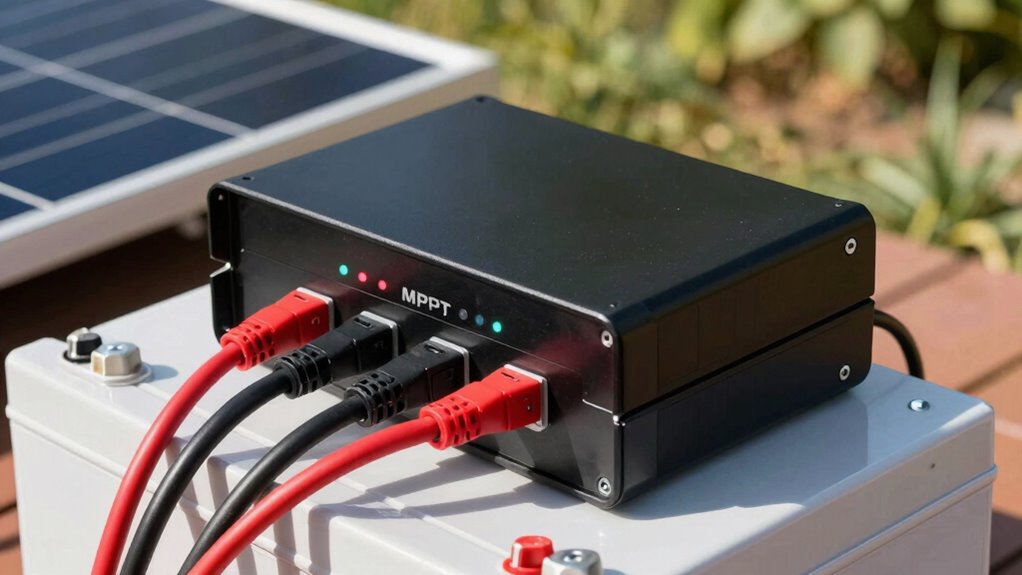
Have you ever wondered how solar backup systems maximize energy transfer from your panels? The answer lies in the role of MPPT (Maximum Power Point Tracking) charge controllers. These devices are designed to optimize the power output from your solar panels by continuously adjusting their input to match the panels’ maximum power point. This process guarantees you get the most energy possible, even when sunlight conditions fluctuate. By doing so, MPPT charge controllers considerably boost battery efficiency, making sure your batteries charge faster and more effectively. This means you can store more power for use during cloudy days or at night, increasing the reliability of your backup system.
One of the key benefits of MPPT charge controllers is their ability to seamlessly integrate with your entire solar setup. They act as a critical link between the panels and your batteries, intelligently managing the flow of energy. Unlike simpler PWM (Pulse Width Modulation) controllers, MPPT units analyze the voltage and current coming from your panels in real time and adjust their operation to maximize power transfer. This system integration ensures your solar components work together harmoniously, reducing energy loss and improving overall system performance. As a result, your solar backup system becomes more efficient, reliable, and capable of delivering consistent power regardless of weather changes or panel orientation. Additionally, MPPT controllers are especially effective in situations where panel configurations or environmental conditions cause voltage differences and operate at higher voltages, which allows for more flexible system design. They are also equipped with advanced features such as temperature compensation and load management, which further enhance system integration and help maintain battery health over time.
Products Worth Considering

eufy Security SoloCam E42 4-Camera Kit, 4K Solar Security Cameras with HomeBase 3

Sonos Era 100 SL Compact Microphone-Free Speaker – Black

Coway Mighty AP-1512HH(W) Air Purifier, White
As an affiliate, we earn on qualifying purchases.
Frequently Asked Questions
How Do MPPT Controllers Handle Overcurrent Situations?
When an overcurrent occurs, MPPT charge controllers activate overcurrent protection to prevent damage, automatically reducing current flow to safe levels. They also handle surges by diverting excess energy away, protecting your system components. This guarantees your solar backup remains dependable and safe, even during unexpected power spikes. You can trust these controllers to manage overcurrent situations efficiently, maintaining ideal performance and safeguarding your investment.
Can MPPT Controllers Be Used With Wind Turbines?
Yes, MPPT charge controllers can be used with wind turbines for hybrid system optimization. For example, in a remote cabin setup, integrating a wind turbine with solar panels and an MPPT controller guarantees efficient energy transfer from both sources. This setup maximizes power output, adapts to variable wind conditions, and maintains battery health, making it a versatile choice for hybrid energy systems.
What Is the Lifespan of an MPPT Charge Controller?
You can expect an MPPT charge controller to last around 10 to 15 years, depending on factors like battery chemistry and maintenance. Properly maintaining the unit and ensuring compatibility with your battery type helps optimize efficiency and prolong its lifespan. High-quality controllers with good cooling and protection features tend to last longer. Regular inspections and keeping the environment clean also help maximize your MPPT charge controller’s durability.
Are MPPT Controllers Compatible With All Battery Types?
Yes, MPPT controllers are compatible with most battery types, but you need to select one that matches your battery chemistry, like lead-acid or lithium-ion. They use different charging algorithms tailored for each chemistry to optimize performance and lifespan. Check your battery manufacturer’s specifications and choose an MPPT controller designed for your specific battery chemistry to guarantee efficient, safe charging and prolong your battery’s life.
How Do MPPT Controllers Perform in Extremely Cold Temperatures?
In extremely cold temperatures, MPPT charge controllers generally perform well, thanks to their temperature resilience. They adapt to cold weather efficiency by adjusting their operation to prevent freezing or damage. However, it’s essential to choose models designed for harsh environments, as some may have better insulation or features for low temperatures. Proper installation and use of cold-weather accessories can further enhance their performance in chilly conditions.
Conclusion
In conclusion, MPPT charge controllers are your trusty steed in the solar kingdom, ensuring you get the most power from your panels. They optimize energy transfer, even during cloudy days or unexpected events, much like a savvy merchant in a bustling marketplace. By choosing an MPPT controller, you’re embracing a modern solution that keeps your backup system efficient and reliable—no need to wait for a knight in shining armor; your solar setup is already equipped for victory.