
TL;DR

Get backup power and energy gear delivered free with Prime
- Fast, free delivery on millions of items
- Prime Video, Amazon Music and more included
- Member-only deals all year
Renault has seen a 50% rise in electric vehicle demand in France and Germany since the US and Israel’s conflict with Iran began. The surge is linked to higher fuel prices caused by the Iran Strait blockage, influencing consumer choices towards EVs.
Renault has reported a 50% increase in electric vehicle demand in France and Germany since the conflict between the US, Israel, and Iran escalated, leading to rising fuel prices and heightened consumer interest in EVs, according to Renault CEO Francois Provost.
Renault CEO Francois Provost stated that demand for Renault’s electric vehicles in France and Germany has grown by 50% amid the Iran war. The increase is attributed to the spike in fuel prices resulting from Iran blocking the Strait of Hormuz, a critical oil transit route, which has caused global oil prices to rise significantly. In the first four months of the year, European EV sales increased by 29%, nearing 1 million units, with the conflict acting as a catalyst for consumer shifts away from gasoline-powered cars. Provost noted that Renault is struggling to meet current demand, citing capacity constraints, and is considering adding more shifts at its French and Slovenian factories. Despite supply challenges, Renault has rejected proposals to lease factory space to Chinese EV manufacturers, emphasizing its commitment to maintaining control over its production facilities.
Impact of Geopolitical Tensions on EV Market Growth
The surge in EV demand linked to the Iran conflict underscores how geopolitical events can influence consumer behavior and accelerate the transition to electric vehicles. This trend may reshape automotive production strategies and supply chain considerations, especially as fuel prices remain volatile. The increased demand could also pressure automakers to expand manufacturing capacity, while highlighting the potential long-term shift away from fossil fuels regardless of geopolitical outcomes.
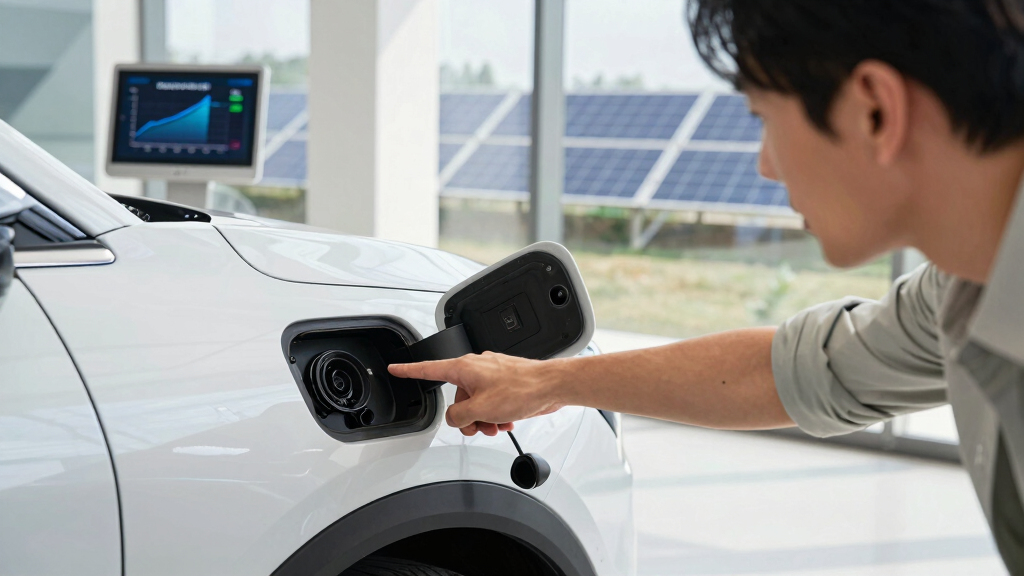
electric vehicle charging station
As an affiliate, we earn on qualifying purchases.
As an affiliate, we earn on qualifying purchases.
Rising Fuel Prices and European EV Adoption Trends
The conflict involving Iran has led to the blockage of the Strait of Hormuz, disrupting global oil supplies and causing fuel prices to spike. This has prompted consumers in Europe, particularly in France and Germany, to seek alternatives to gasoline-powered cars, boosting EV sales. Prior to the conflict, European EV sales were already on an upward trajectory, with a 29% increase in the first four months of the year. Renault, a major player in the European EV market, has responded to these developments by ramping up production capacity and reaffirming its commitment to electric mobility. The broader context includes increasing European policies favoring EV adoption and automakers’ efforts to meet rising demand amid supply chain constraints.
As an affiliate, we earn on qualifying purchases.
Unconfirmed Long-Term Impact of Iran Conflict on EV Demand
It is still unclear how long the Iran conflict will persist and how sustained the demand increase will be once geopolitical tensions subside. The actual impact on global oil prices and consumer behavior remains uncertain, as government policies and market dynamics could influence future trends.
As an affiliate, we earn on qualifying purchases.
Future Production Plans and Market Trends
Renault is considering expanding production shifts at its European factories to meet ongoing demand. Monitoring how EV sales evolve once fuel prices stabilize will be critical, alongside potential shifts in supply chain strategies and competitive responses from other automakers. Further updates from Renault and industry analysts are expected as the geopolitical situation develops.
As an affiliate, we earn on qualifying purchases.
Key Questions
How has the Iran conflict affected global oil prices?
The blockage of the Strait of Hormuz has caused oil prices to rise significantly, contributing to higher fuel costs worldwide, especially in Europe.
Will Renault continue to see high EV demand after the conflict ends?
According to Renault CEO Francois Provost, demand is expected to remain strong, although it may decrease somewhat once fuel prices stabilize.
Are other automakers experiencing similar demand surges?
While Renault has publicly reported a 50% increase, industry-wide data shows a general rise in EV sales across Europe, but specific figures vary by manufacturer.
What is Renault doing to meet increased EV demand?
Renault is considering adding more production shifts at its factories in France and Slovenia and has rejected offers to lease factory space to Chinese EV manufacturers to maintain control over its manufacturing capacity.
Could geopolitical tensions impact supply chains further?
Yes, ongoing conflicts and supply chain constraints could continue to challenge automakers’ ability to meet demand, especially for EV batteries and critical components.
Source: CleanTechnica
Halloween Picks
halloween
As an affiliate, we earn on qualifying purchases.