To avoid common portable solar setup mistakes, start by accurately evaluating your power needs to choose the right battery size—avoiding under- or over-sizing. Properly position your solar panels at the correct angles to maximize sunlight exposure and efficiency. Keep your cables organized with clips or ties to prevent disconnections and safety hazards, and guarantee all connections are secure. Regularly check your setup to maintain peak performance and longevity. If you want to learn more tips, stick around for some expert advice.

Get backup power and energy gear delivered free with Prime
- Fast, free delivery on millions of items
- Prime Video, Amazon Music and more included
- Member-only deals all year
Key Takeaways
- Accurately assess device power needs to choose an appropriately sized battery.
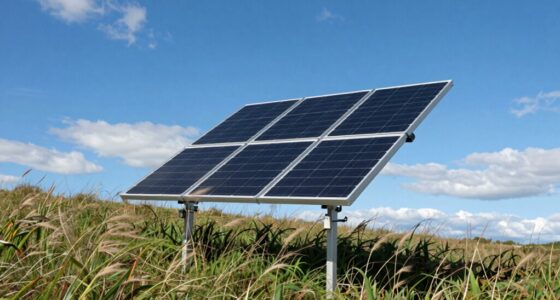
- Properly position solar panels at optimal angles for maximum sunlight exposure.
- Organize and secure cables to prevent disconnections and safety hazards.
- Use high-quality cables and secure connections to ensure safety and efficiency.
- Regularly evaluate and adjust the system setup for optimal performance and longevity.
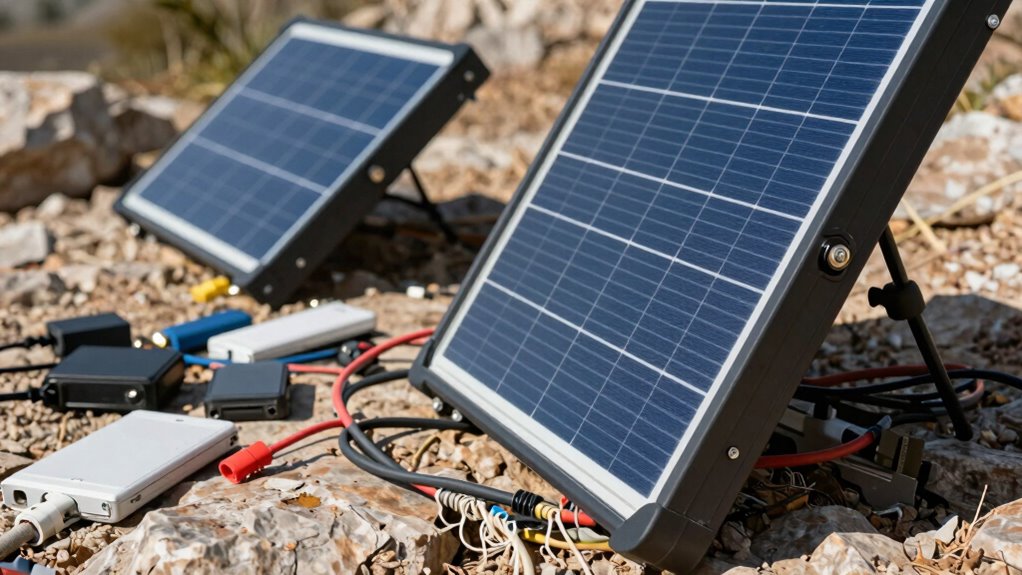
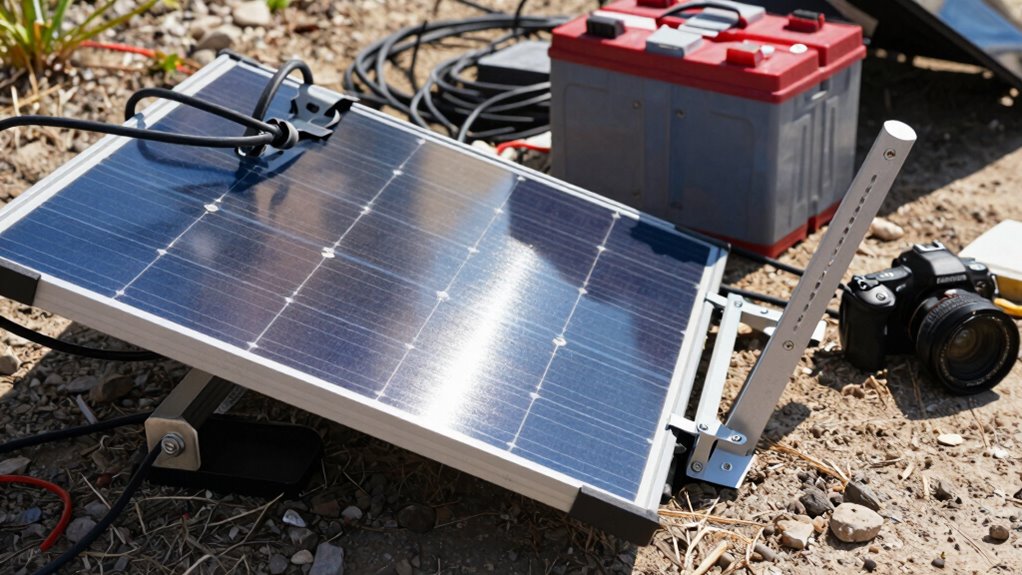
Setting up a portable solar system can be a great way to stay powered on the go, but beginners often make simple mistakes that can reduce efficiency or even damage their equipment. One common mistake is overlooking the importance of battery capacity. Many new users underestimate how much power they’ll need, leading to insufficient energy storage. Before you start, assess your power needs carefully—consider the devices you plan to run and how long you’ll need them powered. Choosing a battery with too little capacity means you’ll constantly run out of juice, forcing you to rely on backup power sources or cut your usage short. Conversely, overspending on an excessively large battery can be unnecessary and add weight, making your setup less portable. Striking the right balance guarantees you get the most out of your system without unnecessary bulk. Additionally, understanding solar panel positioning and sunlight angles can significantly boost your system’s output, ensuring you maximize energy generation from your setup.
Choosing the right battery size is key to efficient, portable solar power. Balance capacity and weight carefully.
Another critical aspect beginners often ignore is cable management. Messy cables can lead to a host of problems, including accidental disconnections, damage, or even safety hazards like short circuits. As you set up your solar panels, charger, and battery, take the time to organize your cables properly. Use clips, ties, or sleeves to keep everything neat and secure. Proper cable management not only prolongs the lifespan of your cables but also makes troubleshooting easier if something doesn’t work correctly. Avoid running cables across walkways or in places where they might get pinched or frayed. Secure connections are essential for maximum power flow—loose or poorly connected cables can cause voltage drops, reducing overall efficiency and possibly damaging your equipment over time. To further improve your setup, consider cable quality and how it impacts the durability and safety of your system.
As an affiliate, we earn on qualifying purchases.
Frequently Asked Questions
Can Portable Solar Setups Work Efficiently in Cloudy Weather?
Yes, portable solar setups can work in cloudy weather, but their efficiency drops due to increased cloud coverage. To maximize output, you should adjust your panel orientation for the best exposure to diffuse sunlight. Keep in mind that while cloudy days reduce energy, proper positioning helps you get the most from limited sunlight, ensuring your setup remains as effective as possible despite less-than-ideal weather conditions.
What Are the Best Storage Options for Portable Solar Energy?
Think of your portable solar energy as a treasure chest—you want it secure and ready for use. Lithium-ion batteries are your best option for storage because they’re lightweight, durable, and have high storage capacity. Lead-acid batteries work well but are heavier and need more maintenance. Choose a battery type based on your power needs, ensuring your storage capacity matches your energy consumption, so you’re never left in the dark.
How Do I Maintain and Clean Portable Solar Panels?
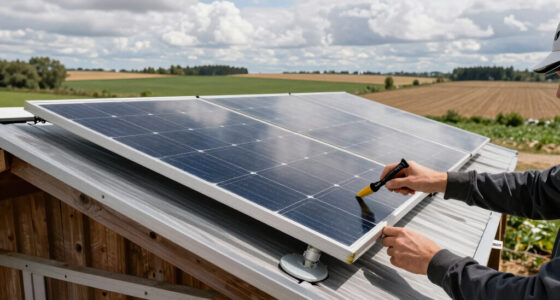
To maintain and clean your portable solar panels, follow simple cleaning techniques like gently rinsing with water and wiping with a soft cloth to remove dust and dirt. Regular maintenance tips include inspecting panels for debris, checking connections, and ensuring no shading occurs. Avoid harsh cleaners or abrasive materials, and perform cleaning in the early morning or late afternoon to prevent rapid evaporation. Consistent care keeps your panels efficient and prolongs their lifespan.
Are There Safety Concerns With Portable Solar System Installations?
Safety concerns with portable solar system installations are like shadows lurking in bright sunlight. To stay safe, follow all safety precautions, such as wearing protective gear and avoiding installation during bad weather. Be aware of installation hazards like electrical shocks or falls. Properly securing panels and disconnecting power during setup prevents accidents. Always read the manufacturer’s instructions and, if unsure, consult a professional to guarantee your setup stays safe and secure.
How Do I Choose the Right Portable Solar Setup for My Needs?
To choose the right portable solar setup, consider your power needs by evaluating your typical battery capacity and power output requirements. Decide if you need a compact system for minimal devices or a larger setup for more significant energy demands. Look for a setup with suitable battery capacity to store enough energy and guarantee the power output matches your devices’ needs. This way, you’ll stay powered without overpaying or underestimating your energy needs.
As an affiliate, we earn on qualifying purchases.
Conclusion
By steering clear of these common mistakes, you’re well on your way to a reliable, efficient portable solar setup. But what if there’s a hidden error you haven’t considered—something that could still trip you up at the worst moment? Stay vigilant, keep learning, and don’t let one overlooked detail turn your solar ambitions into a setback. The next step might just be the key to accessing the full potential of your solar system—are you ready to find out what it is?
As an affiliate, we earn on qualifying purchases.
As an affiliate, we earn on qualifying purchases.
Halloween Picks
halloween
As an affiliate, we earn on qualifying purchases.