
Whole-home surge protectors help limit voltage spikes entering through a home’s electrical service, but the right choice depends on panel compatibility, installation style, and the protection rating you need. I’d put the Eaton Complete Home Surge Protector first for its 60kA rating and indoor/outdoor flexibility; the FHSPD108S stands out for its higher stated surge-current capacity, while the Square D HEPD80 offers a strong 80kA option for buyers seeking a universal device. The main tradeoff is between a higher capacity or Type 1 design and simpler, panel-matched Type 2 options. Compatibility and installation requirements matter as much as headline ratings, and a licensed electrician may be needed. Read on for the full comparison and guidance on matching a protector to your service panel.

Get backup power and energy gear delivered free with Prime
- Fast, free delivery on millions of items
- Prime Video, Amazon Music and more included
- Member-only deals all year
Key Takeaways
Ratings and installation type set the lineup apart: the FHSPD108S lists 108,000 amps, while the Eaton Complete Home is rated 60kA and the Square D HEPD80 is rated 80kA; those figures do not replace checking the device’s listing and panel fit.
Panel compatibility can outweigh a higher rating: the Square D Homeline SurgeBreaker and Type BR devices are designed around specific breaker families, while universal-style units offer broader stated compatibility.
Type 1 and Type 2 are not interchangeable labels: the list includes both, so confirm the intended service location and installation method with the product instructions and an electrician.
Outdoor-rated enclosures widen placement choices: several Eaton and FHSPD models specify indoor/outdoor use or a NEMA enclosure, but placement still depends on local code and installation instructions.
More amperage is not the only reason to choose a model: indicator features, enclosure rating, replacement access, and how the device connects to the panel can make a lower-rated or panel-matched unit the more practical fit.




| whole home surge protector | Voltage | Model |
|---|---|---|
| FHSPD36S Whole House Surge Pro | 120/240V | FHSPD36S |
| HSPD Square Whole Home Surge P | 240VAC | HSPD-25 |
| Eaton CHSPT2ULTRA Ultimate Sur | 240V | CHSPT2ULTRA |
| FHSPD108S Whole House Surge Pr | 240V | FHSPD108S |
| Eaton Complete Home Surge Prot | 240V | CHSPT2SURGE10 |
| Square D HEPD80 Universal Whol | 120/240V system; listed spec also states 600 volts | — |
| Type BR Whole-Panel Circuit Br | — | ET003 |
| Siemens Boltshield Plug-in Sur | 120/240V | — |
| Eaton CHSPT2SURGE Type 2 Whole | — | — |
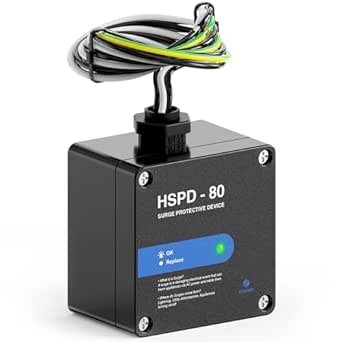
| HSPD Square Whole Home Surge P | 120/240VAC; listed spec states 240V | HSPD-80 |
| Leviton Type 1 Surge Protectiv | 120/240 VAC | R2120-B |
| Type BR Circuit Breaker Surge | 240 volts | BRNSURGE |
| ABB Thomesurge Whole Home Surg | 120/240V and 120/208V AC | THOMESURGEP |
| Whole Home Surge Protector SPD | 240V | — |
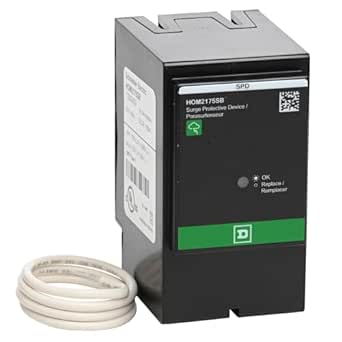
| Square D by Schneider Electric | 120/240V | HOM2175SB |
More Details on Our Top Picks
FHSPD36S Whole House Surge Protector for 36,000 Amps, Indoor/Outdoor Use, 120/240V
The Furniqro FHSPD36S suits buyers who want a compact, panel-mounted option without moving to the highest-capacity devices in this group. Its stated 36,000-amp capacity, 120/240V compatibility, and indoor/outdoor use cover common whole-home installation needs, while LED indicators give a simple status check. Compared with the FHSPD108S, it offers less stated surge capacity; its appeal is the smaller-capacity choice rather than a claim of equivalent headroom. The product information lists one pole, so I would verify that configuration and panel compatibility with an electrician before buying for a residential split-phase installation. Professional installation and proper grounding are required, and the listing provides no warranty details. Choose it for a space-conscious setup, not if documented warranty coverage or a higher listed capacity is your priority.
Pros:- Compact wall-mount design can suit installations with limited space.
- Rated for 120/240V systems.
- Listed for indoor and outdoor installation.
- LED indicators provide a visual status check.
Cons:- Its 36,000-amp rating is lower than the FHSPD108S’s stated 108,000 amps.
- Professional installation and correct grounding are required.
- The listing provides no warranty details, and its one-pole specification merits electrician verification.
Best for: Homeowners seeking a compact 120/240V whole-home device for an indoor or outdoor installation, with an electrician confirming panel and pole compatibility.
Not ideal for: Buyers prioritizing a higher stated capacity or clear warranty terms; the FHSPD108S lists 108,000 amps, and this listing does not specify warranty coverage.
- Brand:Furniqro
- Model:FHSPD36S
- Maximum amperage:36,000 amps
- Voltage:120/240V
- Mounting:Wall mount
- Number of poles:1
- Circuit breaker type:Standard
- Installation use:Indoor/outdoor
Our verdict“Choose the FHSPD36S for a compact, lower-capacity whole-home setup when an electrician confirms it matches your panel.”
HSPD Square Whole Home Surge Protective Device, Type 1 SPD, 120/240VAC
The Gloyatin HSPD-25 stands apart here as the lineup’s explicitly identified Type 1 SPD, with a listed 80kA surge capacity and indoor/outdoor mounting. That makes its classification a key reason to compare it with the Type 2 Eaton models: installation location and system design matter, so I would have an electrician confirm the intended application rather than assume the Type 1 label makes it a direct substitute. Its two-pole configuration and 240VAC specification distinguish it from the FHSPD36S, which is listed at one pole and 120/240V. The product description claims broad breaker compatibility, but the supplied data does not name tested panel families. Professional electrical knowledge is needed for installation, and the listing offers little detail on monitoring or warranty support.
Pros:- Explicitly identified as a Type 1 SPD.
- Lists 80kA surge capacity.
- Two-pole configuration is specified.
- Suitable for indoor and outdoor installation.
Cons:- Installation requires electrical knowledge and panel-specific verification.
- The listing does not provide status-indicator or warranty details.
- Its 240VAC specification should be checked against the home’s electrical system before purchase.
Best for: Homeowners and electricians specifically seeking a Type 1 SPD with a stated 80kA capacity for a compatible 120/240V installation.
Not ideal for: Buyers who want clearly documented status indicators, warranty coverage, or confirmed compatibility with a particular panel; those details are not supplied here.
- Brand:Gloyatin
- Model:HSPD-25
- SPD type:Type 1
- Voltage:240VAC
- Surge capacity:80kA
- Number of poles:2
- Mounting:Wall mount
- Circuit breaker type:Standard
- Installation use:Indoor/outdoor
Our verdict“Consider the HSPD-25 when you specifically need a Type 1 device and an electrician confirms its application and panel fit.”
Eaton CHSPT2ULTRA Ultimate Surge Protection 3rd Edition
The Eaton CHSPT2ULTRA is the most clearly differentiated by its quick-connect design and explicit Type 2 classification. It lists 108kA per phase, matching the FHSPD108S’s stated 108,000-amp figure in scale, while offering a connection approach described as compatible with any load center. That broad compatibility claim and status LEDs may help buyers seeking a straightforward panel-mounted Type 2 device, but an electrician still needs to confirm wiring, breaker requirements, and installation conditions. Unlike the Gloyatin HSPD-25, which is labeled Type 1, this Eaton is presented as Type 2, so they serve different installation contexts rather than competing on capacity alone. The supplied specifications also include plug and outlet details that do not clearly describe a hardwired whole-panel unit; verify the exact configuration before purchasing.
Pros:- Type 2 protection is explicitly stated.
- Lists 108kA per phase surge protection.
- Quick-connect design may simplify a compatible installation.
- LED indicators support at-a-glance status checks.
Cons:- Professional confirmation of wiring and breaker requirements is still needed.
- The supplied plug and outlet specifications create uncertainty about the precise installation configuration.
- Its 240V specification may not answer all system-compatibility questions without electrician review.
Best for: Homeowners who want a Type 2, indoor/outdoor panel-connected protector with stated quick-connect installation and LED status monitoring.
Not ideal for: Buyers who need fully clear hardwired installation details or a product with specifications free of plug-in and outlet ambiguity; confirm the exact unit with an electrician.
- Brand:Eaton
- Model:CHSPT2ULTRA
- SPD type:Type 2
- Voltage:240V
- Dimensions:2.38 x 5.25 x 7.5 inches
- Weight:8 ounces
- Enclosure material:Acrylonitrile butadiene styrene (ABS)
- Installation use:Indoor/outdoor
Our verdict“Pick the CHSPT2ULTRA for its Type 2, quick-connect approach when an electrician verifies the unit’s configuration and panel fit.”
FHSPD108S Whole House Surge Protector for 108,000 Amps, Indoor/Outdoor, 120/240V
The Furniqro FHSPD108S leads this group on its stated 108,000-amp maximum current, making it the capacity-focused alternative to the FHSPD36S. Both are compact, indoor/outdoor Furniqro devices with LED status monitoring, but this model’s larger rating is the main reason to choose it; the listing does not provide enough detail to compare protection performance beyond those figures. The Eaton CHSPT2ULTRA also lists 108kA per phase, though its Type 2 designation and quick-connect description give it a different installation profile. Here, voltage is listed as 240V, and the product data also says one outlet and a Type B plug, details that sit awkwardly beside a whole-panel device description. Ask an electrician to confirm the actual connection method, grounding, and panel fit before buying.
Pros:- Lists a maximum current of 108,000A.
- Compact design may fit installations with limited space.
- Rated for indoor and outdoor use.
- LED indicators provide status monitoring.
Cons:- The listing’s one-outlet and Type B plug details create uncertainty about its whole-panel connection method.
- Professional installation and proper grounding are required.
- Warranty coverage and a clear pole count are not provided.
Best for: Homeowners prioritizing a high stated surge-current rating in a compact indoor/outdoor device, with an electrician confirming how it connects to the panel.
Not ideal for: Buyers who need unambiguous wiring details, warranty information, or a clearly documented multi-pole panel configuration.
- Model:FHSPD108S
- Maximum current:108,000A
- Amperage:108kA
- Voltage:240V
- Number of outlets:1
- Power plug type:Type B, 3-pin (North American)
- Weight:0.46kg
- Recommended use:Indoor/outdoor
Our verdict“Choose the FHSPD108S for its high stated capacity only after an electrician confirms its connection and panel compatibility.”
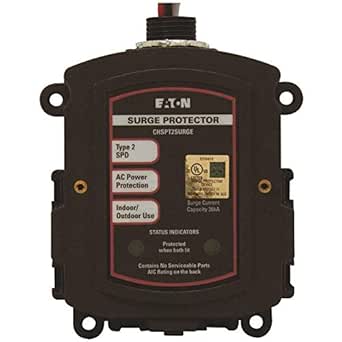
Eaton Complete Home Surge Protector, Type 2 SPD, 60kA Surge Current, Indoor/Outdoor
The Eaton CHSPT2SURGE10 offers a more moderate stated capacity than the 108kA Eaton CHSPT2ULTRA and FHSPD108S, while spelling out its Type 2 SPD classification and indoor/outdoor use. Its 60,000-amp rating may suit buyers who want a clearly identified whole-home panel device without choosing the highest listed capacity in this batch. The product description adds LED status indicators and weather-resistant housing, useful details for checking device status and planning an appropriate installation location. Unlike the Gloyatin HSPD-25, it is labeled Type 2 rather than Type 1, so the right pick depends on the electrician’s assessment of the home’s setup. It is hardwired at the electrical panel, not a plug-in solution; professional installation is recommended, and the supplied warranty information is limited to a 30-day return guarantee.
Pros:- Explicitly identified as a Type 2 SPD.
- Lists 60,000A maximum surge current.
- LED indicators help monitor device status.
- Indoor/outdoor use and weather-resistant housing are specified.
Cons:- Hardwired panel installation requires electrical expertise.
- Its 60kA rating is below the 108kA figures listed for the CHSPT2ULTRA and FHSPD108S.
- Warranty information supplied is limited to a 30-day return guarantee.
Best for: Homeowners seeking a clearly labeled Type 2, hardwired whole-home protector with 60kA stated surge current and LED status indicators.
Not ideal for: Renters or buyers seeking a plug-in device, and homeowners prioritizing the highest listed capacity over simpler Type 2 specifications.
- Brand:Eaton
- Model:CHSPT2SURGE10
- SPD type:Type 2
- Maximum current:60,000A
- Voltage:240V
- Dimensions:5 x 5 inches
- Weight:15.6 ounces
- Installation use:Indoor/outdoor
Our verdict“Choose the CHSPT2SURGE10 for a clearly specified, hardwired Type 2 setup when 60kA meets your electrician’s recommendation.”
Square D HEPD80 Universal Whole House Surge Protection Device, 1-Phase, 3-Wire for 120/240V, 80kA
The Square D HEPD80 is a strong fit for homeowners with a compatible 120/240V, single-phase load center who want an 80kA-rated whole-home device and a straightforward status light. Its compact design is easier to accommodate than a larger separately mounted unit, while the LED gives a quick visual cue about device status. Compared with the Siemens Boltshield, it isn’t tied to Siemens panels, but the available product details don’t identify a specific audible alert or remote monitoring feature. This is a panel-installed protector, not a plug-in appliance accessory, so installation may call for an electrician. The stated 600V spec also differs from the 120/240V system description, so I’d verify compatibility with the panel and manufacturer documentation before purchase.
Pros:- 80kA maximum current rating is substantial among the listed options.
- LED indicator provides a basic visual status check.
- Compact, lightweight design can suit installations with limited space.
- Designed to protect connected home appliances and electronics at the panel.
Cons:- Requires installation in the load center and may require a qualified electrician.
- Listed for 1-phase, 3-wire systems, limiting its fit for other configurations.
- No remote monitoring feature is specified, and the voltage details warrant verification.
Best for: Homeowners with a compatible single-phase 120/240V load center who want an 80kA device and a simple LED status indication.
Not ideal for: Buyers seeking a plug-and-play protector, remote monitoring, or a clearly documented fit for a different electrical system.
- System:1-phase, 3-wire
- Voltage:120/240V system; listed spec also states 600 volts
- Maximum current:80kA
- Status indicator:LED
- Item weight:14.88 ounces
- Enclosure materials:Polycarbonate, rubber
Our verdict“Choose the HEPD80 for a compatible residential panel when its high stated surge rating and simple LED status matter more than monitoring features.”
Type BR Whole-Panel Circuit Breaker Surge Protective Device (3 Pack)
This three-device Type BR pack is aimed at buyers who need protection for multiple compatible panels or want spares on hand, rather than one higher-capacity whole-home unit. Each device uses two branch-circuit spaces and is rated at 18kA, so it asks for panel space while offering a lower stated surge capacity than the Square D HEPD80 or Siemens Boltshield. That makes the pack’s value primarily about having three panel-mounted devices, not matching those alternatives’ individual ratings. The manufacturer and listing provide limited installation detail, so buyers should confirm Type BR panel compatibility and consult an electrician before fitting them. I’d skip this set if you need a single, well-documented device or want clear information about status indicators and durability.
Pros:- Three devices are included for buyers protecting multiple compatible panels.
- Panel-mount format integrates at the electrical panel rather than using outlet strips.
- Each device has a stated 18kA surge current capacity.
- Two-pole design is specified for the listed Type BR application.
Cons:- 18kA per device is below the stated capacities of the Square D HEPD80 and Siemens Boltshield.
- Each unit occupies two branch-circuit spaces.
- Detailed installation instructions and durability information are not provided.
Best for: Property owners or electricians sourcing three devices for compatible Type BR panels and willing to verify installation requirements.
Not ideal for: Homeowners who need one clearly documented high-capacity protector, have limited panel space, or want detailed status and durability information.
- Brand:Drizzlen
- Model:ET003
- Part number:BRSURGE
- Quantity:3 devices
- Surge current capacity:18kA per device
- Mounting type:Panel mount
- Circuit breaker type:Standard
- Number of poles:2
- Panel space:2 branch-circuit spaces per device
Our verdict“Pick this pack when you need three Type BR panel devices, but choose a higher-capacity, better-documented option for a single primary installation.”
Siemens Boltshield Plug-in Surge Protection Device 2-Pole 65kA 120/240V
For a compatible Siemens panel, the Boltshield’s 65kA rating and replacement alerts make it a more informative choice than the three-device Type BR pack, whose listing gives less detail about device status. Its audible and visual indicators can alert a homeowner when replacement is needed, helping prevent a failed device from going unnoticed. The tradeoff is panel compatibility: this is not the flexible choice for a home with another manufacturer’s load center. It is also specified for indoor use, unlike the Eaton CHSPT2SURGE, which has a NEMA 4 enclosure described for outdoor use. Buyers should treat the indicator as a maintenance prompt, not a reason to delay replacement. Confirm panel fit before ordering and arrange proper installation.
Pros:- 65kA stated surge capacity is higher than the Eaton CHSPT2SURGE’s listed 22kA capacity.
- Audible and visual alerts indicate when replacement is needed.
- Compact dimensions and light weight can suit a panel installation.
- Specified for residential and commercial panels where Siemens compatibility is confirmed.
Cons:- Limited to compatible Siemens panels.
- Indoor-use specification rules it out for exposed outdoor installation.
- The device needs replacement when its indicator signals.
Best for: Homeowners with a compatible Siemens 120/240V panel who want a high-capacity protector with audible and visual replacement alerts.
Not ideal for: Owners of non-Siemens panels or buyers who need an outdoor-rated enclosure.
- Voltage:120/240V
- Maximum surge current:65kA
- Poles:2
- Dimensions:2 x 2.5 inches (listed length x width)
- Item weight:10.24 ounces
- Enclosure material:Plastic
- Warranty:10 years; listing states $50,000
- Installation environment:Indoor
Our verdict“Choose the Boltshield for a compatible Siemens panel if you value replacement alerts and indoor installation over broad panel compatibility.”
Eaton CHSPT2SURGE Type 2 Whole Home Surge Protector, NEMA 4, Single Phase, 120/240V
The Eaton CHSPT2SURGE earns its place for homeowners who need a Type 2 protector that can be mounted in a setting where enclosure protection matters. Its NEMA 4 enclosure is the clearest differentiator from the indoor-only Siemens Boltshield, while its 120/240V single-phase specification covers a common residential service. The stated surge figures need careful reading: the listing gives 22kA capacity and also 36kA per phase across specified paths, so I would verify the manufacturer’s documentation rather than compare those numbers as if they were identical measures. Eaton describes a universal load-center connection and LED status indication, but installation is on the load side of the main disconnect and may require professional work. This is a practical fit-focused pick, not the highest stated capacity in this group.
Pros:- NEMA 4 enclosure is suited to installations where exposure protection is needed.
- LED status indication offers a straightforward visual check.
- Universal load-center connection is described for broad panel compatibility.
- Type 2 design is specified for single-phase 120/240V residential systems.
Cons:- Installation on the load side of the main service disconnect may require an electrician.
- Limited to single-phase systems.
- The listing presents multiple surge-current figures that require careful interpretation.
Best for: Homeowners with single-phase 120/240V service who need a Type 2 protector and an enclosure suited to outdoor exposure.
Not ideal for: Buyers who want a simple plug-in installation, need a three-phase solution, or prioritize the highest clearly stated surge rating.
- Type:Type 2 surge protector
- Voltage and phase:120/240 VAC, single phase
- Enclosure:NEMA 4
- Surge current capacity:22kA
- Per-phase surge current:36kA listed (18kA on each specified L–N and L–G path)
- Nominal discharge current:5kA
- Maximum continuous operating voltage:150V L–N, 300V L–L
- Mounting type:Wall mount
- Frequency:60Hz
Our verdict“Choose the Eaton when enclosure protection and a Type 2 120/240V fit matter more than a simpler installation or a higher headline capacity.”
HSPD Square Whole Home Surge Protective Device, Type 1 SPD, 120/240VAC
The Gloyatin HSPD-80 stands out in this group for its stated 80kA capacity and Type 1 designation, with indoor and outdoor installation listed as options. That rating matches the Square D HEPD80’s headline capacity, while this model also claims compatibility with various circuit breakers. The difference is that the HEPD80 provides an LED status indicator and a specified 1-phase, 3-wire configuration; this listing gives much less electrical and maintenance detail. It also states no warranty, a meaningful gap beside the Siemens Boltshield’s stated 10-year warranty. I would treat this as a candidate only after checking the manufacturer’s documentation for panel fit, protection ratings, and enclosure details. Its headline capacity is appealing, but sparse specifications make verification part of the buying decision.
Pros:- Type 1 SPD designation is stated for the 120/240V application.
- Listed surge capacity reaches 80kA.
- Indoor and outdoor installation are both described.
- Two-pole configuration and compatibility with various circuit breakers are specified.
Cons:- No warranty is listed.
- Limited documentation is provided on long-term durability and performance testing.
- Status indication and detailed enclosure ratings are not specified.
Best for: Experienced homeowners or electricians seeking a Type 1 device with a stated 80kA capacity for a verified 120/240V installation.
Not ideal for: Buyers who want warranty coverage, detailed performance documentation, or clearly specified status and monitoring features.
- Brand:Gloyatin
- Model:HSPD-80
- SPD type:Type 1
- Voltage:120/240VAC; listed spec states 240V
- Surge capacity:Up to 80kA
- Mounting type:Wall mount
- Number of poles:2
- Circuit breaker type:Standard
- Warranty:None listed
Our verdict“Consider the HSPD-80 only if its Type 1, 80kA claims match a verified installation and you can accept limited documentation and no warranty.”
Leviton Type 1 Surge Protective Panel, Residential Home Surge Protection, 120/240 VAC, Split Phase, 36kA per Phase, R2120-B, Gray
I’d shortlist the Leviton R2120-B for homeowners who want a Type 1 device with a weather-resistant enclosure. Its NEMA 4X housing gives it an installation advantage over the Square D HOM2175SB, which is specified for indoor use only. The Leviton also lists 36kA per phase and thermally protected MOVs, while its LED status indicator offers a quick visual check without remote monitoring.
The tradeoff is that its published 36kA rating is more modest than the 108,000-amp figure listed for the SPD2ULTRA; those ratings are not directly comparable without matching test specifications, so buyers should check the manufacturer documentation for their installation. This is a residential-focused device, not a commercial solution, and the data does not describe remote alerts. I’d pick it for a robust enclosure and clear status indication, not for connected monitoring.
Pros:- Type 1 protection for residential 120/240V split-phase systems
- NEMA 4X enclosure suits installations that need a more weather-resistant housing
- LED status monitoring gives a local indication of device condition
- Thermally protected MOVs are specified
Cons:- 36kA per phase is lower than the 108,000-amp figure listed for the SPD2ULTRA, though the ratings may use different test bases
- No remote monitoring capability is listed
- Specified for residential applications rather than commercial systems
Best for: Homeowners seeking a Type 1 surge panel with a NEMA 4X enclosure for a residential 120/240V split-phase system.
Not ideal for: Commercial facilities or buyers who want remote status alerts or a published surge-current figure higher than 36kA per phase.
- Model:R2120-B
- Device type:Type 1 surge panel
- Voltage:120/240 VAC
- Phase:Split phase
- Maximum surge current:36kA per phase
- Nominal current:10kA
- Enclosure:NEMA 4X
- Protection and monitoring:Thermally protected MOVs; LED status monitoring
Our verdict“Choose the Leviton if a Type 1 device with a NEMA 4X enclosure and local LED status indication fits your residential installation.”
Type BR Circuit Breaker Surge Protective Device, Two Pole
The Eaton BRNSURGE is the panel-family pick: its two-pole, panel-mount design is aimed at a compatible Eaton BR load center, making it more targeted than the ABB Thomesurge, which is described as compatible with various load centers. That specificity can make the choice straightforward for a homeowner who already has a BR panel, but it also makes panel compatibility the first thing to verify.
The supplied information gives a 240-volt rating and an 18kA surge figure, but offers less installation and protection detail than the Leviton R2120-B, which specifies Type 1 construction, split-phase service, and a NEMA 4X enclosure. There is no listed LED indicator, enclosure rating, or remote monitoring, so I wouldn’t choose this model for those features. It makes most sense as a compatible, panel-mounted option—not as a broadly specified whole-home upgrade.
Pros:- Two-pole panel-mount format is suited to compatible load centers
- Specified for 240V systems
- Lists an 18kA surge rating
- Compact device weight of 5.6 ounces
Cons:- Panel-family compatibility limits its usefulness outside compatible Eaton BR installations
- No remote monitoring or LED status feature is listed
- The supplied data lacks enclosure and Type 1/Type 2 classification details
Best for: Homeowners with a compatible Eaton BR panel who want a two-pole, panel-mounted surge protective device.
Not ideal for: Buyers with a different panel family or those who need documented enclosure protection, status monitoring, or detailed Type 1 installation information.
- Brand:Eaton
- Model:BRNSURGE
- Part number:BRSURGE
- Device type:Two-pole circuit breaker surge protective device
- Voltage:240 volts
- Mounting:Panel mount
- Circuit breaker type:Standard
Our verdict“Pick the Eaton BRNSURGE only after confirming your load center is compatible and its 18kA rating fits your protection plan.”
ABB Thomesurge Whole Home Surge Protection Device Type 1 SPD NEMA 3R
The ABB Thomesurge earns a distinct place for its listed compatibility with both 120/240V and 120/208V AC systems. That makes it a more flexible candidate for certain residential service configurations than the Leviton R2120-B, whose supplied specs name 120/240V split-phase service. ABB also specifies a 200kA SCCR, a NEMA 3R enclosure, and LED status indication, giving buyers more installation and fault-current information than the Eaton BRNSURGE listing provides.
The tradeoff is that the product description says proper setup may require professional installation, so this is not the easiest choice for a DIY panel project. Its NEMA 3R rating also differs from the Leviton’s NEMA 4X enclosure; buyers should match the enclosure to the installation rather than treating those ratings as interchangeable. I’d choose ABB for documented service-voltage flexibility, while checking the full manufacturer data for the stated surge capacity and installation requirements.
Pros:- Lists compatibility with both 120/240V and 120/208V AC systems
- NEMA 3R enclosure supports installations calling for that enclosure rating
- LED indicator provides a local status check
- 200kA SCCR is specified
Cons:- Professional installation may be needed for correct setup
- NEMA 3R is not the same enclosure rating as the Leviton R2120-B’s NEMA 4X
- Remote monitoring is not listed
Best for: Homeowners or electricians working with a 120/208V or 120/240V system who want a Type 1 device with an outdoor-rated enclosure and local status indication.
Not ideal for: DIY buyers seeking a clearly documented plug-on installation, or anyone who needs remote alerts or a NEMA 4X enclosure.
- Model:THOMESURGEP
- Device type:Type 1 SPD
- Voltage:120/240V and 120/208V AC
- SCCR:200kA
- Nominal discharge current:10kA
- Operating frequency:50–60Hz
- Mounting:Wall mount
- Enclosure:NEMA 3R
- Certifications:UL Listed; ANSI Certified
Our verdict“Choose the ABB Thomesurge when its 120/208V support and NEMA 3R enclosure match your service and installation.”
Whole Home Surge Protector SPD2ULTRA, 108,000 Amp, 120/240V, Indoor/Outdoor, for Breaker Box/Load Center, Spike and Surge Protection, 10 Years Warranty
The SPD2ULTRA stands out in this group for its listed 108,000-amp capacity, indoor/outdoor suitability, and 10-year warranty. Compared with the Leviton R2120-B’s stated 36kA per phase, that headline figure is much larger, but the figures may reflect different rating methods; I’d compare the manufacturer’s test definitions before using them to rank protection strength. The listed compatibility with breaker boxes and load centers also makes this a candidate for buyers who want a hardwired whole-home approach rather than a plug-in strip.
There are important gaps in the supplied data: it lists one outlet and a 50A maximum current, while also describing a breaker-box installation, so buyers should confirm the wiring configuration and panel compatibility with the manufacturer or an electrician. Installation may call for professional help. Unlike the ABB Thomesurge, no Type 1 classification, enclosure rating, or status indicator is specified here. I’d favor it for its stated capacity and warranty only after verifying those details.
Pros:- Lists a 108,000-amp capacity
- Designed for indoor or outdoor installation
- Compatible-device information includes household electronics and appliances
- Includes a 10-year warranty
Cons:- The one-outlet and 50A details need clarification for a breaker-box whole-home installation
- Type classification and enclosure rating are not specified in the supplied data
- Professional installation may be needed
Best for: Homeowners comparing devices by published surge-capacity figure who need an indoor/outdoor option and can verify panel and circuit compatibility before installation.
Not ideal for: Buyers who need clearly documented Type 1 or Type 2 classification, a stated enclosure rating, or an LED status indicator.
- Voltage:240V
- Maximum current:50A
- Listed surge capacity:108,000 amps
- Installation setting:Indoor/outdoor
- Mounting:Mountable; intended for breaker box/load center
- Item dimensions:2.2 in L × 3.62 in W
- Listed outlets:1
- Warranty:10 years
Our verdict“Consider the SPD2ULTRA for its stated 108,000-amp capacity and 10-year warranty, but verify its wiring, ratings, and panel fit first.”
Square D by Schneider Electric HOM2175SB Homeline SurgeBreaker, 25kA, 120/240V, 1-Phase, 3-Wire
The Square D HOM2175SB is the lineup’s panel-specific indoor choice: its plug-on format uses two pole positions and is intended for Homeline panels. That can be a simpler fit for a homeowner with the right load center than adding a separately mounted device such as the ABB Thomesurge. It also lists an LED indicator, giving a local status cue that the Eaton BRNSURGE product data does not provide.
Its scope is narrower than a general whole-home device may suggest. The supplied specifications describe indoor NEMA 1 use and two circuits, so it is not the pick for an outdoor installation or a buyer seeking broad panel compatibility. There is also conflicting current information: the title says 25kA, while the description and spec fields cite other ratings. I’d confirm the exact electrical rating and Homeline compatibility with the manufacturer before purchase. This is a panel-fit choice, not a universal surge solution.
Pros:- Plug-on installation uses two pole positions in a compatible Homeline panel
- LED indicator provides a local status check
- UL Listed for indoor use according to the description
- Compact listed dimensions of 2.58 × 2 × 3.13 inches
Cons:- Panel-specific fit limits use with non-Homeline load centers
- Indoor NEMA 1 specification rules out outdoor installation
- Surge-current information conflicts across the title, description, and specs
Best for: Homeowners with a compatible Square D Homeline panel who want an indoor, plug-on device with a local LED status indicator.
Not ideal for: Owners of other panel brands, anyone needing outdoor protection, or buyers who require a single clearly stated surge-current rating before selection.
- Model:HOM2175SB
- Voltage:120/240V
- Phase:Single phase, 3-wire
- Maximum current in specs:10 kiloamps
- Number of circuits:2
- Installation setting:Indoor, NEMA 1
- Dimensions:2.58 in L × 2 in W × 3.13 in H
- Status indicator:LED
Our verdict“Choose the HOM2175SB only if you have a compatible Homeline panel and confirm its applicable surge rating before buying.”
How We Picked
I ranked these whole-home surge protectors by the factors that most affect a real installation: stated surge-current capacity, Type 1 or Type 2 designation, voltage and phase compatibility, enclosure rating, panel or breaker fit, and clarity of the product’s intended use. I also weighed whether a device appears suited to a broad range of installations or is most useful to owners of a particular panel family. These details affect both the protection setup and the chance of choosing a unit that can be installed as intended.
The Eaton Complete Home leads because its 60kA rating and indoor/outdoor specification make it a balanced choice without relying on the largest headline number. The FHSPD108S and HEPD80 rank as capacity-focused alternatives, while panel-specific devices earn their place for buyers who prioritize fit. Similar listings, including two HSPD Type 1 entries, are treated as separate products in the supplied lineup, but their specifications should be verified before purchase. I did not treat amp ratings alone as proof of superior protection; product listing, compatibility, installation instructions, and professional review all matter.
Factors to Consider When Choosing Whole Home Surge Protectors
Choosing a whole-home device is partly an electrical-system decision, not just a product comparison. I’d start with the service panel and installation plan, then use ratings and enclosure details to narrow the options. These broader checks can prevent a mismatch that a high capacity number won’t fix.
Match the Device to Your Panel and Service
Check the panel brand, model, breaker family, voltage, and phase before comparing ratings. A device designed for a Type BR or Homeline panel may offer a tidy installation there but may not suit a different panel. Universal wording should not be treated as proof of compatibility with every load center; verify the manufacturer’s fit list. Take a clear photo of the panel label and share it with an electrician or the manufacturer if the documentation is unclear. Also confirm that the device is intended for your 120/240V service. A mismatch can mean extra parts, a different installation plan, or a return that could have been avoided.
Understand Type 1 Versus Type 2 Before Buying
Type 1 and Type 2 describe different installation categories, so do not choose between them by treating one as a simple upgrade over the other. The right type depends on where the device will connect, the service equipment, product listing, and applicable electrical code. Type 1 units may be intended for a service-side position, while Type 2 units are commonly installed at or near the panel; exact requirements depend on the product. Ask an electrician which category fits your setup before ordering. This is especially useful when a listing uses broad phrases such as “whole home” without clearly explaining the installation point. Confirming the plan first is safer than relying on a product title alone.
Read Surge Ratings in Context
A larger stated surge-current number can help distinguish products, but it does not tell the whole story about protection. Check how the rating is presented, whether it applies per phase or to the device overall, and what the product documentation says about its test standard and listing. Avoid comparing a “per phase” figure directly with a single overall number unless the manufacturer explains the measurement. A high rating also cannot compensate for poor fit, an unsuitable installation location, or missing electrical-system details. Use capacity as one screening factor, then compare the device’s specifications and intended application. When the units or test conditions are unclear, ask the manufacturer or your electrician rather than guessing.
Choose an Enclosure for the Actual Location
Indoor/outdoor language and NEMA ratings can affect where a device may be installed, but they do not mean it can go anywhere outdoors. Consider exposure to rain, dust, temperature changes, and the distance from the service equipment. A weather-rated enclosure may give an electrician more placement options, while an indoor-only device can be appropriate when mounted in a protected location. Follow the product instructions for mounting, wiring, and clearances. Do not assume that a tougher enclosure improves electrical protection by itself; it primarily addresses the installation environment. Have the installer confirm both enclosure suitability and local code requirements.
Plan for Indicators, Replacement, and Maintenance
Surge protective components can wear down after repeated events, so think about how you will know when a device needs attention. Look for clear status indicators and instructions explaining what each light or alarm means. Ask whether the unit is replaceable as a whole, whether any modules can be changed, and what signs call for service. A device that is difficult to inspect can be less convenient even when its rating looks attractive. Keep the installation paperwork and model details near your electrical records. Schedule an electrician’s review if an indicator changes state or the unit shows visible damage.
Decide When to Spend More—and When Not To
Paying more can make sense when a model offers a rating, enclosure, or approved panel fit that your installation specifically needs. It is less useful to chase the biggest number if the device cannot connect correctly or its specifications are not comparable with the alternatives. A panel-specific protector can be the practical choice when it matches your equipment, while a broader-fit unit may suit a different installation plan. Consider the electrician’s labor and any required breaker or wiring changes as part of the total project, without assuming the device is a simple do-it-yourself add-on. For a home with sensitive electronics, discuss layered protection and correct grounding with a qualified professional. The best purchase is the one that fits the service and can be installed and maintained as directed.
Frequently Asked Questions
Can I install a whole-home surge protector myself?
Many whole-home units connect to electrical service equipment, where mistakes can create shock, fire, or equipment-damage risks. The product may also require a particular breaker position, wire routing, or installation location. Check the manufacturer’s instructions and local rules before making a plan. If you are not qualified to work inside a panel, hire a licensed electrician. Ask for confirmation that the selected device is compatible with your exact panel and service.
Should I choose a Type 1 or Type 2 surge protector?
The choice depends on the device’s listed installation category and the location where it will connect to your electrical system. Type 1 and Type 2 are not simple performance grades, so a higher type number does not automatically mean weaker protection. Review the product documentation and have an electrician confirm which category is permitted and appropriate for your setup. If you are replacing an existing unit, record its model and installation position, but do not assume the same category will suit a different product. The installation plan should settle this question before you buy.
Does a higher kA rating mean a surge protector is always better?
No. A higher stated rating can be a useful comparison point, but the units and measurement basis must match before the numbers are compared. The device also needs the correct listing, panel compatibility, installation location, and enclosure for the job. A lower-rated model that fits the service correctly can be a better choice than a higher-rated device that does not. Check whether a rating is per phase or overall, and consult product documentation when that distinction is not clear. Ask an electrician to interpret specifications that use different rating conventions.
Will a whole-home surge protector replace plug-in protection for electronics?
A whole-home device is installed at the electrical service or panel to limit surges entering the home, while plug-in protectors serve equipment at individual outlets. The two approaches address protection at different points, and a whole-home unit does not guarantee that every device is protected from every event. Follow the manufacturers’ instructions for any additional point-of-use protection, especially for sensitive electronics. Also confirm that the home’s grounding and bonding are in good condition, since surge protection depends on the electrical system being installed correctly. An electrician can advise whether layered protection suits your equipment and wiring.
How do I know whether a whole-home surge protector needs replacement?
Start with the unit’s status lights, alarms, and maintenance instructions; indicator meanings differ by model. Some devices signal that protection components are no longer operating as intended, while others may show a fault or require inspection. Do not assume a light means the same thing across brands, and do not open the enclosure to investigate live equipment. Save the manual and model number so you can check the correct guidance. If an indicator changes, the enclosure is damaged, or the device has been exposed to a major event, ask an electrician to inspect it.
Conclusion
For a balanced starting point, I recommend the Eaton Complete Home Surge Protector as the best overall pick, with its 60kA rating and indoor/outdoor specification. The FHSPD36S is the best value-style option for buyers who want a straightforward 36,000-amp listing, while the FHSPD108S is the premium capacity-focused choice for those who prioritize its stated 108,000-amp rating and confirm the fit. Beginners should start with a panel-matched product, such as the Square D HOM2175SB for a compatible Homeline panel, and have an electrician verify installation. For specific needs, the Square D HEPD80 offers an 80kA universal-style alternative, while the Type BR devices suit buyers with compatible BR panels. Before choosing any model, confirm panel compatibility, installation type, and local requirements; those details matter more than selecting the largest number on the label.
Halloween Picks
halloween
As an affiliate, we earn on qualifying purchases.