To plan a backyard solar charging spot that works, position your panels where they get maximum sunlight, facing south in the northern hemisphere and tilting them at your latitude. Keep the area clear of obstructions and debris for peak efficiency. Use weatherproof wiring and a charge controller to protect your system, and choose suitable batteries for your needs. Regularly check for shadows or damage, and you’ll be on your way to a reliable solar setup—more tips await to help you perfect your system.

Get backup power and energy gear delivered free with Prime
- Fast, free delivery on millions of items
- Prime Video, Amazon Music and more included
- Member-only deals all year
Key Takeaways
- Choose a sunny, unobstructed location facing south (north hemisphere) or north (southern hemisphere) for optimal sunlight.
- Use weatherproof wiring, enclosures, and safety devices to protect components and ensure durability.
- Select appropriate batteries (preferably lithium-ion) matched to your power needs and system compatibility.
- Tilt solar panels at your latitude angle and regularly maintain to maximize efficiency and prevent shading.
- Incorporate a charge controller and safety features for reliable, safe, and long-lasting solar charging performance.
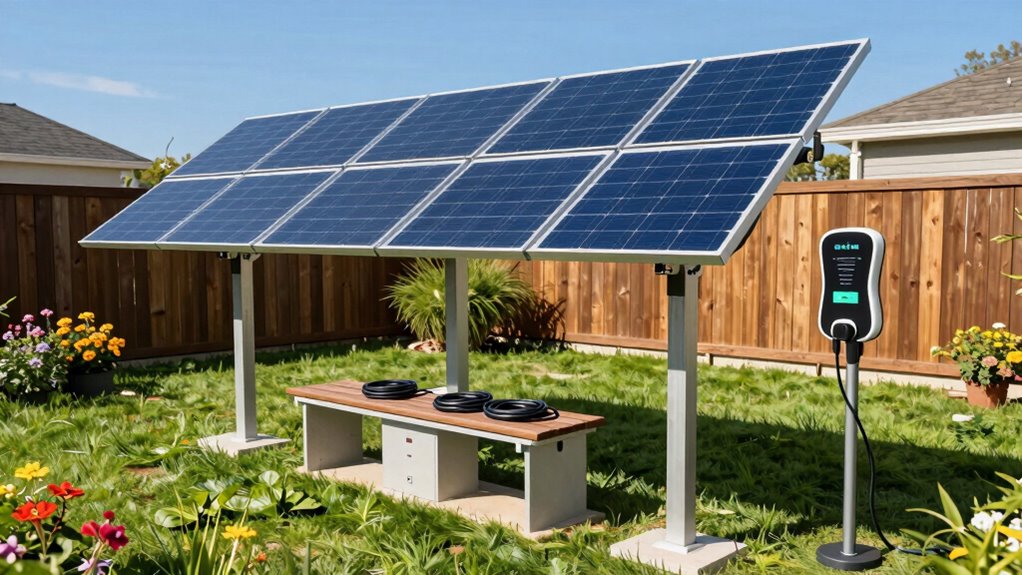
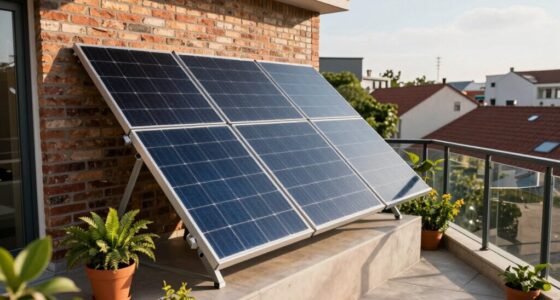
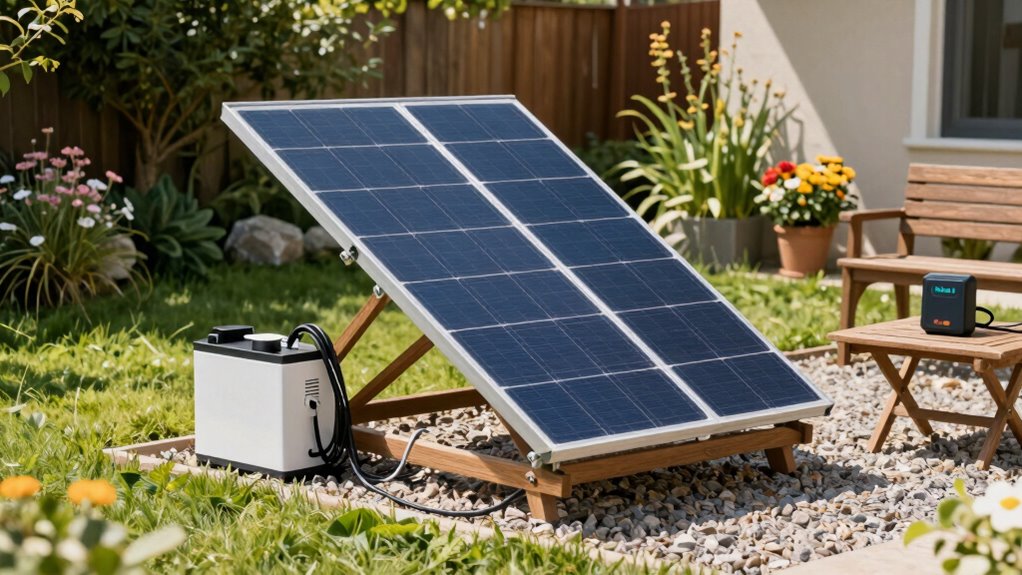
Creating a dedicated backyard solar charging spot is a smart way to harness renewable energy and keep your devices powered up outdoors. To make this work effectively, you need to pay close attention to solar panel placement. The key is to position your panels where they’ll receive maximum sunlight throughout the day. Ideally, find a spot that’s unobstructed by trees, buildings, or other objects that cast shadows. Facing your solar panels south (in the northern hemisphere) or north (in the southern hemisphere) maximizes exposure. Tilt the panels at an angle that corresponds to your latitude, ensuring they capture the most sunlight during peak hours. Regularly check for any new obstructions or debris that could reduce efficiency. Proper solar panel placement isn’t just about sunlight; it’s also about ease of access for maintenance and cleaning. Ensuring your solar panel placement is optimal can significantly improve energy collection and overall system performance.
Once you’ve got your panels in the right spot, it’s time to think about battery storage options. Having a reliable way to store energy ensures that your devices stay charged even when the sun isn’t shining. Lithium-ion batteries are popular because they’re lightweight, efficient, and have a long lifespan. You can choose a battery bank that suits your power needs—small units for occasional device charging or larger systems if you want to power more devices or run small outdoor appliances. When selecting battery storage options, consider the capacity, charging cycles, and safety features. It’s also important to ensure that your battery system is compatible with your overall setup to prevent any issues with energy flow. Keep in mind that a good battery system should be compatible with your solar panels and charge controller, so it’s worth investing in quality components that work seamlessly together. Additionally, understanding battery safety and proper handling can help prevent potential hazards and extend the lifespan of your storage system.
Planning your backyard solar charging spot involves more than just placing panels and batteries; you also need to think about wiring and safety. Use weatherproof cables and enclosures to protect your connections from the elements. Install a charge controller between your solar panels and batteries to regulate voltage and prevent overcharging, which can damage your batteries. Position your charging station at a convenient spot—close enough for easy access but far enough away from potential hazards like water runoff or falling debris. Incorporate a weather-resistant outlet or USB port so you can connect your devices directly. Proper wiring safety measures are essential to ensure your setup is both functional and secure.
As an affiliate, we earn on qualifying purchases.
Frequently Asked Questions
What Is the Average Cost of Setting up a Solar Charging Station?
You’ll typically spend between $500 and $2,500 to set up a solar charging station, depending on factors like solar panel efficiency and battery storage solutions. Higher-efficiency panels cost more but generate more power. Including quality battery storage solutions can boost upfront costs but guarantees reliable charging even when sunlight’s limited. Consider your energy needs and available space to find a setup that balances cost and performance effectively.
How Do I Maintain My Solar Panels Over Time?
Did you know regular solar panel cleaning and shade management can boost your system’s efficiency? To keep your panels performing well, clean them gently with water and a soft brush every few months to remove dirt and debris. Trim nearby trees or branches that cast shade on your panels, ensuring maximum sunlight exposure. Consistent maintenance helps your solar setup generate more power and lasts longer, saving you money over time.
Can I Expand My Solar Charging Spot Later?
Yes, you can expand your solar charging spot later. When planning for DIY installation, leave space and wiring capacity for additional solar panels. Consider adding battery storage now or later to increase energy independence. Upgrading is straightforward if you select scalable components and guarantee your system’s inverter and wiring can handle the increased capacity. This way, you future-proof your setup and make expansion simple whenever you’re ready.
What Safety Precautions Should I Take?
You should prioritize safety by ensuring proper electrical wiring installation and avoiding fire hazards. Use weatherproof, outdoor-rated wiring and connectors, and double-check that all connections are secure and insulated. Keep the area clear of flammable materials, and install a fire extinguisher nearby. Regularly inspect your setup for any signs of wear or damage, and follow local electrical codes to prevent potential hazards.
How Much Sunlight Is Needed for Optimal Charging?
Think of your solar panel as a thirsty plant, craving sunlight to flourish. For ideal charging, you need at least 4-6 hours of direct sunlight daily. Focus on shade management—avoid trees or structures blocking the sun—and guarantee proper panel orientation, ideally facing south if you’re in the northern hemisphere. This way, your solar setup captures maximum sunlight, turning energy into power efficiently and reliably.
As an affiliate, we earn on qualifying purchases.
Conclusion
Creating a backyard solar charging spot isn’t just about installing panels; it’s about embracing sustainability in a world that often feels disconnected from nature. While the technology offers convenience, it also reminds you of the delicate balance between progress and preservation. By thoughtfully designing your space, you transform everyday charging into a mindful act—connecting you to the earth even as you power your devices. Ultimately, your solar spot becomes a small but essential step toward a more sustainable future.
lithium-ion battery bank for solar
As an affiliate, we earn on qualifying purchases.
As an affiliate, we earn on qualifying purchases.
As an affiliate, we earn on qualifying purchases.
Fall Picks
fall essentials
As an affiliate, we earn on qualifying purchases.