To safely use a balcony or patio for solar panels, guarantee you install UL-listed components, keep wiring waterproof with drip loops and strain reliefs, and secure mounts firmly to support the panels without blocking exits or vents. Follow regional regulations on size, permits, and fire safety, and avoid overloading circuits. Regularly inspect and maintain your system, and consider consulting professionals to keep everything compliant and safe—more tips await if you keep exploring.
Key Takeaways
- Ensure panels do not block egress paths or create fire hazards by maintaining proper clearance and stable mounting.
- Use UL 1741 listed outdoor-rated microinverters and waterproof wiring for safe, compliant system operation.
- Obtain necessary permits and approvals from building authorities or landlords before installing balcony or patio solar systems.
- Keep batteries and electrical components away from exits and combustibles, following local safety regulations.
- Regularly inspect and maintain connections, wiring, and mounts to prevent electrical or fire risks in apartment settings.
Understanding the Fire Safety Aspects of Balcony Solar Systems
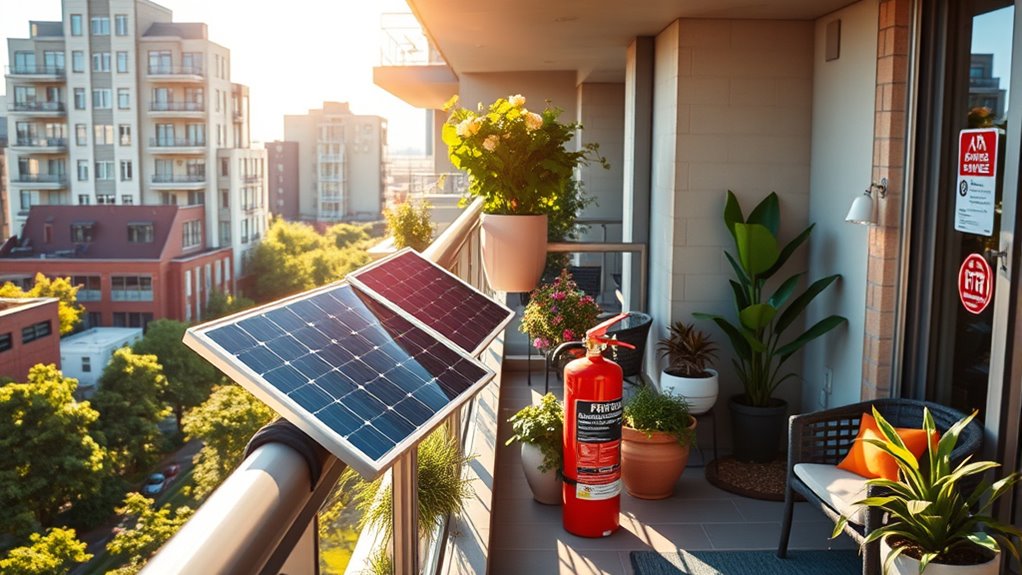
Understanding the fire safety aspects of balcony solar systems is crucial because, while the panels themselves pose no inherent fire hazard, improper installation and poor maintenance can increase risks. You should guarantee connectors are secure, mounts are stable, and panels aren’t blocking egress paths. Microinverters help reduce fire risk by limiting voltage at the module level, providing arc-fault detection, and enabling rapid shutdown. Always use UL 1741 listed devices with ground-fault and overcurrent protections to prevent electrical arcs and overloads. Maintain a safe clearance of 0.3–0.5 meters from combustibles and keep batteries away from exits. Be aware of local safety warnings, like those from the Swedish Electrical Safety Board, about risks like overload fires or power supply issues to disconnected networks. Proper precautions help minimize fire hazards effectively. Additionally, regular system inspections can identify potential issues before they lead to hazards. Incorporating innovative European cloud solutions can also enhance system monitoring and safety management through advanced remote diagnostics and alerts.
Ensuring Electrical Compliance and Proper System Design
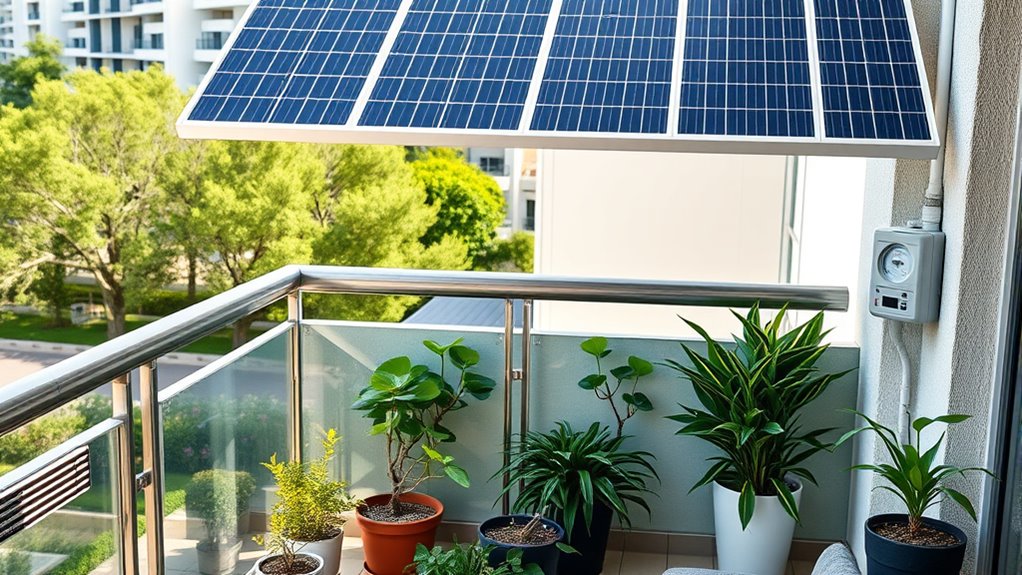
You need to follow electrical codes and choose certified components to guarantee your balcony solar system is safe and legal. Using UL-listed inverters, connectors, and proper wiring helps prevent hazards and meet regulations. Always verify local requirements before installation to avoid compliance issues. Additionally, understanding proper system design ensures your setup operates efficiently and safely. Proper electrical safety practices are essential to protect against potential hazards and ensure code compliance. Implementing compliance checks during installation can further ensure your system adheres to all relevant standards. Incorporating heat distribution principles from kitchen science can also help prevent overheating of electrical components and improve system longevity. Being aware of smart‑home integrations can enhance system monitoring and control for added safety and efficiency.
Adhere to Electrical Codes
Adhering to electrical codes is essential for ensuring a safe and reliable balcony solar system. To do this effectively, you should:
- Use only listed PV modules and inverters that meet local standards.
- Install GFCI or AFCI protection to prevent electrical shocks and fires.
- Follow NEC Article 690 guidelines for wiring, including proper conduit, drip loops, and correct polarity.
- Verify whether permits are required in your area, especially for systems over 1kW, and obtain approval if needed.
- Regularly review quality assurance practices to confirm that all components and installation procedures meet safety standards and adhere to electrical codes and safety regulations.
Use Certified Components
Using certified components is essential to guarantee your balcony solar system meets safety standards and operates reliably. Always choose devices listed by recognized safety organizations like UL or IEC, ensuring they pass strict quality tests. Use microinverters and connectors rated for outdoor use and compliant with standards like UL 1741 and IEC 62852. Proper components reduce risks like electrical arcs, overloads, and fire hazards. Avoid unknown or uncertified parts, as they may not withstand weather or load demands. Invest in high-quality wiring, connectors, and mounts designed for outdoor environments. Certified components help ensure your system functions safely over time, offers reliable energy production, and remains compliant with local regulations. Prioritizing quality components is a key step in creating a safe, efficient balcony solar setup. Additionally, selecting components that are weather-resistant ensures durability and sustained performance in outdoor conditions. To further enhance safety, consider incorporating proper grounding practices and protective devices to mitigate electrical risks. Incorporating regular maintenance routines can also help detect potential issues early and maintain system integrity. Involving a qualified professional during installation can further ensure all electrical connections are correctly made and certified. Moreover, choosing components with long-term durability guarantees your system remains dependable over many years.
Choosing the Right Components and Installation Methods
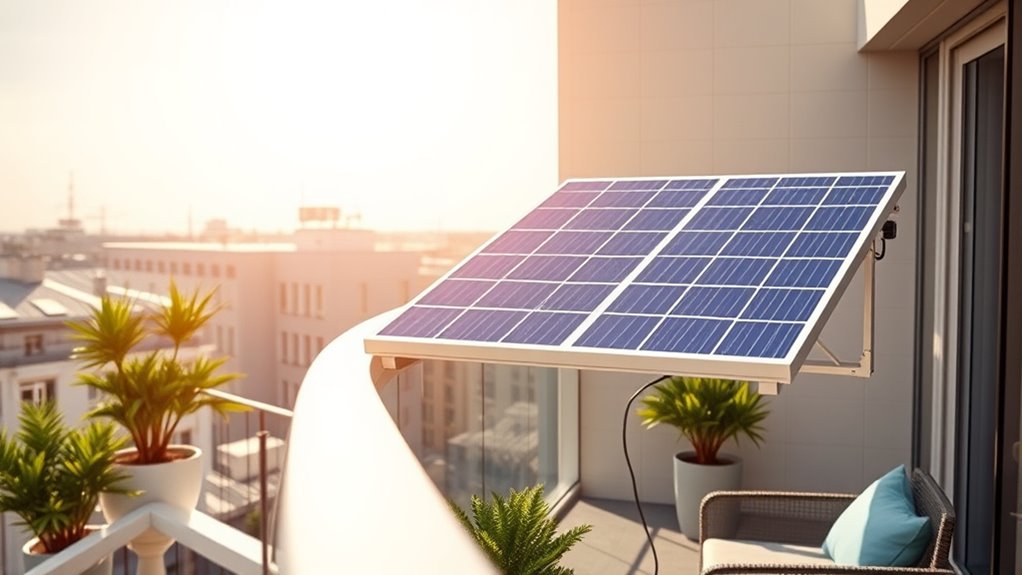
When selecting components for your apartment solar system, make certain they meet safety standards like UL 1741 and IEC 62852. Proper installation techniques, such as secure mounts and waterproof connections, are essential to prevent hazards. Always follow manufacturer instructions and consult professionals to ensure a safe, reliable setup. Additionally, incorporating smart home automation can help monitor and optimize your system’s performance and safety. For optimal safety and efficiency, it’s also important to understand mount, OTA, and camera comparisons with field‑of‑view and imaging‑scale examples, especially when planning a new installation. Ensuring your system uses appropriate materials like titanium or surgical steel for any exposed components can further reduce risks associated with corrosion or damage. Being aware of cryptid mysteries and other folklore can also help you identify unusual phenomena that might be mistaken for technical issues, helping to distinguish between paranormal reports and genuine system malfunctions. Conducting regular system inspections and maintenance can catch potential problems early, enhancing overall safety.
Component Safety Standards
Choosing the right components for your balcony solar system is essential for safety and performance. First, ensure all devices are UL 1741 listed, including microinverters and connectors. Second, select components with built-in ground-fault and overcurrent protection to prevent electrical arcs and overloads. Third, use IEC 62852 connectors and outdoor-rated PV cables to withstand weather and avoid shorts. Fourth, verify that mounts and hardware meet safety standards, supporting panel weight and resisting wind. Following these standards reduces fire risks, electrical hazards, and system failures. Always read product manuals thoroughly and double-check certifications before installation. Properly selected and compliant components are key to a safe, reliable, and efficient balcony solar system. Additionally, paying attention to system wiring basics can help prevent common installation errors and enhance overall safety. It is also important to stay informed about environmental considerations to ensure your system minimizes impact on surrounding ecosystems. Being aware of local building codes can further ensure your installation adheres to safety requirements and avoids legal complications. Incorporating quality components with proper protective features not only extends system longevity but also ensures compliance with safety standards and sustainable practices, which are increasingly important in modern solar installations.
Secure Installation Techniques
Selecting the right components and installation methods is vital for the safety and durability of your balcony solar system. Choose UL 1741 listed microinverters, connectors, and mounting hardware designed for outdoor use. Secure mounts firmly to support the panels’ weight and guarantee they’re attached to stable surfaces like concrete or treated wood. Keep all wiring waterproof and insulated, using drip loops and strain reliefs to prevent moisture and mechanical stress. Avoid overloading balcony surfaces and verify that your setup complies with local building codes and regulations. Use proper grounding and overcurrent protection devices. If unsure, consult a professional to ensure your system is safe, stable, and compliant, reducing risks of electrical failure, damage, or accidents. Proper waterproofing techniques are essential to maintain system integrity over time.
Navigating Legal Permissions and Regulatory Requirements
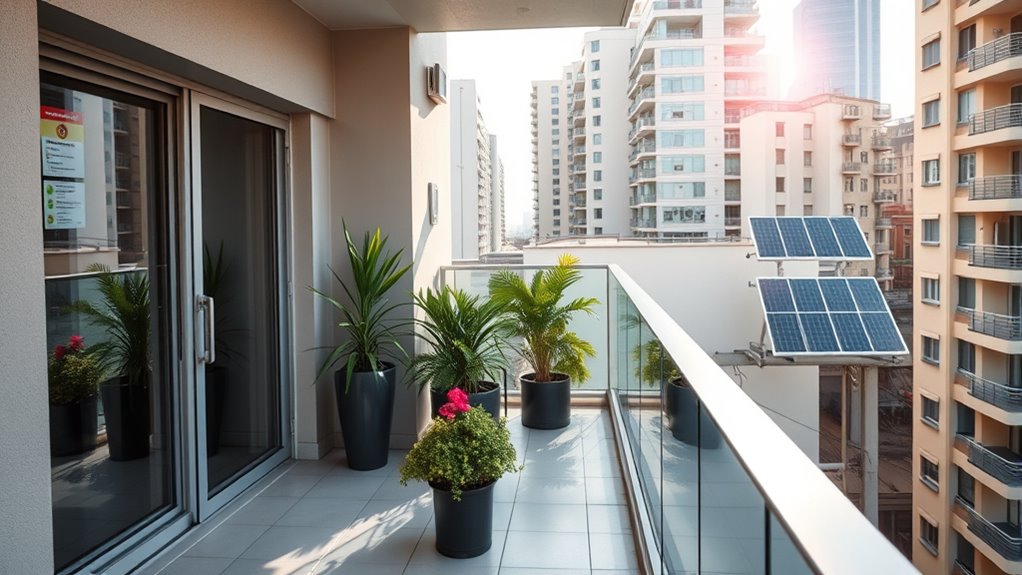
Understanding legal permissions and regulatory requirements is essential to guarantee your balcony solar system complies with local laws and safety standards. First, always check with your landlord if you’re renting—get written consent, review your lease for restrictions, and be prepared to remove the system when you move. Second, consult your homeowners’ association (HOA) rules for aesthetic and size limits. Third, submit any required documentation, such as product listings, layout photos, and one-line diagrams, to the local authority having jurisdiction (AHJ). Fourth, understand regional regulations: in Germany, up to 800W is permitted without permits; in the US, systems under 1kW often don’t need permits, but verify local rules. Staying compliant avoids fines and safety issues.
Recognizing and Adapting to Regional Regulatory Variations

Regional regulations substantially impact how you install and operate balcony solar systems. You need to understand local laws, building codes, and utility policies, as these vary widely by region. For example, in the EU, countries like France and the Netherlands follow Germany’s relaxed rules for small balcony systems, allowing up to 800W without permits. In contrast, Washington State bans modular plug-in panels into standard outlets, requiring specific compliance. Some areas require permits or approval from homeowners’ associations, while others don’t. Always verify load capacities, fire safety clearances, and wind resistance standards applicable locally. Utility policies may also influence your setup, especially regarding connection procedures, permits, or restrictions. Adapting to these regional differences guarantees your system is legal, safe, and optimized for your environment.
Practical Tips for Safe and Effective System Maintenance
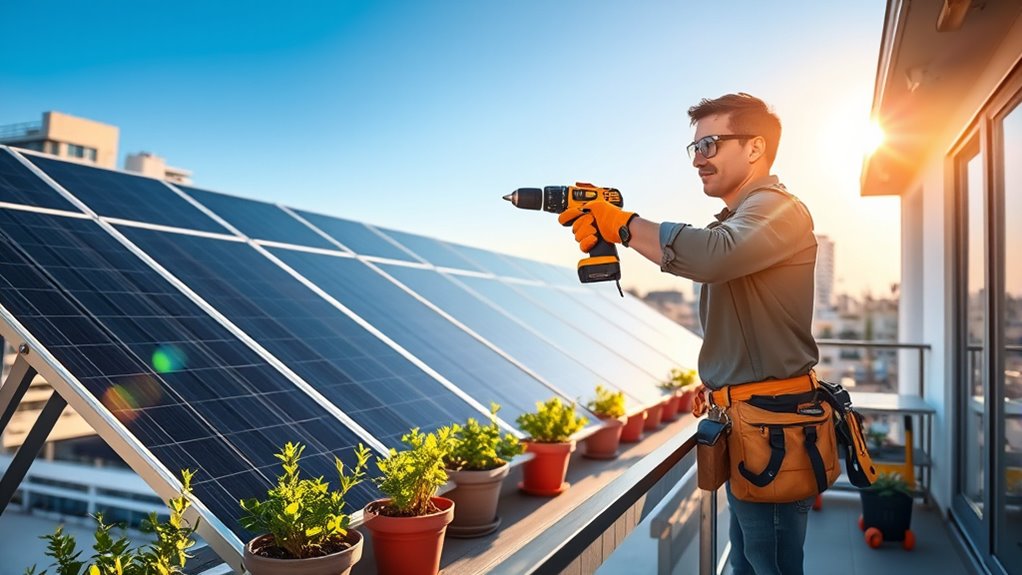
Regular maintenance is essential to keep your balcony solar system operating safely and efficiently. To do this effectively, follow these practical tips:
- Inspect connections and wiring for corrosion, deterioration, or loose fittings regularly. Tighten or replace as needed.
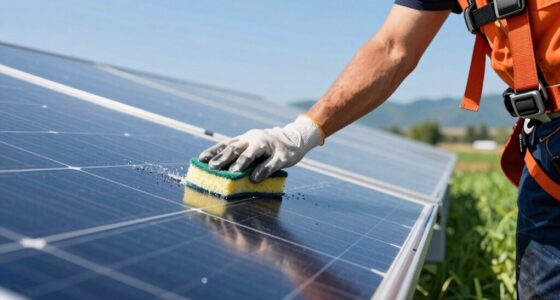
- Check for shading or debris on panels, cleaning them gently with a soft brush or cloth to maximize sunlight absorption.
- Test safety features like shutdown switches and labels to ensure easy access during emergencies.
- Review datasheets, certifications, and system diagrams periodically to verify everything remains compliant and operational.
Keep detailed records of inspections and repairs, and avoid attempting repairs beyond your skill level. When in doubt, consult a professional to ensure your system stays safe, functional, and compliant with local regulations.
Common Mistakes to Avoid When Installing Balcony Solar

Installing balcony solar systems can be straightforward, but mistakes during setup can compromise safety and performance. First, avoid neglecting your balcony’s structural integrity. Ensure mounts are securely attached and capable of supporting the panels’ weight without causing damage or instability. Don’t skip reading the product manual—understanding component installation and wiring procedures is essential. Using improper or non-rated connectors, such as unknown adapters, can lead to electrical hazards. Keep clear of combustibles and ensure cables are properly protected with drip loops and strain reliefs to prevent moisture intrusion or overloads. Avoid overloading circuits or exceeding the system’s capacity, which can cause fire risks or electrical failure. Finally, don’t ignore local regulations—failing to secure necessary permits or approvals can lead to penalties or system shutdowns.
Collaborating With Professionals and Authorities for Safe Setup
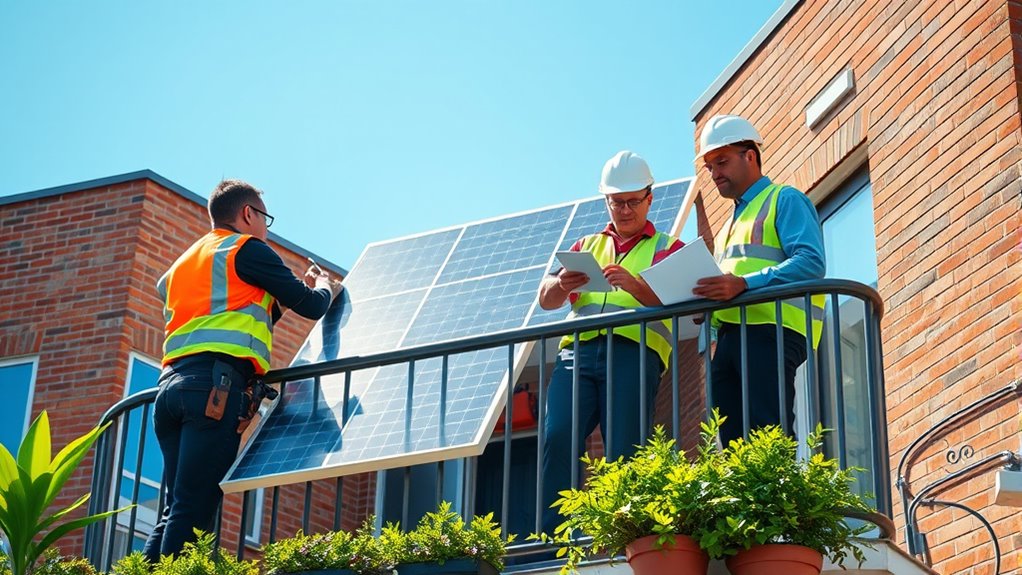
To guarantee your balcony solar system is safe and compliant, working closely with professionals and local authorities is essential. Here’s what you should do:
- Consult licensed electricians to ensure proper wiring, grounding, and device selection, following NEC and local codes.
- Obtain necessary permits or approvals from your landlord, HOA, or building management before installation.
- Submit required documentation, such as product listings, layout diagrams, and one-line diagrams, for approval by authorities.
- Verify local regulations on system size, placement, and safety standards to avoid fines or system removal.
Engaging experts and authorities early ensures your setup meets all safety, legal, and technical requirements, minimizing risks and maximizing your system’s performance.
Frequently Asked Questions
Can Balcony Solar Systems Increase Fire Risk Despite Safety Measures?
Balcony solar systems generally don’t increase fire risk if you follow safety measures. Proper connectors, secure mounts, and UL-listed components help prevent hazards. Microinverters and ground-fault protection limit electrical issues, and maintaining clearances from combustibles adds safety. Regular inspections, correct wiring, and professional installation further reduce risks. When you adhere to these guidelines, your balcony solar system operates safely without posing a fire threat.
Are Plug-In Balcony Solar Kits Legal Everywhere?
Did you know that in some areas, over 80% of balcony solar kits are considered illegal? Plug-in balcony solar kits aren’t legal everywhere. In the US, systems under 1kW often don’t require permits, but local laws vary. Canada, Australia, and EU countries have their own rules. Always check your local regulations before installing, and verify your kit meets safety standards to stay compliant and avoid fines.
How Do I Ensure My Balcony Structure Can Support Solar Panels?
You need to assess your balcony’s weight capacity before installing solar panels. Check the building’s structural details or consult a professional to evaluate load limits for your balcony’s materials—be it wood, concrete, or metal. Look for signs of weakness or deterioration, and avoid overloading. Securing proper support guarantees safety and prevents damage. If unsure, hire an engineer to perform a load analysis and confirm your balcony can handle the added weight.
What Permits Are Required for Installing Balcony Solar in My Region?
You’ll need to check your local regulations to determine the permits required for balcony solar installation. In many US areas, systems under 1kW often don’t need permits, but some regions, like Washington State, ban plug-in panels into outlets. You should contact your local building authority or AHJ to confirm specific permit requirements, verify compliance with codes like NEC, and obtain approval before starting your installation.
How Often Should I Inspect My Balcony Solar System for Safety?
You should inspect your balcony solar system at least once a month to make certain safety. Check for loose connections, signs of corrosion, or damage to panels and mounts. Look for any blocked egress or combustible materials nearby. After severe weather or storms, perform a more thorough inspection. Regular checks help you catch potential issues early, preventing electrical hazards and maintaining system efficiency. Always follow manufacturer guidelines for specific maintenance recommendations.
Conclusion
By following these guidelines, you’ll keep your balcony solar system safe and compliant. Remember, it’s better to be safe than sorry—don’t cut corners or rush the process. With careful planning and proper maintenance, you’ll make the most of your solar setup without risking fire or legal issues. Think of it as planting seeds today for a brighter, cleaner energy future tomorrow—trust that your efforts will pay off in the long run.