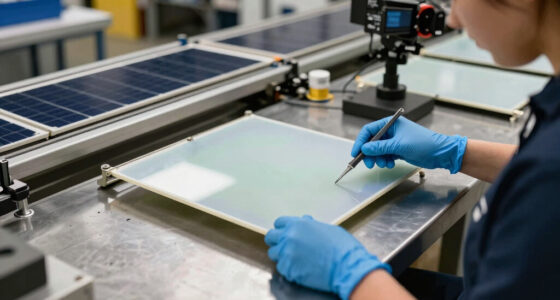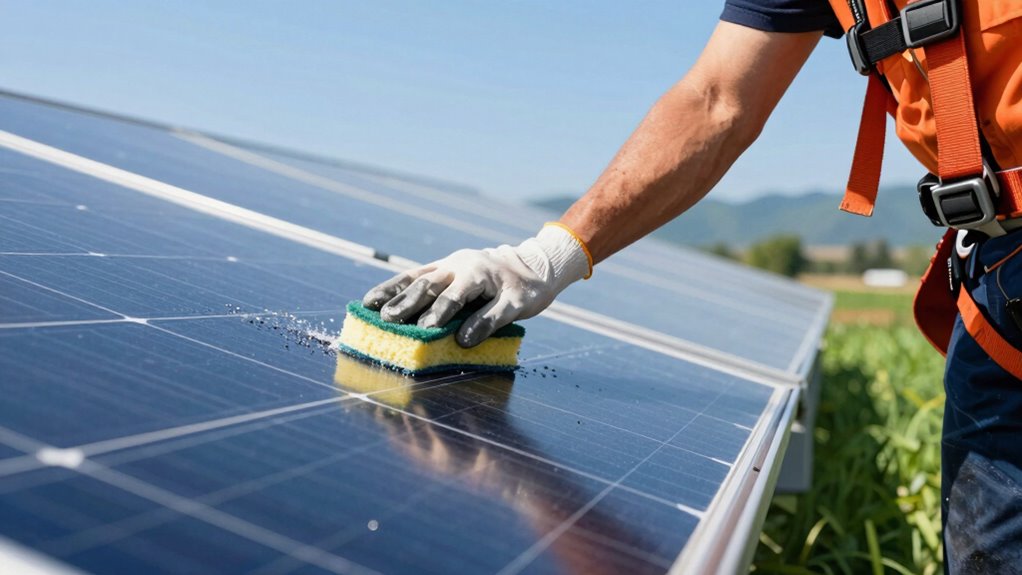

Cleaning your solar panels can markedly boost output when dirt, dust, or grime block sunlight, especially on flat or horizontal arrays in dusty areas. If your panels are lightly soiled or naturally cleaned by rain, the gains are minimal. Factors like soiling severity, panel tilt, and environment influence the effectiveness. To maximize benefits and avoid unnecessary effort, understanding when cleaning makes a difference can save you time and money—discover more tips to optimize your system’s performance.
Play games included with Prime
Start a Prime free trial and play with Amazon Luna on your devices.
As an affiliate, we earn on qualifying purchases.
Key Takeaways
- Cleaning significantly boosts output mainly when panels are heavily soiled, dusty, or covered with grime, especially on flat or horizontal setups.
- Natural rain often suffices for cleaning in moderate climates, making manual cleaning unnecessary unless soiling is persistent or severe.
- Benefits are minimal in well-maintained systems with low soiling or in environments with frequent rain, where dirt is naturally washed away.
- Automated cleaning systems are cost-effective for large, persistent soiling conditions but may not be justified for small or lightly soiled panels.
- Monitoring performance helps determine if soiling causes substantial losses, guiding targeted cleaning efforts rather than routine cleaning.
When Does Cleaning Significantly Boost Power Output?
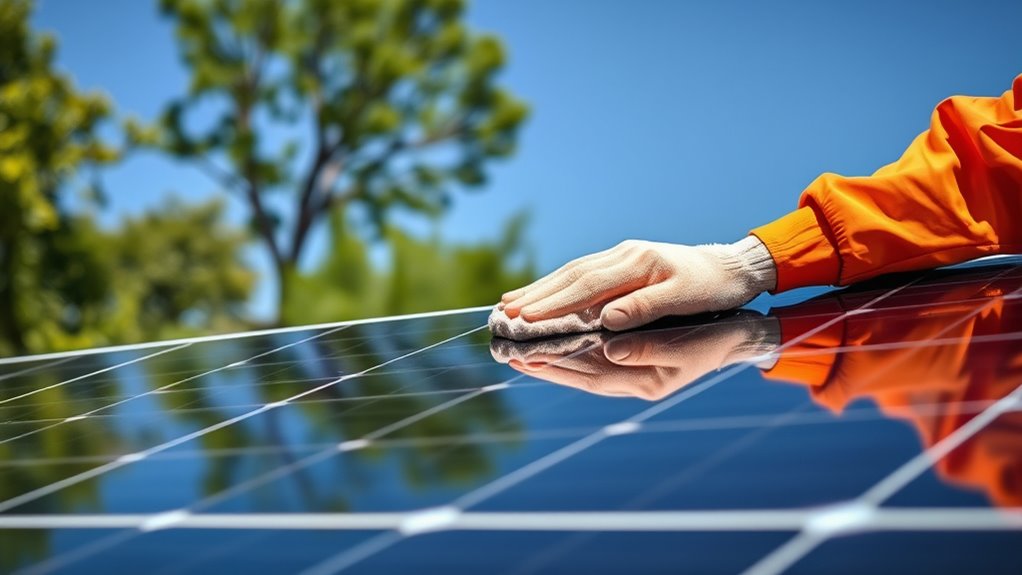
Cleaning markedly boosts power output when soiling causes substantial shading or energy loss, particularly on flat or horizontally mounted panels. If your panels are heavily covered with dust, bird droppings, or industrial grime, cleaning can recover up to 95% of their original output, as demonstrated in lab tests. These conditions create non-uniform shading, which results in outsized power loss. Large, flat arrays near sandy or dusty environments often see their output double after cleaning. When soiling is severe and persistent, the energy gains are significant enough to justify cleaning efforts and costs. Automated or robotic cleaning systems become especially cost-effective here, helping maintain high performance and reducing manual labor. In such cases, cleaning directly translates into large, measurable improvements in energy production. Proper system maintenance ensures your panels operate efficiently over their lifespan, and choosing the right cleaning method can make a significant difference in effectiveness and safety. Regular inspections can help identify soiling severity early, preventing long-term efficiency drops. Additionally, understanding environmental factors can assist in predicting when cleaning is most beneficial, especially in dusty or industrial areas where buildup occurs rapidly.
Situations Where Cleaning Offers Little to No Advantage

In many residential or well-maintained commercial settings, the benefits of cleaning are minimal because natural conditions often keep panels relatively free of dirt. If your panels are tilted and exposed to regular rain, they typically stay clean enough that manual cleaning offers little to no measurable gain. Light, uniform dust accumulation, which causes only small efficiency losses (~0.05% per day), rarely justifies the effort or cost of cleaning. Additionally, if natural weather events like rain or wind clear away dirt frequently, cleaning provides negligible benefits. For small systems or those with stable performance metrics, routine cleaning often results in minimal energy savings and low return on investment. In such cases, understanding the environmental impact can help determine whether cleaning is truly necessary based on local weather patterns and dust levels. Proper maintenance practices can help ensure optimal performance without unnecessary cleaning efforts. Moreover, understanding the impact of environmental factors can assist in deciding whether cleaning is truly necessary based on local weather patterns and dust levels. When considering cleaning, evaluating the cost-benefit ratio can help determine if the effort will yield meaningful improvements. Sometimes, the presence of light dust accumulation does not significantly impact energy output, especially if natural cleaning events occur regularly.
Key Factors That Influence the Effectiveness of Cleaning
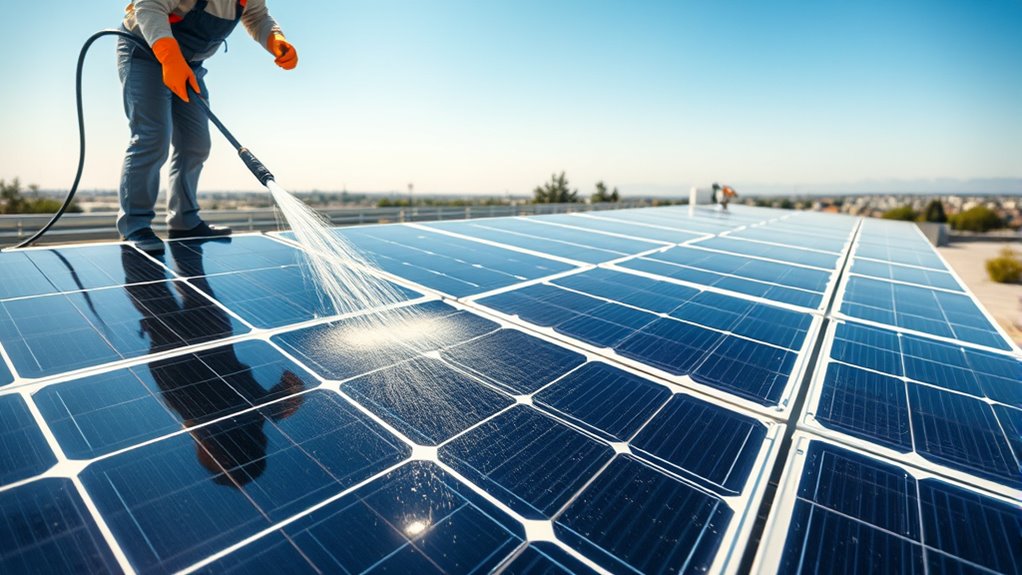
The effectiveness of cleaning your solar panels depends heavily on several key factors that determine how much energy can be recovered. First, the type and severity of soiling matter; sticky grime or industrial deposits require more aggressive cleaning than light dust. Panel tilt and orientation influence natural rain runoff, affecting self-cleaning efficiency. Local climate conditions—like dust storms, pollen, or rain frequency—set the baseline for soiling rates and cleaning schedules. System size and economics also play a role; large utility arrays may justify automated cleaning, while small residential setups often don’t. In the end, detailed monitoring helps identify specific losses, enabling targeted cleaning efforts. Recognizing these factors ensures you make informed decisions about when, how, and if cleaning will truly boost your solar output. Additionally, understanding the self-cleaning properties of different panel surfaces can help determine whether natural cleansing will suffice or if manual intervention is necessary.
Quantitative Insights From Real-World and Laboratory Studies
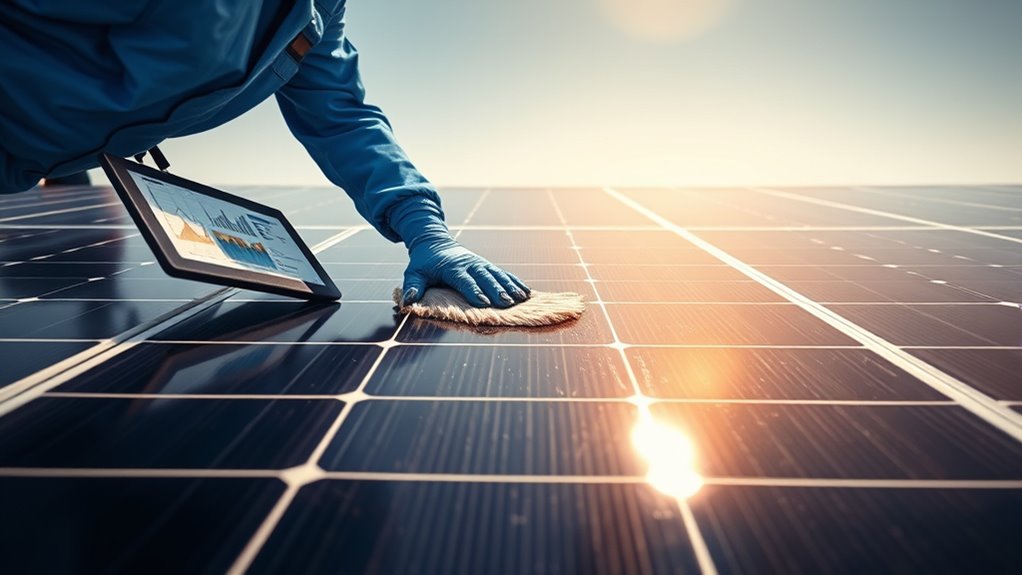
Real-world studies and laboratory experiments provide a broad range of data on how much soiling can reduce solar panel output. In controlled tests, complete dust removal can restore up to 95% of lost energy, especially on heavily soiled, flat, or horizontal arrays. Field reports from desert or pollution-heavy sites often show improvements exceeding 10% after cleaning. Conversely, well-tilted residential panels in moderate climates usually see only 5–8% gains, with rain frequently keeping panels clean enough to negate cleaning benefits. Quantitative data reveal that soiling losses vary widely—from around 1% in Arizona to over 30% in extreme cases. Many studies also highlight that sticky grime or non-uniform shading causes disproportionately high losses, which can be recovered through targeted cleaning.
Making Cost-Effective Cleaning Decisions for Different Systems
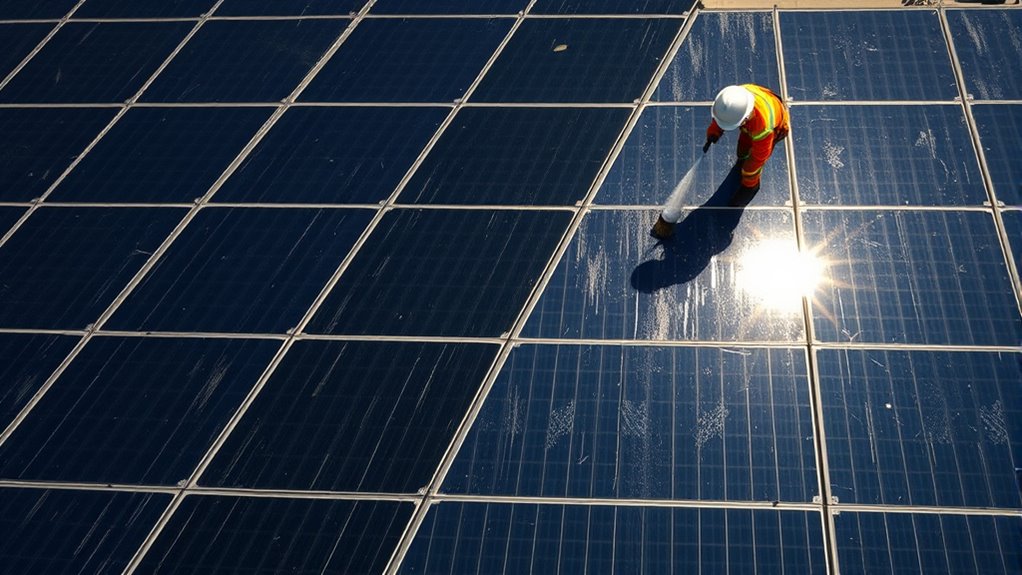
Deciding when and how to clean solar panels effectively depends on balancing potential energy gains against costs and practical constraints. First, assess your system’s soiling level and local conditions. If panels are extremely dirty or the soiling causes significant shading, cleaning can yield substantial output gains, making it worthwhile. For lightly soiled residential systems in moderate climates, natural rain often suffices, and manual cleaning may not be cost-effective. Monitor your system’s performance to identify persistent drops not caused by weather or faults. Consider the cleaning method: rain is cheapest but unreliable for sticky deposits, while manual washing or automated systems involve costs. Weigh the expected energy savings against labor, water, and equipment expenses to determine whether cleaning offers a good return on investment for your setup. Additionally, understanding the impact of dust and debris on panel efficiency can help you decide when cleaning is truly necessary. Regularly evaluating soiling accumulation patterns can further optimize cleaning timing and frequency, ensuring you maintain peak system performance without unnecessary expenditure.
Frequently Asked Questions
How Often Should Different Types of Panels Be Cleaned for Optimal Performance?
You should clean panels based on their environment and dirt buildup. Flat, horizontal, or heavily soiled panels near dust fields or pollution may need cleaning every few months or after storms. Tilted residential panels often only require cleaning once or twice a year, especially after heavy dust, bird droppings, or storms. Regular monitoring helps you decide, but over-cleaning isn’t cost-effective if natural rain keeps panels reasonably clear.
Does Cleaning Impact the Longevity or Durability of Solar Panel Surfaces?
Cleaning your solar panels is like giving them a gentle spa treatment—they become more resilient over time. Proper cleaning, when done carefully, generally doesn’t harm the surface and can even extend panel life by removing corrosive dirt and grime. However, aggressive or improper cleaning methods risk scratching or damaging coatings. Use soft tools and avoid harsh chemicals to protect your panels’ durability and guarantee they perform at their best for years to come.
Are There Environmental Benefits or Drawbacks to Frequent Cleaning Methods?
Frequent cleaning can have environmental benefits by improving energy efficiency, reducing reliance on fossil fuels, and lowering greenhouse gas emissions. However, drawbacks include water use, which may strain local resources, and chemical runoff from cleaning agents that can harm ecosystems. You should weigh these factors against the energy gains and consider eco-friendly methods like rainwater or dry cleaning to minimize environmental impact. Balancing efficiency with sustainability helps optimize both system performance and ecological health.
Can Improper Cleaning Techniques Cause Damage or Reduce Panel Efficiency?
A stitch in time saves nine, but improper cleaning can do more harm than good. You might scratch or crack the panels with abrasive tools or harsh chemicals, reducing efficiency and lifespan. Using high-pressure water or aggressive brushes can loosen connections or damage delicate surfaces. Always follow manufacturer guidelines, use soft materials, and avoid sudden temperature changes to protect your panels and maintain ideal performance.
What Are the Latest Innovations in Low-Cost, High-Effectiveness Cleaning Technologies?
You should explore waterless cleaning systems, air-jet devices, and nanocoatings as the latest low-cost, high-effectiveness innovations. Waterless methods use compressed air or soft wipers to remove dirt, reducing water use and labor. Nanocoatings make panels hydrophobic, encouraging self-cleaning and reducing soiling buildup. These options are cost-effective, scalable, and suitable for various sites, helping you maintain efficiency without expensive traditional cleaning methods.
Conclusion
Ultimately, deciding when to clean your solar panels depends on your specific situation. Are you wasting energy on unnecessary cleaning or missing out on potential gains? By understanding the key factors and real-world insights, you can make smarter choices that save money and maximize efficiency. Don’t just clean blindly—consider the conditions and evidence. After all, isn’t optimizing your solar investment worth a little extra effort?
Fall yard work Picks
leaf blowers
As an affiliate, we earn on qualifying purchases.