During a heat wave outage, stay cool by closing curtains during the hottest part of the day and creating cross-ventilation by opening windows at night. Use damp cloths or sheets hanging in windows to aid evaporative cooling, and place bowls of ice in front of fans for chilled breezes. Keep yourself hydrated with water and water-rich foods. For more tips, discover strategies to prepare your home and boost resilience against power outages.
Key Takeaways
- Use evaporative cooling methods like damp cloths, damp sheets in windows, or DIY fans with ice to lower indoor temperatures.
- Keep curtains and blinds closed during peak heat hours to block sunlight and reduce indoor heat gain.
- Increase ventilation by opening windows at night and sealing them during the day to promote cooler air flow.
- Stay hydrated by drinking water regularly and consuming water-rich foods like fruits and vegetables.
- Prepare your home with reflective window coverings, insulation, and shading to minimize heat entry during outages.
Immediate Steps to Stay Cool Without Power
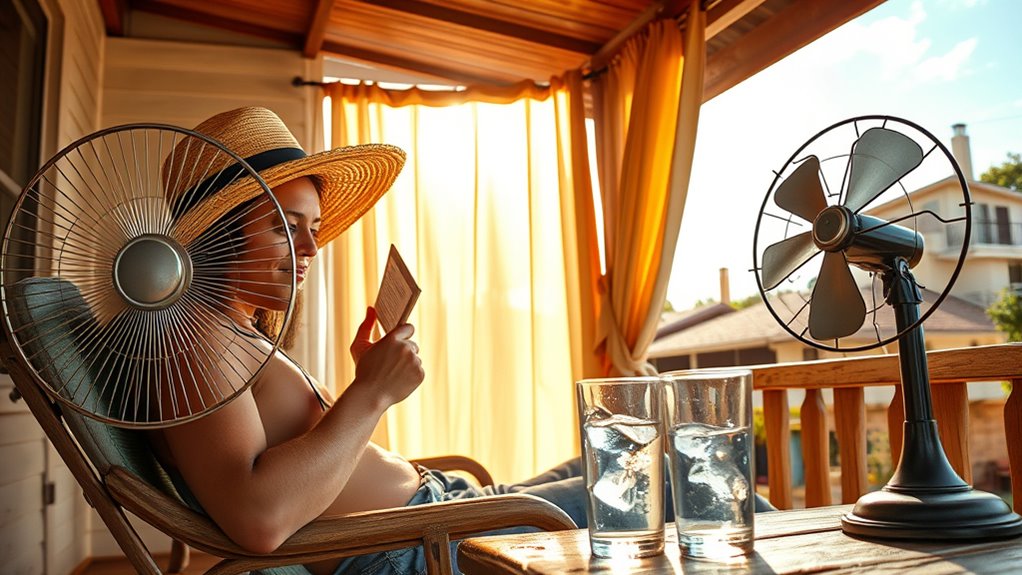
When the power goes out during a heat wave, staying cool becomes a priority. You can tap into evaporative cooling by dampening a cloth or sponge and hanging it in front of an open window. As air passes through, it cools, providing relief without electricity. DIY fans are also effective; fill a shallow pan with ice or cold water and place a fan (if available) nearby to blow cool air. If you don’t have a fan, create a makeshift one using a sturdy piece of cardboard and a hand-held fan or by manually fanning yourself. Keep curtains and blinds closed during the hottest parts of the day to block out sunlight. Additionally, creating outdoor seating areas in shaded spots can help you relax comfortably outside without feeling the heat indoors. Using natural ventilation techniques can also improve airflow and help lower indoor temperatures. Incorporating evaporative cooling methods can be especially helpful in dry climates where humidity is low, enhancing your comfort during outages. Being aware of climate-specific cooling strategies allows you to adapt effectively to your environment. Additionally, butter into your cooling strategies might seem unconventional, but its role in traditional cooling or comfort methods in some cultures highlights its versatility. These simple, immediate steps help lower indoor temperatures and keep you comfortable until power is restored.
Creative Ways to Lower Indoor Temperatures
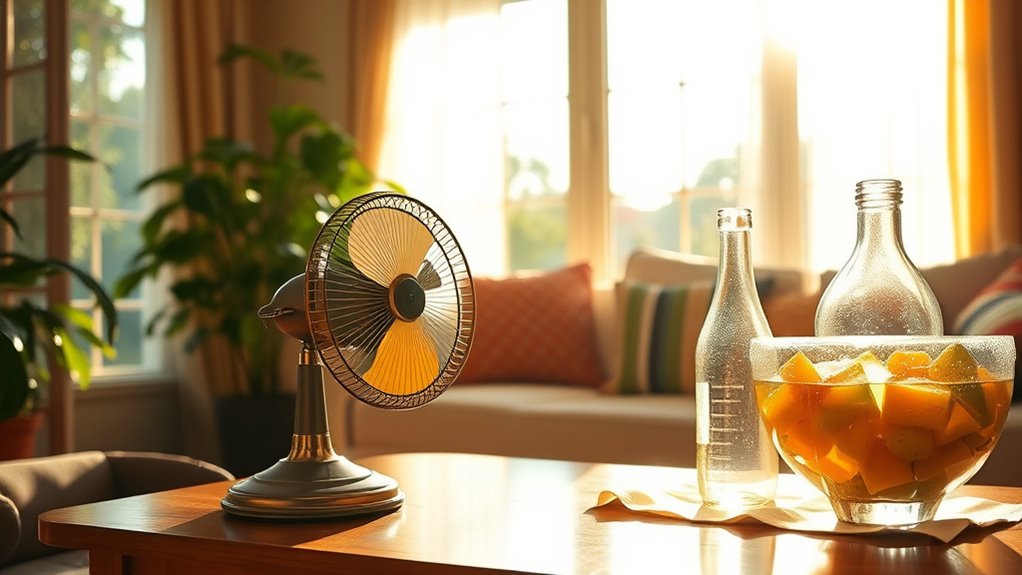
During a heat wave, getting creative with your cooling methods can make a significant difference. DIY cooling techniques and natural ventilation can help lower indoor temperatures without electricity. You might hang damp sheets in windows to create evaporative cooling or place bowls of ice in front of fans for a chilled breeze. Open windows at night to let cooler air in, then seal them during the day to trap the coolness inside. Use cross-ventilation by positioning fans opposite open windows to encourage airflow. Additionally, shade windows with reflective blinds or curtains to block out heat. These simple, resourceful strategies keep your space cooler and more comfortable, even when power is out. Embracing natural ventilation and DIY cooling to beat the heat effectively can be further enhanced by modern kitchen technology, such as smart fans or temperature sensors that help optimize airflow and cooling efficiency. Incorporating practical, room-by-room solutions can help you organize and optimize your space for better airflow and comfort during hot days. For example, using energy-efficient appliances can reduce heat generated indoors, contributing to a cooler environment. Moreover, insulating your living space can prevent heat from entering and help maintain a cooler indoor temperature. Additionally, selecting heat-reflective window coatings can further reduce heat gain and improve comfort indoors.
Safe Hydration and Nutrition Tips During a Heat Outage

Staying properly hydrated and nourished is essential to avoid heat-related illnesses during a power outage in a heat wave. Hydration reminders, like drinking water regularly even if you don’t feel thirsty, help prevent dehydration. Prioritize easy-to-digest foods rich in water content, such as fruits and vegetables, to maintain your energy levels. Nutritional strategies should focus on balanced snacks that replenish electrolytes, like sports drinks or electrolyte tablets if available. Avoid caffeine and alcohol, which can dehydrate you further. Keep a supply of bottled water accessible, and sip fluids consistently throughout the day. Proper hydration and nutrition support your body’s ability to stay cool and recover from heat stress, making it easier to endure the heat until power is restored. Regularly consuming electrolyte-rich foods can also help maintain your body’s fluid balance during extreme heat conditions. Incorporating hydration strategies such as flavored water or electrolyte drinks can make it easier to consume adequate fluids and maintain electrolyte balance. Staying informed about power outage updates can help you plan your hydration and nutrition accordingly. Additionally, being mindful of your body’s signals can help you recognize early signs of heat exhaustion and respond promptly.
Preparing Your Home Before a Heat Wave Hits
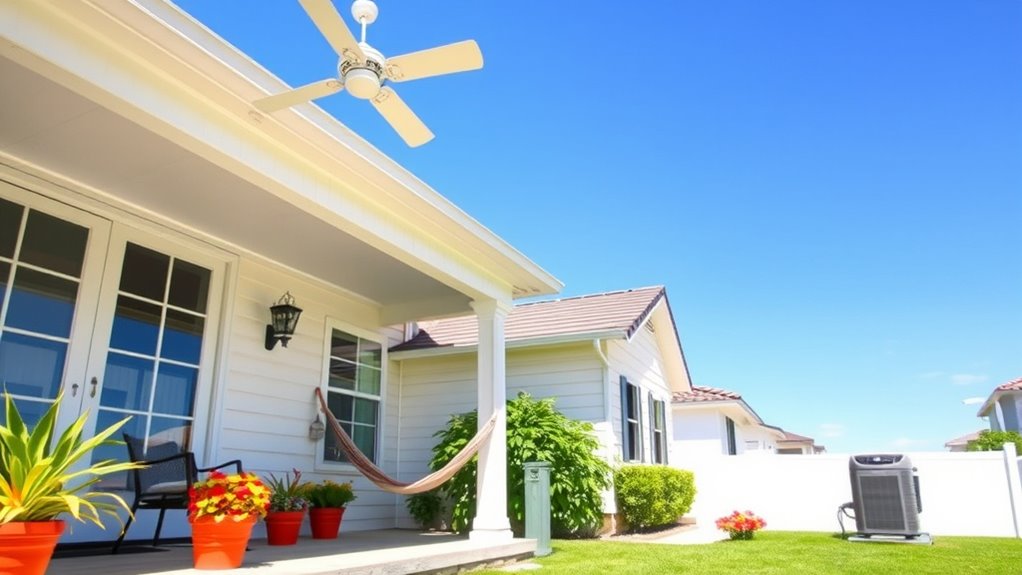
Preparing your home before a heat wave arrives can markedly reduce indoor temperatures and keep your living space more comfortable. Start by installing a smart thermostat to optimize cooling efficiently and set it to pre-cool your home early in the day. Consider insulation upgrades, such as sealing gaps and adding attic insulation, to prevent heat from seeping in. Shade windows with reflective films or awnings to block direct sunlight. Use heavy curtains or blackout blinds during peak heat hours. Planting trees or installing exterior shades can also create natural cooling. These steps create a cooler indoor environment, reducing reliance on power and minimizing discomfort during the heat wave. Proper preparation guarantees your home remains a safe, cool retreat even when temperatures soar outside.
Long-Term Solutions for Power Outage Resilience

To build resilience against power outages caused by heat waves, investing in long-term solutions is essential. Installing solar power systems can provide a reliable, renewable energy source that reduces dependence on the grid during outages. Solar panels can charge batteries, ensuring you have backup power for critical cooling devices. Additionally, supporting community cooling initiatives helps protect vulnerable populations and reduces overall heat stress. Community cooling centers equipped with solar-powered fans or air conditioning can serve as safe refuges during extreme heat. These investments not only increase your home’s resilience but also promote sustainable practices that benefit the entire community. Incorporating smart home technology such as automated climate control and energy management systems can further optimize energy use and enhance comfort during outages. Designing resilience planning strategies that include energy storage and backup power sources creates a more robust, prepared environment ready to withstand prolonged heat-related power outages, especially when community infrastructure is improved and integrated. Investing in renewable energy solutions can significantly decrease reliance on fossil fuels and contribute to a healthier environment. Moreover, utilizing reliable backup power options ensures continuous operation of essential cooling systems during extended outages.
Frequently Asked Questions
How Can I Tell if My Home Is at Risk of Heat-Related Damage?
You can tell if your home is at risk of heat-related damage by checking its insulation and roof integrity. If your insulation is old or poorly installed, it won’t keep the heat out effectively. Also, inspect your roof for damage or leaks, as compromised roof integrity can lead to heat buildup and moisture issues. Addressing these issues helps prevent heat damage and keeps your home cooler during a heat wave.
Are There Any Emergency Services Available During Prolonged Power Outages?
Yes, emergency services are available during prolonged power outages. You should keep emergency contacts handy, including local emergency numbers and utility companies. Check for shelter availability in your area, such as cooling centers or public facilities, and plan to visit them if your home becomes unmanageable. Stay informed through local news and alerts, and don’t hesitate to reach out for assistance if needed.
What Are the Signs of Heat Exhaustion and Heat Stroke?
You might think heat exhaustion and heat stroke are just about feeling hot, but they’re serious. Signs of heat exhaustion include heavy sweating, weakness, dizziness, and nausea. Signs of heat stroke are more severe: high body temperature, confusion, rapid pulse, and loss of consciousness. If you notice these symptoms, act fast—move to a cooler place, hydrate, and seek medical help immediately. Staying alert can save your life.
Can Certain Plants Help Cool Indoor Air Naturally?
Yes, certain indoor air plants can help with natural cooling. Plants like snake plants, pothos, and spider plants absorb heat and humidity, making your indoor environment more comfortable. By improving airflow and releasing moisture, these indoor air plants create a cooler, fresher atmosphere. Incorporate them into your space for a natural way to reduce indoor temperatures and stay cool during a heat wave.
How Do I Safely Dispose of Spoiled Food After a Power Outage?
To safely dispose of spoiled food after a power outage, prioritize food safety by acting quickly. Use disposal methods like double-bagging the waste in heavy-duty trash bags and sealing them tightly to prevent leaks and odors. Place the bags in your outdoor trash bin, away from children and pets. Remember to wash your hands thoroughly afterward. Prompt disposal helps prevent foodborne illnesses and keeps your home clean and safe.
Conclusion
Even if a power outage leaves you sweating, staying cool is still possible. You might think it’s too late to prepare, but small steps now can make a big difference. By using creative cooling tricks and staying hydrated, you’ll stay comfortable and safe. Remember, you don’t need fancy gadgets—just a little ingenuity and prep work. Stay calm, stay cool, and know you’re ready to beat the heat, no matter what comes.