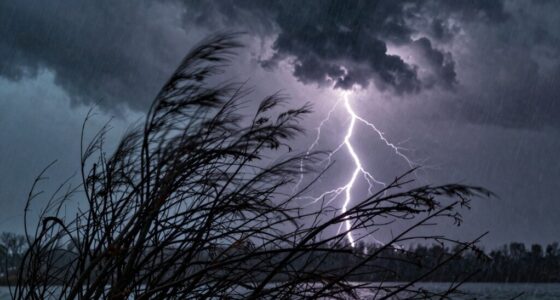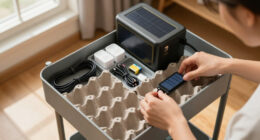
To prepare for a thunderstorm outage in just 30 minutes, start by securing emergency supplies, charging essential devices, and backing up power sources. Clear outdoor items, secure valuables, and review your emergency contacts and plans. Protect your home’s electrical and plumbing systems, and set up weather alerts to stay informed. Make sure your family and pets are safe and ready, so you’re fully prepared when the storm hits. Keep going to learn more about each step.

Get backup power and energy gear delivered free with Prime
- Fast, free delivery on millions of items
- Prime Video, Amazon Music and more included
- Member-only deals all year
Key Takeaways
- Secure emergency supplies, important documents, and valuables in waterproof containers and store them in accessible locations.
- Fully charge essential devices and backup power sources, and prepare equipment for quick deployment during outages.
- Clear outdoor areas and secure furniture or tools to prevent hazards from strong winds or flying debris.
- Review and practice your emergency plan, including pet safety measures and household communication strategies.
- Stay informed with real-time weather alerts and radar updates to respond swiftly within the critical 30-minute window.
Check and Secure Your Emergency Supplies
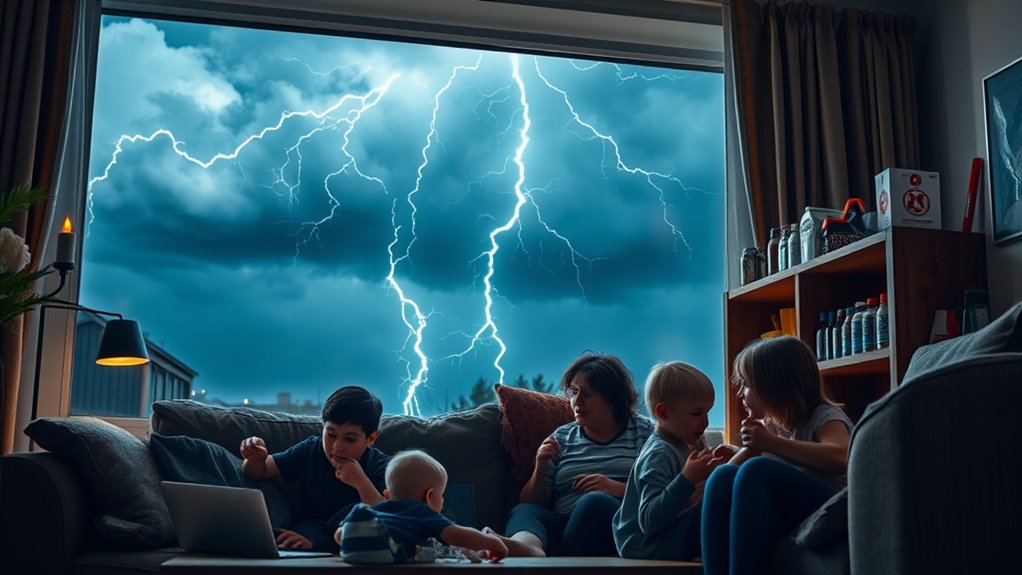
Before a thunderstorm hits, it’s essential to check and secure your emergency supplies. Proper storm preparedness starts with organized supply storage so you can find what you need quickly. Gather essential items like bottled water, non-perishable food, flashlights, batteries, and a basic first aid kit. Confirm all supplies are in waterproof containers or bags to prevent damage. Take a moment to verify expiration dates and replace any expired items. Supply organization minimizes stress during an outage and ensures you have quick access to what’s necessary. Keep your emergency kit in a designated, easily accessible spot, ideally near an exit or central area. Practicing emergency readiness can help you respond more effectively when a thunderstorm arrives, reducing panic and confusion. Ensuring your supplies are properly stored and easily reachable is crucial for quick response during power outages caused by storms. Additionally, consider implementing backup power options such as portable chargers or generators to maintain essential devices and safety equipment. Having a well-prepared plan in place can further streamline your response and keep everyone safe during severe weather. Preparing your supplies now helps you stay calm and ready when a thunderstorm arrives. Additionally, understanding the importance of color accuracy in home safety devices can ensure alerts are clearly visible during outages.
Charge Essential Devices and Backup Power Sources

Make certain your power banks are fully charged and ready to go, so your devices stay powered during an outage. Create a device charging checklist to ensure all essential gadgets have sufficient battery life. Staying prepared with charged devices helps you stay connected and informed when the storm hits. Additionally, consider backup power sources like portable generators or uninterruptible power supplies (UPS) to maintain critical functions during extended outages. Ensuring your power source reliability is essential for effective outage preparedness. Understanding energy efficiency in your backup equipment can also help extend their runtime and effectiveness during prolonged outages. Moreover, checking that your fuel storage is sufficient can prevent interruptions in your backup power during longer outages. Incorporating power management strategies can further optimize your backup system’s performance and longevity during emergencies.
Power Bank Readiness
During a thunderstorm outage, guaranteeing your power banks and backup sources are fully charged can make a crucial difference. A fully charged power bank allows you to keep essential devices powered on, preventing disruptions when the power goes out. Check your power banks now, and plug in devices like smartphones, tablets, and radios for device charging. Keep backup power sources accessible, so you’re ready to switch if needed. Regularly inspect your power bank’s capacity and charge levels. Consider labeling your backup sources for quick identification. This preparation ensures you won’t be caught unprepared during a storm. Incorporating energy storage techniques into your emergency plan can further enhance your readiness. Being familiar with power management strategies can help you conserve energy during outages, maximizing the use of your charged devices. Additionally, understanding battery health can ensure your devices and backup sources operate reliably when needed. Use the table below to visualize how to optimize your power bank readiness:
| Device | Charge Level | Backup Power Source |
|---|---|---|
| Smartphone | 100% | Fully Charged |
| Tablet | 80% | Partially Charged |
| Radio | 100% | Fully Charged |
| Emergency Light | 100% | Fully Charged |
| Other Devices | Check regularly | Keep accessible |
Device Charging Checklist
To make sure you’re prepared for a thunderstorm outage, prioritize charging your essential devices and backup power sources now. Start by organizing your power strips so you can easily access and plug in your devices quickly. Confirm each device is fully charged, and use device labeling to identify which gadgets are most important, like your phone, flashlight, or portable radio. Check that your backup power sources, such as power banks, are also charged and ready. Keep charging cables and adapters in a designated spot, so you don’t waste time searching during an emergency. Proper organization of your power strip and clear device labeling help streamline the charging process, ensuring everything is ready to keep you connected and safe when the storm hits.
Clear Yard and Outdoor Items That Could Cause Damage
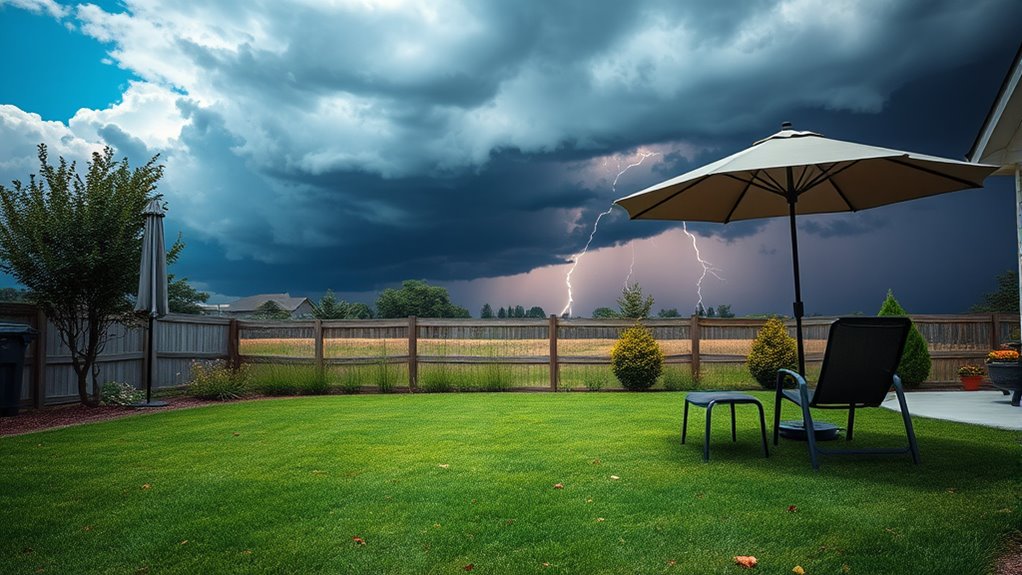
When a thunderstorm approaches, it’s crucial to clear your yard of outdoor items that could become dangerous projectiles. Proper yard cleanup prevents damage and keeps everyone safe. Start by identifying items that can be blown around easily. You might also consider storm preparedness strategies when planning your storm safety measures, especially if household members have auditory sensitivities or processing challenges. Additionally, understanding the best outdoor storage practices can help in safeguarding your belongings from storm damage. To further reduce risks, ensure that all yard safety measures are in place before severe weather hits. 1. Garden furniture – move or secure chairs, tables, and loungers to prevent them from flying into windows or damaging property. 2. Lawn tools and equipment – store lawnmowers, trimmers, and hoses in outdoor storage to avoid them becoming hazards. 3. Loose debris and decorations – pick up toys, umbrellas, and hanging decorations that can be picked up by strong winds. Taking these steps ensures outdoor storage is organized, minimizes risks, and keeps your yard safe during storms.
Review and Update Emergency Contacts and Plans
Regularly reviewing and updating your emergency contacts and plans guarantees you’re prepared for any storm-related outages or emergencies. Confirm that your emergency contacts are current, including neighbors, family members, and local services. Share your updated plans with everyone in your household, ensuring clear family communication. Make sure each person knows how to reach others and where to meet if disconnected. Keep a printed list of emergency contacts in an accessible spot, like your emergency kit or fridge. Discuss potential scenarios and responses, so everyone stays informed. Updating your plans regularly helps account for any new phone numbers, changed addresses, or family dynamics. Staying aware of emergency communication best practices can make a significant difference during a crisis. Being proactive with your emergency contacts and communication plans minimizes chaos and keeps everyone safe during a storm outage.
Protect Your Home’s Electrical and Plumbing Systems
Protecting your home’s electrical and plumbing systems is essential to prevent damage during thunderstorms and outages. Here are key steps to guarantee electrical safety and plumbing protection:
- Unplug sensitive electronics to avoid power surges that can damage devices and appliances.
- Install surge protectors on your main electrical panel for added security during lightning strikes.
- Shut off the main water valve if you anticipate severe flooding, preventing plumbing damage and leaks.
- Consider integrating smart home technology to monitor and manage your electrical and plumbing systems remotely during storms.
Prepare Your Family and Pets for Storm Safety
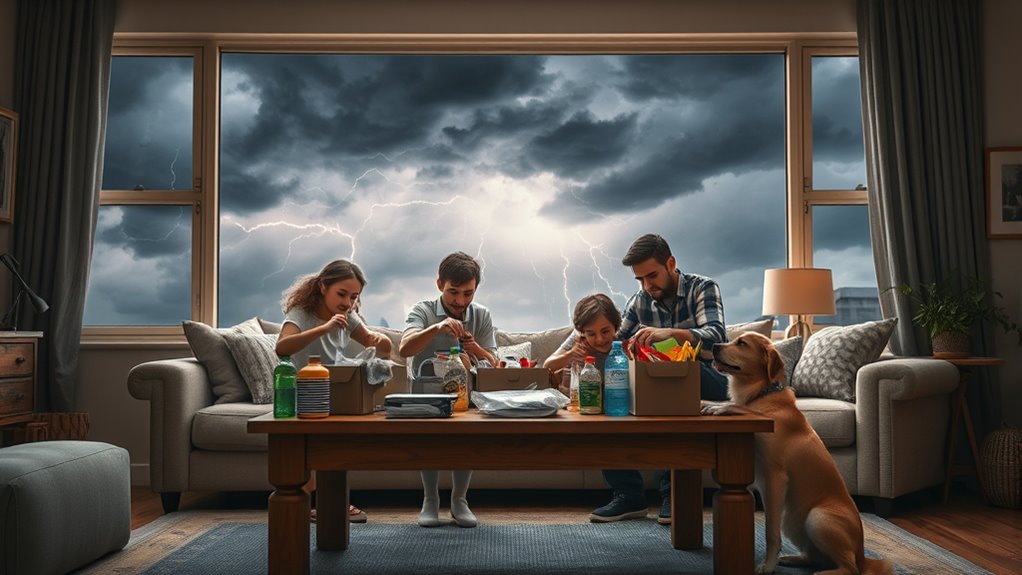
You need to secure your pet shelter spaces so your animals stay safe during a storm. Make sure your family has an emergency plan that everyone knows and practices. Being prepared helps protect your loved ones and pets when severe weather hits. Additionally, smart design principles can help create safer, more comfortable living spaces that are resilient during storms. Incorporating emergency preparedness strategies into your home design can further enhance safety and peace of mind during severe weather events. Considering the use of at‑home safety devices can also provide added protection and quick response options in case of emergencies. Properly installing safety devices can ensure they function correctly when you need them most. Understanding the importance of home resilience can guide you in making effective modifications to withstand storm damage.
Secure Pet Shelter Spaces
When a thunderstorm threatens, securing a safe refuge for your pets is essential to keep them calm and protected. You need to choose reliable shelter options that prioritize pet safety and comfort. Start by identifying a quiet, interior space away from windows. Consider crate training your pets so they have a familiar, secure spot. Finally, prepare a pet emergency kit with food, water, and comfort items to reduce stress.
Here are three steps to ensure your pets are safe:
- Select a designated shelter area inside your home, ideally a small, soundproof room.
- Use crates or carriers for added security and comfort.
- Keep essentials like food, water, and calming items nearby for quick access during the storm.
Emergency Family Plan
Creating a thorough emergency family plan is essential to guarantee everyone, including pets, stays safe during a storm. Your plan should include clear communication methods, designated safe zones, and pet evacuation procedures. Make sure all family members know how to reach each other and where to meet if separated. Practice the plan regularly to ensure everyone’s preparedness. Also, identify pet-friendly shelters or safety spots beforehand. Use the table below to organize your ideas:
| Family Communication | Pet Evacuation | Safe Spots | Emergency Contacts | Supplies Checklist |
|---|---|---|---|---|
| Phone tree, texts | Leash, carrier | Basement, closet | Neighbors, vet | Water, food, meds |
| Meeting points | Transport options | Secure room | Emergency services | First aid kit |
| Practice drills | Evac route | Pet supplies | Local shelters | Flashlights |
Additionally, knowing your local shelter options can save valuable time during an emergency.
Safeguard Important Documents and Valuables
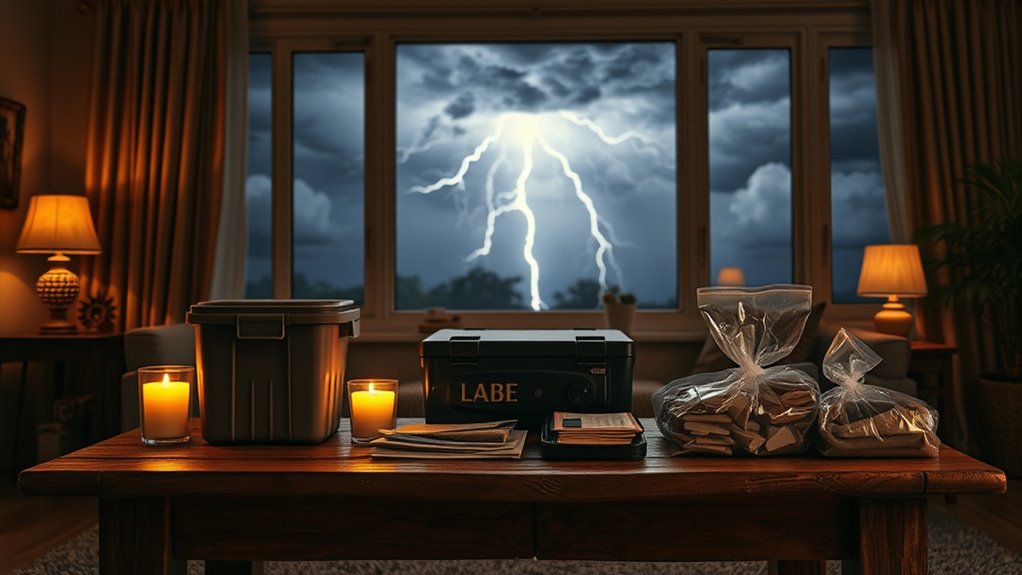
During a thunderstorm outage, it’s essential to protect your important documents and valuables from potential damage or loss. Proper document protection guarantees they stay safe from water, power surges, or theft. To safeguard your valuables effectively, consider these steps:
- Store critical documents—like IDs, insurance papers, and bank info—in waterproof, fireproof containers.
- Keep digital copies on a secure cloud service or external drive, ensuring valuables safeguarding even if physical items are damaged.
- Consolidate jewelry, cash, or heirlooms in a safe, easily accessible spot to prevent misplacement or theft during the outage.
- Additionally, ensure your ventilation considerations are addressed to prevent humidity buildup that could damage sensitive valuables.
Set Up Weather Alerts and Stay Informed
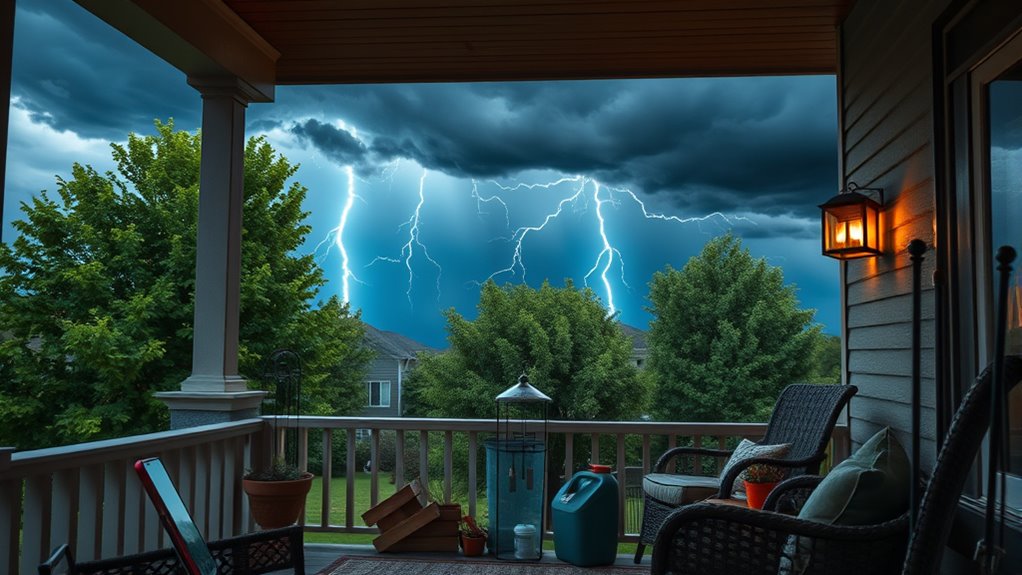
Staying informed about upcoming weather conditions helps you respond quickly and effectively during thunderstorms. Set up weather alerts on your phone using trusted weather apps with storm tracking features. These apps send real-time notifications about severe weather alerts, giving you critical time to prepare. Customize alerts for your specific location so you’re notified immediately if a storm is approaching. Regularly check these apps, especially during storm season, to stay ahead of changing conditions. Many weather apps also provide radar images and storm movement updates, helping you track storms as they develop. By actively monitoring weather alerts and utilizing storm tracking tools, you ensure your family stays safe and you’re ready to implement your 30-minute pre-storm routine.
Frequently Asked Questions
How Early Should I Start My Storm Prep Routine Each Day?
You should start your storm prep routine at least 30 minutes before a weather alert or storm safety warning is issued. Keep an eye on weather alerts, and when you see signs of an approaching storm, begin your routine. This allows you to gather essentials, secure your home, and stay safe. Being proactive guarantees you’re prepared well in advance, reducing stress and increasing safety during severe weather conditions.
What Specific Items Are Most Critical in Emergency Kits?
Your emergency kit should be like a reliable toolbox, with essentials at your fingertips. Focus on critical items like fresh flashlight batteries to keep your light shining and first aid supplies to handle injuries. Include bottled water, non-perishable food, a whistle, and blankets. These items guarantee safety and comfort during power outages or emergencies, giving you peace of mind when storms roll in.
How Can I Protect My Electronic Devices From Power Surges?
To protect your electronic devices from power surges, you should plug them into surge protectors, which absorb excess voltage during storms. Make sure to use high-quality surge protectors with a good joule rating. Additionally, back up your devices regularly to prevent data loss if a surge causes damage. Unplug devices when storms are imminent to provide extra protection and avoid potential surges altogether.
What Are the Signs of Potential Electrical System Damage After a Storm?
After a storm, stay alert for storm damage indicators like flickering lights, frequent breaker trips, or burning smells—signs your electrical system might be compromised. Don’t ignore these clues, as they threaten electrical system safety. If you notice any of these, shut off power and call a professional immediately. Acting quickly can prevent further damage, ensuring your home’s electrical system remains safe and functional.
How Do I Communicate With Neighbors During Storm Outages?
During storm outages, you should prioritize neighborhood communication by sharing storm information quickly. Use your phone to call or text neighbors, especially those who might need help. Set up a group chat on messaging apps to facilitate storm information sharing. If possible, use social media or neighborhood apps to keep everyone informed about outage updates and safety tips. Clear communication helps everyone stay safe and coordinated during the storm.
Conclusion
Now, swiftly scan your space, secure supplies, and straighten your safety plan. Stay sharp, stay safe, and sound before the storm strikes. With quick, confident actions, you’ll ward off worry and weather the weather wisely. A prepared person is a peaceful person, so take these simple steps to safeguard your space and soothe your soul. Storms may roar, but your readiness will keep you resilient and relaxed.
Columbus Day / Indigenous Peoples' Day Picks
long weekend sales
As an affiliate, we earn on qualifying purchases.